Blog

Adjuvant Chemotherapy for Triple Negative Breast Cancer (TNBC)

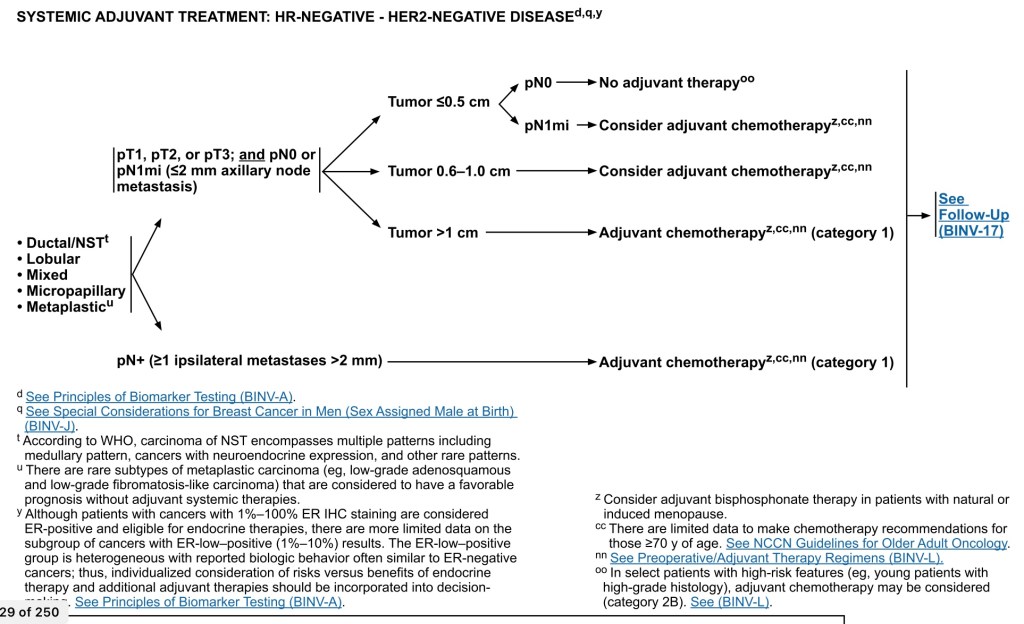
  • Algorithm for Adjuvant Therapy (AC) in TNBC:
    • For histologic types:
      • Ductal
      • Lobular
      • Mixed
      • Metaplastic
    • For pT1, T2, or T3 and pN0 or pN1mi (≤ 2 mm axillary nodal metastasis), adjuvant systemic treatment depends on tumor size:
      • For T1a (T ≤ 0.5 cm including microinvasive) and pN0:
        • NO adjuvant therapy, however, if pN1mi:
          • Adjuvant therapy should be considered
      • For T1b (T > 0.5 cm and ≤ 1.0 cm), pN0 or pN1mi:
        • Adjuvant therapy should be considered
      • For tumors greater than 1 cm, N0 or N1mi:
        • Chemotherapy should be given
      • For node-positive disease (one or more metastases ≥ 2 mm) to one or more axillary lymph nodes:
        • AC should be given
  • Standard Adjuvant Systemic Chemotherapy for TNBC:
    • Current AC for TNBC does not differ according to subtype
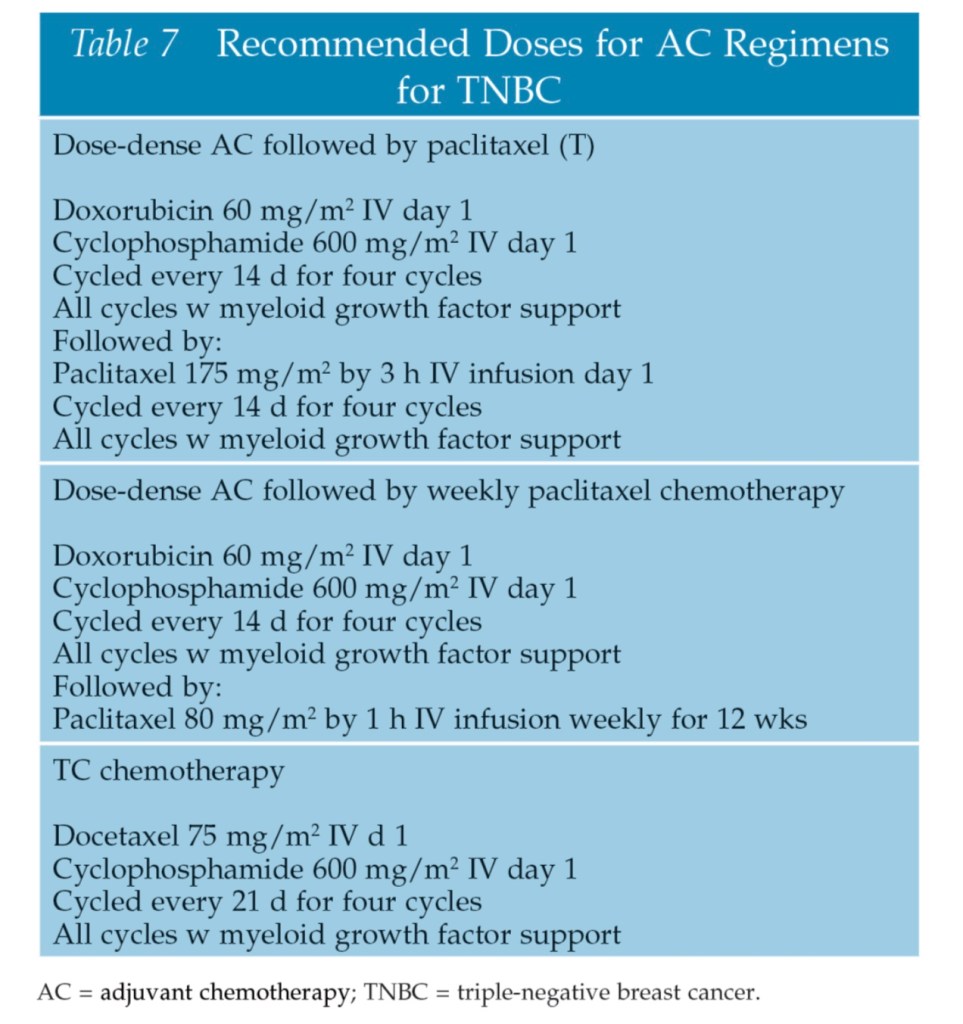
  • Preferred regimens are:
    • Dose-dense AC (doxorubicin / cyclophosphamide) followed by paclitaxel every 2 weeks
    • Dose-dense AC followed by weekly paclitaxel
    • TC (docetaxel and cyclophosphamide)
  • Other acceptable adjuvant therapy regimens as per NCCN guidelines are:
    • Dose-dense AC (doxorubicin / cyclophosphamide)
    • AC (doxorubicin / cyclophosphamide) every 3 weeks
    • Cyclophosphamide / methotrexate / fluorouracil
    • AC followed by docetaxel every 3 weeks
    • AC followed by weekly paclitaxel
    • Epirubicin / cyclophosphamide
    • TAC (docetaxel / doxorubicin / cyclophosphamide)
  • High-risk triple-negative patients are, in general:
    • Treated with an anthracycline and a taxane-containing regimen
  • Emerging concepts in systemic therapy for TNBC – Precision Medicine:
    • The considerable overlap of the BRCA1 tumor phenotype and TNBC:
      • Has led investigators to take advantage of TNBC BRCA-ness when considering chemotherapy regimens
    • The DNA repair defects characteristic of BRCA1-deficient cells:
      • Confer sensitivity to poly (adenosine diphosphate ribose) polymerase 1 (PARP) inhibition
      • Platinum salts:
        • Such as carboplatin and cisplatin:
          • Cause DNA cross-link strand breaks and thus should be effective in BRCA-mutated calls and TNBC:
            • Which are deficient in homologous DNA repair mechanisms
  • Consideration should be given for neoadyuvant chemotherapy (NAC) for:
    • Stages IIA, IIB, and IIIA and if the patient fulfills criteria for breast-conserving surgery apart from tumor size
  • The NCCN guidelines recommend:
    • The same NAC regimens for TNBC as for adjuvant treatment
  • Pathologic complete response (pCR) rates:
    • For TNBC are higher (22% to 44%) than for non-TNBC (6% to 11%)
  • Residual disease following NAC:
    • Portends a worse prognosis than a pCR
  • Response to neoadjuvant therapy (adriamycin-, cytoxan-, taxol-containing regimens) differs according to intrinsic subtype:
    • Masuda and colleagues noted a pCR of 28% overall:
      • However, when looked at by subtype:
        • BL1 subtype has a pCR of 52% versus:
          • BL2 0%
          • LAR 10%
          • MSL (23%)
  • TNBC subtype is an independent predictor of pCR following NAC:
  • Tsai and colleagues determined that residual nodal disease post-NAC for TNBC was associated with an unfavorable outcome:
    • They calculated the lymph node ratio (LNR) and the proportion of positive nodes over the number excised, following NAC according to molecular subtype:
      • Patients with a low LNR (≤ 0.2) had a prolonged DFS compared with those with a high (> 0.65) LNR
  • Patients with TNBC:
    • Have higher pCR rates in the axilla following NAC than patients with hormone receptor-positive cancers:
      • 49.4% versus 21.1%
  • Further, a pCR determined by the sentinel node biopsy in the axilla may reduce the need for full axillary dissection in selected patients who achieve the pCR:
    • Axillary downstaging to reduce the extent of axillary node dissection with NAC is an emerging paradigm
  • Despite the relative chemosensitivity of TNBC:
    • Early relapse is common:
      • Leading to the term:
        • Triple-negative paradox
    • TNBC tumors show increased rates of pCR to NAC:
      • But have lower DFS and overall survival (OS) compared with other subtypes
  • It has been postulated that the triple-negative paradox:
    • Is due to differing pCR rates and higher likelihood of relapse in patients who do not achieve pCR
  • Swisher and colleagues found that failure to achieve a pCR (in both the breast and axilla) following NAC:
    • Was a significant adverse feature for patients with TNBC tumors
    • With a median follow-up of 4.6 years:
      • Those with a pCR the locoregional recurrence-free survival was:
        • 98.6% versus 89.9% for those who did not achieve pCR (p = .007)
  • For TNBC patients having residual disease following NAC:
    • The use of AC following surgery has been associated with an improvement in survival
  • The CREATE-X (Capecitabine for Residual Cancer as Adjuvant Therapy) trial:
    • Was designed to study the effect of adjuvant capecitabine on patients with TNBC who did not achieve pCR following NAC
    • Women in the capecitabine group:
      • Had better 2-year:
        • DFS:
          • 82.8% versus 74.0%
        • OS:
          • 94% versus 89.2%
  • In an ongoing clinical trial (SWOG 1418):
    • The role of pembrolizumab (an immune checkpoint inhibitor) in patients with residual disease after NAC is being investigated
  • Two landmark trials have shown the efficacy of platinum salts when added to NAC regimens for TNBC:
    • The GeparSixto trial:
      • Compared paclitaxel, doxorubicin, and bevacizumab (Avastin) with or without carboplatin
      • In the TNBC subset:
        • pCR improved from 37.9% to 58.7% with the addition of carboplatin
    • In the Cancer and Leukemia Group B 40603 trial:
      • Patients received paclitaxel 80 mg/m2 once per week for 12 weeks followed by doxorubicin plus cyclophosphamide once every 2 weeks for four cycles, and were randomly assigned to concurrent carboplatin (area under curve 6) once every 3 weeks for four cycles and / or bevacizumab 10 mg/kg once every 2 weeks for nine cycles
      • The addition of either carboplatin (60% versus 44%; p = .0018) or bevacizumab (59% versus 48%; p = .0089) significantly increased pCR in the breast:
      • Whereas only carboplatin (54% versus 41%; p = .0029) significantly raised pCR in both and axilla
  • In a meta-analysis of eight platinum-based therapy trials for TNBC:
    • Tian and colleagues concluded that both pCR and overall response rate:
      • Were significantly higher for platinum-based regimens
  • In the I-SPY 2 trial:
    • A phase 2, multicenter, adaptively randomized trial:
      • Multiple experimental regimens in combination with standard NAC were screened
    • Seventy-two patients with TNBC were randomly assigned to receive veliparib (a PARP inhibitor), carboplatin, and standard therapy, and 44 patients were concurrently assigned to receive control therapy
    • The investigators found the estimated rates of pathologic complete response in the triple-negative population at the completion of chemotherapy were:
      • 51% in the veliparib-carboplatin group versus 26% in the control group
      • They concluded that veliparib-carboplatin had an 88% predicted probability of success in a phase 3 trial for TNBC

#Arrangoiz #CancerSurgeon #BreastSurgeon #SurgicalOncologist #ComplexSurgicalOncology #BreastCancer #TripleNegativeBreastCancer #TNBC #Miami #Mexico #Teacher #Surgeon #MountSinaiMedicalCenter #MSMC
Metastatic Triple Negative Breast Cancer (TNBC)

  • All patients with TNBC:
    • Should be considered for a clinical trial
  • Taxanes, carboplatin, eribulin, and capecitabine:
    • Are some of the commonly used standard chemotherapeutic drugs
  • In general, medical oncologists recommend single-agent sequential therapy
  • Combination regimens:
    • Have not shown an improvement in DFS or OS
  • If the patient has a BRCA mutation:
    • He / she could be considered for a PARP inhibitor trial
  • Based on the Olympiad trial:
    • The PARP inhibitor olaparib:
      • Has shown improvement in progression-free survival
    • Several other PARP inhibitors such as niraparib and veliparib are being investigated in clinical trials:
  • An ongoing SWOG trial (SWOG 1416):
    • Is looking at the role of veliparib in mTNBC patients treated with cisplatin
  • If the patient has a mismatch repair–deficient tumor or a tumor with microsatellite instability:
    • He or she could be considered for pembrolizumab based on recent FDA approval of pembrolizumab in the tumor agnostic setting
  • In about 10% of patients, next-generation sequencing may also give a genomically driven clinical trial option

#Arrangoiz #CancerSurgeon #BreastSurgeon #SurgicalOncologist #ComplexSurgicalOncology #BreastCancer #TripleNegativeBreastCancer #TNBC #Miami #Mexico #Teacher #Surgeon #MountSinaiMedicalCenter #MSMC
Differentiated Thyroid cancer: Radioiodine Treatment

Introduction

• Radioiodine therapy:

• Has been used in the management of patients with well-differentiated (papillary or follicular) thyroid cancer since the 1940s

• Thyroid tissue has a unique ability to take up iodine from blood:

• Like iodine, radioiodine is taken up and concentrated in thyroid follicular cells:

Because they have a membrane sodium-iodide transporter

• Compared with normal thyroid follicular cells:

• Thyroid cancer cells have reduced expression of the transporter:

• Which may account for the low iodine-131 (131-I) uptake in thyroid cancer tissue

• 131-I:

• Causes acute thyroid cell death by:

• Emission of short path-length (1 to 2 mm) beta particles

• The uptake of 131-I by thyroid tissue:

• Can be visualized by scanning to detect the gamma radiation that is also emitted by the isotope

• 131-I must be taken up by thyroid tissue to be effective:

• As a result, it is of no value in patients whose thyroid cancers do not concentrate iodide:

• Patients with medullary cancer, lymphoma, or anaplastic cancer

Goals of Radioactive Iodine Treatment

• In an effort to standardize terminology:

• An inter-societal working group with representatives from the American Thyroid Association (ATA), the European Thyroid Association, the European Association of Nuclear Medicine, and the Society of Nuclear Medicine and Molecular Imaging reached the following consensus regarding the goals of iodine-131 (131-I) therapy in differentiated thyroid cancer:

• Remnant ablation:

• The primary goal of remnant ablation is:

Destruction of presumably benign thyroid tissue after total thyroidectomy:

• To facilitate initial staging and follow-up studies. This will, in turn:

Improve the specificity of measurements of serum thyroglobulin (Tg) as a tumor marker

• Increase the specificity of 131-I scanning for detection of recurrent or metastatic disease:

• By eliminating uptake by residual normal tissue

• Adjuvant treatment:

• The primary goal of adjuvant treatment is destruction of subclinical tumor deposits:

• That may or may not be present after surgical resection of all known primary tumor tissue and metastatic foci

• Since adjuvant treatment is given based on the risk of having persistent / recurrent disease without definitive evidence of biochemical or structural evidence of disease:

• It is accepted that some patients selected for adjuvant treatment might already have been treated sufficiently by their primary surgery

• Thus, the decision to recommend adjuvant treatment requires:

• Balancing oncological risk (risk of persistent / recurrent disease and disease-specific mortality) and the risks associated with adjuvant treatment (short- and long-term risks of 131-I):

• With the potential benefit of adjuvant treatment (potential to decrease recurrence, improve progression-free survival, and/or improve disease-specific mortality)

• Thus, in properly selected patients, the potential benefits of 131-I adjuvant treatment could include:

Destruction of subclinical, microscopic foci of disease remaining after surgery

• Decreased risk of recurrence

• Improved disease-specific survival

• Improved progression-free survival

• Treatment of known disease:

• The primary goal in the treatment of known disease is:

Destruction of clinically apparent macroscopic disease (evidenced by either abnormal thyroglobulin values or structural findings) that is not amenable to surgical therapy

• Radioiodine treatment of residual disease and metastatic disease:

• May reduce the risk of recurrence and mortality:

• Especially in small-volume disease that is radioiodine avid

#Arrangoiz #ThyroidSurgeon #CancerSurgeon #HeadandNeckSurgeon #ThryoidExpert #ThyroidCancer #RadioactiveIodine #Teacher #Miami #MountSinaiMedicalCenter

Surgical Management of Triple Negative Breast Cancer

  • Surgical management of TNBC consists of the standard options of:
    • Breast-conserving treatment versus mastectomy
  • TNBC should not be treated differently from the surgical standpoint
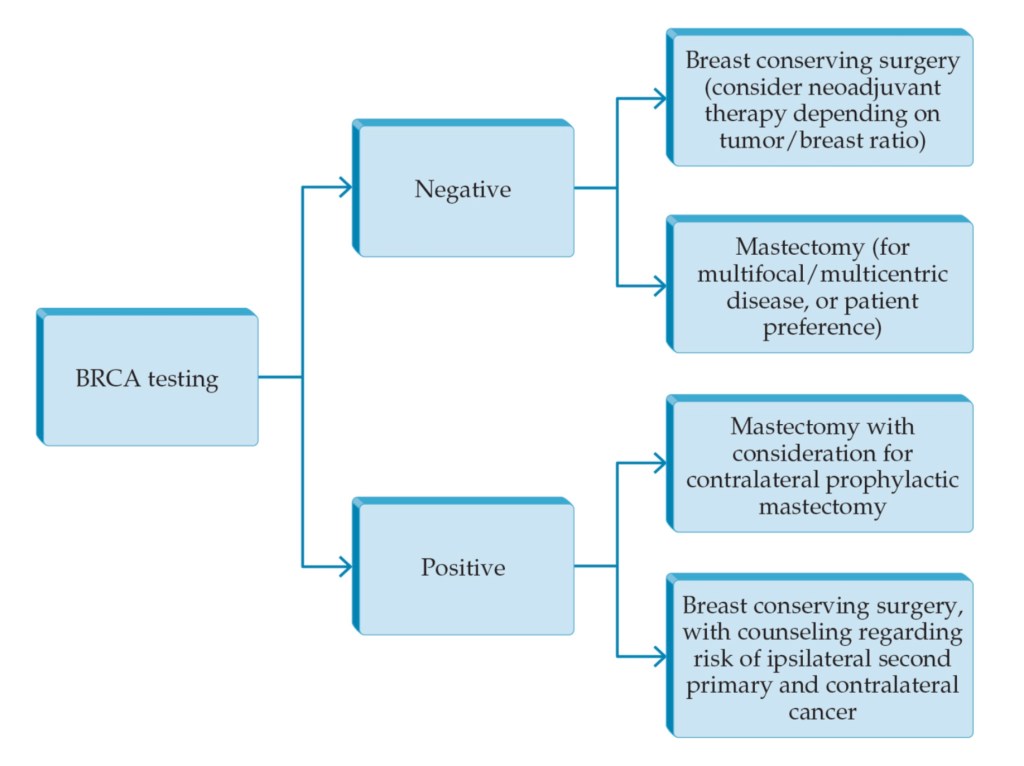
  • Genetic testing and BRCA 1/ BRCA 2 status guide surgical choices as per the algorithm are shown in Figure
  • NCCN guidelines recommend:
    • Discussion of the option of risk-reducing mastectomy
Algorithm for surgical choices in TNBC based on genetic testing and BRCA1 / BRCA 2 status

#Arrangoiz #CancerSurgeon #BreastSurgeon #SurgicalOncologist #ComplexSurgicalOncology #BreastCancer #TripleNegativeBreastCancer #TNBC #Miami #Mexico #Teacher #Surgeon #MountSinaiMedicalCenter #MSMC
Clinical Features and Presentation of Triple Negative Breast Cancers

  • The majority of TNBCs are detected clinically as a:
    • Mass, either by the patient or examining clinician
  • Other possible presenting symptoms include:
    • Breast pain
    • Bloody nipple discharge
  • In the institutional review by Krizmanich-Conniff and colleagues, when compared with non-TNBCs:
    • TNBCs were more likely to present clinically:
      • 68% versus 48%
    • The remaining 32% of TNBCs were found on screening mammography:
      • Whereas 52% of non-TNBCs were found by screening
  • More than one-third of patients whose TNBC was detected clinically had no prior mammography:
    • Of those detected by mammography:
      • One-third had developed within 12 months of the last mammography:
        • The high incidence of interval cancers is attributed to the aggressive growth rate of TNBC
  • Imaging:
    • Mammographic characteristics of TNBC included:
      • A round mass (59.3%) or an oval or lobulated mass (65%), with circumscribed (15%), microlobulated (12.5%), or indistinct margins (55%)
      • Spiculated margins were much less common (15%)
  • On mammography, TNBCs are most likely seen as:
    • A noncalcified mass:
      • 58%
  • Dogan and Turnbull caution that TNBC may lack the typical mammographic features of breast cancer, and although ultrasonography adds to the sensitivity of diagnosis:
    • 21% to 41% of TNBCs can have benign characteristics on breast imaging
  • On MRI, the most common enhancement pattern seen with TNBC is rim enhancement:
    • MRI findings following neoadjuvant chemotherapy (NAC):
      • Correlate well with the extent of residual tumor
    • MRI provides a reliable baseline prior to NAC and can predict response more sensitively than other imaging methods

#Arrangoiz #CancerSurgeon #BreastSurgeon #SurgicalOncologist #ComplexSurgicalOncology #BreastCancer #TripleNegativeBreastCancer #TNBC #Miami #Mexico #Teacher #Surgeon #MountSinaiMedicalCenter #MSMC
Etiology and Pathogenesis of Triple Negative Breast Cancer

  • Breast cancer is the most common cancer in women in the United States and worldwide:
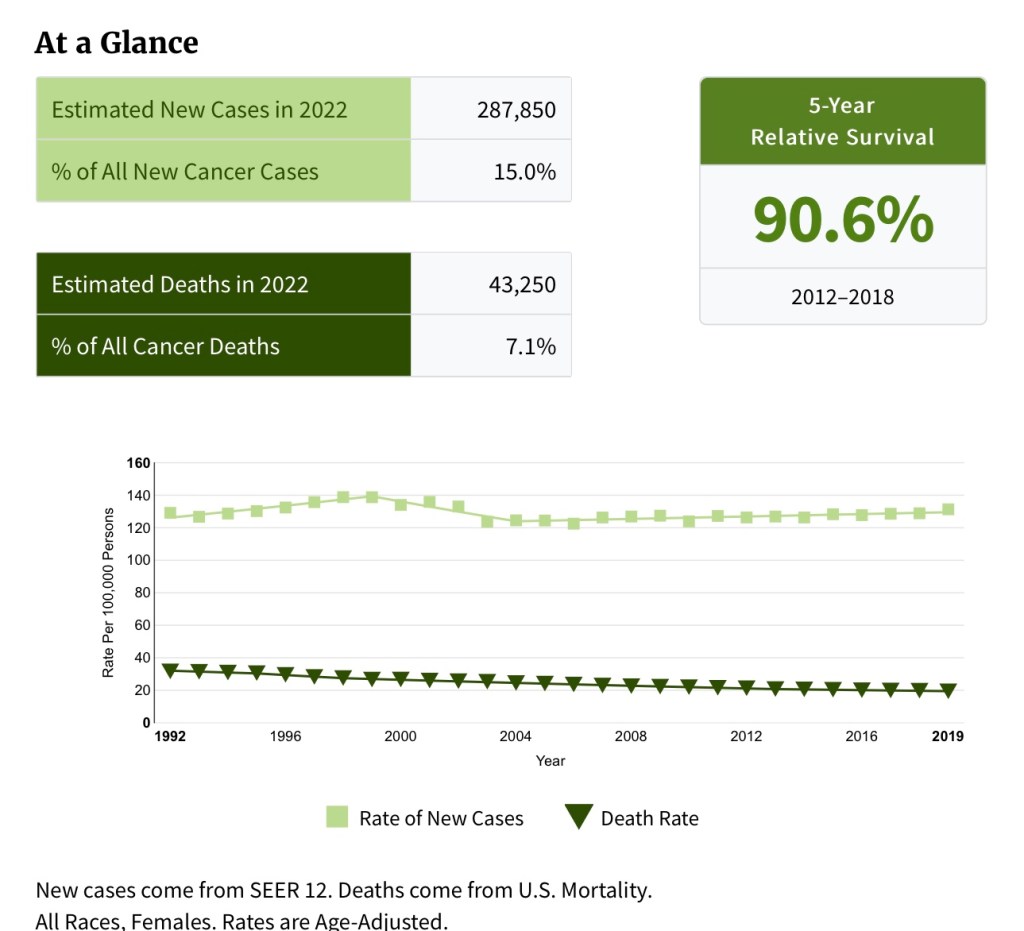
    • It is estimated that there will be 287, 850 cases of breast cancer in women in the United States in 2022:
      • 15% of all new cancer cases
    • It is estimated that there will be 43, 250 deaths from breast cancer in the United States in 2022:
      • 7.1% of all cancer deaths
    • Globally, breast cancer accounts for:
      • At least 1.6 million new cases annually
  • Triple-negative breast cancers (TNBCs) are defined as:
    • Those that lack expression of the estrogen receptor (ER) and progesterone receptor (PR) and do not overexpress human epidermal growth factor 2 receptor (HER2) protein
      • If staining for ER receptor by immunohistochemistry (IHC):
        • Is less than 1%:
          • The tumor is ER negative
      • The same applies for PR
    • HER2 negativity is reported if:
      • Staining by IHC is 0 or 1+ or if IHC is 2+ (equivocal), HER2/CEP17 ratio is less than 2.0, and the HER2 copy number is less than 4 by in situ hybridization
  • Of all breast cancers:
    • 15% to 20% are of TNBC variety
  • The prevalence of TNBC is highest in:
    • Premenopausal African American women:
      • 39% of all African American women diagnosed with breast cancer have TNBC:
        • Compared with 15% of the same age group of non–African American women
      • It is estimated that African American women are threefold more likely to have TNBC than Caucasian women
      • Analysis of the US Surveillance, Epidemiology, and End Results database in 2010 showed that:
        • African American and Hispanic women were more likely to be diagnosed with TNBC than Caucasian women
  • Overall, TNBC is associated with a:
    • Poor prognosis and higher risk of distant recurrence and death:
      • Within the first 5 years after diagnosis compared with other subtypes
    • The peak risk of recurrence in TNBC:
      • Occurs within 3 years of diagnosis
  • TNBC is associated with a:
    • Shortened disease-free survival (DFS) and in the metastatic setting, a more aggressive clinical course
  • Visceral metastases are more common with TNBC than hormone receptor–positive tumors:
    • Common sites of metastasis include the:
      • Lung, liver, and brain
        • 15% of patients with TNBC develop brain metastases
  • The median survival of metastatic TNBC (mTNBC):
    • Is only 13 months
  • Radosa and colleagues:
    • Did not find young age to be an independent prognostic factor for outcome in TNBC
    • When comparing patients aged less than 40 years with those aged 40 years or older:
      • Age was not found to be independently associated with local recurrence, distant recurrence, DFS, or breast cancer–specific survival
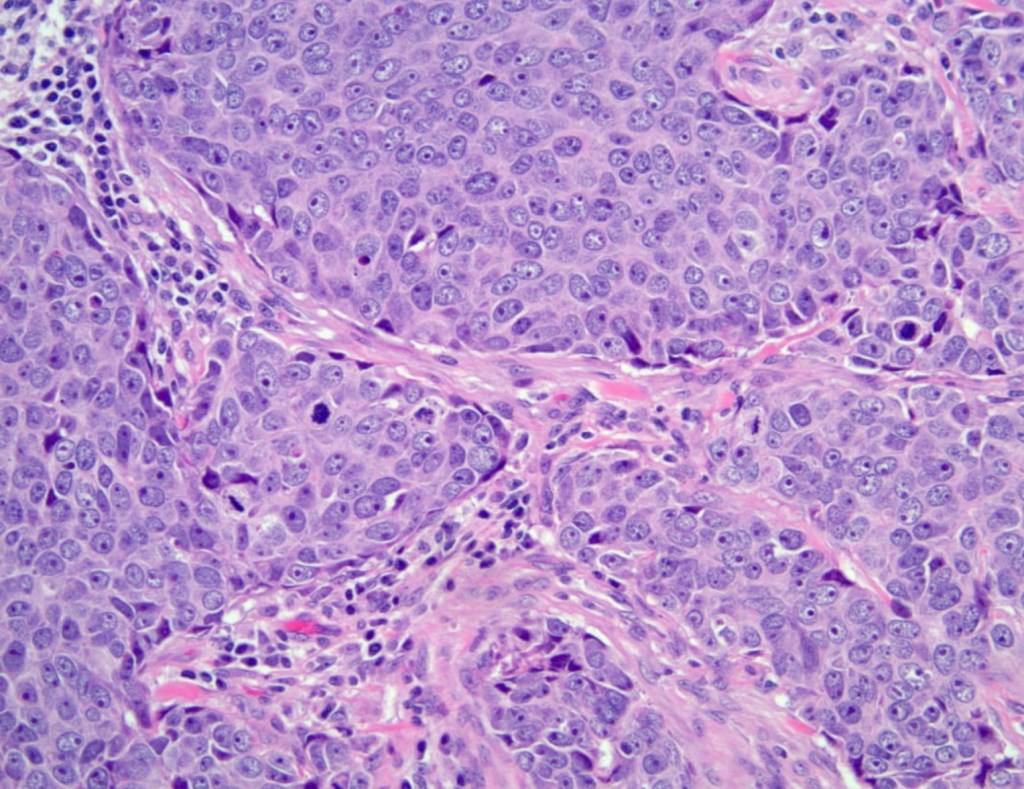
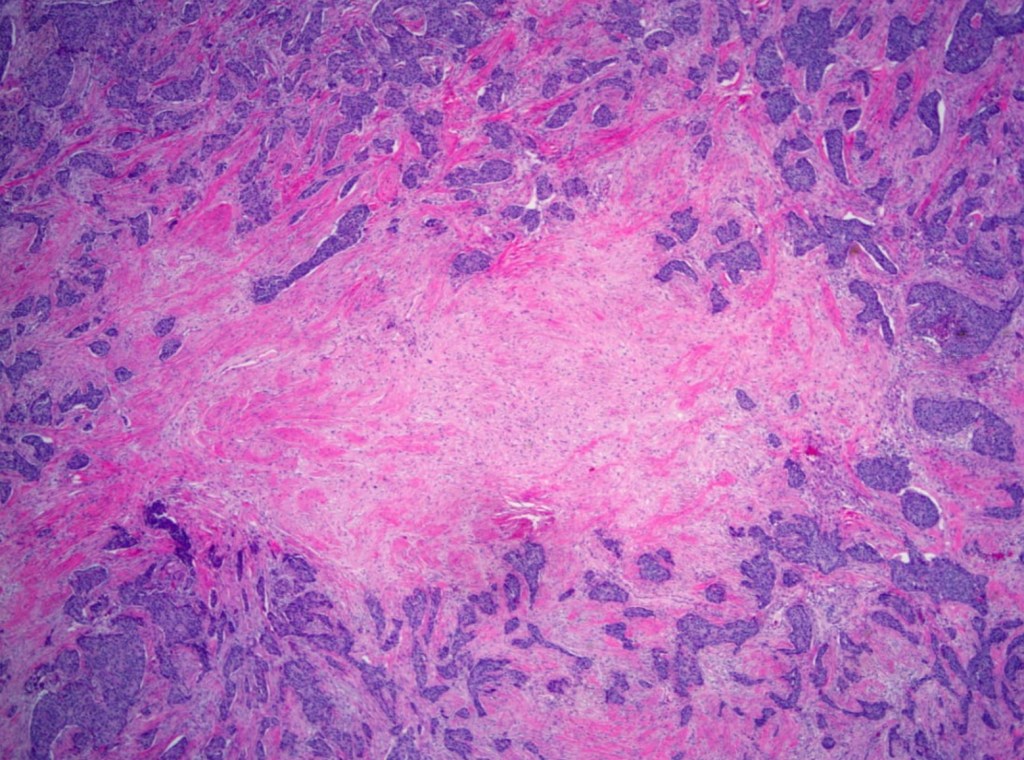
  • Histologically, TNBCs are most often of:
    • Higher grade
    • Exhibit tumor necrosis
    • Have more frequent nodal metastases
  • The majority of TNBCs are of:
    • Invasive ductal breast cancer, no special type:
      • Characterized by:
        • High mitotic indices
        • Presence of central necrotic or fibrotic zones
        • Pushing borders
        • Conspicuous lymphatic infiltrate
        • Typical or atypical medullary features
    • However, TNBC can be heterogeneous, with a subset of TNBCs of lower grade, including those of the:
      • Secretory
      • Adenoid cystic
      • Acinic cell
      • Apocrine varieties
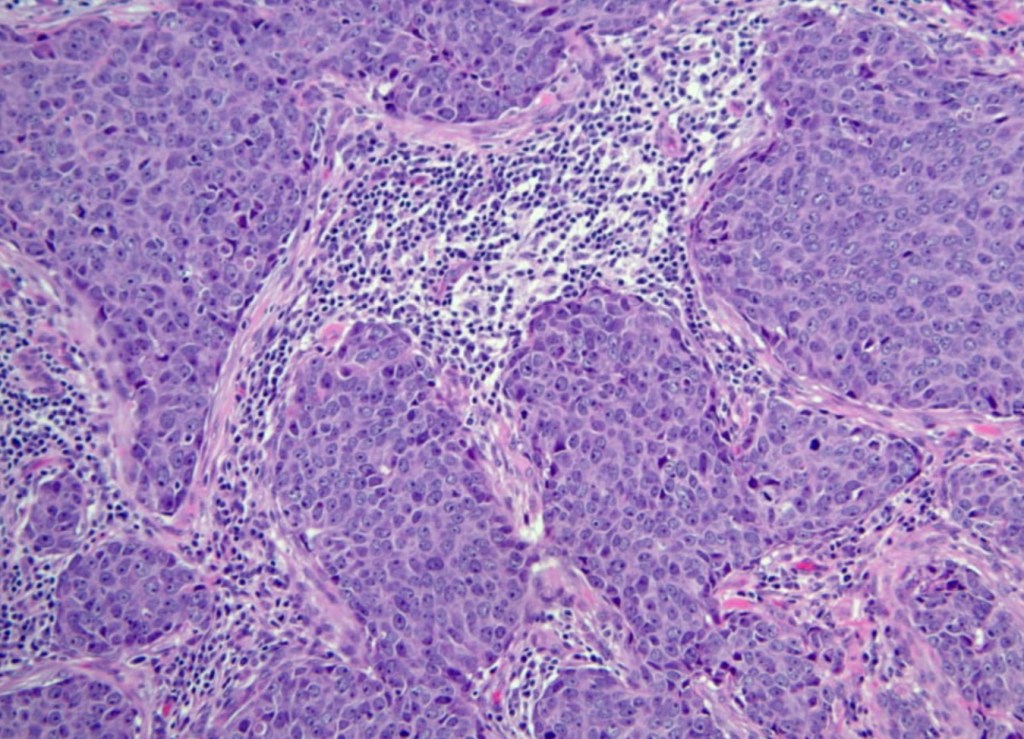
Photomicrograph of TNBC showing tumor infiltrating lymphocytes
Photomicrograph of TNBC showing high-grade nuclei, mitotic activity, basaloid morphology
Photomicrograph of TNBC showing central fibrotic focus
  • Perou and colleagues divided breast cancers into distinct subtypes by microarray analysis:
    • ER+ or luminal-like
    • Basal-like
    • Erb-B2+
    • Normal breast
  • The commercially available prediction analysis of microarray 50 (PAM50) assay by Prosigna® NanoString Technologies can be used to classify tumors into one of four subtypes:
    • Luminal A
    • Luminal B
    • HER2-enriched
    • Basal-like
  • TNBCs share many characteristics with basal-like cancers:
    • However, the terms are not synonymous
  • About 75% of TNBCs are classified as:
    • Basal-like based on PAM50 profiling
  • A recent analysis of 868 TNBCs showed that:
    • 86.1% basal-like
    • 9.1% HER2-enriched
    • 3.2% luminal B
    • 1.6% luminal A
  • Among TNBC patients:
    • Intrinsic subtype identified by PAM50 testing:
      • Has not been correlated with differences in clinical outcome
  • There is increasing evidence that not all TNBCs have the same behavior, and in fact:
    • TNBCs comprise a very heterogeneous group of tumors
  • Several emerging paradigms have attempted to define TNBC heterogeneity:
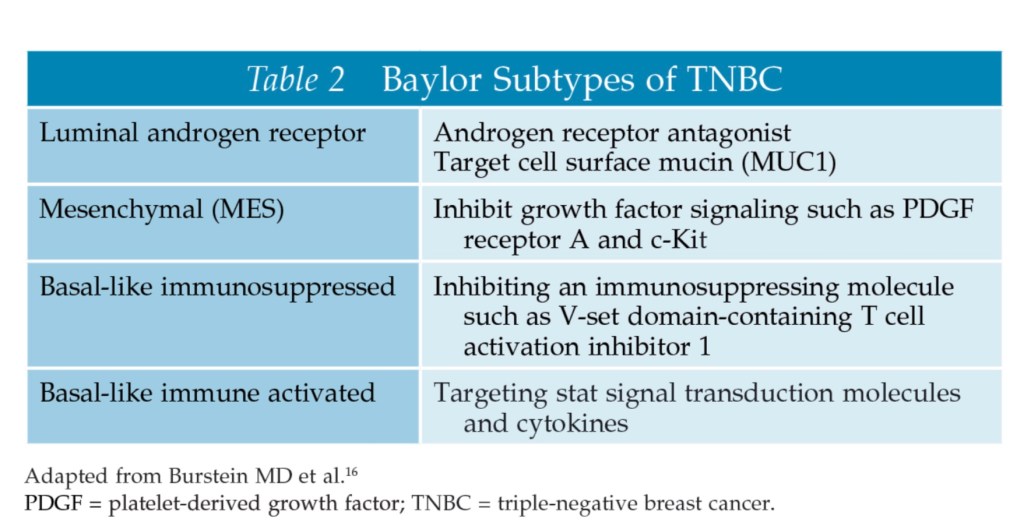
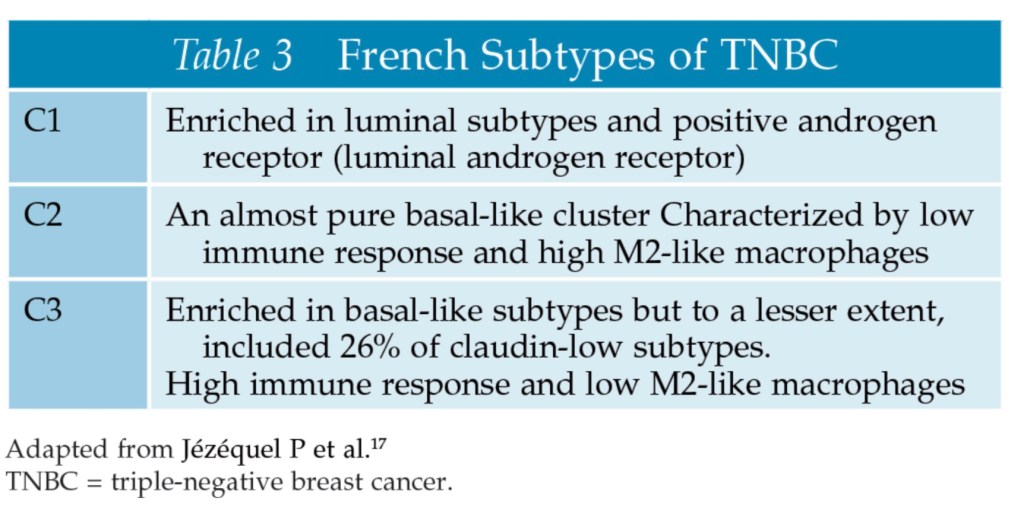
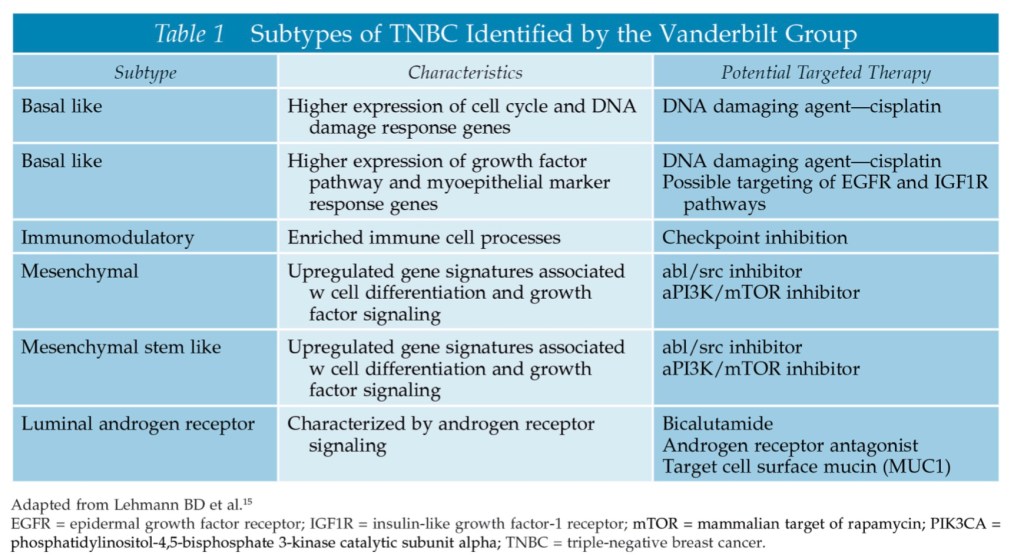
    • Groups from Vanderbilt, Baylor, and France have divided TNBC into subtypes based on K means clustering, non-negative matrix factorization, and fuzzy clustering, respectively
  • The subtypes identified by the Vanderbilt group (K means clustering) and possible mechanism of action of effective chemotherapy regimens based on subtype are shown in Table:
  • Researchers from Baylor (non-negative matrix factorization) and France (fuzzy clustering) also recognized the heterogeneity of TNBC; however, the subtypes they described differed from the Vanderbilt group as shown in Tables:
  • The Vanderbilt researchers have further refined their six original subtypes into four:
    • BL1
    • BL2
    • M
    • LAR
  • They recognized that the:
    • IM subtype reflected a high percentage of tumor-infiltrating lymphocytes
    • The MSL subtype higher tumor-associated stromal cell content
  • The value of identification of subtypes with differing behavior is in the potential for targeted therapy:
    • For example, 10% to 35% of TNBCs are androgen receptor (AR) positive
  • At the American Society of Clinical Oncology (ASCO) Annual Meeting in 2017, Quist and colleagues presented another classification schema for TNBC based on transcriptomic and genomic data – CONEXIC:
    • The CONEXIC four-gene decision tree classified TNBC into six subtypes:
      • The MC6 subtype was genomically unstable and immune activated:
        • This subtype appeared responsive to platinum chemotherapy
      • Other CONEXIC subtypes require further characterization
  • Although all the classification systems mentioned above provide an intriguing insight into the biology of TNBC, they have not yet transitioned from the research realm into practice to guide clinical decision-making
    • TNBCs that are AR negative have been termed quadruple-negative breast cancer (QNBC):
      • The presence or absence of luminal AR varies according to race:
        • With QNBC being more likely to be found in African American women than in Caucasian women

#Arrangoiz #CancerSurgeon #BreastSurgeon #SurgicalOncologist #ComplexSurgicalOncology #BreastCancer #TripleNegativeBreastCancer #TNBC #Miami #Mexico #Teacher #Surgeon #MountSinaiMedicalCenter #MSMC
Breast Cancer Epidemiology

  • Rate of New Cases and Deaths per 100,000:
    • The rate of new cases of female breast cancer was 128.3 per 100,000 women per year
    • The death rate was 19.9 per 100,000 women per year
    • These rates are age-adjusted and based on 2015 to 2019 cases and deaths
  • Lifetime Risk of Developing Cancer:
    • Approximately 12.9% of women will be diagnosed with female breast cancer at some point during their lifetime, based on 2017 to 2019 data
  • Prevalence of This Cancer:
    • In 2019, there were an estimated 3,771,795 women living with female breast cancer in the United States

#Arrangoiz #BreastSurgeon #BreastCancer #CancerSurgeon #SurgicalOncologist #Miami #Mexico #MountSinaiMedicalCenter

Tuberous Breast Deformity

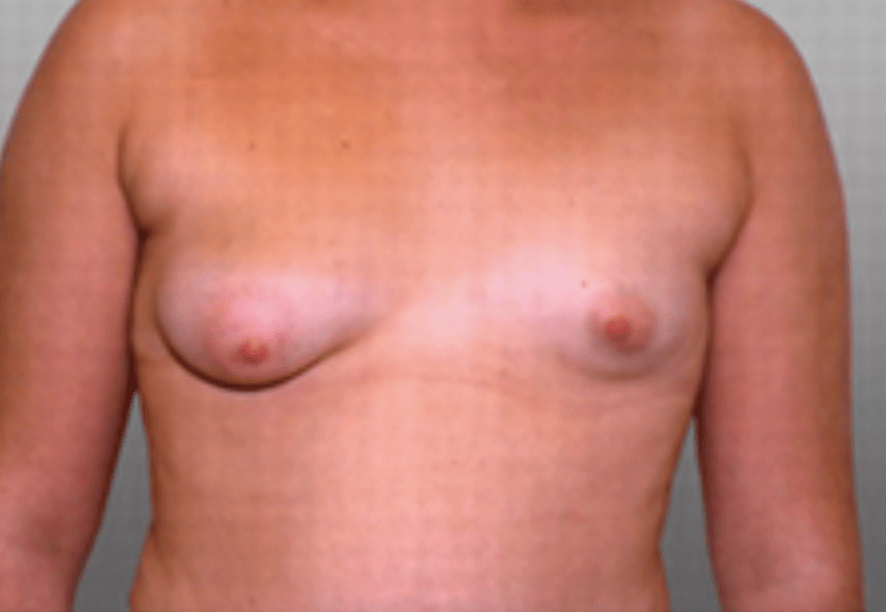
The inferior pole of the right breast is underdeveloped; the entire left breast is severely hypoplastic. 
  • Tuberous breast deformity:
    • Is an abnormality in breast development that involves:
      • Constriction around the nipple areolar complex
      • Hypoplasia of the breast
      • Herniation of the underdeveloped breast tissue toward the nipple areolar complex 
    • The deformity can be:
      • Unilateral or bilateral
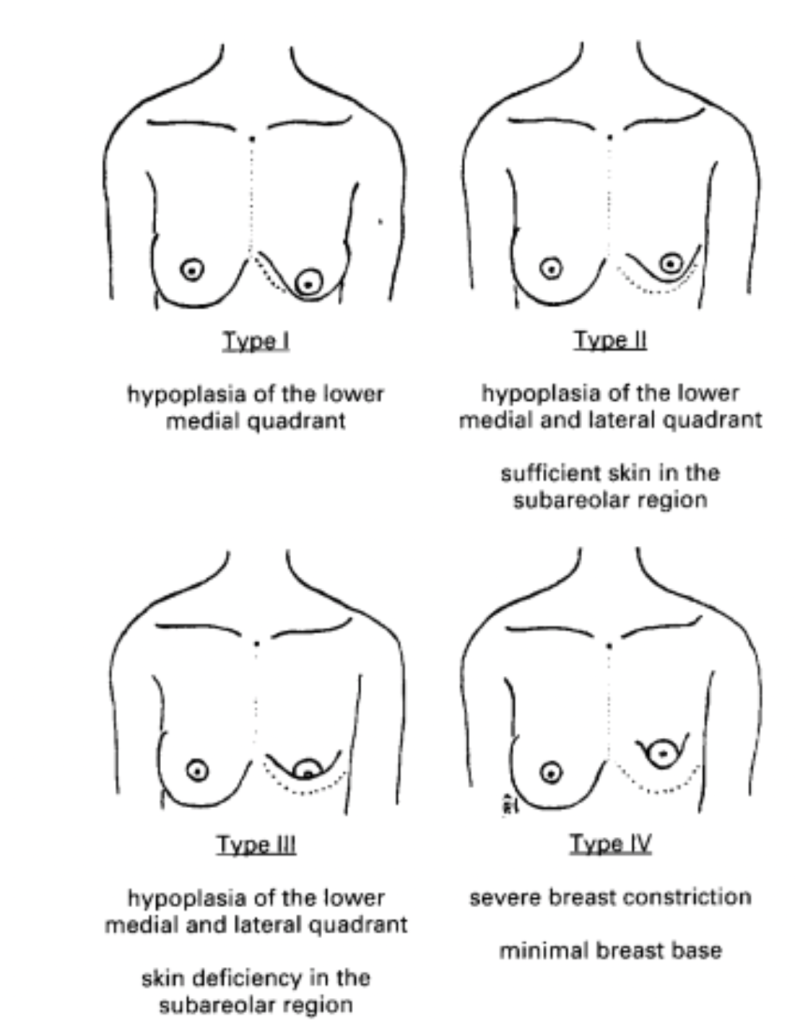
    • The appearance of the breast is variable, and a classification of the deformities has been proposed (see image)
  • The underlying breast parenchyma:
    • Can contain all forms of breast abnormalities, including:
      • Fibroadenomas
    • Breast symmetry concerns are best addressed by a surgeon who can address the tuberous breast abnormality:
      • Reconstructive techniques vary based on the degree of deformity but include:
        • Releasing the fibrous band that causes the constriction
        • Reduction in areolar size if desired
        • Glandular reconstruction, and implant placement
  • References:
    • Mandrekas A, Zambacos G. Aesthetic reconstruction of the tuberous breast deformity: a 10-year experience. Aesthet Surg J. 2010;30(5):680–692.
    • Aggarwal S, Niranjan N. Tuberous breast deformity: A modified technique for single-stage correction. Indian J Plast Surg. 2016;49(2):166–171.
    • von Heimburg DV, Exner K, Kruft S, Lemperle G. The tuberous breast deformity: classification and treatment. Br J Plast Surg. 1996;49(6):339-345.
Classification of tuberous breast deformities

#Arrangoiz #BreastSurgeon #CancerSurgeon #BreastCancer #TuberousDeformityoftheBreast #SurgicalOncology #Miami #Mexico #Teacher

Poland Syndrome

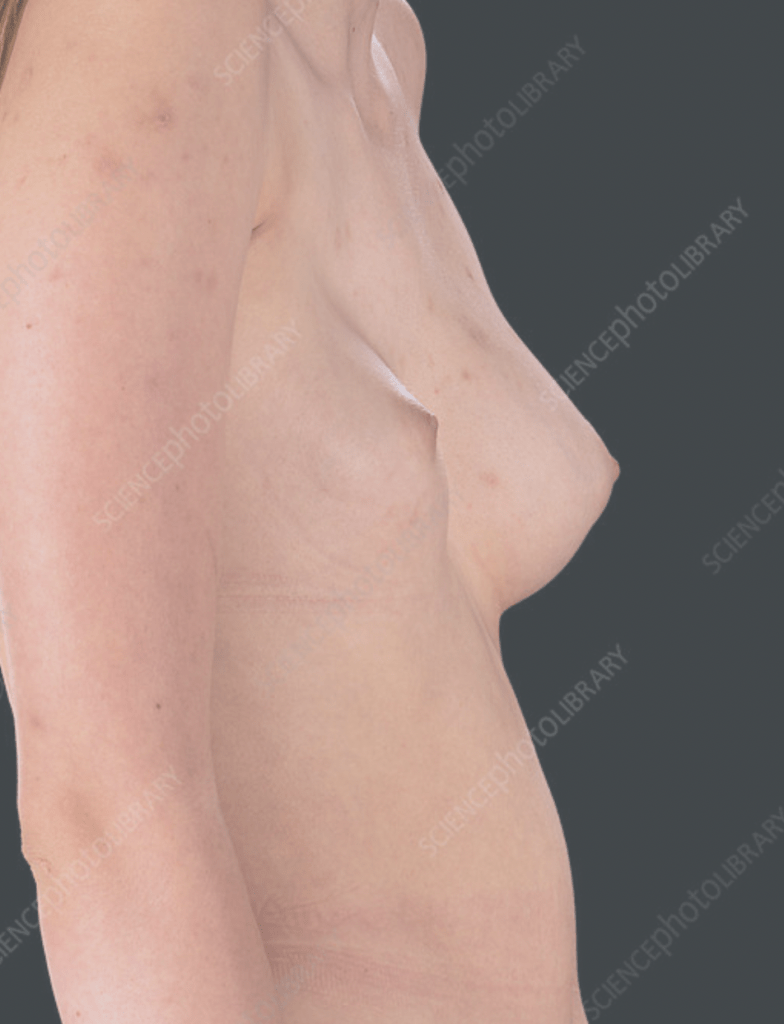
  • Poland Syndrome:
    • Is a rare congenital malformation that includes:
      • Aplasia or hypoplasia of the chest wall
      • Hypoplasia of the breast parenchyma
      • And is associated with thoracic and upper extremity anomalies
    • Is a rare chest wall deformity consisting of:
      • Unilateral chest wall hypoplasia and unilateral upper limb deformity
    • There can be:
      • Absence or hypoplasia of the breast
      • Absent pectoralis major or minor muscle
      • Absent nipple
      • Absent costal cartilages
      • Rib abnormalities
      • Upper limb deformities including:
        • Syndactyly
        • Micromelia
        • Brachydactyly
    • This rare disease affects men three times more commonly than women
    • There is no increased risk of breast cancer with Poland syndrome:
      • Although there is an association with:
        • Hodgkins lymphoma and leukemia
    • Most cases are sporadic:
      • There is no inheritance pattern or known genetic cause:
        • Genetic testing or high-risk screening for breast cancer is not warranted
    • Poland syndrome is thought to occur due to:
      • vascular malformation resulting in reduced blood flow during embryogenesis:
        • An interruption of the embryonic blood supply to the subclavian artery:
          • At the 6th week of embryonic development
    • The defects can be corrected surgically:
      • Repair can include:
        • Reconstruction of anaplastic ribs:
          • Using bone grafts or prosthetic mesh
        • Muscle flaps such as latissimus dorsi flap to correct muscle hypoplasia
        • Breast implants or autologous fat grafting for breast hypoplasia
  • References:
    • Kulkarni D, Dixon JM. Congenital abnormalities of the breast. Women’s Health. 2012;8(1):75–88.
    • Baldelli I, Santi P, Dova L, Cardoni G, Ciliberti R, Franchelli S, Merlo DF, et al. Body image disorders and surgical timing in patients affected by Poland Syndrome: data analysis of 58 case studies. Plast Reconstr Surg. 2016;137(4):1273-1282.
    • Fokin AA, Robicsek F. Poland’s syndrome revisited. Ann Thorac Surg. 2002:74(6),2218–2225.
    • Mojallal A, La Marca S, Shipkov C, Sinna R, Braye F. Poland Syndrome and breast tumor: a case report and review of the literature. Aesthet Surg J. 2012;32(1):77–83.

#Arrangoiz #BreastSurgeon #CancerSurgeon #SurgicalOncologist #Miami #PolandSyndrome #Mexico

Nipple Adenoma

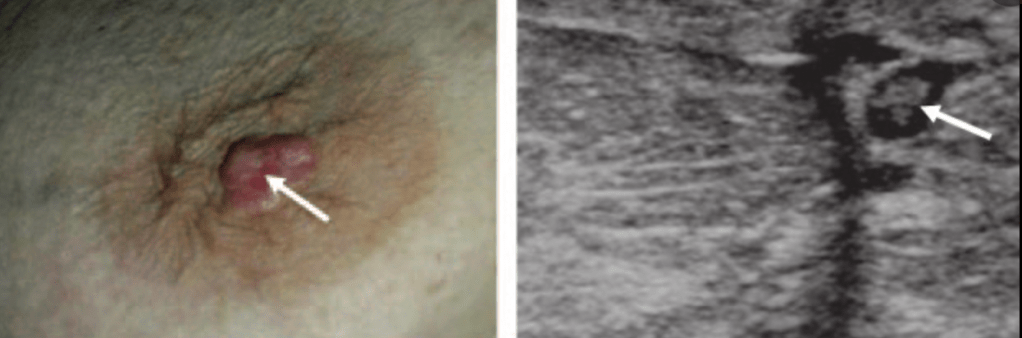
  • Nipple adenoma:
    • Is an intraductal papilloma:
      • That arises within the terminal lactiferous ducts
  • Nipple adenomas are rare:
    • But usually present as a mass visualized on the nipple:
      • It can become ulcerated and caused bleeding
  • Nipple adenomas also can be associated with:
    • Nipple discharge
    • Pain
    • Loss of nipple tissue
      • Often confusing the diagnosis with Paget’s Disease or eczema
  • Topical steroids:
    • Are not recommended for the treatment of a nipple adenoma
  • Despite their benignity:
    • Complete surgical resection to a negative margin is recommended:
      • Because they can be associated with atypia or ductal carcinoma in situ
  • Nipple resection is not necessary:
    • If the adenoma can be removed with a negative surgical margin
  • Breast MRI is not indicated for the diagnosis of a nipple adenoma
  • References:
    • Stone K, Wheeler A. A review of anatomy, physiology, and benign pathology of the nipple. Ann SurgOncol. 2015;22(10):3236-3240.
    • Wang C, Wang X, Ma R. Diagnosis and surgical treatment of nipple adenoma. ANZ J Surg.2015;85(6):444-447.
    • Jones MW, Tavassoli FA. Coexistence of nipple duct adenoma and breast carcinoma: a clinicopathologic study of five cases and review of the literature. Mod Pathol. 1995;8(6):633–636.

#Arrangoiz #BreastSurgeon #CancerSurgeon #SurgicalOncologist #NippleAdenoma #BreastCancer #Miami #Mexico