Reproductive and Lifestyle Factors that May Influence Hereditary Breast Cancer Risk

👉There is evidence that environmental factors, such as parity and alcohol consumption, can modify breast cancer risk associated with common, low-penetrance variant alleles (e.g., LSP1-rs3817198 and CASP8-rs17468277).

👉Alcohol consumption is of particular interest because the metabolic by-product, acetaldehyde, has been shown to damage DNA, leading to BRCA1 activation.

👉Nevertheless, available epidemiologic data have not identified an association between alcohol consumption and breast cancer risk among BRCA1 or BRCA2 gene mutation carriers.

👉In general, convincing examples of gene-environment interactions are rare for autosomal dominant breast cancer predisposition syndromes, and where such data exist, the effects are inconsistent.

👉A recent review of the literature and meta-analysis suggested that late age at first live birth and lactation reduced breast cancer risk in BRCA1 mutation carriers, but data were insufficient for BRCA2 mutation carriers.

👉An alternative interpretation of the available data is that parity and age at first live birth do not modify breast cancer risk in BRCA1 mutation carriers, although lactation may reduce risk.

👉There is also evidence suggesting that for BRCA2 mutation carriers, pregnancies do not reduce breast cancer risk the same way they do in nonmutation carriers and may even increase risk, with greater risk at later ages at first live birth.

👉Similar to other women, combined hormone replacement therapy (HRT) with estrogen and progestin seems to increase breast cancer risk in mutation carriers, whereas estrogen-only therapy does not.

👉Finally, weight gain in adulthood and higher caloric intake have been associated with increased breast cancer risk and earlier age at diagnosis in BRCA1 and BRCA2 mutation carriers.

👉It seems reasonable to counsel BRCA1 and BRCA2 mutation carriers to avoid weight gain in adulthood.

👉However, given the inconsistency of available data and interpretation of these data, childbearing decisions should be left to the individual but lactation encouraged as long as it is not considered a substitute for risk-reducing mastectomy.

#Arrangoiz #BreastSurgeon #BreastCancer #CancerSurgeon #SurgicalOncologist

Managing Breast Cancer Risk

👉The goal of risk management in mutation carriers is to reduce the probability of developing a breast cancer or to diagnose a breast cancer early when it can be treated with the best outcome and least morbidity.

👉The primary options for managing cancer risk include enhanced surveillance, chemoprevention, and prophylactic surgery.

👉Certain reproductive and lifestyle factors may also modify breast cancer risk in gene mutation carriers.

👉Most available data are derived from studies in BRCA1 and BRCA2 gene mutation carriers and may not be relevant to every inherited predisposition syndrome.

Estimating Risk of Breast Cancer Using Genetic Testing

👉The average probability of developing breast cancer by age 70 is estimated at 57% to 59% for BRCA1 gene mutation carriers and 49% to 51% for BRCA2 gene mutation carriers.

👉Emphasis is on the word “average” because these estimates are based on data from families with a lot of breast cancer cases as well as families with very few breast cancers.

👉Previous studies that had only included families with many breast cancer cases had concluded that lifetime breast cancer risk was more in the range of 80% to 85%.

👉This illustrates an important point: the risk conferred by a pathologic mutation in any breast cancer predisposition gene will vary widely by family.

👉This is most likely due to gene-gene interactions, which are the modifying effects of small differences (e.g., polymorphisms) in many different genes.

👉Average risk is a good place to start for any pathologic gene mutation.

👉The “All Syndromes Known to Man,” or ASK2ME, Web calculator is a good place to find average risks for the rarer syndromes (http://www.ask2me.org/).

👉This risk should be adjusted up or down based on evaluation of the three-generation cancer family history.

👉Both age at diagnosis and cumulative risk vary by family.

👉Indeed, even for genes such as ATM and CHECK2, which are thought to be low-penetrance genes, breast cancer risk approaches that of BRCA1 and BRCA2 genes in some families.

👉Careful evaluation of the three-generation cancer family history is required for accurate risk estimation.

#Arrangoiz #BreastSurgeon #CancerSurgeon #SurgicalOncologist #Breast Cancer
Classifying Variants in Multigene Testing in Breast Cancer

👉There are publicly available algorithms for whittling down these variant lists, but we are often left with a handful that cannot be definitively classified as benign or pathologic.

👉These are the variants of uncertain clinical significance (VUS).

👉There is a 20% to 40% chance that a modern multigene panel test will identify a VUS, compared with only a 5% chance that it will identify a clinically useful pathologic mutation in a gene that is not BRCA1 or BRCA2.

👉This is a temporary situation, however, as VUS rates will decline as more is learned about these genes.

👉Patients can help advance knowledge in this area by participating in the Prospective Registry Of MultiPlex Testing (PROMPT), which is curating family history and genetic test results with the goal of facilitating reclassification of VUS cases (http://promptstudy.info/).

👉Most VUS are missense mutations; that is, a single nucleotide has changed, leading to a different amino acid in the final protein.

👉This might appear in the report as something such as Gene X c.78G>C p.Trp26Cys, which means that in the cDNA (c.), the 78th nucleotide has changed from glycine to cytosine, resulting in the 26th amino acid of the protein (p.) changing from a tryptophan to a cysteine.

👉Most (but not all) missense VUS are eventually reclassified as benign.

👉Pathologic mutations are mostly of the truncating type.

👉That is, there is a deletion or insertion of one or two nucleotides (or some other number that is not a multiple of three) leading to a shift in the reading frame that often results in early termination of transcription, producing a short, dysfunctional protein.

👉These appear in the report as something such as Gene Xc.291delT p.Arg97Glyfs*26, which means that a thymine, which was the 291st nucleotide in the cDNA (c.), has been lost, resulting in the 97th amino acid in the protein (p.) changing from an arginine to a glycine while shifting the reading frame (fs), leading to a stop codon (*) 26 amino acids later.

👉Other pathologic mutations include deletion or rearrangement of large segments of the gene. This also leads to a very altered, dysfunctional protein.

#Arrangoiz #BreastSurgeon #CancerSurgeon #BreastCancer #SurgicalOncologist

Multigene Panels in Breast Cancer Management

👉Next-generation sequencing technology has made it possible to test dozens of genes at one time for a fraction of the cost of classic BRCA 1 / 2 testing.

👉BRCA1 and BRCA2 are still the most common pathologic mutations identified with these tests.

👉After that, PALB2, CHEK2, and ATM are the next most common.

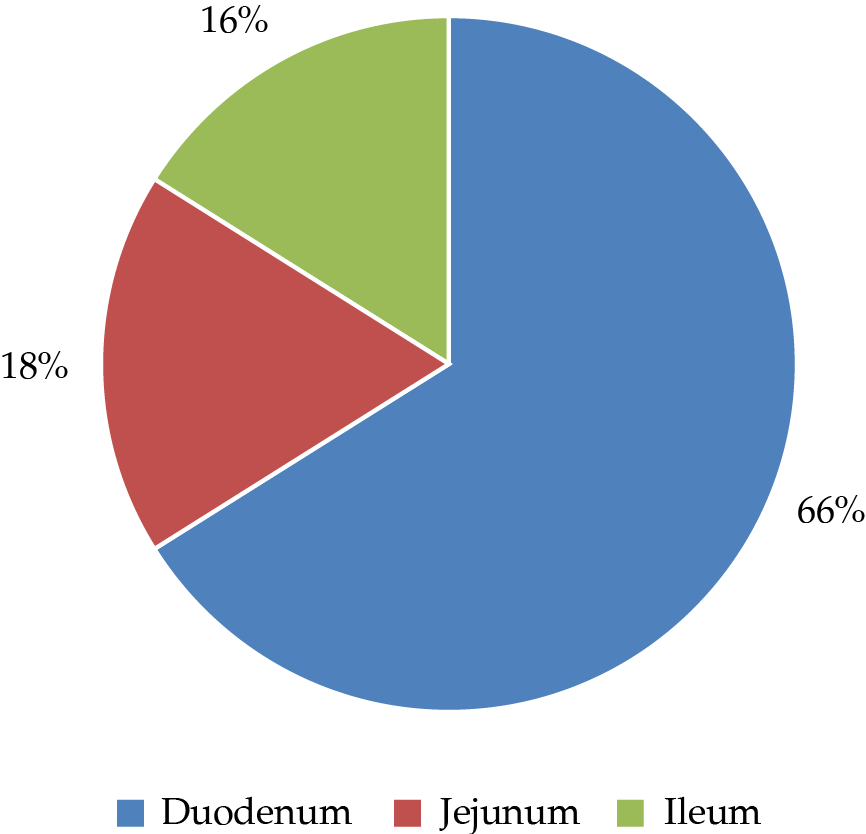
Distribution of Pathological Mutations Identified Using Multigene Panels.

👉Not all genes included on these multigene panels are known breast cancer predisposition genes.

👉Most of the breast cancer genes share in the task of DNA double-strand break repair.

Most of the breast cancer predisposition genes cooperate with BRCA 1 for DNA double stranded break repair.

👉There is no concern about the accuracy of these tests for detecting mutations (they are very accurate).

👉The real issue is getting the thousands of variants each test identifies classified as clinically meaningful or not.

#Arrangoiz #BreastCancer #BreastSurgeon #Arrangoiz #CancerSurgeon #SurgicalOncologist
Data Presented at the 2019 American Association of Clinical Endocrinologists Annual Meeting Demonstrate Performance of ThyroSeq Test in Cytology Smears

👉Validation of ThyroSeq Genomic Classifier performance in an expanded range of sample types has been presented at the 28th Annual Scientific and Clinical Congress of the American Association of Clinical Endocrinologists (AACE) in Los Angeles, California.

👉ThyroSeq, commercially offered by CBLPath, a Sonic Healthcare Company, is a comprehensive molecular test for thyroid nodules and cancer that is typically performed using a dedicated sample collected during fine needle aspiration (FNA) procedure.

👉This study demonstrates that ThyroSeq can be performed using routine cytology smears, while maintaining the robust diagnostic accuracy.

👉In this study, ThyroSeq performance was assessed in routinely prepared Diff-Quik and Papanicolaou-stained cytology smears.

👉Adequate DNA results for mutations and copy number alterations were obtained in 93% of nodules and RNA results for gene fusions and gene expression in 79% of nodules.

👉In addition, ThyroSeq performance was evaluated in reference cytology slides included in a worldwide ring trial study on quantitative cytological molecular reference specimens.

👉ThyroSeq demonstrated accurate detection of all mutations down to 3% to 5% of allele frequency.

👉The results of this study show that ThyroSeq Genomic Classifier achieved high performance in adequately cellular routine cytology.

👉The expansion of acceptable sample types will enable more patients to benefit from ThyroSeq testing, save expenses associated with another office visit and repeated FNA biopsy, while offering the same high diagnostic accuracy to optimize patient management.

👉The ThyroSeq test can help avoid costly diagnostic thyroid surgeries by reliably distinguishing between benign and cancerous thyroid nodules.

👉When a dedicated sample is not collected for molecular testing, cytology smears may be the only specimens available.

👉Expansion of ThyroSeq testing to cytology smears means that patients with indeterminate cytology will not have to come back into a physician’s office to have another sample taken, instead the available smears can be sent for testing.

👉Previously validated and acceptable specimen types for ThyroSeq include fresh FNA samples collected into ThyroSeqPreserve solution, which remains the gold standard of specimen quality, cytology cell blocks, and FFPE tissue.

#Arrangoiz #ThyroidSurgeon #ThyroidExpert #ThyroidNodules

Head/Neck Cancers Symposium 2020: Relationship Between BRAF Mutations and PD-L1 Expression in Papillary Thyroid Cancer

👉Inhibition of BRAF signaling in BRAF-mutated papillary thyroid cancer may be able to induce PD-L1 expression through the activation of the mTOR pathway in vitro.

👉Atish Mohanty, PhD, of the City of Hope National Medical Center in Duarte, California, presented there work at the 2020 Multidisciplinary Head and Neck Cancers Symposium in Scottsdale, Arizona (Abstract 336).

👉A total of 19 high- and low-risk papillary thyroid cancer cases from 2013 to 2018 with available paraffin-embedded archived tissue were identified for this study.

👉Initial characterization of BRAF mutation status was completed via RNA analysis using NanoString, which identified 13 tumors with BRAF V600–activating mutations, one BRAF V600R–activating mutation, and 5 BRAF wild-type tumors.

👉Researchers used one BRAF wild-type and two BRAF-mutant papillary thyroid cell lines for proof of concept.

👉The BRAF inhibitors dabrafenib and vemurafenib were added to the cell lines in vitro, as was the Rho-associated protein kinase inhibitor Y27632 (to inhibit mTOR).

👉Additionally, BRAF-specific small interfering RNAs (siRNA) were transfected into the papillary thyroid cell lines.

👉Researchers found there was a higher expression of PD-L1 and CTLA-4 in papillary thyroid cancer cell samples that had mutant BRAF genes.

👉This association was confirmed in the two papillary thyroid cancer cell lines with mutated BRAF.

👉Addition of dabrafenib or vemurafenib in the BRAF-mutated cell lines was reported to induce PD-L1 expression without affecting cell viability.

👉In addition, knockdown of BRAF via siRNA in these same cell lines confirmed PD-L1 upregulation in vitro.

👉A potential mechanism for the upregulation of PD-L1 is through AKT-mTOR signaling, as mTOR inhibition was found to cause a strong reduction in the expression of PD-L1 in the BRAF-mutated cell lines.

#Arrangoiz #ThyroidSurgeon #ThyroidExpert #ThyroidCancer

Hypopharngeal Tumors

👉Histopathologic types of tumors of the hypopharynx:
1. The most common (90% to 95%) histologic type of cancer is squamous cell carcinoma.

2. Other malignant tumours present in a similar manner either with ulceration or as a non-ulcerative swelling:
– Malignant minor salivary gland tumors

– Lymphomas

– Sarcomas


👉Macroscopic pathology:
1. The majority of tumors present as ulcers and are widely infiltrative.
2. They have a tendency to extend submucosally and also also to metastasize to the local lymph nodes.

👉Epidemiology:
1. The hypopharynx is an uncommon site of tumors, the majority being malignant, and accounts for less than 10% of all squamous cell carcinomas overall.
2. The overall incidence in the Western world is one case per 100 000 per year:
– 1800 new cases each year of hypo pharyngeal cancers are reported in the USA.
3. There is a high incidence in Northern France of 14.8 per 100 000 per year, which accounts for 18% of head and neck cancer seen in France.
5. The mean age at presentation is 60 years.
6. The piriform sinus and posterior pharyngeal wall carcinomas demonstrate a male dominance: – 5 to 20 : 1.
7. Postcricoid lesions unlike other sites, shows a moderate female preponderance 1.5 : 1.

#Arrangoiz #HeadandNeckSurgeon #CancerSurgeon #HeadandNeckCancer

Hypopharynx

👉The hypopharynx is interposed between the oropharynx superiorly and the upper esophagus inferiorly, with the larynx located anteriorly.

👉In the adult, the hypopharynx extends from the hyoid bone (fourth cervical vertebrae) above to below the cricopharyngeus muscle, around the lower border of the cricoid cartilage (sixth cervical vertebrae).

👉The cervical esophagus extends from the lower border of the cricoid cartilage into the thorax.

👉The hypopharynx includes the posterior pharyngeal wall, the piriform fossae or sinuses, and the post cricoid area or space.

👉Anatomical description based on the AJCC/UICC:

1. Pharyngo-esophageal junction (postcricoid area) extends from the level of the arytenoid cartilages and connecting folds to the inferior border of the cricoid cartilage (C6), thus forming the anterior wall of the hypopharynx.

2. Piriform sinus extends from the pharyngoepiglottic fold to the upper end of the esophagus.

– The piriform sinus is bounded laterally by the thyroid cartilage and medially by the hypopharyngeal surface of the aryepiglottic fold, and the arytenoid and cricoid cartilages.

👉Posterior pharyngeal wall extends from the superior level of the hyoid bone (or floor of the valleculae) to the level of the inferior border of the cricoid cartilage and from the apex of the piriform sinus to the other.

👉The wall of the hypopharynx is composed of four layers:

1. An inner mucosal lining of stratified squamous epithelium over a loose stroma.

2. A fibrous layer of the pharyngeal aponeurosis.

3. A muscular layer formed by the inferior pharyngeal constrictor muscle and, in the upper part by the distal portion of the middle pharyngeal constrictor muscle.

– The most distal fibres of the inferior pharyngeal constrictor muscle condense into the cricopharyngeus muscle

– Just proximal to this muscle on the posterior wall is an area of relative weakness known as Killian’s dehiscence.

4. An outer layer of fascia that derives from the buccopharyngeal fascia.

👉The piriform sinus is divided into a superior or membranous part, and an inferior or cartilaginous part.

1. The thyrohyoid membrane bounds the superior aspect of the piriform sinus laterally, through which passes the internal branch of the superior laryngeal nerve.

– Sensory innervation of this area synapses with the jugular ganglion, along with sensory nerves of the external auditory canal (Arnold’s nerve), which accounts for the referred otalgia frequently encountered with the patient presenting with tumors of the piriform sinus.

2.The lower portion of the piriform sinus is bounded by the ala of the thyroid cartilage.

👉The terminal branches of the recurrent laryngeal nerve pass through the fibres of the cricopharyngeus muscle and the posterior cricoarytenoid muscle of the larynx.

👉Motor and sensory innervation of the hypopharynx occurs via the pharyngeal plexus, which is formed by branches of the cranial nerves IX and X.

👉The arterial supply arises from branches of the superior thyroid arteries along with collateral vessels from the lingual and ascending pharyngeal arteries.

👉Lymphatic drainage of the hypopharynx terminate in lymph nodes along the jugular vein (levels II, III and IV) and appear to a lesser extent in the nodes along the spinal accessory nerve (level V) and even less frequently in the submandibular area (level Ib).

👉Significant lymphatic drainage occurs from the posterior pharyngeal wall and drains to the retropharyngeal lymph nodes.

👉Lymphatics from the inferior part of the piriform sinus, the postcricoid area and the upper esophagus often drain to the nodes along the recurrent laryngeal nerves to the paratracheal lymph nodes (level VI).

#Arrangoiz #HeadandNeckSurgeon #CancerSurgeon #SurgicalOncologist #HeadandNeckCancer
Thyroid-related articles published last week!


A prospective mixed-methods study of decision-making on surgery or active surveillance for low risk papillary thyroid cancer. Sawka AM, Ghai S, Yoannidis T, Rotstein L, Gullane PJ, Gilbert RW, Pasternak JD, Brown DH, Eskander A, de Almeida JR, Irish JC, Higgins KM, Enepekides DJ, Monteiro E, Banerjee A, Shah M, Gooden E, Zahedi A, Korman M, Ezzat S, Jones J, Rac V, Tomlinson G, Stanimirovic A, Gafni A, Baxter N, Goldstein DP. Thyroid. 2020 Mar 4. PMID: 32126932 https://www.ncbi.nlm.nih.gov/pubmed/32126932

Indeterminate thyroid nodules. The role of 18F-FDG PET/CT in the “era” of ultrasonography risk stratification systems and new thyroid cytology classifications. Piccardo A, Puntoni M, Dezzana M, Bottoni G, Foppiani L, Marugo A, Catrambone U, Ugolini M, Sola S, Gatto M, Treglia G, Giovanella L, Trimboli P. Endocrine. 2020 Mar 2. PMID: 32124261 https://www.ncbi.nlm.nih.gov/pubmed/32124261

Outcome of classical (CVPTC) and follicular (FVPTC) variants of papillary thyroid cancer: 15 years of follow-up. Giani C, Torregrossa L, Piaggi P, Matrone A, Viola D, Molinaro E, Agate L, Romei C, Ugolini C, De Napoli L, Materazzi G, Basolo F, Elisei R. Endocrine. 2020 Mar 2. PMID: 32124258 https://www.ncbi.nlm.nih.gov/pubmed/32124258

Post-thyroidectomy emergency room visits and readmissions: Assessment from the Collaborative Endocrine Surgery Quality Improvement Program (CESQIP). Taye A, Inabnet WB 3rd, Pan S, Carty SE, Cotton T, Czako P, Doherty G, Gauger P, Hanks J, McAneny D, Milas M, Perrier N, Rosen J, Schneider DF, Sharma J, Siperstein A, Sosa JA. Am J Surg. 2020 Feb 19. PMID: 32115176 https://www.ncbi.nlm.nih.gov/pubmed/32115176

#Arrangoiz #ThyroidSurgeon #ThyroidExpert #HeadandNeckSurgeon

http://www.cirugiatiroides.com