Aggressive Types of Papillary Thyroid Cancer

BACKGROUND
The number of people diagnosed with thyroid cancer in the United States has been increasing steadily over the last several decades. Fortunately, most cases of this disease will be a non-aggressive subtype, called classical papillary thyroid cancer, which, when treated correctly, is very unlikely to be dangerous. This being said, there are other, less common forms of thyroid cancer that are more dangerous than papillary thyroid cancer. These more aggressive thyroid cancer subtypes tend to grow faster and spread (metastasize) to other parts of the body sooner. Such aggressive cancer subtypes include diffuse sclerosing variant, tall cell variant, poorly differentiated thyroid cancer and insular variant.

There are a number of important questions about these uncommon, more aggressive thyroid cancer subtypes that remain to be answered. Unlike classical papillary thyroid cancer, we do not know for sure if the number of people diagnosed with these thyroid cancer types is increasing over time. We also do not know exactly how dangerous these cancer types are, at least compared to classical papillary thyroid cancer. The study described here tries to answer these two questions by evaluating the medical records of large groups of people previously treated for thyroid cancer. By answering these questions, the study authors hope to better understand aggressive types of thyroid cancer and, in particular, to get a better idea of how to treat them.

THE FULL ARTICLE TITLE
Ho AS et al 2020 Incidence and mortality risk spectrum across aggressive variants of papillary thyroid carcinoma. JAMA Oncol. Epub 2020 Mar 5. PMID: 32134428.

SUMMARY OF THE STUDY
The study authors reviewed the medical records of people who were treated for any kind of thyroid cancer in the United States during the 16 year period between 2000 and 2016. 

These medical records were identified by examining two large data bases that store information about people being treated for cancer, including the U.S. National Cancer Data Base and the U.S. Surveillance, Epidemiology, and End Results (SEER) data base. In the end, the authors found 5,447 cases of aggressive subtype thyroid cancer, compared to 35,812 cases of classical papillary thyroid cancer. They also found that these aggressive cancer types became increasingly more common during the 16 year study period and that the number of aggressive type thyroid cancer cases grew faster than the number of classical papillary thyroid cancer cases diagnosed in the same timeframe. Similarly, the authors learned that the aggressive subtype thyroid cancers identified were, on average, bigger than the classical papillary thyroid cancer type and were more likely to spread into both neighboring tissues and to other parts of the body. In addition, when the aggressive thyroid cancer types were evaluated individually, the study team found that the four thyroid cancer types evaluated were not equally dangerous. The insular variant type was found to be the most dangerous, with the lowest survival rate, followed by poorly differentiated thyroid cancer, tall cell variant and, least dangerous, diffuse sclerosing variant. In fact, the overall rate of survival for people diagnosed with diffuse sclerosing variant was similar to those diagnosed with classical papillary thyroid cancer, suggesting that the diffuse sclerosing variant subtype may not be particularly dangerous.

WHAT ARE THE IMPLICATIONS OF THIS STUDY?
The study authors concluded that aggressive thyroid cancer types are becoming increasingly common and confirmed that 3 of the 4 aggressive cancers are more dangerous than classical papillary thyroid cancer. The diffuse sclerosing variant was found to be similar to the classical papillary thyroid cancer. Moreover, these investigators found that the rate at which these cancer types are being diagnosed is growing faster than that of other classical papillary thyroid cancer. The findings of this study are important because they alert us that relatively aggressive forms of thyroid cancer appear to be increasingly common and need to be treated more aggressively when diagnosed. Additionally, more studies are needed into how and why these thyroid cancer subtypes develop

#Arrangoiz #ThyroidSurgeon #CancerSurgeon #HeadandNeckSurgeon #SurgicalOncologist

DCIS Increases Breast Cancer Mortality

👉For women diagnosed with ductal carcinoma in situ (DCIS), the risk of dying of breast cancer was three times higher than among women in the general population, according to findings from a large epidemiologic study.

👉Within a cohort of nearly 145,000 women who were treated for DCIS, 1540 died from invasive breast cancer, which was higher than the 458 expected breast cancer deaths in an equivalent number of cancer-free women from the general population.

👉The standardized mortality ratio (SMR) for death from breast cancer among women with DCIS was 3.36. The higher risk for death persisted more than 15 years after diagnosis.

👉Notably, the risk for death was higher in certain groups. Among Black women and those younger than 40, mortality rates approached 10%.

👉It’s hard to study the death rate for DCIS, as the numbers are rather low, and you have to go to a large database in order to obtain adequate numbers to show a difference. These results are not going to change clinical practice.

👉When DCIS is diagnosed, patients should know how its treated, what are the different options, and what is the chance that it will recur. More aggressive surgery provides peace of mind for the patient, but it doesn’t change survival.

👉The study was published online September 16 in JAMA Network Open.

👉An earlier study by Narod and colleagues yielded similar findings. That study found that about 3.3% of women with DCIS die of breast cancer within 20 years; the risk was higher among young women and Black women. However, the authors point out that the risk of dying of breast cancer after a diagnosis of DCIS had not been compared with women in the general population

👉We are well aware that if someone has a diagnosis of DCIS, they are at a higher risk of breast cancer going forward compared to someone without risk, and this is not a new fact.

👉Looking at the SEER [Surveillance, Epidemiology and End Results] database, no information on genetic status, family history, and other risk factors, and many of the women with DCIS that had excision excluded radiation therapy, which would have reduced their risk of recurrence.

👉These findings raises the awareness that DCIS is a difficult clinical problem that is multifaceted and often more confusing clinically than invasive cancers. There has been a push recently to decrease treatment for DCIS, but this study might require taking a second look at less aggressive management.

👉In this study, the investigators estimated the risk of dying of breast cancer following a DCIS diagnosis and compared that with the risk among cancer-free women. They used the SEER registries database to identify 144,524 women who were diagnosed with first primary DCIS from 1995 to 2014. The primary outcome was breast cancer death.

👉The mean follow-up time was 9.2 years. There were 4502 (3.1%) cases of ipsilateral invasive recurrence during that period, resulting in a 20-year actuarial risk of 13.9%. During that same period, there were 5527 (3.8%) contralateral invasive breast cancer events, for a 20-year actuarial risk of 11.3%. Overall, the 20-year actuarial risk for breast cancer death in this population was 3.3%.

👉Overall, the SMR for death from breast cancer among women with DCIS was 3.36, but it varied in accordance with age and race. For women younger than 40 years, the SMR was much higher, at 11.95; for women aged 40 to 49 years, it was 4.15.

👉The SMR for White women was 3.03; for Black women, it was 7.56. It was lower for East Asian women (1.89) and Southeast Asian women (2.40).

👉Black women do worse than White women, and we need to look at the disparities in treatment and care, as well as income.

👉Income had an effect on survival. For example, for patients earning >$40,000, the SMR was 4.11, compared to 2.73 for those with an income of >$50,000. “Income most likely doesn’t affect treatment of DCIS and the treatment of the cancer when it comes back,” he said, “but there may have been differences in treatment for distant metastasis.

👉All women in the cohort were treated surgically, and roughly half (n = 68,118 women; 47.1%) also received radiotherapy. Among women who underwent lumpectomy, the SMR was 2.81 (95% CI, 2.55 – 3.04) for women treated with radiotherapy and 3.42 (95% CI, 3.07 – 3.80) for those who underwent surgery alone. Among patients who did not receive radiotherapy, the SMR was 4.12 among those who underwent a single mastectomy (95% CI, 3.59 – 4.67) and 4.14 for those who underwent a double mastectomy (95% CI, 2.83 – 5.59).

👉The SMR was 4.12 for those who did not receive radiotherapy. For patients who underwent a lumpectomy, the SMR was 3.42 for those who did not receive radiotherapy and 2.81 for those who did. Among patients who did not receive any radiotherapy, the SMR was 4.12 for patients who underwent a unilateral mastectomy and 4.14 for those who underwent a bilateral mastectomy.

👉During the entire follow-up period, the annual mortality rate from breast cancer was 0.12% per year. It increased during the first 10 years and remained constant through years 15 through 20. The cumulative 20-year risk for breast cancer–specific mortality following DCIS was 3.3% overall, but for Black women who were diagnosed before age 50 years, the 20-year risk was much higher, at 8.1%.

👉Mount Sinai’s Bernik said that one interesting point of this article is that the highest risk for recurrence was among women who underwent mastectomy. However, these women may have been at a higher risk for death as a result of having more extensive disease with close margins or of having genetic mutations that increase the likelihood of recurrence. “These women were also younger and could have had longer follow-up and therefore were more likely to have a recurrence picked up in the database,” Bernik said. “Mastectomy patients generally also don’t use an antiestrogen after bilateral mastectomies.

👉The study’s bottom line, is that women with DCIS are at a higher risk for invasive cancer in the future.

JAMA Netw Open. Published online September 16. 2020. Full text

#Arrangoiz #BreastSurgeon #CancerSurgeon #CASO #CenterforAdvancedSurgicalOncology #PalmettoGeneralHospital

Lifestyle and other Environmental Factors Involved in Breast Cancer

  • Breast cancer epidemiology pattern differences across countries are further compounded by:
    • Cultural factors, lifestyle factors and national awareness campaigns
  • The increase in breast cancer incidence between 1980 and the late 1990s:
    • Is likely due to:
      • Changes in reproductive factors:
        • With advanced maternal age for first pregnancy,
      • An increase in awareness and mammography screening
    • Several explanations have been offered as to why early pregnancy and high levels of estrogen during pregnancy reduce breast cancer risk:
      • The proposed mechanisms include:
        • Altered sensitivity of the mammary gland to:
          • Later hormonal exposures
        • Reduction in the number of stem or progenitor cells:
          • Consequently, elimination of targets for malignant transformation
        • Changes in gene expression patterns:
          • Resulting in reduced proliferation and increased differentiation
  • Other risk factors for breast cancer include:
    • Early menarche:
      • Before 12 years of age
    • Lack of breast feeding
    • Late-onset menopause:
      • After 55 years of age
  • It has been estimated that approximately 20% of breast cancers worldwide:
    • Can be attributed to modifiable risk factors, including:
      • Obesity
      • Physical inactivity
      • Alcohol use:
        • Offering the potential for reduction in the disease burden by promoting a healthy lifestyle:
          • For example, each 10 g (roughly one drink) of alcohol consumed daily by an adult woman:
            • Will lead to a 7% to 10% increase in breast cancer risk:
              • This association is observed in both premenopausal and postmenopausal women
        • Furthermore, the influence of central obesity on breast cancer risk and survival has been studied:
          • Current evidence suggests a stronger adverse effect of obesity on breast cancer risk and survival in women of Asian ancestry than in non-Hispanic white women in the United States and Europe
          • Central obesity seems to have a stronger influence on breast cancer risk:
            • In African-American women than general adiposity as measured by body mass index (BMI)
          • Currently, 18% of premenopausal women in the United States have elevated BMI and breast density:
            • And may benefit from lifestyle modifications involving weight loss and exercise:
              • However, this benefit is not limited to premenopausal women, especially when the Asian breast cancer population is being studied:
                • For example, it was noted that postmenopausal Asian women whose BMI increased ≥ 5.0 were significantly more likely to develop breast cancer than those with a stable BMI (defined as a change in BMI of ±2.5)
              • Additionally, postmenopausal women with abdominal circumference ≥ 90 cm were significantly more likely to develop breast cancer than those with abdominal circumference < 70 cm
              • Among postmenopausal women with BMI ≥ 20:
                • Those with high (≥ 6.5) glycated hemoglobin (HbA1c) were more likely to develop breast cancer than those with low (< 5.5) HbA1c:
                  • Thus, breast cancer incidence, obesity and increased BMI are associated in postmenopausal Asian women
          • The possibility that the use of hormonal contraceptives:
            • May increase the risk of breast cancer has been raised for many years
            • Two recent papers showed a statistically significant increase in breast cancer with use of hormonal contraception:
              • Even contemporary lose-dose formulations
            • Thus, counselling may be needed to encourage women of child-bearing age to adopt lifestyle habits that may reduce the cancer risk
    • Studies have shown that the risk for breast cancer is due to a combination of factors:
      • The main factors that influence the risk include being a woman and getting older
      • Most breast cancers are found in women who are 50 years old or older
    • Some women will get breast cancer even without any other risk factors that they know of:
      • Having a risk factor does not mean you will get the disease, and not all risk factors have the same effect
      • Most women have some risk factors, but most women do not get breast cancer
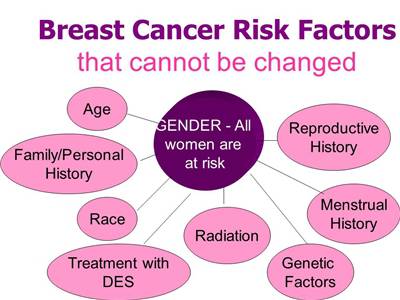
    • Risk Factors that Cannot be Changed:
      • Getting older:
        • The risk for breast cancer increases with age
        • Most breast cancers are diagnosed after age 50
      • Genetic mutations:
        • Inherited changes (mutations) to certain genes, such as BRCA1 and BRCA2:
          • Women who have inherited these genetic changes are at higher risk of breast and ovarian cancer
      • Reproductive history
        • Early menstrual periods before age 12 and starting menopause after age 55:
          • Expose women to hormones longer:
            • Raising their risk of getting breast cancer
      • Having dense breasts:
        • Dense breasts have more connective tissue than fatty tissue:
          • Which can sometimes make it hard to see tumors on a mammogram
          • Women with dense breasts are more likely to get breast cancer
      • Personal history of breast cancer or certain non-cancerous breast diseases:
        • Women who have had breast cancer are more likely to get breast cancer a second time
        • Some non-cancerous breast diseases such as atypical hyperplasia or lobular carcinoma in situ:
          • Are associated with a higher risk of getting breast cancer
      • Family history of breast or ovarian cancer:
        • A woman’s risk for breast cancer is higher if she has a mother, sister, or daughter (first-degree relative) or multiple family members on either her mother’s or father’s side of the family who have had breast or ovarian cancer
        • Having a first-degree male relative with breast cancer also raises a woman’s risk
      • Previous treatment using radiation therapy:
        • Women who had radiation therapy to the chest or breasts (like for treatment of Hodgkin’s lymphoma) before age 30 have a higher risk of getting breast cancer later in life
      • Women who took the drug diethylstilbestrol (DES):
        • Which was given to some pregnant women in the United States between 1940 and 1971 to prevent miscarriage, have a higher risk
        • Women whose mothers took DES while pregnant with them are also at risk
  • Risk Factors You Can Change:
    • Not being physically active:
      • Women who are not physically active have a higher risk of getting breast cancer
    • Being overweight or obese after menopause:
      • Older women who are overweight or obese have a higher risk of getting breast cancer than those at a normal weight
    • Taking hormones:
      • Some forms of hormone replacement therapy (those that include both estrogen and progesterone) taken during menopause can raise risk for breast cancer when taken for more than five years
      • Certain oral contraceptives (birth control pills) also have been found to raise breast cancer risk
    • Reproductive history:
      • Having the first pregnancy after age 30
      • Not breastfeeding
      • Never having a full-term pregnancy can raise breast cancer risk
    • Drinking alcohol:
      • Studies show that a woman’s risk for breast cancer increases with the more alcohol she drinks
  • Research suggests that other factors such as:
    • Smoking, being exposed to chemicals that can cause cancer, and changes in other hormones due to night shift working also may increase breast cancer risk

#Arrangoiz #BreastSurgeon #CancerSurgeon #SurgicalOncologist #BreastCancer #CASO #CenterforAdvancedSurgicalOncology #PalmettoGeneralHospital

September is Thyroid Cancer Awareness Month.

👉The thyroid is a butterfly-shaped gland at the base of the throat. The gland uses iodine, a mineral found in some foods and in iodized salt, to help make several hormones that control heart rate, body temperature, metabolism, and the amount of calcium in the blood.

👉According to the National Cancer Institute’s Surveillance, Epidemiology, and End Results (SEER) database, 52,890 people living in the United States will be diagnosed with thyroid cancer and 2,180 will die of the disease in 2020. The five-year survival rate for this type of cancer is 98.3%

👉There are four main types of thyroid cancer: papillary thyroid cancer, follicular thyroid cancer, medullary thyroid cancer, and anaplastic thyroid cancer.

👉Papillary thyroid cancer is the most common type of thyroid cancer, accounting for roughly 85% of all diagnoses, according to the National Cancer Institute. If diagnosed early, the cure rates for this type of thyroid cancer are high.

👉Follicular thyroid cancer is the second most commonly diagnosed type of thyroid cancer, accounting for approximately 10% of diagnoses. It begins in follicular cells and usually grows slowly. This type of cancer is also highly treatable if diagnosed early enough.

👉Medullary thyroid cancer develops in the thyroid’s C cells, which make a hormone called calcitonin that helps maintain calcium levels in the blood. This rare cancer occurs in nearly everyone with a certain gene mutation. Blood testing can usually detect the presence of this altered gene.

👉Anaplastic thyroid cancer is a very rare and aggressive type of thyroid cancer that usually affects those over age 60. This type of cancer grows and spreads quickly, and is difficult to treat.

👉Exposure to radiation and a family history of thyroid issues are risk factors for thyroid cancer. Women are diagnosed with thyroid cancer significantly more than men.

#Arrangoiz #ThyroidSurgeon #ThyroidExpert #ThyroidCancer #HeadandNeckSurgeon #CASO #CenterforAdvancedSurgicalOncology #PalmettoGeneralHospital #EndocrineSurgery

Thyroid Nodule

👉The term thyroid nodule refers to an abnormal growth of thyroid cells that forms a lump within the thyroid gland. Although the vast majority of thyroid nodules are benign (noncancerous), a small proportion of thyroid nodules do contain thyroid cancer. In order to diagnose and treat thyroid cancer at the earliest stage, most thyroid nodules need some type of evaluation.

👉Most thyroid nodules do not cause symptoms. Often, thyroid nodules are discovered incidentally during a routine physical examination or on imaging tests like CT scans or neck ultrasound done for completely unrelated reasons. Occasionally, patients themselves find thyroid nodules by noticing a lump in their neck while looking in a mirror, buttoning their collar, or fastening a necklace. Abnormal thyroid function tests may occasionally be the reason a thyroid nodule is found. Thyroid nodules may produce excess amounts of thyroid hormone causing hyperthyroidism. However, most thyroid nodules, including those that cancerous, are actually non-functioning, meaning tests like TSH are normal. Rarely, patients with thyroid nodules may complain of pain in the neck, jaw, or ear. If a nodule is large enough to compress the windpipe or esophagus, it may cause difficulty with breathing, swallowing, or cause a “tickle in the throat”. Even less commonly, hoarseness can be caused if the nodule invades the nerve that controls the vocal cords but this is usually related to thyroid cancer.

The important points to remember are the following:

  • Thyroid nodules generally do not cause symptoms.
  • Thyroid tests are most typically normal—even when cancer is present in a nodule.
  • The best way to find a thyroid nodule is to make sure Dr. Arrangoiz checks your neck!

👉We do not know what causes most thyroid nodules but they are extremely common. By age 60, about one-half of all people have a thyroid nodule that can be found either through examination or with imaging. Fortunately, over 90% of such nodules are benign. Hashimoto’s thyroiditis, which is the most common cause of hypothyroidism, is associated with an increased risk of thyroid nodules. Iodine deficiency, which is very uncommon in the United States, is also known to cause thyroid nodules.

👉Once the nodule is discovered, your doctor will try to determine whether the rest of your thyroid is healthy or whether the entire thyroid gland has been affected by a more general condition such as hyperthyroidism or hypothyroidism. Your physician will feel the thyroid to see whether the entire gland is enlarged and whether a single or multiple nodules are present. The initial laboratory tests may include measurement of thyroid hormone (thyroxine, or T4) and thyroid-stimulating hormone (TSH) in your blood to determine whether your thyroid is functioning normally.

Since it’s usually not possible to determine whether a thyroid nodule is cancerous by physical examination and blood tests alone, the evaluation of the thyroid nodules often includes specialized tests such as thyroid ultrasonography and fine needle biopsy.

THYROID ULTRASOUND:
Thyroid ultrasound is a key tool for thyroid nodule evaluation. It uses high-frequency sound waves to obtain a picture of the thyroid. This very accurate test can easily determine if a nodule is solid or fluid filled (cystic), and it can determine the precise size of the nodule. Ultrasound can help identify suspicious nodules since some ultrasound characteristics of thyroid nodules are more frequent in thyroid cancer than in noncancerous nodules. Thyroid ultrasound can identify nodules that are too small to feel during a physical examination. Ultrasound can also be used to accurately guide a needle directly into a nodule when your doctor thinks a fine needle biopsy is needed. Once the initial evaluation is completed, thyroid ultrasound can be used to keep an eye on thyroid nodules that do not require surgery to determine if they are growing or shrinking over time. The ultrasound is a painless test which many doctors may be able to perform in their own office.

THYROID FINE NEEDLE ASPIRATION BIOPSY (FNA OR FNAB):
A fine needle biopsy of a thyroid nodule may sound frightening, but the needle used is very small and a local anesthetic may not even be necessary. This simple procedure is often done in the doctor’s office. Sometimes, medications like blood thinners may need to be stopped for a few days before to the procedure. Otherwise, the biopsy does not usually require any other special preparation (no fasting). Patients typically return home or to work after the biopsy without even needing a bandaid! For a fine needle biopsy, your doctor will use a very thin needle to withdraw cells from the thyroid nodule. Ordinarily, several samples will be taken from different parts of the nodule to give your doctor the best chance of finding cancerous cells if they are present. The cells are then examined under a microscope by a pathologist.

The report of a thyroid fine needle biopsy will usually indicate one of the following findings:

  1. The nodule is benign (noncancerous).
  • This result is obtained in up to 80% of biopsies. The risk of overlooking a cancer when the biopsy is benign is generally less than 3 in 100 tests or 3%. This is even lower when the biopsy is reviewed by an experienced pathologist at a major medical center. Generally, benign thyroid nodules do not need to be removed unless they are causing symptoms like choking or difficulty swallowing. Follow up ultrasound exams are important. Occasionally, another biopsy may be required in the future, especially if the nodule grows over time.
  1. The nodule is malignant (cancerous) or suspicious for malignancy.
  • A malignant result is obtained in about 5% of biopsies and is most often due to papillary cancer, which is the most common type of thyroid cancer. A suspicious biopsy has a 50-75% risk of cancer in the nodule. These diagnoses require surgical removal of the thyroid after consultation with your endocrinologist and surgeon.
  1. The nodule is indeterminate. This is actually a group of several diagnoses that may occur in up to 20% of cases. An Indeterminate finding means that even though an adequate number of cells was removed during the fine needle biopsy, examination with a microscope cannot reliably classify the result as benign or cancer.
  • The biopsy may be indeterminate because the nodule is described as a Follicular Lesion. These nodules are cancerous 20-30% of the time. However, the diagnosis can only be made by surgery. Since the odds that the nodule is not a cancer are much better here (70-80%), only the side of the thyroid with the nodule is usually removed. If a cancer is found, the remaining thyroid gland usually must be removed as well. If the surgery confirms that no cancer is present, no additional surgery to “complete” the thyroidectomy is necessary.
  • The biopsy may also be indeterminate because the cells from the nodule have features that cannot be placed in one of the other diagnostic categories. This diagnosis is called atypia, or a follicular lesion of undetermined significance. Diagnoses in this category will contain cancer rarely, so repeat evaluation with FNA or surgical biopsy to remove half of the thyroid containing the nodule is usually recommended.
  1. The biopsy may also be nondiagnostic or inadequate. This result is obtained in less than 5% of cases when an ultrasound is used to guide the FNA. This result indicates that not enough cells were obtained to make a diagnosis but is a common result if the nodule is a cyst. These nodules may require reevaluation with second fine needle biopsy, or may need to be removed surgically depending on the clinical judgment of your doctor.

NUCLEAR THYROID SCANS:

Nuclear scanning of the thyroid was frequently done in the past to evaluate thyroid nodules. However, use of thyroid ultrasound and biopsy have proven so accurate and sensitive, nuclear scanning is no longer considered a first-line method of evaluation. Nuclear scanning still has an important role in the evaluation of rare nodules that cause hyperthyroidism. In this situation, the nuclear thyroid scan may suggest that no further evaluation or biopsy is needed. In most other situations, neck ultrasound and biopsy remain the best and most accurate way to evaluate all types of thyroid nodules.

MOLECULAR DIAGNOSTICS:

Can any other tests assist in evaluation of thyroid nodules?

Yes, new tests that examine the genes in the DNA of thyroid nodules are currently available and more are being developed. These tests can provide helpful information about whether cancer may be present or absent. These tests are particularly helpful when the specimen evaluated by the pathologist is indeterminate. These specialized tests are done on samples obtained during the normal biopsy process. There are also specialized blood tests that can assist in the evaluation of thyroid nodules. These are currently available only at highly specialized medical centers, however, their availability is increasing rapidly. Ask Dr. Arrangoiz if these tests are available and might be helpful for evaluating your thyroid nodule.

#Arrangoiz #ThyroidSurgeon #EndocrineSurgery #ThyroidCancer #HeadandNeckSurgeon #CancerSurgeon #CASO #CenterforAdvancedSurgicalOncology #PalmettoGeneralHospital

Breast Cancer – Genetic Predisposition

  • Approximately 10% of breast cancers are inherited and associated with a family history:
    • Although this varies frequently by ethnicity and across countries:
      • In the context of early-onset, bilateral and / or TNBC
  • Individuals with a first-degree relative who had breast cancer:
    • Have an elevated relative risk (RR) of 3 of early-onset breast cancer:
      • Before 35 years of age:
        • However, a family history of breast cancer is associated with an ‘erratic’ individual risk of breast cancer:
          • Composed of different variables, including:
            • The size of the family
            • Environmental factors
        • To determine the family’s risk, models such as the family history score have been developed
  • Mutations in two high-penetrance tumor suppressor genes:
    • BRCA1 (17q21) and BRCA2 (13q13):
      • Whose proteins are involved in DNA repair through homologous repair
    • Show an autosomal-dominant inheritance pattern:
      • Loss of function greater than missense mutations
    • BRCA1 and BRCA2 mutations are associated with:
      • An average cumulative risk of developing breast cancer by the age of 80 years of:
        • 72% and 69%, respectively
      • The relative risk of breast cancer in men harboring BRCA2 mutations:
        • Is 6%
    • More than 2,000 BRCA gene alterations have been described (mutations and large rearrangements):
      • But only few have been found repeatedly in unrelated families:
        • For example, founder mutations in:
          • Ashkenazi Jewish families (BRCA1 185delAG or BRCA2 6174delT) or
          • Icelandic families (BRCA2 999del5)
    • Germline BRCA testing will now be performed:
      • As a companion diagnostic in patients with metastatic breast cancer:
        • Given the availability of poly(ADP-ribose) polymerase (PARP) inhibitors:
          • Which prolong progression-free survival (PFS) and improve quality of life:
            • As a targeted therapy for BRCA mutation carriers in HER2-negative metastatic breast cancer
    • Several syndromes related to germ-line mutations of genes involved in DNA repair and maintaining genomic integrity:
      • Have been shown to be linked to, to a lesser degree, the inherited breast cancer risk (see table below)
      • Next-generation sequencing has enabled panels of genes to be screened:
        • Beyond BRCA1 and BRCA2 :
          • To determine the inherited breast cancer risk, and include:
            • ATM, CHEK2, PALB2, PTEN, STK11 and TP53

#Arrangoiz #CancerSurgeon #BreastSurgeon #BreastCancer #CASO #CenterforAdvancedSurgicalOncology #PalmettoGeneralHospital #SurgicalOncology

September 24, World Thyroid Cancer Day

Thyroid Cancer Facts:

  • Thyroid cancer is the fastest growing cancer among women, by number of new cases.
  • Thyroid cancer rates have doubled over the past thirty years and continue to increase.
  • Thyroid cancer is the most common endocrine cancer. It is a cancerous tumour or growth located within the thyroid gland. This can often lead to various symptoms of thyroid disease and tenderness/swelling.
  • The ‘five year survival rate’ tells you what percentage of people live at least five years after the cancer is found. The five year survival rate for people with thyroid cancer is 98%. The ten year survival rate and fifteen year survival rate are 97% and 95%, respectively. So prospects are quite good.
  • Those of us with Hashimoto’s (around 90% of hypothyroidism/underactive thyroid patients) are three times more likely to develop thyroid cancer.
  • Thyroid cancer is two to three times more common in women compared to men, although the cause/s for thyroid cancer, are quite unknown.

Treatment for thyroid cancer typically ends in the patient becoming hypothyroid and requiring thyroid medication for life. However, treatment for thyroid cancer can depend on the type as well as size and stage.

  • In most cases of thyroid cancer, the thyroid gland is surgically removed. This is known as a thyroidectomy. After a thyroidectomy, patients require lifelong thyroid medication, in order to replace what their non-existent thyroid is no longer producing for them. Thus, they become hypothyroid following a thyroidectomy.
  • Some are given radioactive iodine treatment, also known as remnant ablation. This is often given to kill off any thyroid tissue remaining after the thyroid surgery, and also often ends in lifelong hypothyroidism.

#Arrangoiz #ThyroidSurgeon #CancerSurgeon #ThyroidCancer #HeadandNeckSurgeon #CASO #CenterforAdvancedSurgicalOncology #PalmettoGeneralHospital

Breast Cancer

  • Breast cancer is the most frequent malignancy in women:
    • Is a heterogeneous disease on the molecular level
  • Over the past 10 to 15 years:
    • Treatment concepts have evolved to take this heterogeneity into account:
      • With emphasis being placed on:
        • More biologically-directed therapies and treatment de-escalation to reduce the adverse effects of treatment
      • Despite the inherent molecular heterogeneity, which is a driving principle of modern-day treatments:
        • Some features such as the impact of locoregional tumor burden or metastatic patterns are shared and influence therapy
  • Early breast cancer:
    • That is, cancer that is contained in the breast or that has only spread to the axillary lymph nodes:
      • Is considered curable
      • Improvements in multimodal therapy have led to:
        • Increasing chances for cure in approximately 70% to 80% of patients
    • By contrast, advanced (metastatic) disease is not considered curable using currently available therapeutic options:
      • However, advanced breast cancer is a treatable disease:
        • For which the main goals of therapy are to prolong survival and control symptoms with low treatment-associated toxicity:
          • To maintain or improve quality of life (that is, improved quality-adjusted life expectancy).
  • All breast cancers arise in:
    • The terminal duct lobular units (the functional unit of the breast) of the collecting duct
  • The histological and molecular characteristics:
    • Have important implications for therapy, and several classifications on the basis of molecular and histological characteristics have been developed
  • The histological subtypes described here (top right) are the most frequent subtypes of breast cancer:
    • Invasive:
      • Ductal carcinoma (now referred to as ‘no special type’ (NST)):
        • Develops from:
          • DCIS
        • Fibrous response:
          • To produce a mass
        • Metastasizes via:
          • Lymphatics and blood
      • Lobular carcinoma:
        • Isolated tumor cells:
          • CDH1 mutations
        • Minimal fibrous response
        • Metastasizes preferentially:
          • Via viscera
    • Pre-invasive:
      • Ductal carcinoma in situ:
        • Spreads through ducts and distorts ductal architecture:
          • Can progress to invasive cancer:
            • Unilateral
      • Lobular carcinoma in situ (or lobular neoplasia):
        • Does not distort ductal architecture:
          • Can be bilateral
        • Risk factor rather than precursor
  • The intrinsic subtypes of:
    • Perou and Sorlie are based on:
      • A 50-gene expression signature (PAM50)
    • Basal-like:
      • TP53 mutations
      • Genetic instability
      • BRCA mutations
      • Medullary-like histology
      • Poorly differentiatied
    • Claudin- low:
      • Largely triple-negative
      • Metaplastic histology
    • HER2-enriched:
      • HER2 amplification
      • GRB7 amplification
      • PIK3CA mutations
      • TOPO2 and / or MYC amplification
      • NST, pleiomorphic lobular and micropapillary histology
    • Normal-like:
      • Artefact:
        • Expression of normal breast components:
          • Due to low tumor cellularity
  • The surrogate intrinsic subtypes:
    • Are typically used clinically:
      • Are based on histology and immunohistochemistry expression of key proteins:
        • Estrogen receptor (ER)
        • Progesterone receptor (PR)
        • Human epidermal growth factor receptor 2 (HER2)
        • The proliferation marker Ki67
    • Tumors expressing ER and / or PR are termed:
      • Hormone receptor-positive
    • Tumors not expressing ER, PR and HER2 are called:
      • Triple-negative
    • Triple-negative:
      • 10% to 15% of the cases
      • ER negative, PR negative, HER2 negative
      • High grade
      • High Ki-67 index
      • NST histology
      • Special type histology:
        • Metaplastic
        • Adenoid cystic
        • Medullary-like
        • Secretory
      • Poor prognosis:
        • Except for some special types
    • HER2-enriched (non-luminal):
      • 13% to 15% of the cases
      • ER negative, PR negative, HER2 positive
      • High grade
      • High Ki-67 index
      • NST histology
      • Aggressive disease:
        • But responds to targeted therapies
      • Intermediate prognosis
    • Luminal B-like HER2 Positive:
      • 13% to 15% of the cases
      • ER positive:
        • But lower ER and PR expression than luminal A-like
      • HER2 positive
      • Higher grade
      • High Ki-67 index
      • NST and pleomorphic
      • Responds to targeted therapies
      • Intermediate prognosis
    • Luminal B-like HER2 Negative:
      • 10% to 20% of the cases
      • ER positive:
        • But ER and PR expression lower than in luminal A-like
      • HER2 negative
      • Higher grade
      • High Ki-67 index
      • High-risk gene expression signature (GES)
      • NST, micro papillary and lobular pleomorphic histology
      • Intermediate prognosis
    • Luminal A-like:
      • 60% to 70% of the cases
      • Strongly ER positive and PR positive
      • HER2 negative
      • Low proliferation rates
      • Typically low grade
      • Low Ki-67 index
      • Low-risk gene expression signature (GES)
      • NST, tubular cribriform histology and classic lobular histology
      • Good prognosis

#Arrangoiz #CancerSurgeon #BreastSurgeon #CASO #CenterforAdvancedSurgicalOncology

Cancer Surgeon

  • My name is Rodrigo Arrangoiz I went to medical school at the Anahuac University in Mexico City, which is one of the most prestigious medical schools in Mexico:
    • I graduated Suma Cum Laude from this medical school and was the president of the medical student council
  • My general surgery training was performed at Michigan State University:
    • Where I was named chief residentduring my fifth year of residency which was a great honor
  • My complex surgical oncology fellowship which included  head and neck training was performed at the Fox Chase Cancer Center in Philadelphia, Pennsylvania
  • At the same time, I undertook a Masters in Science (Clinical Research for Health Care Professionals) at Drexel University in Philadelphia, Pennsylvania
  • I performed a two-year global online fellowship in Head and Neck Surgery and Oncology with the International Federations of Head and Neck Societies / Memorial Sloan Kettering Cancer Center
  • I encountered patients with very complex problems, and the greatest lesson I learned was there are always treatment options, utilizing all different types of techniques including radiation, chemotherapy and surgery:
    • This comprehensive training has provided me with an extensive understanding of the multidisciplinary approach to treating patients with cancer
  • I have developed a particularly strong interest in the surgical and multimodal treatment of patients with breast cancerhead and neck cancer (including thyroid and parathyroid cancer), and endocrine diseases (benign and malignant thyroid and parathyroid diseases), using traditional surgery, regional therapies, and minimally invasive techniques
  • I am an expert in the treatment of thyroid cancer including; active surveillance for early, small papillary thyroid cancers, minimally invasive thyroid surgery, selective and comprehensive neck dissections
  • For the management of parathyroid disease, I offer a minimally invasive radio-guided technique called MIRP (minimally invasive radio-guided parathyroidectomy) through a 2 cm incision which will allow the patient to have a great cosmetic result and quick return to normal life after the operation
  • I am extremely aware of the impact that a breast cancer diagnosis has on a patient:
    • I do my best to promote a positive atmosphere in which to start my patients’ course of treatment and take the time to explain the pros and cons of each treatment option, so that they can make an informed decision
  • My management philosophy also includes, not just an emphasis on successful treatment, but also preserving a good cosmetic outcome:
    • I feel fortunate to be a fellowship trained, very highly specialized clinician, because this combination of factors allows me, and our treatment team to focus on one thing all day, every day, and do it well: 
      • Curing cancer:
        • I think there is nothing more rewarding that I could do as a clinician
  • I hold my patients as my number one priority:
    • I will spend as much time as necessary educating, answering questions and providing guidance for each individual patient to help them throughout each stage of their management
    • I believe in honest discussions, where both the patients and family’s goals and expectations are openly communicated
    • We will work together as a team to put together an evidence based personalized treatment plan
    • My personal goal is to treat and care for every patient with the same compassion and honesty as if they were a friend or family member
cropped-color-logo-with-background-1.png

Fistulas of the Gastrointestinal Tract

  • An enterocutaneous fistula (ECF):
    • Is an abnormal communication between the small or large bowel and the skin that allows the contents of the stomach or intestines to leak through an opening in the skin

Classification:

  • Congenital types:
    • Tracheoesophageal
    • Vitellointestinal duct
    • Patent urachus
    • Rectovaginal
  • Acquired:
    • Trauma (postoperative)
    • Radiation
    • Malignancy,
    • Infection

Two categories:

  • Low-output fistula:
    • Less than 500 mL/day
  • High-output fistula:
    • Equal or greater than 500 mL/day

Three categories:

  • Low-output fistula:
    • Less than 200 mL/day
  • Moderate-output fistula:
    • 200ml to 500 mL/day
  • High-output fistula:
    • Greater than 500 mL/day
  • Etiology:

The mnemonic FRIENDS can be used to memorize characteristics which impede the closure of ECF:

  • F Foreign body
  • R Radiation
  • I Infection or Inflammatory bowel disease
  • E Epithelialization
  • N Neoplasm
  • D Distal obstruction
  • S Short tract (less than 2 cm)
  • Patients with enteric content exiting a wound on their abdomen are motivated to undergo operation:
    • The majority will close spontaneously within approximately 6 weeks
    • If it has not closed by 12 weeks:
      • It is unlikely to do so and definitive surgery should be planned:
        • The median time to definitive repair from fistula onset was 6 months (range 1 day to 28 months):
          • The 6-month time course is commonly utilized by groups with significant experience treating fistulas, owing to the trend in encountering a less hostile abdomen than in the early phases
          • Some evidence also suggests that somatostatin can be an effective treatment with respect to reducing closure time and improving the spontaneous closure rate of enterocutaneous fistulas
  • References:
  1. Lee SH (2012). “Surgical management of enterocutaneous fistula”. Korean Journal of Radiology. 13 Suppl 1: S17–S20. doi:10.3348/kjr.2012.13.S1.S17. PMC 3341456. PMID 22563283.
  2. Galie KL, Whitlow CB (2006). “Postoperative enterocutaneous fistula: when to reoperate and how to succeed”. Clinics in Colon and Rectal Surgery19: 237–246. doi:10.1055/s-2006-956446. PMC 2780112. PMID 20011327.
  3. Ross H (2010). “Operative surgery for enterocutaneous fistula”. Clinics in Colon and Rectal Surgery23: 190–194. doi:10.1055/s-0030-1262987. PMC 2967319. PMID 21886469.
  4. Stevens, P; Foulkes, RE; Hartford-Beynon, JS; Delicata, RJ (October 2011). “Systematic review and meta-analysis of the role of somatostatin and its analogues in the treatment of enterocutaneous fistula”. European Journal of Gastroenterology & Hepatology23 (10): 912–922. doi:10.1097/MEG.0b013e32834a345d. PMID 21814141.
  5. Metcalf C (1999). “Enterocutaneous fistulae”. Journal of Wound Care8 (3): 141–142. doi:10.12968/jowc.1999.8.3.25854.

#Arrangoiz #Surgeon #CancerSurgeon #CASO #CenterforAdvancedSurgicalOncology #PalmettoGeneralHospital