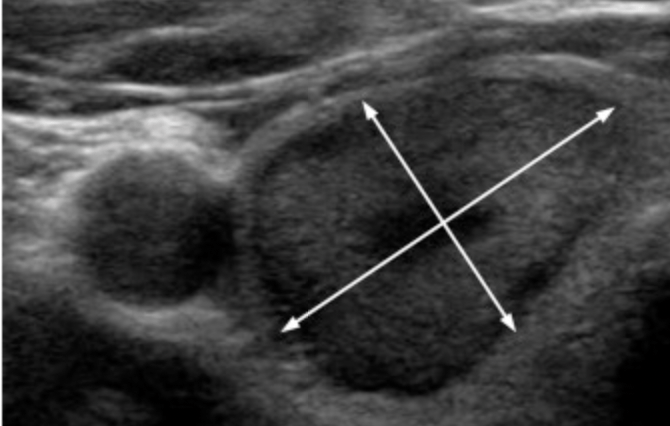
Predicting Response to Therapy: The Updated ATA Risk-Stratification System

  • Unlike many cancers, the risk of recurrence does not parallel the risk of mortality in differentiated thyroid cancer
  • In most patients, the risk of recurrence far exceeds the risk of disease-specific mortality:
    • Thus staging systems designed to predict mortality in thyroid cancer:
      • Would not be anticipated to be predictive of disease recurrence
  • To address this issue, a risk-stratification system:
    • Was developed and validated to predict the risk of structural disease recurrence:
      • Based on information obtained around the time of initial therapy
    • A modified version of this original risk-stratification system was endorsed in the 2009 ATA guidelines and subsequently modified in the 2015 ATA guidelines
  • Whereas initially conceived as a three-category model of risk assessment:
    • Low, intermediate, or high risk
  • The ATA risk-stratification system:
    • Is now visualized as a continuum of risk:
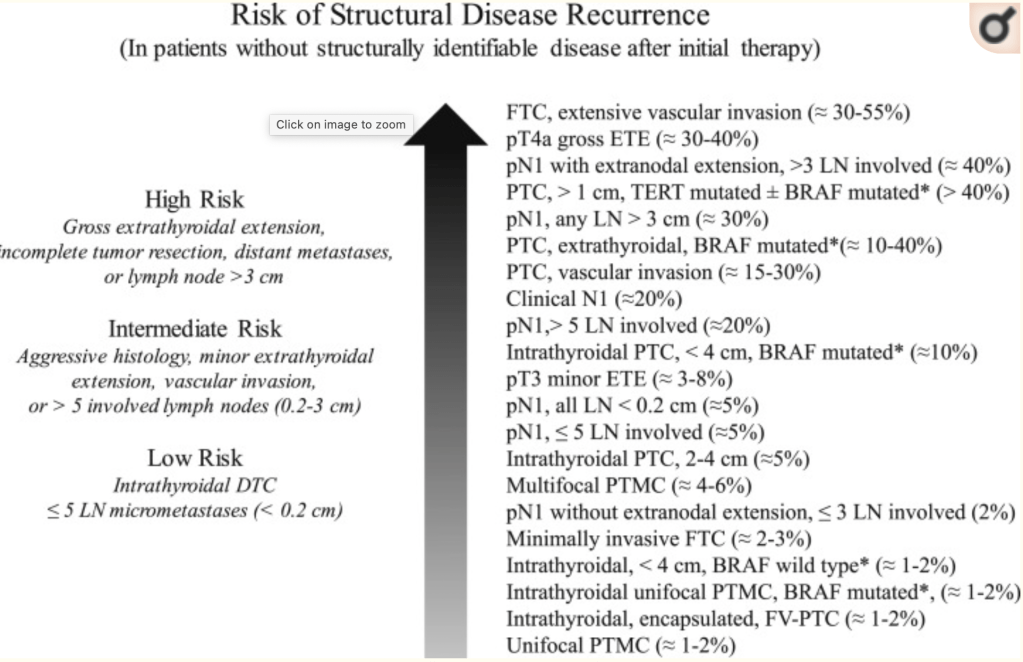
      • Ranging from very low to very high risk of structural disease recurrence
As described in the ATA guidelines, individualized risk stratification is best visualized as a “continuum of risk” rather than as three discrete risk categories that predict the risk of structural disease recurrence. [Adapted with permission from Haugen BR, Alexander EK, Bible KC, Doherty GM, Mandel SJ, Nikiforov YE, Pacini F, Randolph GW, Sawka AM, Schlumberger M, Schuff KG, Sherman SI, Sosa JA, Steward DL, Tuttle RM, Wartofsky L. 2015 American Thyroid Association Management Guidelines for Adult Patients with Thyroid Nodules and Differentiated Thyroid Cancer: The American Thyroid Association Guidelines Task Force on Thyroid Nodules and Differentiated Thyroid Cancer. Thyroid. 2016;26(1):1–133.]
  • The three-category model was proven to be very useful and reproducible across multiple studies
  • The 2015 ATA guideline:
    • Expanded the low-risk category to include not only intra-thyroidal papillary thyroid cancer but also patients with:
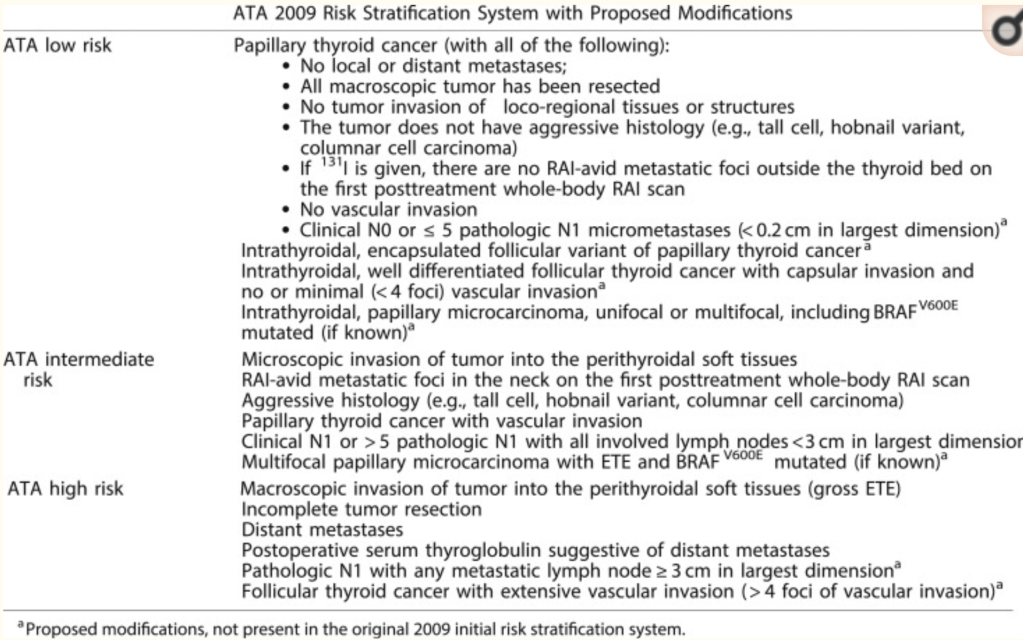
      • Very small-volume lymph node micro-metastases:
        • Less than 0.2 cm in largest dimension
      • Intra-thyroidal well-differentiated follicular thyroid cancer:
        • With capsular invasion and fewer than four foci of vascular invasion
      • Intra-thyroidal encapsulated follicular variant of papillary thyroid carcinoma:
        • Now known as noninvasive follicular thyroid neoplasm with papillary-like nuclear features
      • Either unifocal or multifocal intra-thyroidal papillary micro-carcinoma:
        • Even if they have known BRAFV600E mutations
    • The high-risk category was also expanded to include:
      • Follicular cancer with more than four foci of vascular invasion and
      • Pathologic lymph node metastasis:
        • With any metastatic lymph node ≥ 3 cm in largest dimension
    • The remaining tumors were classified as intermediate risk based on the data available at the time the guidelines were written
The 2015 ATA guidelines expanded the inclusion criteria for ATA low-risk and ATA high-risk disease categories as described in this table. [Adapted with permission from Haugen BR, Alexander EK, Bible KC, Doherty GM, Mandel SJ, Nikiforov YE, Pacini F, Randolph GW, Sawka AM, Schlumberger M, Schuff KG, Sherman SI, Sosa JA, Steward DL, Tuttle RM, Wartofsky L. 2015 American Thyroid Association Management Guidelines for Adult Patients with Thyroid Nodules and Differentiated Thyroid Cancer: The American Thyroid Association Guidelines Task Force on Thyroid Nodules and Differentiated Thyroid Cancer. Thyroid. 2016;26(1):1–133.]
  • The last several years have seen an abundance of published data confirming the association among specific molecular alterations, histological subtypes, and clinical outcomes in follicular cell-derived thyroid cancer
    • Point mutations in BRAFV600E:
      • Are associated with:
        • Increased risk of recurrence
        • Radioactive iodine refractoriness
        • Extrathyroidal extension
        • Lymph node metastases
        • Disease-specific mortality
    • Likewise, oncogenic genetic alterations in TERT promoterTP53EIF1AX, and β-catenin:
      • Are associated with more aggressive tumor behavior and poorer clinical outcomes
    • Furthermore, mutational combinations (such as BRAFV600E + TERT promoter mutations or RAS + TERT promoter mutations):
      • Are associated with significantly increased risk beyond that associated with either mutation in isolation
    • As shown in the ATA continuum of risk figure:
      • Appropriate molecular risk stratification requires integration of the genetic abnormality into the proper clinical context:
        • As the presence of a specific mutation does not always portend a poor prognosis:
          • e.g.BRAFV600E mutations are found in > 50% of papillary micro-carcinomas:
            • Which usually display an indolent clinical course
      • Although not yet proven:
        • It seems reasonable to consider either:
          • More careful follow-up or potentially more aggressive therapies for tumors with the highest risk mutational profiles:
            • Particularly those with mutational combinations associated with the poorest clinical outcome
      • It is important to remember that there is no guarantee that more aggressive surgery, radioactive iodine therapy, thyroid-stimulating hormone suppression, or other systemic therapies:
        • Will necessarily provide therapeutic benefit simply because we can identify a patient at high risk for poorer outcomes on the basis of clinic-pathological presentation or molecular profiling
      • Prospective studies evaluating the impact of more aggressive surgical and systemic therapies in the setting of high-risk mutational profiles are needed
  • The ATA risk-stratification system performs well in clinical practice:
    • With low-risk patients:
      • Demonstrating no evidence of disease 80% to 90% of the time
      • Biochemical incomplete responses 15% of the time
      • Structural incomplete responses 3% to 5% of the time
    • Intermediate-risk patients achieve:
      • Excellent response ∼60% of the time
      • Have a biochemical incomplete response ∼15% to 20% of the time,
      • Structural incomplete response ∼20% of the time
    • High-risk patients achieve:
      • No evidence of disease status in less than 30% of the cases
      • Structural incomplete response 50% to 75% of the cases
      • Biochemical incomplete response 10% to 15% of the cases
    • The studies contributing to these approximations are extensively reviewed in the ATA guidelines
    • Interestingly:
      • Age is a major determinant of response to therapy:
        • In ATA high-risk patients:
          • The proportion of excellent responders was found to be significantly higher among younger patients (age < 55 years) than among older patients (age ≥ 55 years; 40.3% vs 27.5%P = 0.02)
          • The proportion of structural incomplete responders was significantly larger among older patients than among younger patients (53% vs 33%, P = 0.002)
          • Moreover, ATA high-risk younger patients with a structural incomplete response to therapy had a significantly better DSS than older patients (74% vs 12%, respectively, P < 0.001)

#Arrangoiz #ThyroidSurgeon #ThyroidExpert #ThyroidCancer #EndocrineSurgery #HeadandNeckSurgery #CancerSurgeon #SurgicalOncologist
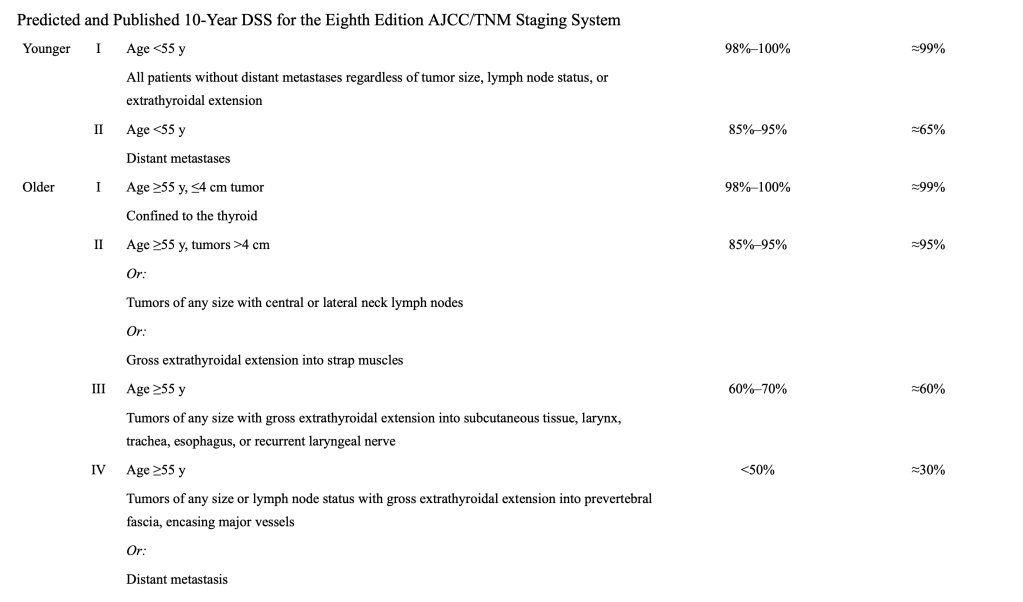
Predicting Survival Outcomes: The Updated AJCC/TNM Staging System

  • In October 2016, the AJCC (www.cancerstaging.org) published the eighth edition of the AJCC / TNM cancer staging system:
    • Which replaced the seventh edition that had been used by clinicians, cancer registries, and researchers since 2009
    • On 1 January 2018, tumor registries officially began using the eighth edition for tumor staging
  • Whereas the staging tables for medullary thyroid cancer and anaplastic thyroid cancer showed only minimal changes:
    • The rules for the staging of well-differentiated thyroid cancer underwent substantial modifications:
      • These included the following:
        • An increase of the age cutoff:
          • From 45 years to 55 years of age at diagnosis
        • Removal of microscopic extra-thyroidal extension:
          • As a key component of the staging system
        • No longer mandating assignment of stage III to older patients with microscopic extra-thyroidal extension or lymph node metastases
        • Establishment of a new T3b category for tumors of any size:
          • That demonstrate gross extra-thyroidal extension involving only the surrounding strap muscles
  • The AJCC Differentiated Thyroid Cancer Committee:
    • Carefully considered the possibility of inclusion of molecular markers (specifically, BRAFV600E and TERT promoter mutations) in the AJCC prognostic staging definitions:
      • Whereas both of these mutations, particularly when present together:
        • Have been shown to be predictors of poor clinical outcomes:
        • They appeared to add only marginal benefit to the traditional anatomic staging factors (this might change in the next staging system with new data coming out)
        • Thus, molecular characterization of differentiated thyroid cancers, although providing some prognostic information:
          • Were not powerful enough factors to merit upstaging tumors to prognostic stages above those mandated by TNM risk factors
        • Nonetheless, similar to the approach used in the ATA risk-stratification system:
          • Molecular results can be used to refine further and individualize risk within risk categories or stages
  • The three critical factors that determine the prognostic stage groups of the eighth edition AJCC / TNM cancer staging system include:
    • The age at diagnosis
    • The presence or absence of distant metastases
    • The presence or absence of gross extra-thyroidal extension
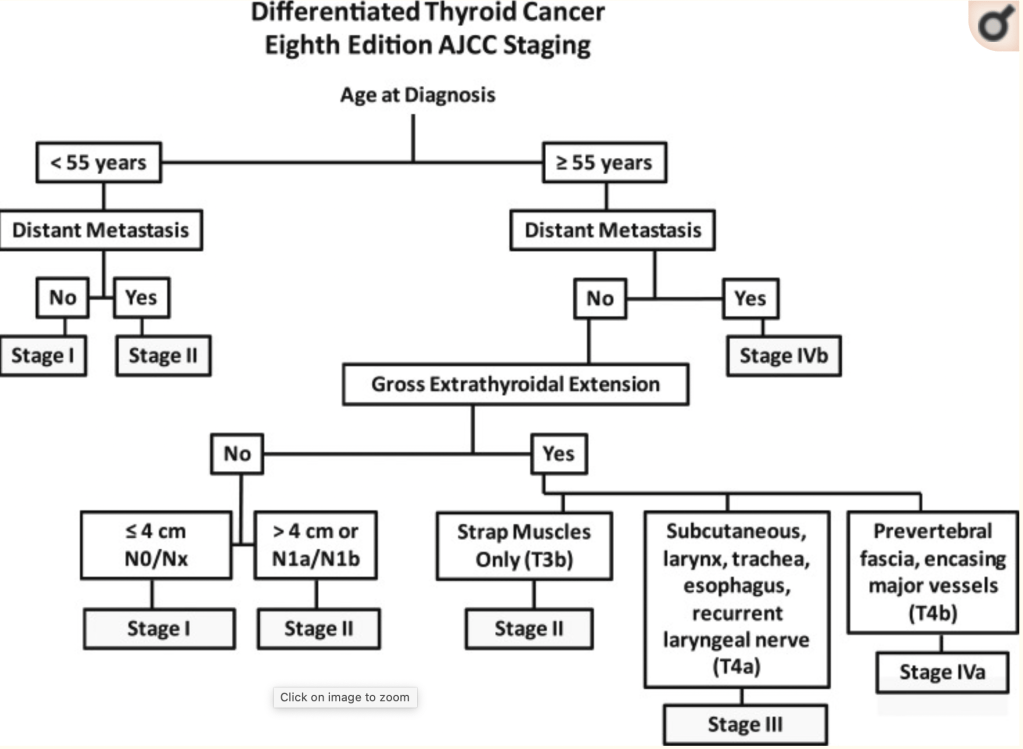
  • Rather than the use of the standard TNM staging tables provided in the AJCC / TNM manual, this flow diagram to stage patients rapidly based on the key clinical risk factors (age at diagnosis, distant metastasis, gross extrathyroidal extension, and lymph node metastases) may be easier
A simplified approach to AJCC staging in differentiated thyroid cancer, emphasizing the critical decision nodes, which include age at diagnosis, distant metastasis, and gross extrathyroidal extensions.
  • Patients age less than 55 years:
    • Rapidly classifies patients as either:
      • Stage I:
        • Any T, any N, M0 or
      • Stage II:
        • Any T, any N, M1
  • In the older patients, additional factors, such as:
    • The presence or absence of distant metastasis
    • Invasion of strap muscles
    • Extent of gross extra-thyroidal extension:
      • Are also used to define the prognostic stage groups
  • In the eighth edition of the AJCC / TNM cancer staging system:
    • It was anticipated that the majority of patients would be classified as stage I or stage II:
      • Reflecting the excellent outcomes expected in the majority of thyroid cancer patients
    • A smaller number of patients, particularly the older patients with either distant metastases or gross extra-thyroidal extension:
      • Were anticipated to do worse and are therefore classified as stage III or IV
  • Multiple publications have demonstrated that the eighth edition of the AJCC / TNM cancer staging system:
    • Moved a substantial number of patients into lower prognostic stage groups:
      • Without affecting the overall survival of those lower-stage groups
    • The patients who remained in the higher-stage groups:
      • Had poorer prognoses, as expected
    • This resulted in a much better separation of the four prognostic stage groups:
      • With respect to survival:
        • Such that 5- to 10-year disease-specific survival (DSS) was:
          • 99% in stage I patients
          • 88% to 97% in stage II patients
          • 72% to 85% in stage III patients
          • 67% to 72% in stage IV patients
    • Unlike previous editions of the AJCC / TNM staging system in which there was substantial overlap in survival in patients with stage I, II, and III disease:
      • The eighth edition provides meaningful separation among the prognostic stage groups that appear to be clinically relevant
    • The differences in predicted and published ∼10-year survival rates:
      • Are best seen when analyzed based on age group (age <55 years vs age ≥55 years)
Ten-year median DSS estimates approximated from data extrapolated from publications examining eighth edition AJCC prognostic stages
  • The predicted 10-year DSS has been validated for all age and stage groups:
    • With only the younger (age < 55 years) stage II patients:
      • Appearing to do more poorly than anticipated
      • The lower-than-anticipated 10-year DSS in the younger patients (age < 55 years) with stage II disease:L
        • Was the result of the stage migration of patients in the 45- to 55-year age group:
          • From seventh edition AJCC stage IV to eighth edition AJCC stage II

#Arrangoiz #ThyroidSurgeon #ThyroidExpert #ThyroidCancer #CancerSurgeon #SurgicalOncologist #HeadandNeckCancer
Risk stratification in active surveillance of papillary microcarcinoma

  • Asymptomatic, small thyroid nodules (usually ≤ 1 cm maximal diameter, 1 cm3, or 1 mL volume) confined to the thyroid and surrounded by normal thyroid parenchyma:
    • Can be followed with active surveillance:
      • With or without cytologic confirmation:
      • In patients who value their normal thyroid function and who desire avoidance of thyroid surgery
  • Patients who demonstrate tumors larger than 1.5 to 2.0 cm; tumors in subcapsular locations adjacent to important structures, such as the trachea and recurrent laryngeal nerve; or tumors with documented growth rate doubling times of less than 2 years:
    • Are generally considered inappropriate for observation and would be considered to have actionable disease
  • If the tumor growth rate is unknown at the time of nodule detection:
    • Then this can be established with serial ultrasound evaluations:
      • Done approximately every 6 months for 1 to 2 years
  • The frequency of ultrasound evaluations and long-term follow-up depends on the tumor size, location, and established growth rate
  • With the use of this paradigm, active surveillance continues until there is a:
    • 3-mm increase in tumor diameter:
      • Which corresponds to a 100% increase in tumor volume
    • Identification of metastatic disease
    • Direct invasion into surrounding structures of the thyroid
    • A decision to discontinue active surveillance based on patient preference
  • This risk-stratified, minimalistic management approach to very low-risk thyroid cancers:
    • Has been shown to be safe and effective over 5 to 10 years of follow-up in studies from Japan, Korea, and the United States
  • In the first 10 years of active surveillance follow-up:
    • Only 2% to 8% of papillary micro-carcinomas increase ≥ 3 mm in maximum diameter
    • 12% to 14% demonstrate an increase in tumor volume of > 50% (the smallest change in nodule volume that can be reproducibly measured)
    • Novel lymph node metastases are detected in 2% to 4%
  • The likelihood of disease progression is higher in younger patients than in older patients
  • Importantly, at the time of disease progression:
    • Deferred surgical intervention is quite effective with excellent outcomes and no disease-specific mortality

#Arrangoiz #ThyroidSurgeon #ThyroidExpert #CancerSurgeon #SurgicalOncologist #HeadandNeckSurgeon #ThyroidCancer
Risk Stratification in Differentiated Thyroid Cancer Part 2

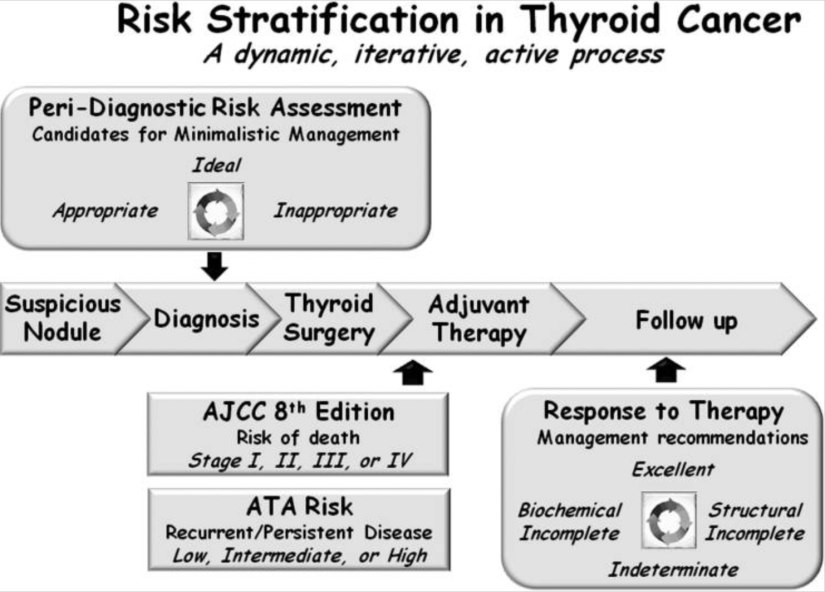
  • From a practical standpoint, postoperatively, the eighth edition of the American Joint Committee on Cancer / tumor node metastasis (AJCC / TNM) staging system is used to predict disease-specific mortality and the American Thyroid Association (ATA) risk stratification system to predict the risk of recurrent or persistent disease
  • These initial risk estimates are then modified over time:
    • Using the descriptions from the ATA guidelines to define the patient’s response to therapy at any point during follow-up, as:
      • Excellent:
        • No evidence of persistent / recurrent disease
      • Biochemically incomplete:
        • Abnormal thyroglobulin (Tg) or rising Tg antibodies in the absence of identifiable structural disease
      • Structurally incomplete:
        • Structural evidence of persistent / recurrent disease
      • Indeterminate:
        • Nonspecific findings that cannot be confidently classified as benign or malignant
    • These modified risk estimates are then used to plan ongoing management
  • Recently, the move toward deferred intervention (active surveillance) of very low-risk thyroid cancers and a more minimalistic approach to thyroid surgery:
    • Has expanded the risk-stratification horizon to include not only the intraoperative and postoperative time periods but also the peri-diagnostic time frame:
      • That begins with the detection of a suspicious thyroid nodule
  • In this peri-diagnostic period, it is important to identify low-risk thyroid cancers:
    • That may be eligible for either an active surveillance management approach (with or without cytological confirmation) or for a minimalistic surgical intervention:
      • Such as thyroid lobectomy without neck dissection
  • Conversely, it is equally important to identify, in the peri-diagnostic period:
    • Those patients who would be most likely to benefit from more aggressive initial interventions that could include:
      • Total thyroidectomy:
        • With or without prophylactic or therapeutic neck dissection
      • Radioactive iodine treatment
      • External beam radiation
      • Upfront systemic therapy
  • It is also important to recognize that highly sensitive disease-detection tools can often detect small foci of papillary thyroid cancer that may not require immediate diagnosis and therapy:
    • The 2015 ATA guidelines provided several specific examples where an observational management approach:
      • Often without cytologic confirmation of disease, is recommended as the preferred or alternative management approach to small-volume disease:
        • For example, an active surveillance observational management approach is allowed for carefully selected patients with either:
          • Highly suspicious sub-centimeter asymptomatic thyroid nodules:
            • Without the need for cytologic confirmation
          • Biopsy-proven very low-risk thyroid cancers:
            • Such as intra-thyroidal papillary microcarcinomas:
              • In locations not adjacent to trachea or neurovascular structures without evidence of lymph node metastasis
          • Furthermore, an observational management approach is also allowed for patients with persistent / recurrent small abnormal cervical lymph nodes
          • Asymptomatic stable or slowly growing distant metastasis
          • Stable or declining abnormal Tg or Tg antibodies
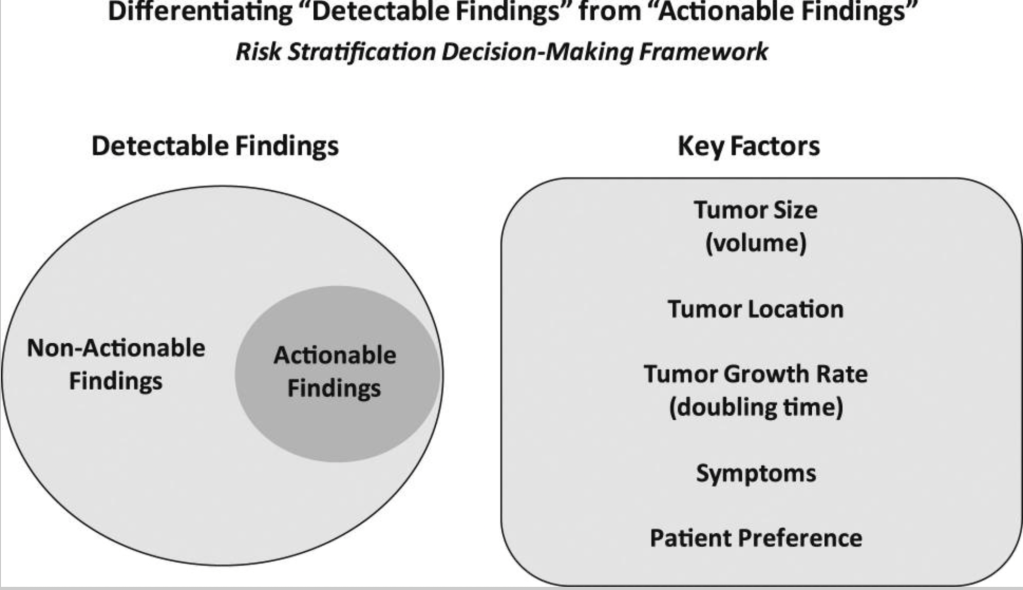
  • As it is clear that not all detectable findings require immediate diagnostic or therapeutic intervention:
    • It is imperative that we develop a risk-stratification decision-making framework:
      • To differentiate actionable findings from non-actionable findings
  • Whether we are considering a highly suspicious sub-centimeter thyroid nodule without cytologic confirmation of disease, a biopsy-proven thyroid nodule with low-risk thyroid cancer, or persistent / recurrent disease in the neck or elsewhere:
    • Consider five key factors that when taken together, allow us to predict the likelihood that a specific tumor focus represents clinically important disease:
      • That may require additional evaluations, ongoing observation, or therapeutic intervention:
        • Both tumor size and tumor location:
          • Are the major factors that determine whether a tumor focus is likely to cause clinically substantial invasion into local structures, such as the recurrent laryngeal nerve, airway, gastrointestinal tract, major vessels, or other important structures
        • A third important factor is the tumor growth rate (measured as tumor volume doubling time):
          • With an observational management approach being much more appropriate for tumors either anticipated to have a slow tumor growth rate or with actual documented slow growth rates over time
        • Obviously, tumors that are either symptomatic or likely to have symptomatic progression would be considered actionable
        • Finally, patient preference plays a key role when deciding whether a particular lesion is actionable or non-actionable:
          • As it is important to integrate the patient’s understanding of the risks and benefits of intervention vs observation with their value system and goals
    • In addition to providing initial guidance as to whether the detectable lesion is actionable at the time of detection:
      • Ongoing re-evaluation of these same factors, using the basic concepts of dynamic-risk stratification:
        • Can also assist the clinician in the determination of when it is time to transition from an observational management approach to active therapeutic intervention
        • Thus, risk stratification has moved from a single postoperative static assessment of the risk of disease-specific mortality:
          • To an all-encompassing evaluation of the patient that is continually modified over time:
            • Beginning from the first detection of a suspicious thyroid nodule and continuing throughout the life of the patient

#Arrangoiz #ThyroidSurgeon #ThyroidExpert #ThyroidCancer #DynamicRiskStratification #HeadandNeckSurgeon #CancerSurgeon

𝗭𝘂𝗰𝗸𝗲𝗿𝗸𝗮𝗻𝗱𝗮𝗹 𝗧𝘂𝗯𝗲𝗿𝗰𝗹𝗲 (𝗭𝗧)

“ᴏᴠᴇʀᴠɪᴇᴡ, ɢʀᴀᴅɪɴɢ & ᴄʟɪɴɪᴄᴀʟ sɪɢɴɪғɪᴄᴀɴᴄᴇ”

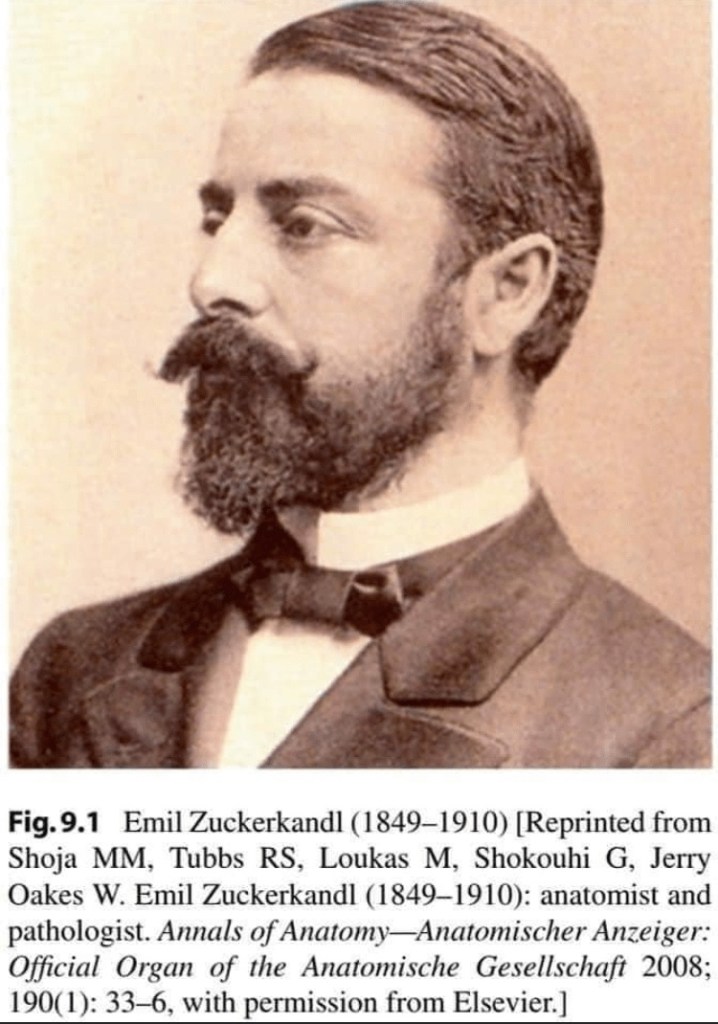
  • The Tubercle of Zukerkandal (TZ) was first described in the medical literature in 1867 by Madelung as the “posterior horn of the thyroid,” and then in 1902 as the “processus posterior glandulae thyroideae” by Emil Zuckerkandl
  • The Tubercle of Zuckerkandl (TZ) is a distinct, well-described anatomical feature of the thyroid gland with a plausible embryological basis of genesis.
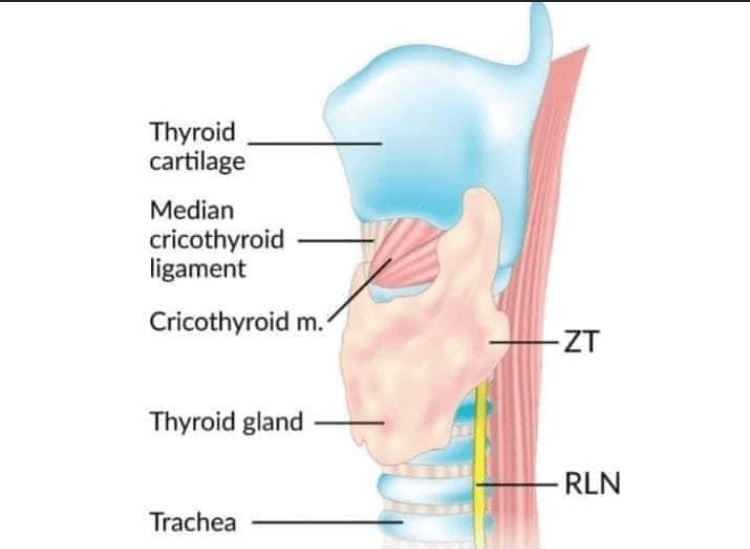
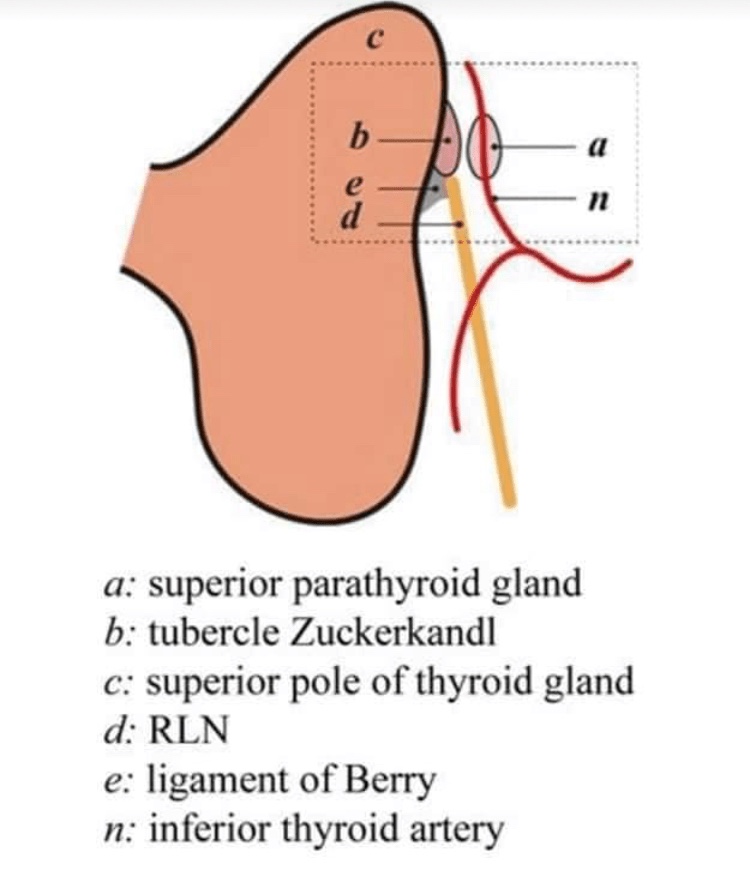
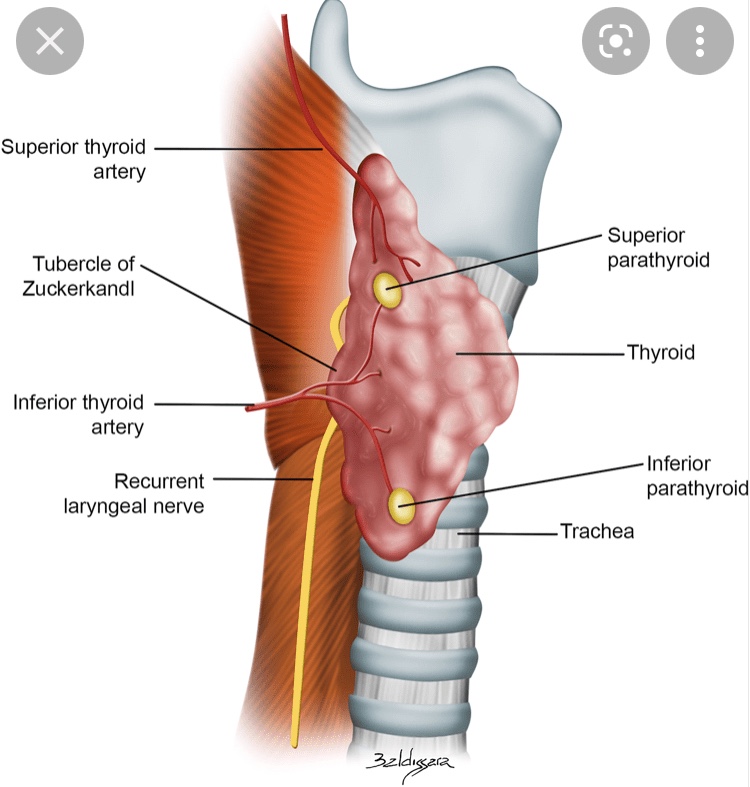
  • In the adult, the TZ is the most posterior extension of the lateral lobes of the thyroid gland at the area of the Ligament of Berry and is closely related to the superior parathyroid gland.
  • The literature describes a highly variable Tuberculum frequency, ranging from 14% to 55% of thyroidectomies and is usually less than 1 cm in diameter.
  • When present, it constitutes a useful anatomical landmark for the identification of the RLN and the superior parathyroid gland.
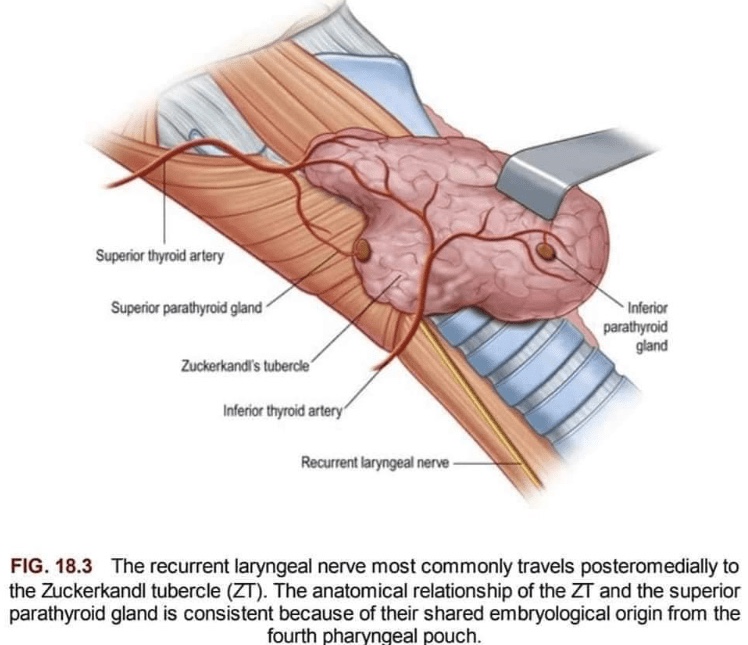
  • The TZ has been described as being shaped like an ‘𝗮𝗿𝗿𝗼𝘄 𝘁𝗵𝗮𝘁 𝗽𝗼𝗶𝗻𝘁 𝘁𝗼𝘄𝗮𝗿𝗱𝘀 𝘁𝗵𝗲 𝗥𝗟𝗡’.
  • This is because the RLN travels posteromedially to a well developed TZ in more than 80% of people, and in this location the nerve may often be mistaken as travelling intrathyroidally.
  • The RLN may, through gentle dissection and with medial retraction of the TZ, can be gradually exposed up to its entry into the larynx.
  • Like the TZ, the superior parathyroid glands are also derived from the fourth pharyngeal pouch; their common embryological origin explains the consistent posterior and superior location of the superior parathyroid gland in relation to the TZ.
  • Thus, the superior parathyroid gland should be routinely identified and its blood supply carefully preserved during thyroidectomy, especially when dissecting the TZ.
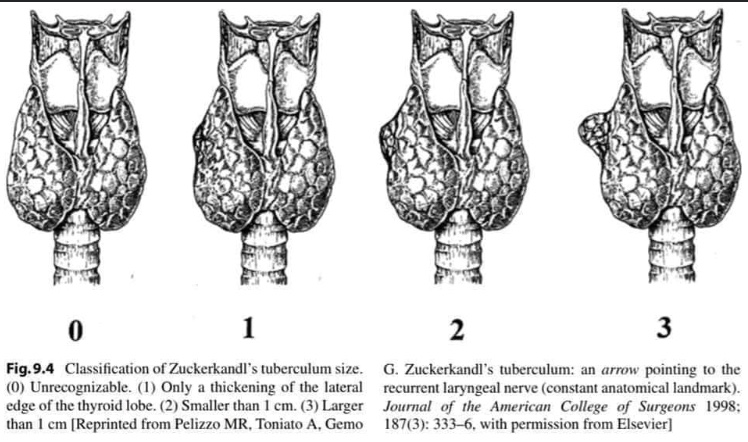
  • 𝗚𝗿𝗮𝗱𝗶𝗻𝗴 𝘀𝘆𝘀𝘁𝗲𝗺 𝗳𝗼𝗿 𝘁𝗵𝗲 TZ:
    • Pelizzo et al. have defined a grading system for the tubercle of Zuckerkandl:
      • Their classification is a numerical scale from 0 to 3, with:
        • 0 being unrecognizable
        • 1 being only a thickening of the lateral edge of the thyroid lobe
        • 2 measuring smaller than 1 cm
        • 3 measuring larger than 1 cm in size
  • In their series in which 104 thyroid lobes were assessed:
    • Grade 0 was present in 23 % of lobes
    • Grade 1 in 9 %
    • Grade 2 in 54 %
    • Grade 3 in 14%
  • 𝗖𝗼𝗻𝗰𝗹𝘂𝘀𝗶𝗼𝗻:
    • The tubercle of Zuckerkandl is a lateral and posterior projection of the thyroid gland. It is variably present, and it is more often found on the right side in humans.
    • The tubercle of Zuckerkandl is important to endocrine surgeons because of its close proximity to the recurrent laryngeal nerve and the superior parathyroid gland.
    • The tubercle is located inferior to the superior parathyroid gland, and superficial to the recurrent laryngeal nerve.
    • It is susceptible to hyperplastic and neoplastic diseases of the thyoid gland, and the anatomic relationships can be altered in these circumstances.
    • An understanding of the normal anatomy and its variants can benefi t surgeons who perform thyroid or parathyroid surgery so that the risks of injury to the recurrent laryngeal nerve or the superior parathyroid gland are minimized, and so that diseased tissue is not left behind when a total thyroidectomy is performed.

Hypocalcemia post total thyroidectomy

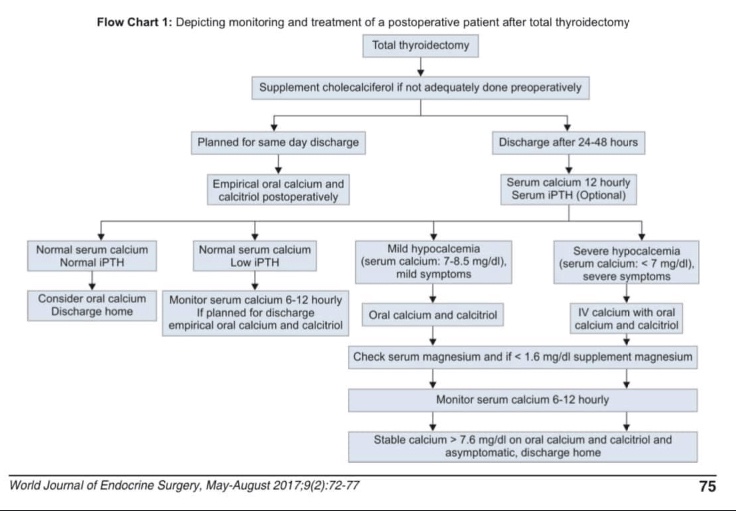
👉Hypocalcemia post total thyroidectomy – Anish Kolly et el May 2017 World Journal of Endocrine Surgery

👉The occurrence of hypocalcemia postthyroidectomy is a menacing condition and can be permanent in severe forms.

👉The extent of surgery, presence of Graves’ disease, technique of surgery, and the presence of preoperative vitamin D deficiency have all been proven to play a role in increasing the risk of postoperative hypocalcemia.

👉With the increasing trend of day-care surgeries and early discharge of patients postsurgery, the need of the hour is to evaluate for possible markers to aid in early prediction of postoperative hypocalcemia.

👉Preoperative vitamin D levels, pre- and postoperative iPTH measurement, and evaluation of trend of calcium changes postoperatively can all aid in the prediction of subsequent hypocalcemia. This can aid in selecting the patients at risk for developing hypocalcemia, in order to discharge calcium and active vitamin D replacement and to follow up accordingly.

Importance of tubercle of Zuckerkandl in thyroid surgery

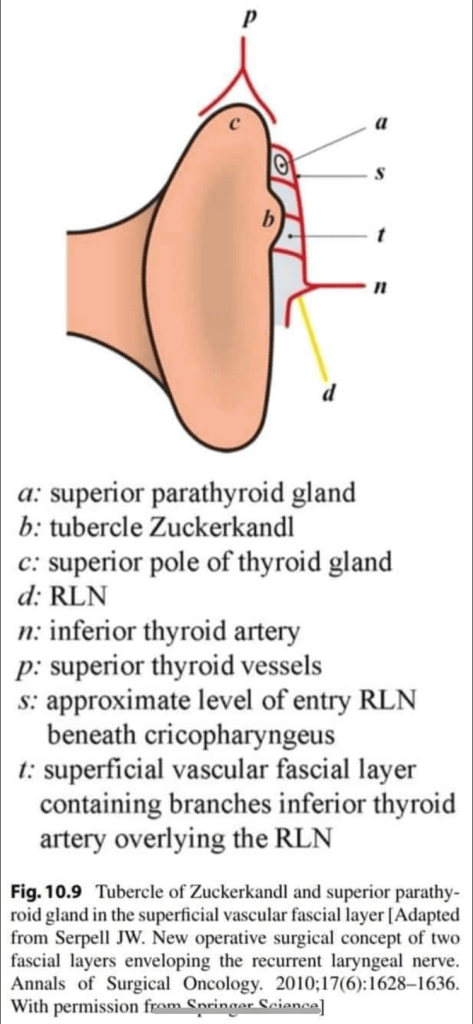
👉The Tubercle of Zuckerkandl (TZ) is not only an important landmark, but also if not properly identified and carefully dissected, increases the chances of recurrent laryngeal nerve (RLN) injury. The new concept of a fascial plane separating the TZ and RLN reinforces the importance of identification TZ for safe dissection of the parathyroid glands and the RLN.

👉There is a fascial sleeve extending from the posterior ‘V’ lip of the superior pole of thyroid which passes posteriorly. This on anteromedial rotation becomes the superficial vascular fascial layer. This encloses the TZ.

👉Tubercle of Zuckerkandl is both the pointer to the RLN and also separates the superior and inferior parathyroid gland.

👉In this situation, it is necessary to mobilize TZ and also rotate it almost 180 degrees anteriorly and medially to expose the RLN and also for the safe dissection of parathyroid glands.

👉It works as a maker and a tool for safe thyroid surgery. In the changing paradigm of thyroid surgery, the TZ, which was an inconstant landmark has now become a constant landmark for identification of RLN.

👉The thyroid surgeon should be aware that it is more consistently found, usually larger on the right with anatomical variations and also might result in pressure symptoms especially in small goiters and becomes a friend as the surgeon experience increases.

👉Saba Retnam et al. World Journal of Endocrine Surgery May 2015

Vitamin D and Hypocalcemia

Vitamin D and Hypocalcemia- ATA meeting presentation 2014

Vit D deficiency is significantly associated with postoperative, symptomatic hypocalcemia in thyroid cancer patients undergoing TT plus CCND. In fact, vitamin D deficiency could predict symptomatic hypocalcemia in cases of postoperative iPTH levels <15 pg/mL,” said Nam. “We suggest that preoperative supplementation of oral vitamin D be considered as a way to minimize postoperative symptomatic hypocalcemia in thyroid cancer patients with preoperative vitamin D deficiency.”

Postoperative hypocalcemia is the most common complication after TT, with transient hypocalcemia occurring in about 30% to 50% of patients and permanent hypocalcemia, lasting 6 months or longer, occurring in 0.5% to 2% of patients. In addition to uncomfortable symptoms, postoperative hypocalcemia also results in longer hospital stays and ongoing laboratory tests.

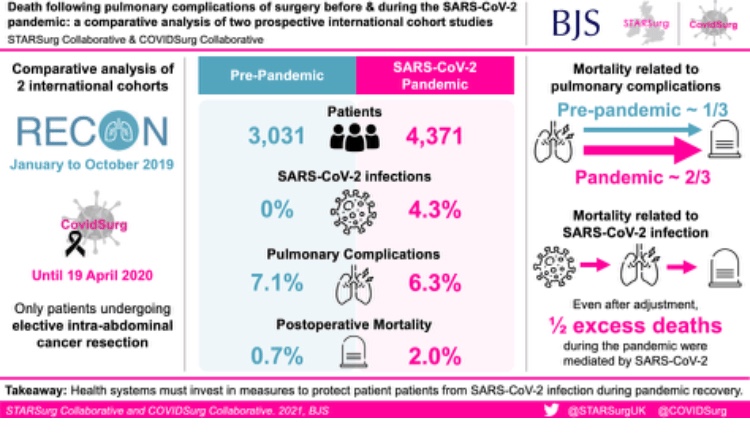
Death following pulmonary complications of surgery before and during the SARS-CoV-2 pandemic

👉COVIDSurg-Cancer & RECON
(REspiratory ComplicatiOns after abdomiNal surgery)

👉This study was a comparative analysis of the two international prospective cohort studies: one before the pandemic (RECON) and the second during the SARS-CoV-2 pandemic (COVIDSurg-Cancer). It is the first study able to directly compare death after pulmonary complications of surgery before and during the pandemic, including both the direct effect of SARS-CoV-2 and the collateral impact of the pandemic on the safety of elective surgery.

👉New publication that I had the opportunity to collaborate in.

ACR Thyroid Imaging, Reporting and Data System

  • Thyroid nodules are exceedingly common:
    • With a reported prevalence between 19%to 68% in adults:
      • On high-resolution ultrasound
  • Currently, fine-needle aspiration (FNA):
    • Is the most effective, practical test to determine whether a nodule is malignant or may require surgery to reach a definitive diagnosis
  • Most thyroid nodules are benign, and even malignant nodules, particularly ones smaller than 1 cm, frequently exhibit indolent or nonaggressive behavior:
    • Therefore, not all detected nodules require FNA and / or surgery
  • Despite a rapid increase in the reported incidence of papillary thyroid cancer (PTC) that resulted from screening thyroid sonography in asymptomatic patients in South Korea:
    • Mortality has remained extremely low
  • In the United States, over-diagnosis of thyroid cancer:
    • Defined as “diagnosis of thyroid tumors that would not, if left alone, result in symptoms or death”:
      • Accounted for 70% to 80% of thyroid cancer cases in women and 45% of cases in men between 2003 and 2007:
        • Therefore, a reliable, noninvasive method to identify which nodules warrant FNA on the basis of a reasonable likelihood of biologically significant malignancy would be highly desirable
  • In 2015, committees convened by the ACR published white papers:
    • That presented an approach to incidental thyroid nodules and proposed standard terminology (lexicon) for ultrasound reporting
  • Project Rationale and Consensus Process:
    • Several professional societies and groups of investigators have proposed methods to guide ultrasound practitioners in recommending FNA on the basis of ultrasound features
    • Some of these systems were termed TI-RADS (Thyroid Imaging, Reporting and Data System):
      • Because they were modeled on the ACR’s BI-RADS®, which has been widely accepted in breast imaging
    • Other societies, such as the American Thyroid Association (ATA):
      • Have taken a slightly different, pattern-oriented approach, but with the same intent
    • The plethora, complexity, and lack of congruence of these systems has limited their adoption by the ultrasound community and inspired our effort to publish a classification system under the auspices of the ACR
    • The ACR TI-RADS Committee agreed on the following attributes for our risk classification algorithm. It would be:
      • Founded on the ultrasound features defined in there previously published lexico
      • Easy to apply across a wide gamut of ultrasound practices
      • Able to classify all thyroid nodules
      • Evidence based to the greatest extent possible
    • The proposals presented in this white paper, which were developed via conference calls, e-mail, and online surveys, represent the consensus opinion of the ACR TI-RADS Committee:
      • They are based on the literature; analysis of data from the Surveillance, Epidemiology, and End Results (SEER) Program of the National Cancer Institute
      • Evaluation of existing risk classification systems; and expert opinion
      • Our recommendations are intended to serve as guidance for practitioners who incorporate ultrasound in the management of adult patients with thyroid nodules
      • They should not be construed as standards
      • Interpreting and referring physicians are legally and professionally responsible for applying their professional judgment to every case, regardless of the ACR TI-RADS recommendations
      • The decision to perform FNA should also account for:
        • The referring physician’s preference and the patient’s risk factors for thyroid cancer, anxiety, comorbidities, life expectancy, and other relevant considerations
  • Overview of ACR TI-RADS:
    • The ultrasound features in the ACR TI-RADS are categorized as:
      • Benign
      • Minimally suspicious for malignancy
      • Moderately suspicious for malignancy
      • Highly suspicious for malignancy
    • Points are given for all the ultrasound features in a nodule:
      • With more suspicious features being awarded additional points
    • Figure 1 presents these features arranged per the five lexicon categories
    • When assessing a nodule:
      • The reader selects one feature from each of the first four categories and all the features that apply from the final category and sums the points
      • The point total determines the nodule’s ACR TI-RADS level:
        • Which ranges from TR1 (benign) to TR5 (high suspicion of malignancy)
          • Note that although it is possible for a nodule to be awarded zero points and hence be characterized as TR1:
            • All other nodules merit at least two points because a nodule that has a mixed cystic and solid composition (one point) will also gain at least one more point for the echogenicity of its solid component
    • Finally, although sonoelastography is a promising technique, it is probably not available in many ultrasound laboratories and is not incorporated into the ACR TI-RADS
    • In the ACR TI-RADS, recommendations for FNA or ultrasound follow-up:
      • Are based on a nodule’s ACR TI-RADS level and its maximum diameter
    • For risk levels TR3 through TR5:
      • The chart presents a size threshold at or above which FNA should be recommended
      • They also defined lower size limits for recommending follow-up ultrasound for TR3, TR4, and TR5 nodules to limit the number of repeat sonograms for those that are likely to be benign or not clinically significant
    • In developing the ACR TI-RADS, the committee strived to account for the discrepancy between the sharp rise in the diagnosis and treatment of thyroid cancer resulting from increased detection and biopsy and the lack of commensurate improvement in long-term outcomes
    • This suggested that diagnosing every thyroid malignancy should not be our goal
    • Like other professional societies:
      • The ACR TIRADS recommend biopsy of high-suspicion nodules only if they are 1 cm or larger
      • As well, they advocate biopsy of nodules that have a low risk for malignancy only when they measure 2.5 cm or more
    • The ACR TI-RADS is designed to balance the benefit of identifying clinically important cancers against the risk and cost of subjecting patients with benign nodules or indolent cancers to biopsy and treatment
    • There recommendations for follow-up ultrasound substantially mitigate the possibility that significant malignancies will remain undetected over time and are concordant with the increasing trend toward active surveillance (“watchful waiting”) for low-risk thyroid cancer
  • Differences Between ACR TI-RADS and Other Systems:
    • Structure:
      • To make the system easy to understand and apply, the ACR TI-RADS does not include:
        • Subcategories, nor does it include a TR0 category to indicate a normal thyroid gland
      • The ACR TI-RADS also lends itself to implementation as templates in voice recognition reporting or computerized decision support systems
      • The committee decided against the pattern-based approach used by the ATA on the basis of the results of a study by Yoon et al:
        • Which showed that the ATA guidelines:
          • Were unable to classify 3.4% of 1,293 nodules:
            • Of which 18.2% were malignant
          • Notably, that study included only nodules that were subjected to FNA or surgery
          • It is likely that an even greater percentage of nodules would not have been categorized had other nodules been included, as it is not practical to provide patterns that account for every potential constellation of features
  • Size Thresholds for FNA:
    • The ACR TI-RADS is consistent with most other guidelines:
      • In recommending FNA for highly suspicious nodules 1 cm or larger:
    • However, thresholds for mildly suspicious and moderately suspicious nodules (2.5 and 1.5 cm, respectively):
      • Are higher than the cutoffs advocated by the ATA and the Korean Society of Thyroid Radiology
    • In a 2005 publication cited by both organizations, Machens et al:
      • Contended that the cumulative risk for distant metastases from papillary and follicular thyroid cancer:
        • Rose at a threshold of 2 cm
      • They therefore advocated biopsy of nodules larger than 2 cm
        • However, reviewing their graphs suggested a gradual, slight increase that began at a larger size
      • More important, Machens et al based their analysis on tumor size in resected specimens, not on ultrasound dimensions
    • Subsequent research has demonstrated a significant lack of concordance between sonographic and pathologic sizing:
      • With a tendency for ultrasound to result in larger measurements
      • Of 205 papillary carcinomas ≥ 1.5 cm studied by Bachar et al:
        • The mean diameter on ultrasound was 2.65 ± 1.07 cm, compared with 1.97 ± 1.17 cm on pathology
    • The committee’s higher size cutoffs reflect this discrepancy:
      • ACR further guided by evaluation of a database of more than 3,000 proven thyroid nodules that was created for a study sponsored by the Society of Radiologists in Ultrasound:
        • Partial analysis showed cancer risk levels of:
          • No more than 2% for TR1 and TR2 nodules
          • 5% for TR3 nodules
          • 5% to 20% for TR4 nodules
          • At least 20% for TR5 nodules
      • They also considered published and SEER data analyses:
        • That showed a slight increase in distant metastases:
          • At 2.5 cm
        • As well as slight increments in 10-year relative and thyroid cancer-specific mortality:
          • At 3 cm
  • ACR TI-RADS Feature Categories:
    • Composition:
      • Nodules that are cystic or almost completely cystic merit no points because they are almost universally benign
      • A spongiform architecture is highly correlated with benign cytology:
        • Regardless of its relative echogenicity or other features
        • However, a spongiform nodule must be composed predominantly (greater than 50%) of small cystic spaces
        • Nodules should not be characterized as spongiform solely on the basis of the presence of a few, scattered cystic components in an otherwise solid nodule
      • “Mixed cystic and solid” combines two features from the lexicon, predominately solid and predominately cystic
      • The appearance of the solid component is more important than the overall size of the nodule or the proportion of solid versus cystic components:
        • In determining whether biopsy is warranted
      • Solid material that is eccentric and has an acute angle with the nodule’s wall is suspicious, as is:
        • Solid material with moderately or highly suspicious characteristics, such as:
          • Decreased echogenicity
          • Lobulation
          • Punctate echogenic foci
      • As well, although color Doppler ultrasound has not been shown to reliably discriminate between benign and malignant nodules:
        • The presence of flow in solid components:
          • Distinguishes tissue from echogenic debris or hemorrhage:
            • Inconsequential debris may be identified by:
              • Layering or motion elicited by changes in patient position
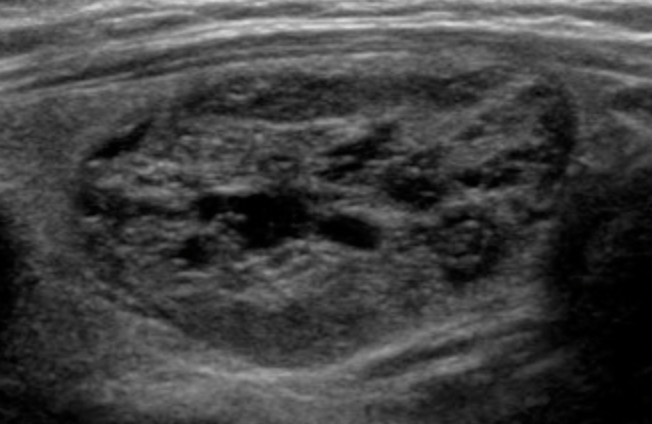
Solid right lobe nodule that contains a few cystic spaces, not warranting classification as spongiform.
  • Echogenicity:
    • This feature refers to a nodule’s reflectivity relative to adjacent thyroid tissue:
      • Except for very hypoechoic nodules:
        • In which the strap muscles are used as the basis for comparison
    • This category also includes “anechoic,” a zero-point feature that was absent from the lexicon:
      • It applies to cystic or almost completely cystic nodules that would otherwise be given three points because of their very hypoechoic appearance
  • Shape:
    • A taller-than-wide shape:
      • Is an insensitive but highly specific indicator of malignancy:
        • This feature is evaluated in the axial plane:
          • By comparing the height (“tallness”) and width of a nodule measured parallel and perpendicular to the ultrasound beam, respectively
          • A taller-than-wide configuration is usually evident on visual inspection and rarely requires formal measurements
  • Margin:
    • The presence of a halo is neither discriminatory nor mutually exclusive with other margin types; therefore, they elected to omit it
    • They included “ill defined” in this group so that any reporting template that incorporates a field for margin will not be left empty if a nodule is not well defined.
    • “Lobulated or irregular margin”:
      • Refers to a spiculated or jagged edge, with or without protrusions into the surrounding parenchyma
      • It may be difficult to recognize this finding if the nodule is:
        • Ill defined, is embedded in a heterogeneous gland, or abuts multiple other nodules
      • If the margin cannot be determined for any reason, zero points should be assigned
      • Extension beyond the thyroid border is classified as:
        • Extensive or minimal:
          • We use the term border because the thyroid gland lacks a true fibrous capsule
          • Extensive extra-thyroidal extension (ETE):
            • That is characterized by frank invasion of adjacent soft tissue and / or vascular structures:
              • Is a highly reliable sign of malignancy and is an unfavorable prognostic sign
          • Minimal ETE may be suspected sonographically in the presence of:
            • Border abutment
            • Contour bulging
            • Loss of the echogenic thyroid border
          • However, agreement among pathologists for identification of minimal ETE is poor, and its clinical significance is controversial:
            • Therefore, practitioners should exercise caution when reporting minimal ETE, particularly for otherwise benign-appearing nodules
  • Echogenic Foci:
    • “Large comet-tail artifacts” are:
      • Echogenic foci with V-shaped echoes greater than 1 mm deep to them
      • They are associated with colloid and are strongly indicative of benignity when found within the cystic components of thyroid nodules
    • “Macro-calcifications” are:
      • Coarse echogenic foci accompanied by acoustic shadowing
      • Evidence in the literature regarding their association with increased malignancy risk is mixed, especially in nodules lacking other malignant features
      • Given published data that show a weakly positive relationship with malignancy:
        • Macro-calcifications are assigned one point, recognizing that the risk is increased if the nodule also contains moderately or highly suspicious features that warrant additional points
      • Peripheral calcifications:
        • Lie along all or part of a nodule’s margin
        • Their correlation with malignancy in the literature is variable
        • However, because some publications suggest that they are more strongly associated with malignancy than macro-calcifications, they are awarded two points
        • Some authors have called attention to interrupted peripheral calcifications with protruding soft tissue as suspicious for malignancy, but with low specificity
        • In the ACR TI-RADS, this appearance qualifies as a lobulated margin:
          • Which adds another two points to the nodule’s total assignment
      • In nodules with calcifications that cause strong acoustic shadowing that precludes or limits assessment of internal characteristics, particularly echogenicity and composition:
        • It is best to assume that the nodule is solid and assign two points for composition and one point for echogenicity
      • Punctate echogenic foci are smaller than macro-calcifications and are non-shadowing:
        • In the solid components of thyroid nodules, they may correspond to the psammomatous calcifications associated with papillary cancers and are therefore considered highly suspicious, particularly in combination with other suspicious features
        • This category includes echogenic foci that are associated with small comet-tail artifacts in solid components:
          • As distinguished from the large comet-tail artifacts described earlier
        • Notably, small echogenic foci may be seen in spongiform nodules:
          • Where they probably represent the back walls of minute cysts
          • They are not suspicious in this circumstance and should not add to the point total of spongiform nodules
  • Additional Benign Appearances:
    • Several ultrasound findings have been described as characteristic of benign nodules with a high degree of reliability
    • These include:
      • A uniformly hyperechoic (“white knight”) appearance
      • A variegated pattern of hyperechoic areas separated by hypoechoic bands reminiscent of giraffe hide:
        • Both in the setting of Hashimoto’s thyroiditis
      • Because of their scarcity, the committee chose not to formally incorporate these patterns in the ACR TI-RADS chart
  • Papillary Thyroid Micro-carcinomas:
    • The ACR TI-RADS is concordant with other guidelines in recommending against routine biopsy of nodules smaller than 1 cm:
      • Even if they are highly suspicious
    • However, because some thyroid specialists advocate active surveillance, ablation, or lobectomy for papillary microcarcinomas:
      • Biopsy of 5 mm to 9 mm TR5 nodules may be appropriate under certain circumstances
      • The determination to perform FNA will involve shared decision making between the referring physician and the patient
      • The report should indicate whether the nodule can be measured reproducibly on follow-up studies
      • Additionally, nodules in critical submarginal locations may complicate surgery:
        • Therefore, the report should also indicate whether the nodule abuts the trachea or whether it is adjacent to the tracheoesophageal groove (the location of the recurrent laryngeal nerve)
  • Reporting Considerations:
    • Measurement and Documentation:
      • Accurate sizing of thyroid nodules is critical, as the maximum dimension determines whether a given lesion should be biopsied or followed
      • Although some interobserver discrepancy is inevitable because of variable conspicuity, consistent technique improves measurement accuracy and reproducibility
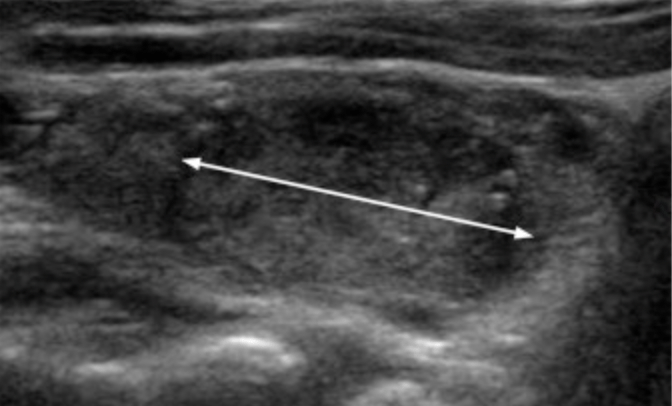
      • Nodules should be measured in three axes:
        • Maximum dimension on an axial image
        • Maximum dimension perpendicular to the previous measurement on the same image
        • Maximum longitudinal dimension on a sagittal image
      • For obliquely oriented nodules, these measurements may be different than the ones used to determine a taller-than-wide shape, but this discrepancy should rarely present a problem in practice
      • Measurements should also include:
        • The nodule’s halo, if present
      • Practitioners may use linear dimensions to determine volume, a calculation that is available on many ultrasound machines
      • Regardless of the method used, each practice should measure and report nodules consistently to facilitate serial comparison


  • Definition of Growth:
    • Criteria for significant growth depend on:
      • The size of the nodule and must take measurement variability into account
    • In the ACR TI-RADS, significant enlargement is defined as:
      • A 20% increase in at least two nodule dimensions and a minimal increase of 2 mm, or
      • A 50% or greater increase in volume, as in the criteria adopted by other professional societies
    • Because enlargement may not be apparent if the current sonogram is compared only with the immediately preceding one, it is important to also review measurements from earlier scans, if available
  • Timing of Follow-Up Sonograms:
    • There is little consensus in the literature regarding optimal spacing of follow-up sonograms for nodules that do not meet size criteria for FNA, as growth rates do not reliably distinguish benign from malignant nodule
    • The committee believes that scanning intervals of less than 1 year are not warranted:
      • Except for proven cancers under active surveillance, which may require more frequent follow-up at the discretion of the referring physician
    • We advocate timing on the basis of a nodule’s ACR TI-RADS level, with additional sonograms for lesions that are more suspicious:
      • For a TR5 lesion, we recommend scans every year for up to 5 years
      • For a TR4 lesion, scans should be done at 1, 2, 3, and 5 years
      • For a TR3 lesion, follow-up imaging may be performed at 1, 3, and 5 years
      • Imaging can stop at 5 years if there is no change in size, as stability over that time span reliably indicates that a nodule has a benign behavior
    • There is no published evidence to guide management of nodules that enlarge significantly but remain below the FNA size threshold for their ACR TI-RADS level at 5 years, but continued follow-up is probably warranted
    • If a nodule’s ACR TI-RADS level increases on follow-up, the next sonogram should be done in 1 year, regardless of its initial level
  • Number of Nodules to Biopsy:
    • Biopsy of three or more nodules is poorly tolerated by patients and increases cost with little or no benefit and some added risk
    • Therefore, the committee recommends targeting no more than two nodules with the highest ACR TI-RADS point totals that meet criteria for FNA
    • Size should not be the primary criterion for deciding which nodule(s) to sample
    • They discourage usage of the term dominant nodule, which is often applied to the largest lesion in the gland:
      • Because it downplays the primary role of architecture in determining management
    • If three or more nodules fall within ACR TI-RADS guidelines for biopsy, the two with the most suspicious appearance on the basis of point totals should be biopsied, even if they are not the largest
    • Conversely, in a gland that contains multiple discrete nodules that do not meet criteria, there is little reason to subject the largest one to FNA solely because of its size
    • Although malignancy cannot be definitively excluded under these conditions, sampling variation lessens the chance of detecting cancer because it would be impractical to biopsy every nodule
    • Likewise, biopsy is usually not indicated in a gland that is replaced by multiple, confluent nodules of similar appearance
  • Assessment of Cervical Lymph Nodes:
    • Evaluation of cervical lymph nodes is a vital part of every thyroid sonographic examination
    • Abnormal findings suggestive of cervical lymph node metastasis include:
      • A globular shape
      • Loss of the normal echogenic hilum
      • Presence of peripheral rather than hilar flow
      • Heterogeneity with cystic components
      • Punctate echogenic foci that may represent microcalcifications
    • They recommend FNA of suspicious nodes, in addition to up to two nodules that warrant biopsy on the basis of the ACR TI-RADS

#Arrangoiz #Surgeon #ThyroidSurgeon #CancerSurgeon #ThyroidExpert #EndorineSurgery #HeadandNeckSurgeon