Blog

Routine Identification of the External Branch of the Superior Laryngeal Nerve

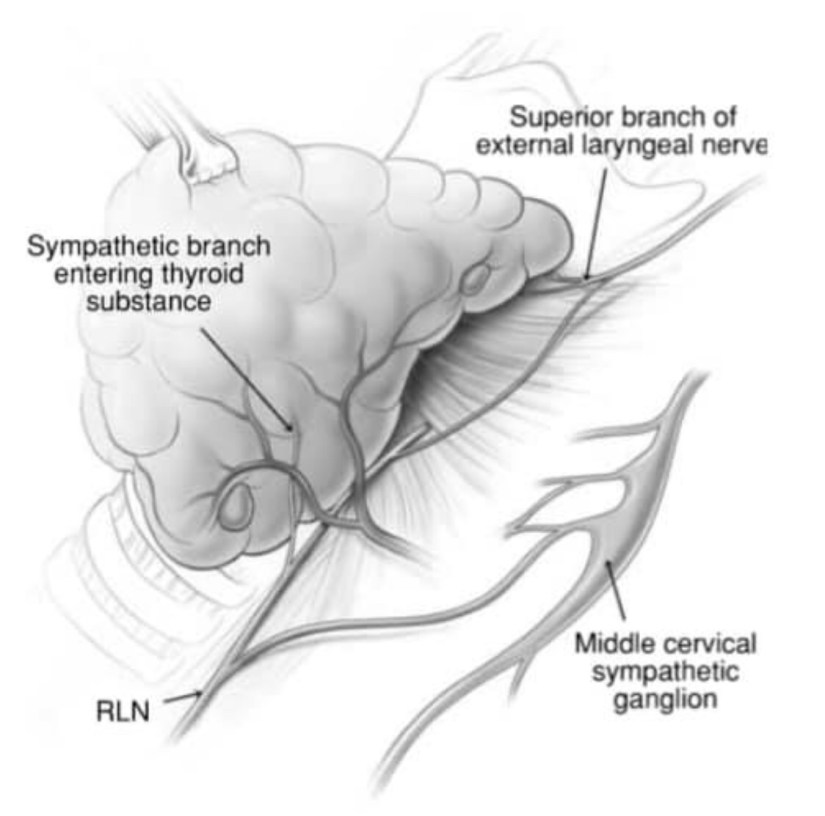
👉The external branch of the superior laryngeal nerve (EBSLN) has been labelled ‘the neglected nerve’ of thyroid surgery.

👉Most surgeons have simply attempted to avoid this nerve on the assumption that so doing will prevent injury; however, it is now recognized that injury is relatively common and associated with the potential for significant impairment, espe- cially for those who use their voices professionally.

👉I was taught to always attempt to identify the nerve and recommend doing so.

👉Recently Aina and Hisham have shown that the nerve can be routinely identified in over 90% of cases, a level that sets a new benchmark for head and neck surgeons / endocrine surgeons.

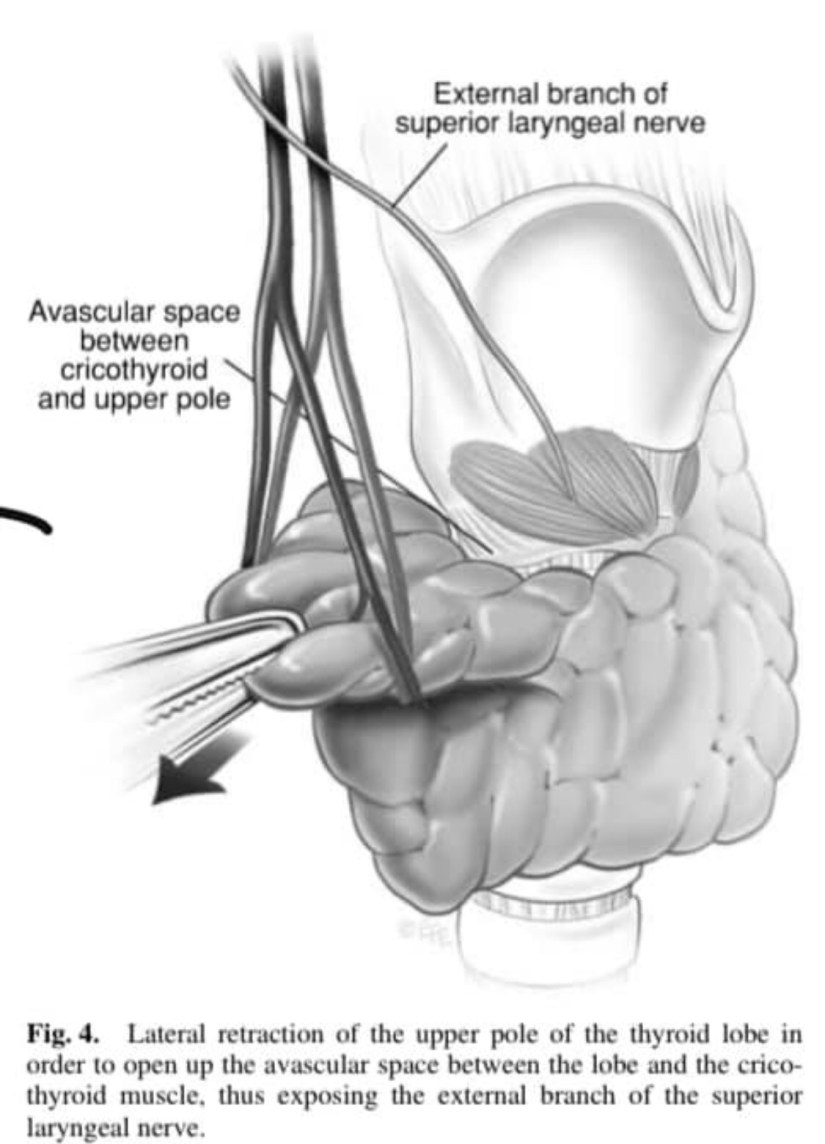
👉The key to identifying the nerve is to develop the avascular plane between the cricothyroid muscle and the medial border of the upper pole of the thyroid lobe, a manoeuvre facilitated by lateral retraction of the lobe.

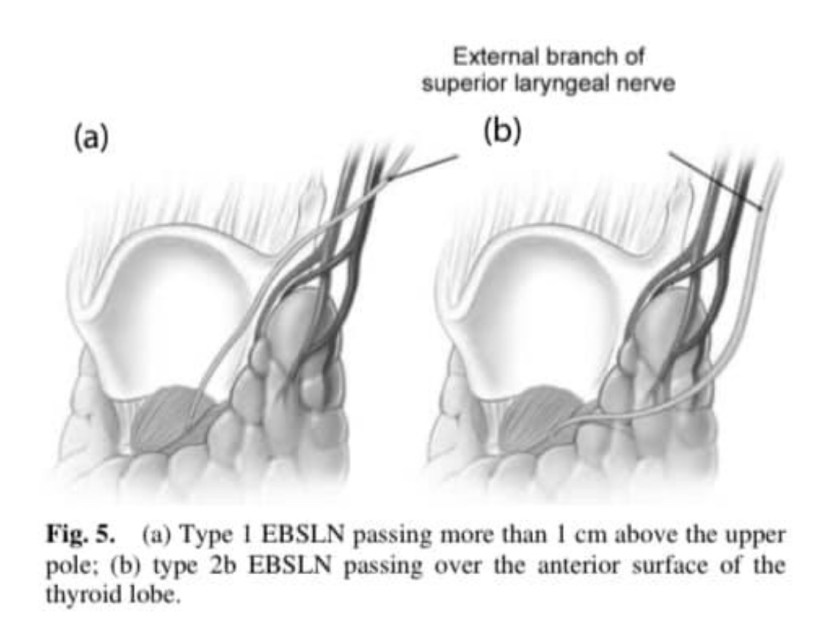
👉Awareness of the various positions of the EBSLN according to the Cernea classification is also essential if the nerve is to be both identified and preserved.

👉Type 1 EBSLN are located well clear of the thyroid, more than 1 cm above the upper pole of the lobe passing directly into the cricothyroid muscle.

👉Type 2a nerves pass in the vicinity of the superior thyroid vessels as they enter the gland substance.

👉Type 2b nerves cross over the anterior surface of the thyroid lobe.

👉Awareness of the anatomic variations, such as the nerve of Galen, a direct communication between the RLN and EBSLN, is important in avoiding injury to the nerve.

#Arrangoiz

#HeadandNeckSurgeon

#ThyroidSurgeon

#ParathyroidSurgeon

#CancerSurgeon

#SurgicalOncologist

#EndocrineSurgery

#Teacher

#MSMC

#MountSinaiMedicalCenter
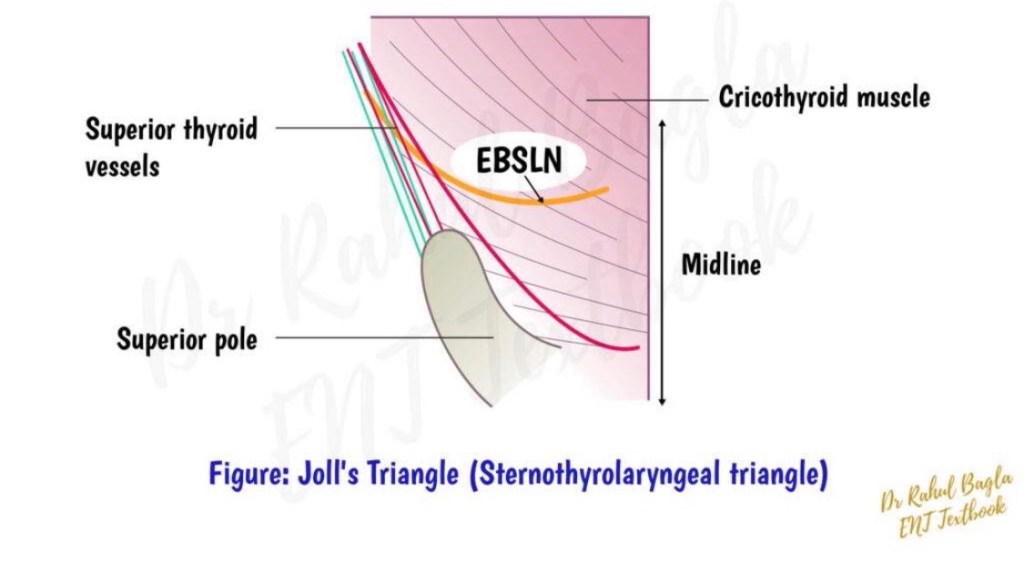
Vascular anatomy relevant to the surgical approach to the external branch of the superior laryngeal nerve (EBSLN)

The true prevalence of iatrogenic injury to the EBSLN during thyroid surgery remains difficult to quantify, largely due to underdiagnosis and variability in clinical presentation.

– The pathophysiology and anatomical risk stratification of EBSLN injury were elegantly described by Cernea et al. in 1992 [1]. In this landmark study, the variant in which the nerve crosses the superior thyroid pedicle below the plane of the upper pole apex—classified as Cernea type 2B—was identified as carrying a high risk of injury.

– Although this configuration was initially reported in approximately 14% of cadaveric dissections by the University of São Paulo group [1], later clinical series by Gianlorenzo Dionigi et al. demonstrated that this “high-risk” anatomy may be present in up to 54% of patients with large or bulky goiters [2], significantly increasing surgical complexity.

– First popularized by Mossman and DeWeese (1968), Joll’s sterno-thyro-laryngeal triangle remains a valuable anatomical landmark for identifying the EBSLN during superior pole dissection [3].

– In 1986, Michael Friedman provided a detailed description of the surgical approach to the upper thyroid pole that many of us continue to employ in complex cases, particularly when exposure of the EBSLN is critical [4].

– At the supero-external angle of the intermuscular pocket, created to identify the insertion of the sternothyroid muscle on the oblique line of the thyroid cartilage, surgeons frequently encounter a small arterial vessel. While its injury usually causes only minor (though often annoying) bleeding, it serves as an important anatomical landmark.

– These vessels supply the upper portion of the sternohyoid muscle, above the level of the cricoid cartilage.

– According to Wang et al. [5], in approximately 75% of cases, this vessel represents a terminal branch of a common trunk with the cricothyroid artery, originating from the superior thyroid artery. Before bifurcation, this trunk also gives rise to small nourishing branches to the thyrohyoid and omohyoid muscles.

– The so-called “sternohyoid nutrient vessel” is anatomically unique in 56% of cases [5]. After emerging superficially, it enters the (virtual) intermuscular space between the posterior surface of the sternohyoid and the anterior surface of the sternothyroid muscle, following one of two patterns:

✅ coursing along (“hugging”) the lateral border of the sternothyroid muscle, or ✅ directly piercing the most cranial fibers of the sternothyroid muscle.

– Awareness of this vascular anatomy can facilitate safe superior pole dissection, improve EBSLN identification, and ultimately reduce the risk of voice-related complications following thyroid surgery.

References

Cernea CR, et al. Identification of the external branch of the superior laryngeal nerve during thyroidectomy. Am J Surg. 1992. Dionigi G, et al. Surgical anatomy of the external branch of the superior laryngeal nerve. Gland Surg. Mossman HW, DeWeese MS. The surgical anatomy of the larynx. 1968. Friedman M. Surgical management of the superior thyroid pole. Otolaryngol Clin North Am. 1986. Wang C, et al. Vascular supply of the infrahyoid muscles and its surgical relevance. Surg Radiol Anat.

SOUND Trial Findings and Discussion

  • Sentinel Lymph Node Biopsy vs No Axillary Surgery in Patients With Small Breast Cancer and Negative Results on Ultrasonography of Axillary Lymph Nodes:
    • The SOUND Randomized Clinical Trial. Gentilini et al. JAMA Oncol. 2023 Sep 21:e233759. doi: 10.1001/jamaoncol.2023.3759
  • The SOUND trial that was published in JAMA Oncology concluded:
    • That patients with small breast cancer (less than 2 cm) and sonographically normal appearing lymph nodes:
      • Can be safely spared any axillary surgery:
        • Whenever the lack of pathological information does not affect the postoperative treatment plan
  • This study was designed to evaluate whether omission of sentinel lymph node (SLN) surgery in patients with negative axillary ultrasound:
    • Was noninferior to SLN surgery in terms of 5 year distant disease free survival
  • While this trial is unlikely to change practice immediately:
    • It is a thought provoking study that will likely generate multidisciplinary discussion
  • Phase III Randomized Controlled Trial:
    • Conducted at 18 European hospitals from 2012 to 2017:
      • Italy, Spain, Switzerland, and Chile:
        • Recruitment Feb 6, 2012 – Jun 30, 2017
    • Enrolled patients with invasive breast cancer up to 2 cm, cN0, planning for breast conserving surgery (BCT) and adjuvant radiation therapy (XRT) who had an axillary US showing no LN involvement on imaging:
      • If doubtful – FNA performed and had to be negative:
        • 1406 negative AUS, 57 with negative FNA
    • Patients were randomized to SLN surgery vs no axillary surgery
    • Analysis cohort:
      • 1405 women:
        • 708 SLN
        • 697 no axillary surgery
      • Median age 60
      • Tumor size 1.1 (IQR 0.8-1.5cm)
      • ER+ / Her2- disease in 87.8%
      • In the SLN group:
        • 13.7% had positive nodes on SLN:
          • 5.1% macrometases
          • 8.6% micrometastases
        • 2.0% had ≥ 2 positive SLNs, 0.6% had pN2 disease
      • Recommended adjuvant systemic therapy and radiotherapy were similar in the two groups:
        • 20.1% of SLN group and 17.5% of no axillary surgery group received chemotherapy
        • 98.0% of SLN group and 97.6% of no axillary surgery received radiation
        • 83.3% (593 pts) vs 81.1% (565 pts) had whole breast radiation over 3 to 5 weeks
        • 10.7% (76 pts) vs 10.8% (75 pts) had partial breast radiotherapy
        • 3.4% (24 pts) vs 5.6% (39 pts) had intraoperative boost of ELIOT (12 Gy) followed by a hypofractionated course of whole-breast radiotherapy (37.05 Gy in 13 fractions)
  • The study authors concluded that patients with patients with small breast cancer with sonographically normal appearing lymph nodes:
    • Can be safely spared any axillary surgery:
      • Whenever the lack of pathological information does not affect the postoperative treatment plan
  • This study provides further data:
    • Supporting that axillary sentinel lymph node surgery does not provide therapeutic benefit
  • In the no axillary surgery group:
    • The cumulative incidence of lymph node recurrences in the axilla was very low:
      • 0.4% at 5 years:
        • Despite a 13.7% rate of nodal involvement in the SLNB group
  • However, SLN surgery likely still has a role in certain patients for staging to guide adjuvant therapies:
    • In particular in young patients:
      • Where chemotherapy is associated with survival benefit for node positive disease (Rx-Ponder patient)
    • Furthermore, while adjuvant treatment recommendations in terms of rate of chemotherapy was similar between the two groups:
      • Identification of nodal positivity in ER+ breast cancer:
        • Also influences treatment options in terms of:
          • CDK4/6 inhibitor eligibility as well as consideration of extended endocrine therapy (to 10 years)
    • Many patients are interested in potential for omission of radiation therapy:
      • The trial required radiation, with 90% of patients having whole breast radiation and 10% partial breast radiation
      • Some of the patients in this trial with small breast cancers aged > 65 would be candidates for consideration of omission of radiation
      • This creates a dilemma regarding de-escalating axillary surgery leading to potential escalation of adjuvant radiation
    • It should be noted that tumor grade was not an inclusion / exclusion factor:
      • However, 18% had grade 3 disease
      • Patients with grade 3 disease have higher likelihood of nodal positivity:
        • Should omission of SLN surgery be limited to grade 1 and 2 disease at outset
        • Especially as grade 3 disease with 1 to 3 positive nodes:
          • Would make patients eligible for CDK4/6 inhibitor
  • Genomic scores were not included on this trial:
    • Most patients with ER+ / Her2- disease (with tumors > 1 cm in size) would be considered for genomic testing to guide systemic treatment recommendations
  • In summary:
    • Multidisciplinary discussion will be important before implementing any changes in practice as a result of the SOUND trial
  • I look forward to additional data from several other trials evaluating this question over the upcoming years:
    • INSEMA (published)
    • BOOG 2013-08
    • NAUTILUS

ACOSOG Z0011, AMAROS, ACOSOG Z0010 Trial

  • Data from the ACOSOG Z0011 trial:

    • Suggested that completion axillary dissection can be avoided in patients with:
      • cT1 to cT2, cN0 breast cancer with sentinel lymph node (SLN) metastasis:
        • Provided that systemic therapy and whole-breast irradiation (WBI):
          • Are incorporated into the treatment strategy for early-stage breast cancer following breast-conserving surgery (BCS)
    • This trial enrolled:
      • Clinically node-negative patients with:
        • Tumors less than 5 cm in size and with 1 to 2 positive SLNs by hematoxylin and eosin staining who were treated with BCS and planned WBI
    • Patients were randomized to:
      • SLN biopsy alone vs. axillary lymph node dissection (ALND)
    • The 10-year:
      • Overall survival was similar in the SLNB only group compared to the ALND group:
        • 86.3% vs. 83.6%, p = 0.72
      • Disease-free survival was similar in the SLNB only group compared to the ALND group:
        • 80.2% and 78.2%
      • In patients treated with ALND:
        • 27% had additional non-SLN disease found at the time of ALND:
          • Suggesting that patients treated with SLNB alone would have a similar disease burden:

            • Yet, nodal recurrence rates were similar between the SLNB and ALND groups at 10 years:
              • 1.5% vs. 0.5%, p = 0.13
            • Suggesting that systemic therapy and radiation therapy:
              • Provide adequate local control in patients with limited disease burden in the axilla
  • The AMAROS trial:
    • Is a phase III non-inferiority study:
      • Comparing ALND with axillary radiation therapy in patients with:
        • Clinical T1 / T2 N0 breast cancer with a positive sentinel node
    • The trial showed low 5-year rates of regional recurrence:
      • In the ALND and axillary radiation therapy groups:
        • 0.43% vs 1.19%, respectively
      • But the risk of patient perceived (subjective) or measured (objective) lymphedema:
        • Was twice as high in the ALND arm compared to the radiation arm:
          • Subjective
            • 23% vs. 11% after 5 years of follow-up
          • Objective:
            • 13% vs. 5% after 5 years of follow-up
  • The ACOSOG Z0010 trial:
    • Evaluates the incidence and impact of SLN and bone marrow micro-metastases on patients with early-stage breast cancer treated with BCS and radiation
    • It demonstrated that:
      • Identification of occult disease in the SNs with immunohistochemistry was not associated with survival
  • References:

    • Giuliano AE, McCall L, Beitsch P, Whitworth PW, Blumencranz P, Leitch AM, et al. Locoregional recurrence after sentinel lymph node dissection with or without axillary dissection in patients with sentinel lymph node metastases: the American College of Surgeons Oncology Group Z0011 Randomized Trial. Ann Surg. 2010;252(3):426-432.Veronesi U, Cascinelli N, Mariani L, Greco M, Saccozzi R, Luini A, et al. Twenty-year follow-up of a randomized study comparing breast-conserving surgery with radical mastectomy for early breast cancer. N Engl J Med. 2002;347(16):1227-1232.Rutgers EJ, Donker M, Straver ME. Radiotherapy or surgery of the axilla after a positive sentinel node in breast cancer patients: final analysis of the EORTC AMAROS trial (10981/22023). J Clin Oncol. 2013;31 (suppl; abstr LBA1001). Available at: http://meetinglibrary.asco.org/content/109779-132. Accessed November 7, 2013.Straver ME, Meijnen P, van Tienhoven G, et al. Sentinel node identification rate and nodal involvement in the EORTC 10981-22023 AMAROS trial. Ann Surg Oncol. 2010;17:1854-1861.
  • Hunt KK, Ballman KV, McCall LM, et al. Factors associated with local-regional recurrence after a negative sentinel node dissection: results of the ACOSOG Z0010 trial. Ann Surg. 2012;256:428-436.

AMAROS (EORTC 10981-22023)

  • AMAROS (EORTC 10981-22023):
    • If a positive SLN needs axillary treatment, axillary RT (ART) gives equivalent control to ALND with far less lymphedema
  • Design & who it applies to:
    • Population: 
      • cT1 to cT2, clinically node-negative invasive breast cancer with a positive sentinel lymph node (SLN):
        • Patients underwent BCT or mastectomy:
          • Unlike Z0011, which was BCT-only
        • Randomized to ALND (levels I to II) vs axillary radiotherapy (levels I to III ± supraclavicular fossa)
    • Primary endpoint: 
      • Non-inferiority of 5-year axillary recurrence (ARR)
    • Key results:
      • 5-year (primary report, Lancet Oncol 2014):
        • Axillary recurrence: 
          • 0.43% ALND vs 1.19% ART:
            • Non-inferiority test underpowered due to very few events, but absolute ARR was low in both arms
      • Lymphedema at 5 years: 
        • 23% ALND vs 11% ART (significantly less with ART)
    • 10-year update (JCO 2023):
      • Cumulative axillary recurrence: 
        • 0.93% ALND vs 1.82% ART (HR 1.71, 95% CI 0.67–4.39):
          • No meaningful difference
      • Overall survival: 
        • 84.6% ALND vs 81.4% ART (HR 1.17, 95% CI 0.89–1.52):
          • No difference
      • Disease-free survival: 
        • 75.0% ALND vs 70.1% ART (HR 1.19, 95% CI 0.97–1.46):
          • No difference
      • Updated 5-year lymphedema: 
        • 24.5% ALND vs 11.9% ART (P<.001):
          • Quality of life similar
  • Clinical takeaways:
    • For SLN-positive patients who still require axillary treatment:
      • Choose ART over ALND to achieve the same axillary control and survival with substantially less lymphedema:
        • This applies to both BCT and mastectomy cohorts (AMAROS included both):
          • If you’re uncomfortable omitting axillary therapy (e.g., features beyond Z0011 scope):
            • ART is preferred over ALND to minimize morbidity
    • Avoid combined ALND + ART when possible:
      • Stacking treatments markedly raises lymphedema risk:
        • General morbidity data and reviews echo this principle
    • Field/Dose (typical in AMAROS): 
      • Axilla levels I to III ± SCV, ~ 50 Gy in conventional fractions; most modern clinics use tangents / high tangents plus nodal fields as indicated. (Protocol details in trial reports.)
  • Bottom line: 
    • ART = ALND for control, with less arm morbidity:
      • So when axillary therapy is needed after a positive SLN:
        • ART is the preferred option

Giuliano et al., Ann Surg 1994 — “Lymphatic mapping and sentinel lymphadenectomy for breast cancer.”

  • What they asked?
    • Could intraoperative lymphatic mapping with a blue dye–guided sentinel lymphadenectomy accurately reflect axillary status in breast cancer”
      • Is the SLN a reliable surrogate for the entire basin? PubMed
  • Methods (early feasibility):
    • Design / setting: 
      • Prospective feasibility / accuracy series at John Wayne Cancer Institute
    • Technique: 
      • Vital blue dye injected at the primary site
      • Surgeons traced stained lymphatics to the first (“sentinel”) node, excised it, then performed ALND on all patients to verify accuracy
    • Cohort: 
      • 174 mapping procedures PubMed
  • Key performance results:
    • Identification rate: 
      • 65.5% (SLN found in 114 / 174 procedures):
        • Reflecting the learning curve of this first-in-breast series PubMed
    • Accuracy when SLN identified: 
      • 95.6% (SLN status matched final axillary status in 109 / 114)
      • All false-negatives occurred early:
        • In the last 87 cases:
          • SLN status was 100% predictive PubMed
    • Unique value of the SLN: 
      • In 38% (16 / 42) of clinically node-negative but pathologically node-positive axillae:
        • The sentinel node was the only involved node:
          • Limited disease that a blind sample / low-level dissection might have missed PubMed
    • Anatomic insight: 
      • Among the last 54 mapped cases:
        • 10 had level II-only metastases:
          • Underscoring why targeted mapping can outperform low-level sampling PubMed
  • Why it mattered?
    • Provided the first clinical proof-of-concept in breast cancer that a mapped SLN can accurately stage the axilla with far less surgery:
      • Laying the groundwork for later multicenter validation (Krag 1998) and definitive RCTs (NSABP B-32, ACOSOG Z0011) that enabled omission of routine ALND in properly selected patients PubMed
  • Practical pearls / caveats:
    • Learning curve is real: 
      • Early experience showed lower identification and some false-negatives
      • Performance improved to perfect concordance in later cases
      • Training and standardized technique are crucial PubMed
    • Technique used here was blue dye alone (pre-radioisotope era):
      • Subsequent adoption of radiotracer (± dye) further raised identification and lowered FNR, but the 1994 study established the principle

Krag et al., NEJM 1998 — “The Sentinel Node in Breast Cancer: A Multicenter Validation Study.”

  • What did they asked?
    • Can a radioisotope-guided sentinel lymph node (SLN) biopsy accurately predict the status of the axilla in breast cancer across multiple surgeons and practice settings? 
  • Methods:
    • Population and setting:
      • 443 women with breast cancer:
        • Treated by 11 surgeons at varied centers
      • Everyone underwent complete axillary lymph node dissection (ALND) so SLNB performance could be verified
    • Technique:
      • Peritumoral / pericavity injection of:
        • 4 mL technetium-99m sulfur colloid (≈1 mCi / 37 MBq):
          • Intraoperative hand-held gamma probe to find “hot spots,” then SLN excision followed by ALND
  • Key performance metrics:
    • Identification (“hot-spot”) rate:
      • 93% (413 / 443)
    • Accuracy vs full axillary histology:
      • 97% (392 / 405)
    • Sensitivity:
      • 89% (101/114):
        • False-negative rate ≈ 11% among node-positive cases
      • Specificity / PPV:
        • 100% (no false positives)
      • NPV:
        • 96% (291/304)
    • Anatomic insight:
      • SLNs were outside the axilla in 8% and outside level I in 11%
      • 3% of positive SLNs were in non-axillary locations
  • Why it mattered?
    • Provided the first large, multicenter, surgeon-diverse validation:
      • Showing SLN biopsy is a highly accurate predictor of axillary status:
        • Establishing the foundation for replacing routine ALND in cN0 patients and enabling the de-escalation pathway:
          • Later confirmed by trials like NSABP B-32 and Z0011
  • Nuances and caveats the paper raised:
    • Learning curve / variability:
      • Success varied by surgeon and patient factors, underscoring the need for technique standardization and training
    • Technique scope:
      • Study used radioisotope only (no blue dye in the protocol):
        • Which many centers later combined with blue dye to further enhance identification and lower FNR:
          • Background reviews consistently show higher detection and lower FNR with combined mapping

NATALEE at a Glance (ribociclib, adjuvant)

Design/Pop: Phase III, HR+/HER2– stage II–III EBC; broadened risk (included select stage IIA N0 with high genomic/grade risk). Randomized to ribociclib 400 mg (3 weeks on/1 off) for 3 years + NSAI vs NSAI alone; ET planned ≥5 years. Primary endpoint: iDFS.  Primary readout: With ~33 mo median follow-up, iDFS HR ~0.75 (0.749; 95% CI 0.628–0.892; P=0.0012).  Absolute benefit over time: Exploratory 4-year update shows absolute iDFS improvement grew from ~2.7% at 3 yrs to ~4.9% at 4 yrs; distant relapse-free survival favored ribociclib.  Subgroups: Benefit consistent across stage II and III and other pre-specified groups (methodology commentary).  Safety/Tolerability: Lower starting dose (400 mg) chosen for adjuvant tolerability; class-expected AEs (neutropenia, LFT elevations, QTc monitoring needed). (Trial design/safety overviews). 

Regulatory & guidelines

US FDA (Sept 17, 2024): Ribociclib + an aromatase inhibitor approved for adjuvant treatment of HR+/HER2– stage II–III EBC at high risk of recurrence (also a ribociclib/letrozole co-pack).  Guideline movement: Professional guidance in 2024–2025 reflects inclusion of adjuvant CDK4/6 inhibition (abemaciclib in monarchE-eligible; ribociclib after approval per NATALEE risk criteria). Check current NCCN/ASCO updates locally.  UK/NICE (Apr 2025): Ribociclib endorsed for early HR+/HER2– disease (node-positive high-risk), with access caveats for node-negative high-risk. 

How NATALEE compares to monarchE (abemaciclib)

monarchE (2 years abemaciclib continuous + ET; high-risk node-positive only) has durable iDFS/DRFS gains and now a statistically significant OS benefit (HR ~0.84; 7-yr OS 86.8% vs 85.0%).  NATALEE uses intermittent ribociclib for 3 years and broader eligibility (including some node-negative). It delivers robust iDFS benefit with growing absolute separation on longer follow-up; OS not yet mature. 

Practical takeaways for clinic

Who fits NATALEE-style ribociclib? HR+/HER2– stage II–III at high risk (e.g., node-positive; select node-negative with high genomic/grade risk). Confirm payer/regulator language in your region.  Duration & dosing: Ribociclib 400 mg, 3 weeks on/1 off for 36 months + AI; plan ET for ≥5 years. Monitor ANC, LFTs, and QTc.  Choosing the CDK4/6 agent: Abemaciclib remains a strong default in classic monarchE-eligible high-risk node-positive patients—now with OS data.  Ribociclib extends adjuvant CDK4/6 benefit to broader early-stage risk per NATALEE and is FDA-approved for stage II–III high-risk. Consider patient comorbidities (QTc, liver), logistics of a 3-year course, and shared decision-making. 

Key sources to cite in slides

Hortobagyi GN et al. Ann Oncol 2025; NATALEE primary publication (iDFS HR 0.749).  ESMO Oncology News 2025; 4-year NATALEE exploratory analysis (absolute iDFS gain ~4.9% at 4 yrs).  FDA label/news for adjuvant ribociclib (Sept 2024).  monarchE OS update 2025.  ASCO/NCCN updated guidance on adjuvant CDK4/6 use. 

ACOSOG Z0011 Trial

  • Background and Rationale:
    • Historically, axillary lymph node dissection (ALND) was performed when sentinel lymph node (SLN) biopsy showed metastasis:
      • For better staging and regional control
    • However, ALND is associated with significant morbidity:
      • Lymphedema, shoulder dysfunction, nerve injury, etc
    • The question:
      • In patients with limited SLN metastasis (1 to 2 positive sentinel nodes):
        • Can ALND be safely omitted (i.e. SLN biopsy alone) without compromising survival or local control?
  • Trial Design and Population:
    • Name / acronym:
      • ACOSOG Z0011 (American College of Surgeons Oncology Group)
    • Type:
      • Phase III randomized noninferiority trial
    • Enrollment period:
      • May 1999 – December 2004 (115 institutions
    • Eligibility:
      • Clinically node-negative:
        • No palpable axillary adenopathy
      • Invasive breast cancer:
        • cT1 or cT2 (≤ 5 cm)
      • Undergoing breast-conserving surgery (lumpectomy) with planned whole-breast tangential irradiation:
        • No third-field axillary radiation
      • 1 or 2 sentinel lymph nodes positive for metastasis detected on standard hematoxylin and eosin (not just by immunohistochemistry) 
    • Exclusions / constraints:
      • Patients undergoing mastectomy (no breast radiation) were not included
      • No neoadjuvant systemic therapy (all patients had primary surgery first) 
      • Third-field / nodal-field radiation of the axilla was prohibited by protocol 
    • Randomization arms:
      • SLND (sentinel lymph node dissection) alone (no further ALND)
      • SLND + completion ALND (standard of care)
      • Patients randomized:
        • 891 total:
          • 856 (96%) completed per-protocol:
            • 446 in SLND-alone
            • 445 in ALND
      • Planned therapies in both arms:
        • Breast irradiation, adjuvant systemic therapy and endocrine therapy per treating physician 
      • Primary endpoint:
        • Overall survival:
          • Noninferiority margin:
            • Hazard ratio ≤ 1.3
      • Secondary endpoints:
        • Disease-free survival, locoregional recurrence, morbidity 
      • Follow-up:
        • Median ~ 9.3 years (IQR ~6.93–10.34) 
        • Final follow-up data locked in 2015
  • In the ACOSOG Z0011 trial:
    • The impact of axillary dissection on the outcomes of both pre- and postmenopausal patients:
      • With clinically T1 to T2, N0 breast cancers was studied
    • Clinically node-negative breast cancer patients:
      • Treated with breast-conserving surgery with 1 to 2 positive SLNs:
        • Were randomized to:
          • Axillary lymph node dissection (ALND) or no additional axillary surgery
    • All women were recommended:
      • For whole-breast irradiation
    • Systemic therapy:
      • Was left to the discretion of the treating physician:
        • But 96% of women in the ALND arm and 97% in the SLN arm:
          • Received some type of systemic therapy
    • Patients were randomized:
      • To receive completion ALND, or
      • No immediate additional axillary surgery
    • Patients were monitored for:
      • Local and regional recurrence, distant recurrence, contralateral breast cancers, and death
    • The study showed that in patients with cT1 to cT2 breast cancers with 1 to 2 positive SLNs:
      • There were no significant differences in:
        • DFS and OS between patients treated with:
          • SLND (DFS: 83.9%, OS: 92.5%)
          • ALND (DFS: 82.2%, OS: 91.8%)
        • 10-year overall survival:
          • SLND – alone: 86.3 %
          • ALND – 83.6 %
            • Hazard ratio (unadjusted) = 0.85 (one-sided 95% CI: 0 – 1.16) — noninferiority P = 0.02 
        • Disease-free survival at 10 years:
          • SLND – alone: 80.2 %
          • ALND – 78.2 %
            • HR = 0.85 (95% CI 0.62 – 1.17), P = 0.32 
      • As anticipated, surgical morbidity was significantly decreased in the SLN-only group, with:
        • Fewer wound infections (P=0.016), paresthesias (P<0.001), and subjective lymphedema (P<0.001)
      • Although approximately:
        • 37% of ALND patients and 45% of SLN only patients had micrometastatic disease only in the sentinel node:
          • The remaining had macrometastasic nodal disease demonstrating that the Z0011 criteria can be applied to both groups of patients
      • Locoregional / Axillary Recurrence:
        • Between year 5 and 10:
          • Only one regional recurrence in the SLND-alone arm (versus none in ALND arm) 
        • 10-year locoregional recurrence rates did not differ significantly between arms
      • Additional findings / observations:
        • The number of nodes removed was vastly different:
          • Median ~ 2 nodes (IQR 1to 4) in SLND-alone vs ~ 17 nodes (IQR 13 to 22) in ALND arm
        • Some patients in the ALND arm had additional non-sentinel nodal metastases:
          • That would not have been known without dissection (~ 27% in ALND group)  
        • Radiation protocol deviations:
          • About 19% of patients received protocol-prohibited nodal field irradiation (some unplanned nodal radiation):
            • But these deviations were balanced between arms, minimizing bias
        • Exploratory subanalyses by hormone receptor status (ER / PR) did not show statistically significant differences in survival by arm
  • Finally, Chung et al:
    • Applied the ACOSOG Z0011 criteria to:
      • High-risk, node-positive breast cancer patients undergoing breast conservation including patients:
        • Younger than age 50 years who were considered by some to be ineligible for management using ACOSOG Z0011 criteria due to poor prognosis
    • Overall, 186 high-risk breast cancer patients with at least 1 positive node were identified:
      • 57 (31%) were HER2-positive
      • 55 (30%) were triple negative
      • 74 (40%) were younger than age 50 years
    • Of the eligible patients who had an ALND (n = 105):
      • 38% had involvement of non-sentinel nodes
      • The median number of positive non-sentinel nodes was only 1 (range 1 to 3)
    • These findings demonstrate that patients with high-risk tumor features:
      • Are not more likely to have a higher burden of residual axillary nodal disease compared to low-risk patients:
        • Confirming that Z0011 criteria can be applied to a heterogeneous breast cancer population with similar results
  • Interpretation and Clinical Implication:
    • The Z0011 data support that, in a selected group of women with clinical T1 to T2, node-negative by palpation, who have 1 to 2 positive sentinel lymph nodes, and who receive breast-conserving surgery + whole-breast irradiation + systemic therapy:
      • Omitting completion ALND does not worsen overall survival, disease-free survival, or regional control (over ~10 years)
    • As such, ALND is no longer considered mandatory in this specific population, reducing surgical morbidity for many patients
    • The additional information gained by ALND (e.g. total number of positive nodes beyond the sentinel ones):
      • Rarely changes systemic therapy decisions in current practice, given that systemic therapy is mostly guided by tumor biology rather than exact nodal count for many patients

#Arrangoiz #Surgeon #BreastSurgeon #CancerSurgeon #SurgicalOncologist #BreastCancer

REFERENCES

  1. Chung A, Gangi A, Mirocha J, Giuliano A. Applicability of the ACOSOG Z0011 criteria in women with high-risk node-positive breast cancer undergoing breast conserving surgery. Ann Surg Oncol. 2015;22:1128-1132.
  2. Giuliano AE, Ballman K, McCall L. Locoregional recurrence after sentinel lymph node dissection with or without axillary dissection in patients with sentinel lymph node metastases: long-term follow-up from the American College of Surgeons Oncology Group (Alliance) ACOSOG Z0011 Randomized Trial. Ann Surg. 2016;264:413-420.
  3. Giuliano AE, McCall L, Beitsch P, et al. Locoregional recurrence after sentinel lymph node dissection with or without axillary dissection in patients with sentinel lymph node metastases. The American College of Surgeons Oncology Group Z0011 Randomized Trial. Ann Surg. 2010;252:426-432.
  4. Latosinsky S, Berrang TS, Cutter CS, et al; for the Members of the Evidence Based Reviews in Surgery Group. CAGS and ACS evidence based reviews in surgery. 40. Axillary dissection versus no axillary dissection in women with invasive breast cancer and sentinel node metastasis. Can J Surg. 2012;55:66-69.
  5. Lucci A, McCall LM, Beitsch PD, et al; American College of Surgeons Oncology Group. Surgical complications associated with sentinel lymph node dissection (SLND) plus axillary lymph node dissection compared with SLND alone in the American College of Surgeons Oncology Group Trial Z0011. J Clin Oncol. 2007;25:3657-3663.

History of Radiation Therapy

  • The use of ionizing radiation in the treatment of cancer has evolved during the past century:
    • Since the discovery of x-rays in 1895 by:
      • Wilhelm Conrad Roentgen:
        • A German physicist
    • Professor Wilhelm Alexander Freund:
      • Demonstrated the disappearance of a hairy mole with the use of x-rays in 1897:
        • Suggesting a potential role for x-rays in treating human disease
    • Antoine Henry Becquerel:
      • Is credited with the discovery of radioactivity:
        • When he found that uranium salts emitted rays:
          • That resembled x-rays in their penetrating power
        • He inadvertently performed the first radiobiology experiments in 1901:
          • After discovering damage to his own skin from a container with radium in his vest pocket
    • Marie Skłodowska-Curie:
      • Was fascinated by Becquerel’s findings
        and, along with her husband Pierre:
        • Initiated her landmark work on radioactivity:
          • Leading to the discovery and isolation of radium and polonium (a breakdown product of radium)
    • Pierre Curie:
      • Validated Becquerel’s radiobiological experiment by:
        • Deliberately producing a radium burn on his own forearm
    • In 1903 Pierre and Marie Curie and Antoine Henry Becquerel:
    • Were awarded the Nobel Prize in physics for:
      • “Joint work concerning investigations of the radiation phenomena described by Henri Becquerel”
  • Marie Curie received a second Nobel Prize in chemistry in 1911:
    • “In recognition of her services to the advancement of chemistry by the discovery of the elements radium and polonium:
      • By the isolation of radium and the study of the nature and compounds of this remarkable element
    • Marie Curie’s contributions included:
      • The standardization of radioactivity:
        • By quantifying the effects of accurately weighed quantities of pure radium salt in 1911:
          • Which continues to serve as the standard to determine the amount of radioactivity in each source
    • During the next few decades:
      • Improved understanding of radiobiology led to the realization that:
        • Radiation response is dependent on oxygenation
        • The fractionation of the radiation dose:
          • Is required for improved efficacy and better tolerance
    • In the latter half of the 20th century:
      • New sources of ionizing radiation were discovered, and treatment delivery systems
        increased in sophistication
      • In the past 20 years:
        • Computerized treatment planning and delivery systems have become the
          standard of care
  • Cell death resulting from ionizing radiation can occur through different mechanisms:
    • The most common cause of cell death is:
      • Deoxyribonucleic acid (DNA) damage:
        • Leading to double-stranded breaks
    • Radiation-induced DNA damage:
      • Occurs either directly or indirectly:
        • By the generation of highly reactive free
          radicals
      • The living cell can repair many of these radiation-induced DNA breaks:
        • Particularly single-stranded breaks, but
          tumors cannot,
          eventually leading to cell death:
          • This damaging effect of radiation may not be evident immediately but it occurs
            when the cell attempts to divide
    • Clinically, the effect of radiotherapy depends on the complex interaction of a multitude
      of factors
    • The therapeutic efficacy of ionizing radiation:
      • In tumors at most head and neck sites has been well documented
    • Although control and cure of the disease:
      • Should be the paramount considerations in choosing the type of therapy:
        • These factors must be balanced against the functional compromise and impact on quality of life
    • As always, a multidisciplinary approach with close cooperation:
      • Not only among the treating team but also with the patient and the family:
        • Is crucial in choosing therapeutic interventions
  • In general, patients with tumors that require extensive surgical resection with sacrifice of organs such as the larynx or the base of tongue:
    • Are now considered candidates for organ-
      preserving approaches:
      • With use of chemoradiation therapy:
        • Reserving surgery for salvage
  • Tumors, especially skin cancers:
    • That are located in areas that are technically difficult to reconstruct:
      • Also may be treated with primary radiation to achieve optimum posttreatment cosmesis
  • For early-staged tumors (T1 or T2):
    • Single-modality treatment (either surgery or radiation therapy):
      • Is chosen for both the primary tumor and the neck (limited low-volume neck metastases) if appropriate
  • For advanced tumors:
    • Surgery combined with radiation and / or chemotherapy or primary chemoradiotherapy are the preferred treatment modalities
  • The key factors that influence choice of treatment are shown in Table