Blog

Rodrigo Arrangoiz MS, MD, FACS

  • I went to medical school at the Anahuac University in Mexico City, which is one of the most prestigious medical schools in Mexico:
    • I graduated Suma Cum Laude from this medical school and was the president of the student medical council.
  • I trained in general surgery at Michigan State University where I was named chief resident during my fifth year of residency which was a great honor.
  • My complex surgical oncology fellowship which included a head and neck training was performed at the Fox Chase Cancer Center in Philadelphia, Pennsylvania.
  • At the same time, I undertook a Masters in Science (Clinical Research for Health Care Professionals) at Drexel University in Philadelphia, Pennsylvania.
  • I also performed a two-year global online fellowship in Head and Neck Surgery and Oncology with the International Federations of Head and Neck Societies / Memorial Sloan Kettering Cancer Center.
    • I encountered patients with very complex problems, and the greatest lesson I learned was there are always treatment options, utilizing all different types of techniques including radiation, chemotherapy and surgery.
      • This comprehensive training has provided me with an extensive understanding of the multidisciplinary approach to treating patients with cancer.
  • I have developed a particularly strong interest in the surgical and multimodal treatment of patients with breast cancer, head and neck cancer (including thyroid and parathyroid cancer), and endocrine diseases (benign and malignant thyroid and parathyroid diseases), using traditional surgery, regional therapies, and minimally invasive techniques.
    • I am an expert in the treatment of thyroid cancer including; active surveillance for early, small papillary thyroid cancers, minimally invasive thyroid surgery, selective and comprehensive neck dissections.
    • For the management of parathyroid disease, I offer a minimally invasive radio-guided technique called MIRP (minimally invasive radio-guided parathyroidectomy) through a 2 cm incision which will allow the patient to have a great cosmetic result and quick return to normal life after the operation.
    • I am extremely aware of the impact that a breast cancer diagnosis has on a patient. I do my best to promote a positive atmosphere in which to start my patients’ course of treatment and take the time to explain the pros and cons of each treatment option, so that they can make an informed decision.
      • My management philosophy also includes, not just an emphasis on successful treatment, but also preserving a good cosmetic outcome. I feel fortunate to be a fellowship trained, very highly specialized clinician, because this combination of factors allows me, and our treatment team to focus on one thing all day, every day, and do it well: curing cancer. I think there is nothing more rewarding that I could do as a clinician.
  • I hold my patients as my number one priority. I will spend as much time as necessary educating, answering questions and providing guidance for each individual patient to help them throughout each stage of their management. I believe in honest discussions, where both the patients and family’s goals and expectations are openly communicated. We will work together as a team to put together an evidence based personalized treatment plan. My personal goal is to treat and care for every patient with the same compassion and honesty as if they were a friend or family member.

👉Will join the Center for Advanced Surgical Oncology at Palmetto General Hospital as a breast / thyroid / parathyroid / head and neck surgeon in July, 2020

#Arrangoiz #Surgeon #CancerSurgeon #HeadandNeckSurgeon #BreastSurgeon #SurgicalOncologist #PalmettoGeneralHospital #CenterforAdvancedSurgicalOncology

Killian’s dehiscence

  • Killian’s dehiscence:
    • Also known as:
      • Killian’s triangle
      • Laimer triangle
      • Laimer-Killian triangle
      • Laimer-Haeckermann area
    • Is a triangular area in the wall of the pharynx:
      • Between the thyropharyngeal and cricopharyngeus muscle of the inferior constrictor of the pharynx:
        • It represents a potentially weak spot:
          • Where a pharyngoesophageal diverticulum (Zenker’s diverticulum) is more likely to occur

#Arrangoiz #HeadandNeckSurgeon #CancerSurgeon #Surgeon #Teahcer

Zenker Diverticulum

  • Zenker diverticulum:
    • Is a pulsion-pseudodiverticulum:
      • Results from herniation of mucosa and submucosa:
        • Through the Killian triangle (or Killian dehiscence):
          • A focal weakness in the hypopharynx:
            • At the normal cleavage plane between the fibres of the inferior pharyngeal constrictor (thyropharyngeus muscle) and the cricopharyngeus muscles

#Arrangoiz #Surgeon #CancerSurgeon #HeadandNeckSurgeon #Teacher

Regional Nodal Metastases in Hypopharyngeal SCC

  • In more than 80% of patients:
    • Tumors spread to involve the local lymph nodes are detected on physical examination or by imaging at first presentation
  • The lymphatics fluid flows mostly via collectors into the lymph nodes of :
    • Levels II and III:
      • A direct relationship to level I has not been detected
    • Drainage to involve level IV occurs frequently
  • The lymphatic drainage of the posterior pharyngeal wall occurs:
    • Mainly first into:
      • The retropharyngeal lymph nodes:
        • Accounts for over 40% cases
  • In hypopharyngeal cancers:
    • Because of its advanced stage at presentation and its involvement or extension to cross the midline:
      • The risk of contralateral metastases is high, with histological identification of tumor in:
        • More than 20% of cases treated surgically, and supports the therapeutic decision:
          • To treat both sides of the neck, either by surgery or by radiotherapy in the N0 neck

#Arrangoiz #Teacher #Surgeon #CancerSurgeon #HeadandNeckSurgeon #NasopharyngealCancer

Overall Survival rate for the Cancers of Hypopharynx and Esophagus

  • The overall survival rate:
    • For the cancers of hypopharynx and esophagus:
      • Remains disappointing:
        • The reported 5-year overall survival rates:
          • Range from 30% to 50%
  • The poor survival rate is, in part, due to:
    • Frequent multicentricity
    • Submucosal spreading
    • High likelihood of advanced primary and nodal disease on presentation

#Arrangoiz #Teacher #CancerSurgeon #SurgicalOncologist #HeadandNeckSurgeon

T Stage of Nasopharyngeal Carcinoma (NPC) 8th Edition AJCC

  • TX – Primary tumor cannot be assessed
  • T0 – No tumor identified, but EBV-positive cervical node(s) involvement
  • T1 – Tumor confined to nasopharynx, or extension to oropharynx and/or nasal cavity without parapharyngeal involvement
  • T2 – Tumor with extension to parapharyngeal space, and/or adjacent soft tissue involvement (medial pterygoid, lateral pterygoid, prevertebral muscles)
  • T3 – Tumor with infiltration of bony structures at skull base, cervical vertebra, pterygoid structures, and/or paranasal sinuses
  • T4 – Tumor with intracranial extension, involvement of cranial nerves, hypopharynx, orbit, parotid gland, and/ or extensive soft tissue infiltration beyond the lateral surface of the lateral pterygoid muscle

#Arrangoiz #CancerSurgeon #HeadandNeckSurgeon #NasopharngealCancer #Teacher

N Staging in Nasopharyngeal Carcinoma (NPC)

  • NX – Regional lymph nodes cannot be assessed
  • N0 – No regional lymph node metastasis
  • N1 – Unilateral metastasis in cervical lymph node(s) and/ or unilateral or bilateral metastasis in retropharyngeal lymph node(s), 6 cm or smaller in greatest dimension, above the caudal border of cricoid cartilage
  • N2 – Bilateral metastasis in cervical lymph node(s), 6 cm or smaller in greatest dimension, above the caudal border of cricoid cartilage
  • N3 – Unilateral or bilateral metastasis in cervical lymph node(s), larger than 6 cm in greatest dimensión, and/ or extension below the caudal border of cricoid cartilage

#Arrangoiz #HeadandNeckSurgeon #CancerSurgeon #SurgicalOncologist #Surgeon #Teacher

Ductal Carcinoma In Situ (DCIS)

Ductal carcinoma in situ (DCIS) is a malignant intra-ductal proliferation of epithelial cells within the tubular-lobular system of the breast with no microscopic evidence of permeation across the basement membrane. There appears to be a progression between flat epithelial atypia, atypical ductal hyperplasia (ADH), and DCIS, in which DCIS is final step prior to the development of invasive disease. The clinical risk factors and molecular alterations related with malignant transformation are very similar between DCIS and invasive cancer. The concurrence of DCIS and invasive carcinoma within one lesion suggests that DCIS is a precursor lesion to invasive carcinoma. Evidence of the ability of DCIS to progress is that 50% of all recurrences after breast-conserving surgery (BCS) for DCIS, with or without adjuvant treatment, are invasive.

Data is sparse on the natural history of DCIS, but some series have reported the outcomes for women many years after undergoing a surgical biopsy that was interpreted as benign that contained an unrecognized area of DCIS (1–4). These data identified that approximately 20% to 53% of these women developed ipsilateral invasive carcinoma. Sanders et al. reported on 28 women with unrecognized low-grade DCIS in the surgical biopsy specimen, of which 11 developed invasive carcinoma, all of these cancers developed in the same breast and quadrant as the biopsy containing the DCIS (1). The vast majority of these invasive cancers developed within 10 years, but three were diagnosed after 20 years.

Collins et al, in the Nurses’ Health Study, singled out 13 women who were found to have DCIS on reexamination of the surgical biopsies that were previously diagnosed as benign (2). Ten of these women subsequently developed breast cancer; all were ipsilateral, four were DCIS and six were invasive (2). The interval between the biopsy and the progression to invasive cancer was on average nine years.

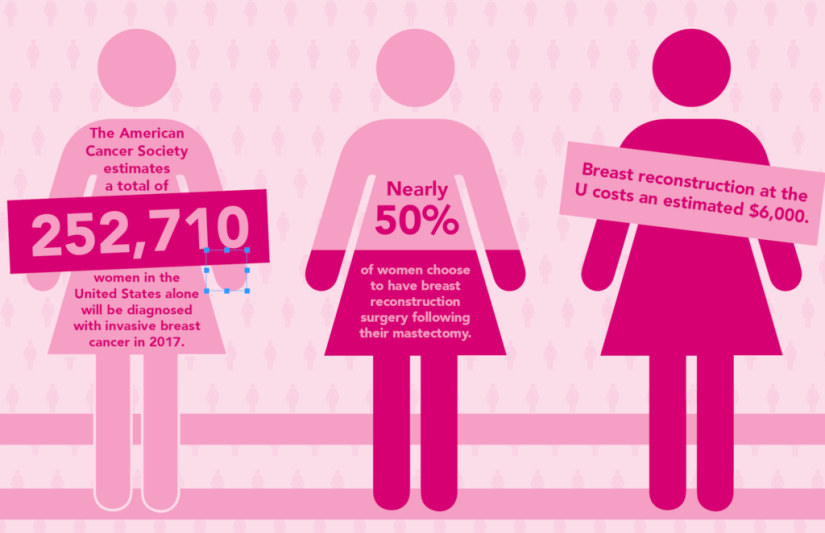
Approximately one in eight women (i.e., 12%) in the United States (US) will be diagnosed with breast cancer in her lifetime, and 20% to 25% of these newly diagnosed cases will be DCIS (Siegel 2015, CA Cancer J Clin). In 2020, an estimated 48,530 cases of DCIS will be diagnosed in US (American Cancer Society: Cancer Facts and Figures 2020. Atlanta, Ga: American Cancer Society, 2020. Available onlineExit Disclaimer. Last accessed January 17, 2020).

Universal screening mammography has resulted in a 10-fold increase in the incidence of DCIS since the mid-1980s, but since 2003, the incidence of DCIS has decreased in women age 50 years and older, conceivably secondary to decline in the use of hormone replacement therapy, while the incidence in women under 50 continues to increase (Altekruse SF, Kosary CL, Krapcho M, et al.: SEER Cancer Statistics Review, 1975-2007. Bethesda, Md: National Cancer Institute, 2010. Also available online. Last accessed April 3, 2020). Roughly one in every 1,300 mammograms performed in US will lead to a diagnosis of DCIS, representing 17% to 34% of all mammographically detected breast cancers. Before the institution of widespread screening mammography in the mid-1980s, most of the cases of DCIS were not identified until a palpable tumor developed, but today, 80% to 85% of DCIS cases are screen detected.

The incidence of DCIS in necropsy studies is higher than in the general population, proposing that not all DCIS lesions become clinically significant and supporting concerns that most of the increase in DCIS incidence is due to the detection of non-aggressive subtypes that are unlikely to progress to invasive cancer.

Most women with DCIS are diagnosed at a median age that ranges from 47 to 63 years, similar to that reported for patients with invasive carcinoma. However, the age of peak incidence for DCIS (96.7 per 100,000 women), occurs between the ages of 65 and 69 years, which is younger than that for invasive breast cancer, for which peak incidence (453.1 per 100,000 women), occurs between the ages of 75 and 79 years.

The incidence of first-degree relative having breast cancer (i.e., 10% to 35%) as well as rates of deleterious mutations in the breast cancer associated (BRCA) genes are similar for patients with DCIS as for women with invasive breast cancer. Other risk factors for DCIS include: older age, proliferative breast disease, increased breast density, nulliparity, older age at primiparity, history of breast biopsy, early menarche, late menopause, long-term use of postmenopausal hormone replacement therapy, and elevated body mass index in postmenopausal women, are the same as those for invasive breast cancer, but in many cases, the relationship between a given characteristic and invasive cancer is stronger than the relationship between that characteristic and DCIS.

#Arrangoiz #BreastSurgeon #CancerSurgeon #SurgicalOncologist #BreastCancer

T Staging of Hypopharyngeal SCC

  • TX – Primary tumor cannot be assessed
  • Tis – Carcinoma in situ
  • T1 – Tumor limited to one subsite of hypopharynx and / or 2 cm or smaller in greatest dimensión
  • T2 – Tumor invades more than one subsite of hypopharynx or an adjacent site, or measures larger than 2 cm but not larger than 4 cm in greatest dimensión without fixation of hemilarynx
  • T3 – Tumor larger than 4 cm in greatest dimensión or with fixation of hemilarynx or extension to esophagus
  • T4 – Moderately advanced and very advanced local disease
    • T4a – Moderately advanced local disease
      • Tumor invades thyroid/cricoid cartilage, hyoid bone, thyroid gland, or central compartment soft tissue
    • T4b – Very advanced local disease
      • Tumor invades prevertebral fascia, encases carotid artery, or involves mediastinal structures

#Arrangoiz #Surgeon #CancerSurgeon #SurgicalOncologist #Teacher #HeadandNeckSurgeon

Common Trastuzumab Side Effects

  • Common trastuzumab side effects include:
    • Flu-like symptoms:
      • Fever
      • Chills
      • Mild pain
      • Nausea
      • Diarrhea
  • However:
    • The more serious adverse event is:
      • Cardiotoxicity
  • Cardiac dysfunction:
    • Occurs in 2% to 7% of patients and includes:
      • Congestive heart failure
  • As a result:
    • Regular screening of cardiac ejection fraction:
      • Is warranted during treatment
    • Luckily the decline in ejection fraction:
      • Appears to be reversible with:
        • Cessation of the medication and standard therapies used to treat congestive heart failure
  • The risk of cardiotoxicity is increased:
    • When combined with anthracycline-based chemotherapy regimens:
      • A retrospective review of seven phase II and III trastuzumab clinical trials:
        • Found the incidence of cardiac dysfunction was:
          • 27%:
            • In patients receiving trastuzumab and anthracycline plus cyclophosphamide chemotherapy
        • Was substantially lower at 13% in patients receiving paclitaxel and trastuzumab
        • Was lowest if receiving trastuzumab alone:
          • 3% to 7%
            • However:
              • Most of these patients had received prior anthracycline therapy
                • Nonetheless, the use of trastuzumab remains justified given its significant impact on overall survival

REFERENCES

  1. Seidman A1, Hudis C, Pierri MK, et al. Cardiac dysfunction in the trastuzumab clinical trials experience. J Clin Oncol. 2002;20(5):1215-1221.
  2. Breast Cancer Care. Trastuzumab (Herceptin). https://www.breastcancercare.org.uk/information-support/facing-breast-cancer/going-through-treatment-breast-cancer/targeted-therapy/trastuzumab-herceptin Published July 2016. Accessed January 31, 2017.

#Arrangoiz #BreastSurgeon #CancerSurgeon #BreastExpert #SurgicalOncologist #Cancer #BreastCancer #Teacher