
- Papillary thyroid cancer (PTC) tends to have an indolent clinical course with low morbidity and mortality. Nevertheless, this entity has a broad range of biologic and clinical behavior that can result in disease recurrence and death, depending on patient and tumor characteristics and the initial management approach.
- PTC is the most common form of well-differentiated thyroid cancer (WDTC) and based on the most recent statistics, accounts for approximately 89.4% of all thyroid malignancies, and is the predominant histology observed in patients exposed to radiation.
- The average age of diagnosis of PTC is between 30 and 40 years, women are affected more frequently than men at a 2:1 ratio.
- PTC appears as an irregular solid or cystic nodule in a normal thyroid parenchyma.
- Notwithstanding its well-differentiated characteristics, PTC may be blatantly or minimally invasive. In fact, these tumors may spread easily to other organs.
- PTC has the propensity for lymphatic invasion but it is less likely to have hematogenous spread.
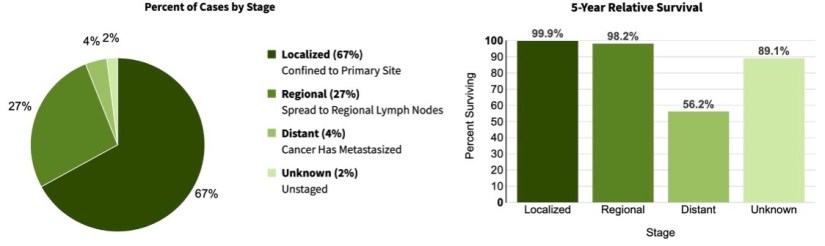
- Roughly 11% of patients with PTC present with distant metastases outside the neck and mediastinum.
- In the past, regional lymph node metastases were thought to be aberrant (supernumerary) thyroids because they contained well-differentiated PTC, but occult regional lymph node metastases are now known to be a very common finding in patients with PTC.
#Arrangoiz #CancerSurgeon #ThyroidSurgeon #HeadandNeckSurgeon #SurgicalOncologist #ThyroidCancer #PapillaryThyroidCancer #PTC #CASO #CenterforAdvancedSurgicalOncology









 Rodrigo Arrangoiz MS, MD, FACS, FSSO