
Blog

Multiple Ipsilateral Breast Cancers (MIBC)

  • Multiple ipsilateral breast cancers (MIBC) include:
    • Both multifocal and multicentric disease
  • The term multifocal (MF):
    • Typically refers to two or more foci of disease within a single quadrant of the breast,
  • Multicentric (MC):
    • Refers to two or more foci in more than one quadrant of the breast
  • When staging:

An “m” modifier, is added to TNM classification to identify MF / MC disease

  • In the setting of MIBC:
    • The size of the largest focus is used for staging:
      • Rather than a cumulative measurement of the tumor sizes
  • Historically, it was believed that multiple ipsilateral breast cancers should be treated surgically with mastectomy:               
    • This thought is based on early retrospective studies (1980s-90s):L
      • That reported a higher locoregional recurrence (LRR) in patients with MF / MC disease who underwent breast conserving therapy (BCT)
    • More current studies, which include patients treated in a contemporary multidisciplinary setting:               
      • Have demonstrated a more promising role for BCT in MF / MC disease
      • A systematic review included six retrospective studies evaluating patients with multiple ipsilateral breast cancers undergoing BCT vs. mastectomy:
        • The rate of LRR overall was 2% to 23% for BCT:
          • With similar rates of LRR for BCS compared to mastectomy
        • The largest of these compared 887 patients who underwent mastectomy vs. 300 who underwent BCT:
          • And found that BCT was not inferior to mastectomy:
            • With respect to:
              • 5-year (2.5% vs. 4.5%) LRR
              • 10-year (6.5% vs 5.7%) LRR
  • In a study reviewing surgical management of 6,134 patients undergoing neoadjuvant chemotherapy:      
    • 1,401 (23%) were found to have MF / MC disease
    • 617 patients (44%) underwent BCT
    • Local recurrence-free survival, disease-free survival (DFS), and overall survival (OS):
      • We’re not inferior in patients with MF / MC compared with unifocal disease:
        • If negative margins or a pathologic complete response was obtained
  • In a study evaluating 110 patients with MF / MC disease compared to 263 matched-case controls with unifocal disease:
    • MF / MC disease had worse local control and DFS:
      • But was not impacted by the type of surgery performed
  • The heterogeneity of findings related to the management of multiple ipsilateral breast cancers underscores the need for a prospective clinical trial to address this issue:
    • The Alliance Z11102 prospective trial aimed to evaluate the feasibility and safety of breast conservation in women with multiple ipsilateral breast cancers:
      • Defined as having tumors separated by 2 cm or more of normal breast tissue:
        • The authors found that of the 198 patients enrolled:
          • 93% underwent successful lumpectomy:
            • 67% underwent lumpectomy in a single operation
          • Conversion to mastectomy occurred in 7.1% of patients due to positive margins
          • Primary endpoint is LRR at 5 years, and these results will be forthcoming as the data mature
  • Thus, based on available data:
    • MF / MC is not an absolute contraindication to BCT
  • Oncoplastic techniques:
    • Can be considered as needed for an improved cosmetic outcome, with high rates with disease-free survival and low risk of local recurrence
  • Chemotherapy can be given as her primary treatment:
    • Which may improve her surgical options
  • References
  • Kurtz JM, Jacquemier J, Amalric R, et al. Breast-conserving therapy for macroscopically multiple cancers. Ann Surg. 1990;212(1):38-44.
  • Winters ZE, Horsnell J, Elvers KT et al. Systematic review of the impact of breast-conserving surgery on cancer outcomes of multiple ipsilateral breast cancers. BJS Open. 2018;2(4):162-174. https://www.ncbi.nlm.nih.gov/pmc/articles/PMC6069349/. Accessed August 25, 2019.
  • Yerushalmi R, Tyldesley S, Woods R, et al. Is breast-conserving therapy a safe option for patients with tumor multicentricity and multifocality? Ann Oncol. 2012;23(4):876-881.
  • Ataseven B, Lederer B, Blohmer JU, et al. Impact of multifocal or multicentric disease on surgery and locoregional, distant and overall survival in 6134 breast cancer patients treated with neoadjuvant chemotherapy. Ann Surg Oncol. 2015;22(4):1118–1127.
  • Shaikh T, Tam T, Li T, et al. Multifocal and multicentric breast cancer is associated with increased local recurrence regardless of surgery type. Breast J. 2015;21(2):121-126.
  • Rosenkranz, K.M., Ballman, K., McCall, L. et al. The feasibility of breast-conserving surgery for multiple ipsilateral breast cancer: an initial report from ACOSOG Z11102 (Alliance) Trial. Ann Surg Oncol. 2018;25(10):2858-2866.
  • De La Cruz L, Blakenship SA, Chatterjee A, et al. Outcomes after oncoplastic breast-conserving surgery in breast cancer patients: a systematic literature review. Ann Surg Oncol. 2016;23(10):3247-3258.
  • Rastogi P, Anderson SJ, Bear HD. Preoperative chemotherapy: updates of National Surgical Adjuvant Breast and Bowel Project Protocols B-18 and B-27. J Clin Oncol. 2008;10;26(5):778-785.

#Arrangoiz #CancerSurgeon #BreastSurgeon #SurgicalOncologist #BreastCancer #Miami #CASO #CenterforAdvancedSurgicalOncology
Surgical Management of Early Stage Invasive Breast Cancer

  • National Comprehensive Cancer Network (NCCN) guidelines:
    • Recommend surgical management for local control for women with early stage invasive breast cancer
  • Several studies have shown:
    • An equivalence in overall and / or breast cancer-specific survival rates:
      • For breast conservation with radiation compared to mastectomy among early stage breast cancer patients
  • For patients with ER+ disease:
    • Endocrine therapy with tamoxifen or aromatase inhibitors:
      • Is prescribed after surgery
  • A systematic review evaluated the efficacy of primary endocrine therapy alone versus surgery in women over 70 years old with operable tumors:
    • The review reported similar survival between the two groups:
      • But women treated with surgery had lower rates of local failure when compared to endocrine therapy alone
      • The authors concluded that primary endocrine therapy:
        • Should be reserved for women who are unfit for surgery or decline surgery
  • Sentinel node biopsy:
    • Has become the standard method for staging the axilla in women with early stage breast cancer who are clinically node negative
  • Axillary dissection:
    • Is only performed in women with:
      • Documented nodal involvement
      • Inflammatory breast cancers
      • Those who fail lymphatic mapping
  • References
    • Fisher B, Anderson S, Bryant J, et al. Twenty-year followup of a randomized trial comparing total mastectomy, lumpectomy, and lumpectomy plus irradiation for the treatment of invasive breast cancer. New Engl J Med. 2002;347(16):1233-1241.
    • Litiere S, Werutsky G, Fentiman IS, et al. Breast-conserving therapy versus mastectomy for stage I-II breast cancer: 20 year followup of the EORTC 10801 phase 3 randomized trial. Lancet Oncol. 2012;13(4):412-419.
    • Veronesi U, Cascinelli N, Mariani L, et al. Twenty-year follow-up of a randomized study comparing breast-conserving surgery with radical mastectomy for early breast cancer. New Engl J Med. 2002;347(16):1227-1232.

#Arrangoiz #CancerSurgeon #BreastSurgeon #SurgicalOncologist #Miami #CASO #CenterforAdvancedSurgicalOncology
Pathologic Nipple Discharge

  • Pathologic nipple discharge:
    • Is characteristically spontaneous, unilateral, uniductal, or bloody
  • Physiologic discharge is:
    • Nonspontaneous, bilateral, multiductal, and milk
  • The most common causes for pathologic nipple discharge are benign:
    • Intraductal papillomas
    • Duct ectasia)
  • The presence of abnormal clinical findings on imaging or physical exam:
    • Is associated with increased risk of malignancy:
      • 38% vs. 2%
  • Contemporary workup for nipple discharge includes:
    • Mammography and evaluation of the retroareolar region with ultrasound
    • Patients with normal findings on mammography, ultrasound, and physical exam can be further evaluated with breast MRI:
      • As it is highly sensitive and specific for cancer
  • Surgical management of nipple discharge includes:
    • Excision of a single duct or central duct apparatus:
      • Depending on the number of ducts involved
  • References
  • Li GZ, Wong SM, Lester S, Nakhlis F. Evaluating the risk of underlying malignancy in patients with pathologic nipple discharge. Breast J. 2018;24(4):624-627.
  • de Paula IB, Campos AM. Breast imaging in patients with nipple discharge. Radiol. Bras. 2017;50(6):383-388.
  • Yilmaz R, Bender O, Celik Yabul F, Dursun M, Tunaci M, Acunas G. Diagnosis of nipple discharge: value of magnetic resonance imaging and ultrasonography in comparison with ductoscopy. Balkan Med J. 2017;34(2):119-126.

#Arrangoiz #CancerSurgeon #BreastSurgeon #SurgicalOncologist #Miami #CASO #CenterforAdvancedSurgicalOncology

Axillary Web Syndrome

  • Axillary web syndrome:
    • Appears to be a common complication following axillary surgery
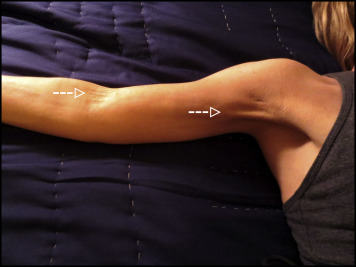
    • It consists of the appearance of a visible web of axillary skin overlying palpable cords of tissue:
      • That are made taut and painful by shoulder abduction
    • These cords can result in painful abduction of the shoulder and reduced range of motion
    • It typically results from axillary lymphadenectomies for treatment of breast cancer or melanoma
  • In general, axillary web syndrome is poorly defined and misunderstood:
    • In a large systematic review:
      • The incidence ranged from 0.6% to 85.4%
    • Risk factors:
      • Extent of surgery (number of nodes removed)
      • Low body mass index
      • Age
    • Although smoking, receipt of neoadjuvant chemotherapy, and radiation may play a role in its development:
      • These factors have not been described in the literature
  • In the majority of cases, axillary web syndrome:
    • Appears to develop within 2 to 8 weeks of axillary surgery
  • Although patients generally do well with resolution of their symptoms:
    • Current evidence for the treatment of axillary web syndrome is insufficient to provide clear guidance for clinical practice
    • Suggested interventions have included:
      • Early education
      • Physiotherapy
      • Thermal therapy
      • Medications
      • Surgery
  • References
  • Koehler LA, Haddad TC, Hunter DW, Tuttle TM. Axillary web syndrome following breast cancer surgery: symptoms, complications and management strategies. Breast Cancer. 2018;11:13-19.
  • Yeung WM, McPhail SM, Kuys SS. A systematic review of axillary web syndrome (AWS). J Cancer Surviv. 2015;9(4):576-598

Contralateral Prophylactic Mastectomy (CPM)

  • Current consensus guidelines from the American Society of Breast Surgeons:
    • Do not recommend CPM for women with sporadic breast cancers
  • A Cochrane review of eight studies evaluating patients who underwent CPM:
    • Concluded that while CPM reduces risk of contralateral breast cancer:
      • It is not associated with improved survival
  • Reasons for not recommending CPM include:
    • A low estimated risk of cancer in the contralateral breast:
      • 2% to 6% over 10 years)
    • Increased complication rates
    • Studies showing that CPM does not improve survival or recurrence from the index cancer
  • References
  • Lostumbo L, Carbine N, Wallace J, Ko H. Prophylactic mastectomy for the prevention of breast cancer. Cochrane Database Syst Rev 2004(4):CD002748.
  • Boughey JC, Attai DJ, Chen SL, et al. Contralateral prophylactic mastectomy consensus statement from the american society of breast surgeons: additional considerations and a framework for shared decision making. Ann Surg Oncol. 2016;23(10):3106-3111.

#Arrangoiz #CASO #CenterforAdvancedSurgicalOncology #BreastSurgeon #CancerSurgeon #SurgicalOncology #BreastCancer
Epidemiology of Cutaneous Melanoma

  • The incidence of invasive cutaneous melanoma continues to be a major public health concern in the United States:
    • Of concern, the rate of melanoma has risen about 3% per year in the United States over the past few decades
  • Estimated incidence rates of new melanomas in 2021:
    • 106,110:
      • Men 62,260
      • Women 43,850
  • Estimated mortality rate for melanoma in the year 2021:
    • 7,180 people are expected to die of melanoma:
      • Men 4,600 men
      • Women 2,580 women
  • Melanoma remains more than 20 times more common in:
    • Whites than in African Americans
  • Overall, the lifetime risk of being diagnosed with melanoma is about:
    • 2.5% (1 in 40) for whites
    • 0.1%(1 in 1,000) for blacks
    • 0.5% (1 in 200) for Hispanics
  • The incidence of melanoma has been increasing faster than that of nearly any other cancer over the last 30 years
  • The major environmental risk factor:
    • Exposure to ultraviolet (UV) radiation:
      • Is reflected in geographic and ethnic patterns of melanoma rates
  • There have also been changes in the distribution and stage of melanoma at diagnosis:
    • With an overall trend toward thinner tumors:
      • Particularly among any patients with T1 / T2 melanomas:
        • While the opposite trend is seen among patients with thick, T4 lesions
  • Etiology and Epidemiology of Cutaneous Melanoma:
    • Cutaneous melanoma originates from melanocytes within the epidermal layer of the skin
    • Although these melanocytes represent a heterogeneous group of cells within the body:
      • They all share a common place of origin:
        • The neural crest, and the ability to produce melanin
    • In humans:
      • Melanin acts as the primary determinant of skin color and provides a layer of protection from ultraviolet (UV) radiation
  • Risk factors for the development of cutaneous melanoma include:
    • Sun exposure
    • Blistering sunburns
    • Fair complexion
    • Family history
    • Increasing age
    • Previous melanoma
    • Dysplastic nevi
  • Although UV radiation is a critical factor in the development of most melanoma:
    • It can occur in unexposed areas of the skin:
      • Such as the perineum, palms of the hands, and soles of the feet
  • However, most melanomas start on the:
    • Trunk in men and on the legs in women
  • Cutaneous melanoma is not the most common form of skin cancer:
    • But presents a considerable health burden as the incidence of disease continues to increase rapidly for both sexes
  • In the United States:
    • There is a higher rate of melanoma in men than in women:
      • But this tends to vary by age:
        • With men more at risk after the age of 50 years
  • Despite the rising rates of melanoma:
    • The prognosis remains excellent for those diagnosed and treated early:
      • With surgery providing the best form of cure for those with early-stage disease
  • Cutaneous malignancies constitute the most commonly diagnosed cancers in the United States of America (USA):
    • More than half of all cancers diagnosed each year
    • In the USA, approximately 1.2 million to 1.4 million cases of skin cancer are diagnosed annually
    • The most common skin cancer types are:
      • Basal cell carcinoma (BCC)
      • Squamous cell carcinoma (SCC)
      • Melanoma:
        • The incidence is increasing dramatically:
          • At an overall rate of 33% for men and 23% for women from 2002 to 2006:
            • About 2.6% per year
        • These estimates for new cases may represent a substantial underestimation because many superficial and in-situ melanomas treated in the outpatient setting are not reported
        • Approximately 8000 patients will be found to have metastatic melanoma at the time of diagnosis
        • Cutaneous melanoma accounts for 4% of all skin cancer diagnosis:
          • But accounts for 75% of skin cancer deaths
        • The age-adjusted incidence of invasive melanoma in the USA:
          • Increased from approximately 4 per 100,000 to 18 per 100,000 in white males between 1973 and 1998
          • The age-adjusted incidence of invasive melanoma in the USA increased to 21.1 per 100,000 in white males between 2011 and 2015
        • The incidence of melanoma continues to increase dramatically:
          • Melanoma is increasing in men more rapidly than any other malignancy and, in women more rapidly than any other malignancy except lung cancer:
            • This disturbing increase can be ascribed to prevailing social attitudes toward sun exposure
  • Recently, The Cancer Genome Atlas (TCGA) program performed DNA-, RNA-, and protein-based analysis of 333 primary and / or metastatic melanomas to catalog the most frequently encountered somatic alterations in cutaneous melanoma:
    • Using these data, cutaneous melanoma was then divided into four genomic subtypes:
      • BRAF
      • RAS
      • NF1
      • Triple-WT
    • The BRAF subtype is the largest genomic subtype:
      • Whereas RAS and NF1 are described as the second and third major subtypes, respectively
    • Although these first three subtypes are defined by their name-specific mutations:
      • Triple-WT subtype is defined as a:
        • Heterogeneous subgroup characterized by:
          • A lack of BRAF, RAS, or NF1 mutations
    • Clinically, BRAF subtypes were:
      • Younger than patients in the other subtypes:
        • Whereas those in the NF1 subtype were older
    • BRAF, RAS, and NF1 subtypes were noted to harbor a UV signature:
      • Defined as a high fraction of cytosine to thymine transitions at dipyrimidine sites:
        • In over 90% of the samples:
          • Compared with only 30% of the Triple-WT samples
    • These distinct genomic classifications provide a framework for identification of potential therapeutic targets and predictive biomarkers
  • Risk Factors for developmenting melanoma:
    • Pigment characteristics are important determinants of melanoma susceptibility:
      • There is an inverse correlation between melanoma risk and skin color that goes from lightest skin to darkest skin:
        • Melanoma occurs infrequently in skin of color:
          • Suggesting that skin pigment plays a protective role
        • Melanoma is 10 to 20 times more common in whites, and 6 to 7 times more common in Hispanics than in African Americans (AA)
    • Fair complexion:
      • Fitzpatrick skin photo-type I and II
    • Blue or green eyes
    • Blond or red hair
    • Freckling
  • A recent meta-analysis reported, that in contrast with people with Fitzpatrick skin photo-type IV:
    • Those with Fitzpatrick skin photo-type I are at more than double (2.27 times) the risk, photo-type II at double (1.99 times) the risk, and photo-type IIIa 35% increased risk for developing malignant melanoma
  • People with red / red – blonde hair:
    • Have triple the malignant melanoma risk compared to dark-haired people
  • People with blond hair:
    • Are at double the risk
  • People with light brown hair:
    • Are at 46% increased risk
  • Individuals with freckles:
    • Have double (1.99 times) the risk of malignant melanoma, as opposed to people without freckles:
      • These individuals with freckles have increased malignant melanoma risk:
        • Irrespective of the number of moles they have
  • Individuals with blue / green-blue / green-grey eyes:
    • Are at increased risk of basal cell carcinoma (BCC):
      • The risk for melanoma is less well known

#Arrangoiz #CancerSurgeon #SurgicalOncologist #HeadandNeckSurgeon #Melanoma #SkinCancer #CASO #CenterforAdvancedSurgicalOncology
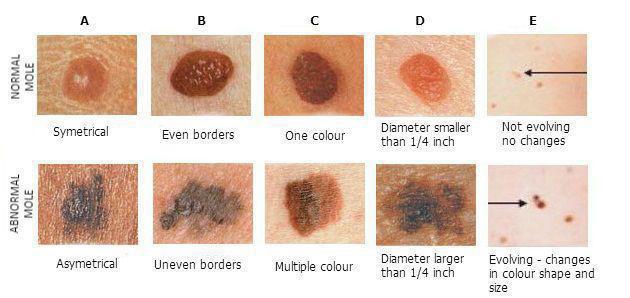
Clinical Presentation of Cutaneous Melanoma

  • Clinical features of melanoma often include:
    • Variegated color
    • Irregular raised surface
    • Irregular perimeter
    • Surface ulceration
  • A biopsy should be performed on a:
    • Pigmented lesion that changes in:
      • Size
      • Configuration or
      • Color
  • The so-called ABCDEs are a mnemonic device to help clinicians and laypersons remember potential early signs of melanoma:
    • A denotes lesion asymmetry
    • B border irregularity
    • C color variegation
    • D diameter greater than 6 mm
    • E a lesion that is elevating, evolving, or enlarging
  • When a patient presents with a lesion suggestive of melanoma:
    • In addition to biopsy:
      • A thorough physical examination must be performed, with particular emphasis on the:
        • Skin:
          • Including the scalp, interdigit webspace, and intertriginous areas
        • Nodal basins
        • Subcutaneous tissues

#Arrangoiz #CancerSurgeon #HeadandNeckSurgeon #SurgicalOncologist #Melanoma #SkinCancer #ABCDE #Teacher #CASO #CenterforAdvancedSurgicalOncology
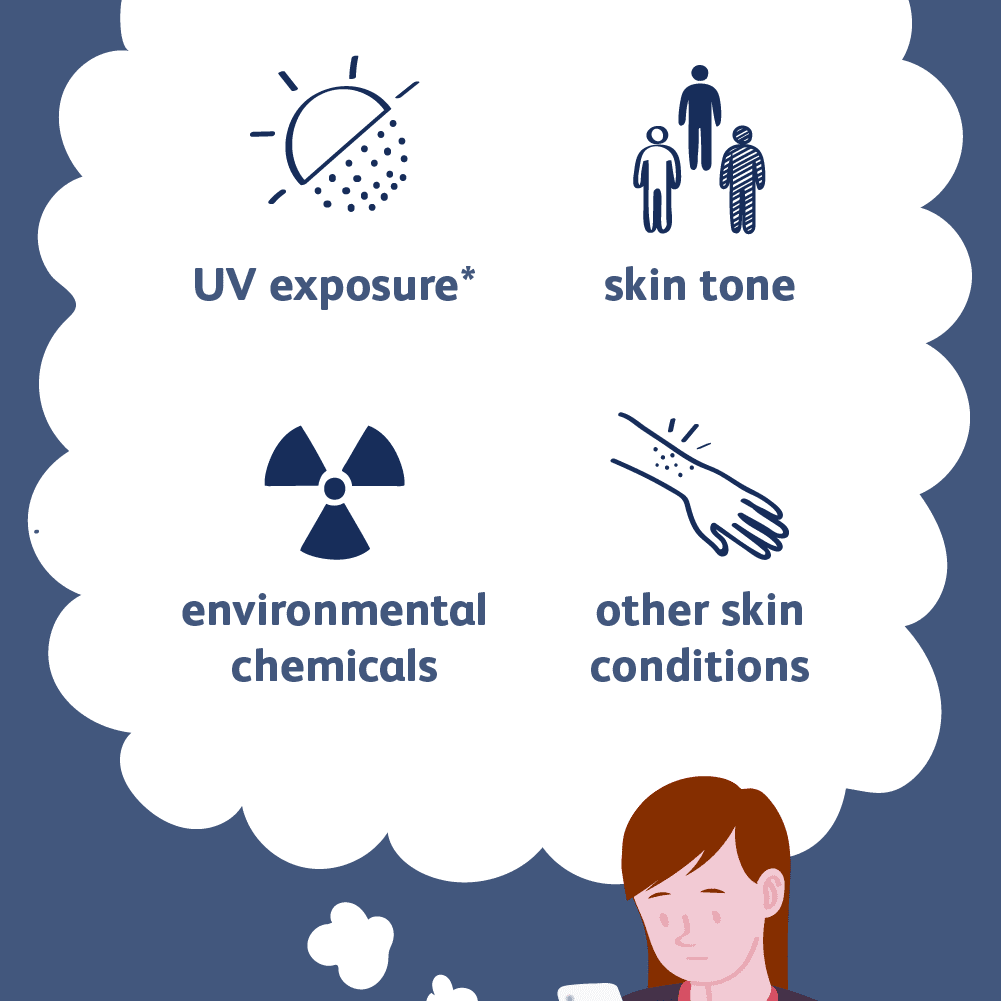
Risk Factors for Melanoma

  • Identifying risk factors and estimating an individual’s risk of developing melanoma can be clinically useful:
    • In determining primary prevention strategies and in directing the level of screening
  • Patients identified as being at high risk for melanoma:
    • May also be recruited to prevention trials
  • Multiple factors can place a patient at risk for developing melanoma:
    • Some factors are modifiable while others are inherent to the individual
  • Skin type:
    • Caucasians have at least 20 times the melanoma incidence of African Americans and five times the melanoma incidence of American Hispanics
    • In addition, white patients with red or blond hair, fair complexion, or blue eyes are at increased risk for melanoma
  • Age and Gender:
    • The incidence of melanoma increases with age
    • The incidence of melanoma is 1.7-fold higher for women than men before 49 years of age
    • Over age 70:
      • The incidence of melanoma is 2.4-fold higher for men than women
    • In general, the incidence of melanoma is higher in men than in women
    • Specifically, a man’s lifetime risk of melanoma development:
      • Is approximately 1.5 times greater than a woman’s risk
  • Overexposure to ultraviolet radiation (UVR) from the sun:
    • Overexposure of UVR from the sun has been associated with an increased risk of melanoma
    • Genetic sequencing data also support the role of UV melanomagenesis
    • Known to be a tumor with one of the highest mutational loads:
      • A seminal report of the melanoma effort within The Cancer Genome Atlas Program:
        • Revealed that a majority of somatic mutations in melanoma indeed have a “UV signature”
    • Data support that damage from sunburns in childhood or even in adulthood are associated with increased risk:
      • A correlation has been identified between the number of severe and painful sunburn episodes and the risk of melanoma:
        • For example, patients who have a history of more than 10 severe sunburns:
          • Are more than twice as likely to develop a melanoma compared to patients who have no history of sunburns
  • Use of indoor tanning devices:
    • Multiple studies support that use of an indoor tanning device is strongly also associated with increased risk of melanoma
    • A systematic review by the International Agency for Research on Cancer (IARC) demonstrated:
      • A 15% increased relative risk of melanoma in individuals who had ever used a sunbed versus those who had never (RR 1.15; 95% CU 1.00 to 1.31)
    • The dangers of indoor tanning have been corroborated by subsequent US and Australian groups
    • Young age of onset and higher frequency of use are key risk factors that are associated with even greater risk of melanoma
    • Indeed, a well-designed Minnesota case–control study showed increased risk with number of years, hours, and sessions of indoor tanning, independent of outdoor sun exposure:
      • These researchers also found that 97% of women diagnosed with melanoma before age 30 had indoor tanned
    • An Australian population-based study showed that tanning bed use more than 10 times per year:
      • Was associated with a doubling of melanoma risk in patients at least 30 years of age, and the association was stronger with earlier exposure
    • Young patients who use indoor tanning devices more than 10 times annually have more than 7 times the melanoma risk compared to individuals who do not indoor tan
    • A recent meta-analysis estimated a 1.8% increased melanoma risk for each additional tanning bed session
    • Since 2009, the World Health Organization lists tanning beds as:
      • A Class I carcinogen
  • Previous melanoma:
    • Individuals with a personal history of melanoma have an increased risk of developing a second melanoma of:
      • Approximately 3% to 7% (life time risk)
  • Benign nevi:
    • Although a benign nevus is most likely not a precursor of melanoma, the presence of large numbers of nevi has been consistently associated with an increased risk of melanoma:
      • Persons with ≥ 50 nevi, all of which are > 2 mm in diameter:
        • Have 5 to 17 times the melanoma risk of persons with fewer nevi
    • Individuals who tend to develop freckles also have an increased risk of melanoma
  • Family history:
    • Approximately 10% of individuals diagnosed with melanoma have a family member with a history of melanoma
    • A family history of melanoma increases an individual’s risk of melanoma three- to eightfold
    • Furthermore, persons who have two or more family members with melanoma are also at a particularly high risk
  • Genetic predisposition:
    • Approximately 8% to 12% of melanomas occur in individuals with a genetic predisposition
    • Specific genetic alterations have been implicated in the pathogenesis of melanoma:
      • Cyclin-dependent kinase inhibitor 2A (CDKN2A):
        • Is the most commonly identified mutation in suspected familial melanoma:
          • A tumor suppressor gene located on chromosome 9p21:
            • CDKN2A is probably involved in familial and sporadic cutaneous melanoma
        • Data from North America, Europe, and Australia correlate germline CDKN2A mutation (45%, 57%, and 20%, respectively):
          • With multiple-case families
          • Early age of onset
          • Multiple primaries within an individual patient
      • Deletions or rearrangements of chromosomes 10 and 8p are also well documented in cutaneous melanoma
      • Also associated with an increase in melanoma incidence are copy number gains of:
        • Chromosomes 2, 6p, 7, 8, 17, 19, and 20
          • These melanomas also tend to present at an earlier age and individuals may have multiple primary lesions
  • Atypical mole and melanoma syndrome:
    • Previously known as dysplastic nevus syndrome, atypical mole and melanoma syndrome is characterized by:
      • The presence of multiple, large (> 5 mm) atypical dysplastic nevi generally in nonexposed areas of skin that represent a distinct clinicopathologic type of melanocytic lesion
    • Melanomas can originate from either normal skin or from a dysplastic nevus
    • Since the actual frequency of an atypical mole progressing to melanoma is small:
      • Resection of all dysplastic nevi is not indicated
    • However, new, changing, or symptomatic lesions:
      • That appear suspicious for melanoma on clinical and / or dermoscopic examination:
        • Should be evaluated histologically

#Arrangoiz #CancerSurgeon #SurgicalOncologist #HeadandNeckSurgeon #CASO #CenterforAdvancedSurgicalOncology #Teacher #SkinCancer #Melanoma

World Head and Neck Cancer Day

#Arrangoiz #HeadandNeckSurgeon #CancerSurgeon #SurgicalOncologist #CASO #Miami #CenterforAdvancedSurgicalOncology

Management of the Axilla in the Setting of Neoadjuvant Therapy

  • Management of the axilla continues to evolve in the setting of neoadjuvant therapy
  • Sentinel lymph node biopsy (SLNB):
    • In clinically node-negative patients after neoadjuvant chemotherapy is feasible and accurate:
      • A recent systematic review:
        • Reported a pooled identification rate of 96% and false negative rate of 6%:
          • These data do not differ from studies evaluating SLNB in early breast cancer without neoadjuvant chemotherapy
  • Neoadjuvant chemotherapy:
    • Can result in down staging of the axilla
  • Performing the SLNB after chemotherapy:
    • Decreases the rate of finding a positive sentinel lymph node and subsequent axillary dissection:
      • The Alliance Z1071 trial:
        • Involved patients with:
          • Initially node-positive
        • It sought to determine the false negative rate for sentinel lymph node surgery following neoadjuvant chemotherapy in this group of patients
        • The false negative rate:
          • For the entire cohort was 12%
        • On additional analysis:
          • Retrieval of at least two sentinel nodes and the previously biopsied node:
            • Was associated with a false negative rate of 6.8%
          • Therefore, marking the biopsied node with a clip and documenting excision at time of SLNB is recommended
  • References:
  • Geng C, Chen X, Pan X, Li J. The feasibility and accuracy of sentinel lymph node biopsy in initially clinically node-negative breast cancer after neoadjuvant chemotherapy: a systematic review and meta-analysis. PLoS One. 2016;11(9):e0162605.
  • Hunt KK, Yi M, Mittendorf EA et al. Sentinel lymph node surgery after neoadjuvant chemotherapy is accurate and reduces the need for axillary dissection in breast cancer patients. Ann Surg. 2009;250(4):558-566.
  • Boughey JC, Suman VJ, Mittendorf EA, et al. Sentinel lymph node surgery after neoadjuvant chemotherapy in patients with node-positive breast cancer: the ACOSOG Z1071 (Alliance) clinical trial. JAMA. 2013;310(14):1455-1461.
  • Boughey JC, Ballman KV, Le-Petross HT et al. identification and resection of clipped node decreases the false-negative rate of sentinel lymph node surgery in patients presenting with node-positive breast cancer (T0-T4, N1-N2) who receive neoadjuvant chemotherapy: results from ACOSOG Z1071 (Alliance). Ann Surg. 2016;263(4):802-807.

#Arrangoiz #BreastSurgeon #CancerSurgeon #SurgicalOncologist #Miami #CASO #CenterforAdvancedSurgicalOncology