Blog

BRCA 1 and BRCA 2

  • BRCA 1 and BRCA 2 are genes:
    • That produce tumor suppressor proteins:
      • Which help repair damaged DNA
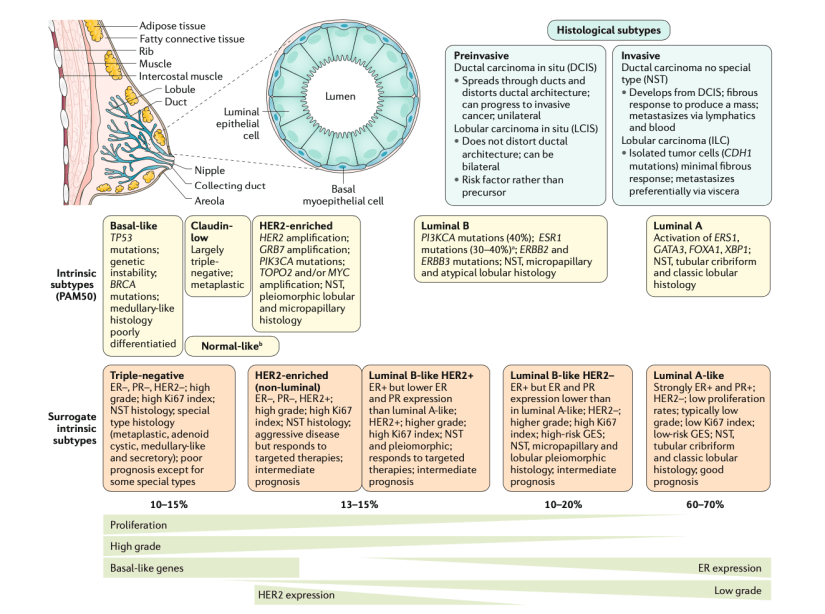
    • They are the most common gene alterations seen in the hereditary breast cancer population
    • They are associated with an increased risk of breast cancer estimated to be:
      • 55% to 70% for BRCA 1 carriers by age 70
      • 45% to 70% in BRCA 2 carriers by age 70
    • While both BRCA 1 and BRCA 2 mutations are associated with an increased risk of breast cancer:
      • BRCA 1 breast cancers more commonly occur in:
        • Younger
        • Premenopausal women
        • Are more likely to be triple negative
    • BRCA 1 is associated with a higher risk of ovarian cancer compared to BRCA 2:
      • With a lifetime risk of 40% to 45% in BRCA 1 carriers compared to 15% to 20% in BRCA 2 carriers
    • BRCA 2 breast cancers more closely resemble the sporadic breast cancer pattern:
      • With a predominance of hormone receptor positive cancers in women greater than 50 years
  • CHEK 2 and PALB 2 are moderate penetrance genes:
    • That are less common than BRCA mutations
    • Similar to BRCA 2 deleterious mutations:
      • CHEK 2 and PALB 2 mutations are associated with:
        • Hormone receptor positive postmenopausal breast cancer
  • Imaging surveillance for BRCA mutation carriers begins at:
    • Age 25 with annual breast MRI with contrast, with addition of mammography after age 30
    • Although use of screening ultrasound is evolving in women with dense breast tissue:
      • Its use in BRCA carriers has not been defined
  • Surveillance strategies have significantly improved early detection but do not prevent breast cancer
  • Bilateral salpingo-oophorectomy:
    • Has been shown to provide approximately 50% relative reduction in breast cancer risk:
      • But ultimately prophylactic mastectomy provides the greatest reduction
  • The optimal timing of surgery depends on multiple factors, including:
    • The patient’s desire for future breastfeeding
    • Ages of family members at diagnosis
  • Several retrospective series and meta-analyses of four prospective studies:
    • Have supported prophylactic mastectomy in BRCA mutation carriers
    • While the data demonstrate a 93% relative risk reduction in breast cancers:
      • They do not demonstrate a survival benefit in this population
  • Recent non-randomized studies have evaluated use of nipple-sparing mastectomy (NSM) and demonstrated its feasibility and safety in patients with BRCA mutation:
    • Jakub et al. reported data from 548 risk-reducing NSMs in 346 patients treated at 9 institutions
    • This study included both women opting for prophylactic mastectomies concurrent with treatment for a contralateral breast cancer, and women undergoing bilateral prophylactic mastectomies for risk reduction
    • With median and mean follow up of 34 and 56 months, respectively:      
      • No ipsilateral breast cancers occurred after prophylactic NSM
    • Breast cancer did not develop in any patients undergoing bilateral risk-reducing NSMs
  • References
    • Heemskerk-Gerritsen BA, Menke-Pluijmers MB, Jager A, et al. Substantial breast cancer risk reduction and potential survival benefit after bilateral mastectomy when compared with surveillance in healthy BRCA1 and BRCA2 mutation carriers: a prospective analysis. Ann Oncol. 2013;24(8):2029-2035.
    • De Felice F, Marchetti C, Musella A, et al. Bilateral risk-reduction mastectomy in BRCA1 and BRCA2 mutation carriers: a meta-analysis. Ann Surg Oncol. 2015;22(9):2876-2880.
    • Ludwig KK, Neuner J, Butler A. Risk reduction and survival benefit of prophylactic surgery in BRCA mutation carriers: a systematic review. Am J Surg. 2016;212(4):660-669
    • Jakub JW, Peled AW, Gray RJ. Oncologic Safety of Prophylactic Nipple-Sparing Mastectomy in a Population With BRCA Mutations: A Multi-institutional Study. JAMA Surg. 2018;153:123-129.
    • Loi M, Desideri I, Olmetto E, Francolini G, Greto D, Bonomo P, et al. BRCA mutation in breast cancer patients: Prognostic impact and implications on clinical management. Breast J. 2018;24(6):1019-1023.
    • Economopoulou P, Dimitriadis G, Psyrri A. Beyond BRCA: new hereditary breast cancer susceptibility genes. Cancer Treat Rev. 2015;41(1):1-8.
#Arrangoiz #BreastSurgeon #CancerSurgeon #SurgicalOncologist #BreastCancer #BRCA #CASO #CenterforAdvancedSurgicalOncology #Miami

Margins in DCIS

  • The standard adequate margin for patients with DCIS treated with breast-conserving surgery followed by whole-breast radiation is:
    • 2 mm
  • Negative margins:
    •  Halve the risk of ipsilateral breast tumor recurrence (IBTR) compared with positive margins (defined as ink on DCIS)
  • A 2 mm margin minimizes the risk of IBTR relative to narrower negative margin widths:
    • However, larger margins (>2 mm) do not significantly decrease IBTR
  • In 2016, margin guidelines related to the treatment of non-invasive breast cancer (e.g., DCIS) in the setting of breast-conservation therapy:
    • Were developed by the Society of Surgical Oncology, American Society for Radiation Oncology, and the American College of Surgeons in a similar manner
    • A consensus statement released by a multidisciplinary panel included:
      • The optimal margins for:
        • Pure DCIS and mixed tumors (invasive and non-invasive components within the same tumor) in the setting of breast conservation
    • Results from the meta-analysis showed:
      • That a 2 mm margin decreases the risk of IBTR in pure DCIS compared to closer negative margins
        • This differs from the previous margin recommendation for invasive cancer:
          • Which remains no ink on tumor:
            • However, in the setting of mixed tumors (invasive cancer with a DCIS component):
              • The recommendation for negative margins remains no ink on tumor, as patients with mixed disease are treated as invasive cancer and therefore receive systemic therapy more often than pure DCIS patients
      • In the setting of DCIS with micro-invasion (no focus of invasive disease larger than 1 mm):
        • The multidisciplinary panel recommends a 2 mm margin:
          • As these lesions have similar rates of IBTR as pure DCIS
  • Patients with positive margins after breast-conserving surgery:
    • Should undergo re-excision
  • Patients for whom adequate surgical margins cannot be achieved with lumpectomy:
    • Total mastectomy should be performed
  • Complete axillary lymph node dissection should not be performed:
    • In the absence of evidence of invasive cancer or proven axillary metastatic disease in women with apparent pure DCIS
    • However, a small proportion of patients with apparent pure DCIS will be found to have invasive cancer at the time of their definitive surgical procedure:
      • Therefore, a sentinel lymph node biopsy should be strongly considered if the patient with apparent pure DCIS is to be treated with mastectomy or with excision in an anatomic location compromising the performance of a future sentinel lymph node procedure
  • References
  • Morrow M, Van Zee KJ, Solin LJ, et al. Society of Surgical Oncology-American Society for Radiation Oncology-American Society of Clinical Oncology consensus guideline on margins for breast-conserving surgery with whole-breast irradiation in ductal carcinoma in situ. J Clin Oncol. 2016;34(33):4040-4046.
  • Breast cancer. National Comprehensive Cancer Network. 2018. https://www.nccn.org/professionals/physician_gls/pdf/breast.pdf. Accessed September 9, 2018.

#Arrangoiz #BreastSurgeon #CancerSurgeon #SurgicalOncologist #BreastCancer #Miami #CASO #CenterforAdvancedSurgicalOncologist

Treatment for Ductal Carcinoma In Situ (DCIS)

  • Local treatment for ductal carcinoma in situ (DCIS) involves:
    • Mastectomy or breast-conserving therapy, which consists of partial mastectomy followed in most cases by adjuvant radiation therapy
  • Sentinel lymph node biopsy (SLNB):
    • Is not indicated for most patients undergoing breast-conserving therapy for DCIS:
      • Because DCIS is a preinvasive lesion:
        • Axillary nodes are rarely involved:
          • Even in cases of extensive multifocal high-grade disease
  • If invasive breast cancer is identified after a breast-conserving surgery is performed for DCIS:
    • SLNB can be performed as a second procedure
  • If a mastectomy is performed as the initial procedure:
    • A sentinel node biopsy should be performed in the event of an occult invasive cancer
  • Radiation therapy alone is not given for DCIS:
    • Although there are ongoing clinical trials comparing active surveillance to surgery with or without endocrine therapy:
      • These are reserved for low- and intermediate-grade DCIS and are not yet considered standard of care
  • References
  • Virnig BA, Tuttle TM, Shamliyan T, Kane RL. Ductal carcinoma in situ of the breast: a systematic review of incidence, treatment, and outcomes. J Natl Cancer Inst 2010; 102:170.
  • Lyman GH, Giuliano AE, Somerfield MR, et al. American Society of Clinical Oncology guideline recommendations for sentinel lymph node biopsy in early-stage breast cancer. J Clin Oncol. 2005;23(30):7703-7720.
  • Intra M, Rotmensz N, Veronesi P, et al. Sentinel node biopsy is not a standard procedure in ductal carcinoma in situ of the breast: the experience of the European Institute of Oncology on 854 patients in 10 years. Ann Surg. 2008;247(2):315-319.
  • Brennan ME, Turner RM, Ciatto S, et al. Ductal carcinoma in situ at core-needle biopsy: meta-analysis of underestimation and predictors of invasive breast cancer. Radiology. 2011;260(1):119-128.
  • Youngwirth LM, Boughey JC, Hwang ES. Surgery versus monitoring and endocrine therapy for low-risk DCIS: The COMET Trial. Bull Am Coll Surg. 2017;102(1):62-63.

Indications for Breast-Conserving Surgery

  • Women are candidates for breast-conserving therapy:
    • If the tumor is small enough in relation to the size of the breast to permit resection of the tumor with clear margins and an acceptable cosmetic result
  • Absolute contraindications to breast-conserving therapy include:
    • Prior radiation therapy to the breast or chest wall
    • Breast cancer early in pregnancy that would necessitate radiation therapy during pregnancy
    • Diffuse suspicious, malignant-appearing micro calcifications
    • Widespread disease that precludes negative margins with a satisfactory cosmetic result
  • Retrospective reviews have shown that patients with collagen vascular diseases, specifically scleroderma:
    • Are at increased risk of radiation toxicities, even with modern techniques:
      • Therefore, the presence of scleroderma would be a relative contraindication for breast-conserving surgery
  • There have been attempts to allow for breast-conserving surgery for selected patients with multifocal or multicentric disease:
    • Retrospective data suggest that although patients with multifocal or multicentric disease have increased risk of local recurrence and lower disease-free survival:
      • This finding is independent of the type of surgery performed
    • The Alliance Z11102 study:
      • Sought to prospectively determine whether patients with multiple ipsilateral breast cancers could safely undergo breast-conserving surgery
      • Initial report in 2018 showed that breast-conserving surgery:
        • Was feasible in 93% of patients
          • And could be accomplished in one operation in 67%
      • Data regarding local regional recurrence will be forthcoming
  • Percutaneous ablation techniques:
    • Such as cryoablation have promising potential for less-invasive management of breast cancer:
      • However, it is not recommended for multicentric disease
    • Large multicenter randomized clinical trials are needed to determine long-term efficacy
  • References
  • Morrow M, Strom EA, Bassett LW, et al. Standard for breast conservation therapy in the management of invasive breast carcinoma. CA Cancer J Clin. 2002;52(5):277-300.
  • Breast cancer. National Comprehensive Cancer Network. 2018. https://www.nccn.org/professionals/physician_gls/pdf/breast.pdf. Accessed September 9, 2018.
  • Zaremba N, Tamkus D, DiCarlo L, Herman J, Martin M, Bumpers HL. The dilemma of breast cancer treatment and existing collagen vascular disease: a case of scleroderma and review of the literature. Breast J. 2016;22(4):451-455.
  • Alm El-Din MA, Taghian AG. Breast conservation therapy for patients with locally advanced breast cancer. Semin Radiat Oncol. 2009;19(4):229-235.
  • Rosenkranz KM, Ballman K, McCall L, Kubicky C, Cuttino L, Le-Petross H, et al. The feasibility of breast-conserving surgery for multiple ipsilateral breast cancer: an initial report from ACOSOG Z11102 (Alliance) Trial. Ann Surg Oncol. 2018;25(10):2858-2866.
  • Lanza E, Palussiere J, Buy X, et al. Percutaneous image-guided cryoablation of breast cancer: a systematic review. J Vasc Interv Radiol. 2015;26(11):1652-1657.

Margins for Ductal Carcinoma Insitu (DCIS)

  • The margin width (distance between the edge of the DCIS and the inked margin):
    • Reflects the completeness of excision and is an important determinant of local recurrence in DCIS:
      • Particularly for patients considering omission of radiotherapy after breast-conserving surgery
  • In 2016, the Society of Surgical Oncology and American Society of Radiation Oncology:
    • Developed consensus guidelines regarding margins for DCIS
    • These guidelines were based on:
      • A meta-analysis of 22 studies enrolling 4,660 women treated with partial mastectomy and radiation therapy:
        • There was a 64% reduction in local recurrence risk:
          • In patients with negative margins compared to those with positive margins
        • Margin thresholds ≥2 mm were associated with fewer local recurrences
  • For patients with positive margins:
    • Either re-excision or mastectomy to achieve negative margins should be performed
  • For patients with close margins:
    • Multiple factors should be considered:
      • The volume / extent of DCIS
      • Its distribution throughout a specimen
      • The volume of the excision
      • The volume of DCIS deemed close to the margin (focal or extensive)
    • After review of pathology:
      • Re-excision and / or radiation boost should be performed
  • A post-excision mammogram:
    • May be considered to rule out residual suspicious calcifications in the partial mastectomy operative bed for targeting during re-excision, and breast-conservation therapy may be re-attempted
    • If the close margins are extensive:
      • Mastectomy may be indicated
  • References
  • Morrow M, Van Zee KJ, Solin LJ, et al. Society of Surgical Oncology-American Society for Radiation Oncology-American Society of Clinical Oncology consensus guideline on margins for breast-conserving surgery with whole-breast irradiation in ductal carcinoma in situ. Ann Surg Oncol. 2016;23(12):3801-3810.
  • Van Zee KJ, Subhedar P, Olcese C, Patil S, Morrow M. Relationship between margin width and recurrence of ductal carcinoma in situ: analysis of 2996 women treated with breast-conserving surgery for 30 years. Ann Surg. 2015;262(4):623-631.
  • Dunne C, Burke JP, Morrow M, Kell MR. Effect of margin status on local recurrence after breast conservation and radiation therapy for ductal carcinoma in situ. J Clin Oncol. 2009;27(10):1615-1620.

#Arrangoiz #BreastSurgeon #CancerSurgeon #SurgicalOncologist #BreastCancer #DCIS #CASO #CenterforAdvancedSurgicalOncology #Miami #StewardHealth

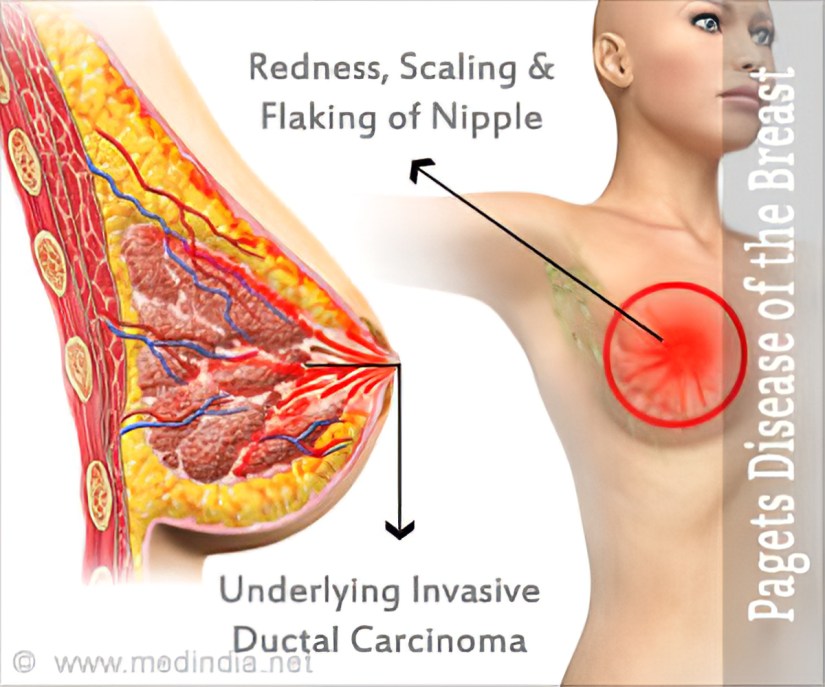
Paget Disease of the Breast

  • The clinical hallmarks of Paget’s disease of the breast are:
    • Scaling, erythema, and / or ulceration of the nipple sometimes extending to the areola
  • Because the main differential diagnosis for this clinical presentation is eczema:
    • A short course of topical steroids is an appropriate initial step:
      • Failure to resolve should prompt tissue biopsy by punch or wedge technique and not additional steroid therapy
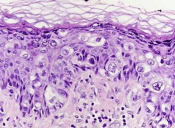
  • Pathology revealing adenocarcinoma cells within the epidermis (Paget cells):
    • Confirms the diagnosis
  • HER2 amplification:
    • Is found in 60% to 90% of cases of Paget’s disease of the breast:
      • But the patient should be fully evaluated prior to making decisions regarding the need for targeted therapy
  • Appropriate diagnostic imaging includes:
    • Mammography, ultrasound, and / or breast MRI:
      • As Paget’s disease is associated with an underlying malignancy 85% of the time
  • The appropriate surgical management of Paget’s disease is:
    • Breast conservation with central mastectomy (resection of the nipple-areolar complex) with resection of the primary tumor and irradiation or mastectomy
  • References
    • Chen CY, Sun LM, Anderson BO. Paget disease of the breast: changing patterns of incidence, clinical presentation, and treatment in the U.S. Cancer. 2006;107(7):1448-1458.
    • Killelea BK, Chagpar AB, Horowitz NR, Lannin DR. Characteristics and treatment of human epidermal growth factor receptor 2 positive breast cancer: 43,485 cases from the National Cancer Database treated in 2010 and 2011. Am J Surg. 2017;213(2):426-432.
    • Caliskan M, Gatti G, Sosnovskikh I, et al. Paget’s disease of the breast: the experience of the European Institute of Oncology and review of the literature. Breast Cancer Res Treat. 2008;112(3):513-521.

#Arrangoiz #BreastSurgeon #CancerSurgeon #PagetDiseaseoftheBreast #CASO #CenterforAdvancedSurgicalOncology #Miami

Occult Primary Breast Cancer

  • Three important conclusions are agreed upon regarding this clinical entity: 
    • Prognosis of occult primary breast cancer is the same or slightly better than women with classic stage IIA disease (T0, N1, M0)
    • An exhaustive workup for the non-breast primary is usually not fruitful
    • Treatment of the breast in some manner decreases the risk of local failure over time
  • Modified radical mastectomy has been the traditional surgical treatment for many years
  • Previously, the primary breast cancer was found in the mastectomy specimen:
    • 40% to 80% of the time, but with the advent of much better mammography and ultrasound along with breast MRI, this rate is much lower now
  • However, what was true then and still holds today:
    • Is that no treatment to the breast itself results in an unacceptably high local recurrence rate
  • An alternative to a modified radical mastectomy:
    • Is complete ALND followed by whole-breast irradiation
  • Axillary dissection:
    • Provides local control while also fine tuning staging
  • Theoretically the whole-breast radiation:
    • Should control any subclinical disease in the breast not detected on imaging
  • Primary radiation to the breast, axilla, and supraclavicular area without any surgery of the breast or axilla:
    • Results in higher local and regional recurrence compared to surgery and radiation combined
  • Axillary node dissection and whole-breast irradiation:
    • Has been found to have equivalent survival as a modified radical mastectomy
  • A recent meta-analysis of 7 studies and more than 240 patients with occult primary breast cancers (0.3% to 0.8% of all breast cancers):
    • Found 39% were treated with ALND and radiation while 47% had modified radical mastectomy and 15% had ALND alone
    • With a mean follow-up of 5 years:
      • The study found no difference in local regional recurrence (12.7% vs 9.8%), distant metastasis (7.2% vs 12.7%), or mortality (9.5% vs 17.9%) between ALND and radiation vs modified radical mastectomy (all p>0.16)
  • ALND with radiation was superior to ALND alone in terms of local regional recurrence (12.7% vs 34.3%, p < 0.01) and trended towards improved survival but this was not statistically significant (P=0.09)
  • References:
    • Barton SR, Smith IE, Kirby AM, Ashley S, Walsh G, Parton M. The role of ipsilateral breast radiotherapy in management of occult primary breast cancer presenting as axillary lymphadenopathy. Eur J Cancer. 2011;47:2099-2106. PMID: 21658935. http://www.ncbi.nlm.nih.gov/pubmed/21658935
    • Rueth NM, Black DM, Limmer AR, et al. Breast conservation in the setting of contemporary multimodality treatment provides excellent outcomes for patients with occult primary breast cancer. Ann Surg Oncol. 2015;22:90-95. [epub ahead of print]. http://www.ncbi.nlm.nih.gov/pubmed/25249256
    • Walker GV, Smith GL, Perkins GH, et al. Population-based analysis of occult primary breast cancer with axillary lymph node metastasis. Cancer. 2010;116:4000-4006. PMID: 20564117. http://www.ncbi.nlm.nih.gov/pubmed/20564117
    • Woo SM, Son BH, Lee JW, et al. Survival outcomes of different treatment methods for the ipsilateral breast of occult breast cancer patients with axillary lymph node metastasis: a single center experience. J Breast Cancer. 2013;16:410-416. https://www.ncbi.nlm.nih.gov/pmc/articles/PMC3893343/

#Arrangoiz #CancerSurgeon #BreastSurgeon #BreastCancer #OccultBreastCancer #SurgicalOncology #CASO #CenterforAdvancedSurgicalOncology

What are the Appropriate Surgical Margins for Breast Cancer Surgery?

  • The Society of Surgical Oncology – American Society for Radiation Oncology (SSO-ASTRO) 2014 Consensus Guidelines:
    • Regarding margins of resection for invasive carcinoma of the breast:
      • Recommend the use of “no ink on tumor” as the standard
        • Patients with invasive cancer, even with associated ductal carcinoma in situ (DCIS):
          • Are treated according to these guidelines
  • In a meta-analysis of 33 studies including 32,363 patients:
    • Odds of local recurrence were associated with margin status of positive vs. negative:
      • But not decreased with increasing margin distance for patients with invasive carcinoma
    • The study reported that rates of in-breast tumor recurrence are twice as high with positive margins regardless of tumor biology, radiation boost, or endocrine therapy
    • There was no evidence that wide margins reduce recurrence, even in patients with extensive intraductal component
  • However, the American Society of Clinical Oncology (ASCO) guidelines recommend consideration of post-excision mammography to document adequate resection in patients with microcalcifications
  • References
    • Moran MS, Schnitt SJ, Giuliano AE, et al. SSO-ASTRO consensus guideline on margins for breast-conserving surgery with whole breast irradiation in stage I and II invasive breast cancer. Int J Radiat Oncol Biol Phys. 2014;88(3):553-564.
    • Houssami N, Macaskill P, Marinovich ML, Morrow M. The association of surgical margins and local recurrence in women with early-stage invasive breast cancer treated with breast-conserving therapy: a meta-analysis. Ann Surg Oncol. 2014;21(3):717-730.
    • Buchholz TA, Somerfield MR, Griggs JJ, et al. Margins for breast-conserving surgery with whole-breast irradiation in stage I and II invasive breast cancer: American Society of Clinical Oncology endorsement of the Society of Surgical Oncology/American Society for Radiation Oncology consensus guideline. J Clin Oncol. 2014;32(14):1502-1506.

#Arrangoiz #BreastSurgeon #CancerSurgeon #Teacher #Miami #SurgicalOncologist #BreastCancer #CASO #CenterforAdvancedSurgicalOncology

Persistent Paresthesia in the Posteromedial Aspect of the Upper Arm Following SLNM/SLNB

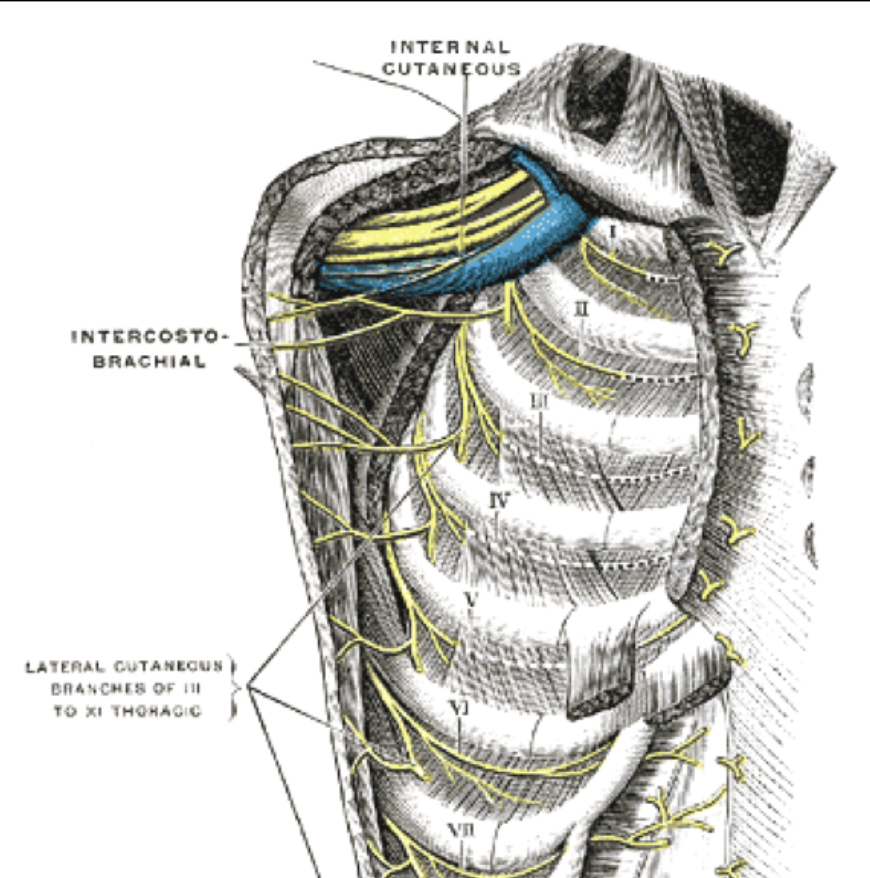
  • The symptoms of neuropathy are due to injury of the intercostobrachial nerve:
    • This nerve is a cutaneous branch of the intercostal nerves:
      • Most commonly the second intercostal nerve:
        • Which gives off a lateral cutaneous nerve:
          • Which continues as the intercostobrachial nerve
    • The intercostal nerves arise from the anterior rami of the thoracic spinal nerves
  • The intercostobrachial nerve pierces the serratus anterior, and crosses the axilla to the medial side of the upper arm:
  • The intercostobrachial nerve is commonly in the surgical field during axillary lymph node dissections and may be severed during surgery, or subject to traction or postsurgical inflammation:
    • Thus leading to intercostobrachial neuralgia
  • The larger intercostal nerves can be preserved with meticulous dissection
  • Neuropathic symptoms:
    • May be limited to numbness or tingling, but may also include a burning sensation
  • Techniques such as a regional nerve block have been described to alleviate symptoms in severe cases
  • In a study of 200 patients who underwent axillary dissection:
    • 76% had symptoms of intercostobrachial neuralgia postoperatively:
      • Of these patients, 82% reported improvement or resolution of these symptoms within 1 year:
        • Reflecting the richness of the sensory nerve supply to the axilla and upper arm
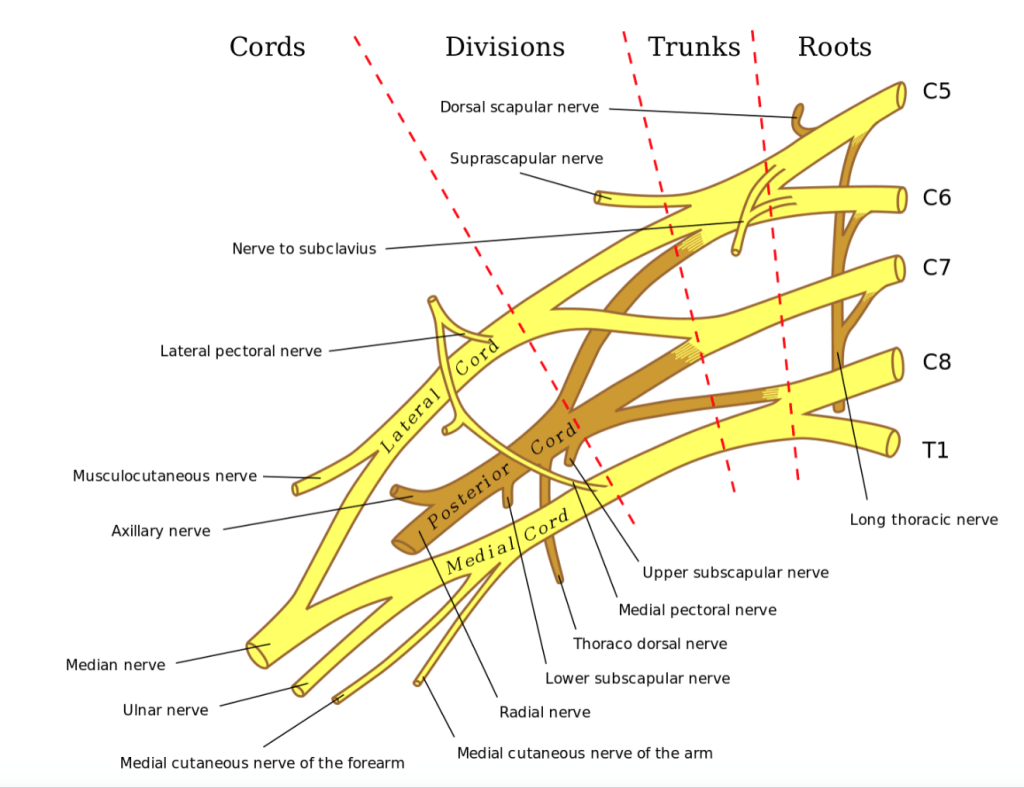
  • The thoracodorsal nerve:
    • Is a branch of the posterior cord of the brachial plexus:
      • Supplies motor function to the latissimus dorsi
  • If injured:
    • Patients experience weakness with arm abduction, lateral flexion, and difficulty with activities such as climbing, swimming, and using the arms to pull the body up
  • The medial cord of the brachial plexus gives rise to the medial pectoral nerve:
    • Which innervates both the pectoralis minor muscle and the pectoralis major muscle
    • The medial pectoral nerve typically pierces the pectoralis minor muscle, but may wrap around the lateral aspect of the pectoralis minor before traveling on to innervate the distal pectoralis major muscle
  • The lateral cord of the brachial plexus:
    • Gives rise to the lateral pectoral nerve, which innervates the pectoralis major muscle
    • This nerve travels along the medial border of the pectoralis minor muscle, and then along the undersurface of the pectoralis major muscle along with the pectoral branch of the thoracoacromial artery to supply the proximal pectoralis major muscle
  • The medial pectoral nerve bundle is often encountered during axillary dissection, as it is located lateral to the lateral pectoral nerve
  • If either of these nerves is injured, pectoralis muscle atrophy can occur, which can present as a late complication of surgery:
    • With weakness of shoulder adduction, interior rotation, and flexion
  • The long thoracic nerve:
    • Typically arises from anterior rami of the cervical spinal nerve roots C5 to C7:
      • It courses along the chest wall and supplies the serratus anterior muscle
      • Injury to this nerve causes a winged scapula
  • References
  • Sclafani LM, Baron RH. Sentinel lymph node biopsy and axillary dissection: added morbidity of the arm, shoulder and chest wall after mastectomy and reconstruction. Cancer J. 2008;14(4):216-222.
  • Wisotzky EM, Saini V, Kao C. Ultrasound-guided intercostobrachial nerve block for intercostobrachial neuralgia in breast cancer patients: a case series. Prev Med Rep, 2016;8(3):273-277.
  • Roses DF, Brooks AD, Harris MN, Shapiro RL, Mitnick J. Complications of level I and II axillary dissection in the treatment of carcinoma of the breast. Ann Sur. 1999;230(2):194-201.
  • Porzionato A, Macchi V, Stecco C, Loukas M, Tubbs RS, De Caro R. Surgical anatomy of the pectoral nerves and the pectoral musculature. Clin Anat. 2012;25(5):559-575.

#Arrangoiz #BreastSurgeon #BreastSurgery #CancerSurgeon #SurgicalOncologist #CASO #BreastCancer #CenterforAdvancedSurgicalOncology

Neoadjuvant Chemotherapy (NAC) Offers Several Advantages in Locally Advanced Breast Cancer

  • The administration of neoadjuvant chemotherapy (NAC) offers several advantages in locally advanced breast cancer:
    • It allows for down staging the disease:
      • Which can potentially allow for less extensive surgery in the breast and axilla
    • It also provides information regarding the responsiveness of the cancer to systemic therapy while the tumor remains in vivo:
      • Which can guide the course of therapy
  • Administering chemotherapy in the neoadjuvant vs. adjuvant setting:
    • Does not change overall survival:
      • As demonstrated in the National Surgical Adjuvant Breast and Bowel Project (NSABP) B-18 and NSABP B-27 trials
  • The patient’s response to chemotherapy:
    • Does offer prognostic information:
      • Particularly in patients with hormone receptor negative (HR-) disease
      • Patients who achieve pathologic complete response (pCR):
        • Which is typically defined as no residual invasive disease in the breast or axilla:
          • Appear to have improved event-free survival (EFS) and overall survival (OS) compared with patients with residual disease:
            • This finding was demonstrated by a recent meta-analysis that included 36 studies including 5,768 patients with HER2 positive breast cancer
            • This correlation was strongest in patients with HR- disease
            • Further, among patients with HER2 positive disease that do not have a pCR:
              • The degree of residual cancer burden appears to correlate with outcomes
                • Patients with HER2 positive tumors:
                  • May complete up to one year of HER2-targeted therapy:
                  • With trastuzamab ± pertuzamab.
  • When planning surgery:
    • The pre-treatment volume does not need to be excised if the tumor has responded to chemotherapy:
      • However if multifocal disease is present:
        • The satellite lesion(s) should be localized and excised with the index lesion
        • When considering the appropriateness for breast conservation following NAC:
          • The distance between the lesions, location, and breast size must be considered
          • Placement of clips in the index lesion and any satellite lesions prior to initiation of NAC is critical for appropriate surgical planning post-NAC
  • References
    • Rastogi P, Anderson SJ, Bear HD. Preoperative chemotherapy: updates of National Surgical Adjuvant Breast and Bowel Project Protocols B-18 and B-27. J Clin Oncol. 2008; 10;26(5):778-785.
    • Broglio KR, Quintana M, Foster M, et al. Association of pathologic complete response to neoadjuvant therapy in HER2-positive breast cancer with long-term outcomes: a meta-analysis. JAMA Oncol. 2016;2(6):751-760.
    • Symmans WF, Wei C, Gould R, et al. Long-term prognostic risk after neoadjuvant chemotherapy associated with residual cancer burden and breast cancer subtype. J Clin Oncol. 2017;35(10):1049-1060.
    • Boughey JC, Peintinger F, Meric-Bernstam F, et al. Impact of preoperative versus postoperative chemotherapy on the extent and number of surgical procedures in patients treated in randomized clinical trials for breast cancer. Ann Surg. 2006;244(3):464-470.

#Arrangoiz #BreastSurgeon #CancerSurgeon #SurgicalOncology #CASO #CenterforAdvancedSurgicalOncology