Blog

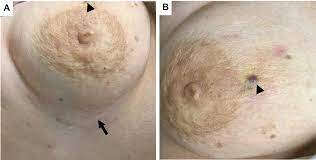
Risk Reducing Mastectomy

  • For patients with BRCA mutations:
    • Bilateral mastectomy is advised to reduce the risk of breast cancer
  • Mastectomy has been shown to reduce the risk of breast cancer:
    • In patients with hereditary cancer by 90%, according to both retrospective and prospective studies
  • In many of the seminal studies investigating surgical prophylaxis of breast cancer:
    • The type of surgery performed was a total (or simple) mastectomy:
      • Which consists of removing all breast tissue, including overlying skin, as well as the nipple‐areolar complex while sparing the pectoral muscles and axillary content
  • In the PROSE study:
    • The only two women diagnosed with breast cancer after surgical prophylaxis:
      • Had undergone skin‐sparing instead of total mastectomies:
        • One of these patients was diagnosed with metastatic breast cancer at the time of surgery
        • The other woman went on to develop breast cancer within the residual breast epithelium
    • Therefore, total mastectomy:
      • Is still the recommended risk‐reducing surgery in BRCA carriers
  • Nipple‐sparing (NSM) and skin‐sparing (SSM) mastectomies:
    • Require a less extensive reconstruction and often a better cosmetic result
    • Since the PROSE study in 2004:
      • piece of mounting evidence demonstrates that NSM, as well as SSM:
        • May be effective forms of surgical prophylaxis in BRCA carriers
    • In a recent retrospective study, patients with BRCA who underwent prophylactic NSM at nine institutions from 1968 to 2013 were reviewed
      • In this cohort, all 346 BRCA mutation carriers who did not have incidental cancer on final pathology:
        • Did not develop breast cancer after 36 months of follow up
      • Using risk models for BRCA carriers:
        • The authors approximated that 22 primary breast cancers were expected in this cohort without prophylactic NSM
      • Nevertheless, this was a retrospective study and more evidence is needed for NSM to replace the currently recommended total mastectomy for surgical prophylaxis of breast cancer in BRCA patients
  • References:
    • Rebbeck TR, Friebel T, Lynch HT, et al. Bilateral prophylactic mastectomy reduces breast cancer risk in BRCA1 and BRCA2 mutation carriers: the PROSE Study Group. J Clin Oncol. 2004;22(6): 1055‐1062. 
    • Ludwig KK, Neuner J, Butler A, Geurts JL, Kong AL. Risk reduction and survival benefit of prophylactic surgery in BRCA mutation carriers, a systematic review. Am J Surg. 2016;212(4):660‐669. 
    • Jakub JW, Peled AW, Gray RJ, et al. Oncologic safety of prophylactic nipple‐sparing mastectomy in a population with BRCA mutations: a multi‐institutional study. JAMA Surg. 2018;153(2):123‐129. 
    • Yao K, Liederbach E, Tang R, et al. Nipple‐sparing mastectomy in BRCA1/2 mutation carriers: an interim analysis and review of the literature. Ann Surg Oncol. 2015;22(2):370‐376. 
    • Domchek SM, Friebel TM, Singer CF, et al. Association of risk‐ reducing surgery in BRCA1 or BRCA2 mutation carriers with cancer risk and mortality. JAMA. 2010;304(9):967‐975. 

#Arrangoiz #BreastSurgeon #CancerSurgeon #SurgicalOncologist #CASO #CenterforAdvancedSurgicalOncology #Miami #RiskReducingSurgery #RiskReducingMastectomy
Indications For Screening of Genetic Mutations Associated with Ovarian Cancer

  • Women who present with a significant family history of breast and / or ovarian cancer:
    • Should be referred to a genetic counselor for formal risk assessment:
      • Before undergoing BRCA testing
  • Many organizations, such as the United States Preventative Services Task Force, the American College of Medical Genetics and Genomics, and the National Comprehensive Cancer Network have published guidelines for whom to refer to genetic counselors:
    • These guidelines are on the basis of:
      • The number of affected family members
      • Their degree of relation to the individual in question
      • The age at diagnosis
      • More than one primary cancer
      • Ethnicity

Indications For Screening of Genetic Mutations Associated with Ovarian Cancer

  • Women who present with a significant family history of breast and / or ovarian cancer:
    • Should be referred to a genetic counselor for formal risk assessment:
      • Before undergoing BRCA testing
  • Many organizations, such as the United States Preventative Services Task Force, the American College of Medical Genetics and Genomics, and the National Comprehensive Cancer Network have published guidelines for whom to refer to genetic counselors:
    • These guidelines are on the basis of:
      • The number of affected family members
      • Their degree of relation to the individual in question
      • The age at diagnosis
      • More than one primary cancer
      • Ethnicity
  • There are also formal risk assessment calculators for patients who do not have a personal history of cancer:
    • Such as the BRCAPRO and Tyrer‐Cuzick models:
      • These calculators can aid in determining whether a patient:
        • Should be referred to a genetic counselor (ie, have a high risk of carrying a BRCA1 or BRCA2 mutation) 
        • As well as screening modalities and time intervals on the basis of their calculated risk of breast cancer:
          • However, these models do not provide probabilities of testing positive for moderate‐risk (ie, BRIP1, RAD51C, PALB2) or non‐BRCA high‐risk gene mutations
  • There is much debate about whether all Ashkenazi Jews:
    • Should be routinely offered BRCA testing:
      • Regardless of personal or family history of cancer given the high frequency of BRCA mutations in that population:
        • Several studies have found that genetic testing of Ashkenazi Jews on the basis of family history criteria:
          • Would miss a number of BRCA carriers
    • In one study, over 8000 Ashkenazi Jewish men were tested:
      • 175 were found to be BRCA‐positive:
        • Half of those BRCA mutation carriers had no family history of breast or ovarian cancer
    • Population‐based BRCA testing has also been shown to be cost‐effective compared with family history‐based testing of Ashkenazi Jewish women
  • For patients who meet criteria for HBOC genetic testing:
    • The current recommended test is a next‐generation multigene panel:
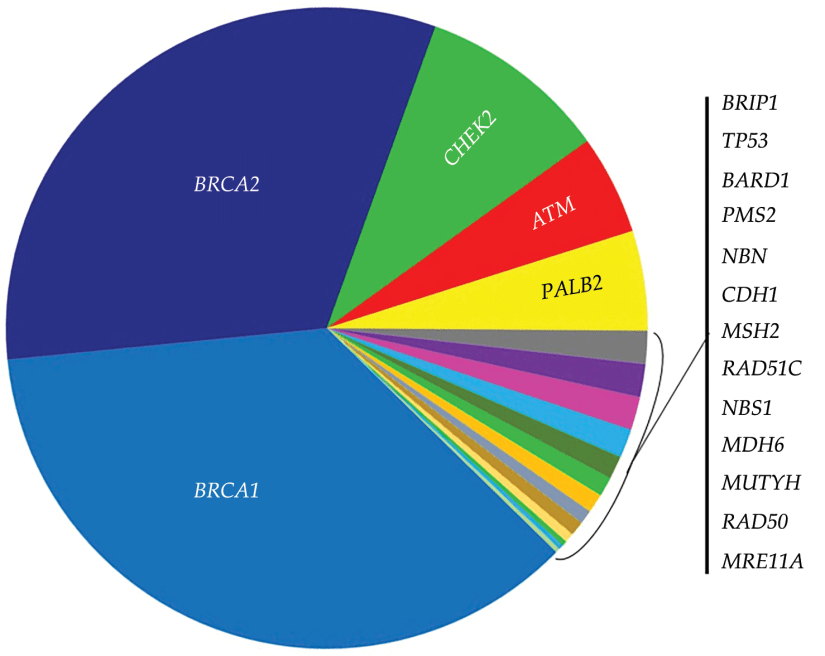
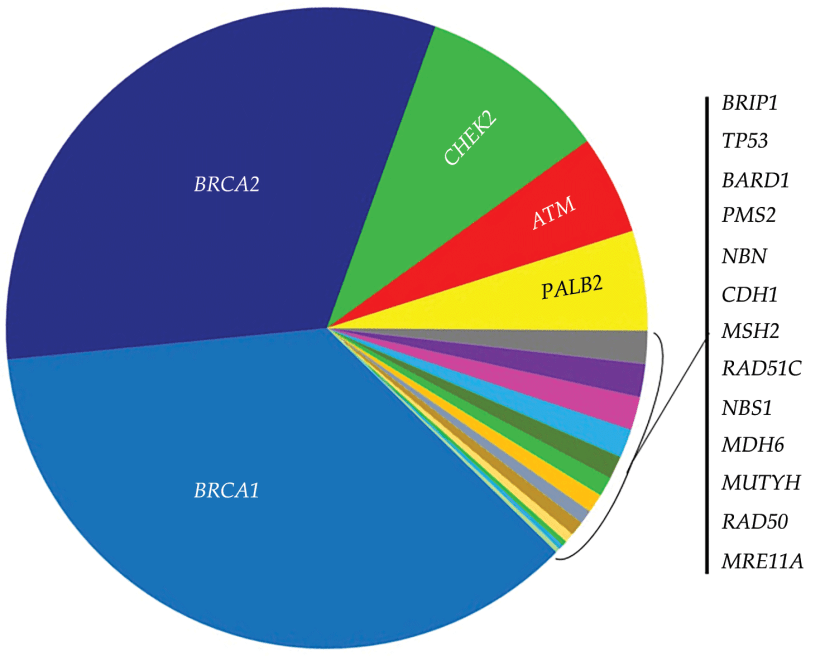
      • Which includes BRCA 1 and BRCA2 as well as several moderate‐risk genes (eg, CHEK2, ATM, PALB2, RAD51C)
  • Many organizations, such as the National Comprehensive Cancer Network (NCCN), American College of Obstetricians and Gynecologists (ACOG), Society for Gynecologic Oncology (SGO), and American Society of Clinical Oncology (ASCO):
    • Recommend germline testing for all patients diagnosed with EOC:
      • Regardless of age, family history, or ethnicity
  • Despite this unanimity from these institutions:
    • Estimated U.S. germline testing rates for women with EOC remains low:
      • At 20% to 30%, and even lower for minority women
  • References:
    • Hampel H, Bennett RL, Buchanan A, Pearlman A, Wiesner GL. American College of Medical Genetics and Genomics Professional Practice and Guidelines Committee and National Society of Genetic Counselors Practice Guidelines Committee, “A practice guideline from the American College of Medical Genetics and Genomics and the National Society of Genetic Counselors: referral indications for cancer predisposition assessment. Genet Med. 2015;17(1):70‐87. and Guideline Development Group. 
    • NCCN Clinical Practice Guidelines in Oncology (NCCN Guidelines), “Genetic/Familial High‐risk Assessment: Breast and Ovarian,” National Comprehensive Cancer Network, Version 3.2019, Jan. 2019. 
    • “Final Recommendation Statement: BRCA‐Related Cancer: Risk Assess- ment, Genetic Counseling, and Genetic Testing. U.S. Preventive Services Task Force. December 2013. https://www.uspreventiveservicestaskforce. org/Page/Document/RecommendationStatementFinal/brca‐related‐cancer‐risk assessment‐genetic‐counseling‐and‐genetic‐testing.”
    • Committee on Practice Bulletins–Gynecology. Committee on Genet- ics, Society of Gynecologic Oncology, “Practice bulletin No 182: hereditary breast and ovarian cancer syndrome. Obstet Gynecol. 2017;130(3):e110‐e126. 
    • Lu KH, Wood ME, Daniels M, et al American Society of Clinical Oncology Expert Statement: collection and use of a cancer family history for oncology providers. J Clin Oncol. 2014;32(8):833‐840. 
    • Gabai‐Kapara E, Lahad A, Kaufman B, et al Population‐based
      screening for breast and ovarian cancer risk due to BRCA1 and 132. 
    • Proc Natl Acad Sci USA. 2014;111(39):14205‐14210. Manchanda R, Legood R, Burnell M, et al. Cost‐effectiveness of population screening for BRCA mutations in Ashkenazi jewish women compared with family history‐based testing. J Natl Cancer 
    • Inst. 2015;107(1):380. 
    • Tung N, Battelli C, Allen B, et al Frequency of mutations in individuals 
    • with breast cancer referred for BRCA1 and BRCA2 testing using next‐generation sequencing with a 25‐gene panel. Cancer. 2015;121(1):25‐33. 
    • Levy DE, Byfield SD, Comstock CB, et al. Underutilization of BRCA1/ 2 testing to guide breast cancer treatment: black and Hispanic women particularly at risk. Genet Med. 2011;13(4):349‐355. 

#Arrangoiz #CASO #BreastSurgeon #BreastCancer #HereditaryBreastCancer #CancerSurgeon #Miami #CenterforAdvancedSurgicalOncology

Non‐BRCA Mutations Associated with Ovarian Cancer

  • Although BRCA mutations are responsible for the majority of hereditary breast and ovarian cancers:
    • There are several other significant mutations that also carry an increased risk 
  • Hereditary breast and ovarian cancer (HBOC) syndrome:
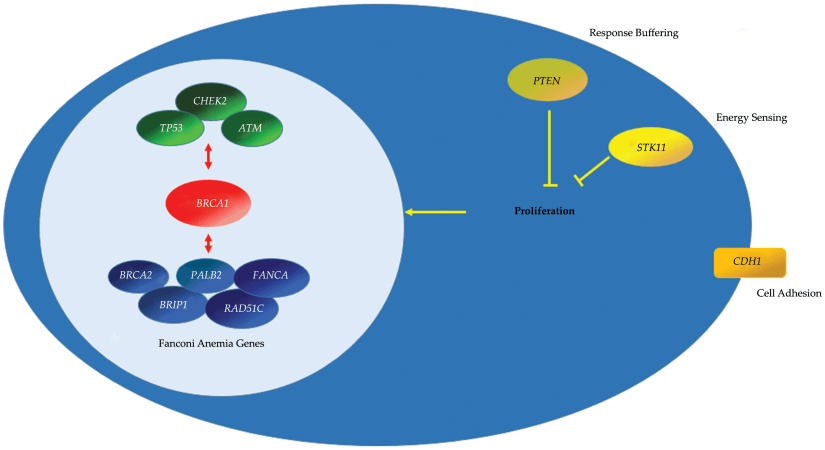
    • Has also been associated with germline mutations in other homologous recombination repair genes, such as:
      • BARD1, BRIP1, MRE11A, NBN, RAD50, CHEK2, ATM, PALB2, RAD51C, and RAD51D
  • Partner and localizer of BRCA2 (PALB2) germline mutation:
    • Is associated with an – albeit small – increased risk of ovarian cancer compared with the general population
    • In a recent study of 1421 patients with epithelial and ovarian cancer (EOC):
      • Three (0.21%) had a germline PALB2 mutation compared with 0.05% of the control cohort of 4300 subjects
  • Similarly, BRIP1 germline mutations:
    • Were found in 0.41% to 0.9% of patients with EOC compared with 0.09% in the general population
  • In a study of 1100 German pedigrees, families with a history of gynecologic or breast cancers without BRCA1 or BRCA2 mutations:
    • Had a higher incidence of RAD51C mutations compared to the 3000 control families with no mutation carriers
    • The exact penetrance of this mutation is not known:
      • But the approximate cumulative risk of ovarian cancer in RAD51C carriers is:
        • 1% by age 49
        • 6% by age 80
      • Although these genes only confer a moderate risk for EOC, given the poor survival estimates for ovarian cancer:
        • The clinical implications for families with carriers of these mutations is great
  • Other genetic syndromes can confer increased susceptibility to breast and / or ovarian cancers:
    • Peutz‐Jeghers syndrome (PJS):
      • Which is a result of mutations in the serine / threonine kinase 11 gene (STK11, also called LKB1):
        • Is associated with the increased risk of gastrointestinal cancers
        • However, it has also been shown to confer an:
          • Increased lifetime risk of breast:
            • 32%
          • Increased lifetime risk of ovarian cancers:
            • 21%
          • Patients with PJS are at risk for:
            • Ovarian sex‐cord stromal tumors:
              • Not epithelial ovarian cancers, and they are usually diagnosed in childhood or young adulthood
  • When an identifiable mutation cannot be found in a patient with a strong family history of ovarian and / or breast cancer:
    • Our practice is to counsel women that their risk may be elevated compared with the general population but continue to discourage serial Ca‐125 levels, serial ultrasounds, and rrBSO
    • We also recommend retesting when new multigene panels are produce
  • References:
    • Konstantinopoulos PA, Ceccaldi R, Shapiro GI, D’Andrea AD. Homologous recombination deficiency: exploiting the fundamental vulnerability of ovarian cancer. Cancer Discov. 2015;5(11):1137‐1154. 
    • Kotsopoulos J, Sopik V, Rosen B, et al. Frequency of germline PALB2 mutations among women with epithelial ovarian cancer. Fam Cancer. 2017;16(1):29‐34. 
    • Ramus SJ, Song H, Dicks Ed, et al Germline mutations in the BRIP1, BARD1, PALB2, and NBN genes in women with ovarian cancer. J Natl Cancer Inst. 2015;107(11). 
    • Tung N, Domchek SM, Stadler Z, et al. Counselling framework for moderate‐penetrance cancer‐susceptibility mutations. Nat Rev Clin Oncol. 2016;13(9):581‐588. 
    • vanLierMGF,WagnerA,Mathus‐VliegenEMH,etalHighcancerrisk in Peutz‐Jeghers syndrome: a systematic review and surveillance recommendations. Am J Gastroenterol. 2010;105(6):1258‐1264. 

#Arrangoiz #BreastSurgeon #BreastCancer #CancerSurgeon #SurgicalOncologist #CASO #Miami #CanterforAdvancedSurgicalOncology #HereditaryBreastCancer

HEREDITARY BREAST AND OVARIANCANCER SYNDROME

  • In the year 2018 in the United States:
    • Approximately 22 000 women received a new diagnosis of ovarian cancer, and there were 14 000 ovarian cancer deaths
  • Inherited germline mutations:
    • That increase the risk for ovarian cancer:
      • Are present in approximately 7% to 25% of these women
  • Hereditary breast and ovarian cancer syndrome (HBOC):
    • Is the most common genetic syndrome:
      • Linked to ovarian cancer:
        • Is associated with mutations in the BRCA genes
    • BRCA1 and BRCA2 are:
      • Tumor suppressor genes:
        • Involved in the repair of double‐stranded DNA breaks
    • Certain populations are at significantly higher risk for BRCA mutations than the general population including:
      • Ashkenazi Jewish, French Canadian, and Icelandic populations:
        • This is because of the founder effect:
          • Which causes a decrease in genetic diversity in a population that is geographically or reproductively isolated 
          • For example, in the general United States non‐Jewish population:
            • The risk of inheriting a BRCA mutation is 1 in 400 compared with theAshkenazi Jewish population, who carry an increased risk of 1 in 40
    • The inheritance pattern of the BRCA mutations is:
      • Autosomal dominant:
        • However, tumor suppressor genes are known to be recessive, requiring both copies of the gene to be affected
        • Therefore, a germline BRCA mutation is inherited in one copy of the gene, the second copy then undergoes a somatic mutation:
          • The second hit and the carrier is phenotypically affected
  • The most recently estimated cumulative cancer risk by age 80 for:
    • BRCA1 carriers is:
      • 72% 
    • BRCA2 carriers is:
      • 69%
  • By comparison, the lifetime risk of ovarian and breast cancer in the general population is:
    • 1.3% and 12.4%, respectively
  • Furthermore, the lifetime risk for ovarian cancer in:
    • BRCA1 carriers is:
      • 44%
    • BRCA2 carriers is:
      • 17%
  • BRCA carriers are also at risk for other cancers including:
    • Pancreatic, prostate, melanoma, and colon cancer
  • Recently, findings by Shu et al8 suggest that BRCA1 carriers:
    • Have an increased risk for uterine papillary serous carcinoma:
      • rare but aggressive type of uterine cancer
      • In a prospective cohort of 627 BRCA1 carriers:
        • Four women developed serious uterine cancer:
          • Which was double the expected incidence in the general population
  • References:
    • Siegel RL, Miller KD, Jemal A. Cancer statistics, 2019. CA Cancer J Clin. 2019;69(1):7‐34. 
    • Noone AM, Howlader N, Krapcho M, et al. “SEER Cancer Statistics Review, 1975‐2015,” National Cancer Institute, Bethesda, MD, 2018. 
    • Morgan RD, Burghel GJ, Flaum N, et al Prevalence of germline pathogenic BRCA1/2 variants in sequential epithelial ovarian cancer cases. J Med Genet. 2019;56:301‐307. 
    • McClainMR,PalomakiGE,NathansonKL,etalAdjustingtheestimated proportion of breast cancer cases associated with BRCA1 and BRCA2 mutations: public health implications. Genet Med. 2005;7(1):28‐33. 
    • Gudmundsson J, Johannesdottir G, Bergthorsson JT, et al Different tumor types from BRCA2 carriers show wild‐type chromosome deletions on 13q12‐q13. Cancer Res. 1995;55(21):4830‐4832. 
    • Kuchenbaecker KB, Hopper JL, Barnes DR, et al Risks of breast, ovarian, and contralateral breast cancer for BRCA1 and BRCA2 mutation carriers. JAMA. 2017;317(23):2402‐2416. 
    • Mersch J, Jackson MA, Park M, et al Cancers associated with BRCA1 and BRCA2 mutations other than breast and ovarian. Cancer. 2015;121(2):269‐275. 

#Arrangoiz #BreastSurgeon #CancerSurgeon #SurgicalOncologist #BreastCancer #HereditaryBreastCancer #BRCA #CASO #CenterforAdvancedSurigcalOncology #Miami

Axillary Sentinel Node Biopsy Has Been Shown To Be Feasible For Axillary Staging

  • Axillary sentinel node biopsy has been shown to be feasible for axillary staging:
    • In patients with in-breast recurrence or ipsilateral breast second primary tumors
  • Limited prior axillary sampling (less than nine nodes) has been shown to have greater success in localization
  • Preoperative lymphoscintigraphy should be considered:
    • Given the possibility of aberrant lymphatic drainage due to alterations secondary to prior surgery and radiation
  • References
  • Tokmak H, Kaban K, Muslumanoglu M, Demirel M, Aktan S. Management of sentinel node re-mapping in patients who have second or recurrent breast cancer and had previous axillary procedures. World J Surg Oncol. 2014;12:205.
  • Kothari MS, Rusby JE, Agusti AA, MacNeill FA. Sentinel lymph node biopsy after previous axillary surgery: a review. Eur J Surg Oncol. 2012;38(1):8-15.

#Arrangoiz #BreastSurgeon #BreastCancer #CancerSurgeon #SurgicalOncologist #Miami #CASO #CenterforAdvancedSurgicalOncologist

Contralateral Breast Cancer and Risk Reducing Mastectomy

  • In the last 10 years:
    • There has been a significant focus on the role of contralateral prophylactic mastectomy and the risk of contralateral breast cancer
  • Single-institution studies and Surveillance, Epidemiology, and End Results program (SEER) data:
    • Have found contralateral prophylactic mastectomy rates:
      • To be as high as 25%, which continue to increase
      • Further, this trend seems to be limited to the United States
  • Nichols et al. reviewed rates of contralateral breast cancer between 1976 and 2006 using the SEER database:
    • Overall, they found the rate of contralateral breast cancer:
      • To be declining approximately 3% per year since 1985
    • From 1990 forward:
      • They found this benefit to be restricted to those presenting with an ER+ breast cancer:
        • With annual incidence rates of contralateral breast cancer of 0.25% to 0.37% when the index cancer was diagnosed after age 30 years
      • The rates of contralateral breast cancer were higher in patients with ER negative breast cancers:
        • But still remained reasonably low with annual incidence rates of contralateral breast cancer of 0.45% to 0.65% when the index cancer was diagnosed after age 40 years
  • The use of adjuvant endocrine therapy has contributed to this decline in contralateral breast cancer rates:
    • As it reduces the risk of contralateral breast cancer by approximately 50%
  • Contralateral prophylactic mastectomy:
    • Is attributed with approximately a 90% to 94% overall reduction in the risk of contralateral breast cancer, not 100%
  • Contralateral prophylactic mastectomy:
    • Does not improve overall survival
    • Recent modeling suggests the added absolute benefit of contralateral prophylactic mastectomy to overall survival is less than 1.45%
  • The American Society of Breast Surgeons published a consensus statement with indications and suggestions for patient management and decision making with regard to contralateral prophylactic mastectomy:
    • Discouraging the procedure for women with unilateral breast cancer at average risk for contralateral cancer
  • References
  • Nichols HB, Berrington de Gonzalez A, Lacey JV, Rosenberg PS, Anderson WF. Declining incidence of contralateral breast cancer in the United States from 1975 to 2006. J Clin Oncol. 2011;29(12):1564-1569.
  • Early Breast Cancer Trialists’ Collaborative Group, Davies C, Godwin J, et al. Relevance of breast cancer hormone receptors and other factors to the efficacy of adjuvant tamoxifen: patient-level meta-analysis of randomised trials. Lancet. 2011;378(9793):771-784.
  • King TA, Sakr R, Patil S, et al. Clinical management factors contribute to the decision for contralateral prophylactic mastectomy. J Clin Oncol. 2011;29(16):2158-2164.
  • Metcalfe K, Lynch HT, Ghadirian P, et al. Contralateral breast cancer in BRCA1 and BRCA2 mutation carriers. J Clin Oncol. 2004;22(12):2328-2335.
  • Portschy PR, Kuntz KM, Tuttle TM. Survival outcomes after contralateral prophylactic mastectomy: a decision analysis. J Natl Cancer Inst. 2014;106(8).
  • Boughey JC, Attai DJ, Chen SL, et. al.. Contralateral prophylactic mastectomy consensus statement from the American Society of Breast Surgeons: additional considerations and a framework for shared decision making. Ann Surg Oncol. 2016 Oct;23(10):3106-3111.

#Arrangoiz #BreastSurgeon #CancerSurgeon #SurgicalOncologist #Miami #BreastCancer #ProphylacticMastectomy #RiskReducingSurgery #CASO #CenterforAdvancedSurgicalOncology

The Annual Risk for BRCA Mutation Carriers

  • The annual risk for BRCA mutation carriers:
    • Is estimated to be 2.1%
  • The risk of contralateral breast cancer at 20 years post initial breast cancer diagnosis is:
    • 41% in BRCA1 mutation carriers:
      • Age at diagnosis does affect risk of contralateral breast cancer:
        • Women under 40 are at highest risk
    • Tamoxifen has been shown to decrease the risk of contralateral breast cancer overall
  • Phillips et al:
    • Report that estrogen receptor status of the initial breast cancer diagnosis did not affect contralateral breast cancer risk:
      • However the status was missing in over 50% of the cohort
    • In addition, women found to be at the highest risk:
      • Were those diagnosed with initial breast cancer under age 50
      • With two or more family members with history of breast cancer
      • Intact ovaries
        • The 15-year risk of contralateral breast cancer was 68% in these women
    • These women should be counseled about risk reducing contralateral mastectomy and salpingo-oopherectomy
    • The strongest predictor of contralateral risk was oophorectomy
    • Contralateral prophylactic mastectomy is a controversial area in breast surgical oncology, and patient decision-making around this process continues to be studied
  • References
    • Metcalfe K, Gershman S, Lynch HT, et al. Predictors of contralateral breast cancer in BRCA1 and BRCA2 mutation carriers. Br J Cancer. 2011;104(9):1384–1392.
    • Phillips KA, Milne RL, Rookus MA, et al. Tamoxifen and risk of contralateral breast cancer for BRCA1 and BRCA2 mutation carriers. J Clin Oncol. 2013;31(25):3091-3099.
    • Kuchenbaecker KB, Hopper JL, Barnes DR, et al. Risks of breast, ovarian, and contralateral breast cancer for BRCA1 and BRCA2 mutation carriers. JAMA. 2017;317(23):2402-2416.

#Arrangoiz #BreastSurgeon #BreastCancer #CancerSurgeon #SurgicalOncologist #CASO #Miami #BRCA #CenterforAdvancedSurgicalOncology

Radiation-Associated Angiosarcoma

  • Radiation-associated angiosarcoma:
    • Is a rare complication from prior radiation
    • The average time from radiation to presentation:
      • Is 10 years
    • The mainstay of treatment remains:
      • Surgical excision with negative margins:
        • However, local recurrence and distant recurrence remains quite high:
          • Close monitoring is recommended
  • The role of chemotherapy:
    • Is unclear
      • Therefore, surgery should remain the primary treatment of choice
  • Preoperative radiation:
    • With hyperfractionated and accelerated radiation therapy:
      • Has also been identified as a potential alternative to surgery alone, with improved survival and should be considered:
        • More trials are needed to improve outcomes for this aggressive but rare complication of radiation
  • References
    • Torres, K.E., Ravi, V., Kin, K. et al. Long-term outcomes in patients with radiation-associated angiosarcomas of the breast following surgery and radiotherapy for breast cancer. Ann Surg Oncol. 2013;20(4):1267-1274.
    • Palta M , Morris CG, Grobmyer SR, Copeland EM, Mendenhall NP. (2010), Angiosarcoma after breast‐conserving therapy. Cancer. 116(8):1872-1878.
    • Smith TL, Morris CG, Mendenhall NP. Angiosarcoma after breast-conserving therapy: long-term disease control and late effects with hyperfractionated accelerated re-irradiation (HART). Acta Oncol. 2014;53(2):235-241.
    • Penel N, Bui BN, Bay JO, et al. Phase II trial of weekly paclitaxel for unresectable angiosarcoma: the ANGIOTAX Study. J Clin Oncol. 2008;26(32):5269-5274.
    • Palta M, Morris CG, Grobmyer SR, Copeland EM 3rd, Mendenhall NP. Angiosarcoma after breast-conserving therapy: long-term outcomes with hyperfractionated radiotherapy. Cancer. 2010;116(8):1872-1878.

#Arrangoiz #BreastCancer #BreastSurgeon #CASO #AngiosarcomaoftheBreast #RadiationInducedAngiosarcoma #CancerSurgeon #SurgicalOncologist #CenterforAdvancedSurgicalOncology #Miami

Occult Primary Breast Cancer

  • Three important conclusions are agreed upon regarding this clinical entity: 
    • Prognosis of occult primary breast cancer is the same or slightly better than women with classic stage IIA disease (T0, N1, M0)
    • An exhaustive workup for the non-breast primary is usually not fruitful
    • Treatment of the breast in some manner decreases the risk of local failure over time
  • Modified radical mastectomy has been the traditional surgical treatment for many years
  • Previously, the primary breast cancer was found in the mastectomy specimen:
    • 40% to 80% of the time, but with the advent of much better mammography and ultrasound along with breast MRI, this rate is much lower now
  • However, what was true then and still holds today:
    • Is that no treatment to the breast itself results in an unacceptably high local recurrence rate
  • An alternative to a modified radical mastectomy:
    • Is complete ALND followed by whole-breast irradiation
  • Axillary dissection:
    • Provides local control while also fine tuning staging
  • Theoretically the whole-breast radiation:
    • Should control any subclinical disease in the breast not detected on imaging
  • Primary radiation to the breast, axilla, and supraclavicular area without any surgery of the breast or axilla:
    • Results in higher local and regional recurrence compared to surgery and radiation combined
  • Axillary node dissection and whole-breast irradiation:
    • Has been found to have equivalent survival as a modified radical mastectomy
  • A recent meta-analysis of 7 studies and more than 240 patients with occult primary breast cancers (0.3% to 0.8% of all breast cancers):
    • Found 39% were treated with ALND and radiation while 47% had modified radical mastectomy and 15% had ALND alone
    • With a mean follow-up of 5 years:
      • The study found no difference in local regional recurrence (12.7% vs 9.8%), distant metastasis (7.2% vs 12.7%), or mortality (9.5% vs 17.9%) between ALND and radiation vs modified radical mastectomy (all p>0.16)
  • ALND with radiation was superior to ALND alone in terms of local regional recurrence (12.7% vs 34.3%, p < 0.01) and trended towards improved survival but this was not statistically significant (P=0.09)
  • References:
    • Barton SR, Smith IE, Kirby AM, Ashley S, Walsh G, Parton M. The role of ipsilateral breast radiotherapy in management of occult primary breast cancer presenting as axillary lymphadenopathy. Eur J Cancer. 2011;47(14):2099-2106.
    • Macedo FI, Eid JJ, Flynn J, Jacobs MJ, Mittal VK. Optimal surgical management for occult breast carcinoma: a meta-analysis. Ann Surg Oncol. 2016;23(6):1838-1844.
    • Rueth NM, Black DM, Limmer AR, et al. Breast conservation in the setting of contemporary multimodality treatment provides excellent outcomes for patients with occult primary breast cancer. Ann Surg Oncol. 2015;22(1):90-95.
    • Walker GV, Smith GL, Perkins GH, et al. Population-based analysis of occult primary breast cancer with axillary lymph node metastasis. Cancer. 2010;116(17):4000-4006.
    • Hessler LK, Molitoris JK, Rosenblatt PY, et al. Factors Influencing management and outcome in patients with occult breast cancer with axillary lymph node involvement: analysis of the National Cancer Database. Ann Surg Oncol. 2017;24(10):2907-2914.
    • Walker GV, Smith GL, Perkins GH, et al. Population-based analysis of occult primary breast cancer with axillary lymph node metastasis. Cancer. 2010;116:4000-4006. PMID: 20564117. http://www.ncbi.nlm.nih.gov/pubmed/20564117
    • Woo SM, Son BH, Lee JW, et al. Survival outcomes of different treatment methods for the ipsilateral breast of occult breast cancer patients with axillary lymph node metastasis: a single center experience. J Breast Cancer. 2013;16:410-416. https://www.ncbi.nlm.nih.gov/pmc/articles/PMC3893343/

#Arrangoiz #BreastSurgeon #CancerSurgeon #Miami #SurgicalOncologist #OccultBreastCancer #BreastCancer #CASO #CenterforAdvancedSurgicalOncology

Axillary Staging after Neoadjuvant Chemotherapy in Breast Cancer

  • Axillary ultrasound :
    • Is frequently useful to assess for lymph node involvement in patients with breast cancer at initial disease presentation:
      • However, normal appearing lymph nodes on ultrasound, before and/or after chemotherapy:
        • Do not obviate the need for surgical axillary staging
  • Axillary ultrasound with percutaneous biopsy of any suspicious lymph nodes, if present:
    • Allows marking of the positive node:
      • To be sure it is removed following treatment with neoadjuvant chemotherapy
  • Plecha et al. recently published data:
    • That show wire localization of marked nodes increases the likelihood of removing the node that was positive prior to neoadjuvant chemotherapy
  • Boughey et al.:
    • Had previously shown that clipping the positive node decreases the false-negative rate of sentinel node biopsy following neoadjuvant chemotherapy
  • Supraclavicular disease:
    • Is classified as N3, stage IIIC disease, not as distant metastatic disease:
      • Supraclavicular involvement can be documented by percutaneous biopsy:
        • Excision is not required prior to chemotherapy
  • Removal of sentinel lymph nodes prior to neoadjuvant chemotherapy:
    • Interferes with assessment of nodal response to chemotherapy
  • PET/CT scan is not needed to plan nodal staging after neoadjuvant chemotherapy:
    • Small volume disease is poorly detected with this modality:
      • So axillary ultrasound is preferred:
        • Regardless of imaging results, surgical staging of the axilla is required
  • References
    • Boughey JC, Ballman KV, Symmans WF, et al. Methods impacting the false-negative rate of sentinel lymph node surgery in patients presenting with node-positive breast cancer (T0–T4, N1–2) who receive neoadjuvant chemotherapy: results from a prospective trial—ACOSOG Z1071 (Alliance). Poster presented at: San Antonio Breast Cancer Symposium; December 9-13, 2014; San Antonio, TX.
    • Plecha D, Bai S, Patterson H, Thompson C, Shenk R. Improving the accuracy of axillary lymph node surgery in breast cancer with ultrasound-guided wire localization of biopsy proven metastatic lymph nodes. Ann Surg Oncol. 2015;22(13):4241-4246.
    • Edge S, Byrd DR, Compton CC, Fritz AG, Greene FL, Trotti A, eds. AJCC Cancer Staging Manual. 7th ed. New York, NY: Springer-Verlag; 2010.
    • Kuerer HM, Sahin AA, Hunt KK, et al. Incidence and impact of documented eradication of breast cancer axillary lymph node metastases before surgery in patients treated with neoadjuvant chemotherapy. Ann Surg. 1999;230(1):72-78.
    • Hieken TJ, Trull BC, Boughey JC, et al. Preoperative axillary imaging with percutaneous lymph node biopsy is valuable in the contemporary management of patients with breast cancer. Surgery. 2013;154(4):831-838; discussion 838-840.

#Arrangoiz #BreastSurgeon #CancerSurgeon #SurgicalOncologist #Miami #BreastCancer #NeoadjuvantChemotherapy #CASO #CenterforAdvancedSurgicalOncologist