Blog

Signs and Symptoms of Hypothyroidism

head-neck

  • General:           

    • Weight gain 
    • Fatigue
    • Cold intolerance and hypothermia
    • Hyponatremia
  • Musculoskeletal:

    • Myalgia
    • Muscle cramps
    • Carpel tunnel syndrome
    • Elevation of creatine phosphokinase
  • Skin:    

    • Dry and coarse skin
    • Pretibial myxedema (nonpitting edema) 
    • Dry and coarse hair
    • Hair loss
  • Nervous System:

    • Depression
    • Decreased concentration
    • Dementia
  • Head and Neck:

    • Hoarse voice     
    • Enlarged tongue   
    • Periorbital edema
    • Goiter
  • Cardiovascular:

    • Bradycardia
    • Diastolic hypertension
    • Hypercholesterolemia
    • Pericardial effusion
    • Congestive heart failure

  • Gastrointestinal:         

    • Constipation
  • Reproductive:

    • Irregular menstrual periods / amenorrhea
    • Menorrhagia
    • Galactorrhea with elevated prolactin levels
    • Infertility
    • Increase risk of miscarriage

#Arrangoiz #CancerSurgeon #ThyroidSurgeon #ParathyroidSurgeon #HeadandNeckSurgeon #ThyroidExpert #SurgicalOncologist #EndocrineSurgery #MountSinaiMedicalCenter #Miami #ThyroidNodule  #Hypothyroidism
Hyperthyroidism

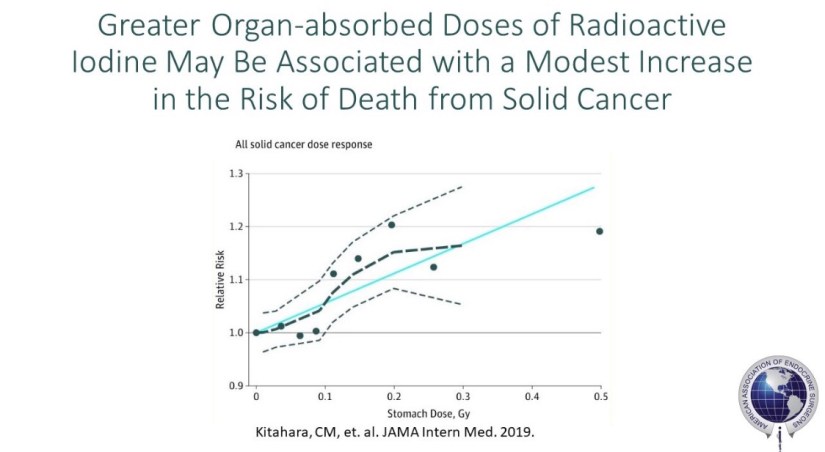
👉In a recent study examining over 18,000 patients with hyperthyroidism, greater organ-absorbed doses of RAI may be associated with a modest increase in the risk of death from solid cancer.

#Arrangoiz

#ThyroidSurgeon

#ThyroidExpert

#Hyperthyroidism

#MountSinaiMedical Center

#HeadandNeckSurgeon

#Surgeon

#Teacher

#Miami

#Mexico

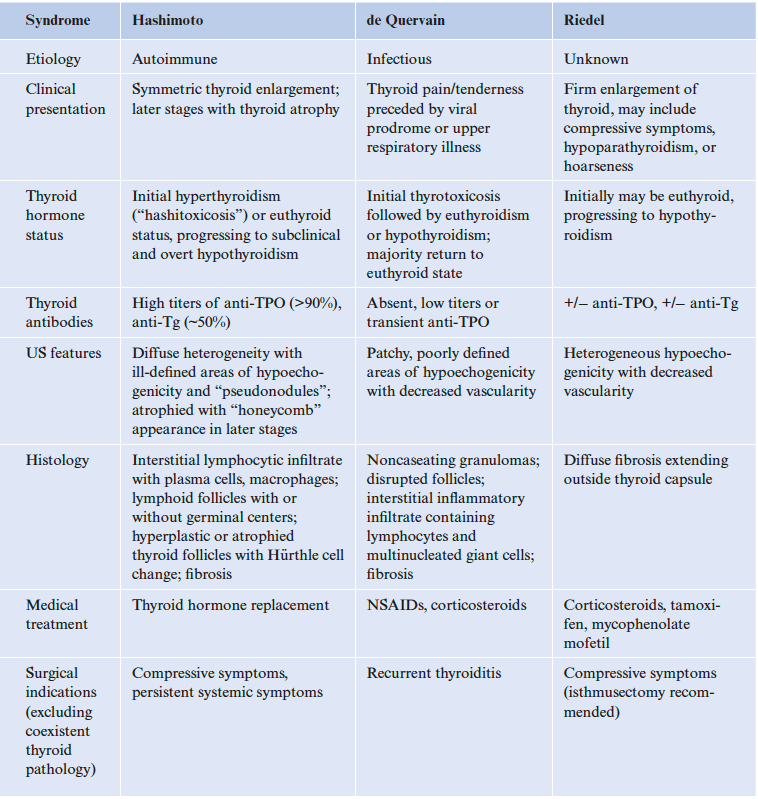
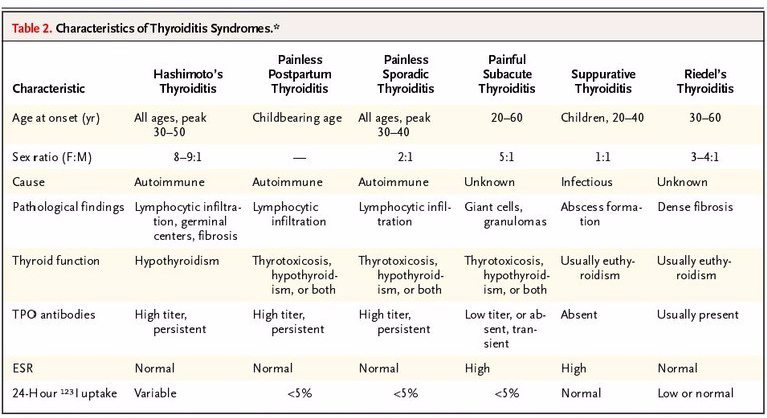
Characteristics and Treatment of Thyroiditis Syndrome

#Arrangoiz #CancerSurgeon #ThyroidSurgeon #ParathyroidSurgeon #HeadandNeckSurgeon #ThyroidExpert #SurgicalOncologist #EndocrineSurgery #MountSinaiMedicalCenter #Miami #ThyroidNodule #ToxicNodularGoiter #TNG #MultinodularGoiter #GravesDisease #Hyperthyroidism #Goiter

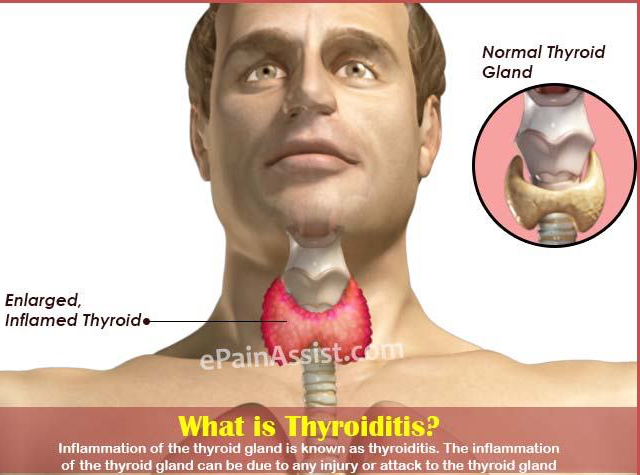
Thyroiditis

what-thyroiditis

  • Thyroiditis comprises a diverse group of disorders:
    • That are among the most common endocrine abnormalities encountered in medical endocrine clinical practice as well as by surgeons managing the thyroid
    • These disorders range from:
      • The extremely common chronic lymphocytic thyroiditis (Hashimoto’s thyroiditis) to the extremely rare invasive fibrous thyroiditis (Riedel’s thyroiditis) 
    • Clinical presentations are also diverse:
      • Ranging from an incidental finding of a goiter to potentially life-threatening illness:
        • From hypothyroidism to thyrotoxicosis.
    • The term thyroiditis implies:
      • That the disorders are inflammatory processes involving the thyroid gland:
        • Although some of the lesions are not inflammatory and are included in the thyroiditis category largely for convenience.
    • A rational approach to such patients:
      • Including history, physical examination, laboratory evaluation, radionuclide or ultrasonographic imaging, and fine-needle aspiration biopsy:
        • Will allow the appropriate diagnosis to be made in the majority of cases.
Chronic lymphocytic thyroiditis (Hashimoto’s thyroiditis)
Subacute lymphocytic thyroiditis:
— Postpartum thyroiditis
— Sporadic silent thyroiditis
Subacute granulomatous thyroiditis (De Quervain’s thyroiditis)
Drug-induced thyroiditis
Radiation thyroiditis
Acute suppurative / infectious thyroiditis:
— Bacterial, fungal, parasitic
Invasive fibrous thyroiditis (Riedel’s thyroiditis)
Miscellaneous:
— Sarcoid, amyloid, traumatic, and palpation-induced thyroiditis

nejmra021194_t2

#Arrangoiz

#Teacher

#Surgeon

#Cirujano

#ThyroidExpert

#ThyroidSurgeon

#CirujanodeTiroides

#ExpertoenTiroides

#ExpertoenParatiroides

#Paratiroides

#Hiperparatiroidismo

#CancerdeTiroides

#ThyroidCancer

#PapillaryThyroidCancer

#SurgicalOncologist

#CirujanoOncologo

#CancerSurgeon

#CirujanodeCancer

#HeadandNeckSurgeon

#CirugiaEndocrina

#EndocrineSurgery

#MountSinaiMedicalCenter

Diagnostic Evaluation of Hyperthyroidism

  • Thyrotoxicosis:
    • Is the common feature of both:
      • Toxic nodular goiter (TNG) and Graves’ disease
    • It may be clinical or subclinical:
      • Subclinical hyperthyroidism:
        • Presents few, if any, mild symptoms ;
          • In the presence of a suppressed TSH with normal free thyroid hormones (T3 and T4)
    • Early in Graves’ disease:
      • Hyperthyroidism may be from:
        • Preferential T3 secretion:
          • So-called T3 toxicosis
  • History and Physical Examination:
    • The clinical presentation ranges from:
      • No symptoms and a suppressed sensitive serum TSH level to overt or obvious clinical hyperthyroidism:
        • The latter includes symptoms associated with:
          • Increased adrenergic tone and resting energy expenditure and other hormonal effects
          • Features related to increased adrenergic tone include:
            • Nervousness
            • Tremor
            • Increased frequency of defecation
            • Palpitations
            • Diaphoresis
            • Irritability
            • Insomnia
            • Headaches
            • Lid retraction and lid lag
            • Muscle weakness
            • Tachycardia
            • Hyperreflexia, and widened pulse pressure
          • Those related to increased energy expenditure include:
            • Heat intolerance
            • Unintentional weight loss without anorexia
            • Warm, moist skin
        • In elderly subjects, the presentation may be subtle, with:
          • Atrial fibrillation
          • Weight loss
          • Weakness
          • Depression
      • Goiter may be detected in patients with either TNG or Graves’ disease:
        • Nodular irregularity is characteristic of TNG:
          • Whereas Graves’ disease is more typically:
            • Diffuse, soft, and rubbery and may have an overlying thyroid region bruit
    • Patients with Graves’ disease often have a:
      • Goiter:
        • Diffuse, soft, and rubbery:
          • May have an overlying thyroid region bruit
      • May present with hyperthyroidism alone, or
      • May have one or more extra-thyroidal manifestations
    • Clinically apparent eye disease may occur in up to a third of patients with Graves’ disease:
      • But orbital CT may detect changes in a majority of patients
      • Signs of eye disease include:
        • Proptosis or exophthalmos
        • Lid lag and retraction
        • Impaired extraocular muscle function
      • Eye symptoms and signs generally begin about six months before or after the diagnosis of Graves’ disease:
        • It is generally uncommon for eye involvement to develop after the thyroid disease has been successfully treated:
          • There is great variability, however, and in some patients with eye involvement, hyperthyroidism may never develop
        • The severity of eye involvement is not related to the severity of hyperthyroidism
        • Early signs of eye involvement may be:
          • Red or inflamed eyes
        • Ultimately, proptosis may develop from the inflammation of retro-orbital tissues
        • Diminished or double vision is a rare problem:
          • That usually occurs later
        • It is not well known why, but problems with the eyes occur much more often in people with Graves’ disease who smoke cigarettes than in those who do not smoke
    • Other features of Graves’ disease include:
      • Onycholysis, acropachy, and pretibial myxedema
      • Pretibial myxedema:
        • Is a rare, reddish lumpy thickening of the skin of the shins
        • This skin condition is usually painless and is not serious
        • Like the eye disorders of Graves’ disease, the skin manifestation does not necessarily begin precisely when hyperthyroidism starts
        • Its severity is not related to the level of thyroid hormones
        • It is not known why this problem is usually limited to the lower leg or why so few people have it
    • Occasionally symptoms related to the mass effect of a large goiter may occur:
      • Very large goiter may extend retrosternally or substernally, resulting in symptoms and signs of tracheoesophageal pressure:
        • These may include:
          • Dysphagia
          • Cough
          • Choking sensation
          • Stridor:
            • Particularly if severe tracheal narrowing exists
          • The development of facial plethora, cyanosis, and distention of neck veins:
            • With raising both arms simultaneouslymay result from deep goiter compression of the structures located within the bony confines of the thoracic inlet (Pemberton sign)
CharacteristicGraves’ DiseaseToxic Nodular Goiter
GoiterDiffuseMultinodular
—SizeSmallLarge
—GrowthRapidSlow
Patient age, y< 45> 50
Hyperthyroid onsetRapidSlow
Histologic featuresFollicles similar, intense iodine metabolismVariable follicular size, shape, and intensity of iodine metabolism

#Arrangoiz #CancerSurgeon #ThyroidSurgeon #ParathyroidSurgeon #HeadandNeckSurgeon #ThyroidExpert #SurgicalOncologist #EndocrineSurgery #MountSinaiMedicalCenter #Miami #ThyroidNodule #ToxicNodularGoiter #TNG #MultinodularGoiter #GravesDisease #Hyperthyroidism #Goiter

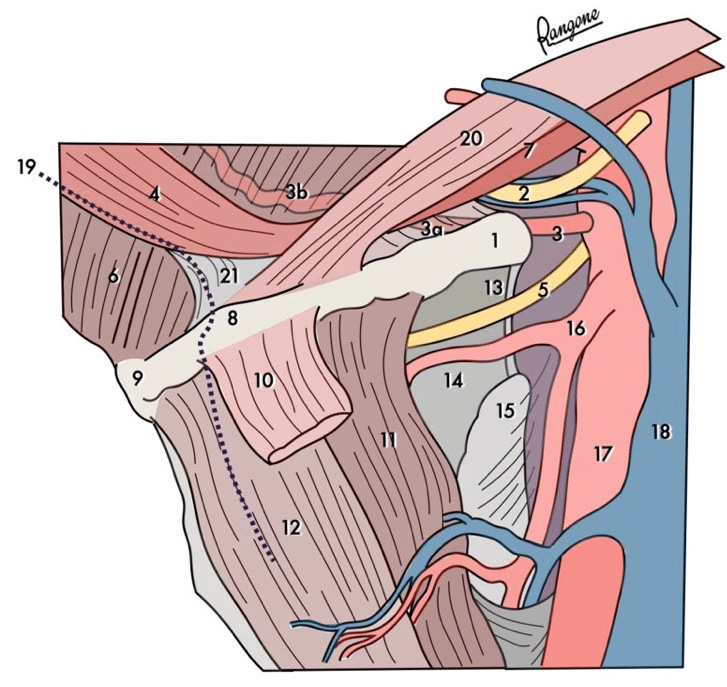
Mayor Horn of the Hyoid Bone

Did you know? 🤔
The major horn of the hyoid bone is a useful repair in lateral neck surgeries.
Its highlight allows us to specify the location:

  • towards the upper: of the hypoglossal nerve next to the ranine veins and of the lingual artery (in the triangle of Beclard).
  • downwards: from the nerve and the superior laryngeal vessels (in the Portmann quadrilateral).

📚References:
1- Major horn (horn) of the hyoid bone.
2- Hypoglossal nerve.
3- Lingual artery: 3a -in the area of the triangle of Beclard, behind the hyoglossus muscle. 3b- in the area of the Pirogoff triangle, behind the mylohyoid and hyoglossus muscle.
4- Anterior belly of the digastric muscle.
5- Superior laryngeal nerve.
6- Mylohyoid muscle (in submental triangle).
7- Posterior belly of the digastric muscle.
8- Minor horn (horn) of the hyoid bone.
9- Body of the hyoid bone.
10- Cranial insertion of the omohyoid muscle.
11- Thyrohyoid muscle.
12- Sternocleidohyoid muscle.
13- Lateral thyroid ligament.
14- Portmann quadrilateral.
15- Upper horn of the thyroid cartilage.
16- Trunk of the superior thyroid artery and superior laryngeal artery.
17- Primitive carotid artery.
18- Internal jugular vein.
19- Projection of the imaginary “safety” line in the Sistrunk operation.
20- Stylohyoid muscle.
21- Fascial sling of the intermediate tendon of the digastric muscle.

Epidemiology Hyperthyroidism

  • Hyperthyroidism in the United States:
    • Occurs in 0.05% to 1.3% of the general population:
      • With the majority of cases consisting of subclinical disease
    • The prevalence of hyperthyroidism:
      • Is approximately 5 to 10 times less than that of hypothyroidism
      • White and Hispanic populations in the United States:
        • Have a slightly higher prevalence of hyperthyroidism than black populations
  • TNG:
    • Is the most frequent cause of thyrotoxicosis:
      • In the elderly
    • It accounts for about 5% to 15% of patients with endogenous hyperthyroidism:
      • But the proportion is:
        • Higher in iodine-deficient geographic regions
    • Changes in the iodine content of salt and in the iodine supplementation of water have been linked to changes in the incidence of TNG:
      • In Switzerland in 1980 and in Spain in 1994:
        • The iodine content of salt was increased, and this was associated with a transient increased incidence of thyrotoxicosis followed by decreased incidence:
          • Mainly the result of reduced TNG incidence
  • Graves Disease:
    • Being the most common cause of thyrotoxicosis in all age groups
    • Graves’ disease accounts for 70% to 80% of endogenous hyperthyroidism
    • The incidence of Graves’ disease is five times higher in females than in males:
      • Occurring generally during women’s reproductive years:
        • Although it may occur at any age
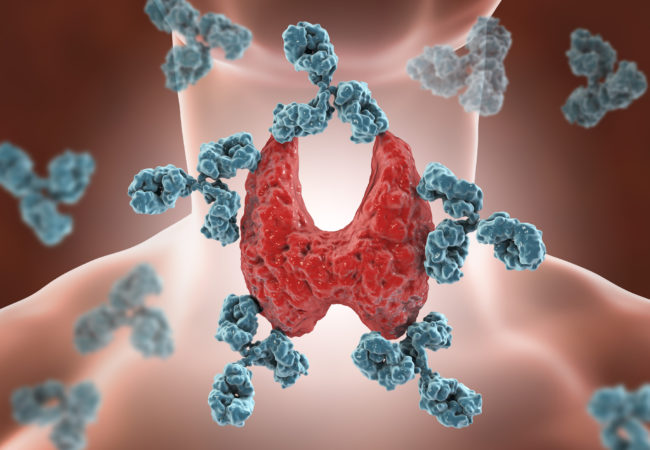
Autoimmune thyroiditis, Hashimoto’s disease. 3D illustration showing antibodies attacking thyroid gland

#Arrangoiz #CancerSurgeon #ThyroidSurgeon #ParathyroidSurgeon #HeadandNeckSurgeon #ThyroidExpert #SurgicalOncologist #EndocrineSurgery #MountSinaiMedical Center #Miami #ThyroidNodule #ToxicNodularGoiter #TNG #MultinodularGoiter #GravesDisease #Hyperthyroidism #Goiter

Hyperthyroidism – Graves Disease

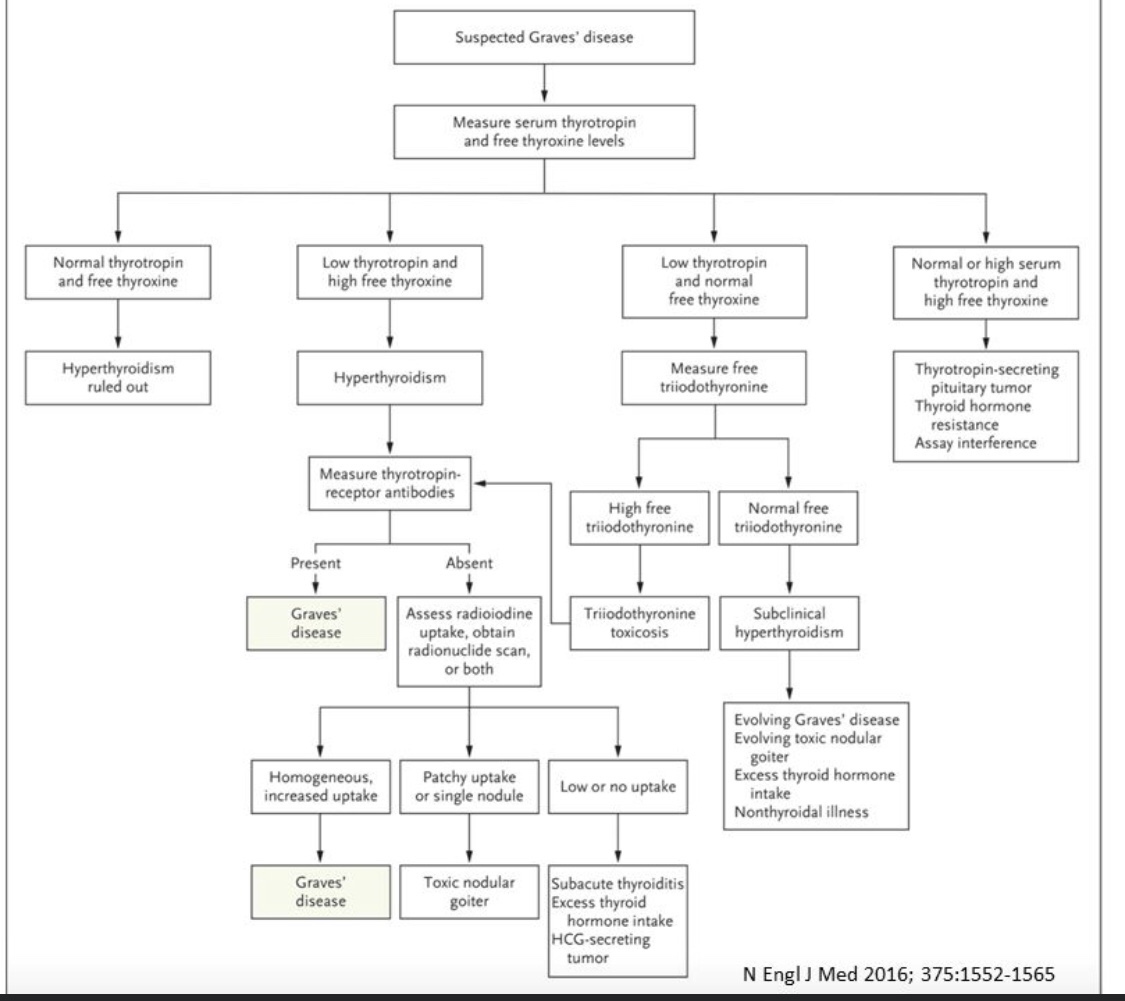
  • In the absence of extra-thyroidal symptoms or diffuse goiter, measurement of thyrotropin-receptor antibodies is performed and has a sensitivity and specificity of over 99%

#Arrangoiz #ThyroidSurgeon #ThyroidExpert #CancerSurgeon #HeadandNeckSurgeon #Hyperthyroidism #GravesDisease #EndocrineSurgery #Miami #Mexico #MountSinaiMedicalCenter

Hyperthyroidism

  • Hyperthyroidism refers to thyrotoxicosis:
    • Caused by the overproduction of the thyroid hormones:
      • Thyroxine (T4) and triiodothyronine (T3)
  • The most common type of thyrotoxicosis encountered in the United States and worldwide:
    • Is Graves’ disease
  • Toxic nodular goiter (TNG):
    • Is the second most common type of thyrotoxicosis
  • Goiter:
    • Is enlargement of the thyroid gland:
      • That is commonly encountered in clinical endocrine practice
    • It may be classified as:
      • Diffuse or
      • Nodular
        • May be either:
          • Non-toxic or
          • Toxic
    • Nodular goiter may include:
      • Multiple nodules:
        • Multi-nodular goiter (MNG)or
      • A single nodule
    • Regardless of different possible mechanisms of development:
      • Diffuse thyroid enlargement eventually evolves into a nodular stage
  • A TNG is a thyroid gland that contains:
    • Autonomously functioning thyroid nodule(s):
      • With resulting hyperthyroidism
    • Also called Plummer’s disease:
      • TNG was first described by Henry Plummer at Mayo Clinic in 1913
    • TNG is the second most common cause of hyperthyroidism in the Western world, after Graves disease:
      • In elderly individuals and in geographic areas of endemic iodine deficiency:
        • TNG is the most common cause of hyperthyroidism
  • Graves’ disease:
    • Is the most common type of thyrotoxicosis encountered in the industrialized world
    • Graves’, disease owes its name to an:
      •  Irish doctor, Robert James Graves’ who described the first case of goiter with exophthalmos in 1835
    • Patients with Graves’ disease usually have:
      • Diffuse, nontender, symmetric enlargement of the thyroid gland

#Arrangoiz #ThyroidExpert #ThyroidSurgeon #CancerSurgeon #EndocrineSurgery #Miami #MountSinaiMedicalCenter #Hyperthyroidism #Goiter #ThyroidNodules #HeadandNeckSurgeon #MulitnodularGoiter #MNG #PlummerDisease #ToxicNodularGoiter #TNG #Mexico

Gross Extrathyroidal Extension into Strap Muscles and Disease-Specific Mortality in Papillary Thyroid Cance

  • Clin Thyroidol 2022;34:78–80.
  • Background:
    • Several studies have reported that microscopic extrathyroidal extension (m-ETE) does not increase disease-related mortality in patients with papillary thyroid cancer (PTC); however, the literature is scarce with regard to the impact of macroscopic (gross) extrathyroidal extension invading only strap muscles (T3b-ETE) on outcomes that are important to patients
    • This study was performed to evaluate the association between T3b-ETE tumors and disease-specific survival (DSS) in patients with PTC
  • Methods:
    • This hospital-based single-institution study included adults who underwent initial surgery for PTC, with or without local or distant metastasis, between 1986 and 2015
    • The cohort was classified into three groups:
      • Mo macro-ETE:
        • No gross intra-operative evidence of extrathyroidal extension
      • T3b-ETE:
        • Gross intraoperative evidence of extra-thyroidal extension invading only strap muscles
      • T4-ETE:
        • Gross intraoperative evidence of extrathyroidal extension invading subcutaneous soft tissues, larynx, trachea, esophagus, recurrent laryngeal nerve, prevertebral fascia, or carotid artery/mediastinal vessels
    • A Cox proportional-hazards model was used to investigate the association of ETE categories and 10-year disease-specific survival (DSS, defined as the interval between initial surgery and last appointment or death with evidence of local or distant disease)
    • This model was adjusted for pathologic nodal stage, distant metastasis stage, and age
    • A subgroup analysis by age (< 55 vs. ≥ 55 years) was planned
  • Results:
    • A total of 5880 patients with a median follow-up of 64 months were included
    • Most were female (72.2%), were < 55 years of age (68.2%); had a tumor size between 0 and 4 cm (94.6%); were classified as T1 (71.3%), N0/Nx (68.1%), and M0 (98.9%); had ATA intermediate-risk disease (37.6%); and had AJCC stage I disease (89.4%)
    • Overall, 5485 patients had macro-ETE (93.3%), 179 had T3b-ETE (3.0%), and 216 had T4-ETE (3.7%)
    • In the overall adjusted multivariate analysis and compared with the no macro-ETE group, the T3b-ETE group had a similar risk of DSS (HR, 2.11; 95% CI, 0.72–6.15) and the T4-ETE group had a higher risk of DSS (HR, 5.22; 95% CI, 2.90–9.40)
    • In the subgroup analysis, patients ≥ 55 years of age with T3b-ETE had a higher risk of DSS as compared with patients with no macro-ETE (HR, 3.29; 95% CI, 1.07–10.08), similar to the higher risk also seen in the T4-ETE group (HR, 9.39; 95% CI, 4.68–18.81)
    • There were 26 patients with residual disease after initial surgery (none from the T3b-ETE group), and there were only 60 DSS events
  • Conclusions:
    • Macroscopic extrathyroidal extension invading only the strap muscles (T3b-ETE) increases disease-specific death in patients with PTC who are ≥55 years of age, as compared with patients with no macro-ET
  • This retrospective study found no increased disease-specific mortality in patients with T3b-ETE overall and increased disease-specific mortality only in those ≥55 years
  • The strength of the Harries et al. study is the meticulous record review and histologic confirmation of the intraoperative T3b-ETE findings
  • Nevertheless, the small number of DDS events limited the analysis of other prognostic factors in the multivariate model, including the tumor size and impact of postoperative radioactive iodine ablation
  • The literature about the impact of extrathyroidal extension (ETE) on disease outcomes provides inconsistent conclusions
  • Factors contributing to different findings are the lack of a standard definition and reporting of ETE
  • For instance, some studies defined ETE and its severity by the direction of invasion (perithyroid tissue, strap muscle, and beyond strap muscle), while others defined ETE based on pathology reports and operative findings
  • Therefore, it is expected that different definitions of the disease may lead to different outcomes and conclusions
  • Macroscopic ETE is defined as an operative or gross examination finding noted when cancer extends out of the thyroid into adjacent structures
  • In contrast, microscopic ETE is defined as when the tumor invasion is observed under a microscope
  • It is expected that all macroscopic ETE will have evidence of microscopic ETE
  • These definitions imply that clinicians taking care of patients with thyroid cancer should carefully review the pathological report and the operative report to classify ETE correctly
  • We have also found that frequent communication with our surgical colleagues can help clarify the operative and histopathologic findings
  • Future studies using standardized definitions will elucidate the impact of macroscopic disease on recurrence and mortality in PTC
  • In the meantime, we agree with the authors of this study that it is prudent to consider T3b-ETE as a prognostic adverse risk factor between microscopic ETE and macroscopic ETE with invasion into adjacent tissues

#Arrangoiz #ThyroidSurgeon #ThyroidExpert #HeadandNeckSurgeon #CancerSurgeon #PapillaryThyroidCancer #ExtrathyroidExtension #Miami #Mexico #MountSinai #EndocrineSurgery #SurgicalOncology #Surgeon #Teacher