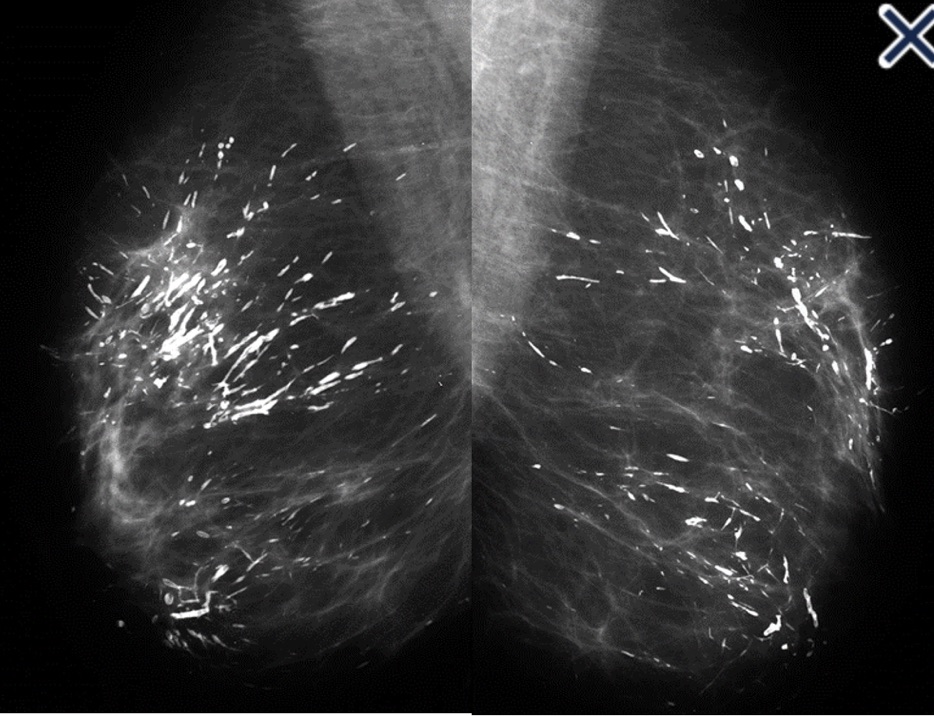
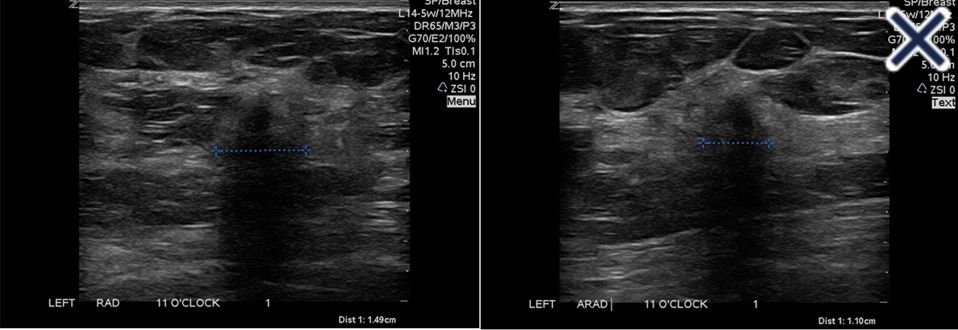
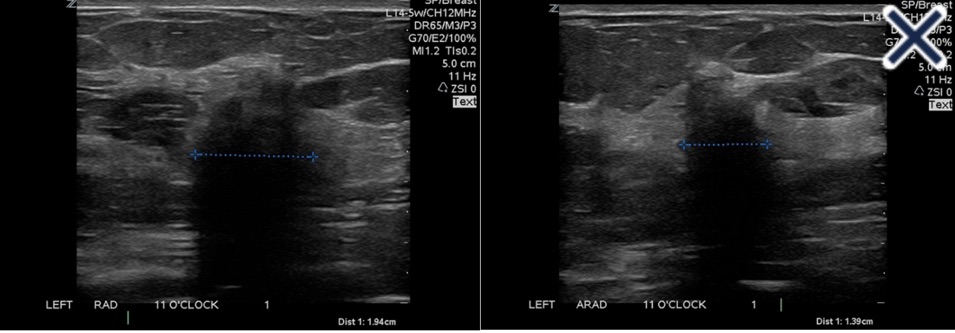
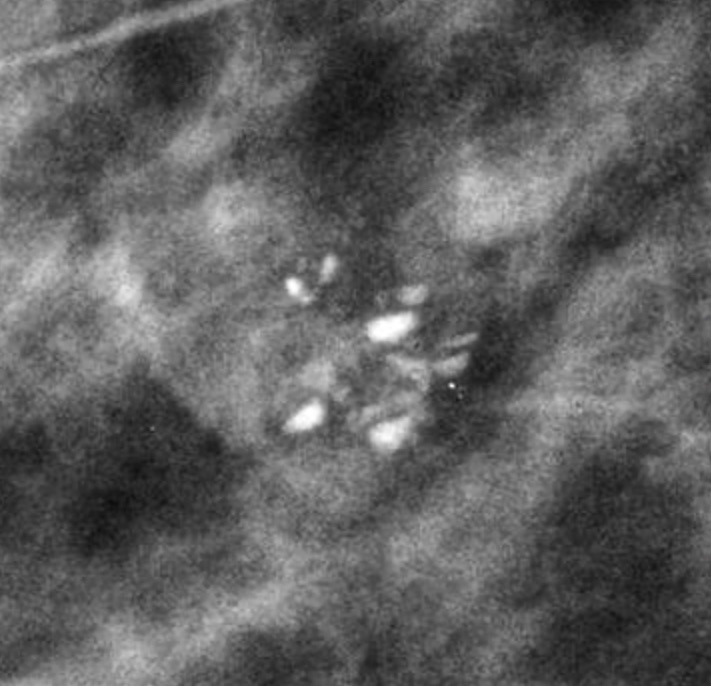
BRCA 1 and BRCA 2 Hereditary Breast Cancer

  • BRCA1 and BRCA2:
    • Are genes that produce tumor suppressor proteins:
      • Which help repair damaged DNA
    • They are the most common gene alterations seen in the hereditary breast cancer population
      • They are associated with an increased risk of breast cancer:
        • Estimated to be 55% to 70% for BRCA 1 carriers and 45% to 70% in BRCA2 carriers by age 70
    • While both BRCA1 and BRCA2 mutations are associated with an increased risk of breast cancer:
      • BRCA1 breast cancers more commonly occur in younger, premenopausal women and are more likely to be triple negative
    • BRCA1 is associated with a higher risk of ovarian cancer compared to BRCA2:
      • With a lifetime risk of 40% to 45% in BRCA1 carriers compared to 15% to 20% in BRCA2 carriers
    • BRCA2 breast cancers:
      • More closely resemble the sporadic breast cancer pattern, with a predominance of hormone receptor positive cancers in women greater than 50 years
  • CHEK2 and PALB2:
    • Are moderate penetrance genes that are less common than BRCA mutations
    • Similar to BRCA 2 deleterious mutations:
      • CHEK2 and PALB2 mutations are associated with hormone receptor positive postmenopausal breast cancer
  • References
#Arrangoiz #Doctor #Surgeon #CancerSurgeon #SurgicalOncologist #BreastSurgeon #MountSinaiMedicalCenter #MSMC #Miami #Mexico #BreastCancer #HormoneReplacementSurgery

Indications for Risk Reducing Bilateral Salpingectomy-Oophorectomy (BSO)

  • Women with a pathogenic variant in BRCA1:
    • Have a lifetime cumulative ovarian cancer risk of 44% (95% CI 36% to 53%)
  • The NCCN guidelines recommend:
    • Risk-reducing bilateral salpingectomy-oophorectomy (BSO), for women who have completed childbearing:
      • Be performed by age 35 to 40 in BRCA1 patients
    • Of note, hysterectomy at the time of BSO is not routinely recommended
  • There is a lack of data to support survival benefit to ovarian cancer screening
  • Pelvic MRI serves no role in screening for ovarian cancers
  • For high-risk patients who decline or defer BSO:
    • Screening is typically offered and includes transvaginal ultrasound and cancer antigen (CA) 125 every six months beginning at age 30 or 5 to 10 years before the earliest age of first diagnosis of ovarian cancer in the family:
      • This screening strategy appears most effective with use of longitudinal algorithms as opposed to a single cutoff for CA 125
  • There is no current effective chemoprevention option for risk-reduction in ovarian cancer, though research is underway
  • References
    • Kuchenbaecker KB, Hopper JL, Barnes DR, et al. Risks of breast, ovarian, and contralateral breast cancer for BRCA1 and BRCA2 mutation carriers. JAMA. 2017;317(23):2402-2416.
    • National Comprehensive Cancer Network. Genetic/familial high risk assessment: breast and ovarian, Version 1.2020 https://www.nccn.org/professionals/physician_gls/pdf/genetics_bop.pdf Accessed February 23, 2020.
    • Menon U, Karpinskyj C, Gentry-Maharaj A. Ovarian cancer prevention and screening. Obstet Gynecol. 2018;131(5):909-927.
    • Kathawala RJ, Kudelka A, Rigas B. The chemoprevention of ovarian cancer: the need and the options. Curr Pharmacol Rep. 2018;4(3):250-260.
#Arrangoiz #Doctor #Surgeon #CancerSurgeon #SurgicalOncologist #BreastSurgeon #MountSinaiMedicalCenter #MSMC #Miami #Mexico #BreastCancer #HormoneReplacementSurgery

Bilateral Salpingooforectomy (BSO) and Breast Cancer Risk Reduction

  • Although BRCA1 associated breast cancers tend to be triple negative and not influenced by estrogen:
    • A 37% reduction in breast cancer risk is seen after BSO
  • In BRCA2 mutation carriers:
    • BSO confers a 64% breast cancer risk reduction
  • Eisen et al:
    • Showed that BSO before the age of 50 led to a greater reduction in breast cancer risk compared to patients who underwent BSO after the age of 50
  • Given that chemotherapy-induced cessation of menses:
    • Reduces estrogen exposure:
      • The added reduction from BSO in patients with chemotherapy-induced menopause is not as significant as in patients with intact ovarian function
  • In a study by Domchek et al:
    • BSO reduced breast cancer specific mortality, ovarian cancer specific mortality and overall mortality by 90%, 95%, and 76%, respectively in BRCA mutation carriers
  • A prospective study by Kostopoulos:
    • Examined the effect of BSO on breast cancer risk and found the largest risk reduction provided by BSO among premenopausal BRCA2 mutation carriers
  • References
    • Domchek SM, Friebel TM, Singer CF, Evans DG, Lynch HT, Isaacs C, et al. Association of risk-reducing surgery in BRCA1 or BRCA2 mutation carriers with cancer risk and mortality. JAMA. 2010;304(9):967-975.
    • Eisen A, Lubinski J, Klijn J, Moller P, Lynch HT, Offit K, et al. Breast cancer risk following bilateral oophorectomy in BRCA1 and BRCA2 mutation carriers: an international case-control study. J Clin Oncol. 2005;23(30):7491-7496.
    • Kotsopoulos J, Huzarski T, Gronwald J, Singer CF, Moller P, Lynch HT, et al. Bilateral oophorectomy and breast cancer risk in BRCA1 and BRCA2 mutation carriers. J Natl Cancer Inst. 2017;109(1).
#Arrangoiz #Doctor #Surgeon #CancerSurgeon #SurgicalOncologist #BreastSurgeon #MountSinaiMedicalCenter #MSMC #Miami #Mexico #BreastCancer #HormoneReplacementSurgery

Hormone Replacement Therapy

  • The Women’s Health Initiative (WHI):
    • Studied the effects of estrogen alone in postmenopausal women with hysterectomy and found a possible reduction in breast cancer risk:
      • Therefore, for this population, particularly younger newly postmenopausal women:
        • This regimen is a good choice for management of menopausal symptoms in the short term
  • On the other hand:
    • The WHI showed a significant increased risk of breast cancer in women:
      • Taking combined hormone replacement therapy with estrogen and progestin
  • There are no data to support claims that bioidentical hormones are safer than other hormones, and they must be assumed to have the same risks as commercial hormone preparations
  • The risk of breast cancer associated with transdermal estrogens and progestins:
    • Does not differ from oral preparations
  • The Nurses’ Health Study:
    • Found significantly increased risk of breast cancer in women who used estrogen and testosterone therapies
  • References
    • Anderson GL, Limacher M, Assaf AR, Bassford T, Beresford SA, Black H, et al. Effects of conjugated equine estrogen in postmenopausal women with hysterectomy: the Women’s Health Initiative randomized controlled trial. JAMA. 2004;291(14):1701-1712.
    • Rossouw JE, Anderson GL, Prentice RL, LaCroix AZ, Kooperberg C, Stefanick ML, et al. Risks and benefits of estrogen plus progestin in healthy postmenopausal women: principal results From the Women’s Health Initiative randomized controlled trial. JAMA. 2002;288(3):321-333.
    • Boothby LA, Doering PL, Kipersztok S. Bioidentical hormone therapy: a review. Menopause. 2004;11(3):356-367.
    • Burry KA, Patton PE, Hermsmeyer K. Percutaneous absorption of progesterone in postmenopausal women treated with transdermal estrogen. Am J Obstet Gynecol.1999;180(6 Pt 1):1504-1511.
    • Tamimi RM, Hankinson SE, Chen WY, Rosner B, Colditz GA. Combined estrogen and testosterone use and risk of breast cancer in postmenopausal women. Arch Intern Med. 2006;166(14):1483-1489.
#Arrangoiz #Doctor #Surgeon #CancerSurgeon #SurgicalOncologist #BreastSurgeon #MountSinaiMedicalCenter #MSMC #Miami #Mexico #BreastCancer #HormoneReplacementSurgery

Male Breast Cancer Risk Factors

Top 10 Risk factors for MALE Breast Cancer

  1. Aging

Risk increases with age. On average, men with breast cancer are about 72 years old when they are diagnosed.

  1. Family history of breast cancer

About 1 out of 5 men with breast cancer have a close relative, male or female, with the disease.

  1. Inherited gene mutations

Men with a BRCA2 gene mutation have an increased risk of breast cancer, with a lifetime risk of about 6 in 100. BRCA1 mutations can also cause breast cancer in men, but the risk is lower, about 1 in 100 ( in women BRCA1 has higher risk). Mutations in CHEK2, PTEN and PALB2 genes might also be responsible for some breast cancers in men.

  1. Klinefelter syndrome

XXY : Men with Klinefelter syndrome (1 in 1000) have lower levels of androgens and more estrogens, have gynecomastia.
Increases breast cancer risk 20 – 60 times the risk of a man in the general population.

  1. Radiation exposure

Prior chest radiation treatment for lymphoma has an increased risk of developing breast cancer.

  1. Alcohol

Heavy drinking ⬆️ risk likely due to its effects on the liver.

  1. Liver disease

Cirrhosis lower levels of androgens and higher levels of estrogen. Also higher chance of developing gynecomastia.

  1. Estrogen treatment

Estrogen-related drugs were once used in hormonal therapy for men with prostate cancer. Transgender/transsexual individuals who take high doses of estrogens as part of sex reassignment could also have a higher breast cancer risk. Not much published data yet.

  1. Obesity

Fat cells in the body convert androgens to estrogens. Obese men have ⬆️ levels of estrogens in their body.

  1. Testicular conditions

Certain conditions, such as having an undescended testicle, mumps as an adult, or history of orchiectomy may increase male breast cancer risk.

https://amp.cancer.org/cancer/breast-cancer-in-men/about/key-statistics.html

Nipple Sparing Mastectomy

  • Nipple-sparing mastectomy (NSM):
    • Has increasingly become an acceptable choice for risk reduction in the BRCA1 and BRCA2 mutation carrier population due to a potential superior cosmetic outcome compared to skin-sparing mastectomy
  • Macromastia (C cup breast or higher):
    • Can result in malposition of the nipple and may require alternative incisions or a standard skin-sparing mastectomy approach for optimal cosmetic results
  • Grade I ptosis is not a contraindication to NSM:
    • However, ptosis of grade 2 or higher:
      • Can also result in malposition of the nipple-areolar complex (NAC)
  • Regarding future cancer risk:
    • There may be a small risk associated with leaving the NAC in situ
    • The greater risk appears to be within the at-risk breast tissue left on thicker mastectomy skin flaps rather than within the NAC itself:
      • As studies have shown the majority of cancer recurrences occur outside of the NAC:
        • Therefore, optimizing dissection technique and choosing appropriate incisions are essential to obtaining optimal oncologic outcomes with this procedure
  • A previous benign biopsy of calcifications is not a contraindication to NSM:
    • However, extensive malignant calcifications, tumors less than to 2 cm from the nipple, nipple discharge, or a rash on the nipple are contraindications to NSM
  • References:
    • Tousimis E, Haslinger M. Overview of indications for nipple sparing mastectomy. Gland Surg. 2018;7(3):288-300.
    • Manning AT, Wood C, Eaton A, Stempel M, Capko D, Pusic A, et al. Nipple-sparing mastectomy in patients with BRCA1/2 mutations and variants of uncertain significance. Br J Surg. 2015;102(11):1354-1359.
    • Yao K, Liederbach E, Tang R, Lei L, Czechura T, Sisco M, et al. Nipple-sparing mastectomy in BRCA1/2 mutation carriers: an interim analysis and review of the literature. Ann Surg Oncol. 2015;22(2):370-376.
    • Moo TA, Pinchinat T, Mays S, Landers A, Christos P, Alabdulkareem H, et al. Oncologic outcomes after nipple-sparing mastectomy. Ann Surg Oncol. 2016;23(10):3221-3225
    • Jakub JW, Peled AW, Gray RJ Greenup RA, Kiluk JV, Sacchini V, et al. Oncologic safety of prophylactic nipple sparing mastectomy in a population with BRCA mutations: A multi-institutional study. JAMA Surg. 2018;153(2):123-129.

Breast Cancer Chemoprevention Medications

  • Postmenopausal women with a uterus:
    • Are at a higher risk of developing uterine cancer with tamoxifen:
      • Therefore raloxifene is preferred in this subset
  • Tamoxifen:
    • Provides a slightly higher breast cancer risk reduction compared to raloxifene
  • Raloxifene:
    • Has a slightly lower rate of developing venous thromboembolism (VTE) than tamoxifen
    • It is preferred in patients with osteoporosis
  • Tamoxifen:
    • Is the chemoprevention agent of choice in premenopausal women and in postmenopausal women who have undergone a hysterectomy
  • Aromatase inhibitors:
    • Are another option for chemoprevention and are used:
      • In patients with contraindications to selective estrogen receptor modulator SERM use (history of VTE, stroke risk):
        • But have a significant incidence of musculoskeletal pain and worsening of osteoporosis
  • Fulvestrant, nor leuprolide are used for chemoprevention
  • References:
    • Reimers LL, Sivasubramanian PS, Hershman D, et al. Breast cancer chemoprevention among high-risk women and those with ductal carcinoma in situ. Breast J. 2015;21(4):377-386.
    • Harris JR, Lippman ME, Morrow M, Osborne CK. Diseases of the Breast, Fifth Edition. Philadelphia, PA: Wolters Kluwer Health, 2014.
    • Thorat MA, Cuzick J. Preventing invasive breast cancer using endocrine therapy. Breast. 2017;34(Suppl 1):S47-s54.

PTEN Mutation and Breast Cancer

  • Phosphatase and Tensin Homolog (PTEN):
    • Is a tumor suppressor gene, and inherited mutations in this gene can be associated with Cowden’s syndrome
  • Cowden’s syndrome:
    • Is associated with increased risk of multiple types of cancer including:
      • Breast
      • Endometrial
      • Thyroid
      • Colorectal
      • Melanoma
  • PTEN mutations carriers:
    • Tend to develop cancers at younger ages than individuals with sporadic malignancies
    • Lifetime breast cancer risk with this syndrome is up to 85%:
      • As reported by Tan el al., although it is noted given the limitations in reported studies of women with Cowden’s syndrome, risk estimates are not stable
    • Hamartomas on the skin or mucous membranes are extremely common in this syndrome
    • Macrocephaly may also be seen
  • PTEN mutations are inherited in an autosomal dominant pattern with an estimated frequency of 1 in 200,000 people
  • Loss of PTEN gene expression at the somatic or germline level:
    • May affect response to HER2-directed therapies, and low levels of the protein in stromal cells have been associated with increased risk of recurrence related to radiation in pre-clinical models
  • The other genes with moderate risk of developing breast cancer with the following relative risks reported from a meta-analysis:
    • PALB2 RR 5.3
    • CDH1 RR 6.6
    • CHEK2 truncating mutations RR 3.0
    • ATM RR 2.8
  • References
    • Couch FJ, Shimelis H, Hu C, Hart SN, Polley EC, Na J, et al. Associations between cancer predisposition testing panel genes and breast cancer. JAMA Oncol.2017;3(9):1190-1196.
    • Gustafson S, Zbuk KM, Scacheri C, Eng C. Cowden syndrome. Semin Oncol.2007;34(5):428-434.
    • Ngeow J, Sesock K, Eng C. Breast cancer risk and clinical implications for germline PTEN mutation carriers. Breast Cancer Res Treat. 2017;165(1):1-8.
    • Tan MH, Mester JL, Ngeow J, Rybicki LA, Orloff MS, Eng C. Lifetime cancer risks in individuals with germline PTEN mutations. Clin Cancer Res. 2012;18(2):400-407.
    • Weiss A, Garber JE, King T. Breast cancer surgical risk reduction for patients with inherited mutations in moderate penetrance genes. JAMA Surg. 2018;153(12):1145-1146.
    • Kim C, Lee CK, Chon HJ, et al. PTEN loss and level of HER2 amplification is associated with trastuzumab resistance and prognosis in HER2-positive gastric cancer. Oncotarget. 2017;8(69):113494-113501.
    • Sizemore GM, Balakrishnan S, Thies KA, et al. Stromal PTEN determines mammary epithelial response to radiotherapy. Nat Commun. 2018;9(1):2783.
    • Easton DF, Pharoah PD, Antoniou AC, et al. Gene-panel sequencing and the prediction of breast-cancer risk. N Engl J Med. 2015;372(23):2243-2257.
Cancer Surgeon
#Arrangoiz #Doctor #Surgeon #CancerSurgeon #SurgicalOncologist #BreastSurgeon #MountSinaiMedicalCenter #MSMC #Miami #Mexico #BreastCancer

Chemoprevention for Women at High Risk Breast Canacer

  • Tamoxifen and raloxifene:
    • Reduce the risk of invasive breast cancer in high-risk women when compared to placebo:
      • But are associated with increased vasomotor symptoms
    • In the NSABP P-2 / STAR trial:
      • When compared to raloxifene:
        • Tamoxifen use resulted in higher rates of uterine cancer (2/1000 vs. 1.5/1000), deep vein thrombosis (2.29/1000 vs 1.69/1000), and pulmonary embolism (1.41/1000 vs. 0.96/1000)
  • Aromatase inhibitors:
    • Are not associated with a risk of thrombosis
  • Use of concomitant hormone replacement therapy with tamoxifen or raloxifene:
    • Was not allowed in the STAR trial and is discouraged in the 2013 American Society of Clinical Oncology chemoprevention guidelines
  • In the MAP.3 prevention trial:
    • Exemestane significantly reduced the incidence of invasive breast cancer
    • Was not associated with serious adverse effects, and resulted in only minimal changes in health-related quality of life:
      • However, it is not FDA-approved for chemoprevention of breast cancer but can be used in an off-label manner
    • Decision tables weighing the risks and benefits of chemoprevention agents:
      • Are available and can identify the most appropriate drug with the fewest side effects for each individual patient
  • Compliance with chemoprevention varies by the agent used:
    • In the MAP.3 trial:
      • 85% of enrolled women were compliant with exemestane
    • In the NSABP P-1 trial:
      • 76% of women with compliant with tamoxifen
    • In clinical practice, overall compliance with chemoprevention is even lower:
      • With a study by Flanagan and colleagues reporting a 61% rate of completion of planned chemoprevention in high-risk patients
  • References
    • Visvanathan K, Hurley P, Bantug E, Brown P, Col NF, Cuzick J, et al. Use of pharmacologic interventions for breast cancer risk reduction: American Society of Clinical Oncology clinical practice guideline. J Clin Oncol. 2013;31(23):2942-2962.
    • Freedman AN, Yu B, Gail MH, Costantino JP, Graubard BI, Vogel VG, et al. Benefit/risk assessment for breast cancer chemoprevention with raloxifene or tamoxifen for women age 50 years or older. J Clin Oncol. 2011;29(17):2327-2333.
    • Goss PE, Ingle JN, Ales-Martinez JE, Cheung AM, Chlebowski RT, Wactawski-Wende J, et al. Exemestane for breast-cancer prevention in postmenopausal women. N Engl J Med. 2011;364(25):2381-2391.
    • Nelson HD, Fu R, Humphrey L, et al. Comparative Effectiveness of Medications To Reduce Risk of Primary Breast Cancer in Women [Internet]. Rockville (MD): Agency for Healthcare Research and Quality (US); 2009 Sep. (AHRQ Comparative Effectiveness Reviews, No. 17.)
    • Fisher B, Costantino JP, Wickerham DL, et al. Tamoxifen for prevention of breast cancer: report of the National Surgical Adjuvant Breast and Bowel Project P-1 Study. J Natl Cancer Inst. 1998;90(18):1371-1388.
    • Flanagan MR, Zabor EC, Stempel M, Mangino DA, Morrow M, Pilewskie ML. Chemoprevention Uptake for Breast Cancer Risk Reduction Varies by Risk Factor. Ann Surg Oncol. 2019;26(7):2127-2135.
#Arrangoiz #Doctor #Surgeon #CancerSurgeon #SurgicalOncologist #BreastSurgeon #MountSinaiMedicalCenter #MSMC #Miami #Mexico #BreastCancer

What Does it Mean to Have a CHEK2 Mutation?

  • Truncating CHEK2 mutations (such as the c.1100delC mutation):
    • Are considered rare, moderate penetrance mutations
  • The lifetime risk of developing breast cancer with these mutations:
    • Is 3 times higher than the general population:
      • This means that the majority of patients with these mutations will not develop breast cancer, and many of the cancers that do develop may be sporadic and not related to the mutation:
        • Patients with these mutations should be counseled about their risk and the available risk management strategies
  • Those with a significant family history of breast cancer:
    • Should be counseled regarding high risk breast cancer screening:
      • Annual mammogram with consideration of annual MRI starting at age 40 or modified to an earlier age based on family history
    • Should be counseled regarding prevention strategies, including:
      • Chemoprevention and prophylactic surgery
  • It should be emphasized that there is less absolute risk-reduction benefit with prophylactic surgery compared to high-penetrance mutations like BRCA mutations, and recommendations should be based on patient’s family history
  • National Comprehensive Cancer Network guidelines:
    • Should be followed with recommendation for high-risk screening, including colon cancer screening recommendations among individuals with a CHEK2 mutation
  • References
    • Stratton MR, Rahman N. The emerging landscape of breast cancer susceptibility. Nat Genet. 2008;40(1):17-22.
    • Desmond A, Kurian AW, Gabree M, Mills MA, Anderson MJ, Kobayashi Y, et al. Clinical actionability of multigene panel testing for hereditary breast and ovarian cancer risk assessment. JAMA Oncol. 2015;1(7):943-951.
    • Weiss A, Garber JE, King T. Breast cancer surgical risk reduction for patients with inherited mutations in moderate penetrance genes. JAMA Surg. 2018;153(12):1145-1146.
    • Tung N, Domchek SM, Stadler Z, Nathanson KL, Couch F, Garber JE, et al. Counselling framework for moderate-penetrance cancer-susceptibility mutations. Nat Rev Clin Oncol. 2016;13(9):581-588.
#Arrangoiz #Doctor #Surgeon #CancerSurgeon #SurgicalOncologist #BreastSurgeon #MountSinaiMedicalCenter #MSMC #Miami #Mexico #BreastCancer