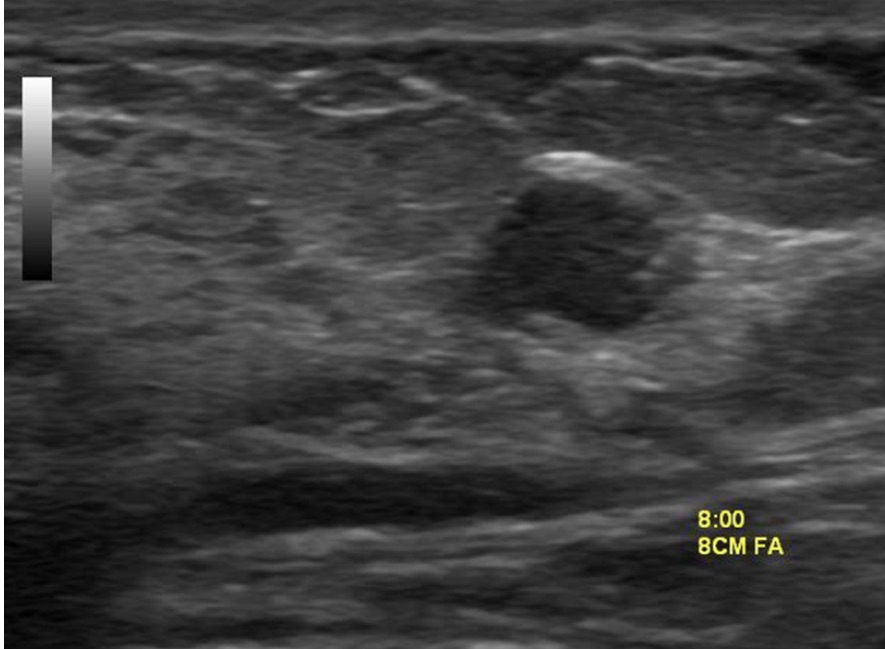
TP53 Mutation in Breast Cancer

  • The TP53 gene:
    • Is a key tumor-suppressor gene that acts as a checkpoint control for DNA damage
    • Due to its critical role in controlling cellular damage:
      • A TP53 germline mutation predisposes patients to multiple malignancies, including breast cancer and soft tissue sarcomas:
        • The associated familial syndrome was first observed in 1969 and is known as the Li-Fraumeni syndrome
    • The penetrance of breast cancer related to TP53 mutations:
      • Is higher than seen in the more common BRCA1 or BRCA2 mutations:
        • With a cumulative incidence reported for TP53 of 85% by age 60
      • TP53-associated breast cancers present at an early age (median age of diagnosis is 34) and the majority are hormone receptor positive and / or HER-2 positive.
    • Due to this high penetrance and associated increased risk for a secondary breast cancer:
      • Bilateral prophylactic mastectomy is recommended for management of an early-stage breast cancer in patients with a mutation in TP53
      • This is especially true in younger women as contralateral breast cancer risk inversely correlates with the patient’s age
    • The recommendation for mastectomy is further supported by the concern regarding radiation use in this patient population already at increased risk for soft tissue sarcomas:
      • Radiation should be used with extreme caution and careful consideration of the risk / benefit
  • For patients presenting with a known TP53 germline mutation and without a diagnosis of breast cancer:
    • NCCN guidelines recommend:
      • Annual breast MRI at 20 to 29 years and annual MRI and mammography at 30 to 75 years for high-risk breast cancer screening
    • Consideration of prophylactic risk-reducing mastectomy should be made in context of the age of presentation:
      • As breast cancer risk increases significantly after the second decade of life in these patients:
        • Bilateral mastectomy should be considered starting at age 20
      • The risk of breast cancer peaks at age 40 to 45 and then decreases, and therefore bilateral mastectomy offers significantly less benefit in women over 60 years of age
  • References
    • Mai PL, Best AF, Peters JA, DeCastro RM, Khincha PP, Loud JT, Bremer RC, Rosenberg PS, Savage SA Risks of first and subsequent cancers among TP53 mutation carriers in the National Cancer Institute Li-Fraumeni syndrome cohort. Cancer. 2016 Dec 1; 122(23):3673-3681.
    • Masciari S, Dillon DA et al. Breast cancer phenotype in women with TP53 germline mutations: a Li Fraumeni syndrome consortium effort. Breast Cancer Res Treat. 2012;133(3):1125–1130.
    • Schon, K, Tischkowitz, M. Clinical implications of germline mutations in breast cancer: TP53 Breast Cancer Res Treat. 2018; 167(2): 417–423.
    • National Comprehensive Cancer Network (2014) Genetic/familial high risk assessment: breast and ovarian. Li Fraumeni syndrome management. NCCN Clinical Practice Guidelines in Oncology. Version 1.2023.
#Arrangoiz #Doctor #Surgeon #CancerSurgeon #SurgicalOncologist #BreastSurgeon #MountSiniaMedicalCenter #MSMC #Miami #Mexico #BreastCancer

Hormone Replacement Therapy After Risk Reducing Bilateral Salpingo Ooforectomy (BSO) in Young Women

  • BRCA mutation carriers:
    • Are recommended to undergo prophylactic BSO to decrease risk of developing ovarian cancer
  • Risk-reducing surgery:
    • Should be performed after completion of childbearing and is recommended at:
      • Ages of 35 to 40 years for BRCA1 mutation carriers
      • Ages of 40 to 45 years for BRCA2 mutation carriers
  • Women who undergo BSO at a young age:
    • Are at increased risk of premature menopausal symptoms including:
      • Vasomotor symptoms
      • Sexual dysfunction
      • Vulvo-vaginal atrophy
    • In addition, premature menopause:
      • May be associated with decreased bone density and cardiovascular disease
  • Short-term hormone replacement therapy (HRT):
    • Can be beneficial to alleviate the symptoms of estrogen deprivation:
      • A literature review on the use of HRT among BRCA mutation carriers following risk-reducing BSO:
        • Summarized data supporting the use of HRT for improvement in menopausal symptoms, quality of life, and sexual function, and suggests an improvement in bone health, cardiovascular health, and cognitive function
  • When assessing breast cancer risk with HRT in this population:
    • The summary of available literature does not show an increase in breast cancer risk with short-term HRT use following risk-reducing BSO:
      • However, there is notable concern regarding increased breast cancer risk with the use of combination estrogen and progesterone HRT compared to estrogen alone:
        • Kotsopoulos and colleagues reported a prospective, longitudinal cohort study of BRCA1 mutation carriers who underwent risk-reducing BSO from 80 centers in 17 countries 1995-2017:
          • BRCA1 carriers with a follow-up of 7.6 years following BSO were included
          • Of the population, 43% of women used some form of HRT following BSO for a mean duration of 3.9 years
          • The authors did not find an associated increase in breast cancer risk with the use of HRT in this population of BRCA1 carriers post-BSO (HR 0.97, p=.89 for any HRT use vs. none)
          • In this cohort, most women took estrogen alone (69%) while 18% took combination estrogen plus progesterone and 32% used another formulation of hormone therapy
          • While there was no significant difference in the 10-year actuarial risk for any HRT regimen compared to none (p=0.72), there was a difference in women who used estrogen alone, with a reported breast cancer incidence of 12% compared with 22% in those who used estrogen plus progesterone (p=0.04)
          • In general, estrogen-alone HRT is recommended for women who have undergone a hysterectomy, while combination estrogen plus progesterone is recommended for women with an intact uterus to reduce the risk of endometrial hyperplasia and cancer (a risk with unopposed estrogen)
          • Given these differences in risk, a thoughtful discussion is necessary to balance the risks and benefits of HRT with appropriate gynecologic surgery.
  • While premature menopause symptoms are a common concern among young women undergoing risk reducing BSO, few BRCA mutation carriers are currently recommended to consider HRT for symptom management:
    • A study reporting on BRCA mutation carriers from the ‘Facing Our Risk of Cancer Empowered’ group found that 81% of the postmenopausal population became menopausal prematurely secondary to surgery or medications
    • Of this group, the majority reported concerns of libido /sexuality (78%), cardiovascular disease (78%), and osteoporosis (65%), but HRT use was reported in only 13% of women with no prior cancer history with only 26% of women reporting that this was favored by their healthcare provider
    • Continued provider and patient education is needed to educate patients that short-term hormone replacement therapy is safe in BRCA1 mutation carriers following risk reducing bilateral salpingo-oophorectomy
  • References
    • Gordhandas S, Norquist BM, Pennington KP, Yung RL, Laya MB, Swisher EM. Hormone replacement therapy after risk reducing salpingo-oophorectomy in patients with BRCA1 or BRCA2 mutations; a systematic review of risks and benefits. Gynecol Oncol. 2019;153(1):192-200.
    • Kotsopoulos J, Gronwald J, Karlan BY, Huzarski T, Tung N5, Moller P, et al. Hormone replacement therapy after oophorectomy and breast cancer risk among BRCA1 mutation carriers. JAMA Oncol. 2018;4(8):1059-1065.
    • Birrer N, Chinchilla C, Del Carmen M, Dizon DS. Is Hormone Replacement Therapy Safe in Women With a BRCA Mutation?: A Systematic Review of the Contemporary Literature. Am J Clin Oncol. 2018 Mar;41(3):313-315.
#Arrangoiz #Doctor #Surgeon #CancerSurgeon #SurgicalOncologist #BreastSurgeon #MountSiniaMedicalCenter #MSMC #Miami #Mexico #BreastCancer

Atypical Lobular Hyperplasia (ALH) of the Breast

  • Atypical lobular hyperplasia (ALH):
    • Is generally an incidental finding on core needle biopsy without specific defining characteristics on mammography, ultrasound, or MRI
  • A palpable breast mass which yields ALH at core needle biopsy:
    • Is discordant and should prompt further diagnostic work-up with a second biopsy, either core or excisional
  • ALH should only be considered for observation:
    • When there is radiologic, pathologic, and clinical concordance:
      • As the risk of upstaging to carcinoma in this scenario:
        • Is less than 5%
  • ALH alone confers a 4 to 5-fold increased risk of future breast cancer
  • Relevant indications for genetic testing include:
    • A personal history of breast cancer ≤ age 45
    • Triple negative breast cancer ≤ age 60
    • A first-degree relative with breast cancer ≤ age 50
    • Two or more first- or second-degree relatives with breast cancer at any age
    • Patient or relative with bilateral breast cancer
    • Male breast cancer in a relative at any age
  • Risk-reducing mastectomy can be considered in patients with very high lifetime breast cancer risk:
    • Usually reserved for women with high-penetrance gene mutations, such as BRCA 1 or 2
  • References
    • Morrow M, Schnitt SJ, Norton L. Current management of lesions associated with an increased risk of breast cancer. Nat Rev Clin Oncol. 2015;12(4):227–238.
    • Smart CE, Furnival CM, Lakhani SR. Chapter 17. High-Risk Lesions: ALH/LCIS/ADH. In: Kuerer HM ed. Kuerer’s Breast Surgical Oncology. New York, NY: McGraw-Hill, 2010.
    • Murray MP, Luedtke C, Liberman L, Nehhozina T, Akram M, Brogi E. Classic lobular carcinoma in situ and atypical lobular hyperplasia at percutaneous breast core biopsy: outcomes of prospective excision. Cancer. 2013;119(5):1073-1079.
    • The American Society of Breast Surgeons (2016). Consensus Guideline on Concordance Assessment of Image-Guided Breast Biopsies and Management of Borderline or High-Risk Lesions https://www.breastsurgeons.org/docs/statements/Consensus-Guideline-on-Concordance-Assessment-of-Image-Guided-Breast-Biopsies.pdf. Accessed February 23, 2020.
#Arrangoiz #Doctor #Surgeon #CancerSurgeon #SurgicalOncologist #BreastSurgeon #MountSiniaMedicalCenter #MSMC #Miami #Mexico #BreastCancer

Breast Cancer Risk in Identical Twins

  • Lifetime breast cancer risk is 13% for identical twins of breast cancer patients compared to 9% for dizygotic twins
  • Twin studies are important because they help us understand the contribution of genetics to risk stratification in various populations
  • Other twin studies have estimated that:
    • 12% to 30% of breast cancer is primarily genetic in origin
  • In a recent update on cancer risk in the population of twins in Nordic countries:
    • The familial breast cancer risk was 28% for monozygotic twins and 20% for dizygotic twins at a median follow-up of 32 years
  • Thus, a minority of breast cancers are directly attributed to germline genetics and only 5% to 10% are thought to be due to inheritance of mutations in major autosomal dominant breast cancer predisposition genes
  • References
    • Baker SG, Lichtenstein P, Kaprio J, Holm N. Genetic susceptibility to prostate, breast, and colorectal cancer among Nordic twins. Biometrics. 2005;61(1):55-63.
    • Lichtenstein P, Holm NV, Verkasalo PK, Iliadou A, Kaprio J, Koskenvuo M, et al. Environmental and heritable factors in the causation of cancer–analyses of cohorts of twins from Sweden, Denmark, and Finland. N Engl J Med. 2000;343(2):78-85.
    • Locatelli I, Lichtenstein P, Yashin AI. The heritability of breast cancer: a Bayesian correlated frailty model applied to Swedish twins data. Twin Res. 2004;7(2):182-191.
    • Mucci LA, Hjelmborg JB, Harris JR, Czene K, Havelick DJ, Scheike T, et al. Nordic Twin Study of Cancer (NorTwinCan) collaboration. familial risk and heritability of cancer among twins in Nordic countries. JAMA. 2016;315(1):68-76.
#Arrangoiz #BreastSurgeon

Phyllodes Tumors

  • Introduction
    • Phyllodes tumors (PTs) of the breast are considered a rare fibroepithelial neoplasms of the breast and are considered a challenging for both pathologists and surgeons
    • The World Health Organization (WHO) has classified PTs histologically as:
      • Benign
      • Borderline
      • Malignant
    • PTs can be detected in all ages:
      • However, the median age of presentation is 45 years
    • PTs can mimic fibroadenoma in clinical presentations
    • Breast imaging is also similar to fibroadenomas
    • Cytological diagnosis of PTs by biopsy is usually unreliable:
      • However, a core needle biopsy is superior to fine-needle aspiration
    • Surgery is considered the mainstay treatment for PTs of the breast:
      • With a goal of achieving negative margins
    • Adjuvant chemotherapy and radiation therapy use for malignant PTs are controversial

Screening for Breast Cancer in Women with A History of Mantle Radiation Prior to the Age of 30

  • Women who receive thoracic (i.e., mantle) radiation prior to age 30:
    • Are at increased risk of breast cancer:
      • Although standardized incidence ratios vary from 13 to 55 based on patient, disease, and treatment factors
  • In the Late Effects Study Group trial:
    • The relative risk of breast cancer varied by follow-up interval and was greatest at 15 to 19 years after radiation exposure
  • Screening guidelines for those under age 25 include:
    • An annual clinical exam beginning 10 years after the radiation exposure
  • Screening guidelines for those over age 25:
    • Include an annual clinical exam beginning 8 to 10 years after the radiation exposure, with the addition of annual screening mammogram for patients ≥ age 30
    • Annual MRI is recommended for patients ≥ age 25
  • Recent studies reporting the persistence of gadolinium deposits in the brain following serial contrast MRI scans have led to a related FDA safety alert:
    • However, deposition is associated with only some gadolinium based contrast agents, and there is no clinical data that this results in detrimental long-term cognitive effects
  • There is currently no evidence that biannual MRI is more valuable than annual MRI for screening.
  • References
    • Henderson TO, Amsterdam A, Bhatia S, Hudson MM, Meadows AT, Neglia JP, et al. Systematic review: surveillance for breast cancer in women treated with chest radiation for childhood, adolescent, or young adult cancer. Ann Intern Med.2010;152(7):444-454.
    • van Leeuwen FE, Klokman WJ, Stovall M, Dahler EC, van’t Veer MB, Noordijk EM, et al. Roles of radiation dose, chemotherapy, and hormonal factors in breast cancer following Hodgkin’s disease. J Natl Cancer Inst. 2003;95(13):971-980.
    • National Comprehensive Cancer Network. Breast Cancer Screening and Diagnosis, Version 1.2019. https://www.nccn.org/professionals/physician_gls/pdf/breast-screening.pdf. Accessed February 23, 2020.
    • Ramalho J, Ramalho M, Jay M, Burke LM, Semelka RC. Gadolinium toxicity and treatment. Magn Reson Imaging. 2016;34(10):1394-1398.
    • Stojanov D, Aracki-Trenkic A, Benedeto-Stojanov D. Gadolinium deposition within the dentate nucleus and globus pallidus after repeated administrations of gadolinium-based contrast agents-current status. Neuroradiology. 2016;58(5):433-441.
    • Olchowy C, Cebulski K, Lasecki M, et al. The presence of the gadolinium-based contrast agent depositions in the brain and symptoms of gadolinium neurotoxicity – A systematic review. PLoS One. 2017;12(2):e0171704.
#Arrangoiz #Doctor #Surgeon #CancerSurgeon #BreastSurgeon #SurgicalOncologist #BreastCancer #Miami #Mexico #MountSinaiMedicalCenter #MSMC

Hormone Replacement Therapy in Postmenopausal Patients with a History of Breast Cancer – Is it Safe?

  • Two randomized clinical trials:
    • Were initiated and terminated early due to an increase in breast cancer events in patients in the hormone replacement therapy (HRT) arm with a personal history of breast cancer
      • The HABITS (Hormonal Replacement Therapy after Breast Cancer- Is It Safe?) trial:
        • Randomized 442 patients with a personal history of breast cancer to:
          • HRT with estradiol with or without progesterone (based on the presence of a uterus) vs. nonhormonal symptom management
        • More women in the HRT arm than the non-HRT arm had hormone receptor-positive breast cancer (62.3% vs 54.5%), and approximately half of patients in each group had taken HRT before their diagnosis of breast cancer
        • At median follow-up of 4 years, new breast cancer events occurred twice as frequently in the HRT group (hazard ratio [HR] 2.4) compared to the nonhormonal symptom management group
    • A similar trial in Stockholm found no difference in breast cancer recurrence in patients randomized to HRT vs. no HRT at 11 years of follow-up:
      • But reported an increased risk of contralateral breast cancer in those receiving HRT (HR 3.6, p=0.013)
  • Estrogen alone:
    • Can be used to reduce symptoms for postmenopausal women without a personal history of breast cancer who have had a hysterectomy, and was associated with a nonsignificant lower risk of breast cancer in the Women’s Health Initiative trial at 13 years of follow-up (HR 0.79)
    • However, the WHI cohort did not include women with a personal history of breast cancer, and therefore these data cannot be extrapolated to this population
  • Expert guidelines:
    • Recommend the use of topical low-dose vaginal estrogen therapy for women with bothersome genitourinary symptoms and contraindications to the use of systemic HRT:
      • This is a reasonable strategy in breast cancer survivors due to the local nature of vaginal estrogen and its low systemic absorption
  • References
    • Holmberg L, Iversen OE, Rudenstam CM, Hammar M, Kumpulainen E, Jaskiewicz J, et al. Increased risk of recurrence after hormone replacement therapy in breast cancer survivors. J Natl Cancer Inst. 2008;100(7):475-482.
    • Fahlén M, Fornander T, Johansson H, Johansson U, Rutqvist LE, Wilking N, et al. Hormone replacement therapy after breast cancer: 10 year follow up of the Stockholm randomised trial. Eur J Cancer. 2013;49(1):52-59.
    • Manson JE, Chlebowski RT, Stefanick ML, Aragaki AK, Rossouw JE, Prentice RL, et al. Menopausal hormone therapy and health outcomes during the intervention and extended post-stopping phases of the Women’s Health Initiative randomized trials. JAMA. 2013;310(13):1353-1368.
    • The NAMS 2017 Hormone Therapy Position Statement Advisory Panel. The 2017 hormone therapy position statement of The North American Menopause Society. Menopause. 2017;24(7):728-753.
#Arrangoiz #BreastSurgeon #CancerSurgeon #MountSinaiMedicalCenter #MSMC #Miami #Mexico

Breast Cancer Risk Models

  • The Tyrer-Cuzick model:
    • Estimates breast cancer risk based largely on family history, and it includes breast density as part of the risk caclulation
  • The Gail model:
    • Which calculates breast cancer risk based on age, race/ethnicity, age at menarche, age at first live birth, number of prior breast biopsies, personal history of atypical hyperplasia, and family history of breast cancer in first-degree relatives, does not include breast density or genetic testing results
  • BRCAPRO and BOADICEA:
    • Are both Mendelian models that estimate breast cancer risk based on the probability that the individual carries a mutation in a major breast cancer susceptibility gene, such as BRCA1 or BRCA2
    • These models do not incorporate nulliparity or breast density into the calculation
  • The Claus model:
    • Is based only on family history of breast cancer in first- and second-degree relatives, is not thoroughly validated in independent cohorts, and does not include factors such as nulliparity
  • References
    • Amir E, Freedman OC, Seruga B, Evans DG. Assessing women at high risk of breast cancer: a review of risk assessment models. J Natl Cancer Inst. 2010;102(10):680-691.
    • Tyrer J, Duffy SW, Cuzick J. A breast cancer prediction model incorporating familial and personal risk factors. Stat Med. 2004;23(7):1111-1130. [See comment in Stat Med. 2005;24:1610-161; erratum appears in Stat Med. 2005;24:156].
    • Gail MH, Brinton LA, Byar DP, Corle DK, Green SB, Schairer C, et al. Projecting individualized probabilities of developing breast cancer for white females who are being examined annually. J Natl Cancer Inst. 1989;81(24):1879-1886.
    • Claus EB, Risch N, Thompson WD. Autosomal dominant inheritance of early-onset breast cancer implications for risk prediction. Cancer. 1994;73(3):643-651.
#Arrangoiz #BreastSurgeon

Lobular Carcinoma In Situ

  • The rate of cancer development in setting of LCIS:
    • Has been reported to be approximately 2% per year:
      • Translating into a cumulative long-term rate of 26% at 15 years
  • While a minority of patients elect to proceed with bilateral prophylactic mastectomy for LCIS:
    • The estimated breast cancer incidence is generally not considered high enough to justify such extensive surgery
    • Furthermore, women with a history of LCIS:
      • Typically develop low- or intermediate-grade malignancies clinically detected at an early stage
  • Multiple studies support a low upgrade rate on excision (1% to 5% for patients diagnosed with LCIS on core biopsy and rad-path concordant) with a 1% upgrade rate reported in a prospective study with central pathology review:
    • Therefore surgical excision is not routinely indicated
  • The risk conferred by LCIS:
    • Is independent of family history
  • Chemoprevention:
    • Reduces breast cancer risk by 40% to 65% in women at elevated risk:
      • Data from the NSABP P-1 trial suggest that women with LCIS derive even greater benefit than this estimate
  • References:
    • King TA, Pilewskie M, Muhsen S, Patil S, Mautner SK, Park A, et al. Lobular carcinoma in situ: a 29-year longitudinal experience evaluating clinicopathologic features and breast cancer risk. J Clin Oncol. 2015;33(33):3945–3952.
    • Wong SM, King T, Boileau JF, Barry WT, Golshan M. Population-based analysis of breast cancer incidence and survival outcomes in women diagnosed with lobular carcinoma in situ. Ann Surg Oncol. 2017;24(9):2509-2517.
    • Nakhlis F, Gilmore L, Gelman R, et al. Incidence of Adjacent Synchronous Invasive Carcinoma and/or Ductal Carcinoma In-situ in Patients with Lobular Neoplasia on Core Biopsy: Results from a Prospective Multi-Institutional Registry (TBCRC 020). Ann Surg Oncol. 2016;23(3):722-728.
    • King MC, Wieand S, Hale K, et al. Tamoxifen and breast cancer incidence among women with inherited mutations in BRCA1 and BRCA2: National Surgical Adjuvant Breast and Bowel Project (NSABP-P1) Breast Cancer Prevention Trial. JAMA. 2001;286(18):2251-2256.
#Arrangoiz #Surgeon #Doctor #CancerSurgeon #BreastSurgeon #SurgicalOncologist #LCIS #LobularCarcinomaInSitu #MountSinaiMedicalCenter #MSMC #Miami #Mexico

Lobular Carcinoma In Situ

  • The rate of cancer development in setting of LCIS:
    • Has been reported to be approximately 2% per year:
      • Translating into a cumulative long-term rate of 26% at 15 years
  • While a minority of patients elect to proceed with bilateral prophylactic mastectomy for LCIS:
    • The estimated breast cancer incidence is generally not considered high enough to justify such extensive surgery
    • Furthermore, women with a history of LCIS:
      • Typically develop low- or intermediate-grade malignancies clinically detected at an early stage
  • Multiple studies support a low upgrade rate on excision (1% to 5% for patients diagnosed with LCIS on core biopsy and rad-path concordant) with a 1% upgrade rate reported in a prospective study with central pathology review:
    • Therefore surgical excision is not routinely indicated
  • The risk conferred by LCIS:
    • Is independent of family history
  • Chemoprevention:
    • Reduces breast cancer risk by 40% to 65% in women at elevated risk:
      • Data from the NSABP P-1 trial suggest that women with LCIS derive even greater benefit than this estimate
  • References:
    • King TA, Pilewskie M, Muhsen S, Patil S, Mautner SK, Park A, et al. Lobular carcinoma in situ: a 29-year longitudinal experience evaluating clinicopathologic features and breast cancer risk. J Clin Oncol. 2015;33(33):3945–3952.
    • Wong SM, King T, Boileau JF, Barry WT, Golshan M. Population-based analysis of breast cancer incidence and survival outcomes in women diagnosed with lobular carcinoma in situ. Ann Surg Oncol. 2017;24(9):2509-2517.
    • Nakhlis F, Gilmore L, Gelman R, et al. Incidence of Adjacent Synchronous Invasive Carcinoma and/or Ductal Carcinoma In-situ in Patients with Lobular Neoplasia on Core Biopsy: Results from a Prospective Multi-Institutional Registry (TBCRC 020). Ann Surg Oncol. 2016;23(3):722-728.
    • King MC, Wieand S, Hale K, et al. Tamoxifen and breast cancer incidence among women with inherited mutations in BRCA1 and BRCA2: National Surgical Adjuvant Breast and Bowel Project (NSABP-P1) Breast Cancer Prevention Trial. JAMA. 2001;286(18):2251-2256.
#Arrangoiz #Surgeon #Doctor #CancerSurgeon #BreastSurgeon #SurgicalOncologist #LCIS #LobularCarcinomaInSitu #MountSinaiMedicalCenter #MSMC #Miami #Mexico