An Update on Thyroid Cancer Trials from the European Society of Medical Oncology (ESMO) 2021 Annual Meeting

  • MERAIODE:
    • Dr. Sophie Leboulleux presented the results of MERAIODE:
      • A single-group, phase 2 study examining:
      • Re-differentiation with the MEK inhibitor trametinib followed by radioactive iodine:
        • For metastatic RAS-mutant radioactive iodine-refractory differentiated thyroid cancer
    • Attempts to recruit the sodium iodine symporter (NIS) to the cell surface:
      • Through MEK inhibition and render thyroid cancer cells susceptible to radioactive iodine have shown promise in the past:
        • Particularly in RAS-mutant cases:
          • Where significant uptake can be induced by this approach and tumors regress along with drops in serum thyroglobulin levels and/or radiographic responses]
    • The RAS mutations (NRAS, KRAS, and HRAS):
      • Are the second most frequent mutations in thyroid cancer after BRAF
    • In this part of the study, patients with RAS-mutant radioactive iodine (RAI)–refractory thyroid cancer:
      • Received trametinib 2 mg daily for 42 days after a diagnostic RAI scan
      • Patients then received 150 mCi RAI with rhTSH stimulation
    • Eleven patients were enrolled, of whom 10 received RAI
    • At 6 months after treatment, two patients had partial responses (PRs) by RECIST criteria (the primary end point), but no complete responses (CRs) were observed
    • RAI uptake increased from 30% of this cohort to 60% at 35 days after treatment
    • It may be fair to say, however, that the radiographic response rate was unexpectedly low in this selected cohort:
      • For example, BRAF V600E–mutant cases were also part of the same study, for which the results were presented earlier this year:
        • In that part of the trial, among 24 patients, the radiographic response rate was 38%
    • Although this study helps to further shed light on the use of MEK inhibition followed by RAI therapy in iodine-refractory disease:
      • This strategy remains experimental until more robust data from larger trials become available
  • COSMIC 311:
    • The final analysis of COSMIC-311, a randomized, phase 3 study of cabozantinib after failure of at least one tyrosine kinase inhibitor (TKI) in RAI-refractory thyroid cancer was presented by Dr. Jaume Capdevila
    • As reported in the preliminary analysis presented at the ASCO meeting this year:
      • 170 patients were randomly assigned to cabozantinib 60 mg daily and 88 to placebo
      • Progression-free survival (PFS):
        • Was again significantly better in the treatment group:
          • HR, 0.2; 95% CI, 0.15–0.32; P = 0.0001
      • Overall survival, however, was not significantly different:
        • Although no difference had been expected in this trial that allowed crossover at disease progression
      • The response rate was 18% for cabozantinib and 0% for placebo
      • Based on these data, cabozantinib was granted approval by the Food and Drug Administration (FDA) for patients with:
        • RAI-refractory thyroid cancer who have previously had no success with one or more multi-TKI drugs
      • While the results were hardly surprising, the data are important:
        • Since they establish cabozantinib:
          • As an appropriate second-line treatment in RAI-refractory thyroid cancer
        • This FDA approval will affect insurance coverage of the drug
    • The difficult question is what to do with patients with NTREK or RET fusions for whom more specific FDA-approved TKIs are available
    • Given the toxicity of cabozantinib:
      • Which was intense (62% of patients suffered grade 3 or 4 toxicity despite the use of a lower dose of 60 mg daily, as compared with the full 140-mg dose):
        • It is likely that most clinicians would prefer NTREK or RET inhibitors for such cases
  • STUDY 211:
    • Study 211, presented by Dr. Matthew Taylor,:
      • Examined whether or not a lower starting dose of lenvatinib (18 mg daily):
        • Would be associated with a better safety profile, while being no less effective than the full-dose regimen (24 mg daily)
    • In the pivotal phase 3 study (SELECT), in which lenvatinib had been used at 24 mg daily:
      • Dose interruptions occurred in 82.4%, and 67.8% of patients required dose reductions owing to side effects
    • Previously presented results of Study 211:
      • Had shown similar response rates at 24 weeks of treatment:
        • 57.3% for the 24-mg dose group and 40.3% in the lower-dose group
    • The data presented at this meeting were an update examining whether or not quality of life (QOL) measures, as assessed by standard questionnaires, were different between the lower and full doses:
      • Surprisingly, this was not the case:
        • QOL deteriorated similarly in both the 24- and 18-mg groups
    • The authors, therefore, drew the conclusion that lenvatinib 18 mg daily should not be recommended as a starting dose:
      • Although the study was carefully conducted and the results appear pretty clear, one could question whether the primary end point for this study (the response rate at 24 weeks) was ideal, since response rate and survival are not necessarily linked
    • While QOL measures may not be so different between the 18-mg and the 24-mg groups:
      • Some might argue that lower doses (such as 10 mg or 14 mg) seem to be much better tolerated and that starting at these levels may actually be a reasonable strategy:
        • With the option to escalate the dose regimen as tolerated
    • Nonetheless, this study adds to the current body of knowledge and is a laudable attempt at reducing the intense toxicities associated with this drug
  • While no major breakthroughs were on the docket this year at ESMO, important data were presented that help on the quest to find more and better-tolerated treatment options for advanced thyroid cancers
  • References:
    • Leboulleux S, Benisvy D, Taieb D, Attard M, Bournaud C, Terroir M, Al Ghuzlan A, Lamartina L, Schlumberger MJ, Godvert Y Borget I 2021 MERAIODE: A redifferentiation phase II trial with trametinib followed by radioactive iodine for metastatic radioactive iodine refractory differentiated thyroid cancer patients with a RAS mutation. Ann Oncol 32(suppl_5): S1205–S1210.
    • Ho AL, Grewal RK, Leboeuf R, Sherman EJ, Pfister DG, Deandreis D, Pentlow KS, Zanzonico PB, Haque S, Gavane S, et al. 2013 Selumetinib-enhanced radioiodine uptake in advanced thyroid cancer. N Engl J Med 368:623–632.
    • Leboulleux S, Do Cao C, Zerdoud S, Attard M, Bournaud C, Benisvy D, Taieb D, Bardet S, Terroir-Cassou-Mounat M, Betrian S, et al. 2021 MERAIODE: A redifferentiation phase II trial with trametinib and dabrafenib followed by radioactive iodine administration for metastatic radioactive iodine refractory differentiated thyroid cancer patients with a BRAFV600E mutation (NCT 03244956). J Endocr Soc 5(Suppl 1):A876.
    • Capdevila J, Robinson B, Sherman SI, Jarzab B, Lin C, Vaisman F, Hoff AO, Hitre E, Bowles DW, Sen S, et al. 2021 Cabozantinib versus placebo in patients with radioiodine-refractory differentiated thyroid cancer who have progressed after prior VEGFR-targeted therapy: Updated results from the phase III COSMIC-311 trial and prespecified subgroup analyses by prior therapy. Ann Oncol 32(suppl_5):S1283–S1346.
    • Taylor MH, Leboulleux S, Panaseykin S, Konda B, de La Fouchardiere C, Hughes BGM, Gianoukakis AG, Park YJ, Romanov I, Krzyzanowska MK, et al. 2021 Health-related quality-of-life (HRQoL) analyses from study 211: A phase 2 study in patients (pts) with radioiodine-refractory differentiated thyroid cancer (RR-DTC) treated with 2 starting doses of lenvatinib (LEN). Ann Oncol 32(suppl_5):S1205–S1210.
    • Schlumberger M, Tahara M, Wirth LJ, Robinson B, Brose MS, Elisei R, Habra MA, Newbold K, Shah MH, Hoff AO, et al. 2015 Lenvatinib versus placebo in radioiodine-refractory thyroid cancer. N Engl J Med 372:621–630.

#Arrangoiz #EndocrineSurgery #ThyroidSurgeon #CancerSurgeon #ThyroidExpert #ThyroidCancer #AdvancedThyroidCancer #Cabozantinib @Levatinib #SelectTrial #MeraiodeTrail #Cosmic311Trial #HeadandNeckSurgeon
Rules of Thumb to Help Prevent Bile Duct Injuries

  • Optimize Imaging:
    • Use high-quality imaging equipment
  • Initial Steps and Objectives:
    • Before starting the dissection:
      • Use the triangle of Calot for orientation
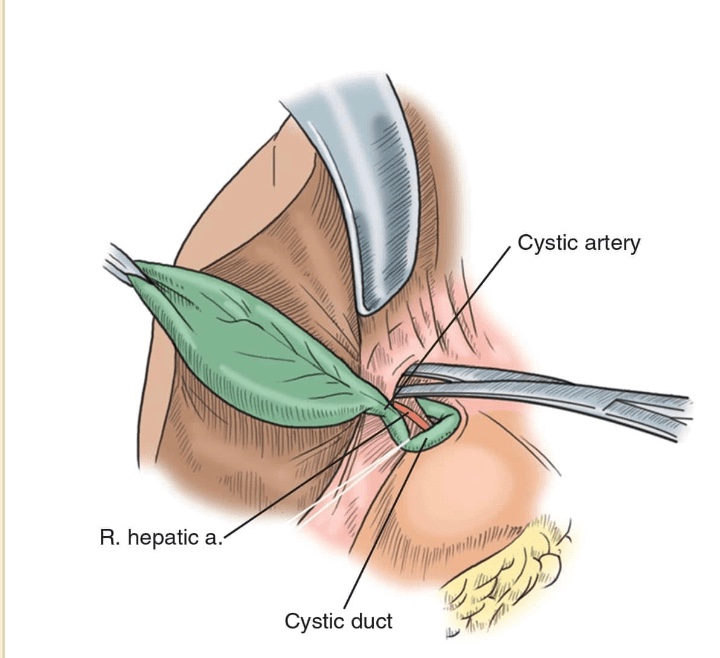
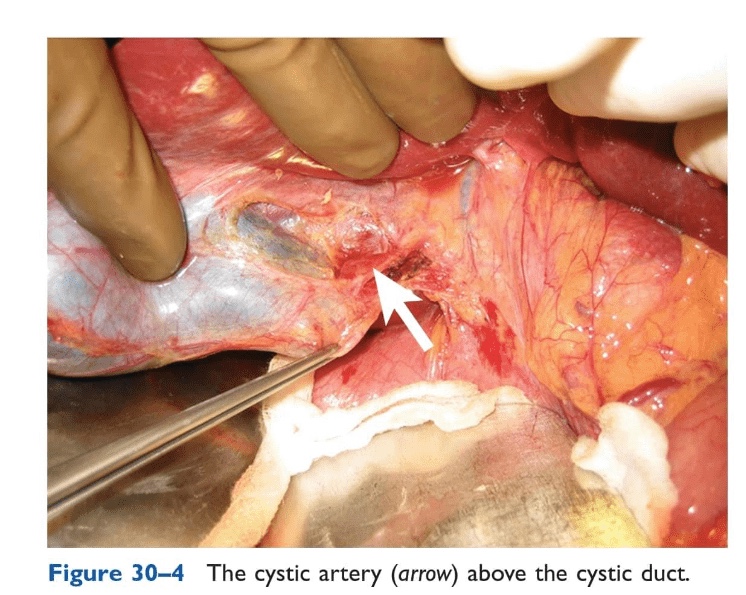
    • Find the cystic duct starting at the triangle of Calot
    • Pull the gallbladder infundibulum laterally to open the triangle of Calot
    • Clear the medial wall of the gallbladder infundibulum
    • Make sure the cystic duct can be traced uninterrupted into the base of the gallbladder
    • Open any subtle tissue plane between the gallbladder and the presumed cystic duct:
      • The real cystic duct may be hidden in there
  • Factors that Suggest One may be dissecting the Common Duct instead of the Cystic Duct :
    • The duct when clipped is not fully encompassed by a standard M/L clip (9 mm)
    • Any duct that can be traced without interruption to course behind the duodenum is probably the common bile duct
    • Another unexpected ductal structure is present
    • A large artery is behind the duct:
      • The right hepatic artery runs posterior to the common bile duct
    • Extralymphatic and vascular structures are encountered in the dissection
    • The proximal hepatic ducts fail to opacify on operative cholangiograms

#Arrangoiz #Surgeon #Teacher

Radial Scar

  • Excision is recommended:
    • Because approximately 8% to 17% of radial scars:
      • Will be found to be associated with an adjacent malignant lesion:
        • The risk may be higher with abnormal mammogram findings
  • There is no indication for annual breast magnetic resonance screening in a patient with a radial scar
  • As a radial scar does not confer an increased risk of developing breast cancer:
    • Chemoprevention with tamoxifen is not indicated
  • References:
    • Linda A, Zuiani C, Furlan A, Londero V, Girometti R, Machin P, et al. Radial scars without atypia diagnosed at imaging-guided needle biopsy: how often is associated malignancy found at subsequent surgical excision, and do mammography and sonography predict which lesions are malignant? AJR Am J Roentgenol. 2010;194(4):1146-1151.
    • Hayes BD, O’Doherty A, Quinn CM. Correlation of needle core biopsy with excision histology in screen-detected B3 lesions: the Merrion Breast Screening Unit experience. J Clin Pathol. 2009;62(12):1136-1140.
    • Kennedy M, Masterson AV, Kerin M, Flanagan F. Pathology and clinical relevance of radial scars: a review. J Clin Pathol. 2003;56(10):721-724.
    • Patterson JA, Scott M, Anderson N, Kirk SJ. Radial scar, complex sclerosing lesion and risk of breast cancer. Analysis of 175 cases in Northern Ireland. Eur J Surg Oncol. 2004;30(10):1065-1068.
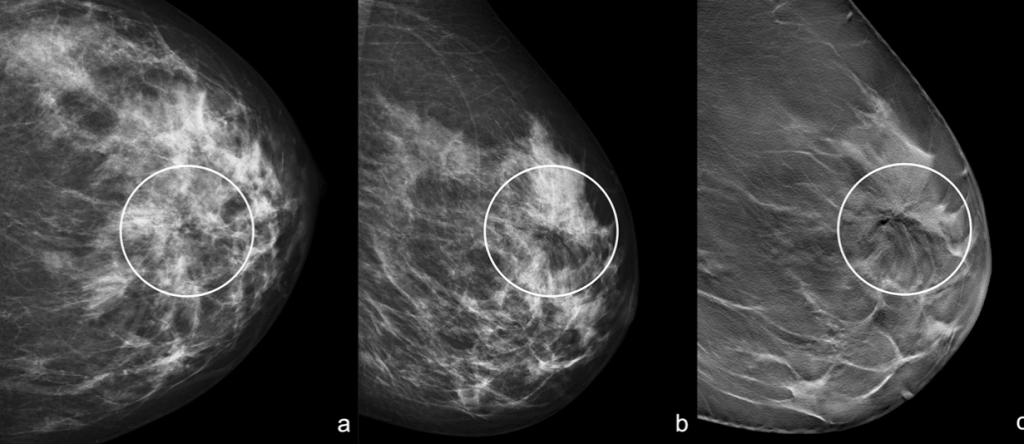
“Black Star”: Left craniocaudal (a) and mediolateral oblique (b) mammograms show an area of architectural distortion with radiolucent core in the union of upper quadrants (white circle). Left mediolateral oblique tomosynthesis (c) confirms the area of architectural distortion and shows better the radiolucent core with the radiating long thin spicules (white circle)

#Arrangoiz #BreastSurgeon #CancerSurgeon #BreastCancer #Teacher #Surgeon #RadialScar #Miami #Mexico

Nerve Supply to the Larynx

  • The nerve supply to the larynx is very complex:
    • Communicating branches between superior laryngeal nerve and recurrent laryngeal nerve
    • Contralateral innervation (cross innervation)
    • Extra laryngeal branching occur
    • It is almost impossible to predict the current outcome of cord movements following surgery
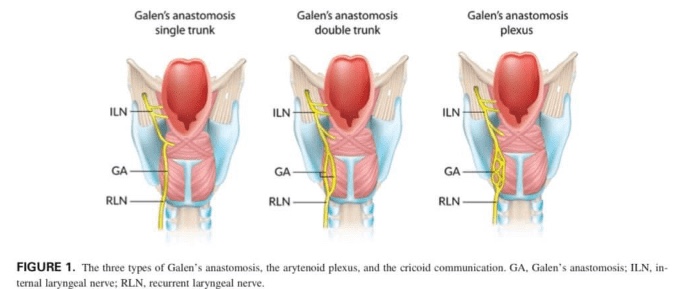
  • The Anastomoses of the Recurrent Laryngeal Nerve in the Larynx:

#Arrangoiz #ThyroidSurgeon #CancerSurgeon #ThyroidExpert #HeadandNeckSurgeon

Identification of the Recurrent Laryngeal Nerve

  • Anatomical triangle for the identification of the recurrent laryngeal nerve (RLN):
    • Often disclosed under other eponyms:
      • The triangular “area” as it is known today:
        • Was initially described by Frank H. Lahey:
          • Although the author (in his seminal article of 1938) does not refer to a triangle, he achieves an accurate description of the anatomical landmarks that have persisted over time
  • Lahey’s “Area” (1938):
    • Superior border:
      • Inferior thyroid artery
    • Medial border:
      • Trachea
    • Lateral border:
      • Common carotid artery
    • Content:
      • Recurrent laryngeal nerve
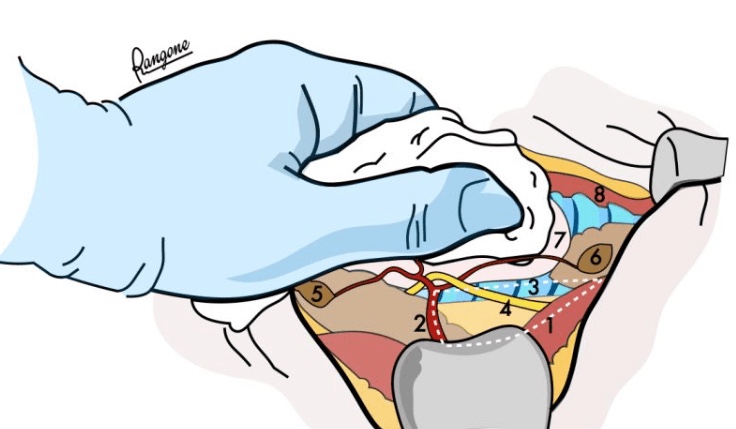
  • Image: “right paratracheal gutter”:
    1. Common carotid artery (right)
    2. Inferior thyroid artery
    3. Trachea
    4. Recurrent laryngeal nerve
    5. Superior parathyroid gland
    6. Inferior parathyroid gland
    7. Thyroid lobe
    8. Common carotid artery (left)
  • Triangle by Max M. Simon (1943):
    • Superior border:
      • Inferior thyroid artery
    • Medial border:
      • Recurrent laryngeal nerve
    • Lateral border:
      • Common carotid artery
  • Triangle by John M. Loré (1977?):
    • Superior border:
      • Inferior pole of the lateral lobe of the thyroid gland (retracted superiorly)
    • Medial border:
      • Trachea / esophagus
  • #Arrangoiz #ThyroidSurgeon #Teacher#ThyroidExpert #ParathyroidSurgeon #Surgeon #EndocrineSurgery #HeadandNeckSurgeon

Use of Dynamic Risk Stratification to Modify and Refine Initial Risk Estimates

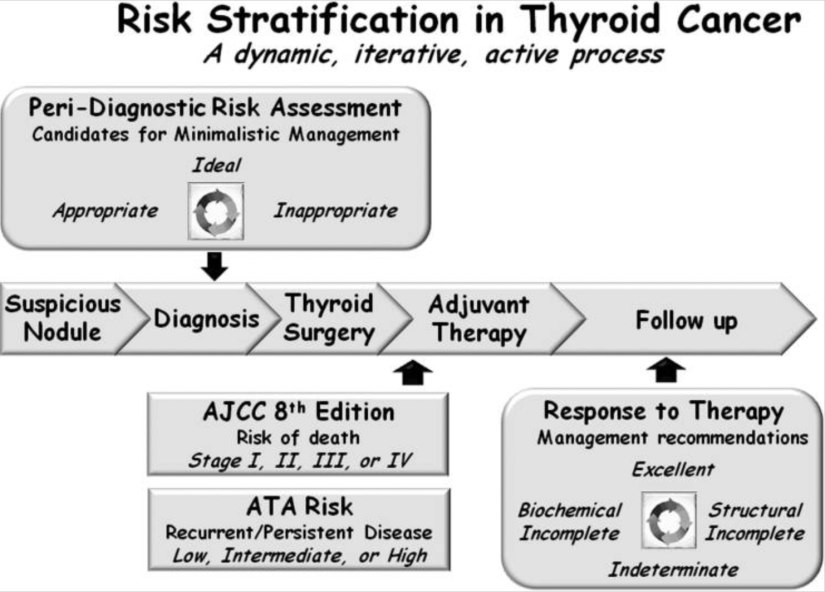
  • Although both the AJCC / TNM staging system and the ATA risk-stratification system provide valuable information with regard to initial risk stratification:
    • They are both static risk assessments that can only incorporate information available in the peri-diagnostic, preoperative, intraoperative, and early postoperative periods:
      • However, all of the static staging systems published provide suboptimal long-term predictions for individual patients:
        • As demonstrated by the proportion of variance explained, ranging from 20% to 30% across a wide range of studies (a measure of how well a predictive model correlates with the final outcome of interest)
      • However, when these initial risk estimates:
        • Are refined and modified over time as a response to therapy and as a reflection of the underlying biology of a particular patient’s thyroid cancer:
          • Risk estimates become more reliable and can achieve a proportion of variance explained as high as 70% to 80%
  • Over the last decade, several groups have developed and validated the general concept of dynamic risk stratification in which the baseline initial risk estimates are continually modified over time as new data become available:
    • Initially, dynamic risk stratification was validated only in the setting of total thyroidectomy and radioactive iodine and only in response to initial therapy
  • Over the last several years, it has become readily apparent that the concept of dynamic risk stratification should not be restricted to response to initial therapy:
    • But should rather be used to reclassify each patient when they return for their follow-up visits
    • Furthermore, definitions for response to therapy outcomes have been published and validated for patients receiving total thyroidectomy without radioactive iodine and even for low-risk patients treated with lobectomy alone
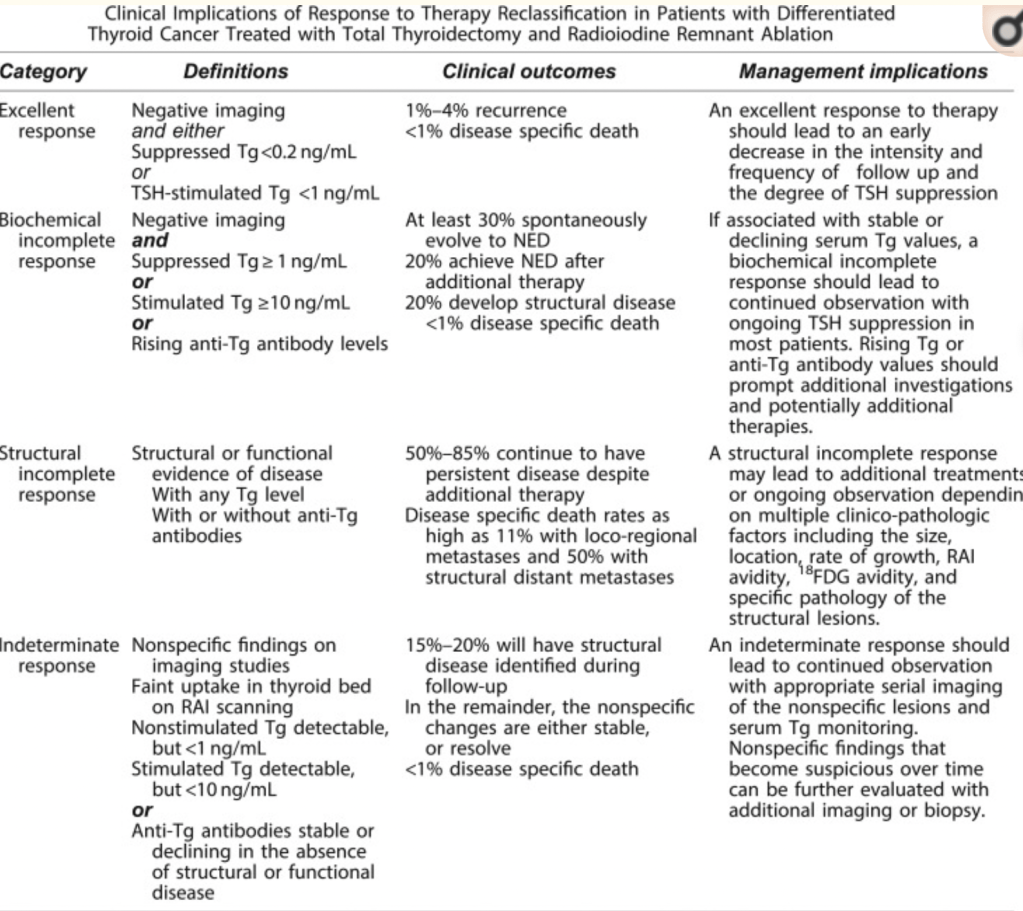
  • In patients treated with total thyroidectomy and radioactive iodine, the ATA guidelines provided a set of definitions, clinical outcomes, and management implications for the use of dynamic risk stratification:
    • In this paradigm, at each follow-up visit, the patient is classified as having an:
      • Excellent, biochemically incomplete, structurally incomplete, or indeterminate response to therapy Unlike the AJCC/TNM staging and the ATA risk-stratification systems, the response-to-therapy category can change over time as new data become available at each visit
  • Patients who have an excellent response to therapy:
    • Are expected to have essentially a normal overall survival and a very low risk of disease recurrence and therefore may not require intensive follow-up
  • Patients with biochemical incomplete response:
    • Have an abnormal Tg value but no structurally identifiable disease:
      • Are usually followed with observation unless the Tg or Tg antibodies are rising:
        • In which case additional imaging and evaluations are warranted to try to identify the source of the abnormal Tg
  • The indeterminate response category:
    • Initially described as acceptable response:
      • Was designed to be a temporary holding area for patients with nonspecific findings that could not be confidently described as benign or malignant
    • Over time, roughly 15% to 20% of these patients:
      • Will develop structural disease that may require additional therapy
    • In the remainder, the nonspecific changes are either stable or resolve:
      • Many of these patients can be reclassified as having an excellent response over time
    • Whereas patients with rising anti-Tg antibodies are classified as having a:
      • Biochemical incomplete response
    • Patients with stable or declining anti-Tg antibodies are categorized as having an:
      • Indeterminate response to therapy
    • Although Tg assays that use a liquid chromotography-tandem mass spectroscopy (LC-MS/MS) methodology:
      • Can identify some Tg antibody-positive patients as having detectable Tg in the setting of known structural disease:
        • Up to 20% to 40% of patients with structural disease will have undetectable Tg measurements on LC-MS/MS
        • Thus, in the setting of antithyroglobulin antibodies, an undetectable Tg obtained on the current LC-MS/MS assays is insufficient evidence to classify a patient as having an excellent response
    • Patients with a structural incomplete response:
      • Are particularly challenging in that the majority of them:
        • Will continue to have persistent disease despite additional therapies:
          • In this is the category of patients from which nearly all of the disease-specific mortality arises
      • These patients are likely to need additional imaging, ongoing thyroid-stimulating hormone suppression, and additional therapies over time

#Arrangoiz #ThyroidSurgeon #ThyroidExpert #HeadandNeckSurgeon #CancerSurgeon #SurgicalOncologist

Risk-stratification considerations for thyroid lobectomy

  • The 2015 ATA guidelines:
    • Now accept a minimalistic surgical approach (thyroid lobectomy without neck dissection):
      • To treat intra-thyroidal papillary thyroid carcinomas less than 4 cm in properly selected patients
  • Careful peri-diagnosis, preoperative, and intra-operative risk stratification:
    • Are the keys to successful use of thyroid lobectomy without having to perform an unacceptable rate of early-completion thyroidectomies
  • Patients classified as being ideal for lobectomy would have:
    • Papillary micro-carcinomas:
      • That appeared to be confined to the thyroid:
        • In the setting of an otherwise normal thyroid ultrasound and clinical N0 neck
  • Patients are classified as appropriate for lobectomy if:
    • The tumor is 1 to 4 cm in maximum dimension:
      • If the contralateral lobe is normal, or if there are other abnormalities on the ultrasound, such as thyroiditis or benign-appearing nodules (again, in the setting of the clinical N0 neck)
    • Patients with extra-thyroidal extension, clinical N1 disease, or distant metastasis:
      • Would be considered inappropriate for thyroid lobectomy as initial therapy
  • In addition to the relevance of peri-diagnostic and preoperative risk stratification with respect to the selection of thyroid lobectomy as initial therapy:
    • It is important to recognize that there are intra-operative findings:
      • That should alter that recommendation and lead to an immediate total thyroidectomy
  • However, even with appropriate preoperative and intra-operative risk stratification:
    • As many as 6% to 20% of patients:
      • Will have unexpected findings on the final pathology report:
        • That may lead to a completion thyroidectomy and usually, radioactive iodine
    • An additional 5% to 10% may require completion thyroidectomy at some later point during follow-up for diagnostic or therapeutic purposes
  • The rate of early-completion thyroidectomy:
    • Performed following review of the initial pathology report, will vary:
      • Depending on how aggressive each management team is with regard to the use of radioactive iodine:
        • For either remnant ablation or adjuvant treatment
      • If minor factors, such as minor extrathyroidal extension, very small-volume lymph node metastasis, or small tumors with aggressive histologic features:
        • Usually lead to radioactive iodine therapy,:
          • Then the completion thyroidectomy rate may be as high as 20%
    • The most common reason for completion thyroidectomy:
      • Is unanticipated, extensive vascular invasion:
        • Documented on the pathology report that obviously could not be visualized preoperatively or intra-operatively
  • Thus, patients need to understand that the final determination of whether a thyroid lobectomy is the appropriate initial therapy:
    • Can only be achieved by the integration of preoperative, intra-operative, and postoperative risk stratification
    • Patients who are uncomfortable with this approach:
      • Will often choose a total thyroidectomy as initial therapy
    • Patients motivated to keep part of the thyroid will often accept that uncertainty:
      • Recognizing that the final decision regarding the completeness of initial therapy cannot be completely known until several weeks after the surgery is completed when more complete risk stratification can be accomplished

#Arrangoiz #ThyroidSurgeon #ThyroidExpert #CancerSurgeon #HeadandNeckSurgeon #SurgicalOncologist #ThyroidCancer #DynamicRiskStratification

Intra-Operative Differentiation of the Parathyroid Glands by the Path of the Recurrent Laryngeal Nerve (RLN)

  • Pyrtek and Painter (1964) studied the location of the parathyroid glands in relation to recurrent laryngeal nerve (RLN):
    • Considering the path of the nerve (RLN) as a coronal clivage plane:
      • The lower parathyroid gland:
        • Is always located ventral or anterior (more superficial in the neck)
      • Upper parathyroid gland:
        • Is positioned dorsal or posterior (deeper in the neck)
  • Scheme “Pyrtek Clivaje Plane”:
    1. Superior parathyroid gland
    2. Inferior parathyroid gland
    3. Recurrent laryngeal nerve
    4. Thyroid gland
    5. Trachea
    6. Thyroid cartilage
    7. Cricoid cartilage
  • Reference:
    • Pyrtek LJ, Painter RL. An anatomic study of the relationship of the parathyroid glands to the recurrent laryngeal nerve. Surg Gynaecol Obstet

#Arrangoiz #ParathyroidSurgeon #ThyroidSurgeon #ParathyroidExpert #ThyroidExpert #HeadandNeckSurgeon #CancerSurgeon #Teacher #Surgeon