My name is Rodrigo Arrangoiz I am a breast surgeon/ thyroid surgeon / parathyroid surgeon / head and neck surgeon / surgical oncologist that works at Center for Advanced Surgical Oncology in Miami, Florida.
I was trained as a surgeon at Michigan State University from (2005 to 2010) where I was a chief resident in 2010. My surgical oncology and head and neck training was performed at the Fox Chase Cancer Center in Philadelphia from 2010 to 2012. At the same time I underwent a masters in science (Clinical research for health professionals) at the University of Drexel. Through the International Federation of Head and Neck Societies / Memorial Sloan Kettering Cancer Center I performed a two year head and neck surgery and oncology / endocrine fellowship that ended in 2016.
Mi nombre es Rodrigo Arrangoiz, soy cirujano oncólogo / cirujano de tumores de cabeza y cuello / cirujano endocrino que trabaja Center for Advanced Surgical Oncology en Miami, Florida.
Fui entrenado como cirujano en Michigan State University (2005 a 2010 ) donde fui jefe de residentes en 2010. Mi formación en oncología quirúrgica y e n tumores de cabeza y cuello se realizó en el Fox Chase Cancer Center en Filadelfia de 2010 a 2012. Al mismo tiempo, me sometí a una maestría en ciencias (investigación clínica para profesionales de la salud) en la Universidad de Drexel. A través de la Federación Internacional de Sociedades de Cabeza y Cuello / Memorial Sloan Kettering Cancer Center realicé una sub especialidad en cirugía de cabeza y cuello / cirugia endocrina de dos años que terminó en 2016.
Thyroid tumors account to 1% of all malignancies in developed countries and 0.2% of cancer deaths. They are the most common malignancies of the endocrine system and pose a significant challenge to pathologists, surgeons, and oncologists. Most of the carcinomas affect young and middle-aged adults and are indolent malignancies with a 10-year survival that exceeds 90%. There has been an increase in the incidence rate of these tumors worldwide which can be largely attributed to more sophisticated diagnostic methods and a change in diagnostic practices with an increasing number of smaller tumors being detected of late. Thyroid tumor pathology is an area replete with diagnostic challenges. Though there are typical morphological patterns described, overlaps with non-neoplastic entities pose diagnostic difficulties. Updates in this field include ancillary and research aiming at techniques that can further narrow down our diagnosis from the different “indeterminate/gray zone” lesions detected on screening.
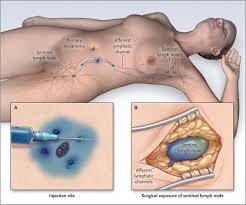
It is clear that patients with pathologically negative sentinel lymph nodes:
Do not require completion ALND:
But the management of patients with ITCs and micrometastatic disease in sentinel lymph nodes:
Has extensively been debated
Micrometastatic disease is defined as:
Tumor deposits spanning:
0.2 mm to 2.0 mm:
Within lymph nodes
ITCs are:
Groupings of cells not greater than 0.2 mm or 200 cells:
In a single lymph node cross section
According to the American Joint Committee on Cancer (AJCC) staging guidelines:
Patients with ITCs are N0(i+)
Patients with micrometastases in one to three axillary lymph nodes are N1mi
ACOSOG Z0010:
Is one of the largest trials to prospectively evaluate the significance of small metastases in sentinel nodes
Hematoxylin and eosin (H&E) tumor-free sentinel nodes:
From patients with early breast cancer were evaluated in a central laboratory with:
Immunohistochemistry (IHC)
Micrometastatic or ITC disease:
Was found in 11% of 3,326 sentinel lymph nodes
With a median follow-up of 6.3 years:
Occult sentinel lymph node metastases:
Were not associated with differences in overall survival, disease-free survival, or recurrence:
When compared with patients with IHC-negative lymph nodes
A subset analysis of NSABP-32:
Looked retrospectively at patients with occult metastatic disease:
Including patients with micrometastatic or isolated tumor cells
In patients who were sentinel node negative:
16% had occult metastases detected on further evaluation:
11% of occult metastases were isolated tumor-cell clusters, 4% were micrometastases, and less than 1% of patients had macrometastatic deposits seen on additional sectioning of the lymph node
Log-rank tests indicated that patients with occult metastasis:
Had worse overall survival (95% versus 96%), disease-free survival (87% versus 89%), and distant disease-free interval (90% versus 93%):
When compared with patients without occult metastases
Although statistically significant:
These differences were not felt to be clinically relevant
There was no improvement in overall or disease-free survival:
When patients with occult metastasis underwent completion ALND
Randomized clinical trials support the use of SLNB without ALND:
For node-negative patients
These studies demonstrated very low axillary recurrence rates:
In patients with negative sentinel lymph nodes:
Regardless of receptor status
Type of breast operation
Patient age
The ASCO guidelines state:
That women with early-stage breast cancer without sentinel nodal metastases:
Should not undergo ALND
The first use of SLNB without ALND was a prospective observational study in 1994:
Which evaluated 125 patients with SLNB alone
NSABP B-32:
A phase III trial involving 80 centers in Canada and the United States
Prospectively randomized 3,989 sentinel lymph node–negative patients to SLNB plus ALND or SLNB alone
Patients were stratified based on age, tumor size, and surgical approach
Regional recurrence was rare in both patients who underwent SLNB alone and those who had a completion ALND and was not statistically significantly different
Of the 22 regional events in both groups:
10 breast cancer recurrences were in the axilla:
For a rate of less than 1%
Two of these recurrences occurred in patients who were treated with ALND and eight in patients who underwent SLNB alone
There was no difference in overall or disease-free survival between groups:
And there were fewer complications in the SLNB-alone group
The results of NSABP B-32:
Have also been seen in other studies
Guided by this strong evidence:
SLNB alone has replaced ALND for sentinel node–negative patients
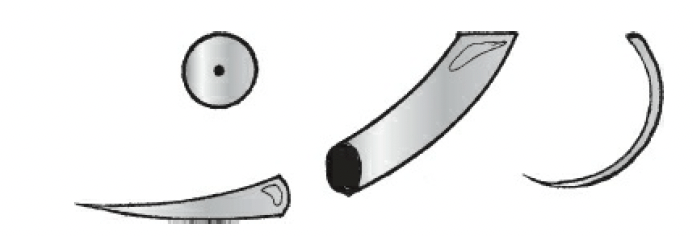
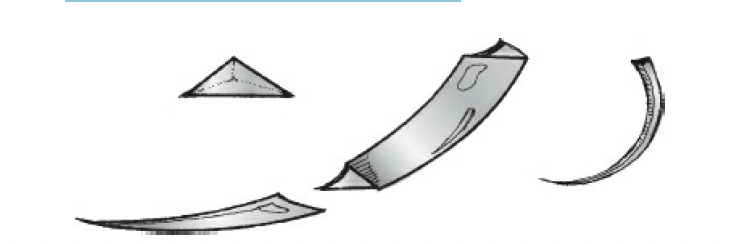
Triangular body with the sharp edge toward the inner circumference:
Leaves a triangular hole in tissue
What are its uses?
Suturing of skin
What is a simple interrupted stitch?
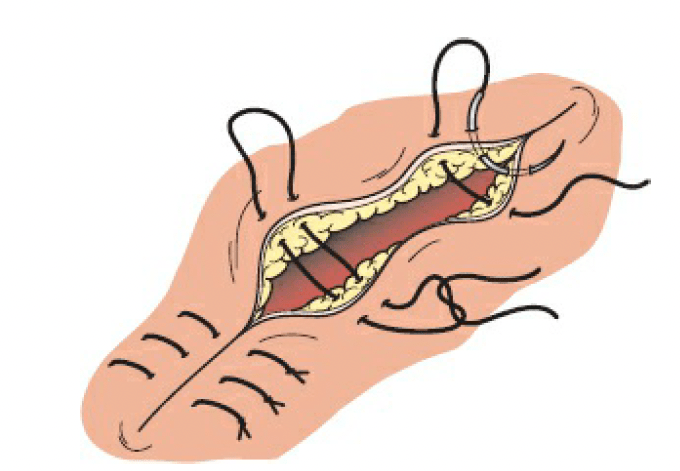
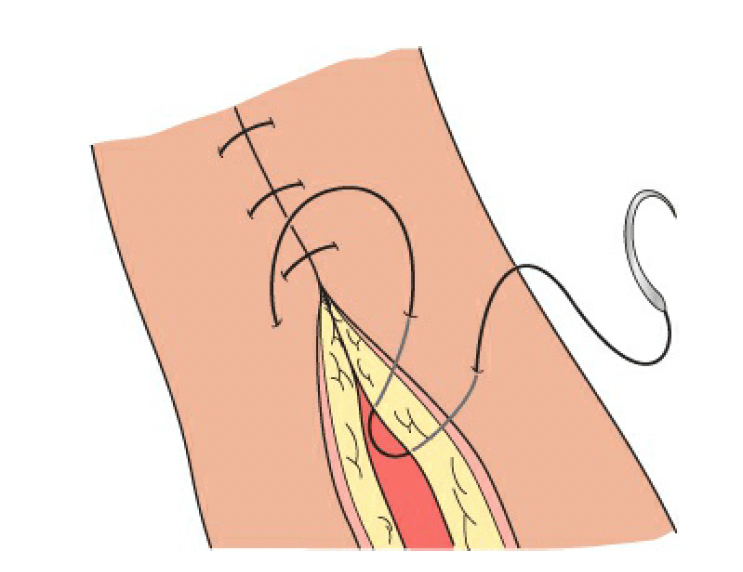
What is a vertical mattress stitch?
Simple stitch is made;
The needle is reversed, and a small bite is taken from each wound edge:
The knot ends up on one side of the wound
What is the vertical mattress stitch also known as?
Far–far, near–near stitch:
Oriented perpendicular to wound
What is it used for?
Difficult-to-approximate skin edges:
Everts tissue well
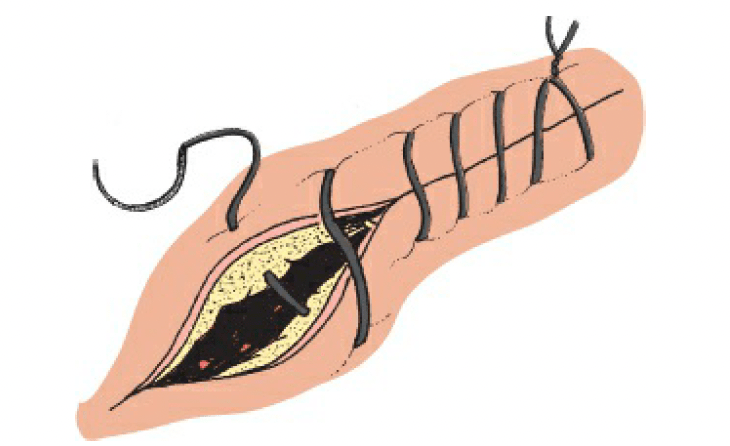
What is a simple running (continuous) stitch?
Stitches made in succession without knotting each stitch
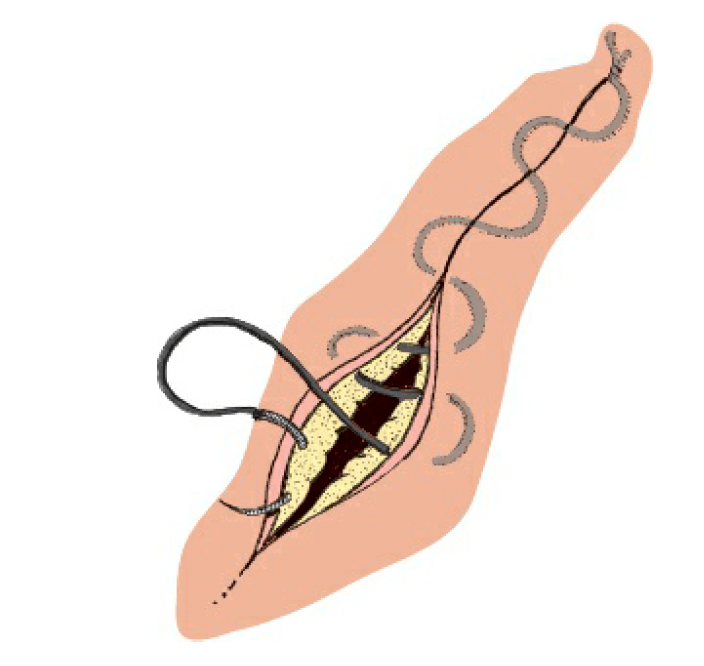
What is a subcuticular stitch?
Stitch (usually running) placed just underneath the epidermis:
Can be either absorbable or non-absorbable:
Pull-out stitch if non-absorbable
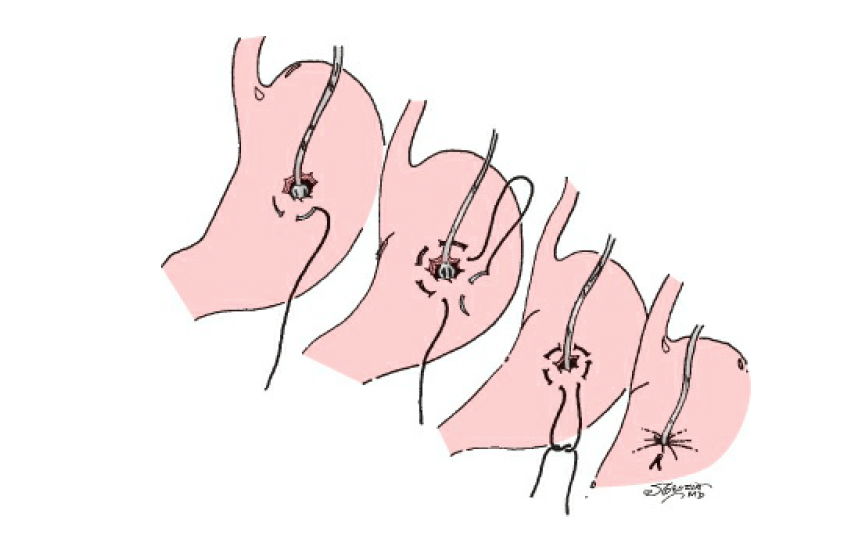
What is a purse-string suture?
Stitch that encircles a tube perforating a hollow viscus:
For example:
Jejunostomy tube
Gastrostomy tube:
Allowing the hole to be drawn tight and thus preventing leakage
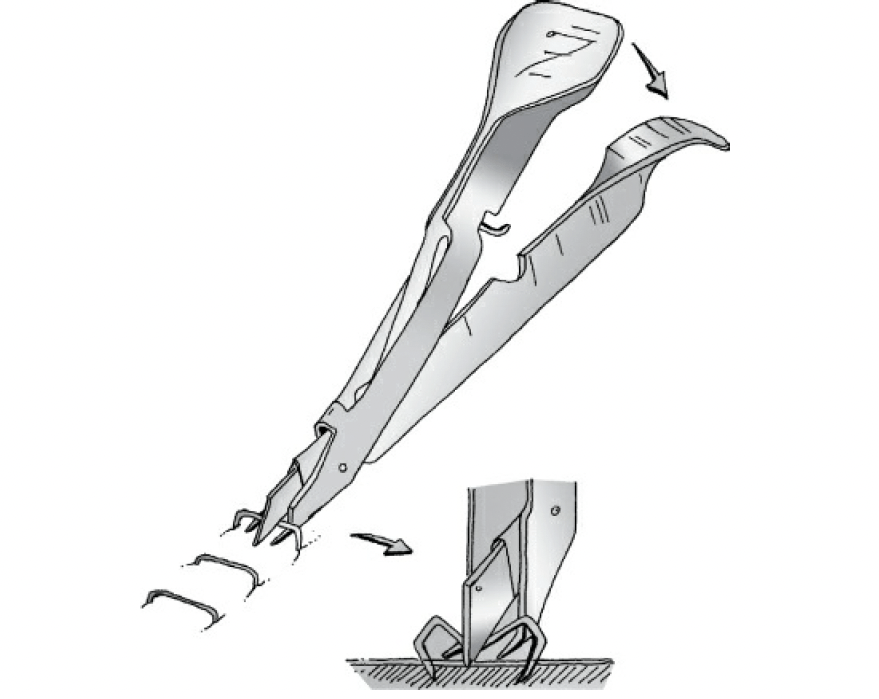
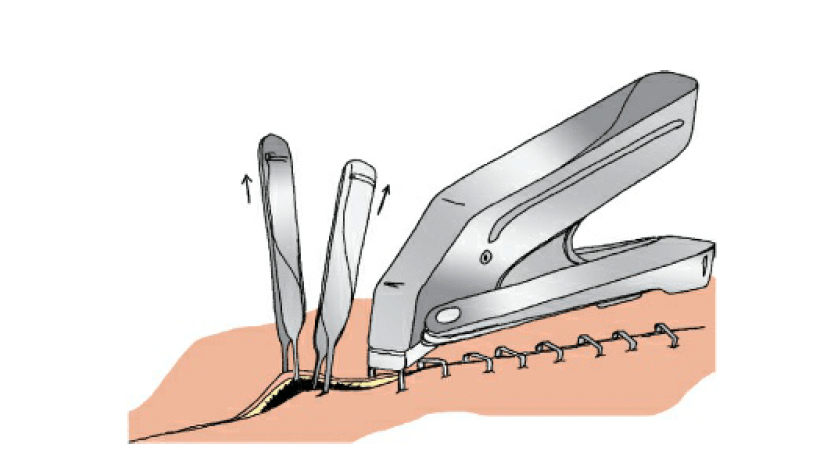
What are metallic skin staples?
What is a staple removal device?
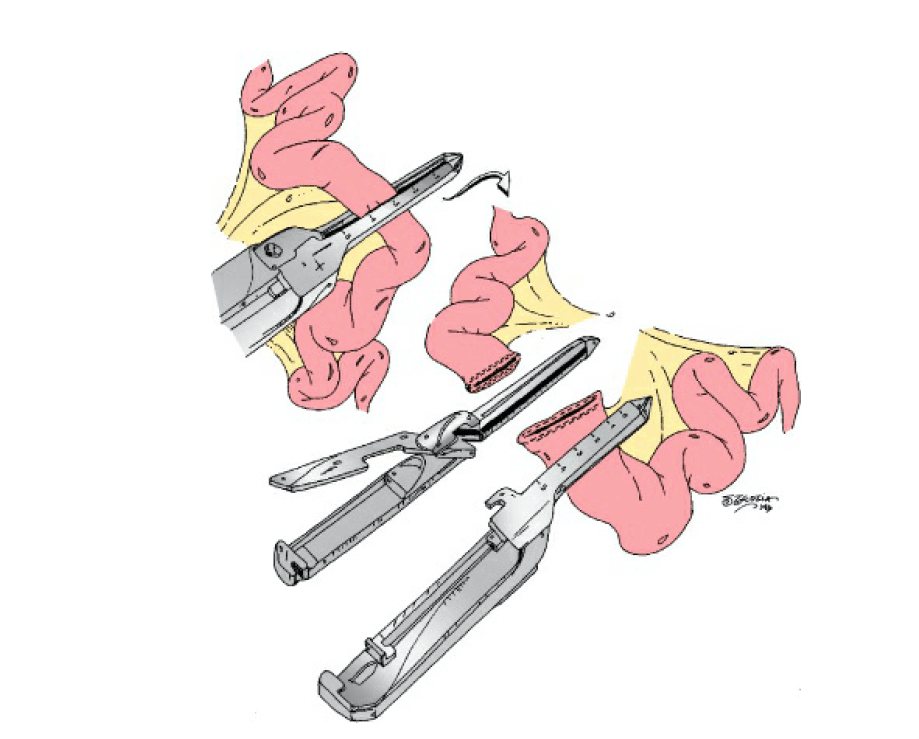
What is a gastrointestinal anastomosis (GIA) device?
Stapling device that lays two rows of small staples in a hemostatic row:
And automatically cuts in between them
What is a Lembert stitch?
It is a second layer in bowel anastomoses
Technique:
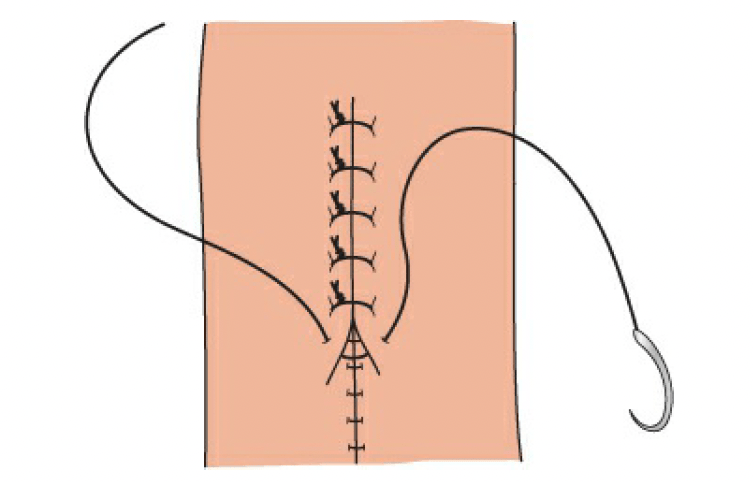
The needle is inserted perpendicular to the epidermis, approximately 8 mm distant to the wound edge.
With a fluid motion of the wrist, the needle is rotated superficially through the dermis, and the needle tip exits the skin 2 mm distant from the wound edge on the ipsilateral side.
The needle body is grasped with surgical forceps in the left hand and reloaded onto the needle driver.
The needle is then inserted perpendicular to the skin on the contralateral side of the wound edge, 2 mm distant from the wound edge.
The needle is again rotated superficially through its arc, exiting 8 mm from the incised wound edge.
The suture material is then tied off gently, with care being taken to minimize tension across the epidermis and avoid overly constricting the wound edges
What is a Connell’s stitch?
The first mucosa-to-mucosa layer in an anastomosis:
Basically, a running U stitch
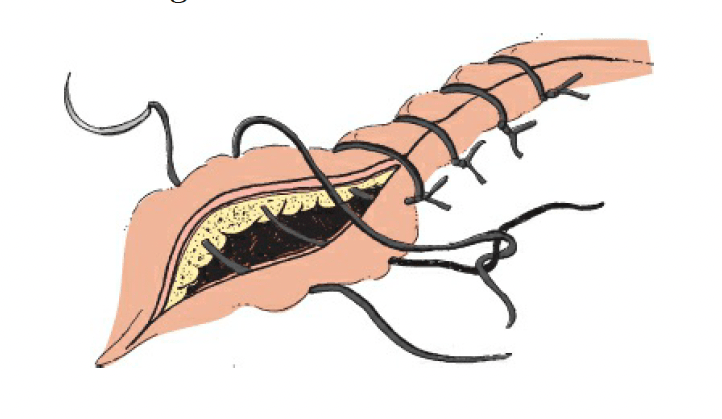
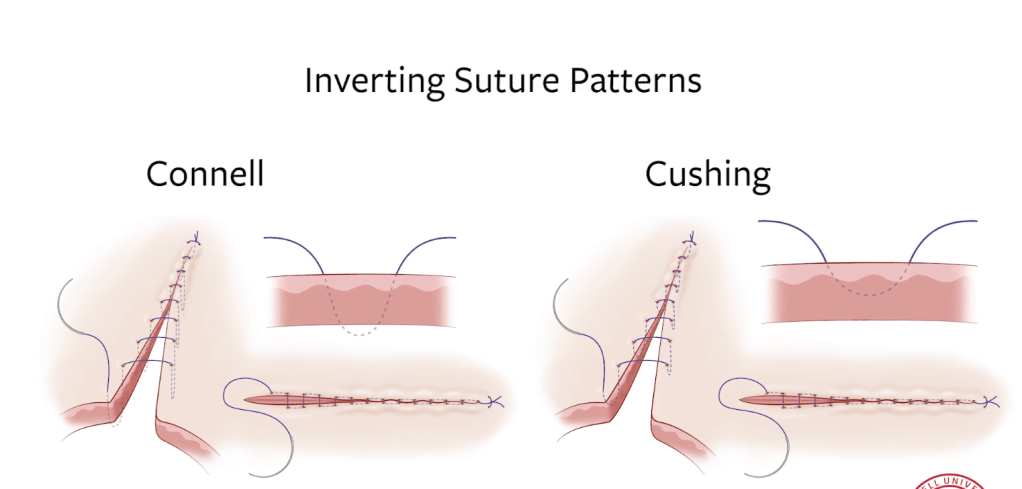
The Cushing and Connell suture technique:
Is often used to close the incisions in hollow organs such as the stomach, urinary bladder, and uterus
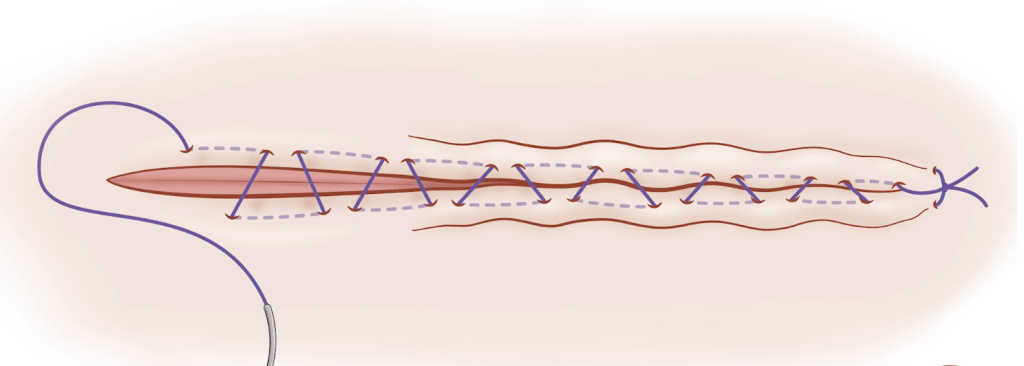
In the Cushing suture technique:
The suture penetrates into the submucosa without penetrating the organ lumen
The suture runs from both sides of the incision:
Parallel to each other
The Connell suture technique is almost identical to the Cushing suture technique:
These two suture techniques are separated according to the tissue they penetrate during suture passage
While the Cushing suture technique is also passed through the submucosa, Connell suture technique is used to pass through the lumen
While applying these techniques, the following steps are followed:
A directionally opposed suture passage is made parallel to the incision.
Suture passage is made from the other side of the incision in the same direction as the incision, parallel to the first passage
The beginning of the suture line is fixed with a knot.
Starting from the back of the knot, a suture passage is made in the direction of the incision
A passage is made from the other side of the incision parallel to the first pass and in the same direction
When the suture is pulled, the tissue becomes inverted and the knot is buried under the skin
A suture passage is made in the direction of the incision
A passage is made from the other side of the incision parallel to the first pass and in the same direction
The last two steps are repeated throughout the incision
After the incision line is crossed, End of suture line is fixed by repeating first three steps
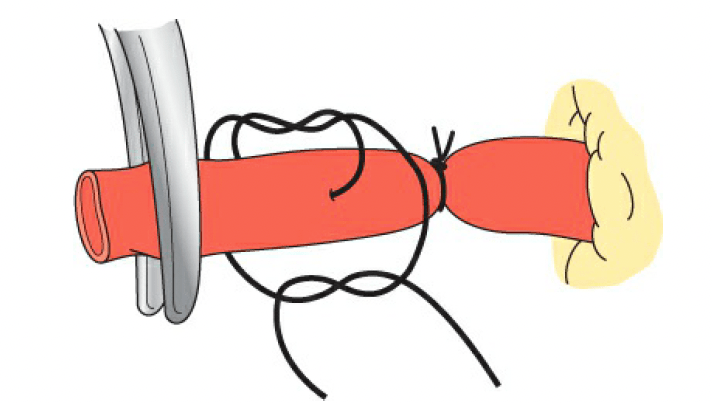
What is a suture ligature (a.k.a. “stick tie”)?
Suture is anchored by passing it through the vessel on a needle before wrapping it around and occluding the vessel:
May be associated with a 3.5% to 5% occurrence of occult carcinoma:
Depending on the indication for the operation
SLNB at the time of prophylactic mastectomy:
May eliminate the need for ALND if occult disease is identified
A recent meta-analysis reviewed 14 studies where SLNB was routinely performed for prophylactic mastectomy in patients undergoing bilateral mastectomy for unilateral cancer:
This study found metastatic disease in the SLNB of the prophylactic mastectomy:
In 0 to 4% of patients with contralateral cancer
The majority of metastatic disease was associated with:
Contralateral axillary tumor spread from the primary tumor:
Not an occult primary tumor
In patients who were found to have occult malignancy in the prophylactic mastectomy breast:
Less than 1% of sentinel lymph nodes were positive for metastatic disease
Given the low rates of occult malignancy and axillary metastasis:
SLNB is not indicated for patients undergoing prophylactic mastectomy


 Rodrigo Arrangoiz MS, MD, FACS, FSSO