Blog

¿Que es el Hiperparatiroidismo?

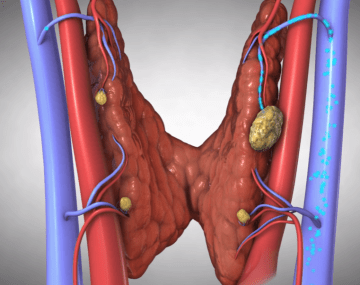
El hiperparatiroidismo primario (HPTP) se produce cuando alguna de las cuatro glándulas paratiroideas empiezan a funcionar anormalmente debido a que desarrollan un tumor benigno (adenoma) o se encuentran crecidas (hiperplasia de las cuatro) llevando a la secreción anormal y sin regulación de la hormona que producen (hormona paratiroidea).


El hiperparatiroidismo primario (HPTP) es una enfermedad benigna con un potencial de causar problemas importantes a la salud de la persona:
  • El HPTP aumenta el riesgo de desarrollar enfermedades cardiovasculares como:
  • 
    
    • Presión elevada (hipertensión arterial)
    • 
      
    • Crecimiento del lado izquierdo del corazón (hipertrofia ventricular izquierda)
    • 
      
    • Alteraciones del ritmo cardiaco (arritmias cardiacas)
    • 
      
    • Infarto / embolia cerebral (enfermedad cerebrovascular)
    • 
      
  • El HPTP aumenta el riesgo de desarrollar cierto tipos de cáncer comparado con la población general:
  • 
    
    • Cáncer de colon, cáncer de recto, cáncer renal, cáncer de próstata, y cáncer de mama
    • 
      
Los pacientes con HPTP suelen vivir en promedio de 5.6 años menos de lo esperado comparado con la población en general.


La gran mayoría de la gente conoce alguna persona que tiene hiperparatiroidismo primario (HPTP):
  • Desafortunadamente alrededor del 70% de los pacientes con hiperparatiroidismo primario no saben que tienen la enfermedad:
  • 
    
    • Tienen niveles altos de calcio (arriba de 10 mg/dl), pero sus médicos no saben lo que esto significa.
    • 
      
      • Muchas veces los médicos no piensan en esta enfermedad hasta que las consecuencias del hiperparatiroidismo se vuelven evidentes:
      • 
        
        • Cálculos renales, osteoporosis, depresión severa, fatiga, dolores musculares, insomnio etc.
        • 
          
El hiperparatiroidismo primario es mas común en las mujeres que en los hombres:
  • 75% de los casos se diagnostica en mujeres comparado a 25% en los hombres.
  • 
    
  • La edad media en el momento del diagnostico es de 59 años de edad:
  • 
    
    • Pero la enfermedad puede presentarse a cualquier edad.
    • 
      
La incidencia del hiperparatiroidismo primario:
  • Affecta una de cada 250 personas:
  • 
    
  • 34 a 120 casos por 100,000 personas años
  • 
    
  • Esta tasa es mucho mayor en las mujeres mayores de 50:
  • 
    
    • 1 en cada 75 mujeres.

Yeh MW. J Clin Endocrinol Metab 2013 Mar;98(3):1122-9..

Almquist M. Cancer Causes Control 2007;18:595-602.

Norenstedt S. Clin Epidemiol 2011;25:103-10

👉Encuentre más información: http://www.hiperparatiroidismo.info

#Arrangoiz

#ParathyroidExpert

#ParathyroidSurgeon

#Hiperparatiroidismo

#Hipercalcemia

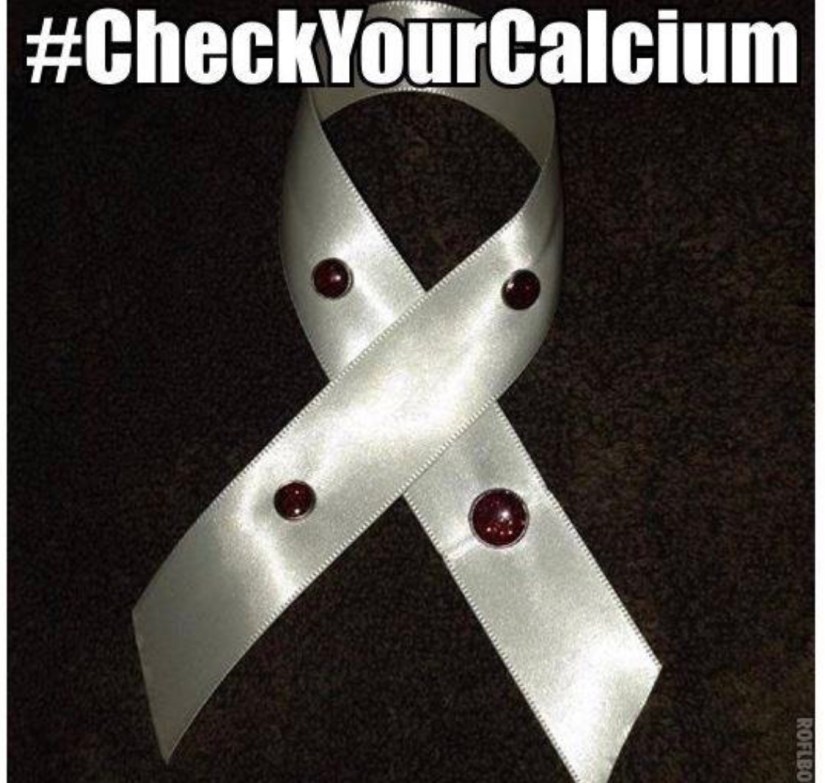
#CheckYourCalcium

#HeadandNeckSurgeon

#EndocrineSurgeon

https://rodrigoarrangoizmd.wordpress.com/2019/07/01/mes-de-concienca-de-paratiroides/

Mes de Concienca de Paratiroides

Julio es el mes de la conciencia paratiroides! Únase al Dr. Rodrigo ARRANGOIZ, miembro de Sociedad Quirurgica SC y experto en cirugía de paratiroides en el desafío #CheckYourCalcium (realízate un calcio total en sangre).Comparte esta publicación y luego publica una foto con tu resultado de calcio en tu página para crear conciencia. # JAM2019 #JulyHPT #CheckYourCalcium #SociedadQuirurgicaEncuentre más información: www.hiperparatiroidismo.info#Arrangoiz#ParathyroidExpert#ParathyroidSurgeon#Hiperparatiroidismo# Hipercalcemia#CheckYourCalcium#HeadandNeckSurgeon#EndocrineSurgeon

July – Parathyroid Awareness Month

    July is Parathyroid Awareness month! Join Dr. Rodrigo ARRANGOIZ member of Sociedad Quirurgica SC and expert in parathyroid surgery in the #CheckYourCalcium challenge.
    • Share this post and then post a selfie with your calcium result on your page to raise awareness. #JAM2019 #JulyHPT #CheckYourCalcium.
  • #Arrangoiz

    #ParathyroidExpert

    #ParathyroidSurgeon

    #Hyperparathyroidism

    #Hypercalcemia

    #CheckYourCalcium

    #HeadandNeckSurgeon

    #EndocrineSurgeon

    Thyroid Articles

    Check out these Thyroid-related articles published online or in print this past week!

    Surgical management of the compromised recurrent laryngeal nerve in thyroid cancer. Russell MD, Kamani D, Randolph GW. Best Pract Res Clin Endocrinol Metab. 2019 Jun 4. https://www.ncbi.nlm.nih.gov/pubmed/31230919

    Intraoperative nerve monitoring during thyroidectomy: evaluation of signal loss, prognostic value and surgical strategy. Gür EO, Haciyanli M, Karaisli S, Haciyanli S, Kamer E, Acar T, Kumkumoglu Y. Ann R Coll Surg Engl. 2019 Jun 20:1-10. https://www.ncbi.nlm.nih.gov/pubmed/31219340

    Stimulating and dissecting instrument for transoral endoscopic thyroidectomy: proof of concept investigation. Zhang D, Li S, Dionigi G, Zhang J, Wang T, Zhao Y, Xue G, Sun H.

    Surg Endosc. 2019 Jun 19. https://www.ncbi.nlm.nih.gov/pubmed/31218426

    Case report of a neuroendocrine tumor of the thyroid gland with limited calcitonin expression: a diagnostic challenge. Sukpanich R, Khanafshar E, Suh I, Gosnell J.

    AME Case Rep. 2019 May 14;3:12. https://www.ncbi.nlm.nih.gov/pubmed/31231713

    Hyperparathyroidism / Hiperparatiroidismo Articles / Artículos

    Check out these parathyroid-related articles published online or in print this week!

    Correlation between iPTH Levels on the First Postoperative Day After Total Thyroidectomy and Permanent Hypoparathyroidism: Our Experience. Canu GL, Medas F, Longheu A, Boi F, Docimo G, Erdas E, Calò PG. Open Med (Wars). 2019 Jun 7;14:437-442. https://www.ncbi.nlm.nih.gov/pubmed/31231683

    Can Met-PET/CT Predict Sporadic Multiglandular Hyperparathyroidism? Report of a Case and Review of the Literature. Hillenbrand A, Lemke J, Henne-Bruns D, Beer AJ, Prasad V.

    Case Rep Endocrinol. 2019 May 15;2019:1791740. https://www.ncbi.nlm.nih.gov/pubmed/31223506

    Surgical Treatment of Hyperparathyroidism After Kidney Transplant. Kovács DÁ, Fedor R, Asztalos L, Andrási M, Szabó RP, Kanyári Z, Barna S, Nemes B, Győry F. Transplant Proc. 2019 May;51(4):1244-1247. PMID: 31101206 https://www.ncbi.nlm.nih.gov/pubmed/31101206

    #Arrangoiz

    #HeadandNeckSurgeon

    #ParathyroidSurgeon

    #ParathyroidExpert

    #Hyperparathyroidism

    #EndocrineSurgery

    #ExpertoenParatiroides

    #CirujanodeParatiroides

    #Hiperparatiroidism

    #CirujanodeTumoresdeCabezayCuello

    #CirugiaEndocrina

    http://www.hiperparatiroidismo.info

    Nódulo Tiroideo

    thyroid-cancer-shown-1

    • Un nódulo tiroideo es una lesión discreta dentro de la glándula tiroides que es radiológicamente diferente que el resto del parénquima tiroideo:
      • Algunas lesiones palpables del cuello pueden no corresponder ha alteraciones radiológicas:
        • Estas anomalías no cumplen con la definición estricta de nódulos tiroideos
    • Los nódulos tiroides no palpables detectados por otros estudios de imagen se denominan nódulos descubiertos incidentalmente o “incidentalomas”:
      • Los nódulos no palpables tienen el mismo riesgo de malignidad que los nódulos palpables confirmados por ultrasonido del mismo tamaño
    • En general:

      • Solo se deben evaluar los nódulos mayores 1 cm:

        • Ya que tienen un mayor potencial de ser cánceres clínicamente significativos.

    • En ocasiones,:
      • Puede haber nódulos menores de 1 cm que requieren una evaluación adicional debido a:
        • Los síntomas clínicos del paciente:
          • Dolor en el cuello
          • Dificultad or dolor al deglutir
          • Cambios de voz
          • Dificultad para respirar
        • Adenopatía linfática asociada
        • Historia familiar de primario grado de cancer de tiroides
        • Historia de radiación a la región de la cabeza y cuello


    #Arrangoiz

    #Teacher

    #Surgeon

    #Cirujano

    #ThyroidExpert

    #ThyroidSurgeon

    #CirujanodeTiroides

    #ExpertoenTiroides

    #ExpertoenParatiroides

    #Paratiroides

    #Hiperparatiroidismo

    #CancerdeTiroides

    #ThyroidCancer

    #PapillaryThyroidCancer

    #SurgicalOncologist

    #CirujanoOncologo

    #CancerSurgeon

    #CirujanodeCancer

    #HeadandNeckSurgeon

    #CirugiaEndocrina

    http://www.cirugiatiroides.com

    Thyroid Nodules Epidemiology

    images

    • Palpable thyroid nodules:
      • Occur in 5% of women and 1% of men in iodine-sufficient areas.
    • Thyroid nodule prevalence varies with detection mode and increases with age:
      • 2% to 6% prevalence by palpation
      • 19% to 68% prevalence by ultrasound
    • Among all thyroid nodules:
      • 7% to 15% are malignant:
        • The proportion varies with:
          • Age
          • Gender
          • Radiation exposure
          • Family history
          • Other factors
    • At least 94% of thyroid carcinomas are:
      • Differentiated thyroid cancer (DTC):
        • Primarily papillary thyroid carcinoma (PTC), and follicular thyroid carcinoma
    • The annual incidence of thyroid cancer per 100 000 person has increased from:
      • 4.6 in 1974 to 1977 to 14.4 in 2010-2013
    • In the United States in 2019:
      • 52,070 new cases of thyroid cancer are estimated to be diagnosed :
        • 14,260 in men
        • 37,810 in women
          • This figure is largely attributable to:
            • Incidentally detected subclinical disease:
      • Approximately 2,170 deaths from thyroid cancer are estimated:
        • 1,020 men
        • 1,150 women

    thyroid 2thyroid 1

    #Arrangoiz

    #Teacher

    #Surgeon

    #Cirujano

    #ThyroidExpert

    #ThyroidSurgeon

    #CirujanodeTiroides

    #ExpertoenTiroides

    #ExpertoenParatiroides

    #Paratiroides

    #Hiperparatiroidismo

    #CancerdeTiroides

    #ThyroidCancer

    #PapillaryThyroidCancer

    #SurgicalOncologist

    #CirujanoOncologo

    #CancerSurgeon

    #CirujanodeCancer

    #HeadandNeckSurgeon

    #CirugiaEndocrina

    http://www.cirugiatiroides.com

    Thyroid related Articles

    Check out these Thyroid-related articles published online or in print this past week! American Thyroid Association THYCA American Association of Clinical Endocrinologists Endocrine Society American College of Surgeons

    Efficacy of indocyanine green fluorescence in predicting parathyroid vascularization during thyroid surgery. Razavi AC, Ibraheem K, Haddad A, Saparova L, Shalaby H, Abdelgawad M, Kandil E. Head Neck. 2019 Jun 17. https://www.ncbi.nlm.nih.gov/pubmed/31206817

    Risk-oriented concept of treatment for intrathyroid papillary thyroid cancer. Hartl DM, Hadoux J, Guerlain J, Breuskin I, Haroun F, Bidault S, Leboulleux S, Lamartina L. Best Pract Res Clin Endocrinol Metab. 2019 Jun 4. https://www.ncbi.nlm.nih.gov/pubmed/31208873

    Thyroid core needle biopsy: patients’ pain and satisfaction compared to fine needle aspiration. Jin Kim H, Koon Kim Y, Hoon Moon J, Young Choi J, Il Choi S.

    Endocrine. 2019 Jun 15. https://www.ncbi.nlm.nih.gov/pubmed/31203562

    Deciphering novel biomarkers of lymph node metastasis of thyroid papillary microcarcinoma using proteomic analysis of ultrasound-guided fine-needle aspiration biopsy samples. Lin P, Yao Z, Sun Y, Li W, Liu Y, Liang K, Liu Y, Qin J, Hou X, Chen L. J Proteomics. 2019 Jun 10;204:103414. https://www.ncbi.nlm.nih.gov/pubmed/31195151

    Axillary Radiation (AR) Instead of Undergoing an Axillary Dissection (ALND)?

    shutterstock_113090875

    • The European Organisation for Research and Treatment of Cancer (EORTC) 10981 After Mapping of the Axilla, Radiation or Surgery? (AMAROS) trial:
      • Randomized 4806:
        • Clinically node-negative
        • T1 to T2 tumors:
          • To completion axillary lymph node dissection (ALND) or axillary radiation (AR):
            • If they had positive nodes
        • Of the 1425 patients with positive sentinel nodes:
          • 744 had been randomly assigned to ALND
          • 681 to AR
        • Initially:
          • Patients with tumors 3 cm or smaller were eligible:
            • But the protocol was later modified to include:
              • Tumors up to 5 cm, multifocal tumors, or both
        • In the AR arm 21% of patients had T2 lesions
        • There were no age limits for eligibility:
          • Patients ranged from age 48 to 64 years
        • In the AR arm:
          • 42% of women were premenopausal
        • Patients who had either partial or total mastectomy were enrolled in the trial:
          • 18% of women had mastectomy
        • There was no limit on the number of positive nodes for the radiation arm:
          • But the majority of patients had 1 or 2 positive nodes
        • Crossover was allowed:
          • For patients with extensive axillary disease:
            • From the radiation arm to the dissection arm
          • Patients in the dissection arm who had 4 or more positive nodes:
            • Where allowed to have axillary radiation
            • Four percent of patients who stayed in the radiation arm had 3 positive nodes, and 1% had 4 or more positive nodes.
        • Importantly:
          • In the axillary dissection arm:
            • 25% of patients had an additional 1 to 3 positive nodes (in addition to the positive sentinel nodes) at dissection
            • 8% had 4 or more additional positive nodes
          • Since it was a randomized trial:
            • We can assume the same numbers were present in the radiation arm:
              • So these patients did not necessarily have low-volume axillary disease.
        • Axillary radiotherapy (RT) included:
          • The contents of all 3 levels of the axilla and the medial part of the supraclavicular fossa
          • The prescribed dose was 25 fractions of 2 Gy each
          • For patients in the AR arm who had mastectomy:
            • Radiation to the chest wall in addition to the axilla was optional but not mandatory
        • There were no significant differences:
          • In 5-year overall survival or disease-free survival between the two arms:
            • At 6.1 years of follow-up:
              • There was no significant difference:
                • In the rate of axillary failure:
                  • 0.43% ALND vs 1.19% RT
            • At 5-year follow-up there was a significant difference:
              • In clinical signs of lymphedema between the groups:
                • 23% in ALND vs. 11% in AR:
                  • There was greater than a 10% difference in arm size compared to the contralateral arm:
                    • In 13% of the ALND arm and 5% of the AR arm
    • The AMAROS study findings would suggest that axillary RT is an appropriate alternative to ALND in patients with a positive sentinel node:
      • However, the clinical characteristics of the AMAROS cohort are remarkably similar to the American College of Surgeons Oncology Group (ACOSOG) Z0011 cohort:
        • With 80% of AMAROS patients having:
          • A tumor less than 2 cm
        • 90% patients:
          • Receiving any systemic therapy
        • 95% of patients:
          • Having only 1 to 2 positive sentinel nodes
      • Patients in ACOSOG Z0011 treated with sentinel lymph node biopsy only demonstrated:
        • Similar 5-year rates of regional recurrence as the AMAROS patients receiving axillary RT:
          • 0.9% [ACOSOG Z0011] vs 1.2% [EORTC 10981 AMAROS axillary RT]):
            • Thus, while AMAROS indicates that sentinel node biopsy and nodal RT is an alternative to ALND:
              • It does not demonstrate that RT is necessary in all patients with a positive sentinel node:
                • Particularly in those treated with breast-conserving surgery
      • The decision to include axillary RT in patients with 1 to 2 positive sentinel nodes:
        • Should be tailored to the individual:
          • Taking into account other clinical factors which may place the patient at higher risk for locoregional recurrence

    0405MorrowTable

    img_0832-2img_0833-2img_0834-2img_0835-2img_0836-2img_0837-2

    #Arrangoiz

    #Teacher

    #Surgeon

    #Cirujano

    #SurgicalOncologist

    #CirujanoOncologo

    #CancerSurgeon

    #CirujanodeCancer

    #BreastSurgeon

    #BreastCancer

    #CancerdeMama

    #CirujanodeMama