Thyroid Cancer Preoperative Imaging

  • Before removal of thyroid cancer:
    • It is critical to perform a thorough evaluation:
      • To determine the extent of disease
  • Preoperative imaging should include:
    • A comprehensive ultrasound (US) of the neck to examine the contralateral lobe of the thyroid, the central neck compartments, and the lateral neck lymph nodes (LN):
      • Such imaging may change the surgical approach in up to 40% of cases
  • The anterior neck is divided into seven contiguous compartments in which thyroid cancer metastatic LN spread occurs
  • The central neck compartment (level VI) contains the thyroid and poses the greatest challenge to clinicians when deciding the optimal surgery:
    • It is bordered laterally by the carotid arteries, inferiorly by the clavicles, and superiorly by the hyoid bone
    • Level VI is the compartment that is most frequently involved with LN metastases:
      • But sonographic identification of diseased nodes is hampered by poor preoperative sensitivity:
        • The intact thyroid gland obscures visualization of the majority of nodal metastases
  • The lateral neck is further subdivided into four compartments lateral to the carotid:
    • Level IV is bordered laterally by the sternocleidomastoid (SCM), inferiorly by the clavicle, and superiorly by the cricoid cartilage
    • Level III, located immediately cephalad to level IV, extends superiorly to the carotid bifurcation
    • Level II is located below the mandible and extends to the hyoid bone
    • Level V nodes are located in the posterior triangle, lateral to the lateral edge of the SCM.
  • The presence of malignancy in sonographically suspicious nodes:
    • Can be confirmed with FNA for cytologic analysis and measurement of thyroglobulin (Tg) in the needle washout
  • If advanced, bulky nodal disease is identified on US, or the patient has clinical signs or symptoms of advanced disease (hoarseness, hemoptysis, a nonmobile thyroid mass):
    • CT or magnetic resonance imaging (MRI) of the neck may be considered to search for additional metastases in areas that cannot be visualized sonographically, including within the mediastinum, at the skull base, and posterior to the trachea
#Arrangoiz #ThyroidSurgeon #CancerSurgeon #MountSinaiMedicalCenter #MSMC #Doctor #Surgeon #HeadandNeckSurgeon #SurgicalOncologist #Miami #Mexico

Thyroid Cancer Preoperative Imaging

  • Before removal of thyroid cancer:
    • It is critical to perform a thorough evaluation:
      • To determine the extent of disease
  • Preoperative imaging should include:
    • A comprehensive ultrasound (US) of the neck to examine the contralateral lobe of the thyroid, the central neck compartments, and the lateral neck lymph nodes (LN):
      • Such imaging may change the surgical approach in up to 40% of cases
  • The anterior neck is divided into seven contiguous compartments in which thyroid cancer metastatic LN spread occurs
  • The central neck compartment (level VI) contains the thyroid and poses the greatest challenge to clinicians when deciding the optimal surgery:
    • It is bordered laterally by the carotid arteries, inferiorly by the clavicles, and superiorly by the hyoid bone
    • Level VI is the compartment that is most frequently involved with LN metastases:
      • But sonographic identification of diseased nodes is hampered by poor preoperative sensitivity:
        • The intact thyroid gland obscures visualization of the majority of nodal metastases
  • The lateral neck is further subdivided into four compartments lateral to the carotid:
    • Level IV is bordered laterally by the sternocleidomastoid (SCM), inferiorly by the clavicle, and superiorly by the cricoid cartilage
    • Level III, located immediately cephalad to level IV, extends superiorly to the carotid bifurcation
    • Level II is located below the mandible and extends to the hyoid bone
    • Level V nodes are located in the posterior triangle, lateral to the lateral edge of the SCM.
  • The presence of malignancy in sonographically suspicious nodes:
    • Can be confirmed with FNA for cytologic analysis and measurement of thyroglobulin (Tg) in the needle washout
  • If advanced, bulky nodal disease is identified on US, or the patient has clinical signs or symptoms of advanced disease (hoarseness, hemoptysis, a nonmobile thyroid mass):
    • CT or magnetic resonance imaging (MRI) of the neck may be considered to search for additional metastases in areas that cannot be visualized sonographically, including within the mediastinum, at the skull base, and posterior to the trachea
#Arrangoiz #ThyroidSurgeon #CancerSurgeon #MountSinaiMedicalCenter #MSMC #Doctor #Surgeon #HeadandNeckSurgeon #SurgicalOncologist #Miami #Mexico

Epidemiology of Thyroid Nodules

  • Palpable thyroid nodules increase in frequency throughout life:
    • Reaching a prevalence of about 5% in the U.S. population for individuals ≥50 years having palpable thyroid nodules
  • Nodules are even more prevalent when the thyroid gland is examined at autopsy or surgery, or when using ultrasonography:
    • 50% of the thyroids studied have nodules:
      • Which are almost always benign
  • New nodules develop at a rate of about 0.1% per year:
    • Beginning in early life
  • They develop at a much higher rate (approximately 2% per year):
    • After exposure to head and neck irradiation
  • Thyroid nodules are approximately four times more common in individuals assigned female at birth (AFAB) than in individuals assigned male at birth (AMAB)
  • By contrast, thyroid carcinoma is uncommon:
    • For the U.S. population:
      • The lifetime risk of being diagnosed with thyroid carcinoma is:
        • 1.2%
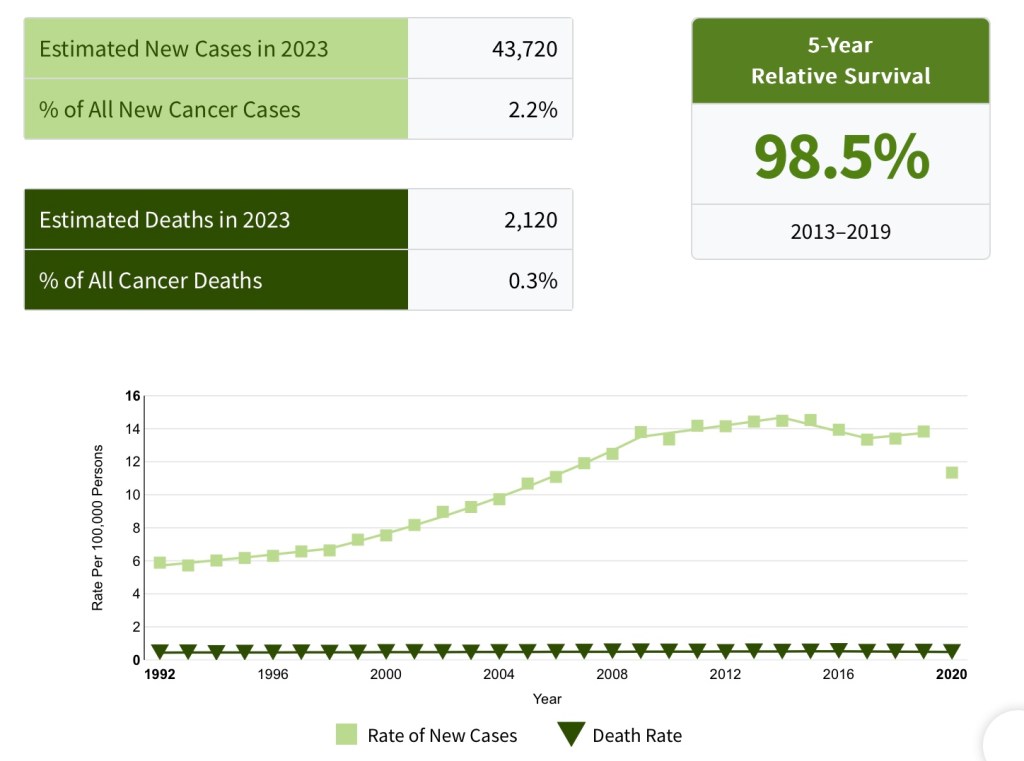
      • It is estimated that approximately 43,720 new cases of thyroid carcinoma will be diagnosed in the United States in 2023
      • As with thyroid nodules:
        • Thyroid carcinoma occurs two to three times more often in individuals AFAB than in individuals AMAB
      • Thyroid carcinoma is currently the seventh most common malignancy diagnosed in individuals AFAB
      • The disease is also diagnosed more often in white North Americans than in African Americans
    • The main histologic types of thyroid carcinoma are:
      • Differentiated (including papillary, follicular, and oncocytic)
      • Medullary
      • Anaplastic:
        • Which is an aggressive undifferentiated tumor
    • Of 63,324 patients diagnosed with thyroid carcinoma from 2011 to 2015:
      • 89.8% had papillary carcinoma
      • 4.5% had follicular carcinoma
      • 1.8% had oncocytic carcinoma
      • 1.6% had medullary carcinoma
      • 0.8% had anaplastic carcinoma
  • A population-based study of data collected by the International Agency for Research on Cancer from 1998 to 2012:
  • Showed that the global incidence of papillary thyroid carcinoma (PTC) increased during this time
  • Mortality rates for thyroid carcinoma are, in general, very low
  • Differentiated thyroid carcinomas usually have an excellent prognosis:
    • With 10-year survival rates exceeding 90% to 95%
  • In contrast, anaplastic thyroid carcinoma (ATC) is almost uniformly lethal
  • However, since differentiated thyroid carcinomas represent more than 95% of all cases:
    • Most thyroid carcinoma deaths are from:
      • Papillary, follicular, and oncocytic carcinomas
  • In 2023, it is estimated that approximately 2120 cancer deaths will occur among persons with thyroid carcinoma in the United States
  • Though thyroid carcinoma occurs more often in individuals AFAB:
    • Mortality rates are lower for younger individuals AFAB
  • Although the estimated incidence of thyroid carcinoma previously increased by an average of ~5% annually between 2004 and 2013:
    • The incidence rate has more recently stabilized:
      • Likely due to more conservative indications for thyroid biopsy and the reclassification of noninvasive follicular thyroid neoplasm with papillary-like nuclear features (NIFTP)
    • Because overall mortality has not dramatically increased since 1975 (1150 vs. 2060 deaths):
      • The previous increase in incidence may reflect, at least in part, earlier detection of subclinical disease (ie, small papillary carcinomas):
        • However, data show the incidence has increased by varying degrees across all tumor sizes and age groups
          • The stable age- and gender-adjusted mortality rate for thyroid carcinoma contrasts distinctly with the declining rates for other solid tumors in adults
  • A cohort study of 2000 to 2016 data from U.S. cancer registries:
    • Showed an increase in incidence of aggressive PTC
  • In addition, an analysis of 1992 to 2018 SEER data showed that there is no evidence of an improvement in disease-specific survival (DSS) in patients with distantly metastatic differentiated thyroid cancer
#Arrangoiz #ThyroidSurgeon #CancerSurgeon #ThyroidAwarenessMonth #HeadandNeckSurgeon #SurgicalOncologist #ThyoridCancer #MountSianiMedicalCenter #MSMC #Miami #Mexico

Factors Influencing Prognosis of Papillary Thyroid Cancer

  • Tumor Histology
    • Numerous histologic variants of PTC have been described based on architectural or cellular features
    • Acknowledgement of the tumor subtype is important:
      • As it can contribute to the risk stratification of individual tumors
    • The classic subtype of PTC and the follicular subtype of PTC (FVPTC) are associated with very favorable outcomes
    • More concerning histologic subtypes include:
      • Tall cell, hobnail subtype, and, perhaps to a lesser extent, columnar cell:
        • These tumors tend to present at an older age and with more advanced disease than is seen in classic PTC
    • These more aggressive histologic subtypes:
      • Also are associated with worse recurrence-free and disease-specific survival rates
  • Tumor Size
    • Primary tumor size is closely associated with the outcome of PTC, including both 10-year recurrence and cancer-specific mortality rates
    • Cancer-specific mortality rates increase incrementally from 2% for tumors 8 cm
    • Furthermore, larger tumors are associated with a higher rate of locoregional and distant metastases
  • Multifocality
    • Patients with PTC have a 32% to 45% chance of cancer elsewhere in the ipsilateral or contralateral lobe
    • Tumor multifocality is also found frequently in papillary thyroid microcarcinomas (PMCs)
    • Multifocal disease increases the risk of recurrence, particularly in patients who have had a lobectomy
    • With the current trend to performing lobectomy for the majority of low-risk cancers, some have raised concerns about the potential for increased recurrence rates
    • Indeed, some patients may develop recurrence in the remaining contralateral lobe, necessitating completion thyroidectomy at a later date:
      • Fortunately, it is the minority (7% at 10 years of follow-up) of patients who will require such an intervention
    • A large, long-term follow-up study of patients undergoing lobectomy for PTC:
      • 14.6% of whom had multifocal disease, demonstrated a recurrence-free 20-year survival rate of 95% in the opposite lobe, 91% for lymph node (LN) recurrence, and a disease-specific survival rate of 97.8%
    • Predictors of recurrence or worse disease-specific survival were:
      • Age
      • Primary tumor > 4 cm
      • Clinically apparent LNs
        • Suggesting that properly selected patients will have an excellent prognosis after lobectomy of PTC
    • The implications of tumor multifocality on survival are controversial:
      • Some studies have determined that multifocal disease does not increase the risk of disease-specific mortality
      • However, when distinguishing unilateral multifocal from bilateral disease, other studies have demonstrated that survival was lower for bilateral tumors
  • Extrathyroidal Extension
    • Extrathyroidal extension (ETE) of tumor beyond the thyroid capsule into the perithyroidal soft tissues and adjacent structures:
      • May be seen in up to 40% of surgical specimens and is an important prognostic factor in PTC
    • The specific extent of ETE should be described on the surgical pathology report
    • Minimal ETE is defined as:
      • Microscopic visualization of tumor into the immediate perithyroidal soft tissues
    • In contrast, extensive ETE is described as:
      • Gross tumor extension into subcutaneous soft tissues, larynx, trachea, esophagus, or the recurrent laryngeal nerve (RLN)
      • The prognostic implications of ETE in differentiated thyroid cancer is controversial, which may stem largely from a failure to distinguish between these distinct degrees of tumor spread
      • It is generally accepted that tumor extension into the surrounding tissues:
        • Which is visible intraoperatively or on preoperative imaging:
          • Is associated with a worse prognosis
      • The implications of minimal ETE on outcomes, however, is less clear:
        • Some retrospective studies have demonstrated that minimal ETE is associated with higher rates of LN metastases
        • Other studies found recurrence rates in those with minimal ETE were dependent on primary tumor size
        • In contrast others have found that minimal ETE is not associated with increased recurrence or decreased survival
        • A recent systematic review and meta-analysis of the effects of minimal ETE on survival and recurrence demonstrated:
          • No influence of minimal ETE on disease-related mortality but did indicate an increased risk of recurrence in patients with minimal ETE
        • The absolute recurrence risk increase for patients with lymph node negative disease was from 2.2% to 3.5% and for patients with lymph node positive disease the increase was from 6.2% to 7%:
          • Suggesting that the effects of minimal ETE on absolute risk for disease recurrence was small
          • Indeed, the 8th edition of The American Joint Committee on Cancer/The Tumor, Node, and Metastases (AJCC/TNM) cancer staging system removed the minimal ETE definition and its influence on overall tumor stage
          • This omission is an acknowledgment of the negligible effects of minimal ETE on tumor-associated mortality
  • Lymph Node Metastases
    • The incidence rates of cervical LN metastases identified at the time of initial surgery in patients with PTC varies widely, depending on the mode of nodal detection
    • Prophylactic LN dissections yield high rates of LN micrometastases (up to 65%)
    • Whereas gross nodal involvement detected by preoperative US or during surgery occurs in a smaller, but still substantial, percentage (20%) of patients
    • The manner of discovery is important as it is related to the prognostic significance of nodal involvement:
      • Those nodes incidentally identified on surgical pathology with microscopic tumor deposits:
        • Do not significantly alter risk of recurrence
      • Prophylactic nodal dissection, therefore, is not recommended as it does not lower recurrence-free survival and risks upstaging patients:
      • Resulting in unnecessary additional treatment
    • In contrast, grossly abnormal nodes:
      • Are associated with a worse recurrence-free survival:
        • Removal of these nodes is thus considered therapeutic
  • The number of involved nodes:
    • Is also related to the recurrence risk
  • Even with microscopic nodal deposits:
    • More than five involved nodes:
      • Carries a higher risk of recurrence compared with lower numbers of diseased nodes:
        • 7% to 21% and 3% to 8%
  • The effects of LN metastases on survival is less clear:
  • There are conflicting reports regarding cancer-specific mortality in the presence of nodal involvement
  • An analysis of the Surveillance, Epidemiology, and End Results (SEER) database:
    • Determined that nodal metastases were associated with increased mortality only in those patients over the age of 45 years:
      • However, a more recent study of patients from the SEER database and the National Cancer Database (NCDB) of patients under the age of 45 years:
        • Found that increasing numbers of nodal metastases were associated with decreasing overall survival up to six nodes, after which more metastatic nodes conferred no additional mortality risk
  • Distant Metastases
    • Although distant metastases are uncommon in PTC:
      • They are present in approximately 5% of patients at the time of initial diagnosis:
        • Another 2.5% to 5% will develop distant metastases after initial therapy
    • The most common sites of involvement are:
      • Lung (50%) and bone (25%):
        • Followed by both lung and bone (20%) and other tumor sites (5%)
      • One study found a 50% survival rate of 3.5 years:
        • However, subsets of patients have better survival rates, especially postpubertal children, those with microscopic metastases, and patients with iodine-avid tumors
      • Additional prognostic information about distant metastases may be gained by performing 2-[18F]fluoro-2-deoxy-D- glucose-positron emission tomography (18FDG-PET) /computed tomography (CT) scanning:
        • One study found an inverse relationship between survival and degree of 18FDG-PET avidity of the most active lesion as well as the number of (18FDG-PET)–avid lesions
        • Patients with a positive 18FDG-PET scan had a 7.28-fold increased risk of dying from thyroid cancer compared with patients who had a negative scan
  • Oncogenes
    • The MAPK (mitogen-activated protein kinase) pathway:
      • Is an intracellular signaling cascade that results in:
        • Cell growth
        • Proliferation
        • Apoptosis
      • A mutation in one of these signaling components in the MAPK pathway is responsible for the majority of PTCs:
        • These mutations are almost always mutually exclusive:
          • Suggesting that a single molecular alteration is sufficient to drive oncogenesis
        • Detection of these mutations may be used to:
          • Identify malignancy on fine-needle aspiration (FNA)
          • To prognosticate for patients with thyroid cancer
          • To guide the systemic agent used in radioiodine-refractory disease
  • BRAF
    • BRAF is a serine / threonine kinase in the MAPK signaling pathway:
      • That regulates cellular differentiation, proliferation, and survival
    • The BRAF V600E pathogenic variant:
      • Is the most common oncogene in sporadic PTC:
        • With an incidence of 36% to 69%
      • The presence of BRAF V600E is associated with:
        • Higher risk clinic-pathologic features, including:
        • LN metastases
        • ETE
        • Recurrence
        • Age-associated mortality
  • The independent prognostic utility of a BRAF mutation remains in question, however
  • With such a high prevalence of this pathogenic variant and the excellent outcomes in the majority of thyroid cancer patients, the specificity of BRAF for prognostication is limited:
    • Further, because BRAF is often associated with high-risk clinical features, it is difficult to discern what component of the poor outcomes seen with this pathogenic variant are due to the mutation itself, independent of the pathologic elements
  • Indeed several studies attempting to determine whether BRAF serves as an independent predictor of recurrence have produced mixed results
  • The identification of a BRAF mutation instead may provide:
    • Direction for the management of radioiodine refractory tumors:
      • A recent clinical trial aimed at redifferentiating noniodine-avid tumors:
        • Used a BRAF-inhibitor, dabrafenib:
          • 60% of patients exhibited new iodine uptake on diagnostic whole-body scans
          • After treatment with 5GBq of 88I at 3 months of follow-up, two patients had partial responses and four had stable disease
          • An ongoing trial is examining the effect of dabrafenib alone or in combination with a MEK inhibitor, trametinib:
            • In progressive, iodine-refractory, BRAF-mutated tumors (clinicaltrials.gov, NCT01723202)
  • TERT
    • Newly described in thyroid cancers, telomerase reverse transcriptase (TERT) promoter mutations:
      • Are found in low frequency in lower risk PTC (9%)
      • Increasing in frequency in more advanced PTC (51%):
        • PDTC (40%)
        • ATC (54% to 73%)
    • Telomerase is responsible for adding tandem repeats of the TTAAGGG sequence to the end of chromosomes:
      • To maintain genome stability
    • Whereas these enzymes are highly expressed in germline and stem cells, expression is reduced or even repressed in somatic cells
    • The loss of telomeres during somatic cell division:
      • Results in cells entering senescence
    • Reactivation of telomerase leads to immortalization:
      • By way of unrestricted proliferation and inactivation of replicative senescence
  • Although there are conflicting reports regarding the effect of a TERT mutation on prognosis in PTC:
    • A recent meta-analysis demonstrated that the presence of coexisting BRAF and TERT mutations was associated with a more aggressive clinical course and another study demonstrated higher mortality rates
    • Further study is needed to determine the feasibility of pharmacologic therapy targeting TERT mutations
  • Age at Diagnosis
    • Age at the time of tumor diagnosis is one of the most important contributing factors to prognosis:
    • There is a trend of worsening cause-specific survival for each decade starting at age 60 compared with younger patients (less than 20 years old)
    • An analysis of the NCDB revealed an incremental increase in 10-year mortality:
      • By 30% to 50% per 5 year increment beginning at age 35 years
    • A recent study determined that the age-associated increasing risk of mortality was associated with BRAF mutational status:
      • This multi-institutional study found that age is a strong, continuous, and independent mortality risk factor in patients with a BRAF V600E mutation but not in those with wild-type BRAF
    • Older patients are also more likely to harbor more aggressive histologic subtypes
    • In patients with distant metastases:
      • Those over the age of 40 years are less likely to demonstrate iodine avidity in their lung metastases
    • Children and adolescents:
      • Are more likely to have a more advanced tumor stage at the time of diagnosis
        • Up to 80% harbor nodal involvement and 15% to 20% develop pulmonary metastases rates that are nearly double those seen in adults
        • Despite the extent of disease at the time of diagnosis, children generally have excellent outcomes
        • In one systematic review of pediatric patients with pulmonary metastases, a complete response to radioactive iodine (RAI) therapy was seen in up to 50% and disease-specific mortality was 2.7%
#Arrangoiz #ThyroidSurgeon #HeadandNeckSu

Sentinel Lymph Node Biopsy in Multicentric / Multifocal Breast Tumors

  • Patients with multiple ipsilateral breast cancers:
    • Were excluded from the initial trials of SLNB
  • A systematic review evaluated the accuracy of SLNB in multifocal and multicentric tumors:
    • This review reported:
      • Significantly higher rates of lymph node metastases
      • Higher rates of involved nonsentinel lymph nodes:
        • In patients with multifocal tumors than patients with unifocal primary tumors
  • In several studies:
    • There is no significant difference in the false negative rate or failed localizations for patients with multifocal tumors
  • In a prospective study:
    • 30 patients with multifocal tumors underwent SLNB followed by ALND:
      • In 30 of 30 patients, the sentinel lymph node was identified and the false negative rate was 0%:
        • Supporting the use of SLNB for patients with multifocal tumors

#Arrangoiz #BreastSurgeon #CancerSurgeon #SurgicalOncology #Surgeon #Teacher #BreastCancer #BreastExpert #MSMC #MountSinaiMedicalCenter #Miami #Mexico #SLNM #SLNB #SentinelLymphNodeBiopsy

Pregnancy and the Use of Sentinel Lymph Node Biopsy

  • Breast cancer:
    • Is the most common pregnancy-associated malignancy
  • The ASCO recommends that pregnant patients:
    • Should not undergo SLNB based on the lack of safety data
  • Unfortunately, approximately 11% of pregnant patients with breast cancer who undergo ALND:
    • Develop lymphedema postoperatively:
      • Which has significant consequences on quality of life in these young women
  • This has led to increased interest in the use of SLNB for pregnant patients
  • Multiple studies have attempted to estimate the exposure of the fetus to radiation when using 99mTc to perform SLNB:
    • Conservative estimates suggest that fetal doses as low as 10 to 50 mGy:
      • Could increase the risk of malignancy in the fetus
    • Estimates suggest that fetal exposure during SLNB:
      • Is minimal at 1.14 mGy to 4.3 mGy:
        • Which is close to the levels of background radiation absorbed on an average day
    • Given this information, small studies have reported sentinel lymph node mapping with 99mTc in pregnant patients:
      • There have been no reported ill effects
    • Both methylene blue and isosulfan blue:
      • Are category C drugs in pregnancy:
        • With unknown levels of teratogenicity
    • Of 30 pregnant patients treated with SLNB using methylene blue:
      • One patient electively terminated her pregnancy and 29 gave birth to healthy infants
  • Safety conclusions are limited by small numbers and a lack of long-term follow-up data:
    • Some offer SLNB to pregnant patients:
      • Whereas others routinely perform ALND

#Arrangoiz #BreastSurgeon #CancerSurgeon #SurgicalOncologist #Surgeon #Teacher #BreastCancer #BreastDiseases #AxillaryDissection #BreastSurgery #MountSinaiMedicalCenter #MSMC #Miami #Mexico #SLNM #SLNB #SentinelLymphNodeBiopsy

Natalee Trial in Early Breast Cancer

  • Adding the CDK4/6 inhibitor ribociclib to endocrine therapy resulted in a significant improvement in invasive disease–free survival for patients with hormone receptor–positive, HER2-negative early-stage breast cancer
    • Findings from this phase III NATALEE trial were presented at the 2023 ASCO Annual Meeting (Abstract LBA500)
  • Hormone receptor–positive, HER2-negative breast cancer:
    • Is the most common subtype of the disease:
      • Making up nearly 70% of all breast cancer cases in the United States
    • Roughly one-third of patients with stage II hormone receptor–positive, HER2-negative disease:
      • Experience a recurrence following standard-of-care treatment
    • More than one-half of patients with stage III hormone receptor–positive, HER2-negative disease:
      • Experience a recurrence
  • If a recurrence occurs:
    • It is often at a more advanced stage
  • Ribociclib is currently approved by the U.S. Food and Drug Administration to treat:
    • Hormone receptor–positive, HER2-negative advanced or metastatic breast cancer in combination with an aromatase inhibitor for premenopausal patients or in combination with fulvestrant for postmenopausal patients
  • While ribociclib has previously shown survival benefits in people with metastatic disease:
    • In the NATALEE study, researchers showed that it may also improve outcomes for people with earlier-stage disease, including those with cancer that has not yet spread to the lymph nodes
  • The NATALEE phase III clinical trial:
    • Included men and premenopausal or postmenopausal women from 20 different countries with stage IIA, IIB, or III hormone receptor–positive, HER2-negative breast cancer who were at risk for disease recurrence
    • Participants were randomly assigned to receive either 400 mg of adjuvant ribociclib for 3 years with hormonal therapy for at least 5 years (n = 2,549) or hormonal therapy alone for at least 5 years (n = 2,552)
    • Men and premenopausal women also received Goserelin
    • Prior hormonal therapy use was allowed if it was initiated no more than 1 year before the start of the study
    • The current recommended starting dose of ribociclib for people with metastatic disease is 600 mg:
      • However, an extended duration of treatment may help to stop cells from duplicating and dividing and destroy any remaining cancer cells:
        • Because of this, study authors chose a 3-year treatment duration of ribociclib at a dose of 400 mg to reduce side effects while maintaining efficacy
  • Key Findings:
    • At a median follow-up of 34 months:
      • 20.2% of participants in the ribociclib group had completed 3 years of treatment
      • 56.8% had completed 2 years of treatment
    • Overall, 74.7% of participants remained on study treatment at data cutoff, with 1,984 patients on ribociclib and 1,826 patients on hormonal therapy alone
    • The study found that adding ribociclib to hormonal therapy:
      • Led to a significant improvement in invasive disease–free survival compared with hormonal therapy alone:
      • Researchers evaluated invasive disease–free survival after 426 invasive disease–free survival events occurred, a number that was prespecified for the interim analysis
      • Of those events, 189 occurred in the ribociclib group (7.4% of patients) vs 237 in the hormonal therapy alone group (9.2% of patients)
    • The 3-year invasive disease–free survival rates were:
      • 90.4% in the ribociclib group compared with 87.1% in the hormonal therapy alone group
    • Overall, the addition of ribociclib reduced the risk of disease recurrence by:
      • 25%
    • The invasive disease–free survival benefit seen in the ribociclib group was generally consistent across clinically relevant patient subgroups
    • Ribociclib also showed more favorable outcomes in overall survival, recurrence-free survival, and distant disease–free survival
    • For patients receiving ribociclib, the most common adverse effects were:
      • Neutropenia and joint pain
    • Rates of gastrointestinal adverse effects and fatigue were low in patients receiving ribociclib
    • For patients receiving hormonal therapy alone, the most common adverse effects were:
      • Joint pain and hot flash.
  • Currently approved targeted treatments can only be used in a small population of patients diagnosed with hormone receptor positive, HER2-negative early breast cancer:
    • Leaving many without an effective treatment option for reducing risk of the cancer returning:
      • Thus, there is a significant unmet need for both reducing the risk of recurrence and providing a tolerable treatment option that keeps patients cancer-free without disrupting their daily life:
        • The NATALEE study investigated the addition of ribociclib to standard-of-care adjuvant endocrine therapy and was specifically designed to address these unmet needs
#Arrangoiz #CancerSurgeon #BreastSurgeon #SurgicalOncologist #Surgeon #Doctor #BreastCancer #MountSinaiMedicalCenter #MSMC #Miami #Mexico

What is the Appropriate Margin Width for a Malignant Phyllodes Tumor

👉Malignant phyllodes tumors carry a high risk of local recurrence if not excised to wide negative margins.

👉How wide these margins should be is a matter of debate with data supporting a negative margin of any width to a negative margin as wide as 2 cm.

👉Currently, the National Comprehensive Cancer Network recommends a margin width of 1cm; however, recent studies suggest margin width is not associated with local recurrence or local recurrence free survival.

👉The addition of radiation therapy when margins are closer than 1 cm or other high-risk features are present can also be a consideration but it is controversial.

👉Most data indicate unacceptably high recurrence rates if the tumor is at the inked margin of a malignant phyllodes tumor excision.

👉Mastectomy is not required unless excision cannot achieve tumor-free margins.

👉The most appropriate margin thickness for borderline or benign phyllodes tumors is even less well-defined.

👉Although achieving widely negative margins can reduce local recurrence rates, malignant phyllodes tumors also have metastatic potential regardless of negative margin status. 

👉REFERENCES

  1. Belkacémi Y, Bousquet G, Marsiglia H, et al. Phyllodes tumor of the breast. Int J Radiat Oncol Biol Phys. 2008;70:492-500.
  2. Jang JH, Choi MY, Lee SK, et al. Clinicopathologic risk factors for the local recurrence of phyllodes tumors of the breast. Ann Surg Oncol. 2012;19:2612-2617. 
  3. Mituś J, Reinfuss M, Mituś JW, et al. Malignant phyllodes tumor of the breast: treatment and prognosis. Breast J.2014;20:639-644. 
  4. Petrek J. Phyllodes tumors. In: Harris JR, Lippman ME, Morrow M, et al. eds. Diseases of the Breast, 2nd ed. Philadelphia PA: Lippincott-Raven Publishers, 2000:669-675.
  5. Telli ML, Horst KC, Guardino AE, et al. Phyllodes tumors of the breast: natural history, diagnosis, and treatment. J Natl Compr Canc Netw. 2007;5:324-330. 
  6. Yom CK, Han W, Kim SW, et al. Reappraisal of conventional risk stratification for local recurrence based on clinical outcomes in 285 resected phyllodes tumors of the breast. Ann Surg Oncol. 2015;22:2912-2918.

#Arrangoiz #PhyllodesTumors

#Surgeon #MountSinaiMedicalCenter #MSMC #Miami #Mexico

#Cirujano

#SurgicalOncologist

#CirujanoOncologo

#BreastSurgeon

#CirujanodeMama

#CancerSurgeon

#CirujanodeCancer

Phyllodes Tumors Part 2

Clinical Presentation

Phyllodes tumors generally present as a palpable mass or, in women being screened, as an abnormal finding on imaging:

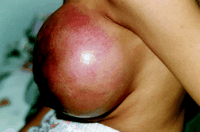
  • In one third of patients, these tumors grow rapidly and may fill a substantial portion of the breast, causing thinning of the overlying skin and prominent vascularity

angiosarc

Clinical concern for a phyllodes tumor versus a fibroadenoma usually hinges on a history of rapid growth, large tumor size (> 3 cm), and / or older patient age:

  • However, with increased adoption of breast screening and breast awareness, smaller and asymptomatic lesions are being detected more often

Imaging Findings

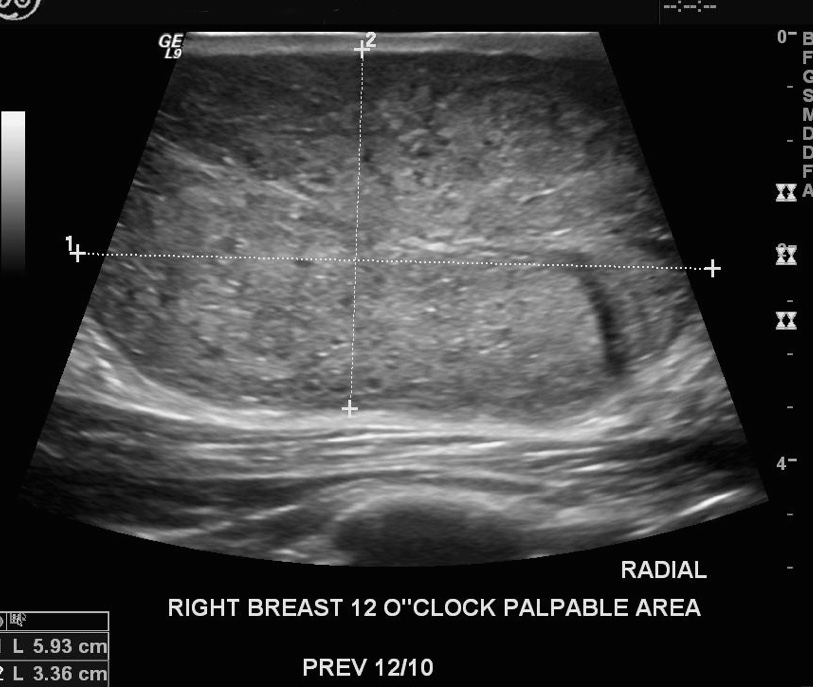
Most phyllodes tumors appear as lobulated masses on mammography and ultrasonography:

Phyllodes tumors may, however, have irregular margins on ultrasonography, a finding seen more frequently in borderline or malignant tumors than in benign tumors

Magnetic resonance imaging (MRI) has been used to evaluate patients with phyllodes tumors, but the clinical benefit of this approach is unclear as these tumors are generally well delineated by physical examination and / or sonography, and correlation of tumor size among mammography, ultrasonography, and MRI is high

Papillary Lesions of the Breast

  • Papillary lesions of the breast:
    • Are common
  • They are highly vascular lesions that are intraductal and may transform into malignant variants
  • In benign papillary lesions:
    • A vascular stalk may be demonstrated on color Doppler scanning:
      • While multiple feeding vessels may be seen when imaging malignant papillary lesions
  • When papillary lesions infarct:
    • The vascular stalk will not be demonstrated
  • The ability to reliably distinguish papilloma, in-situ papillary carcinoma, and invasive papillary carcinoma:
    • Is not possible with ultrasound and is quite challenging even on core biopsy:
      • Open surgical biopsy may need to be performed to distinguish malignant from benign papillary lesions
Acorn Cyst
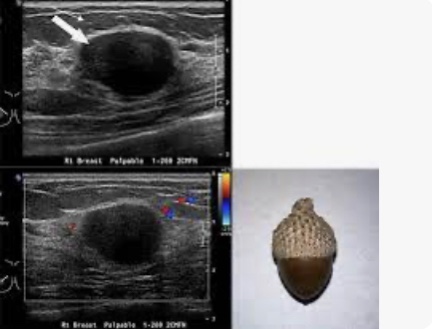
  • An “acorn” cyst is lined with papillary apocrine metaplasia:
    • Which can form a mural nodule:
      • The nodule in an acorn cyst is less echogenic than papillomas or papillary carcinomas:
        • Is usually concave, following the contour of the cyst (thus the appearance of a cap on an acorn) instead of convex, and does not have a vascular stalk
          • The mural nodule caused by papillary apocrine metaplasia:
            • Also would not extend into the duct as the papillary lesion shown in the image does
  • Tubular adenomas and fibroadenomas:
    • Have a similar sonographic appearance and are frequently round or oval, although tubular adenomas can be fusiform or spindle shaped:
      • Both lesions occur during reproductive years and would not commonly present as a new finding in a postmenopausal patient
  • References
    • Jagmohan P, Pool FJ, Putti TC, Wong J. Papillary lesions of the breast: imaging findings and diagnostic challenges. Diagn Interv Radiol. 2013;19(6):471-478.
    • Wyss P, Varga Z, Rössle M, Rageth CJ. Papillary lesions of the breast: outcomes of 156 patients managed without excisional biopsy. Breast J. 2014;20(4):394-401.
    • Stavros AT. Breast Ultrasound. Philadelphia, PA: Lippincott Williams & Wilkins; 2004.
#Arrangoiz #BreastSurgeon #CancerSurgeon #SurgicalOncologist #MountSinaiMedicalCenter #MSMC #Miami #Mexico