Total Thyroidectomy – Ensuring Completeness of Resection

images

  • The technique of subtotal thyroidectomy:
    • Relied on the anatomical removal of visibly abnormal thyroid tissue.
    • Leaving behind bilateral posterior remnants.
  • The move to total thyroidectomy has meant not only that more thyroid tissue is  removed, but that rather there has been a progressive awareness of the vagaries of embryological development of the thyroid, with dissection now focused on those changes in order to ensure completeness of resection, and thus efficacy of the procedure.
  • Thyroid development involves the midline descent of thyroid tissue from the foramen caecum to the level of the larynx along the thyroglossal tract, at which stage the left and right lobes develop:
    • What is not as well appreciated is that thyroid descent may well continue into the thyrothymic region (and even into the anterior mediastinum) forming a prolongation of thyroid tissue or even completely separate thyrothymic thyroid rests.
  • In addition the lateral thyroid component arising from the 4th branchial cleft and ultimobranchial body fuses with the median component:
    • To form the tubercle of Zuckerkandl:
      • A distinct anatomical structure:
        • This fusion is not only the source of the thyroid’s C-cells, but is also essential in the process of follicular development.
  • Thyroglossal tract and pyramidal remnants:
    • Routine dissection of the pyramidal area up to the laryngeal cartilage should be part of every total thyroidectomy:
      • Even minimal recurrence in this area can be very apparent to the patient.
      • More importantly, in patients with Graves’ disease:
        • A small pyramidal lobe remnant can contain sufficient thyroid tissue to cause clinical recurrence even after an apparent ‘total’ thyroidectomy.
    • Thyrothymic thyroid rests:
      • Thyrothymic thyroid rests are present in over 50% of patients (if looked for), although most are small.
      • They are often mistaken for small lymph nodes, or even parathyroid glands, and mostly cause no real problems.
      • They are classified according to the nature of their connection to the thyroid gland proper:
        • Grade I:
          • Is a protrusion of thyroid tissue from the lower edge of the thyroid lobe.
        • Grade II:
          • Is a thyroid rest connected by a bridge of thyroid tissue
        • Grade III:
          • Is connected by only a fibrovascular core.
        • Grade IV:
          • Has no connection at all with the thyroid proper.
      • Their clinical significance lies in the fact that, if not removed at the initial operation, they may well reappear as retrosternal recurrence after apparent ‘total’ thyroidectomy:
        • Routine dissection of the thyrothymic area down to the thoracic inlet looking for such rests should therefore be part of every total thyroidectomy.
  • The tubercle of Zuckerkandl:
    • This structure, first described by Zuckerkandl in 1902, is a distinct anatomical entity, and can be found in nearly two-thirds of patients undergoing thyroid surgery.
    • It is classified according to size (grades 0 to grade 3) using a system developed by Pelizzo et al.
    • The tubercle of Zuckerkandl is often the source of local pressure or obstructive symptoms, especially when the thyroid itself is relatively small.
    • The importance of the tubercle of Zuckerkandl, once again, is that if not looked for and removed during thyroid surgery:
      • It may be a source of persistent unrelieved symptoms or recurrence.
    • An understanding of the anatomy of the tubercle of Zuckerkandl is also central to safe surgical dissection:
      • It usually enlarges lateral to the RLN, with the nerve appearing to pass into a cleft medial to it:
        • A situation that some surgeons used to describe as the nerve passing into the thyroid substance.
    • Early elevation of the tubercle of Zuckerkandl usually allows the recurrent nerve to be easily and safely ‘encountered’ even though not initially visible.
    • However:
      • An uncommon but high risk situation is where the RLN runs lateral to an enlarged tubercle of Zuckerkandl, placing it at increased risk of damage during dissection.
    • Another important point is that the normal superior parathyroid gland, also being derived from the fourth branchial cleft, is commonly found in close association, cephalad to the tubercle of Zuckerkandl.

Presentation1Presentation2Presentation3

  • Introduction:
    • Although the association between annual surgeon total thyroidectomy volume and clinical outcomes is well established, published methods typically group surgeons into volume categories.
    • The volume-outcomes association is likely continuous, but little is known about the point at which the annual surgeon procedure volumes begin to be associated with a decrease in complication rates.


  • Multiple studies have demonstrated the relationship between surgeon volume and improved patient outcomes.

  • This is no different for thyroid surgery; when procedures are performed by high-volume surgeons, patients have decreased rates of endocrine-specific complications (e.g., transient and permanent hypoparathyroidism and recurrent laryngeal-nerve injury), shorter hospital stays, and lower rates of readmission.

  • Previous studies have varied with respect to the definition of a high-volume surgeon, ranging from a threshold of 30 to 100 thyroidectomies per year:

    • One recent study demonstrated that the likelihood of experiencing a complication decreased with increased surgeon volume, up to 26 total thyroidectomies per year.


  • The intent of the current study was to examine the association between surgeon volume and patient outcomes for total thyroidectomy, with the hypothesis that the optimal threshold is continuous, with no defined cut point defining a high-volume surgeon.

Presentation1

2019 Jul 25. doi: 10.1001/jamaoto.2019.1752.

img_3463


¿Quién debe realizar cirugía de tiroides?

  • Generalmente debe ser cirujanos con sub-especialidades que tiene un volumen alto de casos por año:
    • No es ideal un cirujano general que realizar muy pocos casos al año.
  • Estas sub-especialidades son:
    • Cirugia oncológica
    • Cirugia de cabeza y cuello
    • Cirugia endocrina
  • Les dejo la respuesta de Ashok R. Shaha, MD, FACS (profesor MSKCC / IFHNOS) en su presentación que dio en el Keynote Lectura del American Head and Neck Society:

prof_739_20190417135234

  • Rodrigo Arrangoiz MS, MD, FACS miembro de Sociedad Quirúrgica S.C. cumple con los requisitos señalados por el Dr. Shaha:
    • El Dr. Arrangoiz tiene entrenamiento en:
      • Cirugía de tumores de cabeza y cuello, cirugía endocrina, y cirugía oncológica.
        • Es pionero en México de la:
          • Cirugia tiroidea minimamente invasiva
            • La cirugia minimamente invasiva radio-guiada de paratiroides
  •  Su entrenamiento es el siguiente:

    • Tumores de Cabeza y Cuello / Cirugía Endocrina:_
      • Fox Chase Cancer Center

image-49

  • Tumores de Cabeza y Cuello / Cirugía Endocrina:
    • IFHNOS / Memorial Sloan Kettering Cancer Center


  • Cirugía Oncológica Compleja:
    • Fox Chase Cancer Center

image-39


  • Cirugia General y Gastrointestinal:
    • Michigan State University

images

  • Maestría en Ciencias de Investigación:
    • Drexel University

image-40

  • El Dr. Arrangoiz esta certificado por:
    • El Colegio Americano de Cirugía

Unknown

  • El Dr. Arrangoiz es:
    • Fellow del Colegio Americano de Cirugía


  • El Dr. Arrangoiz es:
    • Fellow de la Sociedad de Cirugia Oncológica:

Unknown

  • Es miembro de la American Thyroid Association

Unknown

Sociedad Quirúrgica S.C.
Hospital ABC Santa Fé
Av. Carlos Graef Fernández #154
Consultorio 515
Col. Tlaxala, Delg. Cuajimalpa
México, D.F. 05300
Tel: 1103 – 1600 Ext 4515 a la 4517
Fax:1664 – 7164
rodrigo.arrangoiz@gmail.com


Treatment of Graves Disease

👉If surgery is chosen as primary therapy for Graves’ disease, near-total or total thyroidectomy (rather than subtotal thyroidectomy) is the procedure of choice.

👉ATA guidelines https://www.liebertpub.com/doi/pdfplus/10.1089/thy.2016.0229

#Arrangoiz

#ThyroidExpert

#ThyroidSurgeon

#ThyroidCancer

#GravesDisease

#HeadandNeckSurgeon

Robert Graves

👉Robert Graves, FRCS (1796 –1853) was an eminent Irish surgeon after whom Graves’ disease takes its name; however, Caleb Parry observed “exophthalmic goiter” in 1786 but his findings were not published until after his death. (https://www.eurothyroid.com/about/met/graves.html)

#ThyroidExpert

#ThyroidSurgeon

#ThyroidCancer

#GravesDisease

#HeadandNeckSurgeon

#EndocrineSurgery

#Arrangoiz

Smoking and Graves Disease

👉Another reason to quit smoking. Cigarette smoking increases the incidence of Graves’ eye disease in a dose-dependent manner.

#Arrangoiz

#ThyroidExpert

#ThyroidSurgeon

#Treacher

Open Conservation Surgery for Glottic Cancer

  • A vertical partial laryngectomy is indicated for primary tumors of the vocal cords that:
    • Extend to involve the supra-glottic larynx or the anterior commissure or that have significant sub-glottic extension (greater than 5 mm).
    • Patients with reduced mobility of the involved vocal cord.
    • Those who have failed to respond to previous radiation therapy for a locally advanced lesion that still remains confined to one side of the larynx.
    • Select patients with fixed vocal cord lesions also are considered for a vertical partial laryngectomy.
  • Certain criteria pertaining to the tumor must  be met before a patient is considered suitable for a vertical partial laryngectomy:
    • These criteria, shown in Figure:
B978032305589500010X_f010-071-9780323055895
Criteria for the selection of a lesion suitable for a vertical partial laryngectomy.
      • However:
        • These criteria are not absolute, and the indications for a partial laryngectomy may be extended.

images-1


What is Head and Neck Surgery?

    • It is a surgical sub-specialty that deals mainly with benign and malignant tumors of the head and neck region, including:
      • The scalp, facial region, eyes, ears, nose, nasal fossae, paranasal sinuses, oral cavity, pharynx (nasopharynx, oropharynx, hypopharynx), larynx (supraglotic larynx, glottis larynx, subglotic larynx), thyroid gland, parathyroid gland, salivary glands (parotid glands, submandibular glands, sublingual glands, minor salivary glands), soft tissues of the neck, skin of the head and neck region.
        • The head and neck surgeon’s work area:
          • Does not cover tumors or diseases of the brain and other areas of the central nervous system or those of the cervical spine:
            • This is the neurosurgeon field.
    • Among the diagnostic procedures performed by the head and neck surgeon,  are the following:
      • Nasopharyngolaryngoscopy:
        • Performed to examine, evaluate and, possibly perform a biopsy, of oral cavity, pharyngeal and laryngeal lesions.
    • The surgeries most commonly performed by the head and neck surgeon are:
      • Total or near total thyroidectomies
      • Hemithryoidectomies (lobectomies)
      • Comprehensive neck dissections
      • Selective neck dissections
      • Maxillectomies:
        • Total maxillectomy
        • Subtotal maxillectomy
        • Infrastructure maxillectomy
        • Suprastructure maxillectomy
        • Medial maxillectomy
      • Mandibulectomy:
        • Segmental
        • Marginal
      • Tracheostomy
      • Salivary gland surgeries:
        • Parotid gland operations:
          • Limited superficial parotidectomy with identification and preservation of the facial nerve
          • Superficial parotidectomy with identification and preservation of the facial nerve
          • Near total parotidectomy with identification and preservation of the facial nerve
          • Total parotidectomy
        • Submandibular gland resection
        • Sublingual gland resection
      • Resection of tumors of the oral cavity:
        • Glossectomy
        • Resection of the floor of the mouth tumors
      • Resection of tumors of the pharynx
      • Resection of tumors of the larynx
      • Split-thickness skin grafts
      • Full-thickness skin grafts
      • Sentinel lymph node mapping and sentinel lymph node biopsy
      • Resection of malignant skin tumors (BCC, SCC, melanoma) of the head and neck region
  • The formation of the head and neck surgeon includes mastering the following subjects: 
    • Surgical Anatomy
    • History and Basic Principles of Head and Neck Surgery
    • Epidemiology, Etiology, and Pathology of Head and Neck Diseases
    • Diagnostic Radiology of the Head and Neck Region
    • Tumors of the Scalp, Skin and Melanoma
    • Eyelids and Orbit
    • Nasal Cavity and Paranasal Sinuses
    • Skull Base and Temporal Bone
    • Lips and Oral Cavity
    • Pharynx and Esophagus
    • Larynx and Trachea
    • Cervical Lymph Nodes
    • Thyroid and Parathyroid Glands
    • Salivary Glands
    • Neurogenic Tumors and Paragangliomas
    • Soft Tissue Tumors
    • Bone Tumors and Odontogenic Lesions
    • Reconstructive Surgery
    • Oncologic Dentistry and Maxillofacial Prosthetics
    • Principles of Radiation Oncology
    • Principles of Chemotherapy
    • Molecular Oncology, Genomics and Immunology
    • Nutrition
    • Biostatistic


  • Rodrigo Arrangoiz MS, MD, FACS a head and neck surgeon / endocrine surgeon / surgical oncologist and is a member of Sociedad Quirúrgica S.C at the America British Cowdray Medical Center in Mexico City:

prof_739_20190417135234

Training:

• General surgery:

• Michigan State University:

• 2004 al 2010

• Surgical Oncology / Head and Neck Surgery / Endocrine Surgery:

• Fox Chase Cancer Center (Filadelfia):

• 2010 al 2012

• Masters in Science (Clinical research for health professionals):

• Drexel University (Filadelfia):

• 2010 al 2012

• Surgical Oncology / Head and Neck Surgery / Endocrine Surgery:

• IFHNOS / Memorial Sloan Kettering Cancer Center:

• 2014 al 2016

#Arrangoiz

#Teacher

#Surgeon

#Cirujano

#ThyroidExpert

#ThyroidSurgeon

#CirujanodeTiroides

#ExpertoenTiroides

#ExpertoenParatiroides

#Paratiroides

#Hiperparatiroidismo

#CancerdeTiroides

#ThyroidCancer

#PapillaryThyroidCancer

#SurgicalOncologist

#CirujanoOncologo

#CancerSurgeon

#CirujanodeCancer

#HeadandNeckSurgeon

#CirugiaEndocrina

#CirujanodeTumoresdeCabezayCuello

#OralCavityCancer

#Melanoma

Graves Disease

👉Remissions in Graves’ disease patients continue to be achieved after many years (>5–10) of continuous antithyroid drug therapy (ATD). Thus, long-term ATD may be viable option for patients who wish to avoid permanent hypothyroidism or potential complications of ablative therapy.

#Arrangoiz

#ThyroidExpert

#ThyroidSurgeon

#Teacher

#GravesDisease

PARATHYOID PRESERVATION

images

  • For many years:
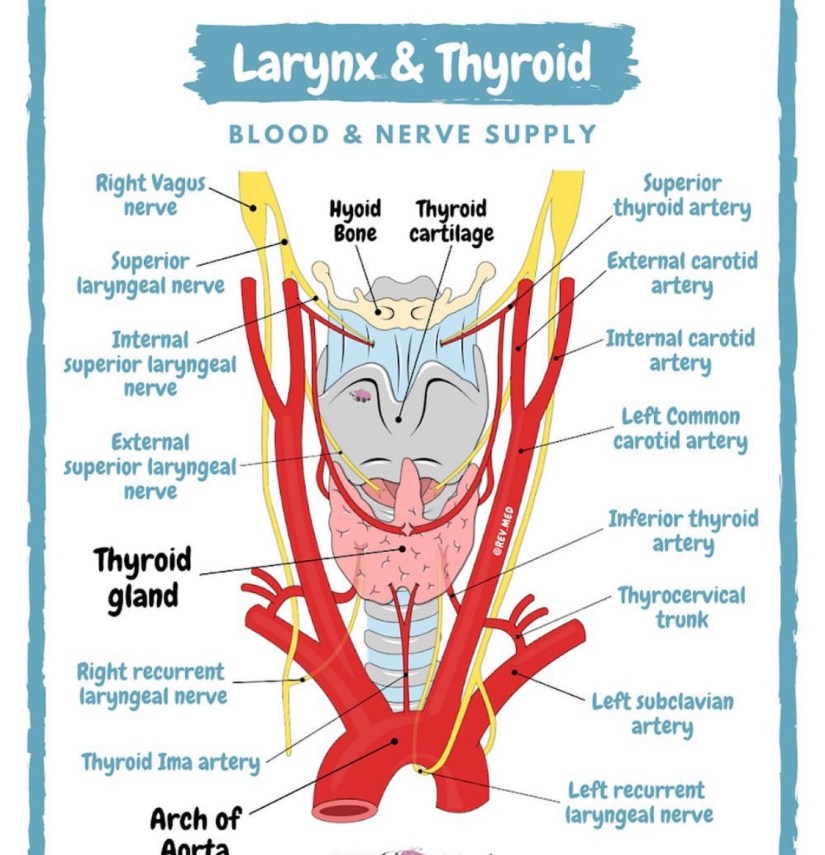
    • The fundamental principle of parathyroid preservation during thyroid surgery had been to maintain all the parathyroids in situ on a vascularized pedicle:
      • In addition there was a belief that any parathyroid apparently preserved, which maintained a tan colour, was viable and could thus be left intact.
  • Although the incidence of permanent hypoparathyroidism has always been acceptably low it still occurs in 1% to 2% of cases:
    • Presumably because of late or unrecognized ischaemia of the preserved parathyroid glands.
  • It is now recognized that:
    • Not only is dissection of parathyroid glands on a vascularized pedicle a very time consuming process, especially for those situated high on the thyroid surface:
      • But it does not necessarily guarantee their preservation.
    • Many a parathyroid gland that has been painstakingly dissected on a long pedicle simply infarcts later as a result of thrombosis of the tenuous vascular supply, or as a result of edema and swelling of the gland within its dissected capsule.
  • Rodrigo Arrangoiz MS, MD, FACS cirujano de tumores de cabeza y cuello / cirugia endocrina es experto en el manejo del hiperparatiroidismo primario:
    • Introdujo a nuestro país la técnica de exploración bilateral de cuello con valoración de la funcionalidad de las glándulas paratiroides con paratiroidectomia radioguiada:

https://m.youtube.com/watch?v=AgvQmtz1gnA&time_continue=127

👉Su entrenamiento fue el siguiente:

• Cirugia general y gastrointestinal:
• Michigan State University:
• 2004 al 2010image-48• Cirugia oncológica / tumores de cabeza y cuello / cirugia endocrina:
• Fox Chase Cancer Center (Filadelfia):
• 2010 al 2012image-39• Maestria en ciencias (Clinical research for healthprofessionals):
• Drexel University (Filadelfia):
• 2010 al 2012image-50• Cirugia de tumores de cabeza y cuello / cirugiaendocrina
• IFHNOS / Memorial Sloan Kettering Cancer Center:
• 2014 al 2016image-51

http://www.sociedadquirurgica.com

http://www.hiperparatiroidismo.info

#Arrangoiz

#CirugiadeTumoresdeCabezayCuello

#CirugiaEndocrina

#CirugiaOncologica

#HeadandNeckSurgery

#EndocrineSurgery

#SurgicalOncology
#Hyperparathyroidism

#Hiperparatiroidismo

Graves Disease

Personalize the treatment for your Graves’ disease patients

#Arrangoiz

#ThyoidSurgeon

#ThyroidExpert

#Teacher

Preoperative Potassium Iodine in Patients with Grave Disease

👉Preoperative potassium iodine (e.g., Lugol’s) treatment prior to thyroidectomy for Graves’ disease decreases thyroid vascularity and intraop blood loss which may allow better visualization and preservation of the surrounding nerves, vasculature, and parathyroid glands.

#Arrangoiz

#Teacher

#Surgeon

#Thyroid

#ThyroidSurgeon

#ThyroidExpert

#HeadandNexkSurgeon

#GravesDisease

Surgery for Graves Disease

A recent study of 1186 Swedish patients with Graves’ disease found that quality of life was worse at 6-10 years after radioactive iodine therapy when compared with treatment via antithyroid drugs or surgery. (Torring, O, et al Thyroid 2019)

#Arrangoiz

#ThyroidSurgeon

#ThyroidExpert

#HeadandNeckSurgeon