Cirugia De La Tiroides

SÍNTOMAS

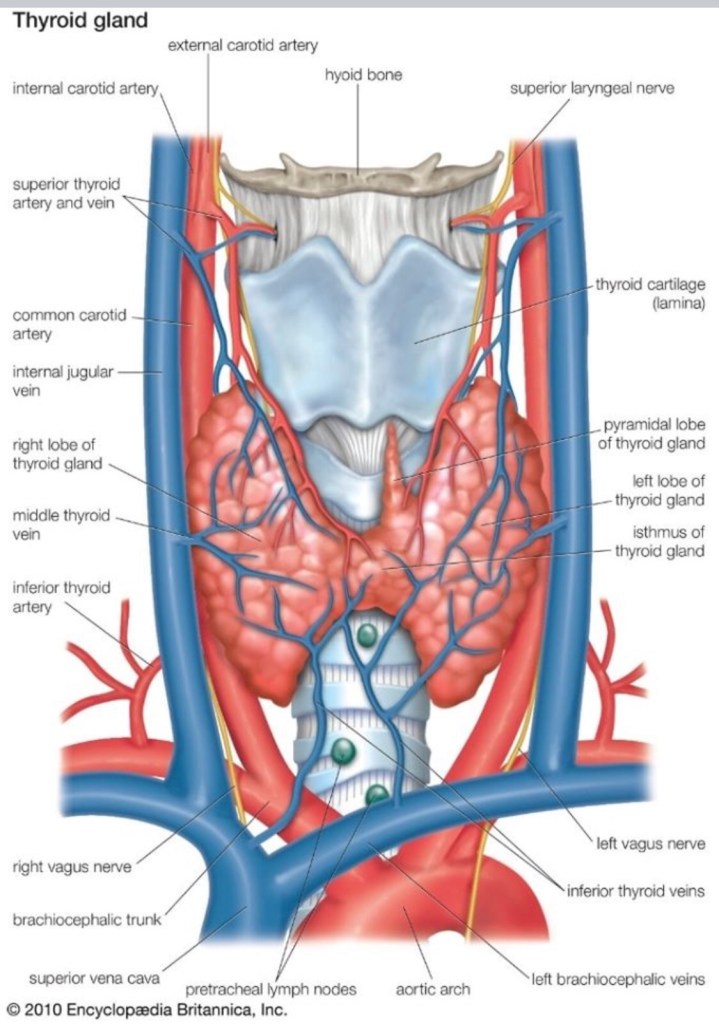
Los procedimientos quirúrgicos de la tiroides se indican para pacientes con una variedad de afecciones tiroideas, incluyendo nódulos tiroideos cancerosos y benignos (no cancerosos), glándulas tiroides grandes (bocios) y glándulas hiperactivas. Existen varios tipos de operaciones de tiroides que un cirujano puede realizar, incluyendo

1) Biopsia o extracción de un bulto- quitar una pequeña parte de la glándula tiroides. 2)Lobectomía– sacar la mitad de la glándula tiroides; 3)Quitar casi toda la glándula tiroides (tiroidectomía subtotal– cuando se deja una pequeña cantidad de tejido tiroideo en ambos lados o tiroidectomía casi-total– cuando se deja aproximadamente un gramo o centímetro de tejido tiroideo en un lado); o 4) Tiroidectomía total, en la cual se elimina todo el tejido tiroideo identificable. Existen indicaciones específicas para cada una de estas operaciones. El principal riesgo de una operación de la tiroides incluye el posible daño a estructuras anatómicas cercanas a la misma, principalmente las glándulas paratiroides (que regulan los niveles de calcio) y los nervios de la laringe recurrentes y externos (que controlan las cuerdas vocales).

Cuando se recomienda cirugía de la tiroides, los pacientes deben hacer varias preguntas en relación con las operaciones de tiroides, incluyendo:

(1) ¿Por qué necesito una operación?
(2)¿Existen otras alternativas de tratamiento?
(3)¿Qué tipo de evaluación necesito antes de mi operación?
(4) ¿Cómo selecciono al cirujano?
(5) ¿Cuáles son los riesgos de la operación?
(6) ¿Qué porción de mi glándula tiroides se debe sacar?
(7) ¿Qué puedo esperar una vez que decida proceder con la cirugía?
(8) ¿Quedaré normal después de la cirugía? ¿Por qué necesito una operación?

El motivo más frecuente por el que los pacientes necesitan cirugía de la tiroides es después de la evaluación de un nódulo tiroideo, lo cual generalmente incluye una punción con aguja fina.

Puede recomendársele cirugía por cualquiera de los siguientes resultados de la punción:

(1) Cáncer (cáncer papilar);

(2) Posible cáncer (neoplasia folicular); o

(3) Benigno.

Se le puede recomendar cirugía por nódulos con punción benigna si el nódulo es grande, si continúa creciendo o si está causando síntomas (dolor, dificultad para tragar, etc). La cirugía también es una opción de tratamiento para el hipertiroidismo para bocios grandes y multinodulares y para cualquier bocio que este causando síntomas.

21-Gene Recurrence Score (Oncotype Dx)

  • Both tamoxifen and aromatase inhibitors:
    • Have been shown to:
      • Reduce recurrence rates and improve survival in postmenopausal women
  • Although chemotherapy has been shown to be beneficial in many patient subsets:
    • The 21-gene recurrence score was developed:
      • To help ascertain which patients with:
        • ER-positive, node-negative breast cancer:
          • Would be most likely to benefit from chemotherapy in addition to adjuvant tamoxifen
  • In patients with an intermediate recurrence score:
    • The benefit of chemotherapy is unclear
  • The Trial Assigning IndividuaLized Options for Treatment (Rx) [TAILORx] trial:
    • Is a randomized prospective trial:
      • That randomized women with ER-positive breast cancer:
        • With a score of 11 to 25 to:
          • Chemotherapy plus endocrine therapy to endocrine therapy alone
    • This trial is closed to accrual, and the results of this trial for this cohort are pending:
      • However:
        • Outcomes data from a subset of 1626 patients with a recurrence score of less than 10:
          • Were recently published
        • These patients were assigned to:
          • Receive endocrine therapy alone without chemotherapy
        • This study reported a 5-year local recurrence rate of:
          • 0.5% in women with a recurrence score of:
            • Less than 10
        • Furthermore:
          • At 5 years:
            • The invasive disease–free survival was:
              • 93.8%
            • The rate of freedom from recurrence of breast cancer at a distant site was:
              • 99.3%
            • At distant or local site was:
              • 98.7%
            • Overall survival rate of:
              • 98%
    • The authors concluded that a favorable gene expression profile:
      • Is associated with a very low rate of recurrence:
        • At 5 years with endocrine therapy alone
  • References:
    • Early Breast Cancer Trialists’ Collaborative Group (EBCTCG), Dowsett M, Forbes JF, et al. Aromatase inhibitors versus tamoxifen in early breast cancer: patient-level meta-analysis of the randomised trials. Lancet. 2015;386(10001):1341-1352.
    • Sparano JA, Gray RJ, Makower DF, et al. Prospective validation of a 21-gene expression assay in breast cancer. N Engl J Med. 2015;373(21):2005-2014.

#Arrangoiz #Surgeon #BreastSurgeon #CancerSurgeon #SurgicalOncologist

Which endocrine therapy regimen would result in highest (or best) disease-free survival in a 32 year old women one year out from a pT2, pN1, ER positive, HER2 negative invasive ductal carcinoma of the right breast?

  • The Tamoxifen and Exemestane Trial (TEXT) and the Suppression of Ovarian Function Trial (SOFT):
    • Investigated adjuvant endocrine therapies:
      • For premenopausal women:
        • With hormone receptor-positive breast cancer
  • Randomizing women to:
    • Exemestane plus ovarian function suppression (OFS)
    • Tamoxifen plus OFS
    • Tamoxifen alone:
      • For 5 years
  • The studies were combined for primary analysis:
    • After enrolling:
      • 4690 patients
    • After a median follow-up of:
      • 68 months:
        • DFS was:
          • 91.1% in the exemestane-ovarian suppression arm versus
          • 87.3% in the tamoxifen-ovarian suppression arm
            • p<0.001
    • Overall survival:
      • Did not differ between the groups
    • Adverse events were reported for:
      • 30.6% of exemestane-ovarian suppression patients and
      • 29.4% of tamoxifen-ovarian suppression group
  • Women on an aromatase inhibitor or who experience ovarian failure secondary to treatment:
    • Should have monitoring of bone health:
      • With a bone mineral density scan:
        • At baseline and periodically thereafter
  • The use of estrogen, progesterone, or selective ER modulators:
    • To treat osteoporosis or osteopenia in women with breast cancer:
      • Is discouraged
    • The use of a bisphosphonate:
    • Is generally the preferred intervention:
      • To improve bone mineral density
        • Optimal duration of bisphosphonate therapy:
          • Has not been established:
            • Factors to consider for duration of anti-osteoporosis therapy include:
              • Bone mineral density
              • Response to therapy
              • Risk factors for continued bone loss or fracture
    • Women treated with a bisphosphonate:
      • Should undergo a dental examination with preventive dentistry prior to the initiation of therapy, and
      • Should take supplemental calcium and vitamin D
  • References:
    • Pagani O, Regan MM, Walley BA, et al. Adjuvant exemestane with ovarian suppression in premenopausal breast cancer. N Engl J Med. 2014;371(2):107-118.
    • Wilkinson GS, Kuo Y-F, Freeman JL, Goodwin JS. Intravenous bisphosphonate therapy and inflammatory conditions or surgery of the jaw: a population-based analysis. J Natl Cancer Inst. 2007;99(13):1016-1024.
    • Regan MM, Francis PA, Pagani O, et al. Absolute benefit of adjuvant endocrine therapies for premenopausal women with hormone receptor-positive, human epidermal growth factor receptor 2-negative early breast cancer: TEXT and SOFT Trials. J Clin Oncol. 2016;34(19):2221-2231.

#Arrangoiz #Surgeon #BreastCancer #CancerSurgeon #SurgicalOncologist

Pathologic Complete Response to Preoperative Systemic Therapy in Triple Negative Breast Cancer

  • Pathologic complete response to preoperative systemic therapy:
    • Is associated with a favorable:
      • Disease-free survival:
        • Particularly in situations in which all treatment:
          • Is given preoperatively
  • The collaborative Trials in Neoadjuvant Breast Cancer (CTNeoBC) group:
    • Reviewed 12 international trials:
      • With 11,955 patients:
        • To evaluate the rates of pCR among patients receiving neoadjuvant chemotherapy:
          • According to their tumor subtype
    • Patients with hormone receptor positive, HER2 negative tumors:
      • Experienced pCR:
        • In only 7.5% of cases
    • While the greatest rate of pCR:
      • Was seen in those with HER2 positive tumors:
        • Receiving anti-HER2 therapy:
          • pCR of 50%
    • Pathologic complete response:
      • Occurred in 34% women:
        • With triple negative cancers
  • Unfortunately:
    • The achievement of pCR in locally advanced TNBC:
      • Is not a reliable predictor:
        • Of better overall survival
  • The triple negative phenotype:
    • Is more likely to be associated with BRCA1 mutations and therefore:
      • Current NCCN guidelines recommend:
        • Genetic testing:
          • For women younger than 60 who have triple negative breast cancer
    • There are no compelling data at present:
      • That the triple negative phenotype precludes breast-conserving therapy:
        • In fact, one recent study:
          • Found the 5-year rate of locoregional recurrence (LRR) to be similar:
            • Among those having:
              • Breast conserving surgery (4.2%) and
              • Mastectomy (5.4%)
    • Further, the authors found no significant difference:
      • In LRR, distant metastasis, overall recurrence, disease-free survival, or overall survival
  • The accuracy of clinical examinations, mammogram, ultrasound, and MRI:
    • Can be used to predict the presence of disease on final pathology:
      • But none are able to reliably predict a pCR
  • References:
    • von Minckwitz G, Untch M, Blohmer JU, et al. Definition and impact of pathologic complete response on prognosis after neoadjuvant chemotherapy in various intrinsic breast cancer subtypes. J Clin Oncol. 2012;30(15):1796-1804.
    • Cortazar P, Zhang L, Untch M, et al. Pathological complete response and long-term clinical benefit in breast cancer: the CTNeoBC pooled analysis. Lancet. 2014;384(9938):164-172.
    • Liedtke C, Mazouni C, Hess KR, et al. Response to neoadjuvant therapy and long-term survival in patients with triple-negative breast cancer. J Clin Oncol. 2008;26(8):1275-1281.
    • Symmans WF, Peintinger F, Hatzis C, et al. Measurement of residual breast cancer burden to predict survival after neoadjuvant chemotherapy. J Clin Oncol. 2007;25(28):4414-4422.
    • Zumsteg ZS, Morrow M, Arnold B, et al. Breast-conserving therapy achieves locoregional outcomes comparable to mastectomy in women with T1-2N0 triple-negative breast cancer. Ann Surg Oncol. 2013;20(11):3469-3476.

#Arrangoiz #BreastSurgeon #BreastCancer #BreastExpert #Teacher #Surgeon #CancerSurgeon #SurgicalOncologist

Hypofractionated Whole Breast Irradiation (WBI) in Breast Conserving Surgery

  • Hypofractionated WBI continues to increase in its utilization with several regimens available including:
    • The Canadian regimen (42.5 Gy/16 fractions) and 
    • Various UK regimens
  • Ten-year data are now available:
    • With a local recurrence rate of 7% from the Canadian regimen 
    • And no difference in local recurrence or toxicity:
      • Compared with standard fractionation
  • Similar results have been seen with the:
    • UK Standardisation of Breast Radiotherapy (START) A and B trials:
      • Which have found no difference in local recurrence:
        • With fewer treatments and higher doses per treatment compared to standard fractionation
      • The START-B trial:
        • Randomized 2215 women to 40 Gy in 15 fractions or standard 50 Gy in 25 fractions:
        • The 10-year local-regional relapse rate:
          • Was 4.3% for the 40 Gy group and 5.5% for the 50 Gy group
        • Breast shrinkage, telangiectasia, and breast edema:
          • Were significantly less common in the 40 Gy group than in the 50 Gy group
  • In the Canadian trials:
    • 24% of patients were younger than age 50 years
    • 31% had tumors greater than 3 cm
    • 26% were ER-negative
    • 18% had high-grade tumors
    • 42% received tamoxifen
    • 11% received adjuvant systemic therapy of:
      • Cyclophosphamide, methotrexate, and fluorouracil as the standard chemotherapy
  • In the START-A trial:
    • 51% had tumors less than 2 cm
    • 29% of patients had positive lymph nodes
    • Only 35% of patients in this trial received adjuvant systemic therapy
  • Collectively, the hypofractionation trials represent:
    • A more diverse, higher-risk patient population in an era without the benefits of modern systemic therapy
    • This may explain the relatively higher rates of local failure when compared to the accelerated partial breast irradiation group
  • References:
    • Haviland JS, Owen JR, Dewar JA, et al; START Trialists’ Group. The UK Standardisation of Breast Radiotherapy (START) trials of radiotherapy hypofractionation for treatment early stage breast cancer: 10-year follow-up results of two randomised controlled trials. Lancet Oncol. 2013;14:1086-1094.
    • Whelan TJ, Pignol JP, Levine MN, et al. Long-term results of hypofractionated radiation therapy for breast cancer. N Engl J Med. 2010;362:513-520.

Canadian Trial

  • A multi-institution, prospective randomized trial:
    • From participating Cancer Care Ontario centers:
      • Was performed from 1993 to 1996
  • The aim of the study sought to determine:
    • Whether accelerated, hypofractionation whole-breast irradiation (WBI) was as effective as the traditional 5-week schedule
  • Included in the study were women:
    • Who received (BCS) for invasive breast cancer with clear surgical margins and negative axillary nodes
  • Participants were randomly assigned:
    • To receive WBI either at the standard dose:
      • Of 50.0 Gy in 25 fractions over 35 days (control group), or
    • At a dose of 42.5 Gy in 16 fractions over 22 days (hypofractionated-radiation group)
  • The control group included 612 patients and the hypofractionation group had 622 patients
  • Results from this study:
    • Indicated that the Canadian regimen:
      • Was not inferior to the standard 5-week treatment regimen for women who received BCS for invasive breast cancer with clear surgical margins and negative axillary nodes
    • The risk of local recurrence at 10 years was:
      • 6.7% in the control group and 6.2% in the hypofractionated group
    • Cosmesis at 10 years was found to be:
      • Comparable between the two groups:
        • With good or excellent outcomes:
          • For 71.3% of women in the control group and 69.8% in the hypofractionated-radiation group
    • There was also no difference between the two groups in:
      • OS and no increase in cardiac-related deaths was seen in the hypofractionated group

REFERENCES

  1. Whelan TJ, Pignol J-P, Levine MN, et al. Long-term results of hypofractionated radiation therapy for breast cancer. N Engl J Med. 2010;362:513-520.

#Arrangoiz #BreastCancer #BreastSurgeon #CancerSurgeon #SurgicalOncologist

The NSABP B-14 Trial

  • The NSABP B14 trial:
    • Was a randomized, double blind, placebo-controlled trial:
      • Of postoperative therapy with tamoxifen (10 mg BID)
      • In 2644 patients
      • With ER-positive histologically node-negative breast cancers
    • Patients were administered the drug:
      • For at least 5 years
    • After 15 years of follow-up:
      • Compared with placebo:
        • Tamoxifen treated patients were found to have benefited irrespective of:
          • Age, menopausal status, or ER concentration for:
            • RFS:
              • 78% tamoxifen vs 65% placebo
            • OS:
              • 71% tamoxifen vs 65% placebo
        • A multivariate analysis indicated that:
          • All subgroups investigated:
            • Showed benefit from tamoxifen treatment:
              • This included a:
                • Reduction in rate of treatment failure at local and distant sites
                • A reduction in rate of incidence of new tumors in the contralateral breast
                • A reduction in loco-regional recurrence after lumpectomy and breast irradiation
  • While the NSABP B-14 is known for:
    • Establishing tamoxifen:
      • As an effective therapy in:
        • ER-positive, node-negative patients:
          • Disease-free survival and OS were found to decrease over the 15-year follow-up:
            • In a subset of patients originally thought to have a favorable prognosis:
              • These findings prompted researchers to find a way to optimize treatment in this group:
                • Thus, the NSABP conducted the B-20 trial:
                  • To evaluate the value of adding chemotherapy to tamoxifen for treatment regimens in ER-positive, node-negative patients
  • Results from the B-20 trial after a 12-year follow-up:
    • Demonstrated a significant improvement in disease-free survival:
      • With the addition of chemotherapy to tamoxifen when compared to tamoxifen alone

REFERENCES

  1. Fisher B, Costantino J, Redmond C et al. A randomized trial evaluating tamoxifen in the treatment of patients with node-negative breast cancer who have estrogen-receptor positive tumors. N Engl J Med. 1989;320:479-484.
  2. Fisher B, Jeong JH, Bryant, et al. Treatment of lymph-node-negative, oestrogen-receptor-positive breast cancer: long-term findings from National Surgical Adjuvant Breast and Bowel Project randomized clinical trials. Lancet. 2004;364:858-868.
  3. Newman LA, Mamounas EP. Review of breast cancer clinical trials conducted by the National Surgical Adjuvant Breast Project. Surg Clin N Am. 2007;87:279-305.

#Arrangoiz #Surgeon #Cancer #BreastSurgeon #CancerSurgeon #SurgicalOncologist #BreastCancer #NSABP

EORTC 1081

  • The EORTC 1081 study:
    • Was a large multicenter clinical trial:
      • Designed to demonstrate the safety of breast conservation therapy (BCT) compared to modified radical mastectomy (MRM):
        • In patients with:
          • Tumors 5 cm or smaller and
          • Axillary node-negative disease
          • Axillary node-positive disease
    • This study was open for accrual:
      • Between 1980 and 1986:
      • In 8 centers in the UK, Netherlands, Belgium, and South Africa
    • Four hundred and forty eight patients (448) were randomized to BCT and 420 to MRM
    • Patients who received BCT:
      • Were treated with lumpectomy and complete axillary clearance:
        • Followed by breast radiotherapy and tumor bed boost
    • The primary endpoint:
      • Was time to distant metastasis
    • Compared to BCT:
      • MRM resulted in better local control:
        • But did not affect overall survival or time to distant metastasis
    • At the 20-year follow-up:
      • No significant difference was noted for long-term OS:
        • 44.5% MRM group vs 39.1% BCT group or time to distant metastasis
    • BCT was noted to have:
      • A higher LRR at 10 years of:
        • 20% versus 12% for MRM
      • Additionally, factors associated with increased LRR included:
        • Larger tumor size
        • Lymph node metastasis
        • Receptor type
  • Interpretation of results from EORTC 10801 trial:
    • Found BCT to be a justifiable form of treatment for patients with small breast cancers:
      • Given that long-term follow-up showed similar OS compared to mastectomy
    • This study contributed to earlier bodies of evidence:
      • Found in the NSABP B-06 and Milan I:
        • Study which evaluated the safety and effectiveness of BCT for women with small breast tumors
    • One of the main differences between the studies was that:
      • The EORTC 10801 trial:
        • Generally had patients with larger tumors (80% had T2 tumors) and 41% had lymph node metastasis
    • Although tumor size > 2 cm and positive lymph node status:
      • Were found to increase risk for distant metastasis and death:
        • This was found to be independent of surgical intervention
    • Thus, the EORTC 10801 trial:
      • Provided valuable data that BCT can safely be performed for patients with larger tumors and positive lymph nodes

REFERENCES

  1. Black DM, Hunt KK, Mittendorf EA. Long-term outcomes reporting the safety of breast conserving therapy compared to mastectomy: 20-year results of EORTC 10801. Gland Surgery. 2013;2:120-123
  2. Liliere S, Werutsky G, Fentiman IS, et al. Breast conserving therapy versus mastectomy for stage I-II breast cancer: 20 year follow-up of the EORTC 10801 phase 3 randomized trial. Lancet Oncol. 2012;13:412-419.

#Arrangoiz #Surgeon #BreastSurgeon #CancerSurgeon #BreastCancer #SurgicalOncologist

Coronavirus en Mexico / Coronavirus in Mexico

👉Casos siguen aumentando, muertes siguen aumentando

👉Quédense en casa

👉Stay at home

Eastern Cooperative Oncology Group (ECOG) E5194 Study

  • Was designed to investigate the risk of ipsilateral breast events (IBEs):
    • In patients with DCIS:
      • Treated with local excision without radiation
  • The ECOG and North Central Cancer Treatment Group conducted a prospective trial:
    • From 1997 to 2002
    • Known as the E5194 study
  • Patients were stratified into two groups based on grade:
    • Low- and intermediate-grade DCIS measuring 2.5 cm or smaller
    • High-grade DCIS measuring 1 cm or smaller
  • Margin widths:
    • Of 3 mm or wider were required along with no residual calcifications on postoperative mammograms
  • Results:
    • The low- and intermediate-grade DCIS group:
      • With 565 eligible patients:
        • Had a 5-year IBE rate of 6.1%
    • The high-grade group:
      • With 105 eligible patients:
        • Had a 5-year IBE rate of 15.3%
  • These results suggested:
    • That in patients with high-grade lesions:
      • Excision alone without radiation:
        • Is inadequate treatment
  • However:
    • E5194 suggested that patients with low- and intermediate-grade lesions:
      • May be considered for omission of radiation:
        • Given the acceptably low rate of IBEs
  • To further answer the question:
    • Of when radiation should be considered for treatment of DCIS patients:
      • Solin et al. used samples from the E5194 study to establish the DCIS score:
        • This assay utilized quantitative RT PCR from tumor specimens for 327 patients with DCIS:
          • Treated with surgical excision without radiation:
            • From the E5194 study
        • The DCIS score from 0 to 100:
          • Low less than 39
          • Intermediate 39 to 54
          • High ≥ 55
        • The DCIS score was then designed to predict:
          • The recurrence of:
            • IBE
            • DCIS
            • Invasive cancer
        • The DCIS score correlated with 10-year IBE risk of:
          • 10.6% in the low-risk group
          • 26.7% in the intermediate-risk group
          • 25.9% in the high-risk group
  • Current literature reports:
    • A 50% decrease in local recurrence with radiotherapy after surgical excision of DCIS:
      • However, there are no clear criteria to determine which patients will have the maximum benefit
  • The DCIS score can be used to stratify patients:
    • Into low- and high-risk groups:
      • Based on more than clinical or pathologic features and can aid in decision making about adjuvant treatments in patients with DCIS
  • To study the effect of the DCIS score on recommendations for radiotherapy following excision:
    • The treatment plans for 127 patients with DCIS were evaluated before and after knowledge of the DCIS score by the surgeon and radiation oncologist
    • The DCIS scores varied within the study population:
      • With 66% with a low-risk score, 20% with an intermediate-risk score, and 14% with a high-risk score
    • Based on clinical and pathologic factors:
      • Radiotherapy was recommended:
        • In 71.7% of the patients
    • After the DCIS score was determined:
      • There was an overall change in 26.4% of the recommendations
    • With the additional information of the DCIS score:
      • Radiotherapy was recommended:
        • For 68.1% of the patients
  • The clinical utility of the DCIS score is evident in these results:
    • Giving oncologists more objective information when deciding if the benefit of radiotherapy outweighs the risk in patients with DCIS

REFERENCES

  1. Hughes LL, Wang M, Page DL, et al. Local excision alone without irradiation for ductal carcinoma in situ of the breast: a trial of the Eastern Cooperative Oncology Group. J Clin Oncol. 2009;27:5319-5324.
  2. Manders JB, Kuerer HM, Smith B, et al. Clinical utility of the 12-gene DCIS score assay: impact on radiotherapy recommendations for patients with ductal carcinoma in situ. Ann Surg Oncol. 2016 [Epub ahead of print].
  3. Solin LJ, Gray R, Baehner FL, et al. A multigene expression assay to predict local recurrence risk for ductal carcinoma in situ of the breast. J Nat Can Inst. 2013;105:701-710.

#Arrangoiz #BreastSurgeon #BreastCancer #SurgicalOncologist #CancerSurgeon #BreastCancer