Risk Factors for Recurrence and Metastases in Cutaneous Squamous Cell Carcinoma

  • Tumor Size:
    • Low risk:
      • Tumors less than 2 cm in greatest dimension
    • High Risk:
      • Tumors equal or greater than 2 cm in greater dimension
    • For cSCC tumors with diameter less than 2 cm:
      • Risk stratification by location and size:
        • Is largely based on extrapolation from older data in BCC:
          • This 27-year retrospective review of 5755 BCCs showed that high-risk sites correspond roughly to the:
            • Mask areas of the face, and that recurrences after standard excision or curettage and electrodesiccation (C&E) were significantly more common:
              • When tumors in high-risk locations:
                • Were 6 mm or more in diameter
              • When tumors in moderate-risk locations:
                • Were 10 mm or more in diameter
            • Therefore, for the purpose of determining which tumors should be removed with Mohs micrographic surgery (MMS) or excision with complete circumferential peripheral and deep margin assessment (CCPDMA) rather than standard excision or C&E, the NCCN panel has defined the following as high risk:
              • Tumors in area L (low-risk region) that are ≥ 20 mm
              • Tumors in area M (moderate-risk region) that are ≥ 10 mm
              • Tumors in area H (high-risk region) of any size
  • Location:
    • Low risk:
      • Trunk
      • Extremities
    • High risk:
      • Mucosal surfaces
      • Genitalia
      • Mask areas of face including:
        • Eyelids
        • Periorbital
        • Nose
        • Lips, chin
        • Preauricular areas
        • Postauricular areas
        • Ear
        • Prior burn scars
        • Irradiated areas
    • In general, cSCCs that develop in the head and neck area:
      • Are more likely to recur than those developing on the trunk and extremities
    • SCCs that develop on the genitalia, mucosal surfaces, and ears:
      • Are also at greater risk of metastasizing
    • The concept of a so-called high-risk “mask area of the face” dates back at least to 1983
  • Borders:
    • Low risk:
      • Well defined
    • High risk:
      • Ill defined
  • Arising from scar or inflammation:
    • Low risk:
      • No
    • High risk:
      • Yes
  • Prior irradiation
    • Low risk:
      • No
    • High risk:
      • Yes
    • Tumors developing in sites of prior radiotherapy refer to:
      • Primary cSCCs arising in areas previously irradiated for unrelated conditions
    • All recurrent tumors:
      • Irrespective of prior therapy:
        • Are defined as high risk
    • Data from older studies and one more recent study support that prior radiotherapy for unrelated (frequently benign) conditions:
      • Is a risk factor for NMSC recurrence or metastasis
  • History of inmunosuppression:
    • Low risk:
      • No
    • High risk:
      • Yes
    • In addition to increasing the risk of cSCC development:
      • Immunosuppression has been shown to be associated with:
        • Poorer outcomes in large meta-analyses, and prospective, and retrospective studies:
          • Each of these studies showed that immunosuppression was associated with at least one measure of poor outcome (recurrence, metastasis, or death), but results are inconsistent regarding which of these outcomes are effected
          • These studies cover a broad range of extent of disease and treatment approaches:
            • Suggesting that immunosuppression is associated with poor prognosis regardless of treatment approach used or the stage of disease at time of treatment
          • A few studies from the organ transplant literature have evaluated other risk factors that might be linked to the higher rates of SCC recurrence and metastasis among transplant patients:
            • A retrospective review of 307 patients with cSCC confirmed that those who received organ transplants had more aggressive disease than those who did not, and that SCCs in transplant patients were more likely to have deep tissue spread and perineural and lymphatic invasion at presentation
  • Primary vs recurrent:
    • Low risk:
      • Primary
    • High risk:
      • Recurrent
    • The higher risk of recurrence and metastasis for recurrent cSCC versus primary cSCC disease has been extensively documented in the literature
  • Degree of differentiation:
    • Low risk:
      • Well differentiated
    • High risk:
      • Poorly differentiated
    • In their extensive meta-analysis of risk factors for local recurrence and metastasis of cSCC:
      • Rowe and colleagues found that patients with well-differentiated tumors fared significantly better than those patients with poorly differentiated lesions
    • Another cohort study of 315 patients also associated differentiation grade with overall survival:
      • Erglo and colleagues colleagues reported differentiation to be a significant risk factor of recurrence in an analysis of 1039 patients
    • Many other studies, including some very large retrospective studies (n > 1000) provide
      supporting evidence that:
      • Poor differentiation is correlated with cSCC recurrence, metastasis, disease-specific survival, and overall survival
    • Another high-risk histologic feature reported in the literature is:
      • The presence of desmoplasia:
        • In studies from Germany, desmoplastic cSCC was shown to pose a greatly increased risk of both recurrence and metastasis
        • A retrospective study using the PALGA national registry of the Netherlands reported significantly higher rates of metastasis for desmoplastic versus non-desmoplastic cSCCs:
          • 89% versus 21% (P < .001)
        • The significance of desmoplasia as a risk factor was confirmed by multivariable analysis
      • A more recent review of 72 patients with desmoplastic SCC:
        • Reported a high rate of recurrence of 80%
  • Perineural invasion:
    • Low risk:
      • Not present
    • Hight risk:
      • Present
    • Perineural involvement is uncommon in any NMSC (2% to 6% of the cases):
      • But develops more frequently and is more aggressive in cSCC versus BCC
    • cSCC with perineural involvement poses a greatly increased risk of:
      • Recurrence
      • Metastasis (nodal and distant)
      • Death
    • It is more common in recurrent versus primary tumors:
      • It is associated with other risk factors, including:
        • Larger lesion size
        • Poor differentiation
        • Adenosquamous (mucin producing)
        • Desmoplastic
        • Metaplastic (carcinosarcomatous)
    • In a prospective cohort study of 315 patients with cSCC of the head and neck, Kyrgidis and colleagues identified perineural involvement as a factor associated with lower overall survival and recurrence-free survival
    • Even among patients with other risk factors:
      • PNI is an independent risk factor for lymph node metastasis:
        • As demonstrated by multivariate analysis of a prospective study of high-risk patients
    • If large nerve involvement is suspected:
      • MRI should be considered to evaluate extent and / or rule out skull involvement in those with head and neck tumors
    • cSCC involving unnamed small nerves (< 0.1 mm in caliber):
      • May have a low risk of poor outcomes in the absence of other risk factors
  • Lymphovascular invasion:
    • Low risk:
      • Not present
    • Hight risk:
      • Present
    • Two prospective studies of patients with local or regional cSCC have shown significant association between lymphovascular invasion (LVI) and lymph node metastasis
      • Retrospective studies corroborate this finding and also show that LVI is:
        • Prognostic for parotid involvement
    • One retrospective study of 114 patients with cSCC and PNI or neurotropism showed by multivariate analysis that in this high-risk population:
      • LVI was significantly associated with disease- specific death and all-cause death
    • The presence of LVI from the primary tumor is important to note:
      • Especially in patients with other risk factors, and should increase the suspicion of subclinical nodal disease
  • Depth of invasion
    • Low risk:
      • Less than 2 mm
      • Less than Clark level IV
    • High risk:
      • Equal or greater than 2 mm
      • Clark level IV / V
    • Data from many large studies support that risk of recurrence and metastasis:
      • Increases with increasing lesion depth
    • cSCC lesion depth can be quantified as thickness in mm or by anatomic layer(s) invaded:
      • A standard Breslow measurement per the College of American Pathologists (CAP) 2013 protocol:
        • Would be the distance from the deepest point of tumor invasion to the granular layer or base of ulcer if present, excluding parakeratosis or scale crust
      • Brantsch and colleagues prospectively examined potential risk factors for metastasis and local recurrence of cSCC in 615 patients over a 20- year period:
        • With a median follow-up of 43 months, metastasis occurred in:
          • 0% of tumors 2.0 mm in thickness
          • 4% of tumors 2.1 mm to 6.0 mm in thickness
          • 16% of tumors thicker than 6.0 mm
      • Thicker lesions also had a higher risk of local recurrence:
        • A large retrospective analysis and a very large meta-analysis (n = 17,248) provide data supporting that risk of recurrence and metastasis is significantly higher:
          • For lesions with thickness > 2 mm
      • Meta-analyses have shown that 4-mm and 6-mm thickness cutoffs:
        • Are also prognostic for recurrence and metastasis, and one retrospective study showed by multivariate analysis that risk for recurrence and metastasis:
          • Increases significantly for every 1-mm increase in tumor depth
        • Retrospective studies and meta-analyses support that anatomic level of invasion is significantly correlated with cSCC recurrence and metastasis:
          • Some studies showed significantly higher risk of recurrence or metastasis for cSCC lesions with Clark levels IV-V:
            • Corresponding to invasion of the deep reticular dermis or subcutaneous fat,
              respectives
          • Other studies have shown that lesions with invasion
            into the subcutaneous fat:
            • Significantly increases rates of recurrence and metastasis
  • Subtype:
    • Low risk:
      • N/A
    • High risk:
      • Bowen disease
      • Desmoplastic SCC
      • Acantholytic SCC
      • Adenosquamous SCC
      • Basosquamous SCC
    • The histologic subtypes of acantholytic (adenoid), adenosquamous (or mucin-producing), and metaplastic (carcinosarcomatous) SCC are rare histologic subtypes:
      • Only case reports and case series document the outcomes of patients with these subtypes, and thus their prognostic significance is debated:
        • However, because these tumors may have a high risk of recurrence and likely would not be included in the high-risk category on the basis of their degree of differentiation, the panel decided to list them as separate risk factors

#Arrangoiz #CancerSurgeon #HeadandNeckSurgeon #SurgicalOncologist #CASO #SkinCancer #CenterforAdvancedSurgicalOncology #BCC #SCC
Nonsurgical Therapies for Non-Melanoma Skin Cancers

  • Radiation therapy:
    • Is often reserved for:
      • Patients unable or unwilling to undergo surgical treatment of primary lesions or
      • When clear margins cannot be obtained by Mohs or more extensive surgery
    • It is also widely accepted as adjuvant treatment of recurrent or histologically aggressive tumors:
      • Particularly those with perineural invasion
    • For high-grade NMSC with perineural involvement or invasion into bone:
      • Radiation therapy is generally recommended in conjunction with surgical excision
    • Radiation therapy can be further used as:
      • Adjuvant or palliative treatment for lymph node metastases
    • Disadvantages of radiation therapy include:
      • Acute and chronic radiation changes:
        • Dyspigmentation
        • Telangiectasia
        • Radiodystrophy
      • Higher recurrence rates in BCC
      • Lack of margin control
      • Increased number of treatment sessions
    • As radiation therapy can result in NMSC decades after exposure:
      • It should be used cautiously in young patients
    • It is also contraindicated in nevoid BCC
  • Topical therapies for superficial NMSC and AKs include:
    • 5% fluorouracil (5-FU)
    • Imiquimod creams
  • 5-FU:
    • Is an antineoplastic antimetabolite
  • Imiquimod:
    • Is a synthetic immune response modifier:
      • That enhances cell-mediated immune response:
        • Via the induction of proinflammatory cytokines
  • These topical therapies are most commonly used for:
    • AKs as well as for superficial BCCs and SCCs in situ when surgery or other treatment techniques are contraindicated or impractical
  • Topical 5-FU is not appropriate for:
    • Nodular BCC
    • It is not recommended for SCC due to high recurrence rates
  • Treatment regimens for AKs with 5-FU vary widely:
    • In general, 5-FU is applied to the affected area once or twice daily for a period ranging from 2 to 6 weeks:
      • Retreatment several months later:
        • Either with cryotherapy or other modalities, may be necessary
  • For the treatment of superficial BCC:
    • 5-FU can be applied daily to the tumor and several millimeters of surrounding skin for a period of at least 4 weeks:
      • After a 2- to 3-week after the treatment ended:
        • The area is then evaluated clinically for residual tumor
        • Biopsy is often indicated to ensure adequate therapy
      • Significant erythema, stinging, oozing, and crusting are often reported:
        • Especially with more aggressive treatment regimens
  • 5-FU:
    • Can be applied to an entire region, such as the face, chest, arms, or hands
  • Imiquimod therapy:
    • Is approved for the treatment of AKs and superficial BCC but should not be used for SCC
    • In general, less local skin reaction is reported compared to 5-FU
    • For AKs the cream is applied:
      • Two nonconsecutive days a week for 16 weeks
    • For superficial BCC:
      • The cream should be applied 5 nights a week for at least 6 weeks
      • After a 2- to 3-month respite, the lesion is evaluated either clinically or histologically (rebiopsy) to confirm adequate therapy
    • While imiquimod can also be used for nodular BCC:
      • The treatment duration requires 12 weeks:
        • The response is lower (76%) compared to a greater than 85% success rate for superficial BCC
    • Imiquimod is often well tolerated:
      • Causes minimal or no scarring, and is particularly useful for multiple lesions concentrated in one area
  • Photodynamic therapy (PDT):
    • Is another noninvasive method used for the treatment of AKs and superficial BCC
    • A photosensitizer (most commonly, aminolevulinic acid) is applied to the skin and activated with a light source
    • The tumor cells retain the photosensitizer for longer periods of time than normal cells:
      • Resulting in preferential killing
    • Cure rates for AKs are reported to be as high as 90%:
      • However, recurrence rates at 5 years for superficial and nodular BCC have been reported to be as high as 14% to 22% respectively
    • Side effects include:
      • Burning or stinging pain during the treatment and posttreatment periods
      • Erythema, swelling, and temporary hyper- or hypopigmentation
      • But overall the cosmetic results are superior in comparison to surgery or cryotherapy
    • Systemic PDT:
      • Has also been tested as a treatment for BCC and may be appropriate for individuals presenting with multiple lesions or nevoid BCC syndrome
  • Chemoprevention:
    • With low-dose oral retinoids has shown some promise in the prevention of SCC for chronically immunosuppressed patients who have undergone organ transplantation:
      • However, long-term therapy is needed as beneficial effects are often lost when these drugs are discontinued

#Arrangoiz #CancerSurgeon #HeadandNeckSurgeon #SurgicalOncology #CASO #CenterforAdvancedSurgicalOncology #Miami #SkinCancer #BCC #SCC

WORK-UP/BIOPSY TECHNIQUES OF NON-MELANOMA SKIN CANCER (NMSC)

  • Work-up of any NMSC should include a thorough history, including:
    • Reported duration
    • Rate of growth
    • Associated symptoms
    • Previous treatment
    • Risk factors for NMSC
  • Changes noted by the patient may be quite subtle and include:
    • Itching
    • Tenderness
    • Bleeding
    • Changes in size, color, or texture
  • A detailed head-to-toe skin examination should be performed:
    • With careful inspection and palpation of suspicious lesions
  • In patients suspected of having SCC:
    • The draining lymph node basins should be evaluated for nodal metastases by palpation
  • In general, radiologic studies are not necessary for the evaluation of patients with SCC:
    • However, if high-risk features are present:
      • A magnetic resonance imaging study can be obtained to evaluate the extent of tumor involvement and ultrasound can be used for the evaluation of regional nodal basin(s)
  • Any cutaneous lesion suspicious for malignancy should be biopsied for pathologic assessment
  • Biopsy of suspicious pigmented lesions should be limited to:
    • Punch or excisional biopsy techniques:
      • In which the full thickness of the dermis can be evaluated
    • A punch biopsy:
      • Usually ranges in size from 2 to 8 mm
        • Involves removing a cylinder of tissue, ideally to the level of the subcutaneous fat
        • Often, entire lesions can be removed for pathologic examination:
          • If not, the most suspicious aspect of the tumor may be sampled
    • Shave biopsy:
      • Is an excellent technique for:
        • Superficial lesions
        • Nonpigmented lesions suspicious for BCC or SCC
      • It is also a good biopsy technique for cutaneous horns or keratoacanthomas provided the base of the tumor is included in the specimen
      • A shave biopsy involves injecting local anesthesia into the epidermis and upper dermis and then performing a tangential sample at the base of the wheal
      • A sterile flexible razor bladeor a 15 blade is recommended so that the mid-dermis is included in the biopsy specimen
      • If performed too superficially:
        • Invasion into the dermis cannot be evaluated and rebiopsy may be required
    • Excisional biopsy:
      • Involves removal of the entire lesion with a margin of clinically clear tissue:
        • It is generally used for classic lesions such as:
          • Superficial SCCs
          • Nodular BCCs
          • Superficial BCCs
      • Margins can be evaluated in the specimen, and further treatment is often unnecessary
  • A number of noninvasive diagnostic tools including:
    • Dermoscopy, high-frequency ultrasound, optical coherence tomography, and confocal microscopy:
      • Have been investigated for screening, diagnosis, and management of NMSC
      • The benefits of these modalities are that they allow the examination of large affected areas and monitoring and surveillance of selected skin sites for topical treatment modalities (e.g., patients with AK or BCC treated with imiquimod)

#Arrangoiz #CancerSurgeon #SurgicalOncologist #HeadandNeckSurgeon #CASO #CenterforAdvancedSurgicalOncology #SkinCancer #BCC #SCC #NonMelanomaSkinCancer

SQUAMOUS CELL CARCINOMA

  • SCC is the second most common cutaneous carcinoma:
    • Accounts for roughly 20% of all non-melanoma skin cancers (NMSCs)
    • SCC is responsible for:
      • The majority of deaths from NMSC
  • SCC develops from keratinocytes of the epidermis and has many clinical variants
  • It can arise from precursor lesions such as:
    • Actinic keratosis (AK)
    • Can develop at the base of a cutaneous horn
  • Uncommonly:
    • SCC presents de novo as a single lesion on otherwise normal appearing skin
  • The most common lesion is found on sun-damaged skin:
    • Especially on the head, neck, or arms
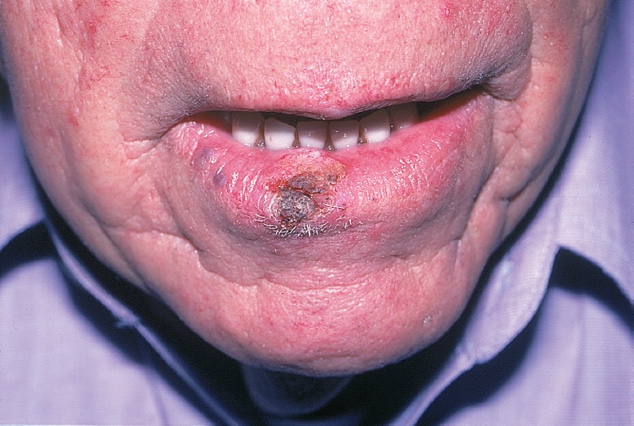
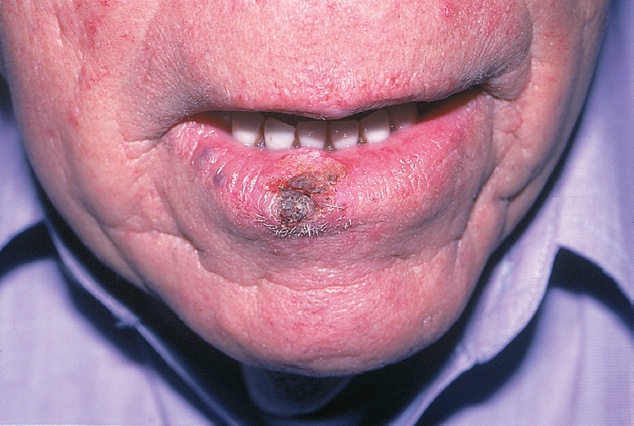
    • The lesions are usually red, poorly defined plaques or nodules with an ulcerated friable surface
  • Bowen disease, or SCC in situ:
    • Is characterized by a rapidly growing, well-demarcated ulcerating tumor:
      • In a pre-existing scaly, erythematous plaque:
        • Up to 5% of Bowen disease may become invasive
  • SCC has a higher metastatic potential than BCC:
    • With an overall 5-year recurrence and metastatic risk of:
      • 8% and 5%, respectively:
        • However, many factors affect the metastatic potential of any given tumor, and there are subgroups with higher risk
    • Regional lymph nodes:
      • Are the most common metastatic site, with distant sites such as bone, brain, and lungs occasionally reported
    • For tumors of the head and neck:
      • The parotid gland is a common site for metastases
    • In general, features that indicate high risk for metastasis also predict risk for recurrence

#Arrangoiz #CancerSurgeon #SurigcalOncology #SurgicalOncology #SCC #CASO #CenterforAdvancedSurgicalOncology #SkinCancer

BASAL CELL CARCINOMA

  • BCC is the most common cancer in humans and the most common type of skin cancer
  • BCCs are believed to arise from:
    • Hair follicle cells:
      • And are therefore found almost exclusively on hair-bearing skin
  • Most lesions are found on sun-exposed mask areas of the head and neck:
    • But non–sun-exposed areas are also at risk
  • These tumors tend to grow slowly:
    • But when untreated can lead to invasion of local structures including:
      • Muscle, cartilage, and bone
    • Although the biologic behavior of BCC is characterized by:
      • Local and sometimes disfiguring invasiveness:
        • Metastasis is rare:
          • Occurring in less than 0.05% of cases
  • There are multiple histologic subtypes of BCC:
    • Subtype is predictive of its behavior
  • Less aggressive subtypes include:
    • Nodular BCC
    • Superficial BCC
    • Keratotic variant BCC
    • Infundibulocystic variant BCC
    • Fibroepithelioma of Pinkus
  • Higher-risk subtypes include:
    • Sclerosing BCC
    • Infiltrating BCC
    • Micronodular BCC
    • Morpheaform (or desmoplastic) BCC
    • Basosquamous carcinoma
  • The higher-risk subtypes:
    • Tend to have subclinical extension exceeding the visible borders of the lesion making treatment more difficult
  • Nodular BCC:
    • Is the classic lesion of this type of non-melanoma skin cancer (NMSC)
    • It appears as a pink translucent nodule with rolled edges and is often described as pearly
    • In dark-skinned individuals:
      • These tumors are often pigmented and can resemble melanoma
    • Overlying telangiectasias and ulceration are common:
      • They occur predominantly on the face
  • Superficial BCC:
    • Is a variant that is more common on the limbs and trunk, and on other areas with little or no sun exposure
    • It presents as a slow-growing, scaly pink plaque and can easily be confused with psoriasis, superficial SCC or SCC in situ (Bowen disease)
    • Gentle traction on the periphery of the lesion often demonstrates a shiny translucent surface characteristic of BCC which can assist with diagnosis
  • The sclerosing or morpheaform type:
    • Represents the rarest form of BCC and is often difficult to recognize
    • It presents as a poorly defined indurated or sclerotic plaque:
      • Which can be mistaken for a scar
    • In addition, this type of BCC frequently is found to be larger histopathologically than is clinically evident:
      • Therefore, both diagnosis and treatment remain a challenge
  • Basosquamous carcinomas:
    • Have histologic features of both BCC and SCC
    • Some of these lesions occur as a result of collision between adjacent BCC and SCC
    • These are aggressive tumors with potential to metastasize:
      • Though metastatic risk is determined by the degree of squamous component present

#Arrangoiz #CancerSurgeon #SurgicalOncologist #SkinCancer #Melanoma #BasalCellCarcinoma #CASO #CenterforAdvancedSurgicalOncology

Non Melanoma Skin Cancers

  • Basal cell carcinoma (BCC) and squamous cell carcinoma (SCC) constitute the majority of nonmelanoma skin cancers (NMSCs):
    • Which are also referred to as “keratinocyte cancer
  • Keratinocyte cancer represents:
    • About 95% of malignant skin tumors estimated at greater than 3.5 million cases annually
  • While BCC is four to five times more common than SCC:
    • The incidence of both tumor types continues to rise despite growing awareness of the risk factors for these skin cancers
  • The overall incidence increases with age and is known to be higher in men than in women
  • Development of NMSC is multifactorial and is related to:
    • Various genotypic, phenotypic, and environmental risk factors
  • Ultraviolet (UV) solar radiation:
    • Is considered to be the dominant risk factor for the development of both BCC and SCC:
      • Supported by the fact that most of these tumors tend to present on sun-exposed areas of the body
    • The development of BCC:
      • Is thought to arise from intense intermittent sun exposure leading to burns
    • Whereas the development of SCC:
      • Appears to be linked to the cumulative dose of UV solar radiation over time
    • Sun exposure earlier in life appears to be more influential in skin cancer development than that received later in life
    • Markers of UV sensitivity (e.g., fair skin, light eyes, blond or red hair) and intensity of exposure (i.e., increased incidence for individuals living in proximity to the equator):
      • Are associated with increased NMSC risk:
        • As is additional UV exposure from recreational tanning booths and UV light therapy:
          • One case-controlled study demonstrated that the use of tanning devices was associated with an estimated twofold risk for both SCC (odds ratio = 2.5) and BCC (odds ratio = 1.5)
          • Karagas et al. reported that treatment of psoriasis with oral psoralen in combination with light treatment (PUVA therapy) resulted in an increased adjusted relative risk of 8.6 for SCC while the risk for BCC was much lower
    • UV-induced mutations in the p53 tumor suppressor gene:
      • Is thought to be a common event in NMSC development
  • Another important risk factor for both BCC and SCC is immunosuppression:
    • Long-term immunosuppression therapy such as that used for solid organ transplant has been shown to increase the risk of SCC over 100-fold and for BCC about 10-fold
    • SCC in immunosuppressed patients:
      • Tend to be behave more aggressively and are associated with:
        • Greater tumor depth:
        • Higher risk of recurrence
        • More frequently associated with perineural or lymphovascular invasion
    • However, BCCs have not been found to be more aggressive in solid organ transplant recipients than the general population
    • Patients with acquired immunodeficiency syndrome also have an increased incidence of NMSC:
      • And factors such as persistent human papilloma virus (HPV) infection may act synergistically with UV exposure to increase risk:
        • Moreover, HPV infection, especially HPV 16 and 18, has been implicated in the development of anogenital SCC
  • Exposure to ionizing radiation:
    • Increases the risk of NMSC threefold and often presents decades after initial exposure
    • This risk has been shown to be dose dependent
  • Chemical exposures:
    • Such as arsenic, tar, soot, tobacco, asphalt, and mineral oil:
      • Have all been associated with an increased risk of SCC
  • SCC can also arise from areas of chronic inflammation and healing:
    • Such as from scars, burn sites, or ulcers:
      • This type of SCC is also known as a Marjolin ulcer
  • Patients with genetic syndromes including:
    • Xeroderma pigmentosum, albinism, Muir–Torre syndrome, dystrophic epidermolysis bullosa, Fanconi anemia, Werner syndrome, nevoid basal cell syndrome, and Li–Fraumeni syndrome:
      • Have an increased incidence of NMSC
    • Xeroderma pigmentosum:
      • Is a rare autosomal recessive disease characterized by:
        • Photophobia
        • Severe sun sensitivity
        • Advanced sun damage
      • Affected individuals have defective DNA excision repair:
        • When exposed to UV radiation:
          • Develop malignancies of the skin and eyes:
            • At a rate 1,000 times that of the general population
      • Aggressive sun protection:
        • In the form of full-body sun suits and regular skin examinations are critical for patients with xeroderma pigmentosum
      • Ideally, these patients should only go outside at night
    • Nevoid basal cell syndrome:
      • Is an autosomal dominant disorder characterized by the development of multiple BCCs
      • BCCs in patients with nevoid basal cell syndrome:
        • Are often quite small but can number in the hundreds on any given skin surface
      • The sonic hedgehog signaling pathway (PTCH1 gene, chromosome 9q) has been recognized as having a significant etiologic role in nevoid BCC syndrome, and is also present in 90% of sporadic BCC
      • These patients are exquisitely sensitive to radiation:
        • Should avoid excessive sun exposure and radiation therapy
      • Regular follow-up is important, as such tumors are difficult to monitor and treat
  • Similar to other tumor types, a previous diagnosis of cutaneous carcinoma increases the risk of future NMSCs to as high as:
    • 35% at 3 years and 50% at 5 years
  • DIFFERENTIAL DIAGNOSIS
    • Several epidermal tumors common to the skin can resemble or are precursors to NMSC:
      • Recognition of these tumors is important for both tumor surveillance and cancer prevention
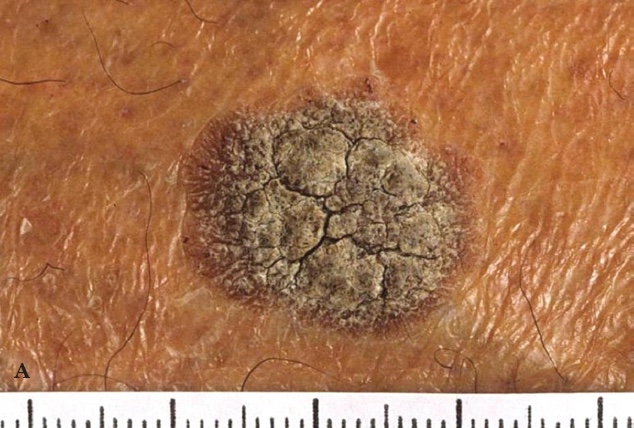
    • Seborrheic keratoses:
      • Are benign proliferations of epidermis that can appear on any part of the skin:
        • Except mucous membranes:
          • Usually appear after the age of 30 years
      • They are not related to sun exposure:
        • But are common on the face, neck, and trunk:
          • Often in large numbers
      • They initially appear as:
        • Flat brown macules:
          • Eventually becoming larger, “stuck-on” brown plaques with dull crumbly surfaces
      • Seborrheic keratoses can sometimes be confused with melanoma:
        • Biopsy of these lesions is prudent if any sudden changes in size or color occur
  • Actinic keratoses (AKs):
      • Are premalignant lesions:
        • With the potential to develop into SCCs
      • They are found mainly on sun-exposed areas
      • These lesions most commonly present as:
        • Skin-colored, erythematous, or brown ill-defined patches with adherent scales
      • These lesions are extremely common on the:
        • Face, scalp, ears, and lips and can often be better appreciated by palpation rather than by inspection with the naked eye
  • Keratoacanthoma:
    • Is a tumor that often occurs on older, sun-damaged skin:
      • Is most commonly found on the:
        • Neck and face
      • These tumors originate in:
        • The pilosebaceous glands:
          • May grow rapidly as a red- or skin-colored dome-shaped nodule with a central crater:
            • Maximum size may be attained at 6 to 8 weeks with slow regression over a period of months leaving a residual scar
    • These tumors can be confused both clinically and histologically with SCC:
      • There are reports of progression of keratoacanthomas to invasive or metastatic carcinoma
    • Classification of these tumors as a:
      • Well-differentiated variant of invasive SCC has been proposed
    • Surgical excision of keratoacanthomas with 3- to 5-mm margins is recommended, and Mohs surgery may be employed in cosmetically sensitive areas
    • These tumors are radiation sensitive if surgery is not an option
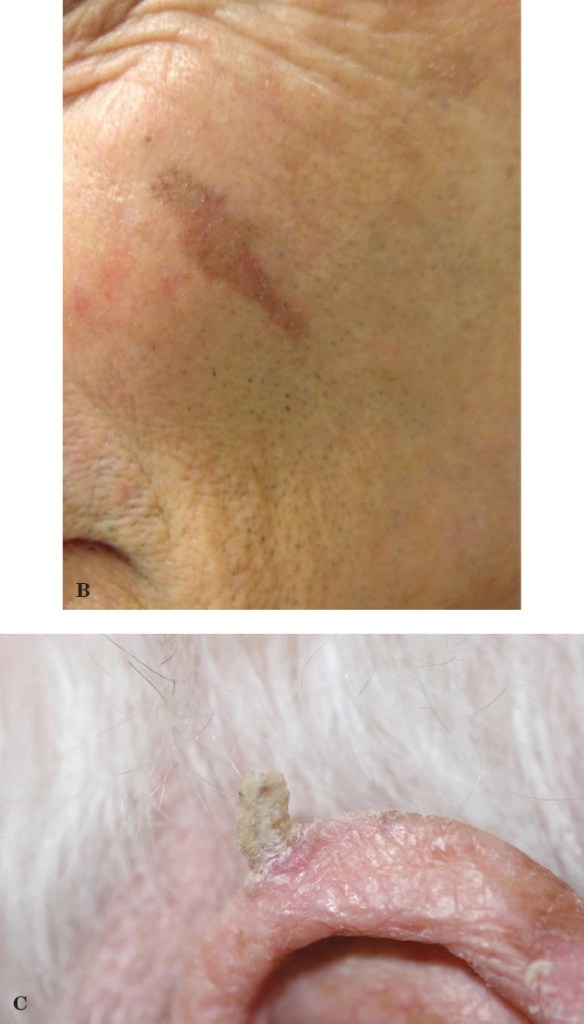
  • A cutaneous horn:
    • Is the clinical description for a growth that appears as a dense cone of epithelium resembling a horn
    • They range in size from several millimeters to over a centimeter and are generally white or yellowish in color
    • They also tend to appear on sun-exposed skin of older individuals
    • Histologically, cutaneous horns can develop from:
      • Benign lesions such as:
        • Warts
        • Seborrheic keratoses
      • Premalignant lesions such as:
        • AKs
        • SCCs in situ
      • Malignant lesions such as:
        • SCCs
    • Up to 15% of cutaneous horns demonstrate invasive SCCs at the base:
      • Excision of these tumors is always indicated
  • Nevus sebaceous:
    • Is a benign tumor of the scalp:
      • That appears at or soon after birth as a yellowish-orange, well-demarcated plaque
    • Initially, the surface has a:
      • Smooth or waxy appearance that gradually becomes more warty or verrucous during puberty
    • In adulthood, approximately 10% of these lesions develop into BCC:
      • It is therefore recommended that these lesions be excised or closely monitored for the life of the patient.

#Arrangoiz #CanerSurgeon #SurgicalOncologist #HeadandNeckSurgeon #CASO #CenterforAdvancedSurgicalOncology #BCC #SCC SkinCancer #FightAgainsttheSun
Standard treatment options for iodine-resistant thyroid cancer

👉Standard treatment options for iodine-resistant thyroid cancer include the following:

  1. Thyroid-suppression therapy.
  2. Targeted therapy.
  3. Surgery.
  4. External-beam radiation therapy (EBRT).
👉Thyroid-suppression therapy

TSH suppression with thyroxine is effective in many lesions that are not sensitive to 131I

👉Targeted therapy
Sorafenib

Sorafenib is an orally active, multityrosine kinase inhibitor. 

Evidence (sorafenib):

  • A phase III randomized, double-blind, placebo-controlled study (DECISION[NCT00984282]) evaluated the activity of sorafenib in patients with progressive, iodine-refractory differentiated thyroid cancer.
    • In the trial, 417 patients with locally advanced or metastatic RAI−refractory thyroid cancer (papillary, follicular [including Hürthle cell], and poorly differentiated, not anaplastic tumors, defined as beyond well-differentiated tumors or those well-differentiated tumors that become resistant to radioiodine treatment) whose disease had progressed within the past 14 months were randomly assigned to receive sorafenib (400 mg twice a day) or placebo.
    • Patients who received previous chemotherapy, thalidomide, or targeted therapy were excluded.
    • The median PFS in the sorafenib group was 10.8 months versus 5.8 months in the placebo group (hazard ratio [HR] 0.59; 95% confidence interval [CI], 0.45–0.76, P < .0001).
    • OS was not significantly improved (HR, 0.80; 95% CI, 0.54–1.19, P = .14, one-sided P-value), but the median OS had not been reached at the time of primary analysis data cutoff, and crossover was allowed.
    • Objective response rate (all partial responses) was 12.2% in the sorafenib group compared with 0.5% in the placebo group.
    • Median time-to-progression was 11.1 months in the sorafenib group compared with 5.7 months in the placebo group (HR, 0.56; 95% CI, 0.43–0.72, P < .001).
    • Adverse events occurred in 98.6% of patients treated with sorafenib and 87.6% of patients treated with placebo.
    • The most common adverse events in the sorafenib group were hand-foot skin reactions (76.3%), diarrhea (68.6%), alopecia (67.1%), and rash or desquamation (50.2%).
    • Most events were grade 1 or 2.
    • Seven squamous cell carcinomas of the skin occurred in the sorafenib group.
👉Lenvatinib

Lenvatinib is an orally active, multitargeted tyrosine kinase inhibitor.

Evidence (lenvatinib):

  • A phase III, randomized, double-blind, placebo-controlled study (SELECT[NCT01321554]) evaluated the activity of lenvatinib in patients with progressive, iodine-refractory, differentiated thyroid cancer.
  • In this trial, 261 patients were randomly assigned to receive lenvatinib (24 mg every day), and 131 patients were randomly assigned to receive placebo.
  • Eligible patients had differentiated thyroid cancer (including papillary, follicular, poorly differentiated, and Hürthle cell carcinomas), RAI-refractory disease, and evidence of radiological progression within the previous 13 months.
  • At disease progression, patients in the placebo group could receive open-label lenvatinib.
    • The primary endpoint was PFS, and secondary endpoints were OS, response rate, and safety.
    • The median PFS in the lenvatinib group was 18.3 months versus 3.6 months in the placebo group (HRprogression or death, 0.21; 99% CI, 0.14–0.31; P < .001).
    • A PFS difference was observed in patients with all histologic types of thyroid cancer enrolled in this trial.
    • There was no significant difference in OS between the two groups (HR death, 0.73; 95% CI, 0.50–1.07; P = .10), even with the crossover design of the study.
    • Objective response rate was 64.8% in the lenvatinib group versus 1.5% in the placebo group (odds ratio [OR], 28.87; 95% CI, 12.46–66.86; P < .001).
    • Treatment-related adverse events (all grades) occurred in 97.3% of patients in the lenvatinib group and 59.5% of patients in the placebo group.
      • Grade 3 or higher adverse events were observed in 75.9% of patients receiving lenvatinib and 9.9% of patients receiving placebo.
      • The most common adverse events in the lenvatinib group were hypertension (67.8%), diarrhea (59.4%), fatigue (59%), decreased appetite (50.2%), decreased weight (46.4%), and nausea (41%).
      • Discontinuation of the study drug because of adverse events occurred in 14.2% of patients receiving lenvatinib and 2.3% of patients receiving placebo.
      • In the lenvatinib group, 6 of 20 deaths occurring during the treatment period were considered drug related.
👉Surgery

Resection of limited metastases, especially symptomatic metastases, should be considered when the tumor has no uptake of 131I

👉EBRT

EBRT is considered for patients with localized lesions that are unresponsive to 131I

👉Treatment options under clinical evaluation for metastatic papillary and follicular thyroid cancer

👉Patients unresponsive to 131I should also be considered candidates for clinical trials testing new approaches to this disease.

  • Chemotherapy has been reported to produce occasional complete responses of long duration.
  • Clinical trials evaluating new treatment approaches to this disease should be considered for patients with radioiodine-refractory papillary or follicular thyroid cancer.
  • Oral inhibitors targeting specific activating point mutations are under clinical evaluation, as are new immunotherapy approaches.

#Arrangoiz #ThyroidSurgeon #ThyroidExpert #CancerSurgeon #ThyroidCancer #PapillaryThyroidCancer #PTC #CASO #CenterforAdvancedSurgicalOncology

Basal cell carcinoma (BCC)

A. BCC is the most common cancer in the United States.

  1. It is estimated that BCCs occur in 2 million Americans annually:
  • This exceeds the incidence of all other cancers combined.
  1. Due to its prevalence, treatment of non-melanoma skin cancer (NMSC) in the United States costs Medicare more than $400 million per year.
  2. Furthermore, the incidence of this common malignancy is rising rapidly.
  3. BCCs are at least 2 times more common than squamous cell carcinomas (SCCs):
  • The second most common type of skin cancer.
  1. Although rarely metastatic, BCC can produce substantial local destruction along with disfigurement and may involve extensive areas of soft tissue, cartilage, and bone.
  2. Fortunately BCCs generally have a good prognosis due to low rates of metastasis.

#Arrangoiz #CancerSurgeon #HeadandNeckSurgeon #CASO #CenterforAdvancedSurgicalOncology

When Treating Thyroid Cancer, Less May Be More

👉In the past, a thyroid cancer diagnosis all but guaranteed a patient would have their thyroid gland removed (total thyroidectomy). But newer guidelines have called for a less radical, more personalized standard of card

👉There has been a big shift in the pendulum in the way thyroid cancer is managed, especially since 2015

👉While thyroid removal, or a total thyroidectomy, is still the primary treatment for some thyroid cancers, that’s no longer the case for every patient

👉Today patients with low-risk thyroid cancers (up to 4 cm thyroid tumors) may only need to have half of their thyroid gland removed, known as a partial thyroidectomy or hemithyroidectomy.

👉Some patients with very small nodules or so-called micro cancers (less than 1 cm), might even be candidates for active surveillance or watchful waiting

👉This shift in treatment is reflective of how experts see thyroid cancer treatment in 2021: Not every patient is the same, and sometimes less treatment is more

👉The de-escalation of treatment means an individualized approach to treatment, which means not everybody needs the whole thyroid out, and not everybody needs radioactive iodine

👉Radioactive iodine is a common follow-up treatment after surgery for thyroid cancer

👉The thyroid is a butterfly-shaped gland in the neck that makes thyroid hormones. These hormones play a key role in managing essential functions like helping the body use energy, regulate metabolism, and maintain the right temperature

👉Patients who have their entire thyroid gland removed have to take synthetic thyroid hormone medications for the rest of their lives. And though thyroid surgery is generally considered safe, there are still risks.

👉Surgery could damage a patient’s nerve supplying the vocal cords or parathyroid glands and lead to long-term side effects. There’s also the potential for severe bleeding in the immediate hours after the procedure.

👈Surgery to remove just part of the thyroid poses fewer risks. The majority of patients who retain half of their thyroid also don’t need to take thyroid medications or may need only low dose thyroid medication for thyroid cancer treatment. And many of those who do need medication may eventually be able to stop taking the drugs as the remaining part of their thyroid gland eventually regains function.

👉The decision to remove all or half of a patient’s thyroid is highly individualized. The size and location of the cancer (including the presence of other thyroid nodules in the contralateral lobe) and the risk for recurrence are the most important factors, but a patient’s age and personal preferences can also come into play

👉It’s important to discuss all of these considerations with your surgeon and a multidisciplinary care team with experience treating thyroid cancers

👉Head and Neck Surgeons are not just technicians: You want them to be good at removing the thyroid and understanding the nuances of this cancer.

👉 You want someone who has a lot of experience and works as part of a multidisciplinary team, so they can make adjustments as necessary

👉Survival of most thyroid cancers is in excess of 90%

👉Weighing the risks and benefits of different treatment approaches isn’t always easy, of course. But consulting with a panel of dedicated thyroid cancer specialists gives you the chance to explore your options fully—and feel confident that your treatment path will likely be successful

At Center for Advanced Surgical Oncology, we look forward to providing an individualized and evidence-based approach in thyroid cancer care

#Arrangoiz #ThyroidSurgeon #ThyroidExpert #ThyroidCancer #HeadandNeckSurgeon #CancerSurgeon #MultidisciplinaryTeam #CASO #CenterforAdvancedSurgicalOncology

Papillary Thyroid Cancer (PTC) Introduction

  • Papillary thyroid cancer (PTC) tends to have an indolent clinical course with low morbidity and mortality. Nevertheless, this entity has a broad range of biologic and clinical behavior that can result in disease recurrence and death, depending on patient and tumor characteristics and the initial management approach.
  • PTC is the most common form of well-differentiated thyroid cancer (WDTC) and based on the most recent statistics, accounts for approximately 89.4% of all thyroid malignancies, and is the predominant histology observed in patients exposed to radiation.
  • The average age of diagnosis of PTC is between 30 and 40 yearswomen are affected more frequently than men at a 2:1 ratio.
  • PTC appears as an irregular solid or cystic nodule in a normal thyroid parenchyma.
  • Notwithstanding its well-differentiated characteristics, PTC may be blatantly or minimally invasive. In fact, these tumors may spread easily to other organs.
  • PTC has the propensity for lymphatic invasion but it is less likely to have hematogenous spread. 
  • Roughly 11% of patients with PTC present with distant metastases outside the neck and mediastinum.
  • In the past, regional lymph node metastases were thought to be aberrant (supernumerary) thyroids because they contained well-differentiated PTC, but occult regional lymph node metastases are now known to be a very common finding in patients with PTC.

#Arrangoiz #CancerSurgeon #ThyroidSurgeon #HeadandNeckSurgeon #SurgicalOncologist #ThyroidCancer #PapillaryThyroidCancer #PTC #CASO #CenterforAdvancedSurgicalOncology