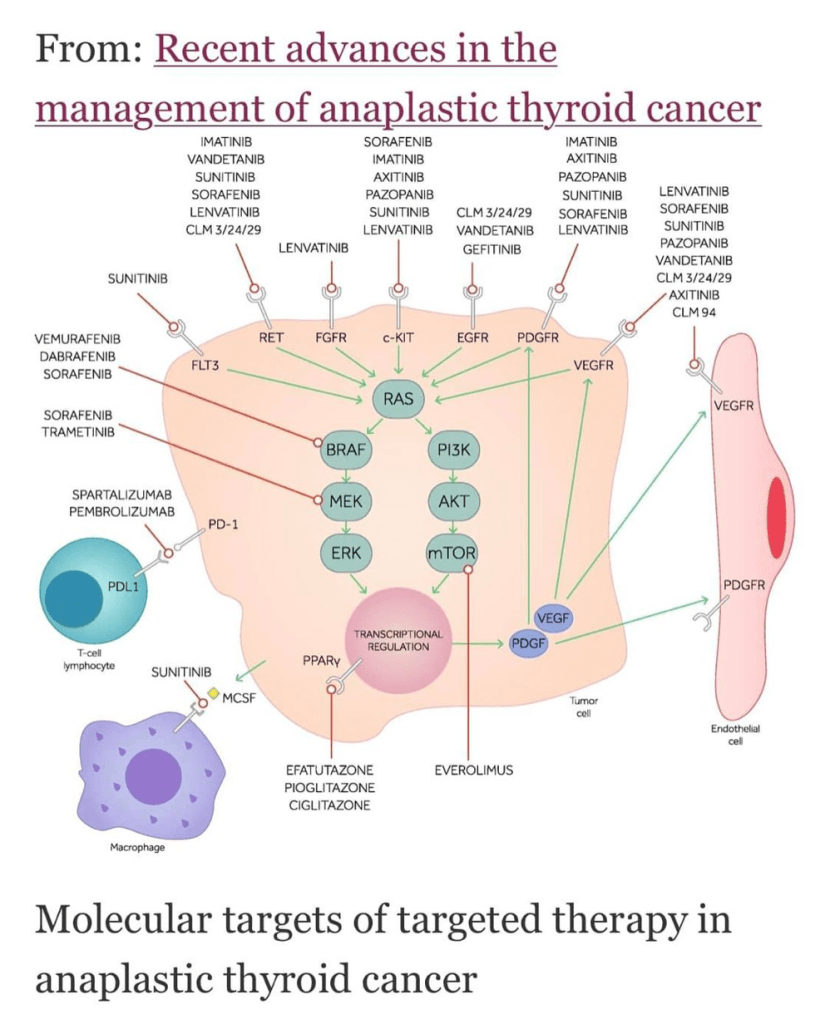
Key Steps in the Management of Anaplastic Thyroid Cancer

  • Rapidly and definitively establish the diagnosis:
    • Because ATC is a highly dedifferentiated cancer that retains few characteristics of noncancerous thyroid cells, attaining a definitive diagnosis can be challenging, yet critical
    • Time is also of the essence because of the very rapid growth rate of ATC and due to the importance of early intervention in minimizing catastrophic airway compromise
    • Differential considerations / mimics can include:
      • Primary thyroid lymphoma
      • SCC of the head and neck
      • Metastatic cancer:
        • Especially from lung
    • Early assessment of tumor mutations is key in expanding therapeutic options
    • Attain multidisciplinary team engagement and coordination:
      • Coordinate early multidisciplinary involvement of surgeons, radiation and medical oncologists, endocrinologists, and palliative care teams to arrive at options for best care
    • Determine extent of disease:
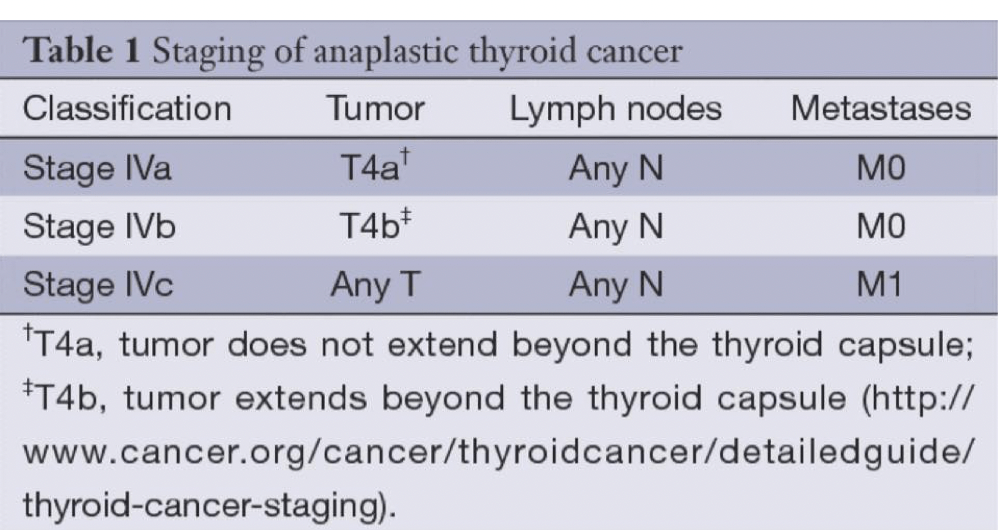
      • Staging with imaging is required to classify as stage IVA, IVB, IVC:
        • This is best done with FDG PET/CT and / or alternatively with dedicated body CT or MRI.
      • Extent of local invasion must also be evaluated in parallel to assist in surgical decision-making, and requires laryngoscopy
    • Undertake patient counseling to establish individualized patient goals of care:
      • Counseling must be provided by a team / individuals skilled in the surgical, medical, and palliative management of complex thyroid malignancies in which trade-offs counterbalancing risks and benefits with goals of care are completely discussed
      • This counseling should best involve not only the patient but also involve supportive individuals / family members
    • Evaluate Surgical Options:
      • The primary goals in stages IVA and IVB ATC patients within an aggressive approach to their care are:
        • Complete resection and prompt transition to adjuvant definitive-intention therapy:
          • As long-term survival may be attainable
        • Thus, surgical procedures should not generate a wound or result in complications:
          • That would prevent chemotherapy and radiation onset due to the risk of wound breakdown given the lack of data supporting an association between increased extent of surgery and improved survival outcomes
      • In IVC ATC, the limited benefit resulting from surgery must be carefully tempered in consideration of other available palliative approaches, including:
        • Radiation and systemic therapy
    • Surgical decision-making:
      • Rapidly assess resectability:
        • Determining tumor invasion of the larynx, trachea, esophagus, and status of the major vessels of the neck
      • Consider the need for tracheotomy, extent of thyroidectomy, neck dissection, and the need to avoid laryngectomy, esophageal resection, and major vessel reconstruction
      • Balancing morbidity from surgery with expected benefits within the context of patient-anticipated prognosis and individualized goals of care is paramount
      • Considerations:
        • Performance score / status.
        • Presence of distant metastasis
        • Extent of local invasion of trachea and esophagus
        • Need for urgent tracheostomy, understanding that placement of a tracheostomy results in immediate improvement in upper airway obstruction but requires significant education for care and understanding that tumor location and growth may make management of the tracheotomy complex.
        • Patient goals of care and willingness to accept anticipated morbidity of planned surgery
    • Nonsurgical management decision-making:
      • Other than surgery, options may include postoperative or primary chemoradiation versus palliative radiotherapy, systemic therapy, or best supportive care considered within the context of:
        • Patient goals of care and willingness to accept anticipated toxicities of presented options.
        • Patient performance status and comorbidities and their impacts on feasibility of planned care.
        • Trade-offs from one approach to care versus alternatives
        • Keep hospice / end-of-life care discussions in the foreground
        • Given the historically dire prognosis of ATC, especially if stage IVC, hospice should always be presented among care options:
          • Truth telling and realistic presentation of anticipated prognosis are critical in allowing sound patient decisions within their individual goals of care
          • For some patients, hospice may be preferable—even from the outset—in comparison with other alternative care options

#Arrangoiz #ThyroidSurgeon #CancerSurgeon #ThyroidExpert #HeadandNeckSurgeon #SurgicalOncologist #ThyroidCancer #ThyroidNodules #AnaplasticThyroidCancer #ATC #Miami #Mexico
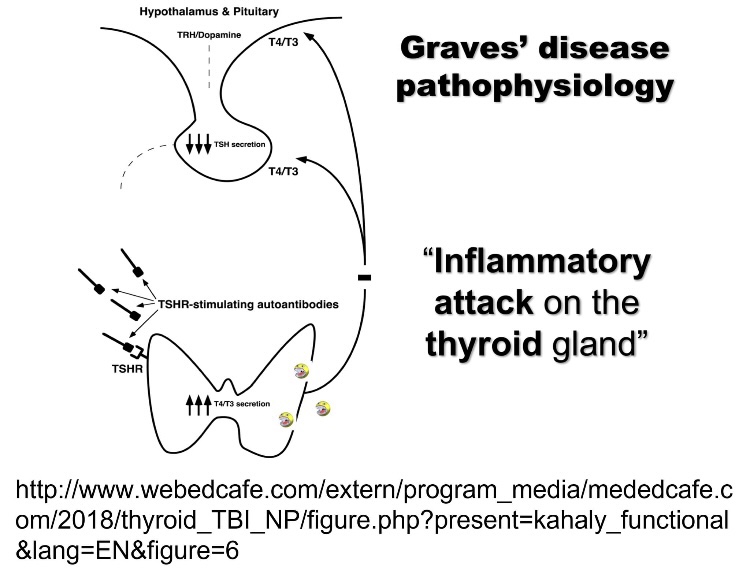
Graves Disease

In Graves’ disease, thyroid-stimulating antibodies are produced, causing overproduction of thyroid hormones, leading to hyperthyroidism. A blood test to check for these antibodies helps diagnose Graves’ disease.

New Management Option for RET Positive Thyroid Cancer

  • Efficacy for medullary thyroid cancer (MTC):
    • Was evaluated in 55 adult and pediatric (older than 12 years) patients with advanced or metastatic RET-mutant MTC:
      • Who had previously been treated with cabozantinib, vandetanib, or both:
        • The ORR was 69%
    • In addition, the drug was evaluated in 88 patients with advanced or metastatic RET-mutant MTC:
      • Who had not received prior treatment with cabozantinib or vandetanib:
        • The ORR for these patients was 73%
    • The trial also enrolled 19 patients with RET-positive thyroid cancer whose condition was refractory to radioactive iodine (RAI) treatment and who had received another prior systemic treatment:
      • The ORR was 79%
    • Eight patients had received only RAI:
      • The ORR for these patients was 100%
  • In all the cases of thyroid cancer:
    • Among the patients who responded to treatment:
      • The response lasted longer than 6 months
  • RET alterations account for the majority of medullary thyroid cancers and a meaningful percentage of other thyroid cancers
  • fact sheet from the company notes that RET mutations are found:
    • In about 60% of sporadic MTC cases
    • In over 90% of familial MTC cases
    • RET fusions are found in approximately 10% to 20% of papillary thyroid cancers
  • The approval of selpercatinib means they now have a treatment option that selectively and potently inhibits RET
  • In the LIBRETTO-001 trial:
    • The rate of discontinuations because of adverse reactions (ARs) was 5%
    • The most common ARs, including laboratory abnormalities (≥ 25%), were:
      • Increased aspartate aminotransferase level
      • Increased alanine aminotransferase level
      • Increased glucose level
      • Decreased leukocyte count
      • Decreased albumin level
      • Decreased calcium level
      • Dry mouth
      • Diarrhea
      • Increased creatinine level
      • Increased alkaline phosphatase level
      • Hypertension
      • Fatigue
      • Edema
      • Decreased platelet count
      • Increased total cholesterol level
      • Rash
      • Decreased sodium levels
      • Constipation
    • The most frequent serious AR (≥ 2%) was:
      • Pneumonia
  • The FDA warned that selpercatinib can cause:
    • Hepatotoxicity, elevation in blood pressure, QT prolongation, bleeding, and allergic reactions
    • It may also be toxic to a fetus or newborn baby so should not be taken by pregnant or breastfeeding women
  • The drug is currently being assessed in two phase 3 confirmatory trials:
    • LIBRETTO-531 involves treatment-naive patients with RET-positive MTC.

Anaplastic Thyroid Carcinoma

  • ATA Guidelines in Anaplastic Thyroid Carcinoma:
    • Work-up:
      • Immediate diagnosis is essential
      • The biopsy should undergo molecular evaluation:
        • Including:
          • BRAF V600E mutation
      • Airway assessment is paramount
      • Staging including anatomic imaging (head to toe)
    • Role of surgery:
      • Only 10% of patients present with local disease that is resectable
      • Local disease:
        • Compete resection is standard
      • Neoadjuvant therapy (targeted therapy) followed by surgery when feasible:
        • Local regional disease that is borderline resectable or un-resectable with actionable mutations:
          • BRAF V600E mutation, ALK fusions, TRK fusion
          • CHEK point inhibitors
      • Palliative resection (rare indication)
      • Open biopsy for diagnosis:
        • When FNA or core needle biopsy is undetermined
    • Advance local disease:
      • Indication for tracheostomy:
        • First we must have an educated discussion with the patient:
          • Discuss prognosis
          • Concerns
          • Airway signs and symptoms
          • Wishes

#Arrangoiz #ThyroidSurgeon #ThyroidExpert #ThyroidCancer #AnaplasticThyroidCancer #EndocrineSurgery #HeadandNeckSurgery #CancerSurgeon #SurgicalOncology

Rodrigo Arrangóiz

  • My name is Rodrigo Arrangoiz I went to medical school at the Anahuac University in Mexico City, which is one of the most prestigious medical schools in Mexico:
    • I graduated Suma Cum Laude from this medical school and was the president of the medical student council
  • My general surgery training was performed at Michigan State University:
    • Where I was named chief residentduring my fifth year of residency which was a great honor
  • My complex surgical oncology fellowship which included  head and neck training was performed at the Fox Chase Cancer Center in Philadelphia, Pennsylvania
  • At the same time, I undertook a Masters in Science (Clinical Research for Health Care Professionals) at Drexel University in Philadelphia, Pennsylvania
  • I performed a two-year global online fellowship in Head and Neck Surgery and Oncology with the International Federations of Head and Neck Societies / Memorial Sloan Kettering Cancer Center
  • I encountered patients with very complex problems, and the greatest lesson I learned was there are always treatment options, utilizing all different types of techniques including radiation, chemotherapy and surgery:
    • This comprehensive training has provided me with an extensive understanding of the multidisciplinary approach to treating patients with cancer
  • I have developed a particularly strong interest in the surgical and multimodal treatment of patients with breast cancer, head and neck cancer (including thyroid and parathyroid cancer), and endocrine diseases (benign and malignant thyroid and parathyroid diseases), using traditional surgery, regional therapies, and minimally invasive techniques
  • I am an expert in the treatment of thyroid cancer including; active surveillance for early, small papillary thyroid cancers, minimally invasive thyroid surgery, selective and comprehensive neck dissections
  • For the management of parathyroid disease, I offer a minimally invasive radio-guided technique called MIRP (minimally invasive radio-guided parathyroidectomy) through a 2 cm incision which will allow the patient to have a great cosmetic result and quick return to normal life after the operation
  • I am extremely aware of the impact that a breast cancer diagnosis has on a patient:
    • I do my best to promote a positive atmosphere in which to start my patients’ course of treatment and take the time to explain the pros and cons of each treatment option, so that they can make an informed decision
  • My management philosophy also includes, not just an emphasis on successful treatment, but also preserving a good cosmetic outcome:
    • I feel fortunate to be a fellowship trained, very highly specialized clinician, because this combination of factors allows me, and our treatment team to focus on one thing all day, every day, and do it well:
      • Curing cancer:
        • I think there is nothing more rewarding that I could do as a clinician
  • I hold my patients as my number one priority:
    • I will spend as much time as necessary educating, answering questions and providing guidance for each individual patient to help them throughout each stage of their management
    • I believe in honest discussions, where both the patients and family’s goals and expectations are openly communicated
    • We will work together as a team to put together an evidence based personalized treatment plan
    • My personal goal is to treat and care for every patient with the same compassion and honesty as if they were a friend or family member

Low-Risk Papillary Thyroid Cancer

  • Current therapeutic options for low-risk papillary thyroid carcinoma:
  • Most cases of thyroid carcinoma are classified as low risk:
    • These lesions can be treated with surgery, active surveillance, and percutaneous ablation:
      • However, there is lack of consensus and clear indications for a specific treatment selection
  • The objective of this study is to review the literature regarding the indications for management selection for low-risk carcinomas:
    • Systematic review exploring inclusion and exclusion criteria used to select patients with low-risk carcinomas for treatment approaches
      • The search found 69 studies
  • The inclusion criteria most reported were nodule diameter and histopathological confirmation of the tumor type
  • The most common exclusions were lymph node metastasis and extra-thyroidal extension
  • There was significant heterogeneity among inclusion and exclusion criteria according to the analyzed therapeutic approach
  • Alternative therapeutic approaches in low-risk carcinomas can be cautiously considered
  • Thyroidectomy remains the standard treatment against which all other approaches must be compared

#Arrangoiz #ThyroidSurgeon #ThyroidExpert #EndocrineSurgery #HeadandNeckSurgery #SurgicalOncology #ThyroidCancer #PapillaryThyroidCancer #LowRiskThyroidCancer #Miami #Mexico

Anaplastic Thyroid Carcinoma

  • Anaplastic thyroid cancer is the least common type of thyroid cancer:
    • Roughly 1% to 2% of all thyroid malignancies
      • But represents greater than 50% of all thyroid-cancer mortalities
    • Unlike papillary thyroid cancer, it’s very aggressive:
      • All new cases are considered Stage IV
  • Anaplastic thyroid cancer overall survival:
    • T4a:
      • 15.8 months
    • T4b:
      • 6.1 months
    • T4c:
    • 2.8 months
  • Reference:

#Arrangoiz #ThyroidSurgeon #ThyroidExpert #EndocrineSurgery #HeadandNeckSurgeon #CancerSurgeon #ThyroidCancer #AnaplasticThyroidCancer #Teacher #Miami #Mexico

A Possible Role for Serum Thyroglobulin to Predict Structural Recurrence of Papillary Thyroid Cancer After Thyroid Lobectomy

  • Papillary thyroid cancer (PTC):
    • Is the most common subtype of differentiated thyroid cancer (DTC)
  • In the 2015 DTC guidelines from the American Thyroid Association (ATA):
    • Thyroid lobectomy is recommended as a reliable therapeutic option for patients with low and intermediate risk intra-thyroidal DTC that is:
      • Less than 4 cm in size
      • No previous history of head and neck radiation
      • A strong family history of thyroid cancer
      • Ultrasound abnormalities in the contralateral lobe
  • Lobectomy has been shown to have therapeutic efficacy:
    • Similar to that of total thyroidectomy (TT) with lesser postsurgical complications
  • Serum thyroglobulin (Tg) and anti-thyroglobulin antibody (TgAb) levels:
    • Are used to monitor for persistent or recurrent disease after initial surgery:
      • But the precise postlobectomy Tg cutoffs are uncertain
  • This study, Clin Thyroidol 2021;33:497–499:
    • Aimed to evaluate the prognostic value of postlobectomy serum Tg and TgAb titers with structural recurrence of PTC
  • Methods:
    • This retrospective cohort study included patients with unilateral PTC who underwent lobectomy at a National Cancer Center in China between 2000 and 2014
    • Patients with preoperative evidence of distant metastasis, positive surgical margins, incomplete Tg or TgAb data, or serum thyrotropin (TSH) levels > 4 mIU/L during follow-up were excluded
    • Serum Tg / TgAb levels were measured semi-annually for the first 5 years and annually thereafter
    • TgAb titer positivity was defined as greater 60 IU/ml:
      • From which the cohort was stratified into TgAb-positive and TgAb-negative groups
    • The first, penultimate, and last Tg/TgAb levels were defined as those:
      • Measured in the initial period (6 to 12 months) after lobectomy, penultimate, and last follow-up, respectively
    • The primary end point was structural recurrence
    • The predictive classifier of recurrence was based on random forest analysis
    • Tg cutoff values were determined with receiver operating characteristic (ROC) curves
    • Recurrence-free survival (RFS) rates were analyzed with Kaplan–Meier curves and Cox proportional-hazards modeling was performed to examine the relationship between RFS and clinicopathologic variables
  • Results:
    • Of 1451 patients enrolled:
      • 66 of 1050 (6.3%) in the TgAb-negative group and 26 of 401 (6.5%) in the TgAb-positive group:
        • Developed recurrence over a median follow-up of 72 months
    • In the TgAb-negative group:
      • According to the classifier:
        • The last Tg level
        • The difference between the last and penultimate Tg levels
        • The proportion of the last to the penultimate Tg:
          • Had the best predictive values
      • The optimal cutoff values of the first and last Tg levels were determined to be:
        • 5.3 ng/ml and 11.0 ng/ml, respectively, by ROC analysis
      • Patients whose last Tg levels were ≥ 11 ng/ml:
        • Had higher recurrence rates than those with levels < 11 ng/ml:
          • 23.5% vs. 4.4%:
            • P<0.001
      • The overall trend in serum Tg was relatively stable and rose sharply before recurrence but decreased in those without recurrence
      • Patients with elevated first Tg levels (≥ 5.3 mg/ml):
        • Had worse RFS in both the low-risk and the intermediate-to high-risk subgroups (P<0.05 for both)
      • A multivariate analysis including gender, age, primary tumor size, gross extra-thyroidal extension, N stage and elevated first Tg levels indicated that:
        • Patients with elevated first Tg levels had double the risk of recurrence compared with those with normal first Tg levels:
          • Hazard ratio, 2.052, 95% CI, 1.231–3.421; P = 0.006
    • In the TgAb-positive group:
      • There was no significant difference between first TgAb and last TgAb levels in patients with or without recurrence
      • The established classifier of serum TgAb:
        • Did not show a favorable association with recurrence (AUC, 0.72; 95% CI, 0.53–0.91)
  • Conclusions:
    • Serum Tg has a predictive value for surveillance in patients with PTC after lobectomy
    • The proposed adverse threshold values of the:
      • Initial Tg levels in the first 6 to 12 months after lobectomy (greater than 5.3 ng/ml) and of the last Tg levels available in this cohort (greater than 11.0 ng/ml over a median of 72 months of follow-up):
        • Could identify patients at a higher risk of recurrence, despite the presence of an intact residual thyroid lobe
  • The expected reference range of serum Tg:
    • Arising from a normal, fully intact thyroid gland is:
      • 20 to 60 ng/ml
  • The predictive value of serum Tg levels for the recurrence of PTC after thyroid lobectomy has been uncertain
  • A retrospective cohort study by Ritter et al:
    • Showed that basal or trend of serum Tg levels during follow up of the patients did not predict disease recurrence
  • A historical cohort study by Park et al:
    • Also showed limited value of serial Tg measurements in predicting the recurrence of PTC after lobectomy, as serum Tg and Tg:TSH ratios:
      • Were found to be gradually increasing in both the groups with and those without disease recurrence
  • However, other studies have shown that Tg values increasing over time:
    • Is significantly more likely in patients with disease recurrence
  • A review paper that was cited in the 2015 ATA DTC guidelines:
    • Suggested that after thyroid lobectomy:
      • A stable, non-stimulated Tg cutoff value of less than 30 ng/ml:
        • Is a reasonable indicator for excellent response
      • Whereas non-stimulated Tg values greater than 30 ng/ml, an upward Tg trend over time, or increasing serum TgAb levels:
        • Would signify a biochemical incomplete response
  • This study by Xu et al., Clin Thyroidol 2021;33:497–499:
    • Using a large sample size, an innovative approach (random forest, machine earning), and adjustment of confounders found that:
      • Serum Tg levels, but not TgAb, was a significant predictor of structural disease recurrence in patients who have undergone thyroid lobectomy for PTC
    • The optimal adverse cutoff values of the first Tg and last Tg values were determined to be:
      • 5.3 ng/ml and 11.0 ng/ml, respectively
    • The overall trend in serum Tg levels sharply increased before disease recur-rence:
      • But it decreased in patients without recurrence
    • Limitations of the study include different intervals between serial Tg and TgAb measurements, as well as nonadjusted TSH influences on Tg levels when patients with normal-range TSH levels (<4 mIU/L) were included
    • The findings of this study are useful in clinical practice:
      • As they increase our confidence that serum Tg data, including their absolute values and trends, can guide us in identifying patients at high risk for DTC recurrence after thyroid lobectomy
    • Larger population studies are needed to further clarify our insight on this emerging topic, particularly as a more conservative surgical approach toward low- and some intermediate-risk DTCs is being adopted

#Arrangoiz #ThyroidSurgeon #ThyroidExpert #ThyroidCancer #Thyroglobulin #HeadandNeckSurgeon #Surgeon #Teacher #Miami #Mexico #SurgicalOncology

Glandular Polymastia

  • Glandular polymastia, or accessory breast tissue:
    • Is defined as an isolated parenchymal mass:
      • Without a nipple-areolar complex
    • The tissue is present:
      • From birth
    • Usually becomes symptomatic under the influence of hormones during:
      • Puberty
      • Pregnancy
      • Lactation
    • This condition occurs in 2% to 6% of women and 1% to 3% of men
    • Common symptoms are:
      • Swelling
      • Discomfort
      • Restricted movement
      • Cosmetic deformity
    • Symptoms usually vary with:
      • The menstrual cycle
    • Ultrasound is the most useful method of diagnosis:
      • Demonstrating normal appearing mammary tissue
    • Mammography:
      • Often cannot fully visualize the area
      • Cannot differentiate between:
        • Mammary tissue and lipoma or lipodystrophy
    • Ectopic mammary tissue:
      • Is at the same risk for both:
        • Benign (i.e., mastitis, fibroadenoma, hamartoma) and malignant changes as orthotopic breast tissue
    • Carcinoma can develop in accessory breast tissue:
      • Accounting for 0.3% of all breast cancers:
        • For this reason, accessory breast tissue should be included in regular screening examinations
    • American College of Radiology guidelines state that additional views may be required to visualize breast tissue more effectively:
      • Axillary breast tissue falls under that screening recommendation
  • References:
    • Patel PP, Ibrahim AMS, Zhang J, Nguyen JT, Lin SJ, Lee BT. Accessory breast tissue. Eplasty. 2012;12:ic5.
    • Kogut M, Bidier M, Enk A, Hassel JC. Axillary accessory breast tissue – case report and review of literature. J Dtsch Dermatol Ges. 2014:12;499-500.

#Arrangoiz #BreastSurgeon #CancerSurgeon #SurgicalOncologist #Polymastia #AccessoryBreastTissue #Miami #Mexico

Minimal Extrathyroidal Extension Does Not Predict Initial Treatment Response, but Is a Better Prognostic Factor when Combined with Tumor S

  • Background:
    • Minimal extrathyroidal extension (ETE):
      • Was recently removed from the TNM cancer staging system of the American Joint Committee on Cancer (AJCC):
        • Leaving only gross extra-thyroidal extension as part of the tumor staging:
          • This was done because only gross ETE impacts mortality, which is the primary focus of the TNM cancer staging system
    • Despite this change, minimal ETE remains clinically relevant:
      • As it is part of the 2015 American Thyroid Association (ATA) guidelines for thyroid nodules and thyroid cancer:
        • Minimal ETE:
          • Is associated with an intermediate risk for recurrence of papillary thyroid carcinoma (PTC)
          • Has been shown to be an independent risk factor for its recurrence
    • The decision to treat patients with radioactive iodine (RAI) ablation following thyroid surgery:
    • Is primarily based on the person’s risk of future disease recurrence:
      • The current ATA guidelines for differentiated thyroid cancer generally recommend RAI ablation in patients with:
        • Minimal ETE because of the associated risk of recurrent disease:
          • Despite having no impact on disease-related mortality
    • This study, Clin Thyroidol 2021;33:493–496:
      • Was done to assess the role of minimal ETE as a predictor of initial treatment response in PTC tumors and to evaluate the impact of RAI ablation in patients with minimal ETE
  • Methods:
    • This study was an analysis of the Italian Thyroid Cancer Observatory (ITCO):
      • A web-based database started in 2013, which includes 49 thyroid cancer centers that prospectively collected data on more than 9000 patients with thyroid cancer
    • Inclusion criteria for the present study were:
      • Histologic diagnosis of PTC and associated variants
      • pN0 and pNX PTC tumors
      • Availability of all information on the initial treatment and pathologic characteristics of the tumor required for ATA recurrence risk assessment
      • Availability of the results for the 1-year follow-up visit needed to classify the treatment response
    • Of the 7746 case records available for review,:
      • 2237 subjects met all inclusion criteria and were included in this study
    • Initial treatment was classified as thyroid lobectomy or total thyroidectomy and if RAI ablation was given following total thyroidectomy
    • Tumors diagnosed as tall-cell, columnar-cell, hobnail-cell, solid / trabecular, or diffuse sclerosing PTC variants:
      • Were classified as tumors with “aggressive PTC histology.”
    • Risk of recurrence was classified based on the 2015 ATA guidelines for thyroid nodules and differentiated thyroid cancer, and response to initial treatment was classified based on imaging and serum thyroglobulin and thyroglobulin antibody levels at the 1-year follow-up visit
  • Results:
    • There were 2237 subjects included in the analysis, including:
      • 1723 (77%) females and 514 (23%) males, with a median age of 51 years
    • Total thyroidectomy was performed in 2127 (95.1%) of patients, and 110 (4.9%) underwent near-total thyroidectomy
    • Central neck dissection was performed in 457 (20.4%), and the median tumor size was 10 mm
    • The cohort included 250 (11.2%) patients who were diagnosed with histologically aggressive variants
    • Minimal ETE was documented in 470 patients (21%), and 1153 patients (51.5%) received RAI ablation, with a median dose of 70 mCi 131I
    • Per the ATA risk stratification system:
      • 1632 (73%) were classified as low risk of recurrence and 605 (27%) as intermediate risk of recurrence
    • At the 1-year follow-up:
      • 1831 patients (81.9%) had an excellent response
      • 296 (13.2%) had an indeterminate response
      • 55 (2.5%) had a biochemical incomplete response
      • 55 (2.5%) had a structural incomplete response
    • There was no difference in initial therapy response rates between patients with and without minimal ETE (P = 0.54)
    • Treatment response was then evaluated as a binary variable (either excellent or incomplete response; indeterminate response was excluded) and multivariate analysis showed:
      • No significant difference with:
        • Minimal ETE (OR, 1.16; P = 0.65)
        • Tumor size > 2 cm (OR, 1.45; P = 0.34)
        • Aggressive PTC histology (OR, 0.55; P = 0.15)
        • Age at diagnosis (OR, 0.90; P = 0.32)
    • Combinations of minimal ETE, tumor size, and aggressive histology were evaluated, and the only combination with a significant finding was:
      • Minimal ETE and tumor size (OR, 5.27, 95% CI 1.39–19.91; P = 0.014)
    • Among the 470 patients with minimal ETE:
      • 370 had received RAI ablation:
        • Subjects who received RAI were more likely to have an excellent response at the 1-year evaluation than subjects who received surgery alone:
          • 84% vs. 77%; P = 0.005
    • To minimize selection bias, propensity-score matching based on known covariates and risk factors was performed:
      • After matching, the difference between subjects was no longer significant (84% vs. 77%; P = 0.06)
  • Conclusions:
    • Minimal ETE is not an independent prognostic marker in predicting the initial response to therapy in patients with PTC who do not have lymph node metastases
    • However, the combination of minimal ETE and tumor size >2 cm:
      • Is an independent prognostic factor for worse outcomes and could be helpful in PTC patients with low to intermediate risk of recurrent disease
  • This study failed to show the clinical significance of minimal ETE in patients with PTC and negative lymph nodes:
    • Which is contradictory to previous studies that show an increased risk of disease recurrence in patients with minimal ETE
    • This brings into question the general recommendation of whether or not to treat patients with minimal ETE with RAI ablation following thyroid surgery
    • Interestingly, this study strongly showed that a combination of minimal ETE and tumor > 2 cm:
      • Had a significant impact on disease status at 1-year follow-up, with an odds ratio of 5.27
    • ETE is a key surgical pathology finding, as it has been shown to be an independent risk factor for PTC recurrence
    • Gross ETE has a more pronounced impact on recurrence:
      • Yet minimal ETE also impacts recurrence
    • Because of this, some authorities recommend that patients with minimal ETE undergo RAI ablation following total thyroidectomy
    • Although this study suggests that patients with minimal ETE without lymph node metastasis may not benefit from RAI:
      • There was a trend toward benefit after propensity-score matching with a P value of 0.06:
        • Further studies with longer follow-up are needed
    • Given these findings, I would certainly continue to generally advocate for RAI ablation in patients with minimal ETE and a tumor size >2 cm:
      • But for patients with tumors less than 2 cm:
        • A more nuanced decision will be needed
    • A major strength of this study is the large size of the patient cohort, with over 2000 subjects included in the analysis
    • These patients also had negative lymph nodes, another strength in trying to isolate the effects of minimal ETE in a lower-risk cohort
    • The major limitation is the short duration of the study follow-up, which was only 1 year
    • While initial response to treatment is important, long-term outcomes are clinically more relevant, and as the authors state, this analysis is underway
    • Finally, despite propensity-score matching, there will still be inherent selection bias with this type of study design, as RAI treatment decisions were individually recommended by the treating physician and more detailed data are unavailable
    • Despite this, this study advances our understanding of minimal ETE and has the possibility to change the care of patients with DTC who have this histologic finding

#Arrangoiz #ThyroidSurgeon #ThyroidExpert #HeadandNeckSurgeon #CancerSurgeon #SurgicalOncologist #EndocrineSurgery #Miami #Mexico