SENTINA (SENTinel NeoAdjuvant) Study

  • The SENTINA (SENTinel NeoAdjuvant) study:
    • Was designed to evaluate the optimum timing of sentinel node biopsy (SNB) for breast cancer patients treated with neoadjuvant chemotherapy (NAC)
  • SENTINA Trial:
    • Was a four-arm, prospective, multicenter cohort study of 1,737 patients:
      • To evaluate the role of SNB in patients who had undergone NAC for invasive breast cancer
  • Clinical node status was determined by palpation and ultrasound in all patients:
    • Ultrasound guided fine-needle aspiration or core biopsy was recommended but not mandatory
  • Patients with clinically node-negative (cN-) disease underwent SNB before NAC (Arm A):
    • If the sentinel node (SN) was positive:
      • A second SNB and axillary lymph node dissection (ALND) was performed after NAC (Arm B)
  • Women who were clinically node positive (cN+) underwent NAC, and those who converted to being cN- also had SNB and axillary lymph node dissection (Arm C)
  • Only patients whose clinical nodal status remained positive (ycN1) underwent axillary dissection without sentinel lymph node biopsy (arm D)
  • When SNB was done before NAC:
    • No difference in the detection rate:
      • Was found between the combined (radiocolloid and blue dye) and single agent (radiocolloid alone) detection techniques;
        • 99.5% vs. 98.8%
  • However, when SNB was done after NAC:
    • The addition of blue dye;
      • Increased the detection rate and the number of nodes retrieved
    • Dual tracer detection rate was:
      • 76% after chemotherapy in patients who also had SNB prior to chemotherapy
      • 88% in those who converted from cN+ to cN- with NAC and had only one SNB
    • For patients who were confirmed node positive by SNB biopsy prior to NAC:
      • The FNR of repeat SNB after NAC was 51.6%
    • For patients who converted from cN+ to cN- with NAC:
      • FNR of SNB after NAC was 14.2%
    • However, in the cN+ to cN- group:
      • The FNR was below 10%:
        • For patients who had 3 or more lymph nodes removed and if both blue dye and radiocolloid were used
          • In these cases, the FNR was 8.6%
  • References
    • Kuehn T, Bauerfeind I, Fehm T, Fleige B, Hausschild M, Helms G, et al. Sentinel-lymph-node biopsy in patients with breast cancer before and after neoadjuvant chemotherapy (SENTINA): a prospective, multicentre cohort study. Lancet Oncol.2013;14(7):609-618.
    • Schwentner L, Helms G, Nekljudova V, Ataseven B, Bauerfeind I, Ditsch N, et al. Using ultrasound and palpation for predicting axillary lymph node status following neoadjuvant chemotherapy – Results from the multi-center SENTINA trial. Breast. 2017;31:202-207.

#Arrangoiz #BreastSurgeon #BreastCancer #CancerSurgeon #SurgicalOncologist #Miami #MountSinaiMedicalCenter #Mexico #SENTINATRIAL
NSABP B-27 Trial

  • In the NSABP B-27 trial:
    • 2,411 women with operable breast cancer were randomly assigned to receive:
      • Preoperative AC followed by surgery
      • AC followed by docetaxel then surgery
      • AC followed by surgery and then docetaxel
    • Tamoxifen was initiated concurrently with chemotherapy
    • The addition of docetaxel, preoperatively or postoperatively:
      • Did not significantly improve OS or DFS
    • The sample size of the study was deemed insufficient to yield significance for the moderate improved DFS
    • However, in the subset of patients with a clinical partial response to AC:
      • The addition of preoperative docetaxel (but not postoperative docetaxel):
        • Resulted in a significant increase in DFS compared with AC alone (hazard ratio, 0.71; 95% confidence interval, 0.55–0.91; P=.007)
      • There was a significant decrease in the cumulative incidence of all local recurrence as first events in the two groups treated with docetaxel:
        • Approximately half of which was accounted for by ipsilateral breast tumor recurrences in women treated with breast-conserving therapy
  • References:
    • Bear HD, Anderson S, Smith RE, Geyer Jr CE, Mamounas EP, Fisher B, et al. Sequential preoperative or postoperative docetaxel added to preoperative doxorubicin plus cyclophosphamide for operable breast cancer: National Surgical Adjuvant Breast and Bowel Project Protocol B-27. J Clin Oncol. 2006;24(13):2019-2027.
    • NSABP clinical trials overview. Protocol B-27. A randomized trial comparing preoperative doxorubicin (adriamycin) cyclophosphamide (AC) to preoperative AC followed by preoperative docetaxel (taxotere) and to preoperative ac followed by postoperative docetaxel in patients with operable carcinoma of the breast. National Surgical Adjuvant Breast and Bowel Project website. http://www.nsabp.pitt.edu/B-27.asp. Accessed May 15, 2020.

#Arrangoiz #BreastSurgeon #CancerSurgeon #SurgicalOncologist #NSABPB27 #Chemotherapy #Miami #MountSinaiMedicalCenter #Mexico #Surgeon #Teacher

NSABP B-51 / RTOG 1304 Trial

  • The NSABP B-51 / RTOG 1304 trial:
    • Is a phase 3 randomized clinical trial currently accruing patients, which is designed to evaluate the role of regional nodal radiotherapy (RT) in patients who had documented positive axillary lymph nodes prior to undergoing NAC who subsequently convert to pathologically negative axillary nodes after the administration of NAC
    • The primary endpoint is:
      • To determine if regional nodal RT significantly reduces the rate of in-breast cancer recurrence free interval
    • Node positivity will be documented by either FNA or core needle biopsy prior to the administration of NAC
    • Patients will undergo standard NAC with the addition of anti-HER2 therapy for patients with HER2-positive tumors
    • Patients can have either mastectomy or breast-conserving therapy
    • Mastectomy patients will be randomized to:
      • Either no RT or regional nodal RT and chest wall RT
    • Breast conservation patients will be randomized to either whole-breast RT or whole-breast RT plus regional nodal RT
  • A companion trial is being undertaken by The Alliance for Clinical Trials in Oncology:
    • The A11202 trial is enrolling patients that were axillary node positive prior to NAC, have a normal axilla on physical exam after NAC, but have microscopic disease on sentinel lymph node biopsy
    • This trial randomizes patients to completion axillary node dissection or sentinel lymph node biopsy only in addition to radiation therapy for both arms
  • References

#Arrangoiz #BreastSurgeon #BreastCancer #CancerSurgeon #NSABPB51 #RTOG1304 #Miami #Mexico #MountSinaiMedicalCenter #SurgicalOncologist

CAGB 9343 Study

  • The CALGB 9343 study:
    • Enrolled 647 patients from 1994 until 1999
    • Long-term follow-up data were published in 2013:
      • With a median follow-up of 12.6 years
    • Women age 70 years or older with clinical stage I (T1,N0,M0) ER positive breast cancer treated by lumpectomy were randomly assigned to receive:
      • Tamoxifen plus radiation therapy (TamRT) or Tam alone
    • At 10 years:
      • 98% of women receiving TamRT were free from local and regional recurrences, compared to 91% of those receiving Tam
    • The 10-year estimates of overall survival (OS) were:
      • 67% (95% confidence interval [CI], 62–72%) in the TamRT group versus 66% (95% CI, 61%–71%) in the Tam group:
        • But the difference was not statistically significant
    • In addition to concluding that while RT (in addition to Tam) reduces locoregional recurrence:
      • The authors noted that “the impact of breast cancer in this select group of older women is much smaller than that of comorbid conditions…:
        • Only 3% of women in study have died as a result of breast cancer, whereas 49% have died as a result of other causes.”2
  • References
    • Hughes KS, Schnaper LA, Bellon JR, Cirrincione CT, Berry DA, McCormick B, et al. Lumpectomy plus tamoxifen with or without irradiation in women age 70 years or older with early breast cancer: long-term follow-up of CALGB 9343. J Clin Oncol.2013;31(19):2382-2389.
    • Hughes KS, Schnaper LA, Bellon JR, et al. Lumpectomy plus tamoxifen with or without irradiation in women age 70 years or older with early breast cancer: long-term follow-up of CALGB 9343. J Clin Oncol. 2013;31:2382-2389.

#Arrangoiz #BreastCancer #BreastSurgeon #CancerSurgeon #SurgicalOncologist #CALGB9343Trial #Miami #MountSinaiMedicalCenter #Mexico

Adjuvant Herceptin Therapy

  • HERceptin Adjuvant (HERA) trial: 
    • An international, multicenter, phase 3 randomized trial of 5,102 women with HER2-positive early breast cancer
    • After completing all primary therapy (including, surgery, chemotherapy, and radiotherapy as indicated):
      • Patients were randomly assigned to receive trastuzumab for 1 or 2 years, or to the observation group
    • Primary endpoint was disease-free survival
    • Results reported that:
      • One year of adjuvant trastuzumab after chemotherapy for patients with HER2-positive early breast cancer significantly improved long-term disease-free survival, compared with observation, while two years of trastuzumab had no additional benefit
  • ALTTO (Adjuvant Lapatinib And/Or Trastuzumab Treatment Optimization) Study: 
    • Was the first trial to test the hypothesis that dual anti-HER2 blockade could further improve survival outcomes of patients with HER2-positive early breast cancer compared with adjuvant trastuzumab
    • The study compared the efficacy of the addition of lapatinib to trastuzumab (sequentially after completion of 12 weeks of trastuzumab or concurrently with 52 weeks of trastuzumab) vs. trastuzumab alone for 1 year
    • Adjuvant treatment that included lapatinib did not significantly improve survival compared with trastuzumab alone and added toxicity
  • NSABP B-44, also known as the BETH Study (Treatment of HER2 Positive Breast Cancer With Chemotherapy Plus Trastuzumab vs. Chemotherapy Plus Trastuzumab Plus Bevacizumab):
    • Was a phase 3 study evaluating the addition of bevacizumab, a vascular endothelial growth factor (VEGF-A) to trastuzumab
    • Patients were randomized to 1 of 4 treatment arms in 2 cohorts: 
      • Cohort 1: 
        • The nonanthracycline regimen TCH (docetaxel, carboplatin, and trastuzumab [Herceptin]) or TCH plus bevacizumab
      • Cohort 2: 
        • Anthracycline-based therapy with T-FEC-H (docetaxel, fluorouracil, epirubicin, cyclophosphamide, plus trastuzumab) with or without bevacizumab
      • The study concluded that the addition of bevacizumab (Avastin) to adjuvant chemotherapy did not improve invasive disease-free survival or overall survival in patients with high-risk HER2-positive breast cancer
      • BETH also demonstrated that the non–anthracycline-containing chemotherapy arm was as effective in prolonging survival as the anthracycline-containing arm
  • Neratinib after trastuzumab-based adjuvant therapy in HER2-positive breast cancer (ExteNET) Trial: 
    • Is a multicenter, randomized, phase 3 trial designed to investigate extended adjuvant therapy with neratinib
    • Patients received one year of extended adjuvant therapy with neratinib, an irreversible pan-HER tyrosine kinase inhibitor, administered after chemotherapy and trastuzumab
    • The results showed:
      • That one year of neratinib significantly improved 5-year invasive disease-free survival without increasing the risk of long-term toxicity
  • APHINITY trial (BIG 4-11): 
    • A randomized comparison of chemotherapy (C) plus trastuzumab (T) plus placebo versus chemotherapy plus trastuzumab (T) plus pertuzumab (P) as adjuvant therapy in patients with HER2-positive early breast cancer
    • In previous neoadjuvant trials:
      • Pertuzumab significantly prolonged progression free and overall survival and increased pathologic complete response (pCR) rates when added to trastuzumab and chemotherapy
    • The investigated the role of pertuzumab when added to trastuzumab after surgery and chemotherapy in the adjuvant setting
    • A small benefit in favor of the combination was observed:
      • Which was more pronounced in node-positive patients
  • References
    • Cameron D, Piccart-Gebhart MJ, Gelber RD, Proctor M, Goldhirsch A, de Azambuja E, et al. 11 years’ follow-up of trastuzumab after adjuvant chemotherapy in HER2-positive early breast cancer: final analysis of the HERceptin Adjuvant (HERA) trial. Lancet. 2017;389(10075):1195-1205.
    • Piccart-Gebhart M, Holmes E, Baselga J, de Azambuja E, Dueck AC, Viale G, et al. Adjuvant lapatinib and trastuzumab for early human epidermal growth factor receptor 2-positive breast cancer: results from the randomized phase III adjuvant lapatinib and/or trastuzumab treatment optimization trial. J Clin Oncol.2016;34(10):1034-1042.
    • Slamon DL, Swain SM, Buyse M, Martin M, Geyer CE. Primary results from BETH, a phase 3 controlled study of adjuvant chemotherapy and trastuzumab ± bevacizumab in patients with HER2-positive, node-positive, or high-risk node-negative breast cancer [Abstract]. Cancer Res. 2013;73(suppl 24): S1-03.
    • Martin M, Holmes FA, Ejlertsen B, Delaloge S, Moy B, Iwata H, et al. Neratinib after trastuzumab-based adjuvant therapy in HER2-positive breast cancer (ExteNET): 5-year analysis of a randomised, double-blind, placebo-controlled, phase 3 trial. Lancet Oncol. 2017;18(12):1688-1700.
    • von Minckwitz G, Procter M, de Azambuja E, Zardavas D, Benyunes M, Viale G, et al. Adjuvant pertuzumab and trastuzumab in early HER2-positive breast cancer. N Engl J Med. 2017;377(2):122-131.

#Arrangoiz #BreastSurgeon #CancerSurgeon #SurgicalOncologist #Miami #Herceptin #Trazstuzumab #Pertuzumab #HERATrial #ALTTOTrial #NSABPB44 #BETHStudy #ExtenetTrial #APHINITYTrial

Milan I Study

  • Milan I study was a prospective randomized trial, conducted by the Milan Cancer Institute from 1973 to 1980
  • Milan I played a critical role in the establishment of:
    • BCT as a preferred mode of treatment for women with small breast cancers (≤ 2 cm)
  • For this study, 701 women with tumors ≤ 2 cm and clinically negative axillary examinations were enrolled and randomized to:
    • Radical mastectomy (n = 349) versus BCT (quadrantectomy and axillary node dissection) followed by radiotherapy (n = 352)
  • Results from Milan I were concurrent with those from NSABP B-06 trial:
    • Showing no appreciable differences in long-term survival between the groups, despite a higher cumulative incidence of recurrence at 20 years in patients treated with BCT
    • Ipsilateral breast tumor recurrence rates after 20 years follow-up were:
      • 8.8% for the BCT group compared to a 2.3% rate of local recurrence for the radical mastectomy group (P<0.001)
    • Additionally, there were no significant differences between the two groups in the rates of:
      • Contralateral breast cancer, distant metastases, or secondary primary cancers
  • Overall, Milan I concluded that long-term survival was the same for women who underwent radical mastectomy as those who received BCT:
    • Thus providing more evidence to support breast-conserving surgery as treatment for women with small cancers
  • References
    • Veronesi U, Cascinelli N, Mariani L, Greco M, Saccozzi R, Luini A, et al. Twenty-year follow-up of a randomized study comparing breast-conserving surgery with radical mastectomy for early breast cancer. N Engl J Med. 2002;347(16):1227-1232.
    • Julian TB, Venditti CA, Duggal S. Landmark clinical trials influencing surgical management of non-invasive and invasive breast cancer. Breast J. 2015:21(1);60-66.

#Arrangoiz #BreastSurgeon #BreastCancer #CancerSurgeon #SurgicalOncologist #Miami #Mexico #MountSinaiMedicalCenter #Teacher #Surgeon

Metastatic HER Positive Breast Cancer to the Brain

  • While HER2+ breast cancer makes up 15% to 20% of all breast cancer cases:
    • A higher proportion of HER2+ breast cancer patients develop brain metastases than other breast cancer subtypes:
      • With some studies indicating that up to 50% of patients with HER2+ breast cancer will develop brain metastases over the course of their disease
  • Most metastases within the central nervous system (CNS):
    • Are intraparenchymal with a small percentage (5% to 14%) of patients have leptomeningeal metastases:
      • Although these metastatic sites are not mutually exclusive
  • Patients with brain metastases have worse outcomes than those without brain metastases:
    • 30.2 months vs 38.3 months
  • Patients with leptomeningeal metastases:
    • Have the worst outcomes with medial survival at 3.5 to 4 months
  • Dual treatment of brain metastases:
    • Is recommended with the involvement of local therapies including radiation (like stereotactic radiosurgery, whole brain radiation) and / or surgical resection as well as systemic therapy
    • Historically, there has been a limited role for systemic therapy in brain metastases; however, studies like the CLEOPATRA trial:
      • Demonstrate that better systemic control of breast cancer leads to delayed development of CNS metastases
    • In the CLEOPATRA trial:
      • Patients who received Docetaxel / Herceptin/ Pertuzumab (THP):
        • Had improved progression free survival (PFS; 18.7 months THP vs 12.4 months TH)) as well as improved overall survival (OS; 57.1 months THP vs. 40.8 months TH)
      • While patients with brain metastases were excluded from the initial trial, a subsequent analysis showed that patients who received THP and developed brain metastases had improved progression free survival and overall survival than those patients who only received TH
  • Second line therapy:
    • T-DM1 was approved for second line therapy based on the EMILIA trial:
      • Of which patients had prior treatment with trastuzumab plus a taxane (but no Pertuzumab)
    • The ongoing KAMILLA trial is evaluating the effect of T-DM1 in patients who have progressed on THP and investigators are including an exploratory CNS subgroup of which approximately 400 patients of the 2000 patient trial have active brain metastases
    • Recently published data suggests that T-DM1 does have activity in CNS disease with a brain metastasis overall response rate (ORR) of 21%, clinical benefit rate (CBR) of 43% and PFS of 5.5 months.
  • Tucatinib / Herceptin / capecitabine (THX) was evaluated in the HER2CLIMB trial:
    • In which patients with active brain metastases were included
    • Patients with brain metastases who received THX had a longer 1 year CNS-PFS (40.2% vs 0% in the Herceptin/capecitabine (HX) arm) and a longer 1 year CNS-OS (70.1% THX vs 46.7% HX)
    • Even more exciting was that patients with active brain metastases, which was defined as untreated brain metastases or treated and progressing with brain metastases:
      • Also had an improved 1 year CNS-PFS (35.0% THX vs 0% HX) and a longer 1 year CNS-OS (71.7% THX vs 41.1% HX)
  • The DESTINY trial:
    • Reported an impressive ORR of 60.9% in heavily pretreated patients (median 6 prior therapies)
    • A PFS of 16.4 months and the median OS is yet to be reached
    • In the trial, median time to response is 1.6 months so if patients are going to respond, they respond quickly
    • The DESTINY trial included patients with treated, stable of asymptomatic brain metastases
    • While the CNS subgroup analysis was small (24 patients in total, 17 patients with measurable brain metastases at baseline), similar ORR and PFS to the general population suggesting trastuzumab deruxtecan has activity in the CNS

#Arrangoiz #BreastSurgeon #CancerSurgeon #SurgicalOncologist #Miami #Herceptin #Trazstuzumab #Pertuzumab #Mexico #MountSinaiMedicalCenter

Acute Suppurative / Infectious Thyroiditis

hyperthyroidism-part1-by-dr-bashir-associate-professor-medicine-sopore-kashmir-35-638

  • Introduction:
    • Infectious thyroiditis is also known as:
      • Acute thyroiditis
      • Suppurative thyroiditis
      • Bacterial thyroiditis
      • Pyogenic thyroiditis
    • Bacterial infections of the thyroid are extremely rare:
      • With only:
        • 224 cases having been reported in the literature from 1900 to 1980 (adult literature)
        • 60 cases reported in the pediatric literature
      • Bacterial infections:
        • Are the most common causes of infectious thyroiditis
        • The infections are generally:
          • Suppurative and acute
    • Infectious thyroiditis caused by:
      • Fungal and parasitic infections:
        • Are more frequently chronic and indolent
  • Etiology and Pathogenesis:
    • The thyroid gland’s high iodine content, significant vascularity, lymphatic drainage as well as its protective capsule:
      • Provide the thyroid gland with notable resistance to infection
    • The most common predisposing factor to infections of the thyroid appears to be:
      • Preexisting thyroid disease has been observed in up to two thirds of women and one half of men with infectious thyroiditis:
        • Simple goiter
        • Nodular goiter
        • Hashimoto’s thyroiditis
        • Thyroid carcinoma
      • Patients with the acquired immunodeficiency syndrome (AIDS):
        • Are a population particularly at risk for bacterial thyroiditis:
          • As with other opportunistic infections in AIDS patients, infections of the thyroid gland often are chronic and insidious in onset
    • In the adult:
      • Staphylococcus aureus and Streptococcus pyogenes are the offending pathogens:
        • In more than approximately 80% of patients:
          • And are the sole pathogen in over 70% of cases
    • In children:
      • Alpha- and beta-hemolytic Streptococcus and a variety of anaerobes:
        • Account for approximately 70% of cases:
          • Whereas mixed pathogens are identified in greater than 50% of cases
    • Other thyroidal bacterial pathogens that have been shown to cause infectious thyroiditis include:
      • Salmonella brandenburg
      • Salmonella enteritidis
      • Actinomyces naeslundi
      • Actinobacillus actinomycetemcomitans
      • Brucella melitensis
      • Clostridium septicum
      • Eikenella corrodens
      • Enterobacter
      • Escherichia coli
      • Haemophilus influenzae
      • Klebsiella sp.
      • Pseudomonas aeruginosa
      • Serratia marcescens
      • Acinetobacter baumannii
      • Staphylococcus nonaureus
    • Pathogenesis of Acute Suppurative Thyroiditis:
      • Bacterial:
        • 68% of the cases
      • Parasitic:
        • 15% of the cases
      • Mycobacterial:
        • 9% of the cases
      • Fungal:
        • 5% of the cases
      • Syphilitic:
        • 3% of the cases
    • Infection and suppuration may result from:
      • Direct spread from a nearby infection
      • Via the bloodstream
      • Via the lymphatics
    • The seminal observation regarding the pathogenesis of bacterial thyroiditis was made in 1979 when Takai et al.:
      • Who reported seven cases of infectious thyroiditis:
        • Caused by a fistula originating from the left pyriform sinus
      • Subsequently, studies involving more than 100 patients with infectious thyroiditis:
        • Have identified pyriform sinus fistulae:
          • Primarily left-sided, in up to 90% of these patients, especially in those with recurrent episodes
    • Additional reports identified as routes of thyroidal infection:
      • Infected embryonic cysts from the third and fourth brachial pouches
      • Thyroglossal duct cysts  
    • On pathologic exam:
      • The characteristic changes of acute bacterial inflammation, including :
        • Necrosis and abscess formation:
          • Are commonly found
  • Clinical Manifestations:
    • Bacterial thyroiditis is often preceded by an upper respiratory infection:
      • Which may induce inflammation of the fistula and promote the transmission of pathogens to the thyroid.
    • Consistent with these observations:
      • Bacterial thyroiditis is more common:
        • In the late fall and late spring months
    • Over 90% of patients will present with:
      • Thyroidal pain:
        • The pain is often referred diffusely to adjacent structures
      • Tenderness
      • Fever
      • Local compression resulting in dysphagia and dysphonia
      • Systemic symptoms are frequently seen, such as:
        • Fever
        • Chills
        • Tachycardia
        • Malaise
  • Laboratory Findings:
    • Thyroid function tests are usually normal:
      • However:
        • Cases of hypothyroidism and thyrotoxicosis have been reported
    • The polymorphonuclear leukocyte count and the sedimentation rate:
      • Are usually elevated
    • The organism frequently can be identified by:
      • Gram stain and culture of a fine-needle aspiration in the region of suppuration:
        • Although sterile cultures are seen in approximately 8% of cases
  • Imaging:
    • A nuclear medicine thyroid scan:
      • May show the suppurative region as a “cold” area
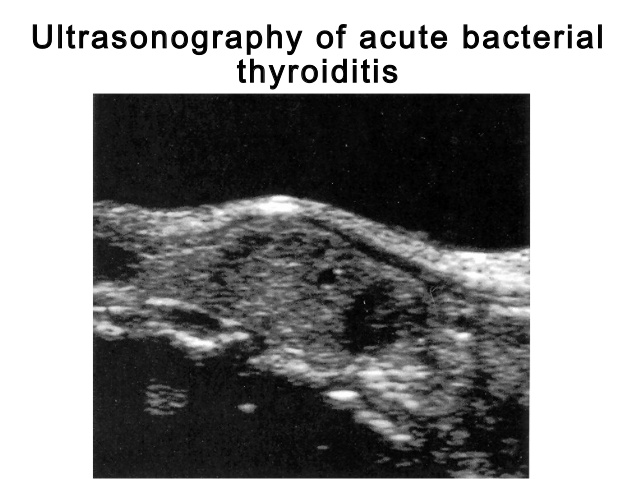
    • Ultrasound examination may reveal:
      • A cystic or “complex” nodule

thyroiditis-by-dr-selim-14-638

  • Diagnosis:
    • The diagnosis is made with:
      • A fine-needle aspiration
      • Gram stain
      • Culture
    • Symptomatically:
      • Infective thyroiditis may be difficult to differentiate from subacute thyroiditis in the early phases:
        • Although the characteristic thyroid function changes in the latter disease should be helpful in discriminating the two
    • Leukocytosis and an elevated erythrocyte sedimentation rate are not discriminatory tests:
      • As they are commonly observed in both subacute thyroiditis and infectious thyroiditis
    • In general:
      • Patients with bacterial thyroiditis have a greater febrile response than those with subacute thyroiditis
    • Once abscess formation has occurred:
      • The local redness, lymphadenopathy, hyperpyrexia, and leukocytosis should lead to the correct diagnosis
    • Malignant neoplasms and hemorrhages into cysts:
      • May sometimes present with manifestations that mimic this disorder
  • Clinical Management:
    • The prognosis of bacterial thyroiditis:
      • Is often dependent on the prompt recognition and treatment of this disorder:
        • As mortality may approach 100%:
          • If the diagnosis is delayed and appropriate antimicrobial therapy is not instituted
      • Much depends on the identification of the microorganism:
        • From the needle aspirate, incision, and drainage, or occasionally from blood culture
        • If no organisms are seen on the Gram stain:
          • Nafcillin and gentamicin or a third-generation cephalosporin is the appropriate initial therapy in adults
          • A second-generation cephalosporin or clindamycin is reasonable in children
        • If an abscess develops and prompt response to antibiotics does not occur:
          • Incision and drainage are necessary:
            • Sometimes partial lobectomy must be performed,:
              • Especially if the disease is recurrent
        • Usually the lesions heal with reasonable speed after initiation of the correct antimicrobial agent, and recurrences are uncommon.
        • Mortality from acute bacterial thyroiditis has markedly improved from the 20% to 25% reported in the early 1900s:
          • With the extensive review by Berger estimating an overall mortality of 8.6%
          • In one review of more than 100 patients, mortality as a complication of acute bacterial thyroiditis was not listed

#Arrangoiz

#Teacher

#Surgeon

#Cirujano

#ThyroidExpert

#ThyroidSurgeon

#CirujanodeTiroides

#ExpertoenTiroides

#ExpertoenParatiroides

#Paratiroides

#Hiperparatiroidismo

#CancerdeTiroides

#ThyroidCancer

#PapillaryThyroidCancer

#SurgicalOncologist

#CirujanoOncologo

#CancerSurgeon

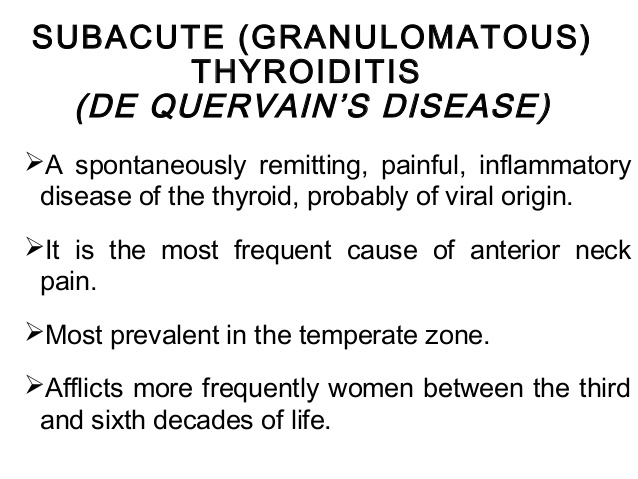
Subacute Thyroiditis / De Quervain’s Thyroiditis (Part II)

images

  • Clinical Manifestations:
    • The clinical manifestations:
      • May be preceded by an upper respiratory tract infection, or a prodromal phase of:
        • General malaise
        • Generalized myalgia
        • Pharyngitis
        • Low-grade fevers
      • Pain or swelling in the thyroid region develops later:
        • Accompanied by higher fevers
      • Up to 50% of patients have symptoms of thyrotoxicosis
      • Pain may be moderate or severe
      • Rarely symptoms are entirely lacking
      • Similarly:
        • Tenderness may be moderate or severe (or even exquisite):
          • Or conversely, may rarely be lacking
      • One of the lobes may be involved initially and later spread to the opposite lobe:
        • “Creeping thyroiditis”
      • Both lobes may be involved from the outset
      • The systemic reaction:
        • May be minimal or severe
          • Fevers may reach 40°C
      • Rarely, subacute thyroiditis may present as:
        • A non-tender solitary nodule:
          • In these cases, the diagnosis has been made after fine-needle aspiration biopsy:
            • Atypical presentations are often misdiagnosed as papillary cancer
      • Patients can generally localize the pain to the thyroid region over one or both lobes
      • They may refer to their symptoms as a “sore throat,”:
        • But upon specific questioning it becomes apparent that pain is in the neck, not within the pharynx.
      • Typically, pain radiates from the thyroid region:
        • Up to the angle of the jaw or to the ear on the affected side(s).
        • The pain may also radiate to the anterior chest or may be centered over the thyroid only
        • Moving the head, swallowing, or coughing may aggravate pain
      • Although an occasional patient may have no systemic symptoms, most complain of:
        • Myalgia
        • Fatigue
        • Fevers
        • Malaise:
          • Can be extreme and can be associated with arthralgias

thyroiditis-by-dr-selim-22-638

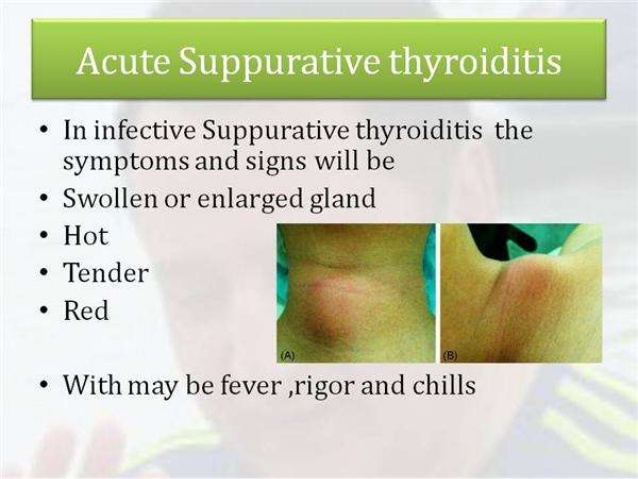
  • On physical exam:
    • Most patients appear uncomfortable and flushed on inspection:
      • With variable elevations in temperature
    • Palpation usually reveals:
      • An exquisitely tender, hard, ill-defined nodular thyroid:
        • The tender region may encompass an entire lobe and mild tenderness may be present in the contralateral lobe
    • The overlying skin is occasionally warm and erythematous
    • Cervical lymphadenopathy is rarely present
    • Although the majority of patients are only mildly to moderately ill:
      • Subacute thyroiditis may have a dramatic presentation:
        • With marked fever (greater than 40°C)
        • Severe thyrotoxicosis
        • Obstructive symptoms:
          • Resulting from pronounced thyroid inflammation and edema
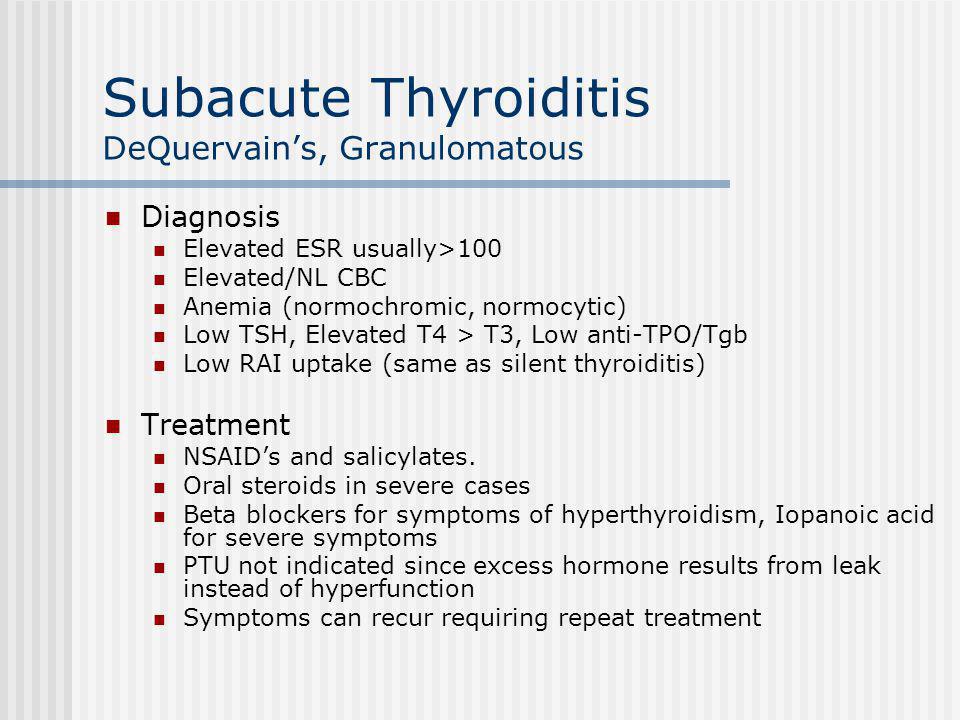
    • During the active / painful phase of subacute thyroiditis:
      • The erythrocyte sedimentation rate is:
        • Markedly elevated:
          • In fact, a normal erythrocyte sedimentation rate essentially rules out subacute thyroiditis as a tenable diagnosis
      • The white blood count is normal to mildly increased
      • There is often a normochromic, normocytic anemia
      • During the inflammatory phase there are increases in:
        • Serum ferritin
        • Soluble intercellular adhesion molecule-1
        • Selectin
        • Interleukin-6 levels
        • C-reactive protein
        • Alkaline phosphatase and other hepatic enzymes may be elevated in the early phase:
          • It has been suggested that subacute thyroiditis may actually represent a multi-system disease also affecting the thyroid
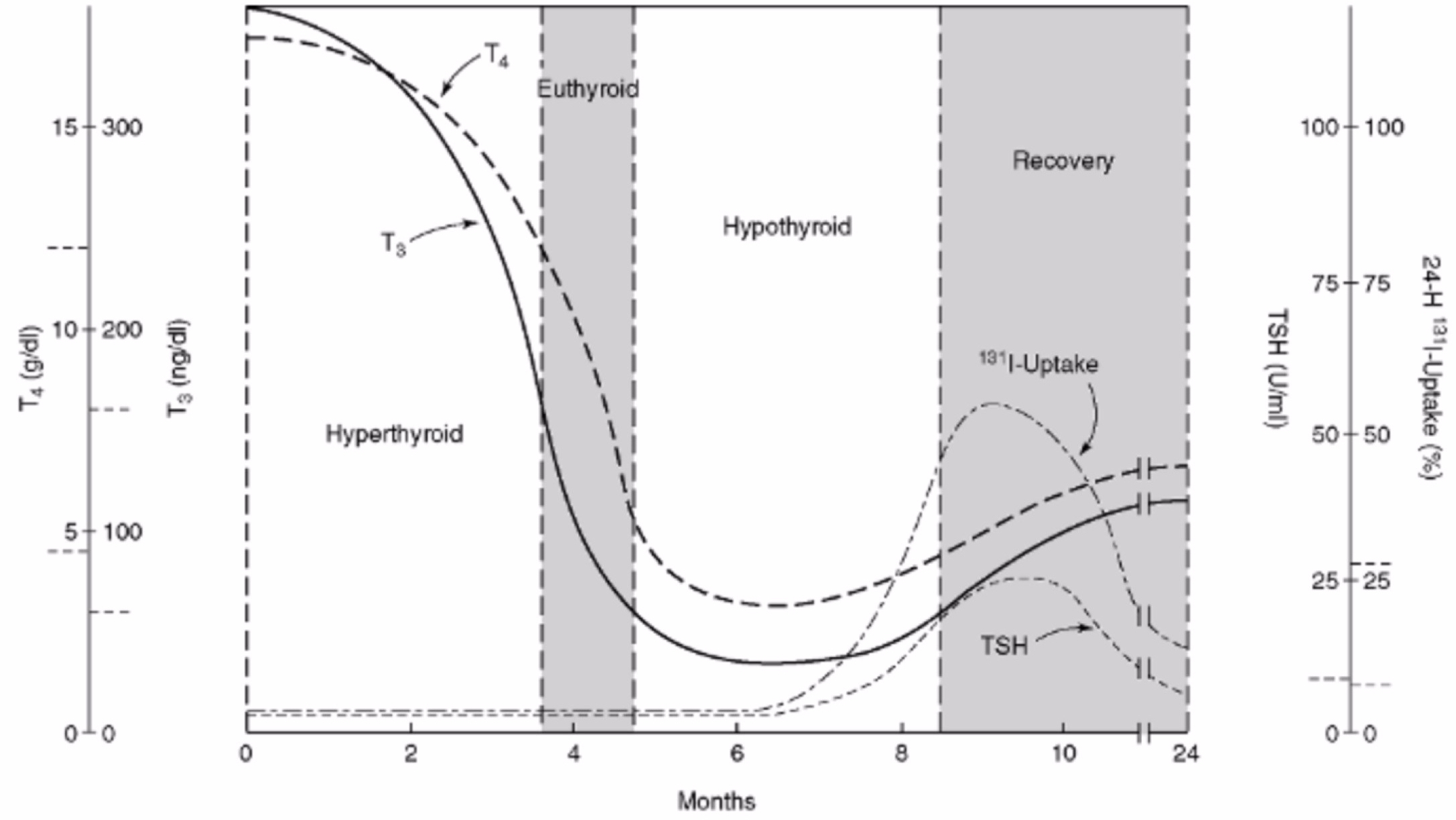
      • In the thyrotoxic phase:
        • The serum T4 concentration is disproportionately elevated relative to the serum T3 concentration:
          • Reflecting the intra-thyroidal T4:T3 ratio
          • In addition:
            • The acute illness decreases the peripheral deiodination of T4 to T3:
              • Resulting in lower serum T3 concentrations than expected.
        • Serum TSH concentrations are low to undetectable
        • It is important to note in subacute thyroiditis:
          • Antibodies directed against thyroglobulin and thyroid peroxidase:
            • Are either absent or present in low titer:
              • These develop several weeks after disease onset and tend to disappear thereafter
    • The radioactive iodine uptake:
      • During the thyrotoxic phase is:
        • Low:
          • Most often less than 2% at 24 hours:
            • As with the erythrocyte sedimentation rate:
              • A normal radioactive iodine uptake essentially rules out subacute thyroiditis as a tenable diagnosis
      • Ultrasound:
        • May show generalized, multiple, or single regions of hypoechogenicity

Subacute+Thyroiditis+DeQuervain’s,+Granulomatous

  • Pathology:
    • The primary events in the pathology of subacute thyroiditis are:
      • Destruction of the follicular epithelium
      • Loss of follicular integrity:
        • However the histopathologic changes:
          • Are distinct from those found with Hashimoto’s thyroiditis
    • The lesions are:
      • Patchy in distribution and are off:
        • Varying stages of development
      • With infiltration of mononuclear cells in affected regions
      • Partial or complete loss of colloid
      • Fragmentation and duplication of the basement membrane
      • Histiocytes congregate around masses of colloid:
        • Both within the follicles and in the interstitial tissues:
          • Producing giant cells:
            • Often these giant cells consist of:
              • Masses of colloid surrounded by large numbers of individual histiocytes:
                • So they more accurately should be termed pseudo-giant cells
      • The term granulomatous thyroiditis:
        • A synonym for subacute thyroiditis:
          • Should likewise be changed to pseudo-granulomatous thyroiditis:
            • However, true giant cells and granulomas do appear in this disease as well
      • During recovery:
        • The inflammation recedes and there is a variable amount of fibrosis and fibrotic band formation
        • In addition:
          • Follicular regeneration occurs:
            • Without caseation, hemorrhage, or calcification
        • Recovery is generally complete:
          • Only in the rare instance:
            • Is there complete destruction of the thyroid parenchyma that leads to:
              • Permanent hypothyroidism

#Arrangoiz

#Teacher

#Surgeon

#Cirujano

#ThyroidExpert

#ThyroidSurgeon

#CirujanodeTiroides

#ExpertoenTiroides

#ExpertoenParatiroides

#Paratiroides

#Hiperparatiroidismo

#CancerdeTiroides

#ThyroidCancer

#PapillaryThyroidCancer

#SurgicalOncologist

#CirujanoOncologo

#CancerSurgeon

#CirujanodeCancer

#HeadandNeckSurgeon

#CirugiaEndocrina

Drug-Induced Thyroiditis

diabetes-managing-multiple-medications-article

  • Several drugs have been reported to cause a drug-induced thyroiditis:
    • Amiodarone
    • Interferon-alfa
    • Interleukin-2
    • Lithium:
      • Lithium has been reported to cause a non destructive thyroiditis:
        • Similar to sporadic silent thyroiditis.
    • Minocycline
  • The clinical course of the drug induced thyroiditis is similar to the other forms of destructive thyroiditis:

Presentation1

  • Importantly:
    • Patients on the offending drugs may also develop:
      • Subacute, sporadic, or suppurative thyroiditis:
        • So these diagnoses need to be evaluated before ascribing the thyroiditis to a drug.
  • The thyroid abnormalities usually resolve with discontinuation of the offending drug.
  • Two drugs that deserve special mention are amiodarone and interferon-alfa:
    • Amiodarone:
      • An iodine-rich drug used in the treatment of cardiac arrhythmias:
        • Is well recognized to produce thyrotoxicosis by two forms:
          • Iodine-induced hyperthyroidism (type I)
          • Destructive thyroiditis (type II)
      • Distinguishing between the two forms is often a diagnostic dilemma:
        • And occasionally both forms may be present in the same patient.
      • In general:
        • Type II amiodarone-induced thyrotoxicosis occurs in:
          • A previously normal thyroid
          • The 24 RAIU is completely suppressed
          • Color flow Doppler ultrasonography shows absent vascularity.
      • The thyrotoxicosis usually responds to:
        • High doses of prednisone (40 to 60 mg daily):
          • Consistent with the underlying inflammatory process.
        • In all cases of amiodarone-induced thyrotoxicosis:
          • The drug should be discontinued if at all possible.
    • Interferon-alpha:
      • Is an immunomodulatory drug that is used in a variety of clinical conditions:
        • Most commonly in the treatment of viral hepatitis.
      • Up to 70% of patients without previous thyroid autoimmunity will develop:
        • High serum thyroid peroxidase antibody concentrations during interferon therapy.
      • Like amiodarone; two forms of interferon-induced thyrotoxicosis have been described:
        • A Graves’-like hyperthyroidism
        • A destructive thyroiditis
      • Frequently:
        • The thyrotoxicosis is mild and symptomatic therapy is often all that is necessary.
      • Because treatment with interferon-alpha is for a defined period:
        • The drug usually can be continued to finish the course of therapy when thyroid dysfunction develops.
        • Thyroid function usually normalizes after the interferon is stopped:
          • However, affected patients are at increased risk for autoimmune thyroid dysfunction in the future

#Arrangoiz #CancerSurgeon #ThyroidSurgeon #ParathyroidSurgeon #HeadandNeckSurgeon #ThyroidExpert #SurgicalOncologist #EndocrineSurgery #MountSinaiMedicalCenter #Miami #ThyroidNodule #ToxicNodularGoiter #TNG #MultinodularGoiter #GravesDisease #Hyperthyroidism #Goiter #DrugInducedThyroiditis