Intraductal Papilloma with Atypia

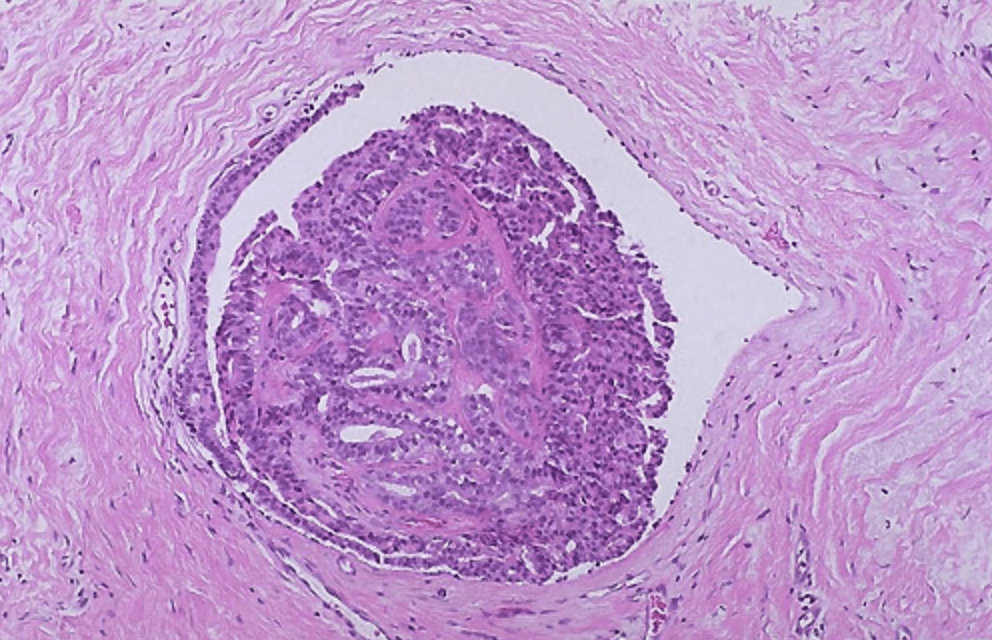
Intraductal Papilloma with Atypia

  • Although a solitary intraductal papilloma is benign:
    • When a papillary lesion with atypia is identified on core biopsy:
      • Surgical excisional biopsy is recommended to rule out an associated in situ or invasive cancer:
        • Studies have demonstrated an upstage rate of 22% to 67% when atypia is present:
          • But only 3%to 9% in the absence of atypia
  • MRI is available as an additional diagnostic tool:
    • A negative MRI would not obviate the need for excisional biopsy to exclude malignancy since it cannot reliably distinguish benign from malignant papillomas
  • A short-term follow-up could be considered appropriate:
    • For an intraductal papilloma without atypia on core biopsy if these findings are considered concordant with the clinical presentation
  • References:
    • Ahmadiyeh N, Stoleru MA, Raza S, Vester SC, Golshan M. Management of intraductal papilloma of the breast: an analysis of 129 cases and their outcome. Ann Surg Oncol. 2009;16(8):2264-2269.
    • Jaffer S, Nagi C, Bleiweiss IJ. Excision is indicated for intraductal papilloma of the breast diagnosed on core needle biopsy. Cancer. 2009;115(13):2837-2843.
    • Syndnor MK, Wilson JD, Hijaz TA, Massey HD, Shaw de Paredes ES. Underestimation of the presence of breast carcinoma in papillary lesions initially diagnosed at core-needle biopsy. Radiology. 2007;242(1):58-62.
    • McGhan LJ, Pockaj BA, Wasif N, Giurescu ME, McCullough AE, Gray RJ. Papillary lesions on core breast biopsy: excisional biopsy for all patients? Am Surg. 2013;79(12):1238-1242.
    • Holley SO, Appleton CM, Farria DM, Reichert VC, Warrick J, Allred DC, Monsees BS. Pathologic outcomes of nonmalignant papillary breast lesions diagnosed at imaging-guided core needle biopsy. Radiology. 2012;265(2):379-384.

#Arrangoiz #BreastSurgeon #CancerSurgeon #SurgicalOncologist #BreastCancer #IntraductalPapilloma

Modified PECS Block for Pain Control Following Mastectomy

  • The modified PECS block (PECS I and II):
    • Is a novel ultrasound-guided nerve block:
      • To target the medial pectoral nerve, lateral pectoral nerve, and lateral cutaneous branches of the intercostal nerves
  • Anatomic studies have shown significant variability in the location and branch distribution of the medial pectoral nerve:
    • While the lateral pectoral nerve reliably runs just lateral to the pectoral branch of the thoracoacromial artery between the pectoral major and pectoral minor muscles:
      • Offering a reliable target for ultrasound injection
  • References
    • Carstebsen LF, Jenstrup M, Lund J, Tranum-Jensen J. Pectoral block failure may be due to incomplete coverage of anatomical targets: a dissection Study. Reg Anesth Pain Med. 2018;43(8):844-848.
    • Woodworth GE, Ivie RM, Nelson SM, Walker CM, Maniker RB. Perioperative breast analgesia. Reg Anesth Pain Med. 2017;42(5):609-631.

#Arrangoiz #BreastSurgeon #CancerSurgeon #SurgicalOncologist #Miami #MountSinaiMedicalCenter

IV / Parental Acetominophen for Postoperative Analgesia

  • IV / parenteral administration of acetaminophen:
    • Achieves the fastest and highest elevation of plasma drug concentration:
      • Higher plasma levels:
        • Are associated with reports of:
          • Improved postoperative pain scores
          • Decreased opioid use
  • Although IV acetaminophen is more expensive than oral and rectal formulations:
    • These improved metrics are evidence that support the use of IV acetaminophen despite the price difference
  • IV / parenteral administration has the effects of:
    • Decreased hospital time to discharge
    • Decreased opioid-associated side effects including:
      • Ileus
      • Urinary retention
      • Nausea / vomiting
  • In addition to improved patient satisfaction scores:
    • These effects result in an overall cost savings to the healthcare system:
      • Justifying the use of IV acetaminophen as part of a multimodal analgesic approach in a carefully selected group of patients, including those at:
        • High risk of post-operative nausea and vomiting (PONV) and difficult-to-control pain
  • References:
    • Singla NK, Parulan C, Samson R, Hutchinson J, Bushnell R, Beja EG, Ang R, Royal MA. Plasma and cerebrospinal fluid pharmacokinetic parameters after single-dose administration of intravenous, oral, or rectal acetaminophen. Pain Pract. 2012 Sep;12(7):523-32.
    • Shaffer EE, Pham A, Woldman RL, Spiegelman A, STrassels SA, Wan GJ, et al. Estimating the effect of intravenous acetaminophen for postoperative pain management on length of stay and inpatient hospital costs. Adv Ther. 2017;33(12):2211–2228.

#Arrangoiz #BreastSurgeon #CancerSurgeon #SurgicalOncologist #HeadandNeckSuregeon #Surgeon #ThyroidSurgeon #ParathyroidSurgeon #Mexico #Miami #MountSinaiMedicalCenter #PostOperativePainControl

Phyllodes Tumor (Cystosarcoma Phyllodes)

Once more commonly referred to as cystosarcoma phyllodes is a rare, predominantly benign tumor that occurs almost exclusively in the female breast

Grossly, the tumor displays characteristics of a large, malignant sarcoma, takes on a leaf like appearance when sectioned, and displays epithelial, cyst like spaces when viewed histologically.

The tumors can develop in people of any age; however, the median age is the fifth decade of life.

Phyllodes tumor is the most commonly occurring nonepithelial neoplasm of the breast, though it represents only about 1% of tumors in the breast.

It has a smooth, sharply demarcated texture and typically is freely movable. It is a relatively large tumor, with an average size of 5 cm (though lesions larger than 30 cm have been reported).

The etiology of phyllodes tumors is unknown.

Because of limited data, the relative percentages of benign and malignant phyllodes tumors are not well defined. Reports have suggested, however, that about 85% to 90% of phyllodes tumors are benign and that approximately 10% to 15% are malignant.

Although benign phyllodes tumors do not metastasize, they have a tendency to grow aggressively and can recur locally. 

Like other sarcomas, malignant phyllodes tumors metastasize hematogenously.

Unfortunately, the pathologic appearance of a phyllodes tumor does not always predict the neoplasm’s clinical behavior; in some cases, therefore, there is a degree of uncertainty about the lesion’s classification.

The characteristics of a malignant phyllodes tumor include the following :

  • Recurrent malignant tumors seem to be more aggressive than the original tumor
  • The lungs are the most common metastatic site:
    • Followed by the bone, heart, and liver
  • Symptoms of metastatic involvement can arise from:
    • As early as a few months to as late as 12 years after the initial therapy
  • Most patients with metastases die within 3 years of the initial treatment
  • No cures for systemic metastases exist
  • Roughly 30% of patients with malignant phyllodes tumors die of the disease

Summer
2019

Failed Encounter
2019

Movement
2018

Retratos
2017

Disappearance
2016

#Arrangoiz #BreastSurgeon #CancerSurgeon #SurgicalOncology #BreastCancer #CASO #CenterforAdvancedSurgicalOncology

Treatment of Obstructive or Substernal Goiter

• Goiter refers to:

• Abnormal growth of the thyroid gland

• Patients with longstanding goiters (cervical or substernal):

• May develop symptoms of obstruction due to:

Progressive compression of the trachea or

• Sudden enlargement (usually accompanied by pain):

• Secondary to hemorrhage into a nodule

• The most common obstructive symptom is:

Exertional dyspnea:

• Which is present in 30% to 60% of the cases:

• Usually occurs when the tracheal diameter:

• Is under 8 mm

• Substernal goiter:

• May be detected incidentally on chest radiograph or computed tomography (CT) scan or

• Found because of obstructive symptoms such as:

• Dyspnea, wheezing, or cough

• Anatomic Relationships:

Enlarging thyroid lobes usually grow outward:

• Because of their location in the anterior neck in front of the trachea, covered only by thin muscles, subcutaneous tissue, and skin

• In patients with substantial enlargement of one lobe or asymmetric enlargement of both lobes:

The trachea, esophagus, or blood vessels may be displaced or, less often, compressed

Bilateral lobar enlargement:

Especially if the goiter extends posterior to the trachea;

• May cause either:

• Compression or concentric narrowing of the trachea or

• Compression of the esophagus or jugular veins

• With some goiters, there is growth of one or both lobes through the thoracic inlet into the thoracic cavity;

• Which can result in obstruction of any of the structures in the inlet:

• Such goiters are referred to as substernal

• The goals of therapy:

• Once goiter is detected (on physical exam or incidentally during a radiologic procedure performed for other purposes):

• An evaluation is performed to assess:

Thyroid function and to identify the underlying cause

• Presence of obstructive symptoms

• Presence of suspicious sonographic features in nodules within the goiter:

• These factors determine management

• For patients with obstructive goiter (cervical or substernal):

• The goal of management is to relieve the obstructive symptoms by resecting or ablating the thyroid gland

• For patients with asymptomatic substernal goiter:

• The goal is to prevent growth and subsequent development of obstructive symptoms

• Obstructive symptoms:

• Patients with obstructive symptoms from a cervical or substernal goiter:

• Require removal or ablation of the thyroid

• Once obstructive symptoms are present:

• There is risk of further thyroid growth and progressive tracheal compression:

• Which in some instances (eg, hemorrhage) may be rapid and fatal

• For the treatment of obstructive goiter:

• Surgery rather than radioiodine ablation is preferred:

• For patients with obstructive symptoms who are unable or unwilling to go undergo surgery:

• Radioiodine therapy is an alternative option:

• However, the reduction in thyroid volume with radioiodine is only moderate, and there are theoretical concerns that radioiodine could acutely worsen obstruction or a missed malignancy

• Most obstructive cervical or substernal goiters are benign:

• However, patients with nodules within a goiter that are malignant or suspicious for malignancy on fine-needle aspiration (FNA) biopsy require surgery

• Asymptomatic substernal goiter:

• The main treatment options for patients with asymptomatic substernal goiter are:

• Surgery or observation with monitoring:

• The choice of therapy depends upon the extent of substernal extension and patient characteristics:

• Someauthors suggest surgery for most patients with asymptomatic substernal goiters:

• That extend below the level of the brachiocephalic vein:

• However, this is an area of controversy, and other experts prefer to monitor such patients

• The arguments for removing a substernal goiter in a patient who has no obstructive symptoms include:

• Some goiters continue to enlarge and become more difficult to remove if obstructive symptoms do develop

• Suppressive therapy is relatively ineffective and is associated with significant morbidity in older patients

• Forty-two percent of patients with evidence of upper airway obstruction on flow-volume loops are asymptomatic

• As patients age, surgical complications are more common and severe

• The substernal component could contain a cancer that cannot be palpated or biopsied:

• Range of reported cancer risk 3% to 22%

• There is a small risk of hemorrhage into the goiter that could result in acute airway obstruction

• Observation rather than surgery is recommended by some authors for:

Asymptomatic patients with normal flow-volume loops whose goiters end at the level of the brachiocephalic vein or higher:

• These patients are monitored with serial computed tomography (CT) scans:

• Initially after one year and, if stable, at increasing intervals (eg, two years later, then three years, then five years)

• Other asymptomatic patients with substernal goiter who may be followed with serial CT scans, rather than undergo surgery, include the following:

• Older patients who are poor operative candidates

• Patients without thyroid enlargement whose glands extend slightly substernally due to kyphosis

• Patients whose goiters extend only slightly substernally on a CT scan obtained without neck extension may not be substernal when the neck is extended:

• Their glands are also usually accessible for FNA biopsy if indicated

• Patients who, in retrospect, have serial CT scans showing long-term stability of a substernal goiter, especially if the inferior extent is above the level of the brachiocephalic vein:

• However, if growth is detected on serial CT scans;

• Surgery is recommended if possible, for these patients also

Levothyroxine may have a limited role in patients with asymptomatic substernal goiters:

• In a randomized trial, thyroid-stimulating hormone (TSH)-suppressive doses of levothyroxine:

• Reduced goiter size in approximately two-thirds of patients with sporadic, multinodular goiters:

• However, most large goiters do not shrink sufficiently to alleviate symptoms, any reduction in size is not rapid, and levothyroxine is not effective in those patients who already have low serum TSH concentrations (ie, subclinical hyperthyroidism)

• Additionally, growth of the goiter may resume as soon as levothyroxine treatment is stopped

• For the treatment of obstructive goiter:

• Surgery rather than radioiodine is recommended

• In addition, patients with nodules within a goiter that are malignant or suspicious for malignancy on fine-needle aspiration (FNA) biopsy require surgery

• Some authors also suggest surgery for most patients with asymptomatic, substernal goiters:

• That extend below the level of the brachiocephalic vein:

• Assuming they are good surgical candidates

• Patients with substernal goiter should be referred to an experienced thyroid surgeon:

• As complication rates appear to be lower in high-volume centers

• Patients who may require sternotomy:

• Should be referred to an experienced thoracic surgeon

• Preoperative assessment:

• The initial evaluation of substernal goiter includes:

• Serum TSH;

• To evaluate for subclinical or overt hyperthyroidism

• Imaging studies (noncontrast computed tomography [CT] or magnetic resonance imaging [MRI]):

• To evaluate the extent of the goiter and its effect upon surrounding structures

• A flow-volume loop study:

• If there is uncertainty if the goiter is causing upper airway obstruction

• FNA biopsy if malignancy is suspected:

• Most nodules within goiters have benign thyroid aspirates

• The decision to proceed with surgery is usually made on:

• The basis of symptoms

• Anatomic studies

• The results of a flow-volume loop study

• Once the decision to proceed with surgery has been made, other preoperative assessment of substernal goiter should include:

• Laryngoscopy:

• To assess the tracheal lumen and vocal cord function

• If the patient is hyperthyroid and surgery is elective:

• An antithyroid drug and, if not contraindicated, a beta blocker should be given for several weeks before surgery:

• Patients with subclinical hyperthyroidism do not need to be prepared with an antithyroid drug

• Surgical approach:

• The majority of obstructive and substernal goiters can be excised through a standard cervical incision:

• While partial or complete sternotomy or even thoracotomy may be required in patients with:

Previous cervical thyroidectomy

• Very large substernal goiters

• Invasive cancer

• In an Italian study of 19,662 patients undergoing total thyroidectomy at six centers, 1055 had substernal goiters and only 69 (6.5%) required sternotomy:

• Patients requiring sternotomy were more likely to have a malignancy: 36% compared with 22% of those excised through a cervical incision

• Similar results were noted in two single-center studies and in a systematic review

Recurrent or ectopic goiter in addition to malignancy:

• Were associated with the need for sternotomy

• The extent of surgery for benign goiter:

• Depends upon the expertise of the surgeon

• The extent of the goiter

• Whether the patient has obstructive symptoms and signs

• Because of the risk of recurrent goiter:

• A total or near-total thyroidectomy should be performed unless during the procedure the surgeon feels that a less extensive operation is prudent because of an increased risk of recurrent laryngeal nerve injury or hypoparathyroidism due to anatomic considerations

• If a more limited operation is done, we suggest:

• Patients with large, relatively symmetric goiters:

• Should have a bilateral subtotal thyroidectomy

• Patients with asymmetric goiters:

• Should have a hemithyroidectomy on the more involved side and a subtotal thyroidectomy on the contralateral side

• If the patient already has vocal cord paralysis on the one side and the contralateral thyroid lobe is not very large:

• We suggest doing only a hemithyroidectomy and isthmusectomy

• In patients with chronic autoimmune thyroiditis who have concentric tracheal compression:

• Excision of the isthmus alone may be sufficient to alleviate the compression

• These fibrous glands may be difficult to dissect free from nerves and parathyroid glands, and more extensive surgery may result in complications

• Complications:

• The major complications of surgery for large goiters and substernal goiters are:

• Injury to the recurrent laryngeal nerves

• Trachea

• Parathyroid glands

• Surgery for substernal goiter appears to be associated with higher complication rates than surgery for cervical goiter:

• As illustrated by a statewide database of cervical (n = 32,777) and substernal thyroidectomies (n = 1153) performed between 1998 and 2004:

• Patients who underwent substernal thyroidectomy were more likely to be:

• Older

• Have a comorbid condition

• Be uninsured

• Be undergoing total thyroidectomy

• Have surgery at a low-volume center

• After adjusting for these variables:

• Patients undergoing substernal thyroidectomy were still at higher risk for the following:

• Recurrent laryngeal nerve injury (odds ratio [OR] 2.4, 95% CI 1.5-3.8)

• Postoperative bleeding (OR 1.9, 95% CI 1.2-2.9)

• Deep venous thrombosis (OR 5.9, 95% CI 2.4-15.2)

• Respiratory failure (OR 4.2, 95% CI 2.8-6.2)

• Red blood cell transfusion (OR 5.7, 95% CI 3.8-8.5)

• Mortality (OR 8.3, 95% CI 4.2-16.3)

• In the same database, complication rates were significantly lower at hospitals that performed a high volume of substernal thyroidectomies

• Of note, this study did not report how many patients with substernal goiter required sternotomy, a procedure that may be associated with higher surgical complication rates

• In the Italian study of 1055 patients with substernal goiter, 69 patients who required a sternotomy were compared with 986 patients whose goiters were excised through a cervical incision:

Only phrenic nerve palsy was more common in the sternotomy group

• In a study from the National Surgical Quality Improvement Program database of 2716 patients with substernal goiter:

• The 14% who required a sternal split or transthoracic approach had a higher incidence of unplanned intubation (OR 2.70, 95% CI 1.17-6.25) and bleeding (OR 5.56, 95% CI 2.38-13.0); a higher incidence of death (1.9 versus 0.3%) was not statistically significant

• Together, these studies suggest that surgery for substernal goiter (using a cervical approach or sternotomy):

• Is associated with higher complication rates than surgery for cervical goiter

• Recurrent laryngeal nerve injury:

• Transient recurrent laryngeal nerve injury has been reported to occur in 2% to 9% of patients undergoing surgery for substernal goiter

• Permanent nerve injury occurs less commonly:

• 0 and 0.03% in the two largest studies [6,18] and 3% in two other reports

• Patients with bilateral nerve injury and therefore bilateral vocal cord paralysis require tracheostomy to provide an adequate airway

• Hypocalcemia:

• Hypocalcemia due to hypoparathyroidism:

• Is the most frequent complication of near-total thyroidectomy

• Is more common when the goiter is extensive and anatomic landmarks are displaced and obscured

• Hypocalcemia may be transient or permanent:

• Transient hypoparathyroidism occurred in 12 of 170 patients (7%) in one series

• Current requirements for short hospital stays argue for early treatment of hypocalcemia

• Tracheomalacia:

• In patients who have tracheomalacia due to pressure-induced destruction of tracheal rings by the goiter:

• The airway may collapse during the postoperative period

• In one study, 10% of patients could not be immediately extubated, although all were successfully extubated by 10 days:

• These patients were older, had larger goiters, and were more likely to have tracheal compression

• If recognized at the time of surgery:

• Tracheomalacia may in some cases be treated by partial tracheal resection and reconstruction:

• Otherwise, tracheostomy is necessary

• In a systematic review, the presence of a substernal goiter for more than five years causing tracheal compression:

• Was a risk factor for tracheomalacia and tracheostomy:

• However, in this review, tracheomalacia was an infrequent occurrence (3%):

• Was managed without tracheostomy in approximately 50% of cases

• Levothyroxine after surgery:

• Patients who undergo total thyroidectomy for benign disease:

• Should start a replacement dose of levothyroxine daily at an approximate dose of 1.6 mcg/kg body weight

• Patients over 65 years should be started at a 10% to 15% lower dose

• Serum TSH should be tested approximately six weeks after starting the replacement therapy

• The TSH should be kept in a normal range

Treatment with higher doses of levothyroxine to suppress serum TSH:

• To prevent goiter recurrence in patients who have already had surgery for obstructive goiter (versus no thyroid hormone therapy or replacement therapy if needed to normalize the serum TSH concentration) is controversial:

• In one study with 10 years of follow-up, the recurrence rate was lower in the patients treated with levothyroxine (5% versus 42% in the untreated group had recurrent goiter):

• However, this benefit was not confirmed in a report with 30 years of follow-up:

• The recurrence rates were similar (41% and 45%) in treated and untreated patients

• Poor operative candidates:

• For patients with obstructive symptoms who are unable or unwilling to undergo surgery:

• Radioiodine therapy is an alternative option:

• Radioiodine is a reasonable option for patients who cannot or do not want to undergo surgery:

• Particularly if the substernal or obstructive goitrous tissue is functional on thyroid radionuclide imaging

• In patients with nonobstructive multinodular goiter:

• Radioiodine therapy results in goiter volume reductions:

• In the range of 30% to 60%

Pretreatment with recombinant human thyroid-stimulating hormone (rhTSH, thyrotropin alfa):

• Allows treatment with lower doses of radioiodine for thyroid volume reduction:

• But may result in development of mild hyperthyroidism and transient goiter enlargement, or rarely induce Graves’ disease

Methimazole may also be used to increase the radioiodine uptake and reduce the dose needed to reduce thyroid volume

• Results of radioiodine therapy for obstructive goiter include the following:

• In one series of 14 patients with large multinodular goiters, eight of whom had respiratory symptoms and eight of whom had substernal extension:

• All improved after treatment with 200 to 400 microcuries/g of radioiodine, and no patient had an acute exacerbation of obstructive symptoms

• Similar improvements in obstructive symptoms were seen in a series of 19 older patients treated with 100 microcuries/g tissue (average total dose 70 millicuries):

• Goiter volume decreased by 40%

• Volume reduction of the cervical and substernal components is similar (30%)

• Despite the reasonable results with radioiodine, surgery is still the treatment of choice because of concerns that radiation thyroiditis might result in worsening of airway obstruction and the need to rule out the diagnosis of carcinoma if the goiter is mostly substernal

• Recombinant human TSH:

• Similar to results seen with smaller multinodular goiters:

• The addition of rhTSH to radioiodine in patients with obstructive goiters:

• Results in a greater reduction in thyroid volume than radioiodine alone:

• However, rhTSH is not currently US Food and Drug Administration (FDA) approved for this indication, and it is not recommended, pending additional clinical trials demonstrating safety and efficacy

• Methimazole;

• Pretreatment of nontoxic nodular goiter with methimazole has also been used to increase the radioiodine uptake and reduce radioiodine dose or frequency of repeat radioiodine treatment:

• This is not currently an FDA-approved indication for this drug, but unlike rhTSH, it does not cause hyperthyroidism (it might cause transient hypothyroidism):

• The use methimazole to increase the radioiodine uptake in select patients with low radioiodine uptake who prefer radioiodine over surgery or who are poor surgical candidates is an option

SUMMARY AND RECOMMENDATIONS

• The most common symptom in patients with obstructive cervical or substernal goiter is:

• Exertional dyspnea:

• Which is present in 30% to 60% of cases:

• This symptom usually occurs when the tracheal diameter is under 8 mm

• Bilateral thyroid lobe enlargement:

• Especially if the goiter extends posterior to the trachea:

May cause either:

• Compression or concentric narrowing of the trachea or

• Compression of the esophagus or jugular veins

• With some goiters, there is growth of one or both lobes through the thoracic inlet into the thoracic cavity:

• Which can result in obstruction of any of the structures in the inlet:

• Such goiters are referred to as substernal

• Patients with obstructive symptoms from a cervical or substernal goiter:

• Require removal or ablation of the thyroid

• For patients with obstructive goiter:

• The recommendation is surgery rather than radioiodine

• The reduction in thyroid volume with radioiodine is only moderate, and there are theoretical concerns that radioiodine could acutely worsen obstruction or a missed malignancy:

• However, radioiodine therapy is an option for patients with obstructive symptoms who are poor surgical candidates

• For asymptomatic patients with normal flow-volume loops whose goiters end at the level of the brachiocephalic vein or higher:

• Observation rather than surgery

• Monitoring of such patients with serial computed tomography (CT) scans:

• Initially after one year and, if stable, at increasing intervals (eg, two years later, then three years, then five years)

• Recommendations for asymptomatic patients with goiters that extend below the level of the brachiocephalic vein are controversial:

• Some authors suggests surgical excision for most patients:

• Except older patients and those who are poor operative candidates

• Other experts suggest observation of asymptomatic patients

• All patients requiring surgery for substernal goiter:

• Should be referred to experienced thyroid surgeons in high-volume centers to minimize complication rates

• For most patients undergoing surgery:

• A total or near-total thyroidectomy, rather than subtotal thyroidectomy, to minimize the risk of recurrent goiter

• Patients who undergo total thyroidectomy for benign disease:

• Should start a replacement dose of levothyroxine daily at an approximate dose of 1.6 mcg/kg body weight:

• Patients over 65 years should be started at a 10% to 15% lower dose

• Its is usually not recommend to prescribe suppressive doses of levothyroxine to prevent recurrence:

REFERENCES

1. Katlic MR, Grillo HC, Wang CA. Substernal goiter. Analysis of 80 patients from Massachusetts General Hospital. Am J Surg 1985; 149:283.

2. Allo MD, Thompson NW. Rationale for the operative management of substernal goiters. Surgery 1983; 94:969.

3. Miller MR, Pincock AC, Oates GD, et al. Upper airway obstruction due to goitre: detection, prevalence and results of surgical management. Q J Med 1990; 74:177.

4. Hedayati N, McHenry CR. The clinical presentation and operative management of nodular and diffuse substernal thyroid disease. Am Surg 2002; 68:245.

5. Newman E, Shaha AR. Substernal goiter. J Surg Oncol 1995; 60:207.

6. Erbil Y, Bozbora A, Barbaros U, et al. Surgical management of substernal goiters: clinical experience of 170 cases. Surg Today 2004; 34:732.

7. Gittoes NJ, Miller MR, Daykin J, et al. Upper airways obstruction in 153 consecutive patients presenting with thyroid enlargement. BMJ 1996; 312:484.

8. Pieracci FM, Fahey TJ 3rd. Substernal thyroidectomy is associated with increased morbidity and mortality as compared with conventional cervical thyroidectomy. J Am Coll Surg 2007; 205:1.

9. White ML, Doherty GM, Gauger PG. Evidence-based surgical management of substernal goiter. World J Surg 2008; 32:1285.

10. Berghout A, Wiersinga WM, Drexhage HA, et al. Comparison of placebo with L-thyroxine alone or with carbimazole for treatment of sporadic non-toxic goitre. Lancet 1990; 336:193.

11. Shimaoka K, Sokal JE. Suppressive therapy of nontoxic goiter. Am J Med 1974; 57:576.

12. Pieracci FM, Fahey TJ 3rd. Effect of hospital volume of thyroidectomies on outcomes following substernal thyroidectomy. World J Surg 2008; 32:740.

13. Ríos A, Rodríguez JM, Canteras M, et al. Surgical management of multinodular goiter with compression symptoms. Arch Surg 2005; 140:49.

14. Sancho JJ, Kraimps JL, Sanchez-Blanco JM, et al. Increased mortality and morbidity associated with thyroidectomy for intrathoracic goiters reaching the carina tracheae. Arch Surg 2006; 141:82.

15. Chen AY, Bernet VJ, Carty SE, et al. American Thyroid Association statement on optimal surgical management of goiter. Thyroid 2014; 24:181.

16. Testini M, Gurrado A, Avenia N, et al. Does mediastinal extension of the goiter increase morbidity of total thyroidectomy? A multicenter study of 19,662 patients. Ann Surg Oncol 2011; 18:2251.

17. de Perrot M, Fadel E, Mercier O, et al. Surgical management of mediastinal goiters: when is a sternotomy required? Thorac Cardiovasc Surg 2007; 55:39.

18. Zambudio AR, Rodríguez J, Riquelme J, et al. Prospective study of postoperative complications after total thyroidectomy for multinodular goiters by surgeons with experience in endocrine surgery. Ann Surg 2004; 240:18.

19. Moten AS, Thibault DP, Willis AW, Willis AI. Demographics, disparities, and outcomes in substernal goiters in the United States. Am J Surg 2016; 211:703.

20. Khan MN, Goljo E, Owen R, et al. Retrosternal Goiter: 30-Day Morbidity and Mortality in the Transcervical and Transthoracic Approaches. Otolaryngol Head Neck Surg 2016; 155:568.

21. Shen WT, Kebebew E, Duh QY, Clark OH. Predictors of airway complications after thyroidectomy for substernal goiter. Arch Surg 2004; 139:656.

22. Anderson PE, Hurley PR, Rosswick P. Conservative treatment and long term prophylactic thyroxine in the prevention of recurrence of multinodular goiter. Surg Gynecol Obstet 1990; 171:309.

23. Röjdmark J, Järhult J. High long term recurrence rate after subtotal thyroidectomy for nodular goitre. Eur J Surg 1995; 161:725.

24. Kay TW, d’Emden MC, Andrews JT, Martin FI. Treatment of non-toxic multinodular goiter with radioactive iodine. Am J Med 1988; 84:19.

25. Huysmans DA, Hermus AR, Corstens FH, et al. Large, compressive goiters treated with radioiodine. Ann Intern Med 1994; 121:757.

26. Bonnema SJ, Knudsen DU, Bertelsen H, et al. Does radioiodine therapy have an equal effect on substernal and cervical goiter volumes? Evaluation by magnetic resonance imaging. Thyroid 2002; 12:313.

27. Szumowski P, Abdelrazek S, Sykała M, et al. Enhancing the efficacy of 131I therapy in non-toxic multinodular goitre with appropriate use of methimazole: an analysis of randomized controlled study. Endocrine 2020; 67:136.

#Arrangoiz #ThryoidSurgeon #ThyroidExpert #ThyroidCancer #CancerSurgeon #Head

Effect of Patient Variables on Prognosis

  • Age at the time of tumor diagnosis:
    • Is one of the more important contributing factors to prognosis
    • After the age of 40:
      • Recurrence and mortality rates increase significantly
    • The recurrence and mortality rates of PTC in patients beyond the age of 60 years become even more steep
    • Children and adolescents (less than 20 years of age) are more likely to have more advanced tumor stage at the time of diagnosis:
      • One large study found that:
        • 64% of children had cervical lymph node metastases at the time of diagnosis
        • 23% had distant metastases at the time of diagnosis
      • In contrast, studies of adults have found that:
        • Up to 40% have lymph node metastases and only 5% present with distant metastases
      • Likewise, the pediatric recurrence rates over 20 to 30 years:
        • Are nearly twice those of adults
          • 40% versus 20%, respectively
      • Despite the extent of disease at the time of diagnosis, children generally have excellent survival rates:
        • One large study found a 2% cause-specific mortality rate after 40 years of follow-up
      • Most authorities suggest children with PTC should be treated with total thyroidectomy and radioiodine, although others prefer surgery alone
        • Differentiated thyroid cancer has a more aggressive presentation in prepubertal children, and rigorous initial surgical and 131I treatment followed by thyrotropin suppression has resulted in favorable outcomes
      • Thyroid cancer mortality increases progressively with advancing age, without a specific age cutoff that stratifies mortality risk:
    • This was illustrated in an analysis of 53,581 patients in the Surveillance, Epidemiology, and End Results (SEER) database, in which the five-year survival rate decreased with increasing age at diagnosis (stratified in five-year categories from 20 to 84 years)
    • There was a continuum of disease-specific mortality with increasing age:
      • Survival remained above 90% for patients less than 65 years at diagnosis
  • Primary tumor size is closely associated with the outcome of PTC:
    • The prognosis is poorer in patients who have large tumors:
      • In one series, as an example, 20-year cancer-related mortality rates were:
        • 6%, 16%, and 50% for patients whose primary tumor diameters were 2 to 3.9 cm, 4 to 6.9 cm, or 7 cm or larger, respectively
    • A retrospective study of 52,173 patients with PTC found that:
      • 10-year cumulative recurrence rates:
        • Increased incrementally from 5% for tumors less than 1 cm to 25% for tumors greater than 8 cm
      • 10-year cumulative cancer-specific mortality rates:
        • Increased incrementally from 2% for tumors less than 1 cm to 19% for tumors greater than 8 cm
      • This study demonstrated that primary tumor size is closely associated with disease outcome, including both 10-year tumor recurrence and cancer-specific mortality rates, and with higher rates of locoregional and distant metastases
  • Tumor multifocality may affect prognosis:
    • Patients with PTC in one thyroid lobe:
      • Have nearly a 45% chance of cancer in the contralateral lobe
    • This is one of the reasons why recurrence rates are often higher in patients treated with hemithyroidectomy:
      • One study found that tumor multifocality:
        • Was associated with a higher risk of persistent or recurrent disease, even in patients treated with total thyroidectomy
    • Tumor multifocality is also found in papillary thyroid microcarcinomas (PTMC):
      • One study of PTMC found that the only factors significantly influencing recurrence rates were:
        • The number of histologic foci (p < 0.002) and the extent of initial thyroid surgery (p < 0.01)
      • Another study of PTMC found that recurrent locoregional disease was more likely in patients:
        • With cervical lymph node metastases at the time of presentation
        • Multifocal disease
        • In those not treated with remnant ablation
  • Microscopic extension of tumor outside the thyroid bed:
    • Identified by central lymph node compartment (level VI) dissection is found in as many as 30% of patients:
      • As compared to patients without extracapsular spread, extracapsular spread is associated with a:
        • Higher risk of persistent or recurrent disease
        • An increased likelihood of cervical lymph node metastases
        • Reduced survival
  • Macroscopic extrathyroidal PTC visualized at surgery:
    • Is found in up to 9% of patients:
      • Invasion into the surrounding musculature, esophagus, or trachea:
        • Has been associated with:
          • Higher recurrence rates
          • Reduced survival:
            • It may benefit from external beam radiotherapy after aggressive surgery
  • Soft-tissue invasion increases the risk of death fivefold:
    • It can also cause substantial morbidity if there is involvement of the:
      • Trachea, esophagus, recurrent laryngeal nerves, or the spinal cord
    • It is important to note that it is gross soft-tissue invasion (usually described as extrathyroidal extension) identified on clinical examination, intraoperatively, or on imaging:
      • That conveys an increased risk of mortality
    • Extrathyroidal extension that is only identified on histopathologic examination:
      • Is not a major factor for mortality, as reflected in the changes in the eighth edition American Joint Committee on Cancer (AJCC) tumor, node, metastasis (TNM) staging system:
        • Where minor extrathyroidal extension no longer upstages a patient to stage III
  • Lymph Node Metastases:
    • Cervical lymph node metastases may be found at the time of initial surgery in as many as 53% of patients with PTC:
      • However, the incidence rates vary widely, depending on the mode of nodal detection:
        • Prophylactic central lymph node dissections yield high rates of lymph node micrometastases:
          • 53% to 65%
        • Macrometastases (i.e., when lymph node metastases are detected by preoperative ultrasound or during surgery):
          • Occur in a smaller but still substantial percentage:
            • Typically between 30% to 40%, of patients
    • The importance of neck ultrasonography on the management of PTC:
      • Was highlighted by a study in which patients with preoperative positive lateral neck lymph nodes on ultrasound had significantly worse lymph node recurrence-free survival as compared to patients without preoperatively detectable lateral lymph node metastases
      • Patients who did not have preoperatively detected lymph node metastases on cervical ultrasonography:
        • Received no benefit in terms of recurrence-free survival when prophylactic neck dissection was performed
    • Other studies have confirmed that lymph node macrometastases detected by ultrasonography are associated with lower recurrence-free survival rates for PTMC
    • The number of grossly involved lymph node metastases:
      • Is inversely related to recurrence-free survival
    • The impact of lymph node metastases on cancer-specific survival is less clear:
      • Several studies have not been able to demonstrate an increase in mortality rates for patients with lymph node metastases, whereas other studies have shown reduced survival
      • The disparity among studies regarding the effect of lymph node metastases on mortality may be explained through an analysis of the SEER database:
        • In which patient age at the time of lymph node surgery was investigated:
          • Those over age 45 years with lymph node involvement had a 46% increased risk of death as compared with similarly aged patients without lymph node metastases
          • In contrast, there was no effect on survival in patients less than age 45 years with lymph node metastases (p < 0.001)
  • Molecular characteristics:
    • The most common oncogene in sporadic PTC is:
      • BRAF
    • BRAF prevalence varies with the geographic locale being sampled:
      • But pooled analyses have found that approximately 39% of PTCs have this mutation
    • Although the clinical significance of BRAF has been debated:
      • Most studies have found that this tumor mutation is associated with adverse clinicopathologic characteristics of PTC, including:
        • Rapid tumor progression and tumor recurrence:
          • In older age patients
        • Lymph node metastases
        • Extrathyroidal invasion
        • Advanced tumor stages
        • It also has been associated with treatment failure
    • The BRAF mutation:
      • Has even been found with PTC recurrence in patients with what would have been otherwise regarded as low-risk tumors
    • Another study found that patients with BRAF-positive tumors have a higher overall mortality rate:
      • However, several studies have not confirmed a correlation between the BRAF mutation and a worse clinical outcome:
        • Indeed, with such a high rate of BRAF positivity (up to nearly 40%) and an overall excellent outcome for the majority of patients with PTC:
          • Not all patients with BRAF do poorly
    • Moreover, not all patients with aggressive tumors have the BRAF mutation:
      • Suggesting other factors play a role in determining tumor phenotype
    • Further study is needed to identify patients at highest risk for poor outcomes among those with a BRAF mutation
  • Other mutations that have been associated with papillary thyroid carcinomas include:
    • RET / PTC rearrangements
    • PAX8 / PPARγ rearrangements
    • RAS point mutations
  • Numerous rearrangements of the RET receptor tyrosine kinase gene have been associated with papillary thyroid carcinomas:
    • The most common being RET / PTC1 and RET / PTC3
      • The prevalence of this genetic alteration is variable, depending on the study, the sensitivity of the detection methods, and geographic variability:
        • Estimates range from 20% to 50%
    • RET / PTC3 was the most prevalent mutation among children exposed to radiation after the Chernobyl accident
    • The clinical implications of a RET / PTC rearrangement in a tumor are unclear:
      • There is evidence that a favorable prognosis may be found in the presence of this mutation in some cases, whereas others have found no association with patient outcomes
    • The RAS mutation may be found in:
      • PTC, FTCs, and follicular adenomas (FAs) with unclear prognostic implications
    • The PAX8 / PPARγ fusion oncogene is found in about:
      • 36% of FTC
      • 11% of FAs
      • 13% of FVPTC
      • 2% of Hürthle cell carcinomas
      • It has not been described in classic PTC
    • The presence of this molecular marker in follicular adenoma, a benign tumor:
      • Raises the question the role of PAX8 / PPARγ in tumor develpment
      • The usefulness of this mutation as a predictor of clinical outcomes is also disputed:
        • One study found that tumors with PAX8 / PPARγ rearrangement are more likely to have multifocal capsular and vascular invasion:
          • Whereas others have not been able to reproduce these findings
  • In addition to the traditional histopathologic risk factors:
    • Specific molecular profiles (eg, BRAF, telomerase reverse transcriptase [TERT]) may be used to predict risk of:
      • Extrathyroidal extension
      • Lymph node metastases
      • Even distant metastases
  • While these observations need further validation, it is likely that the specific molecular profile of the primary tumor:
    • May have significant prognostic value that could be incorporated into stratification systems
  • In a cohort of low-risk patients with intrathyroidal papillary thyroid cancer (less than 4 cm, N0, M0; 33% with BRAF mutation):
    • The overall risk of having structural disease recurrence:
      • Over five years of follow-up was:
        • 3%
    • However, BRAF V600E mutated tumors had a recurrence rate of:
      • 8% (8 of 106) compared with only 1% (2 of 213) in BRAF-negative tumors
    • Furthermore, in multivariate analysis:
      • The only clinicopathologically significant predictor of persistent disease after five years of follow-up:
        • Was the presence of mutated BRAF V600E
  • TERT mutations have been described in:
    • 7% to 22% of papillary thyroid cancers
    • 14% to 17% of follicular thyroid cancers
  • TERT mutations are associated with a:
    • Significantly higher prevalence of aggressive thyroid cancer
  • In the largest reported series (332 papillary and 70 follicular thyroid cancers followed on average for eight years):
    • TERT mutation was an independent predictor of persistent disease (odds ratio [OR] 4.68, 95% CI 1.54-14.27) and mortality (hazard ratio [HR] 10.35, 95% CI 2.01-53.24):
      • For well-differentiated thyroid cancer
  • Expression of vascular endothelial growth factor (VEGF, a potent stimulator of endothelial cell proliferation) in thyroid cancer specimens:
    • May help predict the presence of metastases:
      • As an example, in a retrospective study of 19 patients with papillary thyroid cancer:
        • A high level of immunostaining for VEGF correlated with:
          • A high risk of metastatic disease
      • In a second report, elevated preoperative serum VEGF-C concentrations:
        • Were an independent risk factor for nodal metastases and advanced tumor stages
  • A broader genetic analysis may provide more accurate tumor prognostication:
    • Specifically, a growing body of data suggest that a more aggressive clinical course can be expected in tumors that carry:
      • BRAF V600E in combination with other driver oncogenic mutations such as:
        • PIK3CA
        • TP53
        • AKT1
        • RET / PTC mutation
      • TERT mutations:
        • Isolated or
        • In combination with BRAF
      • TP53 mutations
  • These results, although pending confirmation in other studies:
    • Suggest that specific molecular profiles may eventually prove to be a useful adjunct to risk stratification
  • Whether the presence of BRAF independently predicts mortality is uncertain:
    • Although in a retrospective analysis, the presence of a BRAF V600E mutation was associated with thyroid cancer mortality:
      • Overall mortality 5.3% versus 1.1% in BRAF V600E-positive versus mutation-negative patients):
        • The association was no longer significant after adjusting for clinical and histopathologic features, including:
          • Lymph node metastases
          • Extrathyroidal invasion
          • Distant metastasis
    • However, BRAF V600E mutation does appear to have a significant interaction with important clinicopathologic risk factors:
      • As the risk of mortality was higher in BRAF mutated versus BRAF wild-type tumors:
        • In the setting of lymph node metastases, distant metastases, and age greater than 45 years at diagnosis
  • Distant metastases:
    • Although distant metastases are uncommon in PTC:
      • They are present in approximately 5% of patients at the time of initial presentation:
        • And another 2.5% to 5% will develop distant metastases after initial therapy
    • The most common sites of involvement are:
      • Lung (50%)
      • Bone (25%)
      • Followed by both lung and bone (20%)
      • Other tumor sites (5%):
        • Liver
        • Adrenal
        • Brain
    • The presence of distant metastases portends a poor prognosis:
      • One study found a 50% survival rate of 3.5 years
    • However, subsets of patients have better survival rates:
      • Especially postpubertal children
      • Those with microscopic metastases
      • Patients with iodine-avid tumors
    • In addition, the ability to achieve a negative posttreatment diagnostic whole-body radioiodine scan (RxWBS) after radioiodine therapy:
      • Was associated with a 92% overall 10-year survival rate:
        • As compared with a 19% rate for patients who did not have a negative RxWBS
    • Additional prognostic information about distant metastases may be gained by performing FDG-PET/CT scanning:
      • One study found an inverse relationship between survival and degree of FDG-PET avidity of the most active lesion as well as the number of FDG-PET avid lesions
      • Patients with a positive FDG-PET scan had a 7.28-fold increased risk of dying from thyroid cancer as compared with patients who had a negative scan
    • The rate of survival in patients with distant metastases is variable:
      • Depending upon the site of metastases
    • Among patients with small pulmonary metastases but no other metastases outside of the neck:
      • The 10-year survival rate is:
        • 30% to 50%
      • Even higher survival rates have been reported in patients whose pulmonary metastases:
        • Were detected only by radioiodine imaging
    • Conversely, the median survival of patients with brain metastases:
      • Is only approximately one year
    • In multivariate analysis:
      • Fluorodeoxyglucose (FDG) positivity was the most powerful predictor of death in a large cohort of patients with metastatic disease:
        • Patients with large-volume, intense FDG uptake had a three-year, disease-specific survival:
          • Less than 50% from the time of the positron emission tomography (PET) scan
          • This may be due in part to lower radioiodine avidity in papillary thyroid cancers demonstrating a high FDG uptake

#Arrangoiz #ThyroidSurgeon #ThyroidExpert #ThyroidCancer #CancerSurgeon #HeadandNeckSurgeon #SurgicalOncologist #ThyroidCancerPrognosis #Miami #Mexico #MountSinaiMedicalCenter

Papillary Thyroid Carcinoma

  • Lymph node involvement:
    • The incidence of nodal metastases in adults depends upon the extent of surgery:
      • Among patients who undergo a modified radical neck dissection:
        • Up to 80% have lymph node metastases:
          • Half of which are microscopic
      • Even among patients with papillary microcarcinomas who have prophylactic central node dissection:
        • Microscopic metastases have been reported in 37% to 64%
    • At diagnosis, clinically detectable regional lymph node metastases:
      • Are more common in children (approximately 50%) than adults (30% to 40%)
  • Invasion of either the thyroid capsule or a lymph node capsule into surrounding soft tissue:
    • Has been reported in 5% to 35% of surgical specimens
  • Vascular invasion:
    • Is seen in only approximately 5% to 10% of the cases
  • Metastases:
    • From 2% to 10% of patients have metastases beyond the neck at the time of diagnosis:
      • Among such patients:
        • Two-thirds have pulmonary and one-fourth have skeletal metastases
        • Rarer sites of metastasis are the:
          • Brain, kidneys, liver, and adrenals

#Arrangoiz #ThyroidSurgeon #ThyroidExpert #CancerSurgeon #HeadandNeckSurgeon #SurgicalOncologist #MountSinaiMedicalCenter #Miami #Mexico #ThyroidCancer #PapillaryThyroidCancer #PTC

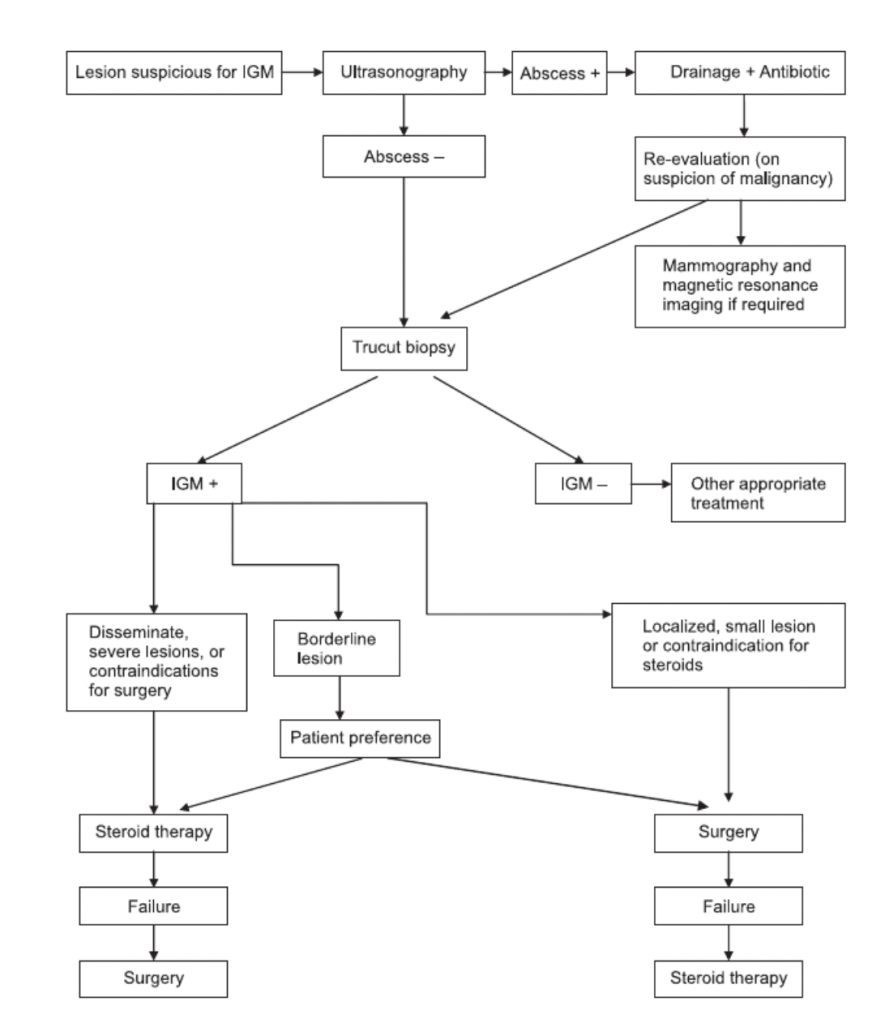
Idiopathic / Chronic Granulomatous Mastitis (IGM) Quick Review

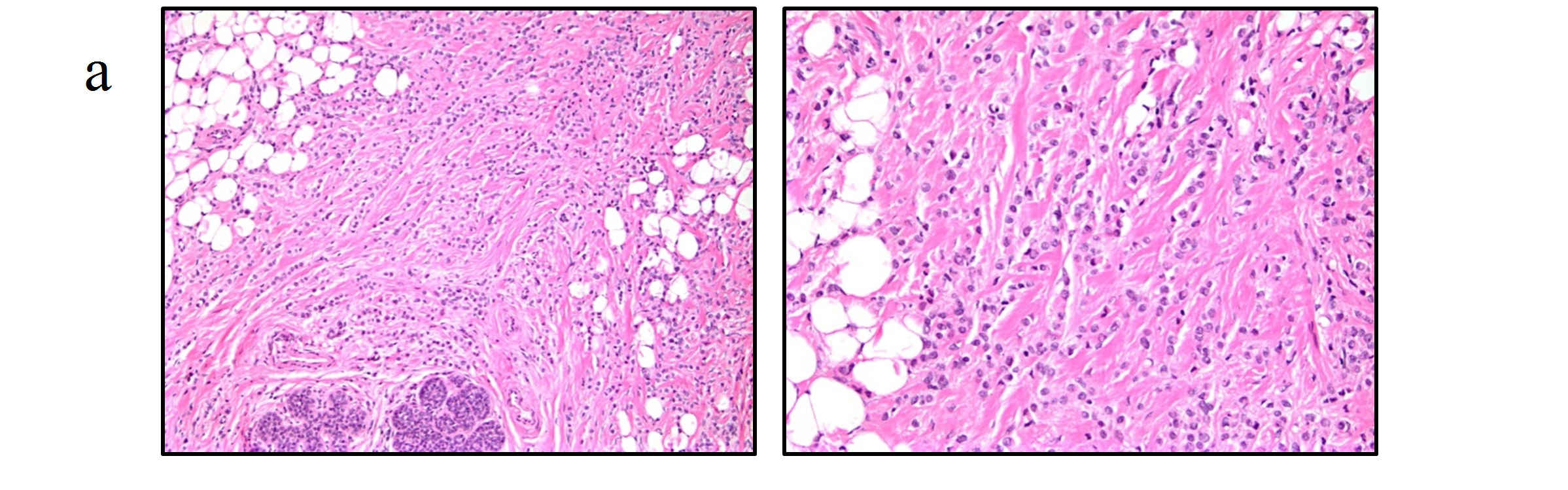
  • Idiopathic (Chronic) Granulomatous Mastitis:
    • Is a rare, benign, chronic, inflammatory breast disease:
      • First described in 1972 by Kessler and Wolloch
    • Patients presenting with symptomatic idiopathic granulomatous mastitis:
      • Are young, usually non-white women (hispanics and African Americans) of reproductive age, typically with a recent pregnancy within the last five years
    • It is characterized histologically by:
      • Non-caseating granuloma formation within the breast lobules
      • Neutrophilic micro abscesses
  • The most common presenting symptom is:
    • A unilateral, firm, and discrete breast mass:
      • Which may be accompanied by:
        • Overlying skin changes and / or possible lymph node involvement:
          • With idiopathic granulomatous mastitis
    • The lesion may occur in any quadrant of the breast:
      • But often extends radially from the retro-areolar region
    • The average duration of symptoms was:
      • 3.9 months
    • The most common signs and symptoms include:
      • Discrete mass:
        • Usually unilateral
        • Firm
      • Tenderness to palpation
      • Erythema
      • Swelling
      • The pain could be out of proportion to findings:
        • Suggestive of a localized ischemic etiology:
          • The pain was the motivating factor in prompting all symptomatic patients to seek consultation
  • Possible etiology:
    • Extravasated lactation secretions:
      • May be responsible for eliciting a granulomatous inflammatory response in the lobular connective tissue
    • Local trauma, autoimmune processes, or chemical agents, such as oral contraceptive drugs and smoking:
      • May cause extravasations of luminal content:
        • With induced ductal epithelial damage
  • The disease often presents in:
    • Women of childbearing age:
      • Mean age in some studies is around 31.7
        • With a recent history of pregnancy or ongoing lactation
  • Typical mammographic and ultrasonographic findings of granulomatous mastitis include:
    • Segmental masses with ill-defined margins:
      • With tubular structures extending from the mass:
        • Which is heterogeneously hypoechoic
  • Mammographic findings of idiopathic granulomatous mastitis have ranged from:
    • Ill-defined mass to an asymmetric density without specific margins
    • It is usually not accompanied by:
      • Micro-calcifications or architectural distortion
    • Mammography in young patients:
      • Can be highly unspecific and misleading:
        • Due to the dense nature of the breasts
    • On the other hand:
      • A dense, spiculated mass causing asymmetry:
        • Raises concern for malignancy
  • Ultrasound may be useful to help differentiate between benign versus malignant etiology:
    • Ultrasound findings of idiopathic granulomatous mastitis include:
      • A hypoechoic heterogeneous mass with internal hypoechoic tubular structures:
        • Where tubular structures may be clustered, separate or contiguous:
          • The latter is consistent with inflamed ducts
          • Altogether, these are highly suggestive of the diagnosis, but also suggestive of abscess formation
  • The presence of associated imaging features such as:
    • A radial scar, micro-calcifications, or intra-ductal papilloma:
      • Steer the direction of further workup to favor biopsy:
        • Since these entertain the possibility of malignancy
  • Cultures sent and / or acid fast staining of mass aspirate has revealed:
    • Corynebacterium species:
      • There is evidence to suggest a link to Corynebacterium kroppenstedtii infection or colo- nization.
    • Propionibacterium acnesdall skin flora
  • Because surgical biopsy is more invasive and leaves a scar on the breast:
    • It is usually considered as the last choice after FNAB or CNB has failed
  • First line treatment:
    • Trial of antibiotics:
      • Most commonly with a short (two week) course of beta-lactamase resistant penicillin:
        • Assuming the more common mastitis at initial presentation
      • First-line therapy with doxycycline:
        • 100 mg twice daily:
        • Was successful as a first-line therapy:
          • With complete response in 50% of patients
  • Second line therapy:
    • Corticosteroids
    • Methotrexate appeared to be a successful second-line therapy:
      • In patients with disease that was refractory to doxycycline (complete response in 50%)
  • The overlap of presenting symptoms with other disease processes such:
    • As malignancy, acute or chronic infections, and chronic inflammatory dis- eases:
      • Makes definitive diagnosis difficult
  • Because the differential diagnosis may include malignancy:
    • The patient may experience significant anxiety during the evaluation
  • The broad differentialdifferential and the lack of pathognomonic features:
    • Make definitive diagnosis difficult:
      • Often resting as a diagnosis of exclusion on a clinical basis:
        • Because diagnosis is difficult, patients typically have received:
          • Prolonged courses of antibiotics, frequent biopsies, or surgical procedures
  • Once the diagnosis is made:
    • Treatment strategies are not clearly delineated but are often supportive
  • IGM occurs predominantly in:
    • Hispanic women of childbearing age
  • IGM has major implications for quality of life:
    • With a high prevalence of pain and scarring
  • Although surgical therapy for IGM has been suggested in the literature:
    • Adequate medical management may alleviate the need for surgical intervention in some cases

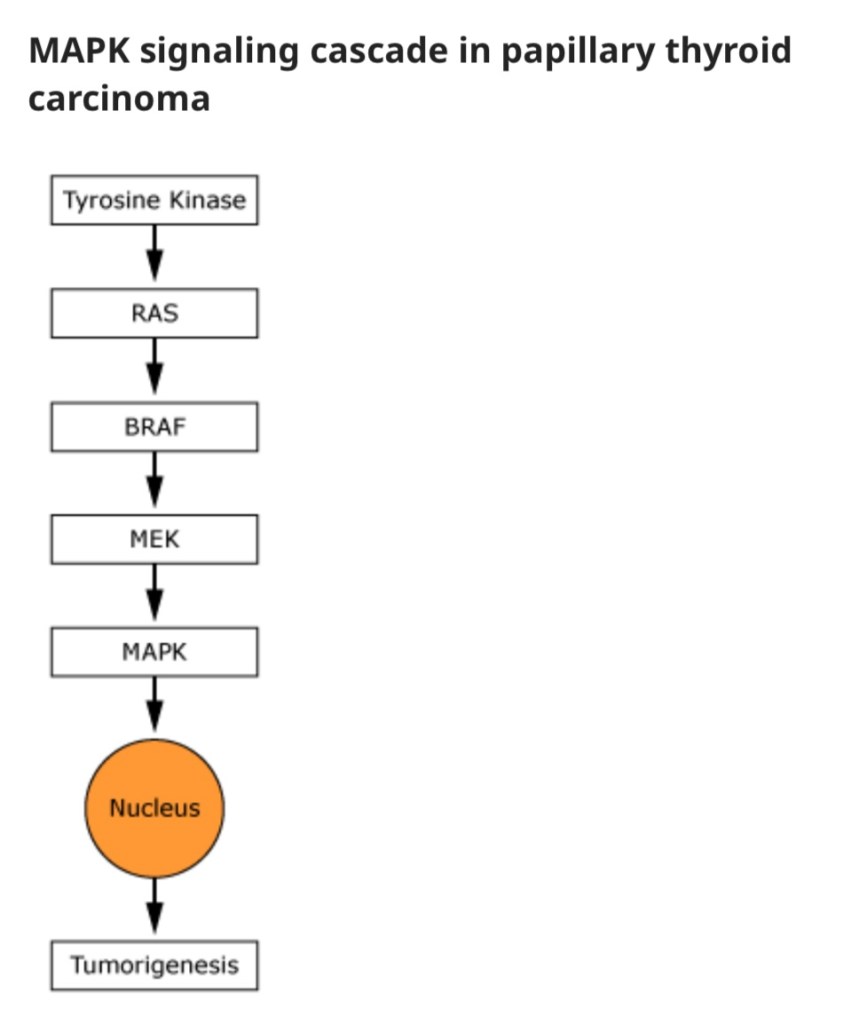
MAPK Signaling Cascade in Papillary Thyroid Carcinoma

Schematic representation of the MAPK signaling cascade in papillary thyroid carcinoma
  • MAPK, also known as ERK:
    • Translocates to the nucleus and promotes cell division:
      • When it is phosphorylated by MEK:
        • A serine / threonine kinase
    • Constitutive activation of this process:
      • Is tumorigenic
  • MAPK phosphorylation is a relatively distal step in a sequential phosphorylation cascade:
    • That can begin with the activation of a tyrosine kinase:
      • Is followed by phosphorylation of RAS:
        • Which activates BRAF:
          • A serine / threonine kinase
      • This is followed by MEK and MAPK phosphorylation
  • In papillary thyroid carcinoma:
    • Somatic genetic alterations at three of these steps:
      • Activate this linear signaling cascade
  • A gene rearrangement:
    • Creating a chimeric RET or TRK activates the initial tyrosine kinase step
  • Activating point mutations of either RAS or BRAF:
    • Constitutively activates these proteins
  • The tyrosine kinase, RAS, and BRAF genetic alterations:
    • Are usually mutually exclusive, suggesting that any single alteration is sufficient to play an early role in tumorigenesis

#Arrangoiz #ThyroidSurgeon #CancerSurgeon #ThyroidExpert #SurgicalOncologist #HeadandNeckSurgeon #MountSinaiMedicalCenter #Miami #Mexico

Management of Goiter and Multinodular Goiter

  • Suppressive Therapy
    • Reports about the effectiveness of thyroid hormone suppression in nontoxic goiter suppression have varied greatly in the literature
    • In 1997, Lima et al. studied prospectively thyroxine (T4) treatment at 200 μg, to suppress thyroid-stimulating hormone (TSH) to less than 0.1 μU/L in patients with nontoxic multinodular goiter:
      • Response defined as a greater than 50% decrease in combined nodular volume occurred in:
        • Only 29.1% of patients
          • 47% of patients were non-responders
    • Berghout et al. found that in patients responding to thyroid treatment:
      • Goiter size reduction averaged only 25%
      • In addition, when thyroid hormone treatment was discontinued:
        • Thyroid volume was found to return to pretreatment values within a few months
    • Hurley and Gharib found that thyroid hormone:
      • Was able to reduce goiter size by 50%:
        • In only 27% of patients
    • Ross noted that when thyroid hormone is affected:
      • A size reduction occurs with a lag of approximately three months relative to initiation of therapy
    • Zorrilla found that thyroid hormone-induced size reduction:
      • Was unpredictable
    • Generally, diffuse goiters are thought to be more thyroid hormone responsive as compared with multinodular goiters
    • Burgi et al. found that nodules larger than 2 or 3 cm are less likely to respond to thyroid hormone therapy
    • Other studies looking at combined nodular volume reduction show response rates ranging:
      • From 20% to 58% of patients suppressed
    • T4 suppression is generally not offered to patients who present with subclinical hyperthyroidism with a TSH level less than or equal to 1 μU/L or in elderly patients
    • Thyroid hormone suppressive therapy for goiter, which must be carried out indefinitely because of the tendency for goiter to recur after cessation of therapy:
      • Risks atrial fibrillation in patients older than age 60 and those with bone loss, especially in postmenopausal women
    • Overall, a review of the literature suggests that T4 suppressive therapy has variable efficacy in reducing goiter size:
      • Is characterized by a high regrowth rate of goiter when T4 is discontinued, and is limited in the elderly population and in patients with subclinical hyperthyroidism
  • Radioiodine
    • Radioiodine can be used for the treatment of nontoxic multinodular goiter
    • Although not widely used currently in the United States, radioiodine as a treatment for large goiter with compressive symptoms has become more common place in Europe
    • Higher doses of 131I:
      • Similar to ablative doses used in thyroid cancer patients are required for nontoxic multinodular goiter, as compared with doses used for Graves’ disease:
        • Because of the large volume and lower uptake of nontoxic multinodular goiters
    • Generally, uptake is lower in nontoxic multinodular goiters than in diffuse (anodular) goiters (i.e., Graves’ disease)
    • Studies looking at radioiodine as a treatment for nontoxic multinodular goiter:
      • Show volume reduction of one third to two thirds occurring in more than 80% of patients:
        • With 70% to 80% of patients having a decrease in obstructive symptomatology
    • Complications include radiation thyroiditis:
      • With acute worsening of airway symptoms in less than 5% of patients
      • The need for greater than one dose of radioiodine in up to 20% of patients
      • Hypothyroidism in 60% of patients:
        • Increased risk if:
          • Positive anti-thyroid peroxidase autoantibodies
          • Family history of hypothyroidism
          • In patients with small goiters
      • Radiation-induced Graves’ disease:
        • In up to 10% of patients
      • The high doses of radioiodine used:
        • Increase the estimated lifetime risk of cancers outside the thyroid gland by:
          • 1.6% overall
          • 0.5% for patients older than age 65
    • Radioiodine in the treatment of large goiter that is affecting the airway deserves special attention:
      • Le Moli found the larger the goiter:
        • The less responsive to radioiodine
      • Nygaard found transient increase in goiter size in approximately 7% of patients treated:
        • In these patients, increased size averaged 25%, with a range from 11% to 60%
      • Bonnema also found that within 1 week of radioiodine treatment:
        • The tracheal cross-sectional area decreased by 9.2% from an initial value:
          • With 33% being the greatest reduction in tracheal caliber seen
    • Radioiodine treatment should be considered only:
      • In patients with smaller goiters without airway impact
      • In patients who could not otherwise tolerate surgery
    • The use of radioiodine is ill advised in patients with substernal goiter who have a substantial increased rate of airway compression
  • Surgery:
    • Rationale:
      • Surgery represents a rational treatment option for many patients with cervical goiter and most patients with substernal goiter
      • Regional compressive symptoms resolve postoperatively:
        • Faster than with suppressive or radioiodine therapy
      • Complication rates are low
      • Subclinical hyperthyroidism remits
      • Airway complications are avoided
      • A pathology report is provided
      • Goiter surgery is most safely offered when it is not offered with undue delay:
        • Waiting until a goiter is massive will likely increase operative complication rates
      • Surgery brings no risk of radioiodine-induced immediate airway complications, malignancies, or Graves’ disease
      • Surgery also brings no risk of thyroid hormone–induced atrial fibrillation or osteoporosis
      • A patient cannot be a “non-responder” to surgery
    • Indications:
      • Surgery is recommended in patients with multinodular goiter who present with hyperthyroidism:
        • As they do not generally respond well to anti-thyroid drugs, including perchlorate and iopanoic acid
      • Furthermore, surgery may be preferred over radioactive iodine treatment in elderly patients with goiter and subclinical or frank hyperthyroidism:
        • To forestall the risk of radioiodine-induce Graves’ disease in this cardiac-frail population
  • Cervical and Substernal Surgery Rationale:
    • Natural history of goiter is of progressive growth
    • Treats existent regional / compressive symptoms
    • Avoids rapid and unpredictable increase in size and airway compression
    • Provides pathology report
    • Rules out malignancy
    • Treats hyperthyroidism and subclinical hyperthyroidism
    • Has low operative morbidity
    • Thyroid hormone (suppressive) treatment is associated with a high non-response rate, requires lifetime treatment, cannot be offered if TSH is <1, risks atrial fibrillation and osteoporosis, and is less likely to be effective with large nodular goiters
    • Radioactive iodine treatment of goiter risks acute radiation thyroiditis and airway compression and, in approximately 10% of patients, induces Graves’ disease
  • Patients can be reasonably considered for cervical goiter surgery in the following situations:
    • If a patient has clear-cut regional upper aerodigestive tract symptoms without other cause:
      • As such symptoms may first manifest with positional provocation or nocturnally
    • If radiographic evaluation through axial CT scanning is showing evidence of tracheal compression
    • For thyroids greater than 5 cm or masses with significant cosmetic issues:
      • As regional symptoms typically emerge when the mass is 5 cm or greater, and fine-needle aspiration is less accurate to exclude malignancy in a mass of this size or greater
    • Goiter patients with subclinical hyperthyroidism
    • Patients in whom carcinoma is suspected or proved
    • All patients with substernal extension:
      • The presence of substernal goiter in general is a surgical indication because of the strong association of tracheal compression and substernal growth and because the mediastinal component is difficult to follow on physical exam or with fine-needle biopsy
    • Patients with goiter in whom carcinoma is suspected or proved should undergo surgical excision
  • The typical pathology report for substernal or surgical goiter:
    • Reveals adenomatous nodules with old hemorrhage, calcification, cyst formation, fibrosis, and, sometimes, focal thyroiditis
    • The pathology report may also be primarily thyroiditis in some circumstances
  • The rate of malignancy varies in cervical and substernal goiter surgical specimens:
    • Singh, Lucente, and Shaha, in reviewing the surgical literature, noted an average rate of 8.3%:
      • With a range of 0% to 40%
    • Katlic, Grillo, and Wang in 80 substernal goiters:
      • Noted only a 2% rate
    • Sanders et al. noted a rate as high as 21%
  • The alternative to surgical extirpation of multiple thyroid nodules is multiple fine-needle aspiration (FNA) of all sizable nodules:
    • It is a matter of judgment as to whether this implies simply aspiration of the dominant nodule or all nodules within the goiter greater than 1 cm
    • Given that negative FNAs of all sizable nodules do not rule out malignancy, I believe it is reasonable to abstain from aspirating all nodules in a patient who is scheduled for goiter surgery and who is not suspected to harbor malignancy based on physical exam and CT scanning especially when total thyroidectomy is planned
  • Surgery for Substernal Goiter:
    • I believe that all patients, whether symptomatic or not, with substernal goiter should be considered for surgery
    • Substernal extension in series of more than 200 large cervical and substernal goiters:
      • Highly correlates with airway compression:
        • This is not surprising, considering the bony confines of the thoracic inlet
    • The thoracic component of a substernal goiter is also unavailable for ongoing clinical examination or FNA
    • If the substernal component acutely enlarges, the airway is affected on a mediastinal level
    • Most substernal goiter series note a small but significant rate of acute airway emergency
    • Neither tracheotomy nor intubation may relieve an obstruction associated with mediastinal airway compression
    • Aside from typical regional symptoms, benign substernal goiter has also been associated with superior vena cava (SVC) syndrome, downhill esophageal varices, recurrent laryngeal nerve paralysis, phrenic paralysis, Horner’s syndrome, chylothorax, abscess formation, and cerebral vascular accident
    • Given the propensity for regional symptomatology, the lack of other reasonable treatment options, and the low complication rate of surgery, all patients with substernal goiter should be considered for surgery, assuming their medical condition permits

#Arrangoiz #ThyroidSurgeon #ThyroidExpert #HeadandNeckSurgeon #CancerSurgeon #SurgicalOncologist #ThyroidDisease #ThyroidNodules #MultinodularGoiter #Goiter #SubsternalGoiter #MountSinaiMedicalCenter