Diagnostic Biopsy for DCIS

  • Stereotactic core-needle or vacuum-assisted biopsy:
    • Is the preferred method for diagnosing DCIS
  • Calcifications that appear faint on mammogram or that are deep in the breast and close to the chest wall:
    • May be difficult to target with stereotactic biopsy
  • In addition, use of stereotactic biopsy in patients above the weight limit of the stereotactic system (about 150 kg) and in patients with very small breasts:
    • May be impossible
  • Patients who cannot remain prone or who cannot cooperate for the duration of the procedure:
    • Are also not good candidates for stereotactic biopsy
  • Bleeding disorders and the concomitant use of anticoagulants:
    • Are relative contraindications
  • Biopsy specimens:
    • Should be radiographed to document the sampling of suspicious microcalcifications
  • Care should be taken to mark the biopsy site with a metallic clip:
    • In the event that all microcalcifications are removed with the biopsy procedure
  • In the final biopsy procedure report:
    • It is important to report the:
      • Needle gauge used
      • How many cores were obtained
      • An estimate as to what percentage of the calcifications was removed
  • Because stereotactic core-needle and vacuum-assisted biopsy specimens represent only a sample of an abnormality observed on mammography:
    • The results are subject to sampling error
  • Invasive carcinoma:
    • Is found on excisional biopsy in 20% of patients:
      • In whom DCIS was diagnosed by a stereotactic core-needle biopsy
  • Thus, if the core-needle biopsy results are discordant with the findings of imaging studies:
    • A wire- or seed-localized excisional biopsy can be performed to establish the diagnosis
  • After diagnosis using stereotactic core-needle biopsy:
    • Approximately 20% to 30% of patients with ADH, up to 20% of patients with radial scar, approximately 5% to 10% of patients with flat epithelial atypia (FEA):
      • Are found to have a coexistent carcinoma near the site of the biopsy:
        • When complete excision is performed
    • Therefore, when the final pathologic studies from core-needle biopsy procedures indicate either of these diagnoses (ADH, radial scar, FEA):
      • Consideration should be made for excisional biopsy:
        • Though in the case of pure FEA:
          • There is some evidence to suggest that surgical excision is not necessary if all calcifications are removed at the time of biopsy (Calhoun et al., 2015)
  • Patients who are not candidates for stereotactic biopsy or who have stereotactic biopsy results that are inconclusive or discordant with the mammographic findings:
    • Should undergo excisional biopsy:
      • This technique is performed with the assistance of preoperative wire or seed localization of the mammographic abnormality in conjunction with the previously placed metallic clip marking the biopsy site
      • Postexcision specimen radiograph:
        • Is essential to confirm the removal of microcalcifications or targeted lesion
      • The excisional biopsy should be performed with the aim of obtaining a margin-negative resection:
        • That can serve as the definitive surgery

#Arrangoiz #CancerSurgeon #BreastSurgeon #SurgicalOncologist #BreastCancer #LCIS #DCIS #DuctalCarcinomaInsitu #LobularNeoplasia #LobularCarcinomaInsitu #Surgeon #Teacher #Miami #Mexico #MSMC #MountSinaiMedicalCenter

An International Survey of Thyroid Nodule Risk Stratification System Use and Preferences: Are We Moving Towards a Universal System?

Clin Thyroidol 2022;34:246–249.

  • Background:
    • Multiple ultrasound-based risk stratification systems (RSSs) have been developed to assist clinicians in the evaluation and management of thyroid nodules
    • Currently available systems differ in their approach to nodule categorization and suggest different fine-needle aspiration (FNA) size thresholds
    • Head-to-head comparisons of the performance of widely available RSS have yielded inconsistent results, making it difficult for individual practitioners to choose and implement an appropriate system
    • An International Thyroid Nodule Ultrasound Working Group (ITNUWG):
      • Is currently working on an international RSS to harmonize current systems
    • The present study is an international survey conducted by members of the ITNUWG to assess RSS use patterns and practitioner preferences
  • Methods:
    • A 22-question online international survey was developed by four members of the ITNUWG steering committee and administered via Survey-Monkey.com
    • The focus of the survey was on choice and usage of RSS, practitioner and practice type and demographics, geographic region, specialty, level of training, experience, and volume of thyroid nodule ultrasound and fine-needle aspiration
    • Invitations to complete the survey were disseminated by email by professional organizations including the American Thyroid Association (ATA), Associazione Medici Endocrinologi (AME), European Thyroid Association, Korean Society of Thyroid Radiology, and the Society of Radiologists in Ultrasound
    • The survey focused on five widely available RSSs including the:
      • American Association for Clinical Endocrinology (AACE), American College of Endocrinology (ACE) and AME unified guidelines, ACR TI-RADS, the ATA guidelines, EU-TIRADS, and K-TIRADS
    • It was designed to be completed in less than 15 minutes and participation was voluntary without reward; respondents did not have to answer all questions
  • Results:
    • A total of 875 respondents from 52 countries participated in the survey
    • 724 respondents answered questions about RSS awareness, value, and use
    • The response rate could not be calculated due to overlapping membership across the 5 disseminating societies
    • The majority of respondents were attending physicians in academic practice
    • There were 54% of respondents from Europe and 28.3% from North America; 61.5% were endocrinologists, 20.6% were radiologists, and 11.4% were surgeons
    • A reported 94.6% of respondents were at least somewhat familiar with an RSS, and a 91% found value in RSS usage
    • There were 95.6% of respondents who stated that an RSS was used in their practice, and 30.8% used more than one
    • Alone or in combination, RSS usage was as follows:
      • ATA guidelines (34%)
      • ACR TI-RADS (33.7%)
      • EU-TIRADS (29.6%)
      • AACE/ACE/AME guidelines 20.5%
      • K-TIRADS (14.6%)
      • Other (4.6%)
      • None (5%)
    • Geography and clinician specialty were major determinates of which RSS was used:
      • Surgeons and “others” were most likely to use multiple RSSs (40%)
    • A total of 271 respondents stated they did not personally use an RSS, most who favored narrative descriptions, and cited lack of institutional requirement (19.6%), multiplicity of options (18.1%), preference for using suspicious features (14.8%), contention that expertise is as or more effective (12.9%)
    • There were 62% of the 724 respondents who felt a universal lexicon with illustrative images would improve inter-observer variability
    • 54% supported a comprehensive online atlas
    • 44.9% supported a universal lexicon endorsed by societies
    • 95.2% preferred no more than 5 risk categories
  • Conclusions:
    • An international survey of RSS use patterns and practitioner characteristics and preferences was performed to inform development of a unifying international RSS
    • The survey demonstrated wide variability in practice patterns across geography and specialty, with majority support for a comprehensive atlas and unified lexicon with no more than 5 risk categories
  • Summary:
    • Ultrasound-based RSSs have attempted to codify and standardize the evaluation of thyroid nodules and have largely succeeded in articulating a shared lexicon of sonographic features that have predictive value
    • While RSSs differ in their specific format (e.g. pattern recognition versus point systems), definitions and weight of each sonographic criterion, risk categories, FNA size thresholds, and the presence and specifics of recommended surveillance intervals, most systems have more similarities than differences, and perform well with robust negative predictive value
    • The present study is one of the largest and most inclusive efforts to date to understand who uses which systems, and to seek to understand determinants of use, as well as clinician preferences
    • While the study’s methods traded some statistical rigor (no calculable response rate, high risk of sampling and non-response biases, etc.) for ease of execution (SurveyMonkey.com) and wide breadth and exposure (use of professional organizations to elicit international respondents, high respondent heterogeneity), it confirms the intuitive observation that clinicians choose systems informed by their geography and specialty, both of which select for involvement with particular professional societies, many of which have their own validated systems
    • the multiplicity of systems is particularly bewildering for primary care providers and patients (especially in the era of “open” notes), especially when radiologists and/or clinicians are using multiple RSSs with differing management recommendations
    • This confusion had led to widespread efforts to compare the performance of RSSs
    • While many comparative analyses have attempted to identify the “best” system, they employ heterogenous methods and outcomes, often looking at biopsy rates, and diagnostic accuracy
    • To date, there has not been a clear winner, and most of the discrepancies across systems are in lower risk strata
    • However, recommendations for lower risk categories are important, especially given that most thyroid cancers are small indolent papillary thyroid cancers and up to 11% to 14% of adults, perhaps more, have incidental papillary thyroid cancer found on biopsy
    • Overdiagnosis, and attendant overtreatment, are a source of cost and morbidity, although headway is being made
    • An ideal RSS would catch all clinically significant thyroid cancers through an up-front FNA biopsy or follow up sonographic surveillance, and minimize the cost and inconvenience of long-term follow up for innocent nodules and cancers
    • It is interesting that the survey did not query why some practitioners use more than one RSS
    • While most of physicians have settled on one particular system for day-to-day use, most of us would admit to selective application of one of several RSSs to justify a specific recommendation or express evidence-based support for patient preferences voiced in shared decision-making:
      • For instance, in older adults with multiple comorbidities and a conservative approach to healthcare, the 2015 ATA guidelines option to survey rather than biopsy spongiform nodules larger than 2 cm, and / or use ACR TI-RADS for more conservative FNA size thresholds, at least in part because of mindfulness around overdiagnosis and increasing data on the safety of an active surveillance strategy for the right patient and low-risk tumor characteristics
    • In the end, most clinically meaningful feature of this survey study is the effort that bore it
    • The results are clear that a majority of clinicians would welcome a universal lexicon and risk stratification system, and it is exciting to see an international effort underway to elicit clinician practice patterns and preferences as part of a larger collaboration to reconcile, improve, and unify current RSSs in the context of the unique biology and epidemiology of thyroid cancer
  • References:
    • Hoang JK, Asadollahi S, Durante C, Hegedus L, Papini E, Tessler FN 2022 An International Survey on Utilization of Five Thyroid Nodule Risk Stratification Systems: A Needs Assessment with Future Implications. Thyroid. ePub 2022 Mar 1.
    • Grani G, Sponziello M, Pecce V, Ramundo V, Durante C 2020 Contemporary Thyroid Nodule Evaluation and Management. J Clin Endocrinol Metab 105.

#Arrangoiz #ThyroidSurgeon #ThyroidExpert #HeadandNeckSurgeon #CancerSurgeon #SurgicalOncologist #EndocrineSurgery #ThyroidNodules #UltrasoundThyroid #MSMC #MountSinaiMedicalCenter #Miami #Mexico

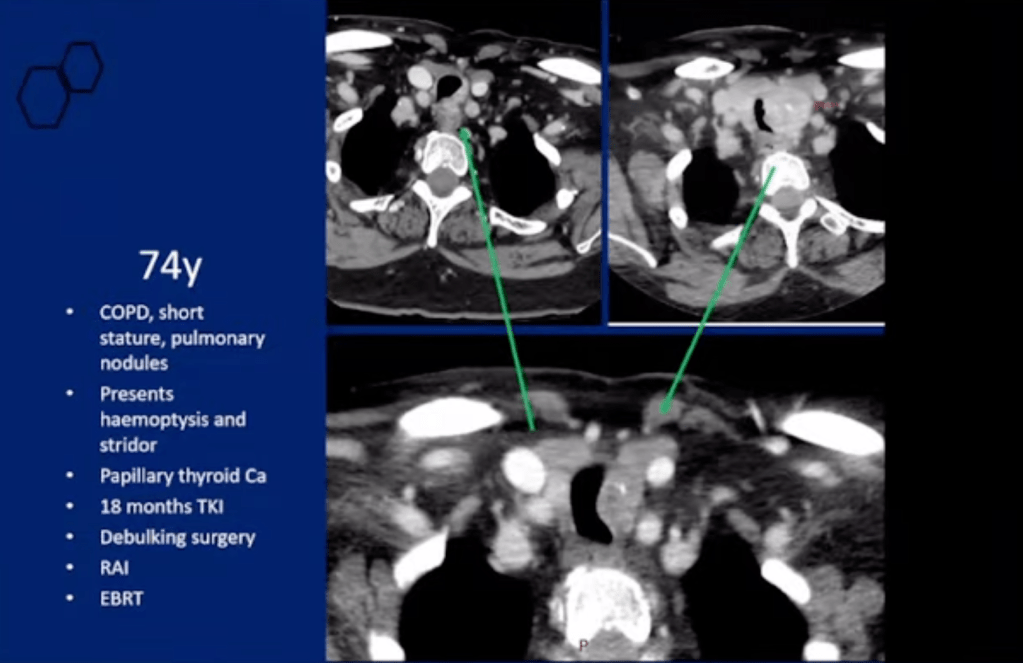
Prognosis of Anaplastic Thyroid Cancer

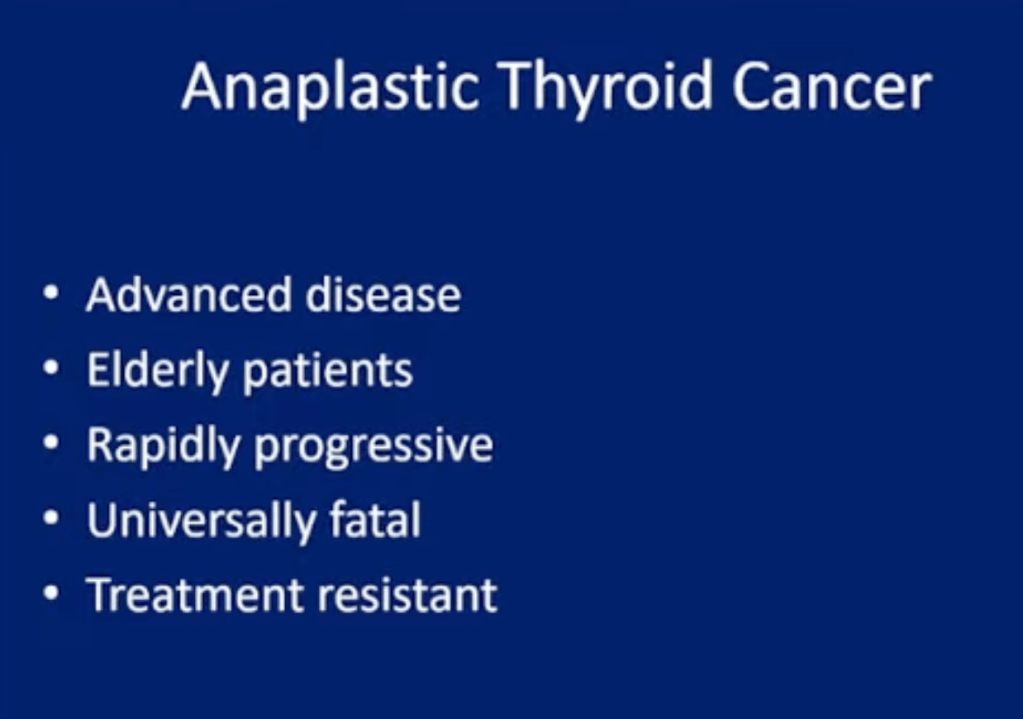
  • ATC has a rapidly progressive course and early dissemination
  • The most common sites of distant spread include, in descending order:
    • The lung, bone, and brain
  • Metastases, particularly in the lung:
    • Are likely to be present at diagnosis in more than 50% of cases
  • The overall 5-year survival rate:
    • Is reportedly less than 10%, and most patients do not live longer than a few months after diagnosis
  • One study has shown that patients younger than 60 years who have ATC confined to the thyroid:
    • Have a better prognosis than patients who are older and have distant metastases
  • A retrospective study from Korea found that:
    • Age less than 60 years, tumor size less than 7 cm, and lesser extent of disease:
      • Were independent predictors of lower disease-specific mortality 
  • While some studies have suggested that postoperative radiotherapy:
    • May be of benefit in terms of survival, definitive prospective trials are lacking
  • Akaishi et al conducted a review of 100 patients with ATC in a single hospital (Ito Hospital) from 1993-2009:
    • The 1-year survival rates were as follows:
      • Stage IVA – 72.7%
      • Stable IVB- 24.8%
      • Stable IVC – 8.2%
  • Multivariate analysis demonstrated worse prognosis with:
    • Age older than 70 years, white blood cell count of 10,000/μL or more, extrathyroidal invasion, and distant metastases at the time of diagnosis
  • Survival was significantly better if the patient received complete resection, external radiation at doses of 40 Gy or more, or both
  • Orita et al developed a prognostic index that can predict prognosis and assist in the early treatment of ATC

#Arrangoiz #ThyroidSurgeon #CancerSurgeon #SurgicalOncologist #HeadandNeckSurgeon #EndocrineSurgery #ThyroidCancer #Miami #Mexico #MountSinaiMedicalCenter #Surgeon #Teacher #ThyroidNodules #RadioactiveIodine #RAI #PTC #MSMC

Anaplastic Thyroid Cancer

  • Anaplastic carcinoma of the thyroid (ATC):
    • Is the most aggressive thyroid gland malignancy
  • Although ATC accounts for less than 2% of all thyroid cancers:
    • It causes up to 40% of deaths from thyroid cancer
  • The aggressive nature of ATC:
    • Makes treatment studies difficult to perform
  • The overall 5-year survival rate:
    • Is reportedly less than 10%, and most patients do not live longer than a few months after diagnosis
  • Patients with ATC:
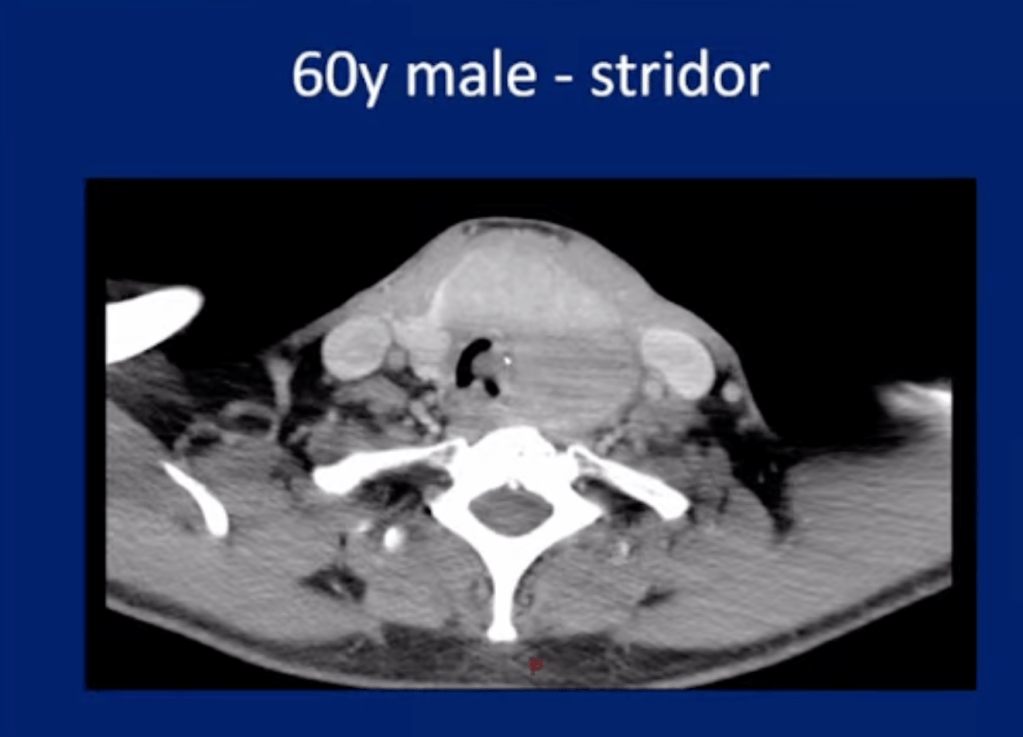
    • Typically present with a rapidly growing neck mass
  • Metastases, particularly in the lung:
    • Are likely to be present at diagnosis more than 50% of the time
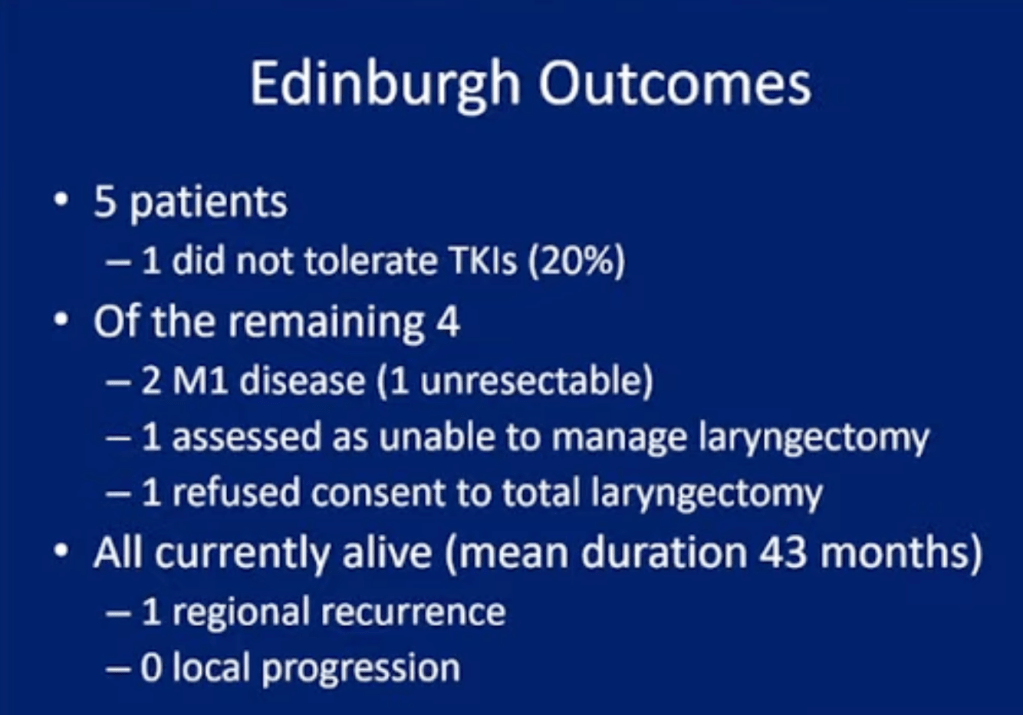
  • Treatment is mostly palliative
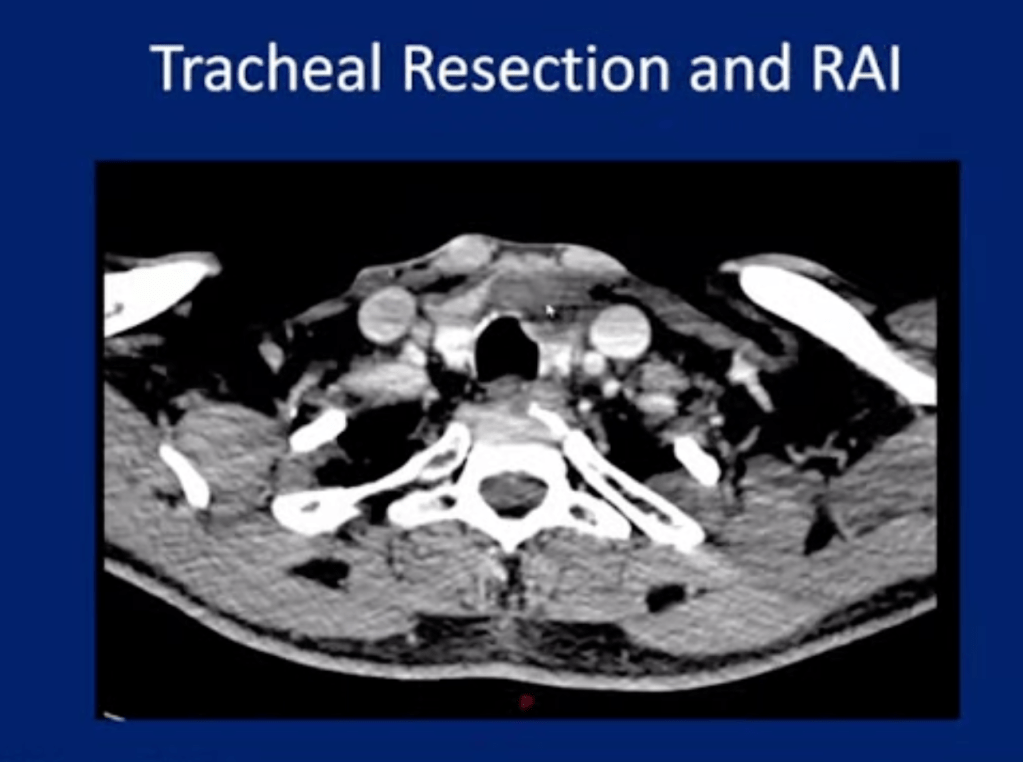
  • Surgical resection with adjuvant radiation therapy and chemotherapy:
    • May prolong survival somewhat and improve quality of life
  • Anaplastic carcinoma of the thyroid (ATC):
    • Generally occurs in people in iodine-deficient areas and in a setting of previous thyroid pathology (eg, preexisting goiter, follicular thyroid cancer, papillary thyroid cancer)
  • Local invasion of adjacent structures (eg, trachea, esophagus):
    • Commonly occurs
  • ATC is believed to occur from a:
    • Terminal dedifferentiation of previously undetected long-standing thyroid carcinoma (eg, papillary, follicular)
  • ATC has a genetic association with:
    • Oncogenes C-myc, H-ras, and Nm23
  • Mutations in genes that code for BRAF, RAS, catenin (cadherin-associated protein), beta 1, PIK3CA, TP53, AXIN1, PTEN, and APC:
    • Have been found in ATC, and chromosomal abnormalities are common 
  • Jonker and collegues performed functional genomic RNA profiling on 25 anaplastic thyroid carcinoma and 80 normal thyroid samples and identified 301 significantly upregulated genes, of which the following were seen as potential therapeutic targets:
    • MTOR
    • MET 
    • WEE1
    • PSMD1
    • MERTK
    • FGFR3
    • RARG
    • ESR2
  • Anaplastic carcinoma of the thyroid (ATC):
    • Constitutes less than 2% of all thyroid malignancies in the United States:
      • Which equates to slightly more than 1000 new cases annually
    • Fortunately, the incidence appears to be declining
    • Worldwide frequency likely approximates that in the United States
  • The female-to-male ratio:
    • Is approximately 3:1
  • Peak incidence occurs during the sixth to seventh decades of life
  • The age range of affected patients reportedly is 15-90 years

#Arrangoiz #ThyroidSurgeon #CancerSurgeon #SurgicalOncologist #HeadandNeckSurgeon #EndocrineSurgery #ThyroidCancer #Miami #Mexico #MountSinaiMedicalCenter #Surgeon #Teacher #ThyroidNodules #RadioactiveIodine #RAI #PTC #MSMC

Parathyroid Glands

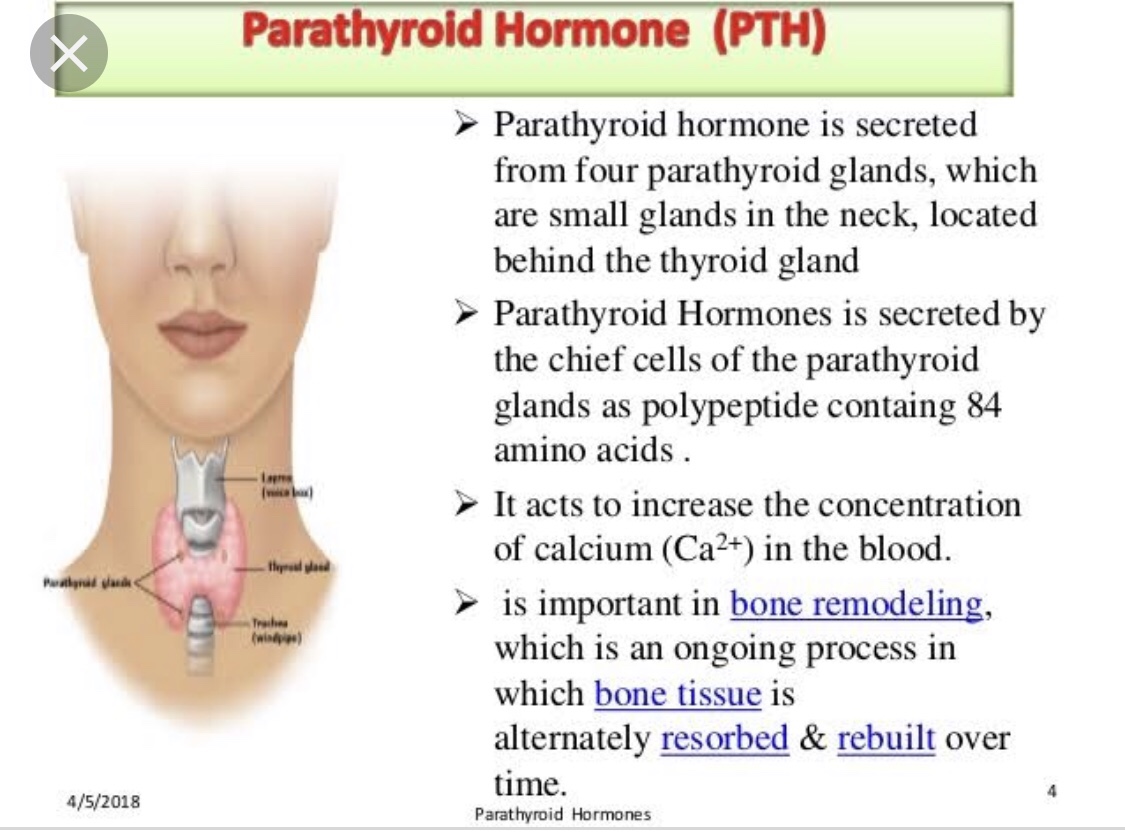
  • Through their secretion of parathyroid hormone (PTH):
    • The parathyroid glands are primarily responsible for:
      • Maintaining extracellular calcium concentrations
  • Hyperparathyroidism:
    • Is a disease characterized by excessive secretion of parathyroid hormone:
      • An 84–amino acid polypeptide hormone
  • The secretion of parathyroid hormone:
    • Is regulated directly by the plasma concentration of ionized calcium
  • The main effects of parathyroid hormone (PTH):
    • Are to increase the concentration of plasma calcium:
      • By increasing the release of calcium and phosphate:
        • From bone matrix
      • Increasing calcium reabsorption:
        • By the kidney
      • Increasing renal production of:
        • 1,25-dihydroxyvitamin D-3 (calcitriol):
          • Which increases intestinal absorption of calcium
    • Thus, overproduction of parathyroid hormone results in:
      • Elevated levels of plasma calcium
  • Parathyroid hormone also causes phosphaturia:
    • Thereby decreasing serum phosphate levels
  • Hyperparathyroidism is usually subdivided into:
    • Primary, secondary, and tertiary hyperparathyroidism
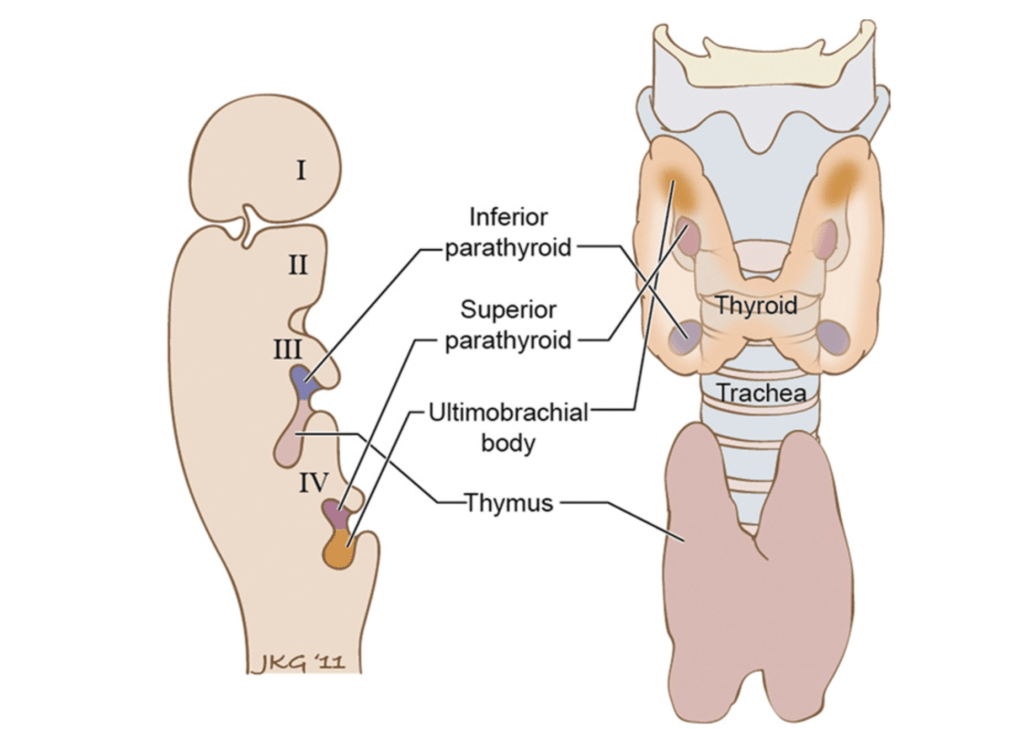
  • Usually, four parathyroid glands are situated posterior to the thyroid gland:
    • A small number of patients have 3, 5, or, occasionally, more glands:
      • The glands are identified based on their location as right or left and superior or inferior.
  • The inferior glands are derived from:
    • The third pharyngeal pouch:
      • This structure is also the embryologic origin of the thymus:
        • Therefore, the inferior glands originate more cephalad than the superior glands:
          • But they migrate along with the thymus to finally become situated more inferiorly than the superior glands
        • Because of their embryologic association with the thymus:
          • The inferior glands are often found adjacent to or within the thymus
          • They are usually located near the inferior pole of the thyroid
  • The superior glands are more consistent in location:
    • Usually found just superior to the intersection of the inferior thyroid artery and the recurrent laryngeal nerve
    • The superior glands are derived embryologically from the fourth pharyngeal pouch:
      • This structure also gives rise to the C cells of the thyroid gland
    • Because of their embryologic origin, the superior glands are occasionally found within the substance of the thyroid gland

#Arrangoiz #ParathyroidSurgeon #ParathyroidSurgeon #HeadandNeckSurgeon #EndocrineSurgery #Hyperparathyroidism #MSMC #MountSinaiMedicalCenter #Mexico #Miami

Identification of the Recurrent Laryngeal Nerve

  • In order to limit any bleeding or tissue distortion that may compromise the identification of the parathyroid glands:
    • The RLN is identified ONLY after all parathyroid glands have been exposed AND a decision made as to which one to remove
  • The RLN is identified in the inferior portion of the neck caudal to the ITA:
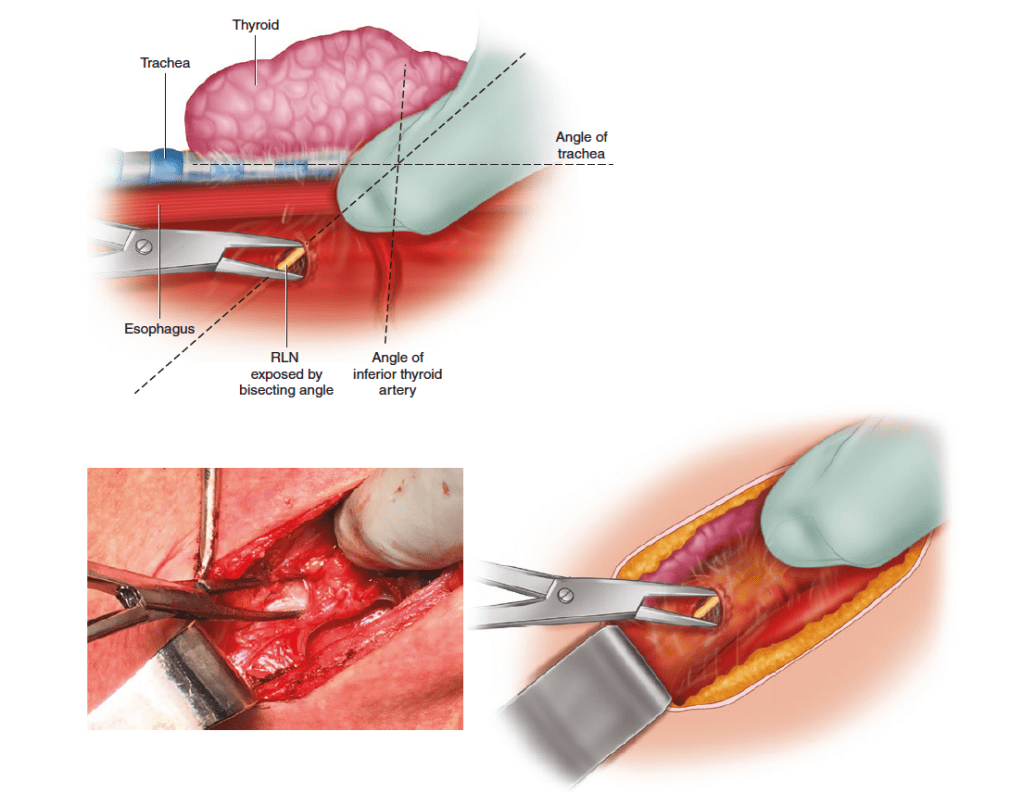
    • The angle between the trachea and the ITA is visually bisected, and careful blunt dissection is performed along this line to identify the nerve (Figure)
  • Further dissection on the perineurium of the nerve toward the ITA can be performed to approximate the course of the RLN
Identification of the recurrent laryngeal nerve allows for safe and confident dissection and ligation of the vascular pedicle supplying the parathyroid gland. The angle between the inferior thyroid artery and the trachea is visually bisected, and areola tissue along this angle is spread with a fine hemostat to identify the nerve

#Arrangoiz #ParathyroidSurgeon #HeadandNeckSurgeon #Surgeon #EndocrineSurgery #MSMC #Teacher #ParathyroidExpert #Hyperparathyroidism #MountSinaiMedicalCenter #Miami #Mexico
Thyroid Cancer

Hurtle Cell Carcinoma

#Arrangoiz #ThyroidSurgeon #CancerSurgeon #SurgicalOncologist #HeadandNeckSurgeon #EndocrineSurgery #ThyroidCancer #Miami #Mexico #MountSinaiMedicalCenter #Surgeon #Teacher #ThyroidNodules #RadioactiveIodine #RAI #PTC #MSMC

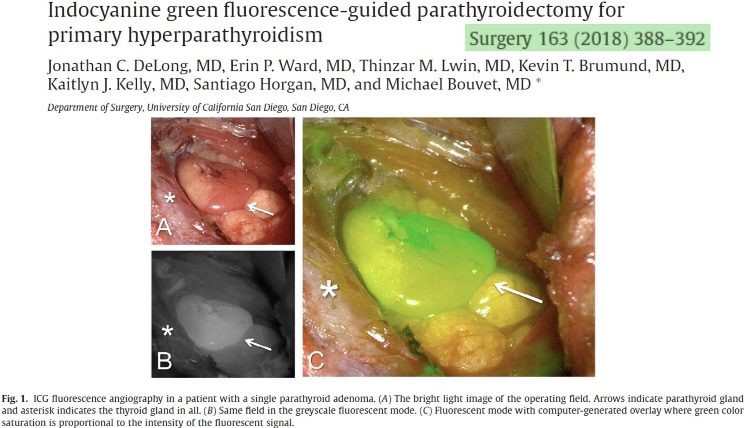
Indocyanine Green Flourescence Guided Parathyroidectomy

  • Indocyanine green fluorescence angiography may be a useful adjunct during parathyroidectomy and thyroid surgery.
  • https://doi.org/10.1016 j.surg.2017.08.018

Thyroid Cancer

#Arrangoiz #ThyroidSurgeon #CancerSurgeon #SurgicalOncologist #HeadandNeckSurgeon #EndocrineSurgery #ThyroidCancer #Miami #Mexico #MountSinaiMedicalCenter #Surgeon #Teacher #ThyroidNodules #RadioactiveIodine #RAI #PTC #MSMC

What is Parathyroid Hormone (PTH)?

  • Did you know that the first report for using intraoperative parathyroid hormone (IOPTH) measurement as an adjunct to guide removal of parathyroid tissue in a patient with hyperparathyroidism:
    • Was published greater than 25 years ago:
      • By Dr. G.L. Irvin the 3rd and colleagues? – Rodrigo Arrangoiz MS, MD, FACS, FSSO

👉CheckYourCalcium (realízate un calcio total en sangre).

#Arrangoiz #ParathyroidSurgeon #ParathyroidExpert #Hyperparathyroidism #PrimaryHyperparathyroidism #CancerSurgeon #EndocrineSurgery #Teacher #Surgeon #HeadandNeckSurgeon #SurgicalOncologist #ParathyroidAdenoma #Hypercalcemia #ElevatedCalciumLevels #Miami #MountSinaiMedicalCenter #MSMC #Mexico #Hialeah

https://www.ncbi.nlm.nih.gov/pubmed/8256205