
- Merkel cell carcinoma (MCC) is the eponym for :
- Primary cutaneous neuroendocrine carcinoma:
- A dermal neoplasm with cytoplasmic, dense-core neuroendocrine granules and keratin filaments.
- MCC is a rare primary cutaneous neuroendocrine malignancy
- Primary cutaneous neuroendocrine carcinoma:
- The incidence of MCC in the United States has recently been reported to have increased by an estimated annual percentage change of 8% from 1986 to 2001:
- Approximately 1500 new cases were predicted by the American Cancer Society in the United States alone in 2008.
- MCC is one of the few cancers found to be:
- Associated with immune suppression
- Polyomavirus has been shown to be integrated within the genome
- Merkel cell carcinoma (MCC) is an uncommon and aggressive cutaneous neoplasm that lacks distinguishing clinical features.
- More than half of Merkel cell carcinomas (MCCs) occur in the head and neck of elderly people in areas of actinically damaged skin:
- The most common site of occurrence is the periorbital region.
- Merkel cell carcinoma (MCC) has a propensity to recur and to cause:
- Local (25% to 30% of the cases) and distant metastases (30% to 35% of the cases).
- Distant metastases indicate a condition that is nearly always fatal.
- Merkel cell carcinoma (MCC) is a deadly disease with a poor likelihood for survival:
- Local recurrence occurs in:
- 44% of patients:
- Multiple local recurrences occur in 15% of patients.
- 44% of patients:
- Local recurrence occurs in:
- These tumors appear as:
- Rapidly growing, painless nodules in elderly caucasian individuals or in young adults with ectodermal dysplasia syndromes.
- Merkel cell carcinomas (MCCs) usually appear as:
- Indurated plaques or violaceous (red or deep purple) solitary and dome-shaped nodules.
- The surface is typically shiny, with telangiectasias and possibly ulceration.
- Most tumors measure 0.7 cm to 1.2 cm in diameter.
- Merkel cell carcinomas (MCCs) usually occur in sun-damaged skin.
- They are often found near other lesions of actinically damaged skin, including skin involved with:
- Bowen disease, squamous cell carcinoma, basal cell carcinoma, solar keratoses, or lentigo maligna.


- The mean age at presentation is 68 years:
- No gender bias is observed.
- Merkel cell carcinoma (MCC) has also been linked to:
- Previous radiation exposure and B-cell lymphoma.
-
The nonspecific characteristics of Merkel cell carcinoma (MCC) lead to a lengthy differential diagnosis that includes:
-
Basal cell carcinoma
-
Squamous cell carcinoma
-
Keratoacanthoma
-
Amelanotic melanoma
-
Epidermal cysts
-
Lymphoma
-
Metastatic carcinoma of the skin
-
As a result:
-
Merkel cell carcinoma (MCC) is rarely diagnosed until biopsy is performed
-
-
-
Approximately 53% of Merkel cell carcinomas (MCCs) occur in the head and neck:
- 35% occur in the extremities.
- In the head and neck:
- 46% of tumors occur in the periorbital region
- 29%, on the cheek
- 18%, on the eyelid
- 17%, on the forehead.
- Other sites in the head and neck include:
- The lips (9%)
- Ears (7%)
- Nose and neck (5.4%)
- Scalp (4%)
- Tumors have also been reported in areas not exposed to sun, such as the:
- Nasal cavity
- Buccal mucosa
- Gingiva
- Hard palate
- Postauricular skin
-
- Approximately 3% of patients with Merkel cell carcinoma (MCC) have tumors at several sites.
- MCC is an aggressive tumor:
- With an overall five-year survival of 40%
- Reported five year survival rates of local, nodal and metastatic disease are:
- 64%, 39% and 18%, respectively
- Reported rates of regional lymph node involvement at the time of presentation vary from 10% to 45%:
- Around 50% of patients with lymph node metastases harbor concurrent distant metastases:
- Most often in the:
- Liver, lung, brain, bone or skin
- Most often in the:
- Around 50% of patients with lymph node metastases harbor concurrent distant metastases:
- MCC has high rates of local recurrence:
- 25% to 30% of patients.
- MCC has high rates of distant metastasis:
- 30% to 35% of patients.
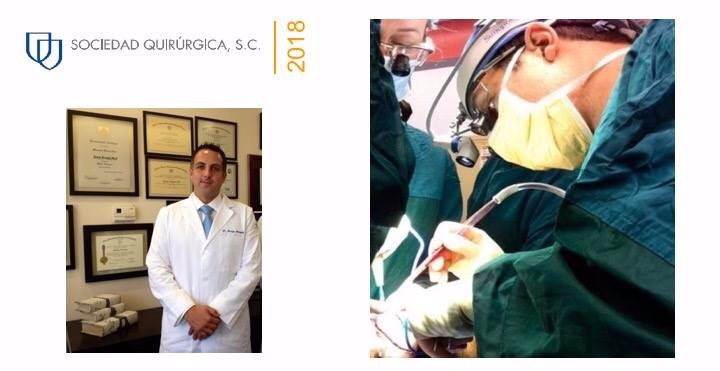
Rodrigo Arrangoiz MS, MD, FACS a head and neck surgeon / endocrine surgeon / surgical oncologist and is a member of Sociedad Quirúrgica S.C at the America British Cowdray Medical Center in Mexico City:
-
He is an expert in the management Merkel Cell Carcinoma.
Training:
• General surgery:
• Michigan State University:
• 2004 al 2010

• Surgical Oncology / Head and Neck Surgery / Endocrine Surgery:
• Fox Chase Cancer Center (Filadelfia):
• 2010 al 2012

• Masters in Science (Clinical research for health professionals):
• Drexel University (Filadelfia):
• 2010 al 2012

• Surgical Oncology / Head and Neck Surgery / Endocrine Surgery:
• IFHNOS / Memorial Sloan Kettering Cancer Center:
• 2014 al 2016

#Arrangoiz#Teacher
#Surgeon
#Cirujano
#ThyroidExpert
#ThyroidSurgeon
#CirujanodeTiroides
#ExpertoenTiroides
#ExpertoenParatiroides
#Paratiroides
#Hiperparatiroidismo
#CancerdeTiroides
#ThyroidCancer
#PapillaryThyroidCancer

 Rodrigo Arrangoiz MS, MD, FACS, FSSO