
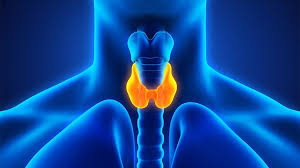
- Hyperthyroidism is approximately 10 times less common than hypothyroidism:
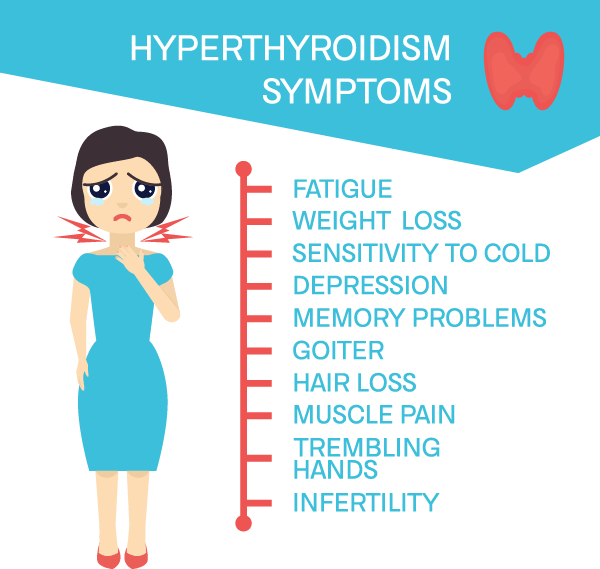
- Symptoms and signs of thyrotoxicosis are listed in the Table.
- Hyperthyroid elderly patients often have more cardiac symptoms but less systemic manifestations of thyrotoxicosis.
- Patients with suspected hyperthyroid syndrome should be evaluated for signs or symptoms of:
- Weight loss, heat intolerance, tremor, palpitations, anxiety, menstrual abnormalities, and new onset atrial fibrillation.
- Evaluation should be considered, especially in patients with increased risk of hyperthyroidism, including:
- A strong family history of thyroid dysfunction (hypothyroidism and hyperthyroidism)
- Other autoimmune conditions
- Long-standing goiter:
- Especially after contrast or amiodarone administration.
- Routine screening of asymptomatic patients for hyperthyroidism is not recommended.
| General | Skin |
| Weight loss | Excess perspiration |
| Heat intolerance | Palmer erythema |
| Anxiety / nervousness | |
| Insomnia | Nervous System |
| Muscle weakness | Tremor |
| Anxiety / nervousness | |
| Cardiovascular | Hyperkinesis |
| Tachycardia | |
| Palpitations | Gastrointestinal |
| Dyspnea on exertion | Frequent stools / diarrhea |
| Bounding pulses | |
| Atrial fibrillation | Reproductive |
| Irregular menstrual periods / amenorrhea | |
| Head and Neck | Light menstrual flow |
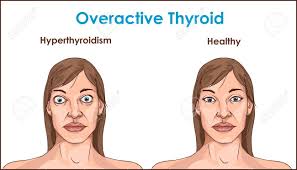
| Ophthalmopathy (Graves’ disease only: proptosis and chemosis) | Infertility |
| Stare | Gynecomastia (males) |
| Goiter |
- Thyroid Tests in the Evaluation of Thyrotoxicosis
- Measurement of serum TSH:
- Is the most sensitive way to diagnose hyperthyroidism:
- As it is always suppressed in primary hyperthyroidism.
- Patients with hyperthyroidism will almost always have a serum TSH concentration of:
- Less than 0.1 mIU/L and often under 0.05 mIU/L:
- The use of a second-generation TSH assay with a functional sensitivity of < 0.2 mIU/L is sufficient for the diagnosis and management of hyperthyroidism.
- Less than 0.1 mIU/L and often under 0.05 mIU/L:
- Secondary hyperthyroidism from a:
- Is extremely rare but should be suspected when the patient has symptoms suggestive of hyperthyroidism with an inappropriately “normal” TSH:
- This rare clinical condition should be referred to an endocrinologist for further diagnosis and management.
- Is extremely rare but should be suspected when the patient has symptoms suggestive of hyperthyroidism with an inappropriately “normal” TSH:
- Is the most sensitive way to diagnose hyperthyroidism:
- Certain medical conditions (severe non-thyroidal illness, acute starvation, first-trimester pregnancy) and medications (glucocorticoids, dopamine), in addition to hypothalamic or pituitary disease:
- Can result in low TSH:
- If any of these conditions are suspected:
- The help of a specialist is invaluable for determining the thyroid status of the patient.
- If any of these conditions are suspected:
- Can result in low TSH:
- An algorithm for ambulatory thyroid function testing for hyperthyroidism is shown:
- Measurement of serum TSH:
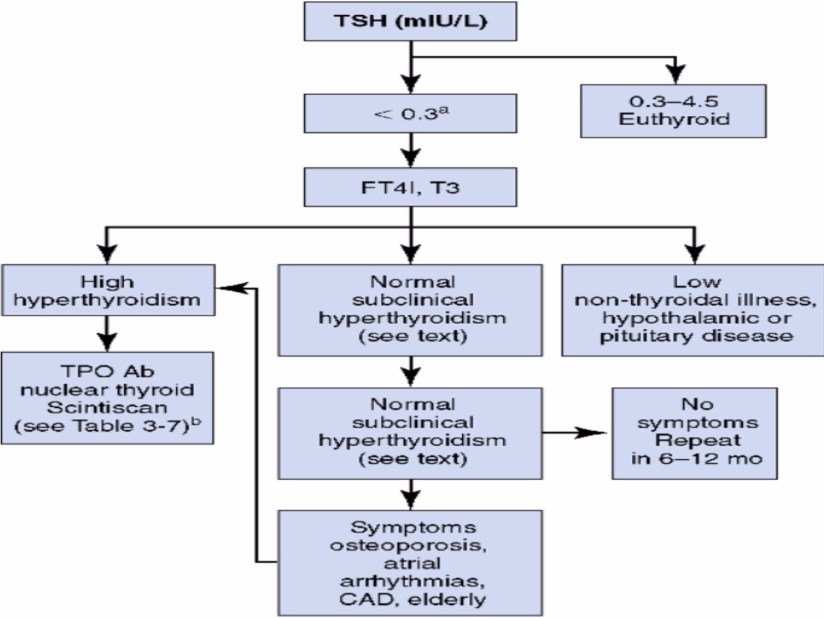
- If the TSH is within normal limits:
- The patient does not have hyperthyroidism:
- No further workup is indicated:
- Thyroid function tests should be repeated as clinically indicated.
- No further workup is indicated:
- The patient does not have hyperthyroidism:
- If the TSH is less than 0.3:
- Thyroid hormone levels should be determined in addition to repeat measurement of TSH:
- Small increases of the thyroid hormone level will cause:
- A disproportionate suppression of TSH because of their inverse log-linear relationship.
- The degree of hyperthyroidism cannot be assessed by second-generation assay TSH:
- Because even very mild thyrotoxicosis will suppress the TSH to very low levels.
- Although a third-generation assay can better differentiate between the degrees of hyperthyroidism:
- Routine laboratory measurements of:
- Total T4, THBR, FT4I, and total T3 can easily and accurately assess the degree of hyperthyroidism.
- Measurement of total T3 is needed in the evaluation of hyperthyroidism:
- Graves’ disease excretes a relatively high ratio of T3 / T4.
- If serum TSH is less than 0.3 and FT4I and total T3 is low:
- Hypothalamic or pituitary disease needs to be considered.
- Routine laboratory measurements of:
- Small increases of the thyroid hormone level will cause:
- Thyroid hormone levels should be determined in addition to repeat measurement of TSH:
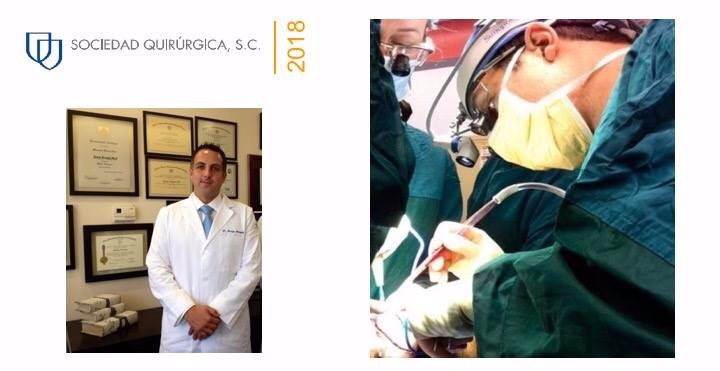
Rodrigo Arrangoiz MS, MD, FACS a head and neck surgeon / endocrine surgeon / surgical oncologist and is a member of Sociedad Quirúrgica S.C at the America British Cowdray Medical Center in Mexico City:
-
He is an expert in the surgical management of thyroid diseases.
Training:
• General surgery:
• Michigan State University:
• 2004 al 2010

• Surgical Oncology / Head and Neck Surgery / Endocrine Surgery:
• Fox Chase Cancer Center (Filadelfia):
• 2010 al 2012

• Masters in Science (Clinical research for health professionals):
• Drexel University (Filadelfia):
• 2010 al 2012

• Surgical Oncology / Head and Neck Surgery / Endocrine Surgery:
• IFHNOS / Memorial Sloan Kettering Cancer Center:
• 2014 al 2016

#Arrangoiz#Teacher
#Surgeon
#Cirujano
#ThyroidExpert
#ThyroidSurgeon
#CirujanodeTiroides
#ExpertoenTiroides
#ExpertoenParatiroides
#Paratiroides
#Hiperparatiroidismo
#CancerdeTiroides
#ThyroidCancer
#PapillaryThyroidCancer


