
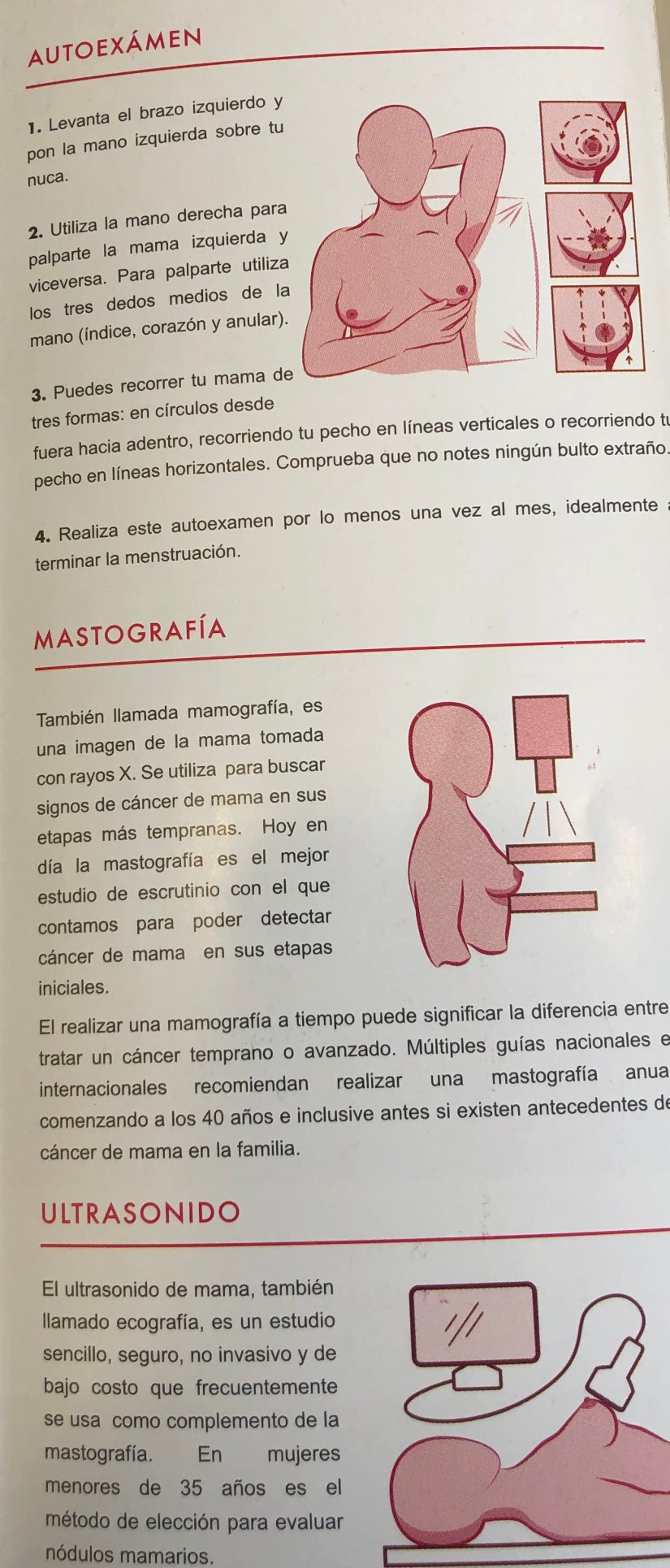
- Women with no symptoms for breast cancer should undergo mammography screening every other year:
- According to a new evidence-based guidance statement from the American College of Physicians (ACP):
- The largest medical specialty organization in the United States.
- According to a new evidence-based guidance statement from the American College of Physicians (ACP):
- The guidance applies to women between the ages of 50 and 74 who are at average-risk:
- The statement was published online April 9 in the Annals of Internal Medicine:
- “The evidence shows that the best balance of benefits and harms for these women, which represents the great majority of women, is to undergo breast cancer screening with mammography every other year.”
- This approach is also endorsed by the US Preventive Services Task Force (USPSTF).
- “The evidence shows that the best balance of benefits and harms for these women, which represents the great majority of women, is to undergo breast cancer screening with mammography every other year.”
- The statement was published online April 9 in the Annals of Internal Medicine:
-
The new guidance drew immediate fire from:
-
The American College of Radiology (ACR) and Society of Breast Imaging (SBI):
-
These two radiology groups recommend women have annual mammograms starting at age 40 years and that they continue “as long as they are in good health.”:
- The American Cancer Society (ACS) also recommends starting screening mammography at age 40.
-
-
- The new ACP guideline recommends:
- Mammography starting every other year:
- Starting at 50 years and stopping at 74 years
- This may result in up to 10,000 additional, and unnecessary, breast cancer deaths in the United States each year:
- This approach would also do little to nothing to address over-diagnosis or the harms of screening:
- The ACR and SBI comment in a joint press statement.
- Starting at 50 years and stopping at 74 years
- Mammography starting every other year:
- New ACP Recommendations:
- The new ACP document is an assessment of the quality and content of seven English-language guidelines for breast cancer screening:
- Including those from USPSTF, ACS, ACR, American College of Obstetricians and Gynecologists, Canadian Task Force on Preventive Health Care, National Comprehensive Cancer Network, and World Health Organization.
- The new ACP recommendations are for women at average risk of breast cancer:
- This includes women:
- Without a history of breast cancer
- Previous diagnosis of a high-risk lesion
- Without genetic mutations such as BRCA1/2 or another familial breast cancer syndrome
- Without a history of radiation therapy to the chest in childhood
- This includes women:
- The new ACP document is an assessment of the quality and content of seven English-language guidelines for breast cancer screening:
-
- In average-risk women aged 40 to 49 years:
- Clinicians should discuss whether to screen for breast cancer with mammography before age 50 years:
- Discussion should include the potential benefits and harms and a woman’s preferences:
- Potential harms outweigh benefits in most women aged 40 to 49 years according to the ACP guidelines.
- Discussion should include the potential benefits and harms and a woman’s preferences:
- Clinicians should discuss whether to screen for breast cancer with mammography before age 50 years:
- In average-risk women aged 50 to 74 years:
- Clinicians should offer screening for breast cancer with biennial mammography.The ACP guidance consists of four statements about mammography screening, as follows:
- In average-risk women aged 75 years or older or in women with a life expectancy of 10 years or less:
- Clinicians should discontinue screening for breast cancer.
- In average-risk women of all ages:
- Clinicians should not use clinical breast examination to screen for breast cancer.
- In average-risk women aged 40 to 49 years:
- Clarity Amid Chaos:
- The new guidance from the ACP provides “clarity and simplicity amidst the chaos of diverging guidelines,” write Joann Elmore, MD, MPH, University of California, Los Angeles, and Christoph Lee, MD, MS, University of Washington, Seattle, in an accompanying editorial.
- The editorialists congratulate the ACP for their effort to clarify the multitude of breast cancer screening guidelines:
- However, they emphasize it is not a perfect product:
- These guidance statements…do not clearly illuminate the full path ahead for every woman:
- For example, the issue of breast cancer density:
- The ACP considers women with dense breast tissue on mammography — and no other risk factors — to be at average risk:
- Because just under half of all women have dense tissue on mammography, this would seem reasonable,” the editorialists opine:
- When the average risk of dense breast tissue is combined with other risk factors that also indicate average risk in isolation (such as early menarche, late menopausal onset, oral contraceptive or menopausal hormone therapy, or a single family member with a history of postmenopausal breast cancer), a woman may no longer be at average risk.
- Physicians can expect that more women will inquire about breast density as a factor that increases risk beyond the average.
- Because just under half of all women have dense tissue on mammography, this would seem reasonable,” the editorialists opine:
- The ACP considers women with dense breast tissue on mammography — and no other risk factors — to be at average risk:
- For example, the issue of breast cancer density:
- These guidance statements…do not clearly illuminate the full path ahead for every woman:
- However, they emphasize it is not a perfect product:
- The editorialists emphasize that breast cancer screening guidelines are an ongoing project:
- Physicians are left to use their best judgment based on available research and expert recommendations.
- Major Disservice:
- Reacting to the news, Laurie Margolies, MD, radiologist, Mount Sinai Health System, New York City, said the new ACP guidance statements “are based on no new evidence…[and] are a major disservice to American women.”
- The majority of women who are diagnosed with breast cancer are at average risk and delaying screening until age 50 will significantly delay diagnosis for many.
- Hopefully, women are smart enough to make the decision to continue yearly screening mammography.
- The ACR and SBI also take issue with the idea of screening every other year:
- In their joint press statement, the societies say that the ACP claims that “every other year mammography screening results in no significant difference in breast cancer mortality.”
- “This is incorrect,” the societies say in their press statement.
- “There have been no randomized controlled trials to test this ACP claim.
- In fact, the NCI/CISNET models that were used by the USPSTF and the ACS actually show a major decline in deaths among women screened annually vs every other year.
- In their joint press statement, the societies say that the ACP claims that “every other year mammography screening results in no significant difference in breast cancer mortality.”
- Reacting to the news, Laurie Margolies, MD, radiologist, Mount Sinai Health System, New York City, said the new ACP guidance statements “are based on no new evidence…[and] are a major disservice to American women.”
- Effect on Mortality
- The ACP guidance notes that pooled results from meta-analyses of randomized clinical trials:
- Demonstrated that mammography was not associated with a reduction in all-cause mortality:
- In their press statement, the ACR and SBI do not address that issue of overall survival:
- Instead, they discuss breast cancer-associated mortality:
- They cite a recent study that showed women screened regularly for breast cancer have a 47% lower relative risk of dying from the disease within 20 years of diagnosis than those not regularly screened:
- Cancer. 2019;125:515-523.
- They also cite two large studies that showed regular mammography use “cuts the risk of dying from breast cancer nearly in half.
- They cite a recent study that showed women screened regularly for breast cancer have a 47% lower relative risk of dying from the disease within 20 years of diagnosis than those not regularly screened:
- Instead, they discuss breast cancer-associated mortality:
- In their press statement, the ACR and SBI do not address that issue of overall survival:
- Demonstrated that mammography was not associated with a reduction in all-cause mortality:
- The ACP guidance notes that pooled results from meta-analyses of randomized clinical trials:
Ann Intern Med. Published online April 9, 2019
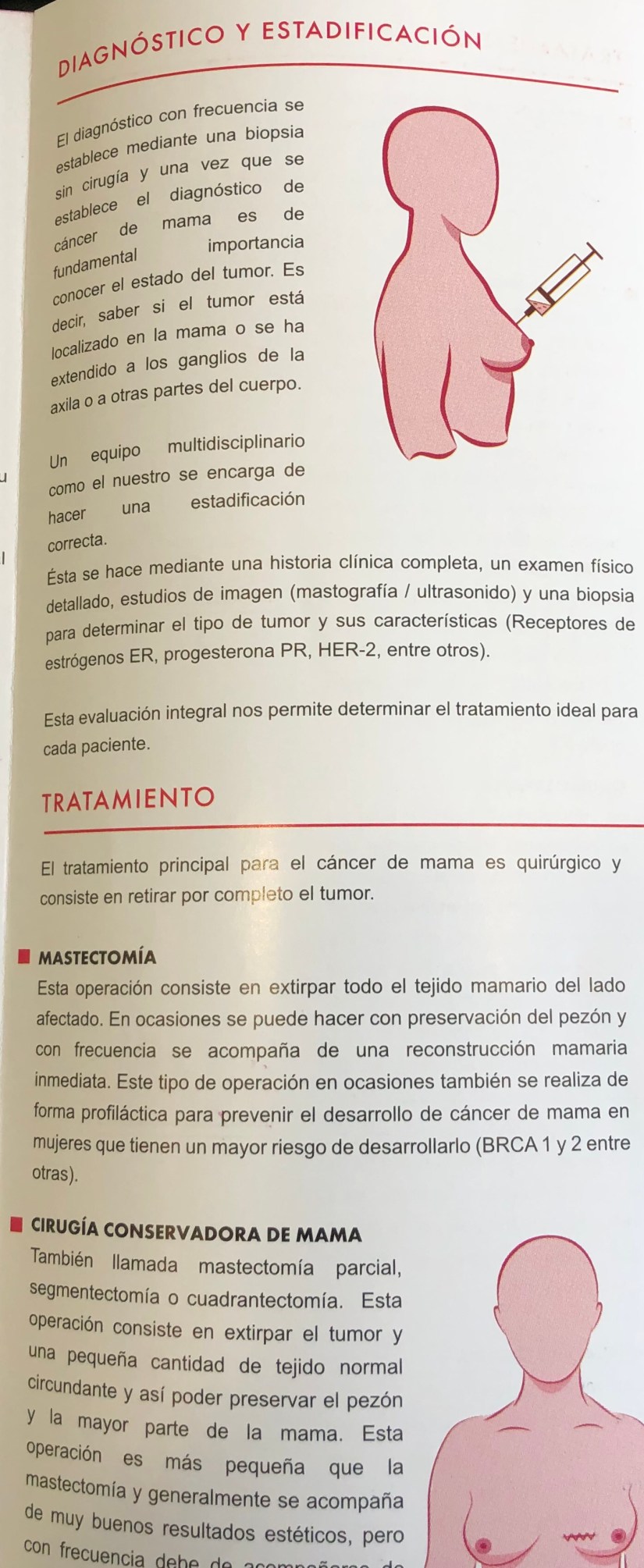
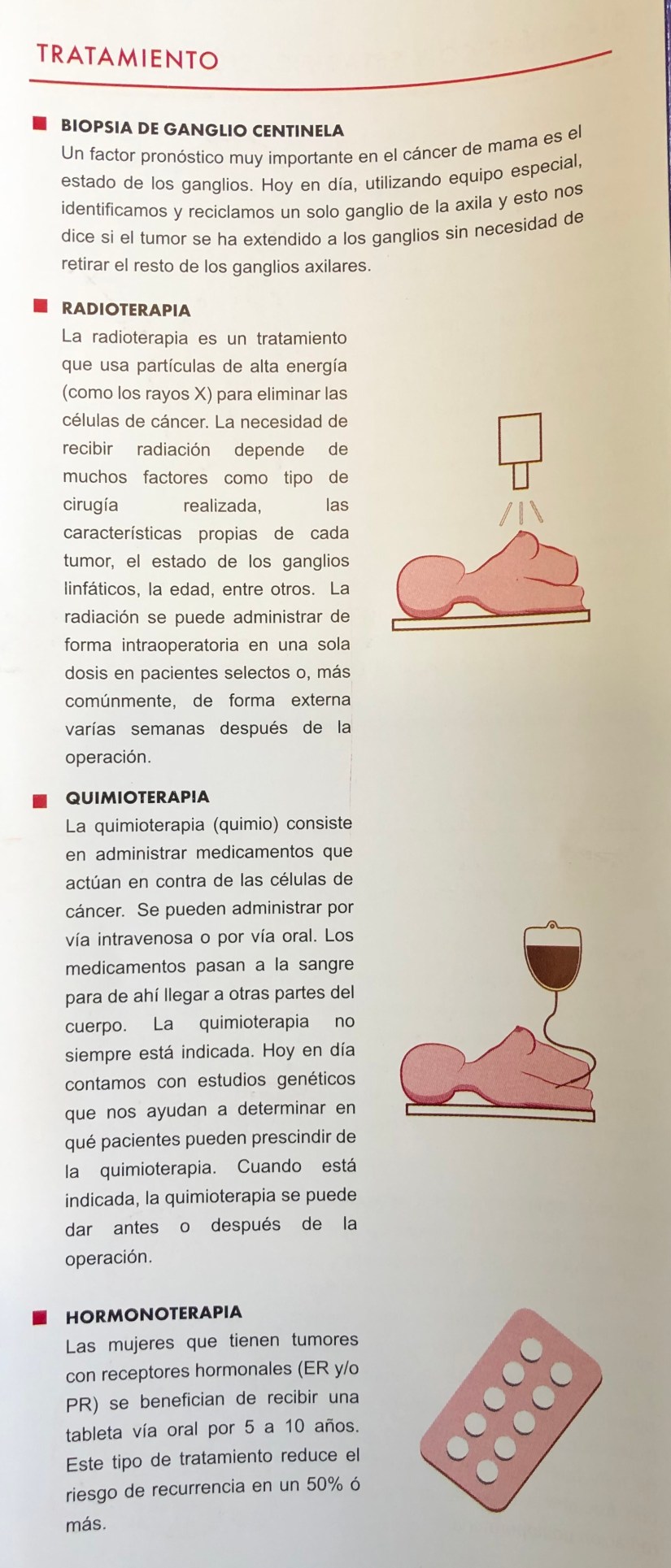
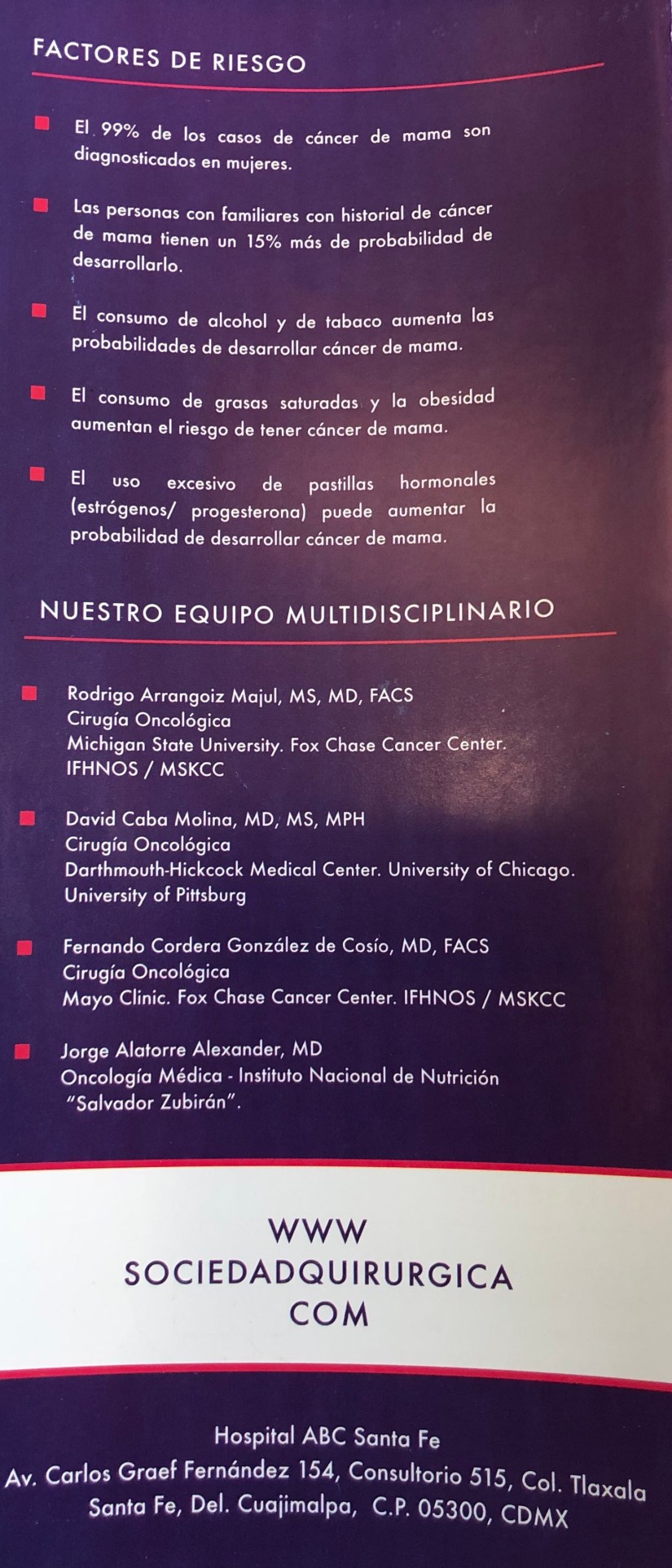
Rodrigo Arrangoiz MS, MD, FACS a surgical oncologist and is a member of Sociedad Quirúrgica S.C at the America British Cowdray Medical Center in Mexico City:
-
He is an expert in the management of breast cancer.
-
If you have any questions about the screening for breast cancer please fill free to contact Dr. Arrangoiz.
-

Training:
• General surgery:
• Michigan State University:
• 2004 al 2010

• Surgical Oncology / Head and Neck Surgery / Endocrine Surgery:
• Fox Chase Cancer Center (Filadelfia):
• 2010 al 2012

• Masters in Science (Clinical research for health professionals):
• Drexel University (Filadelfia):
• 2010 al 2012

• Surgical Oncology / Head and Neck Surgery / Endocrine Surgery:
• IFHNOS / Memorial Sloan Kettering Cancer Center:
• 2014 al 2016

#Arrangoiz
#Surgeon
#Cirujano
#SurgicalOncologist
#CirujanoOncologo
#BreastSurgeon
#CirujanodeMama
#CancerSurgeon
#CirujanodeCancer
http://www.sociedadquirurigca.com



 Rodrigo Arrangoiz MS, MD, FACS, FSSO