
Recombinant human parathyroid hormone 1-84 (rhPTH[1-84]) (Natpara):
- New research has shown that Natpara is safe and effective:
- Based on data were patients used Natpara for over 6 years of continuous use for the treatment of adults with chronic hypoparathyroidism:
- Findings from the long-term, open-label RACE extension study were presented March 26, 2019 at ENDO 2019: The Endocrine Society Annual Meeting by:
- John P. Bilezikian, MD, professor of medicine at Columbia University, New York City.
- Findings from the long-term, open-label RACE extension study were presented March 26, 2019 at ENDO 2019: The Endocrine Society Annual Meeting by:
- Based on data were patients used Natpara for over 6 years of continuous use for the treatment of adults with chronic hypoparathyroidism:
- Hypoparathyroidism is a disorder of mineral homeostasis characterized by deficient or absent parathyroid hormone:
- The associated clinical findings are:
- Hypocalcemia, hyperphosphatemia, and reduced tubular reabsorption of calcium, often leading to hypercalciuria.
- The associated clinical findings are:
- Conventional treatment with:
- Oral calcium and activated vitamin D (calcitriol):
- Doesn’t always maintain normal serum calcium levels and also doesn’t restore other physiologic actions of the missing parathyroid hormone.
- Oral calcium and activated vitamin D (calcitriol):
- The once-daily subcutaneous injectable drug:
- Was approved by the US Food and Drug Administration in 2015 and European Medicines Agency (Natpar) in 2017:
- The new follow-up data is important because the original phase three trial lasted only 26 weeks:
- These patients have a lifelong disease:
- Physician who prescribe his drug like to have long-term safety and efficacy data:
- It still continues to demonstrate efficacy and no safety concerns have surfaced since the original study.
- Physician who prescribe his drug like to have long-term safety and efficacy data:
- These patients have a lifelong disease:
- One new finding did arise in the 6-year data that was not seen in the original phase 3 REPLACE trial:
- Urine calcium levels eventually went down among the patients who received rhPTH(1-84):
- Whereas those levels hadn’t previously changed significantly over 26 weeks:
- One of the main shortfalls of conventional therapy is that you get hypercalciuria and that can be damaging to the kidneys:
- So if this data indeed holds up that the urine calcium concentration will eventually fall, that will mean this is a good way to go in those individuals in whom you can’t control the urine calcium by conventional therapy and other adjunctive therapy that we use to try and bring the urine calcium down.
- One of the main shortfalls of conventional therapy is that you get hypercalciuria and that can be damaging to the kidneys:
- Whereas those levels hadn’t previously changed significantly over 26 weeks:
- Urine calcium levels eventually went down among the patients who received rhPTH(1-84):
- The new follow-up data is important because the original phase three trial lasted only 26 weeks:
- Was approved by the US Food and Drug Administration in 2015 and European Medicines Agency (Natpar) in 2017:
- Relentless Reduction in Urine Calcium Excretion Over 6-Years:
- The RACE study, an open-label extension of REPLACE and another phase 3 trial:
- Enrolled 49 patients from 12 US centers
- 82% were women
- Mean age 48 years
- Hypoparathyroidism duration of about 16 years
- Bilezikian reported findings for 34 of those patients who had completed 72 months of the study:
- They were started on 25 or 50 µg/day of rhPTH(1-84) and titrated up or down to a maximum of 100 µg/day depending on serum calcium:
- The goal was to maintain the albumin-corrected serum calcium between 8 mg/dl to 9 mg/dL.
- Oral calcium and calcitriol supplementation doses were continued and also adjusted up or down to help achieve that target.
- The composite efficacy endpoint was:
- The proportion of patients who achieved at least:
- A 50% reduction from baseline in oral calcium dose (or calcium ≤ 500 mg/day) and at least a 50% reduction from baseline in calcitriol dose (or calcitriol ≤ 0.25 µg/day):
- While normalizing or maintaining albumin-corrected serum calcium compared with baseline and not exceeding the upper limit of normal for the central laboratory.
- A 50% reduction from baseline in oral calcium dose (or calcium ≤ 500 mg/day) and at least a 50% reduction from baseline in calcitriol dose (or calcitriol ≤ 0.25 µg/day):
- The proportion of patients who achieved at least:
- After the first year:
- 76% of patients had achieved the primary composite endpoint.
- By 72 months:
- 65% of the 34 patients who reached that timepoint met the primary endpoint:
- Among the 34 patients, there was a 40% reduction in oral calcium supplementation doses and a 72% reduction in calcitriol dose, while albumin-corrected serum calcium levels were maintained within the target range (mean 8.4 mg/dL at baseline and 6 years).
- 65% of the 34 patients who reached that timepoint met the primary endpoint:
- And there was a “very interesting, progressive, if not relentless,” reduction in urinary calcium excretion:
- From hypercalciuric values (mean 357 mg/24 hours) at baseline to normal levels (213 mg/24 hours) at 6 years.
- At the same time, there were no significant changes in serum creatinine concentrations or estimated glomerular filtration rate.
- They were started on 25 or 50 µg/day of rhPTH(1-84) and titrated up or down to a maximum of 100 µg/day depending on serum calcium:
- Average serum phosphorus levels also declined rapidly and significantly:
- From 4.8 mg/dL at baseline and was maintained at about 4.0 mg/dL through the 6 years.
- Calcium phosphate product also dropped quickly:
- By an average of 9.5 mg2/dL2 lower than baseline at 6 years.
- Enrolled 49 patients from 12 US centers
- The RACE study, an open-label extension of REPLACE and another phase 3 trial:
- No Unexpected Adverse Events:
- Adverse events were reported by most patients:
- The most common drug-related adverse events were:
- Nausea, hypercalcemia, and hypocalcemia.
- The most common drug-related adverse events were:
- A quarter of the patients experienced serious adverse events:
- But none where believed to be because of the drug.
- Adverse events were reported by most patients:
- Conclusions:
- Continuous use of rhPTH(1-84) over 6 years resulted in a:
- Favorable safety profil
- Was effective
- Improved key measurements of mineral homeostasis:
- Notably normalization of urinary calcium.
- Continuous use of rhPTH(1-84) over 6 years resulted in a:
- ENDO 2019. Presented March 26, 2019. Abstract OR30-1.
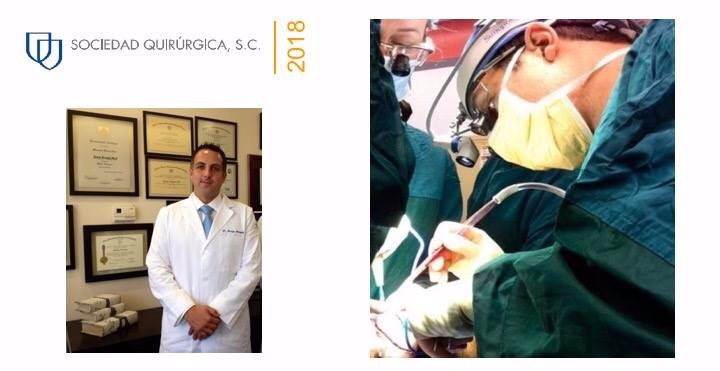
Rodrigo Arrangoiz MS, MD, FACS a head and neck surgeon / endocrine surgeon / surgical oncologist and is a member of Sociedad Quirúrgica S.C at the America British Cowdray Medical Center in Mexico City:
-
He is an expert in the management of hyperparathyroidism.
Training:
• General surgery:
• Michigan State University:
• 2004 al 2010

• Surgical Oncology / Head and Neck Surgery / Endocrine Surgery:
• Fox Chase Cancer Center (Filadelfia):
• 2010 al 2012

• Masters in Science (Clinical research for health professionals):
• Drexel University (Filadelfia):
• 2010 al 2012

• Surgical Oncology / Head and Neck Surgery / Endocrine Surgery:
• IFHNOS / Memorial Sloan Kettering Cancer Center:
• 2014 al 2016

#Arrangoiz
#Teacher
#Surgeon
#Cirujano
#SurgicalOncologist
#CirujanoOncologo
#CancerSurgeon
#CirujanodeCancer
#HeadandNeckSurgeon
#CirugiaEndocrina
#EndocrineSurgery
#CirujanodeCabezayCuello
#ParathyroidExpert
#ExpertoenParatiroides
#Hyperparathyroidismo
#Hiperparatiroidismo
#ThyroidExpert
#ExpertoenTiroides
http://www.cirugiatiroides.com
http://www.hiperparatiroidismo.info

 Rodrigo Arrangoiz MS, MD, FACS, FSSO