Blog

Management of Lactation Complications – Nipple Areolar Lesions and Piercings

  • Myth:
    • Women with nipple / areolar lesions and nipple piercings should be discouraged from breastfeeding
  • Science:
    • Several lesions can occur on the nipple / areolar complex including:
      • Nipple adenomas
      • Skin tags
      • Eczema
      • Hyperkeratosis
    • Patients with these conditions are often advised to avoid breastfeeding:
      • Due to concerns about latch and milk extraction, as well as theoretic risks of an infant choking on a protruding lesion or suffering toxicity from medications used to treat dermatologic conditions
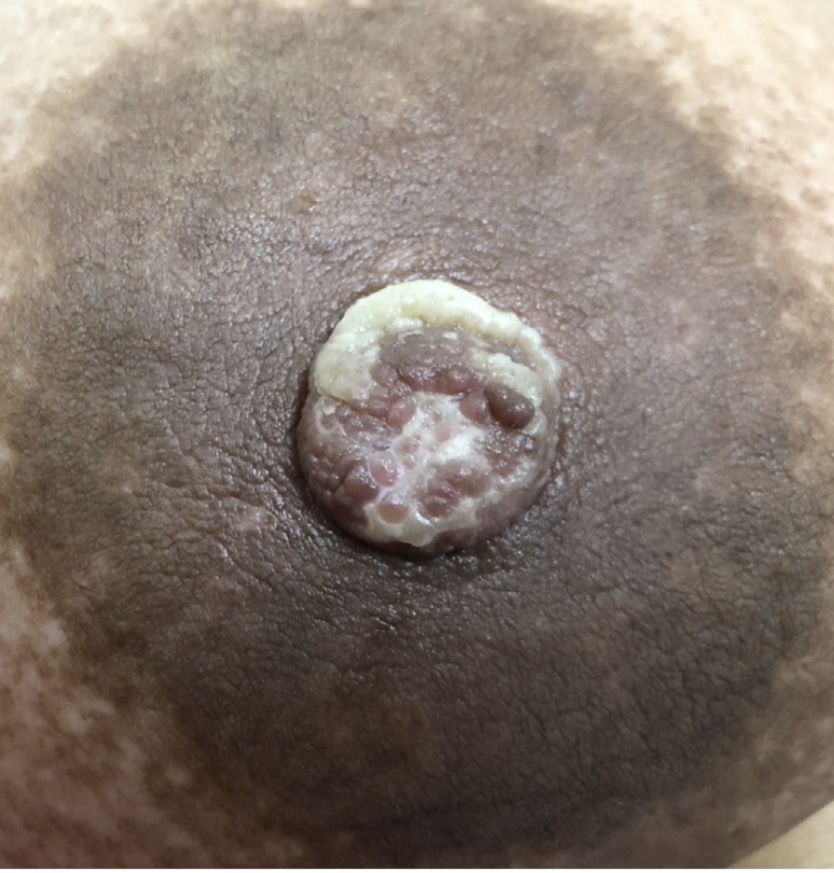
      • Patients with nipple piercings may be advised to avoid breastfeeding altogether due to concerns about milk fistulae:
        • Milk will indeed pass through the piercing sites (Figure):
          • However, this does not negatively affect milk production or extraction, nor does it pose a risk to the mother’s health in any way
  • Treatment:
    • Women with nipple / areolar lesions should be evaluated by a breastfeeding medicine physician prenatally
    • These physicians may recommend removal of larger lesions if they are concerned about interference with latch or potential for tissue trauma
    • Surgical excision can be performed under local anesthesia during pregnancy or lactation with minimal risk
    • In most of the cases, prenatal evaluation of nipple / areolar lesions will consist of review of the lactational safety of medications and reassurance
    • Topical steroids, keratolytic ointments, and most immunomodulators used for conditions such as eczema, psoriasis, and hyperkeratosis are safe in lactation, with the exception of methotrexate
    • Nipple shields should not be recommended to cover nipple /areolar complex lesions, as there is no benefit to this practice and nipple shields are associated with decreased physiologic milk transfer and increased risk of microbiome disruption and mastitis
    • Ideally, patients should remove nipple piercings during early pregnancy:
      • As the nipple is expected to hypertrophy and can make later removal more difficult
    • Nipple piercings are a choking hazard, and patients should not breastfeed with them
    • When consenting for piercings, women should be counseled that the procedure may result in ductal trauma or scarring that could impair lactation
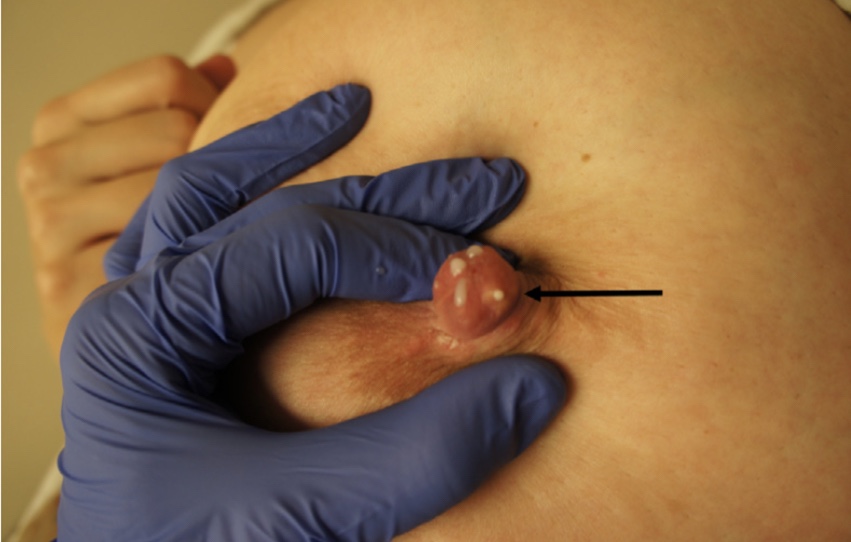
Nipple piercing orifice with milk emanating from it.

#Arrangoiz #Doctor #Surgeon #CancerSurgeon #BreastSurgeon #SurgicalOncologist #MountSinaiMedicalCenter #MSMC #Miami #Mexico #BreastCancer #MilkBlebs
Management of Common Complications of Lactation – Nipple Wound Care in Lactation

  • Myth:
    • Nipple wounds in lactating women should be treated with drying agents and topical antibiotics to prevent progression to mastitis
  • Science:
    • Surgical training provides strong education in wound care techniques and teaches the difference between traumatized versus infected tissue
    • Surgeons debride devitalized tissue and understand the need to provide absorption for serous fluid and fibrinous exudate
    • However, traditional lactation recommendations have contradicted principles of closed, moist healing for wound care
    • Patients are often counseled to express a small amount of breastmilk onto nipple wounds and allow it to air dry
    • They also may be recommended to soak nipples in Epsom salt or salt water and to use a hair dryer to prevent moisture build-up
    • They are also often instructed to avoid wearing a bra or allow anything touch the nipples
    • In addition, breastfeeding patients with nipple wounds are often warned they are at risk for ascending intraductal infection, that is, bacterial mastitis
    • They are therefore encouraged to apply topical antibiotics to their wounds
    • However, it is very uncommon for open, vascularized wounds to become secondarily infected in immunocompetent hosts
    • Overutilization of antibiotics contributes to disruption of the microbiome and development of multidrug-resistant pathogens
    • Routine use of topical antibiotics for open wounds is not recommended
    • Furthermore, the hypothesis that bacterial mastitis is a result of ascending infection from nipple wounds is not supported by breast anatomy and physiology
    • The highly vascular nature of the lactating breast and the multiple immune components of breastmilk prevent such infection
  • Treatment:
    • Care of the nipples include:
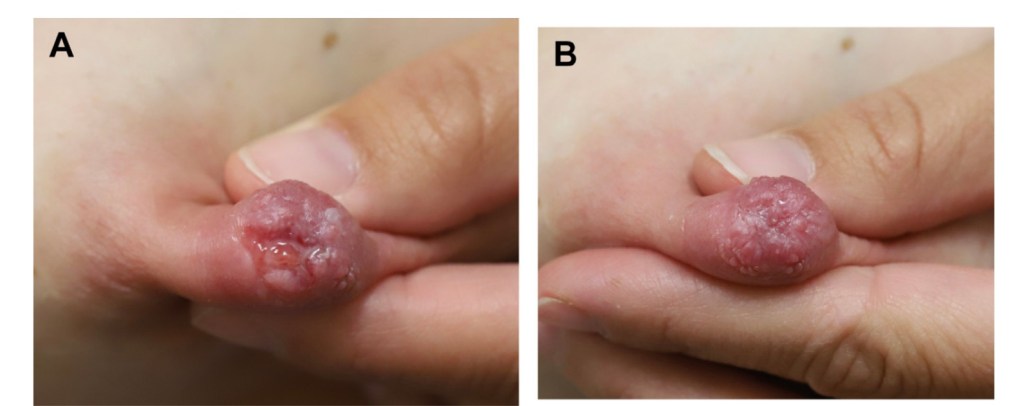
      • Moist, closed wound healing principles should be followed, with the use of nonallergenic ointments / balms and sterile, absorbent dressings (Figure)
      • Avoid ointments / balms containing potentially allergenic ingredients such as lanolin and petroleum
      • APNO (All Purpose Nipple Ointment) should be avoided:
        • This compounded prescription ointment contains an antifungal, antibacterial, and a steroid
        • Although often recommended by lactation consultants and readily prescribed by the physicians to whom patients are referred, this nonspecific medication can cause additional complications
        • Although patients may achieve some pain relief due to steroids and antiinflammatory properties of the antifungal, this potential benefit is outweighed by the risks of impaired wound healing from steroids and of microbiome disruption from nonselective elimination of normal flora
        • Furthermore, other ingredients in this ointment may cause dermatitis
        • This medication is generally expensive, even for patients with insurance
      • Breast shells designed to “keep the nipple dry” or “protect the nipple from the bra” worsen swelling in the nipple, cause areola compression, and subsequently worsen pain
      • Do not use drying agents such as antiseptics, alcohol, or Epsom salt soaks
      • Similarly, do not use a hair dryer to blow hot, dehumidified air on nipples:
        • These practices cause tissue desiccation, which is counterproductive for wound healing and increase the risk of skin breakdown
Nipple previously air dried (A), with resolution of tissue defect with PolyMem therapy (B).
Blistering from small pump flanges worsened with Epsom salt soaks.

#Arrangoiz #BreastSurgeon #CancerSurgeon #SurgicalOncologist #Surgeon #Surgeon #Doctor #MountSinaiMedicalCenter #MSMC #Miami #Mexico

Management of Common Complications of Lactation – Breasts Massage

  • Myth
    • “Plugging” represents occlusion of ducts by stagnant milk, and “plugs” should be extruded through massage
  • Science:
    • The sensation of “plugging” does not represent discrete collections of breastmilk
    • More accurately, a “plug” represents a focal area of congested capillaries, distended alveolar cells, and tissue edema:
      • The root cause of “plugging” relates to:
        • Tissue hypervascularity
        • Edema
        • Ductal narrowing from microbiome changes and luminal inflammation
    • Lactation consultants often recommend massage for “plugs”:
      • However, this recommendation lacks scientific validity and causes tissue trauma that can result in significant complications
    • As surgeons are well aware, lactating breasts have robust blood supply, lymphatic vessels to drain increased interstitial fluid during lactation, nerves, fibroadipose tissue, and functional glandular tissue with a complex network of interlacing ducts:
      • Attempts to extrude a milk “plug” from a duct with aggressive massage will result in tissue trauma, edema, collapse of ducts, and capillary damage
      • All patients report worsened pain with massage
      • As we would injure a thyroid, pancreas, or other functional gland with massage or tissue mishandling during a surgical procedure, it similarly must be avoided in the lactating breast
      • Massage is associated with development of lactational phlegmon (Figure), particularly in the setting of hyperlacta- tion or excessive pumping
  • Treatment:
    • Deep manual massage, vibrators, electric toothbrushes, or any commercial breast massage products designed to extrude a “plug” should be strictly avoided
    • Patients with symptomatic “plugging” should be evaluated for:
      • Proinflammatory conditions such as:
        • Hyperlactation and subacute mastitis
    • Patients can use ice for both pain relief and vasoconstriction
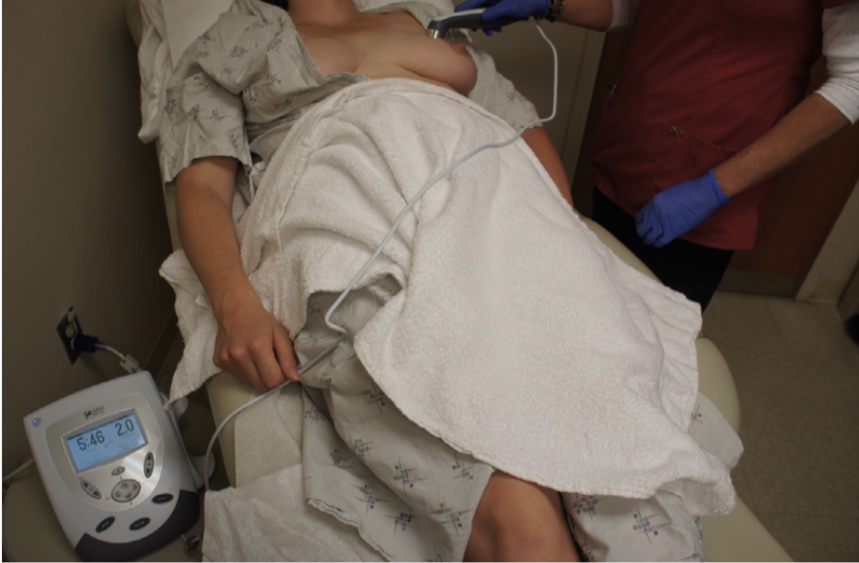
    • Therapeutic ultrasound, also used to treat conditions such as radiation fibrosis, can reduce inflammation and pain through application of thermal energy (Figure)
    • If a mass or erythema persists, diagnostic breast imaging should be performed
Therapeutic ultrasound technique.

#Arrangoiz #BreastSurgeon #CancerSurgeon #SurgicalOncologist #Surgeon #Surgeon #Doctor #MountSinaiMedicalCenter #MSMC #Miami #Mexico

Management of Common Complications of Lactation – Mastitis

  • Myth:
    • Mastitis represents a bacterial infection resulting from milk stasis, engorgement, and “plugging”
  • Science:
    • When an infant sleeps through the night or mothers do not express their milk at work as regularly as the infant breastfeeds at home:
      • Patients experience transient engorgement and pain
    • Women may also develop breast erythema and edema:
      • From congested capillaries and interstitial fluid (Figure):
        • Which can cause sweating, fever, and chills:
          • As it is an inflammatory process in a body organ with robust blood supply
        • This systemic inflammatory response syndrome may be mistaken for signs and symptoms of infection:
          • Raising alarm for impending development of bacterial mastitis
        • However, unless a person has developed a very rare rapidly progressive soft tissue infection:
          • It is otherwise very unusual for average bacterial mastitis to present this quickly
    • Lactation literature commonly describes a theory that mastitis results from milk stasis:
      • Mothers are warned to avoid long stretches without breastfeeding or pumping to avoid build-up of stagnant milk and progression to “plugging” and infectious mastitis:
        • However, there is no scientific evidence to support the idea that mastitis results from milk stasis
        • In contrast to a passive repository such as a bladder, the breast is a gland with production regulated by Feedback Inhibitor of Lactation (FIL):
          • Therefore, continued removal of milk increases production and worsens tissue edema and inflammation:
            • Reduced removal of milk will allow for FIL to downregulate production and enable resorption of milk not used
    • Mastitis results from underlying microbiome disruption and ductal inflammation and is therefore often observed in patients with hyperlactation and/or blebs
      • Most cases of lactational mastitis are purely inflammatory and can be resolved with conservative measures and appropriate management of lactation
      • Breastmilk contains numerous immunologic cells and substances:
        • That counteract infection
      • In similar fashion, it is uncommon for stagnant milk contained in a galactocele to become infected without an inciting event such as instrumentation
  • It also should be noted that external compression by a bra or tight clothing can obstruct ducts:
    • Is not scientifically founded.
  • Treatment:
    • With early inflammatory mastitis:
      • Patients should feed physiologically (eg, eliminate breast pump usage if possible, and do not continue “overfeeding” on the affected breast):
        • Reducing overstimulation of an engorged or inflamed breast will allow down-regulation of milk production through the FIL receptor
      • Patients should never be counseled to “pump to relieve engorgement” as this prevents FIL from activating and perpetuates hyperlactation
    • Patients can use ice and antiinflammatory medication by mouth such as nonsteroidal antiinflammatory drugs and/or obtain pain relief from acetaminophen:
      • Ice is generally the most helpful, but some people also prefer heat for comfort
    • Therapeutic ultrasound:
      • Can use thermal energy to reduce inflammation and pain, as can lymphatic drainage
    • A supportive bra is necessary during lactation:
      • To prevent dependent lymphedema and back pain
    • Massage should be strictly avoided
    • If symptoms persist or worsen:
      • Antibiotics should be considered (Table)
    • Women should be counseled that there is no medical indication to “pump and dump” while taking these antibiotics:
      • The Relative Infant Dose (RID) estimates an infant’s exposure to a medication through breastmilk and depends on multiple factors including the medication’s plasma concentration, half-life, solubility, and oral bioavailability:
        • In general, medications with RID less than 10% are considered safe
Acute inflammatory mastitis (A) managed with decreased removal of breastmilk, ice, and antiinflammatory medication, with resolution of erythema (B).

#Arrangoiz #BreastSurgeon #CancerSurgeon #SurgicalOncologist #Surgeon #Surgeon #Doctor #MountSinaiMedicalCenter #MSMC #Miami #Mexico

Management of Common Complications of Lactation – Drainage of Abscess and Galactocele

  • Myth:
    • Fluid collections in the lactating breast require operative incision and drainage or aspiration alone
  • Science:
    • As surgeons have moved away from large incision and drainage procedures performed on the lactating breast in the operating room setting:
      • They have turned to minimally invasive aspiration approach:
        • However, aspiration alone can result in incomplete drainage
    • Unlike simple breast cysts, abscesses and galactoceles in the lactating breast contain breastmilk:
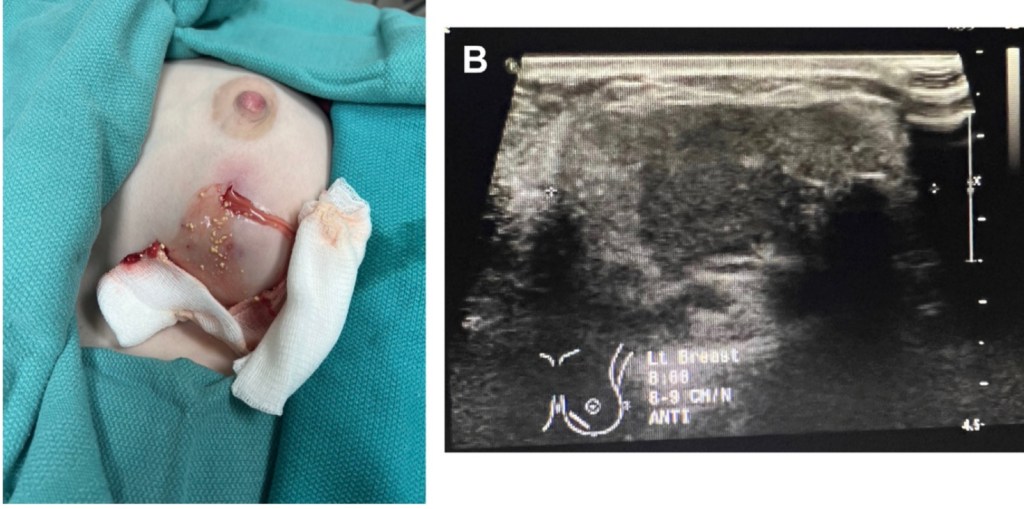
      • Which is highly viscous and loculated (Figure):
        • Therefore, a needle aspiration alone will likely remove only part of the fluid collection, particularly if it is chronic
        • If a needle aspiration is successful in removing the entire volume of an acute collection:
          • The area can refill with milk very quickly and require repeated procedures
  • Treatment:
    • Lactational abscess and infected galactocele:
      • Require drainage for source control
    • Drainage may also be appropriate for symptomatic noninfected galactoceles:
      • Small stab incision and drain placement will definitively resolve fluid collections in the lactating breast:
        • The small stab incision allows for access to the cavity with an instrument that can be used to disrupt loculations and provide complete drainage, such as a hemostat
        • A stent or drain can be placed to allow passive decompression of the area for 3 to 5 days:
          • This could involve a Penrose drain, Seromacath, Blake drain, or other wicks such as a small foley catheter:
            • Drains should be placed to gravity rather than suction
    • In addition to the surgical management, many patients developing fluid collections during lactation require treatment of idiopathic or iatrogenic hyperlactation:
      • Patients should not be instructed to massage their breast:
        • As this results in tissue necrosis and phlegmon development
      • Ice and antiinflammatory medication by mouth should be recommended for symptomatic relief
      • Antibiotics may be indicated if significant surrounding cellulitis exists
Chronic, loculated fluid collection demonstrating thick milk chunks at definitive drainage after needle aspiration failed to resolve. Ultrasound image corresponding to semisolid appearance of the collection.

#Arrangoiz #BreastSurgeon #CancerSurgeon #SurgicalOncologist #Surgeon #Surgeon #Doctor #MountSinaiMedicalCenter #MSMC #Miami #Mexico

Post Breast Cancer Surgery Surveillance Imaging Recommendations

  • Previously, there was no consensus on the optimal time intervals for imaging evaluation of patients following breast-conservation surgery:
    • Many practices performed 6-month interval mammography of the treated breast for a variable number of years in an effort to monitor post-procedure changes:
      • The usefulness of short-term follow-up mammography in women undergoing breast conservation has been challenged:
        • Local recurrence in the ipsilateral breast following breast conservation and radiotherapy occurs at an estimated rate of 1% in the first year, 3% to 9% at 5 years, and 14% to 20% at 20 years
        • Retrospective studies have verified that the yield from a 6-month follow-up mammogram on the affected side is low (≤1%)
  • Therefore, the ACR and ASCO recommendations are:
    • To perform a bilateral mammogram at 12 months from the initial mammogram:
      • Which should be at least 6 months following completion of radiotherapy and should include a diagnostic mammogram on the affected side and a screening mammogram on the nontreated side
    • Bilateral annual mammography is recommended thereafter
  • Elimination of the 6-month and 18-month interval diagnostic mammograms after breast conservation should spare women unnecessary anxiety, discomfort, and inconvenience while lowering costs and improving efficiency
  • References
    • https://www.asco.org/research-guidelines/quality-guidelines/guidelines/breast-cancer#/9821 Accessed July 20, 2020
    • Monticciolo DL, Newell MS, Moy L, Niell B, Monsees B, Sickles EA. Breast cancer screening in women at higher-than-average risk: recommendations from the ACR. J Am Coll Radiol. 2018;15(3 Pt A):408-414.
    • Khatcheressian JL, Hurley P, Bantug E, Esserman LJ, Grunfeld E, Halberg F, et al. Breast cancer follow-up and management after primary treatment: American Society of Clinical Oncology clinical practice guideline update. J Clin Oncol. 2013;31(7):961-965.
#Arrangoiz #BreastSurgeon #CancerSurgeon #SurgicalOncologist #Surgeon #Doctor #MountSinaiMedicalCenter #MSMC #Miami #Mexico

Management of Common Complications of Lactation – Milk Fistula

  • Milk Fistula:
    • Myth:
      • Procedures should be avoided on the lactating breast due to the risk of milk fistula
    • Science:
      • Milk fistula is rare if lactation and surgical interventions are managed appropriately
      • After a procedure:
        • Patients should not avoid breastfeeding:
          • In fact, the preferential flow of breastmilk through the nipple will decrease the flow through a needle or incision tract
        • On the other hand, patients should not be counseled to “pump to empty” their breasts or breastfeed more frequently on the affected breast:
          • As this will cause increase in milk production:
            • Which will promote fistula persistence
    • Treatment:
      • Large surgical incision and drainage:
        • Should be avoided in lactation patients
      • Any incision made should be as small as possible, and as distant from the nipple areolar complex as possible
      • If a distal incision is not possible:
        • It should be made outside the region where an infant latches or pump flanges contact the skin:
          • Periareolar incisions, although cosmetic, are particularly high risk due to the potential for latch or pump trauma.
    • Patients should feed physiologically after a procedure:
      • Local anesthetic agents are not absorbed orally by the infant, and blood is safe for the infant to ingest
    • A transient fistula will form after any procedure but is expected to close within a week if lactation is managed appropriately:
      • Should a persistent, high-output fistula develop:
        • A distal diverting drain can be placed to hasten closure (Figure)
        • Milk passing through a fistula tract may be collected and is safe to feed to the infant
        • Absorbent dressings may be used to prevent skin maceration from moisture but should be removed before breastfeeding:
          • As they are potential choking hazards and/or may interfere with latch
          • Wound vacuum systems should not be used on the lactating breast, as this will promote chronic fistulization and maintain tract patency
Transient milk fistula in setting of hyperlactation and pump trauma, located near nipple areolar complex with resolution 24 hours after placement of distal diverting Interventional Radiology (IR) drain.

#Arrangoiz #BreastSurgeon #CancerSurgeon #SurgicalOncologist #Surgeon #Surgeon #Doctor #MountSinaiMedicalCenter #MSMC #Miami #Mexico #MilkFistula

Indications for Radioactive Iodine Therapy in Thyroid Cancer

  • There are three main indications for postoperative iodine-131 (131I) use:
    • To treat any known (or unknown) residual disease
    • To reduce the risk of recurrence
    • To destroy remaining noncancerous thyroid cells:
      • This last indication:
        • Called remnant ablation, improves the sensitivity of serum Tg and may also be used as a staging tool to identify previously undiagnosed tumors
  • The use of RAI therapy is a contentious issue with conflicting findings regarding recurrence and survival benefit:
    • Largely stemming from the lack of prospective, randomized, and controlled trials
  • The patients for whom RAI may be beneficial can be clarified based on the initial risk stratification of the individual tumor (Table) and the postoperative disease status
RAI, radioactive iodine, ATA, American Thyroid Association, TNM, The Tumor, Node, and Metastases scoring system, ETE, extrathyroidal extension, ENE, extranodal extension.
Modified from Haugen BR, Alexander EK, Bible KC, et al. 2015 American Thyroid Association management guidelines for adult patients with thyroid nodules and differentiated thyroid cancer: the American Thyroid Association Guidelines Task Force on Thyroid Nodules and Differentiated Thyroid Cancer. Thyroid. 2016;26(1):1–133.
  • Studies have consistently shown that patients with American Thyroid Association (ATA) low-risk tumors measuring 1 cm lacking nodal and distant metastases:
    • Do not benefit from RAI therapy, and its use is not recommended
  • Additionally, low-risk tumors measuring 1 to 4 cm lacking local or distant metastases with complete tumor resection and no tumor invasion into the locoregional tissues or structures:
    • Do not derive mortality benefit from adjuvant RAI therapy:
      • As such, RAI therapy should not be routinely used in this group unless there is an aggressive histology or evidence of vascular invasion
  • In contrast, RAI does appear to be beneficial in terms of mortality and disease-free survival for those patients with a high-risk tumor:
    • Its use is routinely recommended in the postoperative management of these patients
  • For the remaining patients, including those with intermediate risk for recurrence:
    • There is conflicting data regarding the benefits of therapy:
      • Use of RAI in this cohort of patients should be considered on a case-by-case basis
#Arrangoiz #Surgeon #Doctor #CancerSurgeon #ThyroidSurgeon #ParathyroidSurgeon #HeadandNeckSurgeon #SurgicalOncologist #MountSinaiMedicalCenter #MSMC #Miami #Mexico #ThyroidCancer

When to Perform A Completion Thyroidectomy?

  • Removal of the contralateral lobe of the thyroid may be necessary after lobectomy:
    • Particularly if total thyroidectomy would have been recommended had the diagnosis been known preoperatively
  • With lobectomy being sufficient therapy for the majority of low-risk cancers, the need for completion thyroidectomy is diminishing:
    • However, in the hands of an experienced surgeon, the complication rates for completion thyroidectomy are comparable to those of total / near total thyroidectomy
  • The use of RAI therapy to ablate the remaining tissue after lobectomy is not recommended routinely but may be considered in select cases when additional surgery is not feasible
#Arrangoiz #Doctor #Surgeon #CancerSurgeon #ThyroidSurgeon #ParathyroidSurgeon #HeadandNeckSurgeon #EndocrineSurgery #MountSinaiMedicalCenter #MSMC #ThyroidCancer #Miami #Mexico

Initial Thyroid Surgery for Thyroid Cancer

  • Surgery is the initial treatment for most thyroid cancers and is often curative for those with low-risk disease
  • Historically, the majority of cancers measuring greater than 1 cm were recommended for total thyroidectomy:
    • To facilitate surveillance, allow for radioiodine therapy, and reduce the likelihood of recurrence
  • Newer data, however, has cast doubt on the necessity of removal of the entire gland:
    • The recent trend to the use of less radioiodine therapy has obviated the need to perform total thyroidectomy in many patients with low-risk thyroid cancer
    • Further strengthening the argument for less extensive surgery is the recognition that the risk of complications with total thyroidectomy is double that seen in lobectomy, regardless of the surgeon’s experience level
    • Most importantly, multiple retrospective studies have revealed that outcomes are equivalent in patients with low-risk disease treated with lobectomy compared with total thyroidectomy when controlled for tumor size and extent of disease
  • Those tumors measuring 4 cm or with preoperative evidence of nodal involvement or ETE, regardless of size:
    • Should proceed with total thyroidectomy
#Arrangoiz #ThyroidSurgeon #HeadandNeckSurgeon #CancerSurgeon #SurgicalOncologist #MountSiniaMedicalCenter #MSMC #Miami #Mexico