Blog

21-Gene Recurrence Score in Breast Cancer

  • In women with hormone receptor positive (HR+), HER2-negative early breast cancer, the 21-gene signature score:
    • Provides prognostic information that is independent of clinicopathological features
  • A high score (on a scale of 0 to 100) indicates:
    • A higher rate of distant recurrence and is predictive of chemotherapy benefit
  • The prospective Trial Assigning Individualized Options for Treatment (TAILORx);
    • Showed that endocrine therapy alone was noninferior to adjuvant chemotherapy plus endocrine (chemoendocrine) therapy:
      • In women with HR+, HER2-negative, axillary node-negative breast cancer and a 21-gene recurrence score of 11 to 25
    • An exploratory analysis indicated some benefit of chemotherapy:
      • In women 50 years of age or younger who had a recurrence score of 16 to 25
      • In this analysis there was a small (~1.6%) chemotherapy benefit in distant disease-free survival for patients with recurrence score results from 16 to 20, and a modest (~6.5%) chemotherapy benefit for patients with recurrence score results from 21 to 25

References

1. Sparano JA, Gray RJ, Ravdin PM, Makower DF, Pritchard KI, Albain KS, et al. Clinical and genomic risk to guide the use of adjuvant therapy for breast cancer. New Engl J Med. 2019;380(25):2395-2405.

2. Sparano JA, Gray RJ, Makower DF, Pritchard KI, Albain KS, Hayes DF, et al. Adjuvant chemotherapy guided by a 21-gene expression assay in breast cancer. New Engl J Med. 2018;379(2):111-121.
The Tongue

  • Overview:

    • The tongue is a mass of muscle:

      • That is almost completely covered by a mucous membrane:

      • It occupies most of the oral cavity and oropharynx

    • It is known for its role in taste:

      • But it also assists with:

        • Mastication (chewing)

        • Deglutition (swallowing)

        • Articulation (speech)

        • Oral cleansing

    • Five cranial nerves:

      • Contribute to the complex innervation of this multifunctional organ

    • The embryologic origins of the tongue:

      • First appear at 4 weeks’ gestation:

        • The body of the tongue forms from derivatives of the first branchial arch:

          • These gives rise to two lateral lingual swellings and one median lingual swelling (known as the tuberculum impar):

            • The lateral lingual swellings slowly grow over the tuberculum impar and merge:

              • Forming the anterior two thirds of the tongue

      • Parts of the second, third, and fourth branchial arches give rise to the base of the tongue

    • Occipital somites:

      • Give rise to myoblasts:

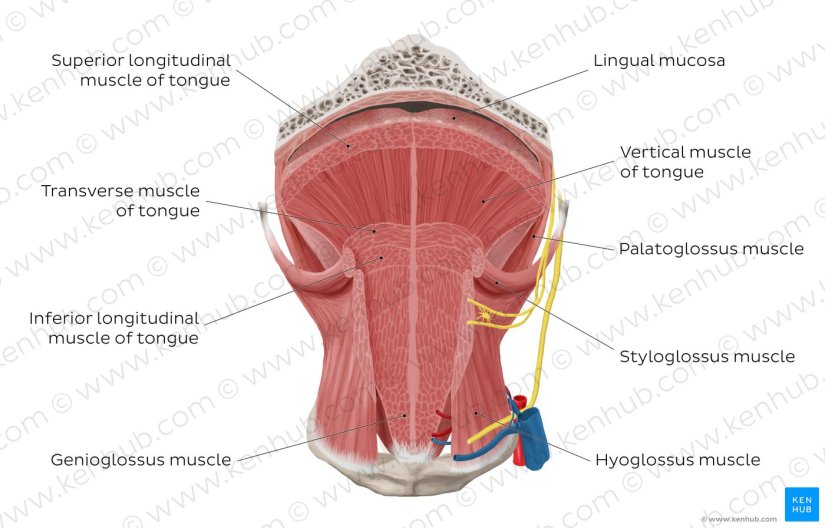
        • Which form the intrinsic tongue musculature

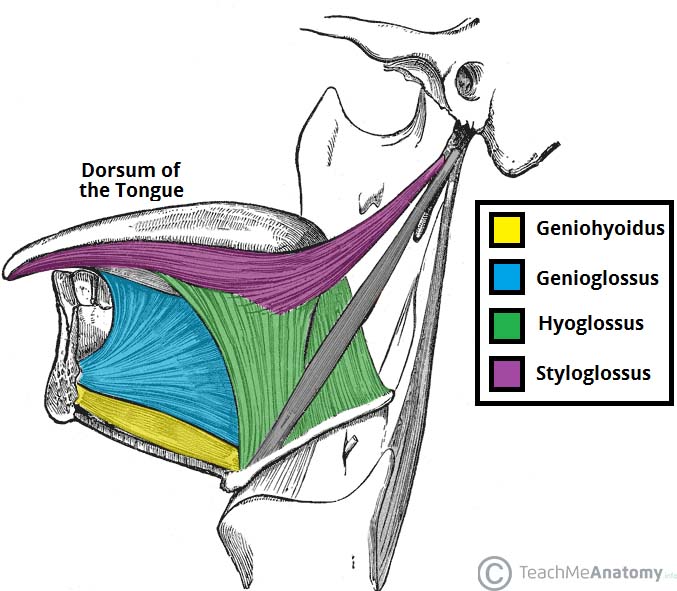
Extrinsic-Muscles-of-the-Tongue

H8rDTg2yQrkuDKTAMNqhg_the-muscles-of-the-tongue_english

  • Gross Anatomy:

    • From anterior to posterior:

      • The tongue has three surfaces:

        • Tip

        • Body

        • Base

    • The tip:

      • Is the highly mobile, pointed anterior portion of the tongue

    • Posterior to the tip lies the body of the tongue:

      • Which has dorsal (superior) and ventral (inferior) surfaces

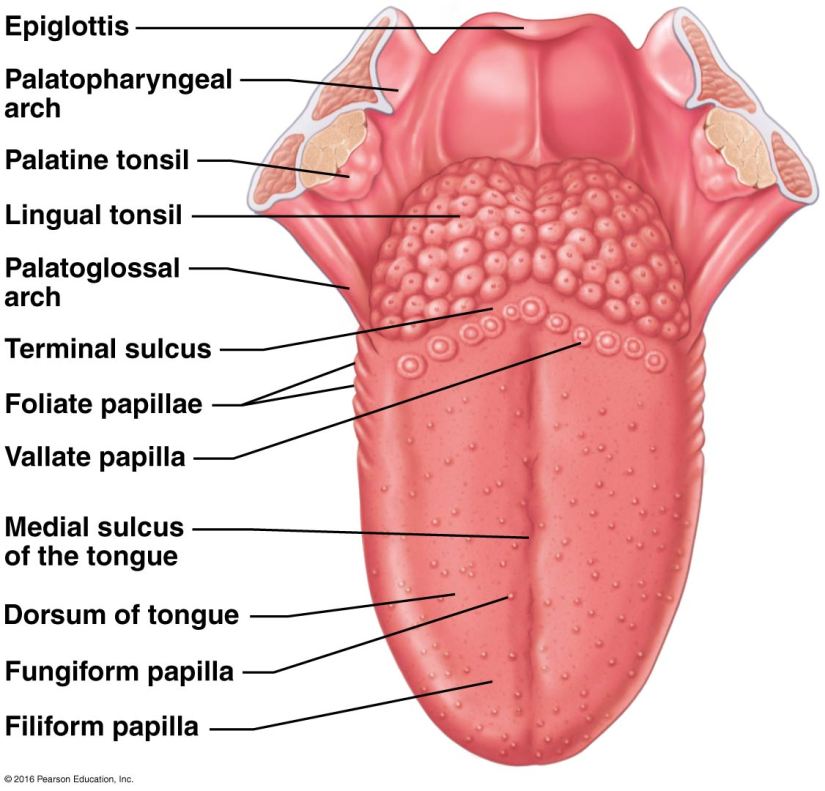
    • The median sulcus of the tongue:

      • Separates the body into left and right halves

    • The terminal sulcus, or groove:

      • Is a V-shaped furrow:

        • That separates the body from the base of the tongue:

          • At the tip of this sulcus is the foramen cecum:

            • A remnant of the proximal thryoglosal duct

    • The base of tongue contains the lingual tonsils:

      • The inferior most portion of Waldeyer’s ring

  • Lingual papillae:

    • The surface of the body of the tongue (dorsum):

      • Derives its characteristic appearance from the presence of lingual papillae:

        • Which are projections of lamina propria covered with epithelium

    • The four types of lingual papillae are as follows:

      • Vallate (circumvallate)

      • Foliate

      • Filiform

      • Fungiform

    • The vallate papillae (circumvallate):

      • Are flat, prominent papillae that are surrounded by troughs:

        • In humans, there are 8 to 12 vallate papillae:

          • Located directly anterior to the terminal sulcus:

            • The ducts of the lingual glands of von Ebner secrete lingual lipase into the surrounding troughs:

              • To begin the process of lipolysis

    • The foliate papillae:

      • Are small folds of mucosa (short vertical folds) located along the lateral surface of the tongue:

        • They are located on the sides at the back of the tongue:

      • There are four or five vertical folds, and their size and shape is variable

      • They are covered with epithelium, lack keratin and so are softer, and bear many taste buds:

        • Approximately 1000 taste buds:

      • They are usually bilaterally symmetrical:

        • Sometimes they appear small and inconspicuous, and at other times they are prominent

      • Because their location is a high risk site for oral cancer, and their tendency to occasionally swell:

      • Serous glands drain into the folds and clean the taste buds

      • Lingual tonsils:

        • Are found immediately behind the foliate papillae and, when hyperplastic, cause a prominence of the papillae

    • The filiform papillae:

      • Are the most numerous of the lingual papillae

      • They are fine, small, cone-shaped papillae:

        • Covering most of the dorsum of the tongue:

          • They cover most of the front two-thirds of the tongue’s surface

      • They appear as very small, conical or cylindrical surface projections, and are arranged in rows which lie parallel to the sulcus terminalis:

        • At the tip of the tongue, these rows become more transverse

      • They are responsible for giving the tongue its texture and are responsible for the sensation of touch

      • Unlike the other kinds of papillae:

        • Filiform papillae do not contain taste buds

    • The fungiform papillae:

      • Are mushroom shaped (generally red in color) and are dispersed most densely along the tip and lateral surfaces of the tongue:

        • Humans have approximately 200 to 300 fungiform papillae

    • Each vallate, foliate, and fungiform papilla contains taste buds (250, 1000, and 1600 taste buds, respectively):

      • Each taste bud is innervated by several nerve fibers

      • In humans:

        • All taste buds can perceive the five different taste qualities:

          • Salt

          • Sweet

          • Bitter

          • Acid

          • Umami

file-5b48ef2de4636

  • Each taste bud consists of:

    • Taste receptor

    • Basal cell

    • Edge cell

  • When a taste molecule binds to a taste receptor, the receptor cell depolarizes:

    • Causing an influx of Ca++:

      • Which results in the release of an unknown neurotransmitter

    • Following depolarization, the afferent neural pathway depends on the location of the taste bud that was stimulated:

      • In the anterior two thirds of the tongue:

        • The chorda tympani branch of the facial nerve (cranial nerve VII) is stimulated

      • The lingual-tonsillar branch of the glossopharyngeal nerve (cranial nerve IX) relays taste information:

        • From the posterior third of the tongue (base of the tongue)

  • Taste fibers from the anterior two thirds of the tongue:

    • First travel with the lingual nerve and then are relayed to the chorda tympani nerve:

      • This nerve enters the temporal bone from the infratemporal fossa:

        • Where it joins the facial nerve and travels to the geniculate ganglion:

          • Where its pseudounipolar cell bodies are located

    • From the geniculate ganglion:

      • The taste fibers travel in the nervus intermedius to the nucleus of the solitary tract located in the medulla oblongata

  • Similarly:

    • Taste fibers from the posterior one third of the tongue travel with the lingual-tonsillar nerve:

      • To the inferior glossopharyngeal ganglion and then to the nucleus of the solitary tract located in the medulla oblongata

  • Second-order neurons:

    • Then project taste fibers to the parabrachial nucleus of the pons

  • The central tegmental tract:

    • Carries taste sensation from the pons to the thalamus

  • The pathway ends in the:

    • Frontal operculum and insular cortex

12605tn

Ess-13-01


Rodrigo Arrangoiz MS, MD, FACS a head and neck surgeon and is amember of Center for Advanced Surgical:

prof_739_20190417135234

He is first author on some publications on oral cavity cancer:

Training:

• General surgery:

• Michigan State University:

• 2004 al 2010

• Surgical Oncology / Head and Neck Surgery / Endocrine Surgery:

• Fox Chase Cancer Center (Filadelfia):

• 2010 al 2012

• Masters in Science (Clinical research for health professionals):

• Drexel University (Filadelfia):

• 2010 al 2012

• Surgical Oncology / Head and Neck Surgery / Endocrine Surgery:

• IFHNOS / Memorial Sloan Kettering Cancer Center:

• 2014 al 2016


Unknown


#Arrangoiz

#Teacher

#Surgeon

#Cirujano

#ThyroidExpert

#ThyroidSurgeon

#CirujanodeTiroides

#ExpertoenTiroides

#ExpertoenParatiroides

#Paratiroides

#Hiperparatiroidismo

#CancerdeTiroides

#ThyroidCancer

#PapillaryThyroidCancer

#SurgicalOncologist

#CirujanoOncologo

#CancerSurgeon

#CirujanodeCancer

#HeadandNeckSurgeon

#CirugiaEndocrina

#CirujanodeTumoresdeCabezayCuello

#OralCavityCancer

#MountSinaiMedicalCenter #MSMC

#Mexico #Miami

Fibroadenomas of the Breast

img_3754

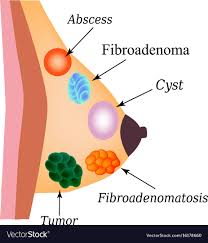
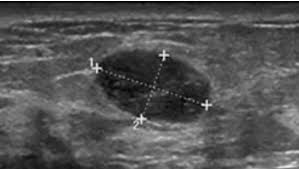
  • Fibroadenomas:Are benign, solid neoplasms of the breast:Consisting of fibroepithelial elements
    • Their size is hormonally influenced:As evidenced by fluctuation in size with the menstrual cycle and regression in postmenopausal women
    • Fibroadenomas are often solitary masses:But in approximately 25% of patients present with multiple lesion’s
    • They have a characteristic clinical presentation: Rubbery, mobile, and firm:Despite this, previous reports have indicated that diagnosis by clinical examination:Is accurate in only 50% to 75% of patient’s

Unknown

  • One of the clinical dilemmas facing both surgeons and patients is the concern that the mass is something more ominous than a fibroadenoma:Both benign and malignant phylloides tumors may mimic fibroadenomas
    • Additionally, published reports have described adenocarcinoma and ductal carcinoma in situ:Arising within fibroadenomas or misdiagnosed as fibroadenomas
  • Because of the potential for more aggressive pathology masquerading as fibroadenomas:Management has been debated and recommendations changed several times in recent decades:Until the mid-1980s:Standard practice was excision of all fibroadenomas
      • Subsequent studies in the 1980s and 1990s:Demonstrated the safety of observing the presumed fibroadenomas:In women under age 35:Who had a fine-needle aspirate biopsy that did not contain malignant or suspicious cells
      • More recently, the question has been asked whether biopsy is even necessary:Smith and Burrows concluded:That patients under the age of 25 with benign ultrasound findings:Could be safely observed without a biopsy

images

  • Criteria for excision of suspected fibroadenomas of the breast: Patients with an age greater than 35 years
    • Immobile or poorly circumscribed mass
    • Size greater than 2.5 cm
    • Biopsy not definitive for fibroadenoma
  • Fibroadenomas:Son neoplasias benignas y sólidas de la mama que consisten en elementos fibroepiteliales.
    • Su tamaño está influenciado hormonalmente: Como lo demuestra la fluctuación en el tamaño con el ciclo menstrual y regresión en mujeres posmenopáusicas.
    • Los fibroadenomas son a menudo tumores solitarios: Pero en aproximadamente el 25% de los pacientes presentan lesiones múltiples
    • Tienen una presentación clínica característica: Gomoso, móvil y firme: A pesar de esto, informes anteriores han indicado que el diagnóstico mediante examen clínico: Es preciso en solo 50% a 75% de los pacientes
    • Uno de los dilemas clínicos que enfrentan los cirujanos y los pacientes es la preocupación de que la tumoración sea algo más siniestra que un fibroadenoma: Los tumores filoides benignos y malignos pueden simular fibroadenomas:Además, los informes publicados han descrito el adenocarcinoma y el carcinoma ductal in situ: Surgen dentro de fibroadenomas o se diagnostican erróneamente como fibroadenomas.
    • Debido al potencial de una patología más agresiva disfrazada de fibroadenomas: El manejo ha sido debatida y las recomendaciones cambiaron varias veces en las últimas décadas:Hasta mediados de la década de 1980: La práctica estándar fue la escisión de todos los fibroadenomas.
        • Estudios posteriores en las décadas de 1980 y 1990: Demostró la seguridad de observar los presuntos fibroadenomas: En mujeres menores de 35 años que tuvieron una biopsia por aspiración con aguja fina que no contenía células malignas o sospechosas
        • Más recientemente, se ha preguntado si la biopsia es necesaria: Smith y Burrows concluyeron: Que los pacientes menores de 25 años con hallazgos benignos de ultrasonido: Podría observarse con seguridad sin una biopsia.


TAILORx Study

  • In women with hormone receptor positive (HR+), HER2–negative early breast cancer:
    • A 21-gene signature assay provides prognostic information that is independent of clinicopathological features
  • A high score (on a scale of 0 to 100):
    • Indicates a higher rate of distant recurrence and is predictive of chemotherapy benefit
  • The prospective Trial Assigning Individualized Options for Treatment (TAILORx):
    • Showed that endocrine therapy alone was noninferior to adjuvant chemotherapy plus endocrine (chemoendocrine) therapy:
      • In women with HR+, HER2-negative, axillary node–negative breast cancer and a 21-gene recurrence score of 11 to 25
    • An exploratory analysis indicated:
      • Some benefit of chemotherapy in women 50 years of age or younger who had a recurrence score of 16 to 25
      • In this analysis there was a small (~1.6%) chemotherapy benefit in distant disease-free survival for patients with recurrence score results from 16 to 20, and a modest (~6.5%) chemotherapy benefit for patients with recurrence score results from 21 to 25
  • The TAILORx study:
    • This study showed a recurrence score between 11 to 25 predicts lack of benefit with adjuvant chemotherapy in women over 50 years of age
    • The level of clinical risk does not appear to predict benefit of chemotherapy

References

1. Sparano JA, Gray RJ, Ravdin PM, Makower DF, Pritchard KI, Albain KS, et al. Clinical and genomic risk to guide the use of adjuvant therapy for breast cancer. New Engl J Med. 2019;380(25):2395-2405.

2. Sparano JA, Gray RJ, Makower DF, Pritchard KI, Albain KS, Hayes DF, et al. Adjuvant chemotherapy guided by a 21-gene expression assay in breast cancer. New Engl J Med. 2018;379(2):111-121.
Diffuse Breast Cancer

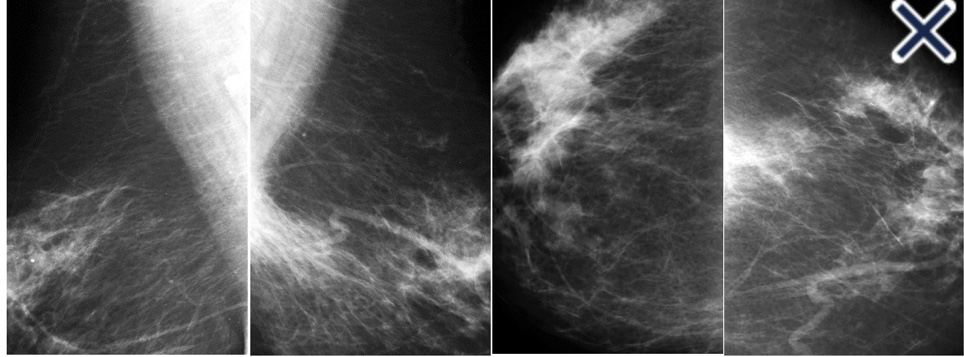
  • There are two main groups of diffuse breast cancers:
    • That present as large areas of architectural distortion on the mammogram:
      • One is neoductgenesis
      • The other is a diffusely infiltrating carcinoma:
        • Which makes up approximately 5% of all breast cancers
Bilateral diagnostic mammogram images
  • When the tumor is e-cadherin negative:
    • It is usually called invasive “lobular” carcinoma
  • When it is e-cadherin positive:
    • It is called infiltrating “ductal” carcinoma:
      • The designation based on e-cadherin staining is arbitrary:
        • Because the behavior of diffusely invasive carcinoma is the same regardless of the staining
  • Lacking calcifications and a central tumor mass:
    • These cancers are notoriously difficult to perceive on mammogram:
      • Even when they are large and palpable or when they occur in fatty involuted breasts:
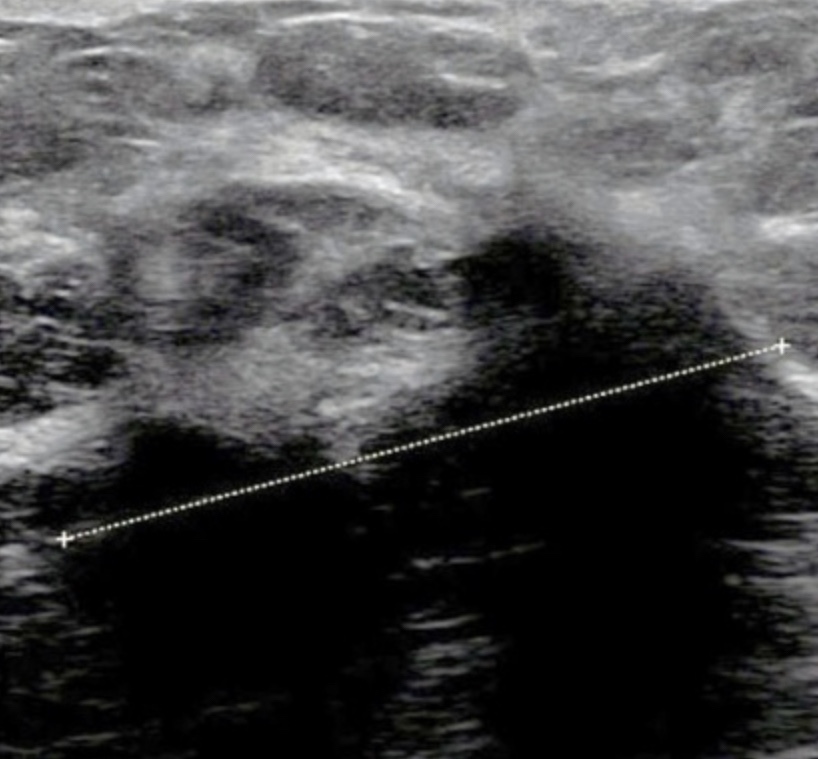
        • However, the associated connective tissue response:
          • Makes this type of cancer quite visible with ultrasound
Hand-held ultrasound image
  • In contrast to diffusely infiltrating cancers:
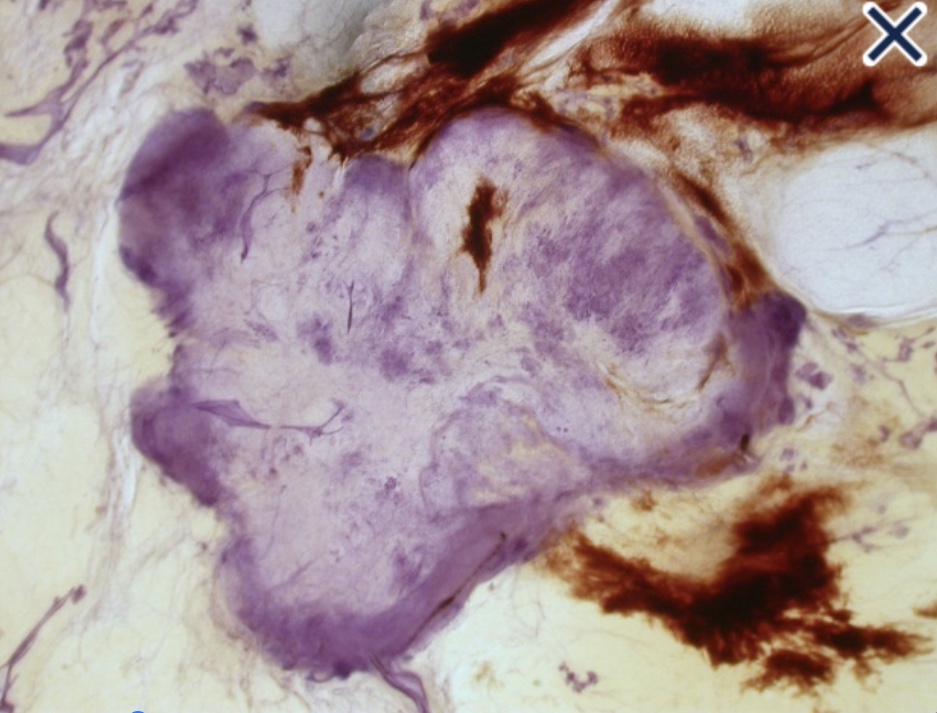
    • Circular (Image) and spiculated (Image) tumors arising in the terminal ductal lobular units (TDLU):
      • Have bulging, convex contours protruding into the adipose tissue
Lobulated spherical tumor mass
Multifocal stellate invasive breast cancer
  • The solid variety of infiltrating lobular carcinoma:
    • Most probably arises within the TDLU and has a circular / oval shape on breast imaging
  • There are two other variants of invasive lobular carcinoma that arise in the TDLUs:
    • The tubulolobular variant:
      • Is either a unifocal or multifocal spiculated lesion on the mammogram (Image)
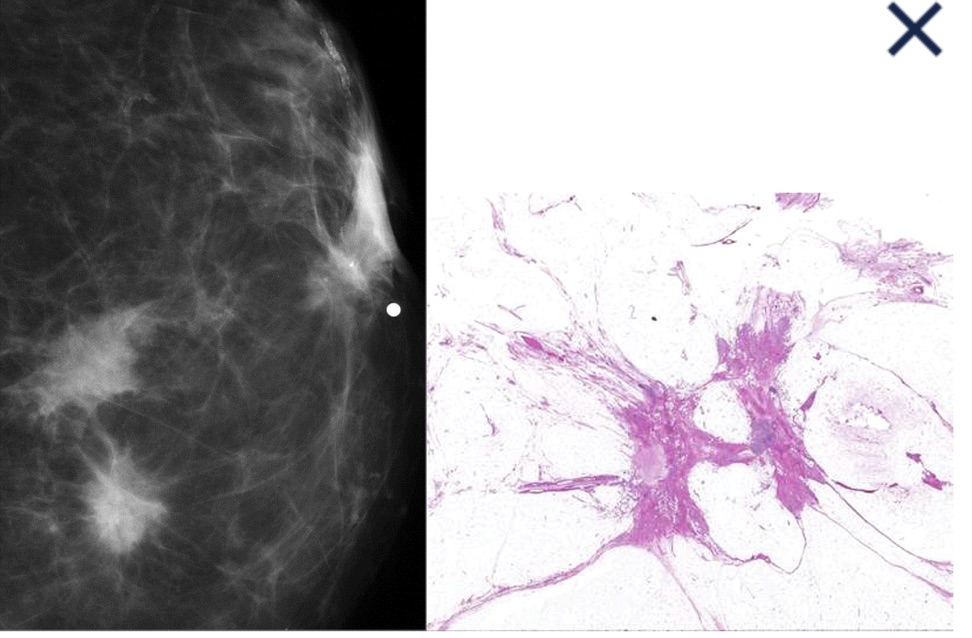
    • The alveolar type of invasive lobular carcinoma:
      • Is usually mammographically occult, or it can be seen as a subtle, asymmetric density (Image)
Multifocal spiculated lesion on the mammogram
Mammogram (a) and large format histology (b) alveolar type invasive lobular carcinoma
  • The various forms of invasive lobular carcinoma that develop in the TDLUs and present as localized lesions:
    • Have a significantly better prognosis than the diffusely infiltrating type breast cancer
  • Complex sclerosing lesions:
    • Present mammographically as nonpalpable architectural distortion with no central tumor mass and lucent radiating structures, the so called “black star”:
      • As opposed to cancers originating from the TDLU:
        • Which have a dense central tumor mass surrounded by radiopaque spiculation, giving the impression of looking at a “white star”
  • Malignant phyllodes tumors:
    • Present as large, high density masses:
      • The borders may be circumscribed or ill defined
  • Fat necrosis:
    • Also presents as a hypoechoic, high-density mass
  • References:
    • Tot T. Diffuse invasive breast carcinoma of no special type. Virchows Arch. 2016;468(2):199-206.
    • Tabár L, Dean PB. Teaching Atlas of Mammography. New York, NY: Thieme; 2011.
#Arrangoiz #BreastCancer #BreastSurgeon #CancerSurgeon #SurgicalOncologist #MountSinaiMedicalCenter #MSMC #Miami #Mexico

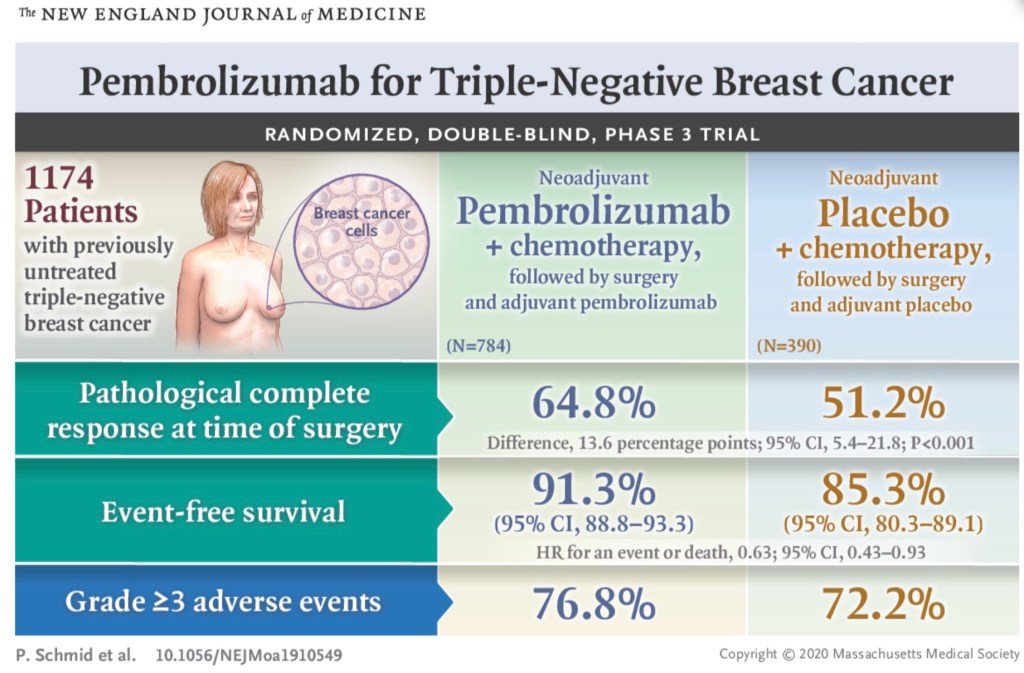
Keynote 522: Pembrolizumab for Early Triple-Negative Breast Cancer

  • High-risk early triple-negative breast cancer:
    • Is frequently associated with early recurrence and high mortality
  • Neoadjuvant chemotherapy:
    • Is the preferred treatment approach
  • In addition to potentially increasing the likelihood of tumor resectability and breast conservation:
    • Patients who have a pathological complete response after neoadjuvant therapy:
      • Have longer event-free survival:
        • Defined as the time from randomization to the date of disease progression that precluded definitive surgery, the date of local or distant recurrence or the occurrence of a second primary tumor, or the date of death from any cause
      • Have longer overall survival:
        • Accordingly, regulatory guidance supports the use of the pathological complete response as an end point for clinical testing of neoadjuvant treatment in patients with early triple-negative breast cancer
  • Pembrolizumab (Keytruda, Merck Sharp & Dohme):
    • An anti–programmed death 1 (PD-1) monoclonal antibody:
      • Has been shown to have antitumor activity and a range of mainly low-grade toxic effects in patients with metastatic triple-negative breast cancer, especially when used as first-line treatment
    • Immune checkpoint inhibition:
      • May enhance endogenous anticancer immunity:
        • After increased release of tumor-specific antigens with chemotherapy
  • Preliminary results from the phase 1b KEYNOTE-173 trial:
    • Showed that pembrolizumab plus neoadjuvant chemotherapy, with or without carboplatin:
      • Had promising antitumor activity:
        • Without a major increase in serious toxic effects in patients with locally advanced triple-negative breast cancer
  • In the phase 2 I-SPY2 trial:
    • The estimated percentage of patients with human epidermal growth factor receptor 2 (HER2)–negative breast cancers:
      • Who had a pathological complete response was:
        • Higher among those who received pembrolizumab combined with neoadjuvant chemotherapy than among those who received neoadjuvant chemotherapy alone
  • The phase 3 KEYNOTE-522 trial:
    • Evaluated the efficacy and safety of neoadjuvant pembrolizumab–chemotherapy as compared with neoadjuvant placebo–chemotherapy, followed by adjuvant pembrolizumab or placebo in patients with early triple-negative breast cancer
  • Methods of the Keynote 522 trial:
    • In this phase 3 trial, they randomly assigned (in a 2:1 ratio) patients with previously untreated stage II or stage III triple-negative breast cancer:
      • To receive neoadjuvant therapy with four cycles of pembrolizumab (at a dose of 200 mg) every 3 weeks plus paclitaxel and carboplatin (784 patients; the pembrolizumab–chemotherapy group) or placebo every 3 weeks plus paclitaxel and carboplatin (390 patients; the placebo–chemotherapy group)
      • The two groups then received an additional four cycles of pembrolizumab or placebo, and both groups received doxorubicin–cyclophosphamide or epirubicin–cyclophosphamide
      • After definitive surgery, the patients received adjuvant pembrolizumab or placebo every 3 weeks for up to nine cycles
      • The primary end points were a pathological complete response at the time of definitive surgery and event-free survival in the intention-to-treat population
  • Results of the Keynote 522 trial:
    • At the first interim analysis, among the first 602 patients who underwent randomization:
      • The percentage of patients with a pathological complete response was 64.8% (95% confidence interval [CI], 59.9 to 69.5) in the pembrolizumab–chemotherapy group and 51.2% (95% CI, 44.1 to 58.3) in the placebo–chemotherapy group (estimated treatment difference, 13.6 percentage points; 95% CI, 5.4 to 21.8; P<0.001)
    • After a median follow-up of 15.5 months (range, 2.7 to 25.0), 58 of 784 patients (7.4%) in the pembrolizumab–chemotherapy group and 46 of 390 patients (11.8%) in the placebo chemotherapy group had disease progression that precluded definitive surgery, had local or distant recurrence or a second primary tumor, or died from any cause (hazard ratio, 0.63; 95% CI, 0.43 to 0.93)
    • Across all treatment phases, the incidence of treatment-related adverse events of grade 3 or higher was 78.0% in the pembrolizumab–chemotherapy group and 73.0% in the placebo–chemotherapy group, including death in 0.4% (3 patients) and 0.3% (1 patient), respectively

#Arrangoiz #CancerSurgeon #BreastSurgeon #SurgicalOncologist #ComplexSurgicalOncology #BreastCancer #TripleNegativeBreastCancer #TNBC #Miami #Mexico #Teacher #Surgeon #MountSinaiMedicalCenter #MSMC

Goals of Treatment of Cancer of the Oral Cavity

  • The goals of treatment of cancer of the oral cavity are:
    • Cure of the cancer
    • Preservation or restoration of:
      • Speech
      • Mastication
      • Swallowing
      • External appearance
    • Minimization of the sequelae of treatment such as:
      • Dental decay
      • Osteonecrosis of the mandible
      • Trismus
    • Selecting options with the awareness of the risk of subsequent primary tumors and their management
  • Factors that influence the choice of initial treatment for oral cavity cancers are related to:
    • The characteristics of the primary tumor (tumor factors)
    • The patient (patient factors)
    • The treatment team (physician factors)
Factors that play a role in the selection of initial treatment
#Arrangoiz #Doctor #Surgeon #CancerSurgeon #SurgicalOncologist #HeadandNeckSurgeon #HeadandNeckCancer #MountSiniaMedicalCenter #MSMC #Miami #Mexico

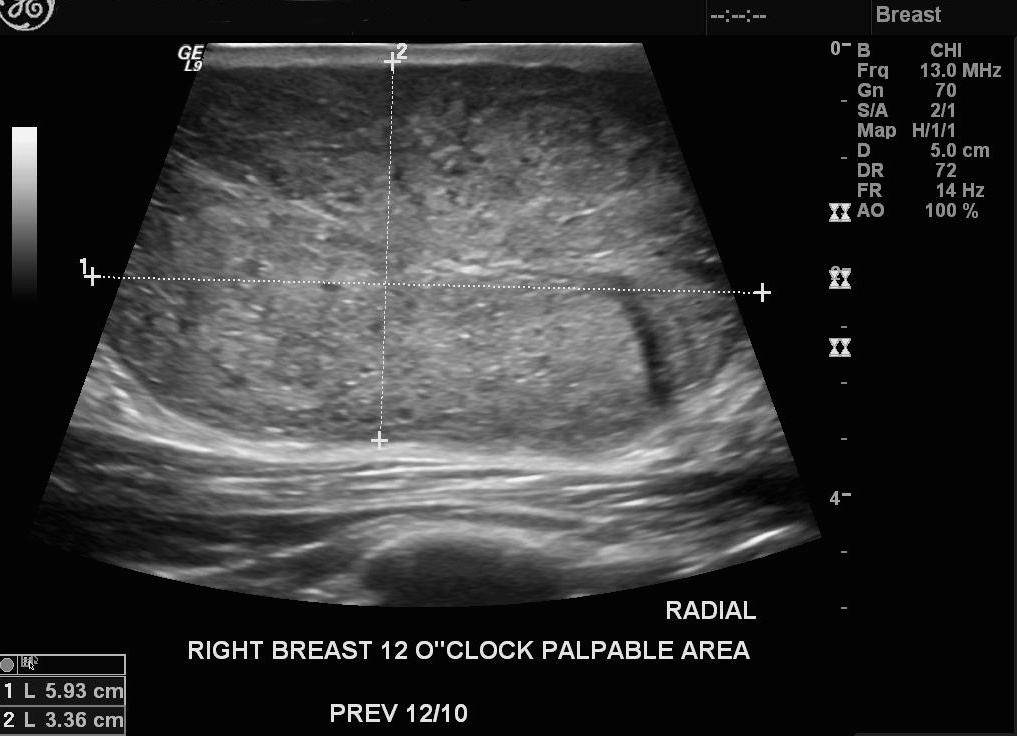
Ultrasound Characteristics of Phyllodes Tumors

  • Rapid growth of breast lesions like the one seen above suggests that it is a phyllodes tumor:
    • Although a giant fibroadenoma is another possibility
  • The ultrasound image shows:
    • An isoechoic, heterogeneous mass that contains cystic, fluid filled spaces, and is vascular on Doppler examination
  • In most cases, benign phyllodes tumors have margins that are well-circumscribed, and a thin, echogenic capsule is demonstrable
  • The doubling time for a benign phyllodes tumor:
    • Is about four months
  • The doubling time for a malignant phyllodes tumor:
    • Is a little over a month
  • Rapidly growing phyllodes tumors:
    • Whether benign or malignant:
      • Often cause prominent veins on the skin from the developing vascularity
  • Phyllodes tumors are more common:
    • In women of Mexican descent:
      • Latin American women with phyllodes tumors tend to be diagnosed at an earlier age than other women
  • A core needle biopsy:
    • Cannot reliably distinguish phyllodes tumors from fibroadenomas:
      • Is therefore not sufficient for a definitive diagnosis
  • The correct management is excision:
    • With or without a pre-operative core biopsy, with care to completely excise the tumor
  • Phyllodes tumors can also be difficult to distinguish from giant juvenile fibroadenomas:
    • But they should also be treated by surgical excision
  • References:
    • Guillot E, Couturaud B, Reyal F, Curnier A, Ravinet J, Lae M, et al. Management of phyllodes breast tumors. Breast J. 2011;17(2):129-137.
    • Plaza MJ, Swintelski C, Yaziji H, Torres-Salichs M, Esserman LE. Phyllodes tumor: review of key imaging characteristics. Breast Dis. 2015;35(2):79-86.
    • Rajan PB, Cranor ML, Rosen PP. Cystosarcoma phyllodes in adolescent girls and young women: a study of 45 patients. Am J Surg Pathol. 1998;22(1):64-69.
    • Sosin M, Pulcrano M, Feldman ED, Patel KM, Nahabedian MY, Weissler JM, et al. Giant juvenile fibroadenoma: a systematic review with diagnostic and treatment recommendations. Gland Surg. 2015;4(4):312-321.
    • Stavros AT. Atypical, high-risk, premalignant, and locally aggressive lesions. In: Stavros AT. Breast Ultrasound. Philadelphia, PA: Lippincott
#Arrangoiz #CancerSurgeon #BreastSurgeon #PhylloidesTumors #MountSinaiMedicalCenter #MSMC #Miami #Mexico

Submandibular Triangle

  • The submandibular triangle:
    • Is a subsection of the larger anterior triangle of the neck:
      • Which is defined by the following boundaries:
        • Lateral: 
          • Sternocleidomastoid muscle
        • Superior: 
          • Inferior border of the mandible
        • Medial: 
          • Anterior midline of the neck
  • The submandibular triangle, also known as digastric triangle:
    • Is located superior to the hyoid bone
    • It is bordered:
      • Superiorly by the inferior border of the mandible and the mastoid process
      • Posteriorly by the posterior belly of the diagastric and stylohoid muscles
      • Anteriorly by the anterior belly of digastric muscle
    • The roof of the triangle is formed by the:
      • Skin
      • Superficial cervical fascia
      • The platysma
      • Deep cervical fascia
    • The branches of the facial nerve and transverse cutaneous cervical nerves:
      • Also pass over the roof of the triangle
  • Digastric muscle:
    • The submandibular triangle is largely defined by the digastric muscle:
      • Which is a double-bellied muscle that depresses the mandible:
        • Opens the mouth
    • The anterior belly:
      • Arises from the digastric fossa found in the inner / internal aspect of the anterior mandible
    • The posterior belly:
      • Arises from the mastoid notch of temporal bone
    • Both are joined by a tendinous sheath:
      • Attach to the hyoid bone
  • A major landmark of the submandibular triangle:
    • Is the submandibular gland (innervated by the facial nerve):
      • This salivary gland can be described as having two lobes:
        • Which are divided by the posterior border of the mylohyoid muscle
      • The superificial lobe:
        • Is the larger of the two
        • Located superficial to the inferior surface of the mylohyoid muscle
      • The smaller deep lobe wraps around the posterior border of the mylohyoid
  • Contents of the submandibular triangle:
    • In terms of surgical practice, the submandibular triangle is best visualized as having four layers:
      • These layers start from the skin and continue progressively deeper
    • First layer (roof):
      • As previously mentioned, the roof of the submandibular triangle i.e. the first plane encountered surgically comprises of the skin and the superficial fascia:
        • These enclose the platysma muscle and the subcutaneous fat
        • Also enclosed are the cervical and mandibular branches of the facial nerve (cranial nerve VII)
    • Second layer (submandubilar space):
      • The second surgical plane of the submandibular triangle, the following contents can be found:
        • The submandibular lymph nodes
        • The superficial portion / lobe of the submandibular gland
        • The submental branch of the facial vein:
          • Which accompanies the submental branch of the facial artery
        • The vessels and nerves to mylohyoid muscle:
          • Lie directly along the inferior surface of the same muscle
        • The superficial / investing layer of the deep cervical fascia is also located here
      • Both the facial vein and anterior branch of the retromandibular vein:
        • Cross the triangle anterior, or superficial to the submandibular gland, and unite near to the angle of the mandible:
          • To form the common facial vein:
            • The common facial vein then drains into the internal jugular vein near the greater cornu of the hyoid bone
      • The facial artery (which is the fourth branch of the external carotid artery):
        • Also enters the submandibular triangle by passing beneath the posterior belly of the digastric muscle, as well as the stylohyoid muscle
        • Once it enters the triangle, it also lies deep to the submandibular gland
        • Once the artery has crossed the gland over its posterior aspect, it curls around the inferior border of the mandible, and ascends superomedially across the facial region
      • The inferior tip of the parotid gland can be found within in the posterior region of the digastric triangle
      • Ascending within the substance of the parotid gland is the external carotid artery
    • Third layer (floor):
      • Next is the third surgical layer
      • Once again the structures from superficial to deep are the:
        • Mylohyoid muscle along with its nerve
        • The hyoglossus muscle
        • As well as the middle pharyngeal constrictor muscle:
          • Which lies over the lower part of the superior pharyngeal constrictor, and a subsection of the styloglossus muscle
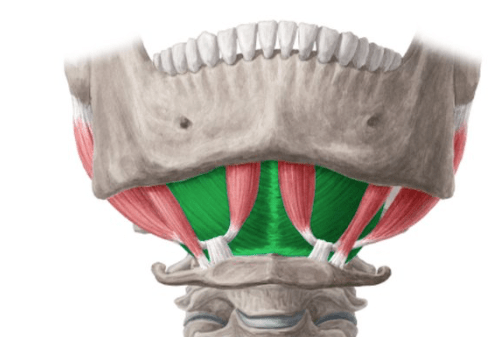
      • The mylohyoid muscles:
        • Are regarded as the true diaphragm of the floor of the mouth
        • These muscles arise from the mylohyoid line:
          • That is found on the inner surface of the mandible
        • Inserts into the body of the hyoid bone itself
        • The nerve that supplies the mylohyoid:
          • Is a branch of the alveolar division of the mandibular division of the trigeminal nerve (CN V3):
            • Lies on the surface of the inferior aspect of the muscle
        • The superior surface of mylohyoid is in contact with the lingual nerve (division of V3) and hypoglossal nerve (cranial nerve XII)
Mylohyoid Muscle
  • Fourth layer (basement / sublingual space)
    • Finally we have the deepest or fourth surgical plane
    • The structures within this plane, from superficial to deep are:
      • The deep portion of the submandibular gland
      • The duct of the submandibular gland (Wharton’s duct)
      • The lingual nerve (division of V3)
      • The sublingual artery & vein:
        • Which lie superficial to the sublingual gland
    • The submandibular duct is found inferior to the lingual nerve (except where the lingual nerve passes beneath it) as well as superior to the hypoglossal nerve
    • Deeper still we find cranial nerve XII (hypoglossal nerve), as well as the submandibular ganglion

Papillary Lesions of the Breast

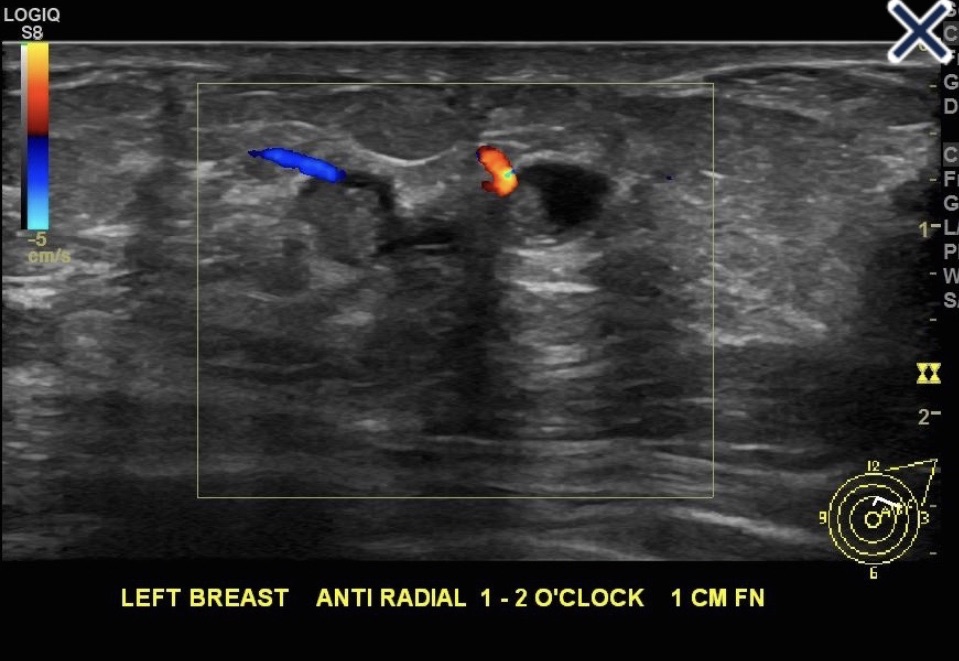
  • Papillary lesions of the breast are common
  • These highly vascular lesions:
    • Are intraductal and may transform into malignant variants
  • In benign papillary lesions:
    • A vascular stalk may be demonstrated on color Doppler scanning while multiple feeding vessels may be seen when imaging malignant papillary lesions
  • When papillary lesions infarct, the vascular stalk will not be demonstrated
  • The ability to reliably distinguish papilloma, in-situ papillary carcinoma, and invasive papillary carcinoma:
    • Is not possible with ultrasound and is quite challenging even on core biopsy
  • Open surgical biopsy:
    • May need to be performed to distinguish malignant from benign papillary lesions
  • An “acorn” cyst is lined with papillary apocrine metaplasia:
    • Which can form a mural nodule:
      • The nodule in an acorn cyst is less echogenic than papillomas or papillary carcinomas, is usually concave, following the contour of the cyst (thus the appearance of a cap on an acorn) instead of convex, and does not have a vascular stalk
    • The mural nodule caused by papillary apocrine metaplasia also would not extend into the duct as the papillary lesion shown in the image does
  • Tubular adenomas and fibroadenomas:
    • Have a similar sonographic appearance and are frequently round or oval, although tubular adenomas can be fusiform or spindle shaped
    • Both lesions occur during reproductive years and would not commonly present as a new finding in a postmenopausal patient
  • References
    • Jagmohan P, Pool FJ, Putti TC, Wong J. Papillary lesions of the breast: imaging findings and diagnostic challenges. Diagn Interv Radiol. 2013;19(6):471-478.
    • Wyss P, Varga Z, Rössle M, Rageth CJ. Papillary lesions of the breast: outcomes of 156 patients managed without excisional biopsy. Breast J. 2014;20(4):394-401.
    • Stavros AT. Breast Ultrasound. Philadelphia, PA: Lippincott Williams & Wilkins; 2004.