Blog

Familial Hypocalciuric Hypercalcemia (FHH)

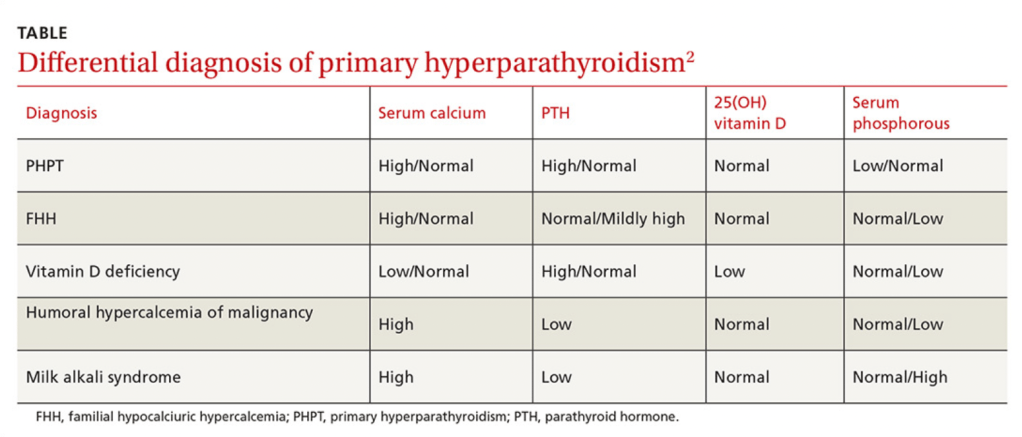
  • Familial hypocalciuric hypercalcemia (FHH):
    • Also known as benign familial hypercalcemia hypocalciuria:
      • Is an autosomal dominant disorder with nearly 100% penetrance:
        • Characterized by:
          • Lifelong asymptomatic hypercalcemia
          • Low urinary calcium excretion
          • Inappropriately normal or mildly elevated PTH levels
  • Genetics and Pathophysiology
    • FHH results from heterozygous loss-of-function mutations affecting the:
      • Calcium-sensing receptor (CaSR) signaling pathway
    • Three genetic subtypes exist:
      • FHH1:
        • Most common – 65% to 70% of cases:
        • Inactivating mutations in CASR gene:
          • Encoding the calcium-sensing receptor
      • FHH2 (rarest):
        • Mutations in GNA11 gene:
          • Encoding the Gα11 protein subunit
      • FHH3:
        • Mutations in AP2S1 gene:
          • Affecting receptor endocytosis
    • These mutations cause reduced sensitivity of parathyroid cells and renal tubular cells:
      • To extracellular calcium:
        • Resulting in a rightward shift in the set point for PTH suppression and increased renal calcium reabsorption (hypocalciuria)
  • Clinical Features
    • FHH is typically benign and asymptomatic:
      • With hypercalcemia often detected incidentally
    • Most patients require no intervention
    • Onset occurs in the first week of life:
      • With lifelong persistence
    • Rarely, adults may develop pancreatitis or chondrocalcinosis
    • FHH3:
      • May present with a more pronounced phenotype than FHH1 or FHH2
  • Laboratory Findings
    • The characteristic biochemical profile includes:
      • Elevated serum calcium (mild to moderate)
      • Low urinary calcium excretion:
        • Fractional excretion of calcium typically < 0.01
      • Normal or low-normal serum phosphate
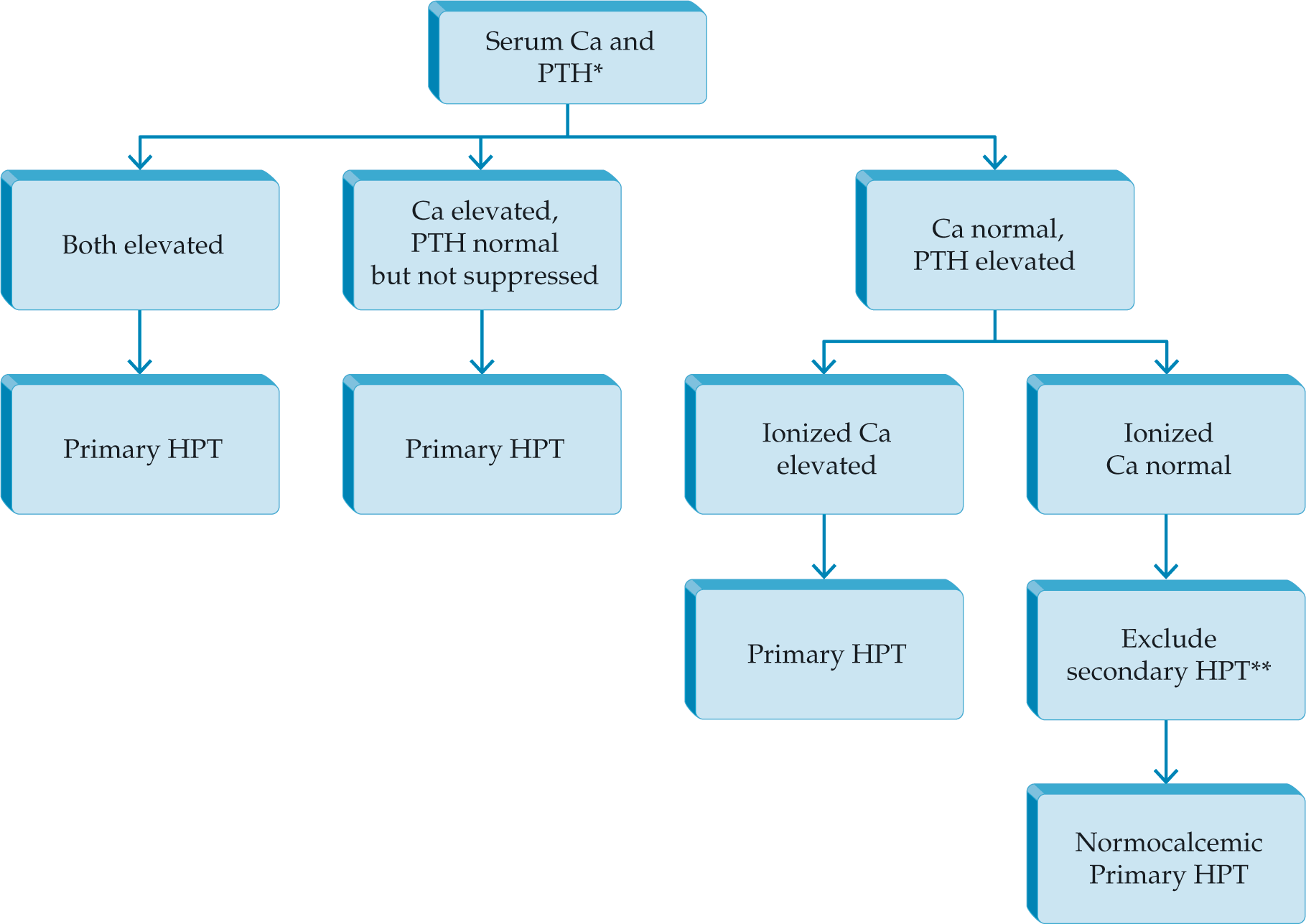
  • Distinguishing FHH from Primary Hyperparathyroidism:
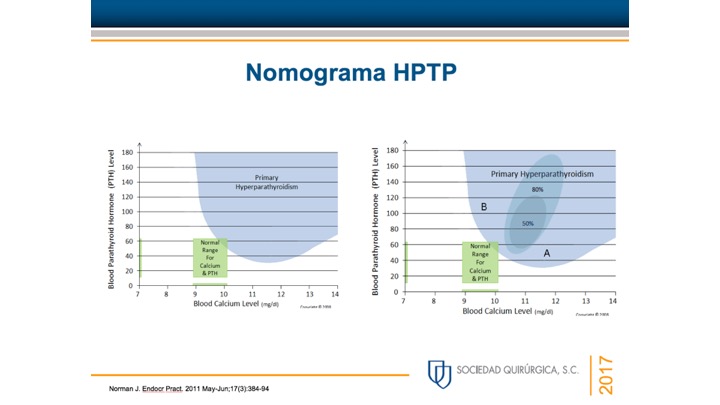
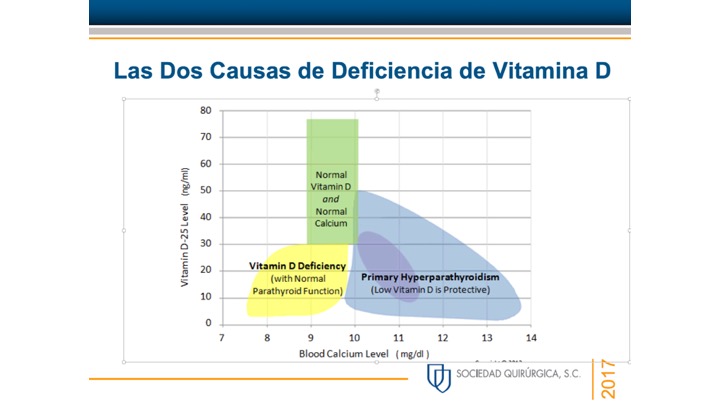
    • Differentiating FHH from primary hyperparathyroidism (PHPT):
      • Is critical because FHH does not require surgery:
        • Whereas PHPT is often treated surgically
      • However, significant biochemical overlap exists between these conditions
    • Key distinguishing features:
      • Important caveats:
        • Up to 20% of FHH patients have fractional excretion of calcium > 0.01, and there is considerable overlap in all biochemical parameters
        • The 24-hour urine calcium excretion has 96% sensitivity for PHPT but only 29% specificity for FHH:
          • While the calcium/creatinine clearance ratio has 47% sensitivity for PHPT but 93% specificity for FHH
  • Genetic Testing:
    • Genetic testing for CASR, GNA11, and AP2S1 mutations is appropriate in:
      • Young patients with hypercalcemia
      • Patients with family history of hypercalcemia
      • Fractional excretion of calcium < 0.02
      • Fail parathyroidectomy
      • Multigland disease
  • Management:
    • FHH is a benign condition that does not require surgery
    • Parathyroidectomy is contraindicated as hypercalcemia persists after subtotal parathyroidectomy and total parathyroidectomy causes permanent hypoparathyroidism
    • For symptomatic cases (particularly FHH3):
      • The calcimimetic cinacalcet has been used successfully to lower calcium levels and alleviate symptoms
  • References
    Familial Hypocalciuric Hypercalcemia as an Atypical Form of Primary Hyperparathyroidism. Marx SJ. Journal of Bone and Mineral Research : The Official Journal of the American Society for Bone and Mineral Research. 2018;33(1):27-31. doi:10.1002/jbmr.3339.
    Familial Hypocalciuric Hypercalcemia and Related Disorders. Lee JY, Shoback DM. Best Practice & Research. Clinical Endocrinology & Metabolism. 2018;32(5):609-619. doi:10.1016/j.beem.2018.05.004.
    Mutations Affecting G-Protein Subunit α11 in Hypercalcemia and Hypocalcemia. Nesbit MA, Hannan FM, Howles SA, et al. The New England Journal of Medicine. 2013;368(26):2476-2486. doi:10.1056/NEJMoa1300253.
    Familial Hypocalciuric Hypercalcemia in an Infant: Diagnosis and Management Quandaries. Goldsweig B, Turk Yilmaz RS, Ravindranath Waikar A, Brownstein C, Carpenter TO. Journal of Bone and Mineral Research : The Official Journal of the American Society for Bone and Mineral Research. 2024;39(10):1406-1411. doi:10.1093/jbmr/zjae137.
    Hyperparathyroid and Hypoparathyroid Disorders. Marx SJ. The New England Journal of Medicine. 2000;343(25):1863-75. doi:10.1056/NEJM200012213432508.
    Hypercalcemia: A Review. Walker MD, Shane E. JAMA. 2022;328(16):1624-1636. doi:10.1001/jama.2022.18331.
    Familial Hypocalciuric Hypercalcemia Types 1 and 3 and Primary Hyperparathyroidism: Similarities and Differences. Vargas-Poussou R, Mansour-Hendili L, Baron S, et al. The Journal of Clinical Endocrinology and Metabolism. 2016;101(5):2185-95. doi:10.1210/jc.2015-3442.
    Urinary Calcium Indices in Primary Hyperparathyroidism (PHPT) and Familial Hypocalciuric Hypercalcaemia (FHH): Which Test Performs Best?. Arshad MF, McAllister J, Merchant A, et al. Postgraduate Medical Journal. 2021;97(1151):577-582. doi:10.1136/postgradmedj-2020-137718.
    Cinacalcet for Symptomatic Hypercalcemia Caused by AP2S1 Mutations. Howles SA, Hannan FM, Babinsky VN, et al. The New England Journal of Medicine. 2016;374(14):1396-1398. doi:10.1056/NEJMc1511646.

Malignancy-Associated Hypercalcemia (MAH)

  • Malignancy-Associated Hypercalcemia (MAH) – Epidemiology
    • Occurs in 20% to 30% of patients with cancer during their disease course
    • Accounts for roughly 90% of hypercalcemia cases in hospitalized patients
    • Most common cause of hypercalcemia in hospitalized patients:
      • Whereas primary hyperparathyroidism is most common in the outpatient setting
    • Most common cancers Table 1
    • Overall prognosis:
      • Median survival after diagnosis of MAH –  3 to 4 months
        • Indicates advanced malignancy
  • Mechanisms of Hypercalcemia in Malignancy:
    • Humoral Hypercalcemia of Malignancy (HHM):
      • Accounts for ~ 80% of cases
      • Pathophysiology:
        • Tumor secretes PTH-related peptide (PTHrP)
        • PTHrP mimics PTH actions:
          • ↑ osteoclastic bone resorption
          • ↑ renal calcium reabsorption
          • ↓ phosphate
        • Laboratory profile Table 2
        • Common cancers:
          • Squamous cell lung carcinoma
          • Head and neck squamous cell carcinoma
          • Renal cell carcinoma
          • Bladder cancer
          • Ovarian cancer
      • Clinical features:
        • Rapid onset
        • Often severe hypercalcemia
        • Advanced malignancy
    • Osteolytic Metastases:
      • ~ 20% of cases
      • Pathophysiology:
        • Direct tumor invasion of bone:
          • Stimulate osteoclast activity via the release of:
            • IL-1
            • IL-6
            • TNF
            • RANKL
              • These cytokines stimulate osteoclasts → localized bone destruction → calcium release
        • Direct bone destruction → calcium release
      • Typical malignancies:
        • Breast cancer
        • Multiple myeloma:
          • Myeloma cells activate osteoclasts
          • Suppress osteoblast activity
          • Produce osteolytic lesions
        • Lymphoma
        • Metastatic prostate (less common cause of hypercalcemia)
      • Laboratory profile Table 3
    • Vitamin D–Mediated Hypercalcemia:
      • Rare (less than 1% to 2% of the cases)
      • Pathophysiology:
        • Tumor produces 1-alpha hydroxylase
        • ↑ conversion of 25-OH vitamin D → 1,25-OH vitamin D
      • Seen in:
        • Hodgkin lymphoma
        • Non-Hodgkin lymphoma
        • Some granulomatous tumors
      • Laboratory profile Table 4
    • Ectopic PTH Production:
      • Extremely rare (< 1%of the cases)
      • True PTH secretion by tumor
      • Seen in:
        • Small cell lung cancer
        • Ovarian carcinoma
  • Clinical Manifestations:
    • Symptoms depend on rate of rise and level of calcium
      • Neurologic:
        • Confusion
        • Lethargy
        • Coma
      • Gastrointestinal:
        • Nausea
        • Constipation
        • Pancreatitis
      • Renal:
        • Polyuria
        • Dehydration
        • Acute kidney injury
      • Cardiac:
        • Shortened QT interval
        • Arrhythmias
  • Laboratory Clues Distinguishing MAH from PHPT Table 5
  • Treatment:
    • Immediate Management:
      • Aggressive IV hydration (normal saline)
      • Calcitonin:
        • Rapid onset (4 to 6 hours):
          • Temporary effect
      • IV bisphosphonates:
        • Zoledronic acid
        • Pamidronate
          • Onset:
            • 24 to 48 hours
    • Refractory Hypercalcemia:
      • Denosumab
      • Glucocorticoids (vitamin D–mediated cases)
      • Dialysis (severe renal failure)
  • Key Teaching Points for Residents:
    • Malignancy = most common cause of hypercalcemia in hospitalized patients
    • PTH is suppressed
    • PTHrP accounts for ~ 80% of cases
    • Severe calcium (>14 mg/dL) should raise suspicion for malignancy
    • Median survival ~ 3 to 4 months → poor prognostic marker
  • Key References:
    • Stewart AF. Hypercalcemia associated with cancer. N Engl J Med. 2005;352:373–379.’
    • Clines GA. Mechanisms and treatment of hypercalcemia of malignancy. Curr Opin Endocrinol Diabetes Obes.2011;18:339–346.
    • Goldner W. Cancer-related hypercalcemia. J Oncol Pract. 2016;12:426–432.
    • Mirrakhimov AE. Hypercalcemia of malignancy: pathogenesis and treatment. North Am J Med Sci.2015;7:483–493.
Cancer TypeFrequency of MAH
Lung cancer (especially squamous cell)~25–30%
Breast cancer~20–25%
Multiple myeloma~15–20%
Renal cell carcinoma~5–10%
Head and neck squamous cell carcinoma~5–10%
Others (ovarian, lymphoma, bladder)<5%
Table 1: Cancers most commonly associated with Malignancy-Associated Hypercalcemia
TestResult
Calcium
PTHSuppressed
PTHrPElevated
PhosphateLow
1,25-vitamin DLow/normal
Table 2: Laboratory Profile of Humoral Hypercalcemia of Malignancy
TestResult
Calcium
PTHSuppressed
PTHrPNormal
Vitamin DNormal
Table 3: Laboratory Profile of Osteolytic Bone Metastases
TestResult
Calcium
PTHSuppressed
1,25-OH vitamin DElevated
Table 4: Laboratory Profile of Vitamin D–Mediated Hypercalcemia
FeaturePrimary HyperparathyroidismMalignancy Hypercalcemia
PTHHigh or inappropriately normalSuppressed
Calcium levelMild–moderate (10.5–12 mg/dL)Often >13–14 mg/dL
Symptom onsetChronicAcute / severe
PTHrPNormalElevated (HHM)
Vitamin DNormalMay be elevated in lymphoma
Table 5: Laboratory Clues Distinguishing MAH from PHPT

Mechanism by which Thiazide Diuretics cause Hypercalcemia.

  • Thiazide diuretics:
    • Cause hypercalcemia primarily by enhancing renal calcium reabsorption in the distal convoluted tubule:
      • Which reduces urinary calcium excretion and leads to calcium retention
  • The mechanism involves:
    • Thiazide-induced blockade of the apical NaCl cotransporter in the distal convoluted tubule:
      • This blockade reduces intracellular chloride:
        • Causing chloride to exit through chloride channels:
          • Which hyperpolarizes the cell membrane
        • The resulting hyperpolarization stimulates calcium entry:
          • Through voltage-sensitive, dihydropyridine-sensitive calcium channels on the apical membrane
        • Additionally, thiazides upregulate expression of distal tubule calcium transport molecules including:
          • TRPV5, TRPV6, and calbindin-D9k
  • The presence of parathyroid hormone (PTH):
    • Is necessary for thiazides to reduce urinary calcium excretion:
      • Studies in hypoparathyroid patients show minimal hypocalciuric effect compared to euparathyroid controls:
        • This suggests thiazides may potentiate PTH action on the nephron
  • In patients receiving vitamin D or with hyperparathyroidism:
    • Thiazides can also increase calcium release from bone:
      • Contributing to more pronounced hypercalcemia:
        • This bone effect appears to require either pharmacologic doses of vitamin D or enhanced bone resorption states
  • Importantly, many patients with thiazide-associated hypercalcemia have underlying primary hyperparathyroidism:
    • That becomes unmasked:
      • Approximately 24% are ultimately diagnosed with primary hyperparathyroidism:
        • 71% continue to have hypercalcemia after thiazide discontinuation
      • The hypercalcemia is typically mild and PTH-independent in those without underlying parathyroid disease
  • References
    Hypercalcemia: A Review. Walker MD, Shane E. JAMA. 2022;328(16):1624-1636. doi:10.1001/jama.2022.18331.
    Drug-Related Hypercalcemia. Lecoq AL, Livrozet M, Blanchard A, Kamenický P. Endocrinology and Metabolism Clinics of North America. 2021;50(4):743-752. doi:10.1016/j.ecl.2021.08.001.
    Mechanism of Calcium Transport Stimulated by Chlorothiazide in Mouse Distal Convoluted Tubule Cells. Gesek FA, Friedman PA. The Journal of Clinical Investigation. 1992;90(2):429-38. doi:10.1172/JCI115878.
    The Role of Calbindin-D28k on Renal Calcium and Magnesium Handling During Treatment With Loop and Thiazide Diuretics. Lee CT, Ng HY, Lee YT, Lai LW, Lien YH. American Journal of Physiology. Renal Physiology. 2016;310(3):F230-6. doi:10.1152/ajprenal.00057.2015.
    Changes in Serum and Urinary Calcium During Treatment With Hydrochlorothiazide: Studies on Mechanisms. Brickman AS, Massry SG, Coburn JW. The Journal of Clinical Investigation. 1972;51(4):945-54. doi:10.1172/JCI106889.
    The Interactions of Thiazide Diuretics With Parathyroid Hormone and Vitamin D. Studies in Patients With Hypoparathyroidism. Parfitt AM. The Journal of Clinical Investigation. 1972;51(7):1879-88. doi:10.1172/JCI106990.
    Thiazide-Associated Hypercalcemia: Incidence and Association With Primary Hyperparathyroidism Over Two Decades. Griebeler ML, Kearns AE, Ryu E, et al. The Journal of Clinical Endocrinology and Metabolism. 2016;101(3):1166-73. doi:10.1210/jc.2015-3964.

Board Review Q&A (2025): De-escalating Axillary Surgery in Breast Cancer

  • What was the pivotal shift from ALND to SLNB?
    • Randomized trials:
      • Milan / Veronesi, NSABP B-32, ALMANAC
    • This trials showed that SLNB achieves equivalent survival and regional control compared with ALND:
  • NSABP B-32 – what did it prove?
    • In > 5,600 cN0 patients:
      • SLNB alone (when SLN negative) yielded:
        • Equivalent OS and regional control to ALND:
          • With less lymphedema and sensory deficits
    • This trial anchored SLNB as safe oncologically and better for function PubMed+1
  • ALMANAC – why do we still quote it?
    • The UK multicenter RCT:
      • SLNB vs standard axillary treatment:
        • Showed substantially less arm morbidity, pain, and better QoL at 12 months with SLNB:
          • An early, practice-changing morbidity signal complementing efficacy trials OUP Academic+1
  • Milan (Veronesi) trial—what’s the take-home?
    • Single-center RCT:
      • SLNB safely replaced routine ALND for cN0 with durable 10-year outcomes:
        • Cementing SLNB accuracy and safety in early breast cancer
  • Technique pearls that lower SLNB FNR in general?
    • Use dual-tracer mapping and retrieve ≥ 2 to 3 SLNs when possible:
      • Dual mapping reduces FNR versus single dye, and more nodes improves accuracy
  • Positive SLN after upfront surgery (ALND omission)
    • ACOSOG Z0011—who can safely avoid ALND?
      • Women with cT1 to cT2, cN0 undergoing BCS + whole-breast RT, with 1 to 2 positive SLNs:
        • Had no OS benefit from ALND:
          • 10-yr OS 86.3% SLNB-alone vs 83.6% ALND
      • Today, we omit ALND for Z0011-eligible patients JAMA Network
    • Does ACOSOG Z0011 imply mandatory comprehensive RNI?
      • No:
        • Z0011 patients largely received tangential breast RT:
          • Comprehensive RNI wasn’t mandated
        • Decisions today are individualized by:
  • IBCSG 23-01—what about micrometastases (≤ 2 mm)?
  • In patients with micrometastases:
    • No ALND was noninferior to ALND for long-term outcomes (10-yr DFS noninferior):
      • Supporting omission of ALND in micrometastatic disease PubMed+1
  • AMAROS Trial – ART vs ALND after a positive SLN?
    • Phase III trial:
      • Axillary RT produced similar control and survival as ALND:
        • But less lymphedema (11% vs 23% at 5 yr):
          • Making ART the preferred completion strategy when axillary treatment is needed PMC+2The Lancet+2
  • OTOASOR Trial – does it align with AMAROS Trial?
  • Yes:
    • Single-center RCT with 8-yr follow-up:
      • RNI noninferior to ALND for control /survival after a positive SLN:
        • Reinforcing ART / RNI as an ALND alternative to limit morbidity PubMed
  • SENOMAC (2024 NEJM) – what’s new versus Z0011?
    • Included mastectomy patients and broader indications: 
      • Omission of completion ALND in patients with 1 to 2 SLN macrometastases:
        • Was noninferior for survival:
          • Most received RNI
      • Expands ALND omission beyond BCS PubMed
  • SENOMAC nuances – ECE, T3 tumors, men?
    • SENOMAC enrolled some patients with ECE, cT3, and men
    • Prespecified subgroup analyses did not show detriment with ALND omission:
      • Though numbers are smaller – supporting wider generalizability makadu.live
  • After mastectomy with 1 to 2 positive SLNs, do I need ALND?
    • Not routinely – With planned comprehensive RNIALND can be omitted (AMAROS, SENOMAC) a position reflected in the 2025 ASTRO-ASCO-SSO PMRT guideline language emphasizing less invasive axillary management with nodal RT PubMed+2PubMed+2
  • Omission of any axillary surgery (SLNB-omission):
    • SOUND (JAMA Oncol 2023) – who can skip SLNB entirely?
      • Women with small tumors and negative axillary ultrasound:
        • Had noninferior 5-yr distant DFS with no axillary surgery vs SLNB
      • If axillary pathology doesn’t change therapy:
        • Omission is safe
    • INSEMA (NEJM 2024/2025) – does it reinforce SLNB omission?
      • Yes:
        • In cT1 to cT2 cN0 undergoing BCS + WBRT, omitting SLNB was noninferior for invasive DFS, with fewer arm morbidities:
          • Broadening omission beyond SOUND’s entry criteria
    • Guideline impact – what does ASCO 2025 now recommend?
      • ASCO now supports SLNB omission for select postmenopausal ≥50, HR+/HER2-, G1–2, ≤2 cm tumors with negative AUS undergoing BCS + RT, when nodal status won’t alter adjuvant therapy
    • How do I counsel a 65-year-old with 1.5 cm HR+/HER2–, AUS-negative tumor?
      • Discuss SLNB omission per ASCO 2025, referencing SOUND / INSEMA
      • Emphasize shared decision-making and document that nodal status won’t change systemic therapy / RNI plans
    • Does negative AUS define cN0 reliably enough to omit surgery?
      • In SOUND / INSEMA, AUS was adequate for selection:
        • Axillary failures were rare with omission when systemic / RT plans were appropriat:
          • Still, ensure imaging quality and consider biology.
  • Pathology definitions and “what counts”
    • Define ITCs vs micrometastases (AJCC 8e):
      • ITCs:
        • < 0.2 mm or < 200 cells (N0[i+])
      • Micrometastases:
        • 0.2 mm to 2 mm (N1mi)
    • Management parallels the trials:
      • Micrometastases (IBCSG 23-01) often no ALND:
        • ITCs generally node-negative 
    • Do ITCs change indications for ALND or RNI
      • ITCs typically do not mandate ALND:
        • Decisions on RNI hinge on comprehensive risk assessment rather than ITCs alone (Use institutional protocols) 
  • Neoadjuvant chemotherapy (NAC): SLNB and TAD
    • ACOSOG Z1071 – what did we learn?
      • In biopsy-proven cN1→ycN0 after NAC:
        • SLNB had an FNR ≈ 12%:
          • Improved by dual tracer and retrieving ≥ 3 SLNs
          • Capturing the clipped node lowered the FNR further – ushering in targeted axillary dissection (TAD) 
    • SENTINA – why was FNR a concern?
      • Complex 4-arm RCT showed higher FNRs when SLNB was performed after NAC in initially node-positive patients, especially when only 1 to 2 SLNs were retrieved:
        • Driving optimization:
          • Dual mapping, ≥ 3 SLNs and TAD
    • SN-FNAC (JCO 2015) – can SLNB be accurate post-NAC in cN+?
      • With mandatory IHC, ID rate 87.6% and FNR 8.4%:
        • When ≥ 2 SLNs were removed – evidence that optimized technique can make SLNB acceptable after NAC in prior cN+
    • GANEA-2 (2019) – safety signal?
      • Prospective multicenter study supported feasibility and safety of post-NAC SLNB with low axillary failure when using optimized protocols; informs modern post-NAC algorithms
    • What is TAD and why do it?
      • Targeted axillary dissection combines SLNB + removal of the pre-treatment clipped node:
        • To slash FNR vs SLNB alone and better mirror basin response – core idea from MD Anderson implementation work 
    • RISAS / TAD accuracy – what’s the FNR
      • Multicenter diagnostic study of radioactive iodine seed localization (RISAS):
        • FNR 3.5%, NPV 92.8% – strong diagnostic performance for restaging after NAC 
    • MARI protocol – how is it different?
      • Marking the positive node with a seed pre-NAC and excising it post-NAC; with PET-CT integration:
        • MARI can avoid ALND in ~80% of cN+ while keeping 3-yr axillary recurrence-free interval ~98%
    • TAD outcomes – can we safely omit ALND in responders?
      • Cohorts show low 3-yr axillary recurrence with TAD alone in good responders (and no survival decrement vs TAD + ALND in selected patients):
        • Supporting ALND omission after accurate TAD
    • Practical NAC pearls to minimize FNR:
      • Always clip the biopsied positive node pre-NAC
      • Use dual / multi-tracers
      • Aim to remove clipped node + ≥ 2 to 3 SLNs
      • Consider seed / mag / wire techniques to ensure clipped-node retrieval
    • What if the clipped node is not a sentinel node?
      • Happens in ~ 20% to 25% – hence TAD’s value:
      • Explicitly localize and remove the clipped node in addition to SLNs to mitigate mapping discordance
    • “Lost marker” after NAC – how common and what to do?
      • About 6% markers cannot be retrieved:
        • Have contingency plans:
          • Intra-op imaging
          • Secondary localization
          • Proceed to ALND if residual disease risk is high and target cannot be verified 
    • After NAC, who still needs ALND?
      • Persistent palpable / yrcN+ disease
      • Inadequate TAD / SLN retrieval
      • Gross ECE / bulky residual nodal disease
      • Tailor with imaging, pathology, and MDT input
  • Radiotherapy interplay and guidelines:
    • When you omit ALND after positive SLN, what about RT?
      • Trials (AMAROS, OTOASOR):
        • Delivered axillary / RNI with excellent control and less lymphedema than ALND
      • For mastectomy with 1 to 2 SLN macrometastases:
        • RNI without ALND is supported (now reflected in 2025 PMRT guidance)
    • 2025 ASTRO-ASCO-SSO PMRT update – what changed?
      • Reaffirms PMRT in most node-positive after mastectomy
      • Clarifies post-NAC ypN0 and scope of RNI:
        • Emphasizes integration with less invasive axillary surgery to limit morbidity
    • Does RNI obviate ALND in all scenarios?
      • No:
        • Use patient selection akin to AMAROS /SENOMAC (limited macrometastases burden)
        • Bulky residual disease or inadequate mapping still tips to ALND
  • Special populations and situations:
    • Age ≥ 70, small HR+ / HER2- tumors – do I need SLNB?
      • SSO Choosing Wisely and ASBrS support omitting axillary staging when it won’t change adjuvant therapy:
        • Aligns with ASCO 2025 omission framework
    • DCIS – when is SLNB indicated?
      • Not for BCS without invasion suspicion
      • Do SLNB for mastectomy or if imaging / biopsy suggests invasion risk
    • Re-SLNB after prior surgery?
      • Feasible after prior BCS / SLNB:
        • But results may not alter systemic therapy in local recurrences:
          • Individualize
    • Pregnancy – map with what tracer?
      • Avoid radiocolloid if possible depending on local policy
      • Many centers use blue dye cautiously (risk of anaphylaxis)
        • Institutional / obstetric MDT policy applies; outside trial scope
    • Male breast cancer – apply same axillary principles?
      • Generally yes:
        • SENOMAC included men without a signal of harm from ALND omission in selected cases
  • Minimum SLNs to retrieve?
    • Strive for ≥ 2
    • ≥ 3 post-NAC if possible – associated with lower FNR in SENTINA / ACOSOG Z1071:
      • Ensure robust mapping
  • Mapping – dye alone acceptable?
    • Dual tracer is preferred for lowest FNR
    • Dye-only can work but increases FNR / variability – reserve for exceptional logistics Does extracapsular extension (ECE) mandate ALND?
  • Does extracapsular extension (ECE) mandate ALND?
    • Not categorically:
      • SENOMAC included some ECE without harming noninferiority
      • Consider extent (gross vs microscopic) and planned RNI
  • Two vs three positive SLNs in BCS – Z0011 boundary?
    • >2 positive SLNs (or Z0011-ineligible features):
      • Generally push toward further axillary therapy:
        • Often ART / RNI rather than routine ALND 
  • Mastectomy, 1 to 2 macrometastases SLNs – can I do SLNB alone + RNI?
    • Yes – supported by AMAROS and SENOMAC:
      • Many centers omit ALND and deliver comprehensive RNI
  • Micrometastases (≤ 2 mm) after SLNB – ALND needed?
    • No:
      • IBCSG 23-01 provides level-1 evidence to omit ALND:
        • Manage with breast / RT decisions as appropriate
  • ITCs only – how to code / manage?
    • N0(i+):
      • Do not count as node-positive for N category:
        • Decisions about RT / systemic therapy rely on whole-patient risk
  • Post-NAC, cN1→ycN0 with TAD negative – omit ALND?
    • Yes for many:
      • With robust TAD (clipped node retrieved + SLNs) showing pCR / low burden:
        • ALND can be omitted:
          • Early outcomes show low axillary failure
  • Post-NAC, ypN1mi – what’s the move?
    • Case-by-case:
      • Limited data
      • Many MDTs favor RNI and omit ALND if TAD robust and burden minimal:
        • Document rationale (biology, response, fields):
          • See ASBrS resource guide framing individualized decisions
  • When is pre-NAC SLNB appropriate?
    • Avoid:
      • Image-guided needle biopsy / clip suspicious nodes before NAC and stage after NAC with SLNB / TAD
  • Does adding axillary RT after TAD-negative improve outcomes?
    • Uncertain; trials ongoing:
      • Observational data suggest very low axillary recurrence with accurate TAD even without ALND:
        • RT decisions are individualized
  • Acceptable axillary failure rates with de-escalation?
    • Across ACOSOG Z0011 / AMAROS / OTOASOR /SOUND / INSEMA:
      • Axillary recurrences are ~ 1% to 2% range at mid-term, with no survival penalty – key benchmark when counseling
  • Documentation when omitting SLNB in 2025
    • Record AUS quality / negative, eligibility per ASCO 2025 & SOUND / INSEMA:
      • That nodal status won’t alter systemic / RT plan, and shared decision-making
  • How do European trials generalize to a diverse US population?
    • Biology and systemic therapy drive outcomes; de-escalation trials show consistency across subgroups
    • Apply trial entry criteria, use high-quality AUS, and partner with RNI where trials did:
      • Guideline-concordant practice mitigates external validity concerns
  • What’s on the horizon (TAXIS)?
    • TAXIS tests tailored axillary surgery (remove clipped + sentinel nodes; omit ALND) with RNI in cN+:
      • Continuing the move away from full ALND where disease control is maintained
    • Blue dye vs radiocolloid vs ICG – does tracer choice change outcomes?
      • Dual tracer (radiocolloid + blue) remains the most validated for lowest FNR
      • ICG is promising, especially post-NAC, but data are heterogeneous
      • Choose the approach that maximizes node yield in your OR
  • What lymphedema differences matter in clinic?
    • Expect lowest rates with no axillary surgery (SOUND / INSEMA) or SLNB alone
    • Intermediate with ART / RNI
    • Highest with ALND (AMAROS quantified 11% vs 23% at 5 yr)
      • Use this in counseling
  • After prophylactic mastectomy, should we stage the axilla?
    • No:
      • SLNB is not recommended during prophylactic mastectomy given the very low chance of invasive cancer / nodal disease 
  • Relevance of ACOSOG Z0011 to mastectomy patients?
    • Z0011 enrolled BCS + whole-breast RT
    • For mastectomy, lean on AMAROS and SENOMAC to omit ALND with planned RNI for 1 to 2 macrometastases
  • One-slide algorithm to operationalize (2025):
    • Upfront cN0, AUS negative, small HR+ / HER2 negative:
      • Consider omit SLNB (ASCO 2025):
        • Else SLNB
    • 1 to 2 SLN macrometastases:
      • Omit ALND
      • BCS → usually radiation tangents ± RNI
    • Mastectomy → RNI (AMAROS/SENOMAC)
    • NAC cN1→ycN0 → TAD (clip+SLNs):
      • If negative / low burden:
        • Omit ALND; tailor RNI
      • Persistent cN+, bulky / ECE, mapping failure:
        • ALND
  • Quick source keys (selected):
    • SLNB vs ALND:
      • NSABP B-32, ALMANAC, Milan
    • No ALND (positive SLN):
      • ACOSOG Z0011; IBCSG 23-01 (micrometastases); AMAROS; OTOASOR
    • No SLNB:
      • SOUND; INSEMA; ASCO 2025
    • Post-NAC:
      • ACOSG Z1071; SENTINA; SN-FNAC; GANEA-2; TAD / RISAS / MARI
    • Guidelines (2024–2025):
      • ASCO 2025 SLNB update; ASTRO-ASCO-SSO 2025 PMRT; ASBrS resource guide

A Paradigm Shift in Early HER2+ Breast Cancer: The Rise of Trastuzumab Deruxtecan (T-DXd)

The treatment landscape for HER2-positive early breast cancer (EBC) is evolving rapidly — and trastuzumab deruxtecan (T-DXd) is emerging as a potential new standard in both the neoadjuvant and adjuvant settings.

🔹 Neoadjuvant Setting

DESTINY-Breast11

T-DXd followed by THP (docetaxel + trastuzumab + pertuzumab) demonstrated:

Significantly higher pathologic complete response (pCR) rates compared with standard anthracycline-based regimens A chemotherapy-sparing strategy with reduced anthracycline exposure Favorable tolerability profile consistent with prior T-DXd data

📊 Early reports show pCR rates approaching ~65–70%, exceeding historical benchmarks for standard neoadjuvant regimens (typically ~55–60%).

Clinical Implication:

We may be entering an era of antibody–drug conjugate (ADC)-based neoadjuvant intensification, potentially redefining the backbone of HER2-directed therapy.

Reference:

Hurvitz SA et al. DESTINY-Breast11. Presented at ESMO 2024 / SABCS 2024 (late-breaking data).

🔹 Adjuvant Setting

DESTINY-Breast05

For patients with residual invasive disease after neoadjuvant therapy, T-DXd demonstrated:

53% reduction in risk of invasive disease–free survival (iDFS) events compared with T-DM1 Superior invasive disease–free survival Manageable toxicity, with ILD rates consistent with prior experience

This builds upon the paradigm established by KATHERINE, where T-DM1 replaced trastuzumab in patients with residual disease.

Now, T-DXd appears poised to replace T-DM1 in this high-risk population.

Reference:

DESTINY-Breast05. Presented at ASCO 2025.

von Minckwitz G et al. KATHERINE trial. NEJM. 2019;380:617–628.

🔬 Why This Matters

We are witnessing:

A shift from monoclonal antibodies → ADC-based escalation Earlier deployment of highly potent HER2-directed agents Refinement of risk-adapted therapy based on response

If adopted into guidelines (NCCN, ASCO, ESMO), this could:

Redefine the management of residual disease Potentially reduce recurrence risk further in high-risk HER2+ EBC Change neoadjuvant sequencing strategies

⚠️ Considerations

ILD/pneumonitis risk requires vigilance Cost-effectiveness and long-term survival data pending Optimal sequencing with pertuzumab still being clarified

📌 Bottom Line

T-DXd is no longer just a metastatic drug.

It is rapidly reshaping the curative-intent HER2+ early breast cancer algorithm.

Choledochal Cysts – Types and Management

Choledochal Cysts – Types and Management

Choledochal cysts are congenital cystic dilatations of the biliary tree. They are associated with an abnormal pancreaticobiliary junction and carry a significant lifetime risk of malignancy (especially cholangiocarcinoma).

Classification (Todani Classification)

The most widely used system is the Todani classification, which divides choledochal cysts into five main types:

Type I – Extrahepatic bile duct dilatation (most common, 50–80%)
• Ia – Diffuse cystic dilatation of CBD
• Ib – Focal segmental dilatation
• Ic – Fusiform dilatation of CBD

Management:
→ Complete excision of extrahepatic bile duct + Roux-en-Y hepaticojejunostomy

Type II – True diverticulum of CBD
• Saccular outpouching from extrahepatic bile duct

Management:
→ Diverticulectomy ± primary closure of CBD

Type III – Choledochocele
• Intraduodenal dilatation of distal CBD (within ampulla)

Management:
→ Endoscopic sphincterotomy (often sufficient)
→ Surgical excision if large/symptomatic

Type IV – Multiple cysts
• IVa – Both intrahepatic and extrahepatic involvement
• IVb – Multiple extrahepatic cysts only

Management:
→ Excision of extrahepatic bile duct + Roux-en-Y hepaticojejunostomy
→ Liver resection if localized intrahepatic disease
→ Liver transplant if diffuse severe intrahepatic disease

Type V – Caroli Disease
• Multiple intrahepatic cystic dilatations only

Associated with congenital hepatic fibrosis.

Management:
→ Segmental liver resection (localized)
→ Liver transplantation (diffuse disease)

Clinical Presentation
• Children: classic triad (rarely complete)
• Abdominal pain
• Jaundice
• Palpable mass
• Adults:
• Recurrent cholangitis
• Pancreatitis
• Biliary colic
• Incidental finding

Investigations
• Ultrasound – initial test
• MRCP – investigation of choice
• CT if malignancy suspected
• LFTs

ERCP mainly therapeutic (type III).

Complications
• Cholangitis
• Pancreatitis
• Stones
• Strictures
• Rupture (rare)
• Cholangiocarcinoma (10–30% lifetime risk if untreated)

Principles of Management (Important for Practice)

  1. Complete cyst excision whenever possible
  2. Avoid drainage procedures (obsolete due to cancer risk)
  3. Long-term follow-up due to residual malignancy risk
  4. Early surgery in children once diagnosed

Surgical Standard Operation

Cyst excision + Roux-en-Y hepaticojejunostomy
→ Gold standard for Type I and IV

Mirizzi Syndrome

Mirizzi Syndrome: The rare but challenging complication where an impacted gallstone in the cystic duct or Hartmann’s pouch causes external compression or fistulization into the common bile duct. The modified Csendes classification grades severity from Type 1 (external compression only) through Type 5 (cholecystobiliary fistula with gallstone ileus). Type 1 shows simple compression without fistula formation. Type 2 involves erosion affecting less than one-third of the bile duct circumference. Type 3 extends to involve one-third to two-thirds of the duct. Type 4 shows complete destruction of the bile duct wall. Type 5 adds the complication of cholecystoenteric fistula with gallstone ileus. Recognition is critical during cholecystectomy as misidentification can lead to bile duct injury. Higher types require bile duct reconstruction

New 5-Year Evidence Supporting Radiofrequency Ablation (RFA) in Early-Stage Breast Cancer

New 5-Year Evidence Supporting Radiofrequency Ablation (RFA) in Early-Stage Breast Cancer

I’m pleased to share results from the RAFAELO Phase 3 multicenter trial — published online in Annals of Surgical Oncology (Feb 18, 2026) — assessing radiofrequency ablation (RFA) as a minimally invasive alternative to partial mastectomy in early-stage breast cancer. 

🔍 Study Overview

• Design: Multicenter, single-arm, Phase 3 clinical study.

• Population: 370 women with solitary Tis–T1 (≤1.5 cm), N0M0 breast carcinomas.

• Intervention: Percutaneous RFA followed by whole-breast radiation (45–60 Gy).

• Primary Endpoint: 5-year ipsilateral breast tumor recurrence-free survival (IBTRFS). 

📈 Key Findings

✔ At 5 years, IBTRFS was 98.6% (90% CI 97.1–99.3%), exceeding the pre-specified noninferiority margin of 90%.

✔ Only 2 ipsilateral recurrences were observed at 5 years.

✔ Grade ≥3 skin ulceration was rare (1/370 patients), underscoring a favorable safety profile.

✔ These results suggest that RFA with adjuvant radiation may be comparable to partial mastectomy in appropriately selected early-stage patients. 

🏷 Clinical Significance

This large prospective trial provides the most robust long-term evidence to date that RFA — a less invasive approach — may be a viable local-control strategy in small, node-negative breast cancers. These findings reinforce ongoing interest in expanding treatment options that balance oncologic safety with patient-centred care (e.g., cosmesis, procedural morbidity). 

Optional Add-Ons for Engagement

🔹 Thanks to the RAFAELO Study Group and contributing centers for advancing patient-centred oncology. 

🔹 Looking forward to longer follow-up, quality-of-life data, and comparative trials against standard surgery

https://idp.springer.com/authorize?response_type=cookie&client_id=springerlink&redirect_uri=https%3A%2F%2Flink.springer.com%2Farticle%2F10.1245%2Fs10434-026-19220-0