- Occult breast cancer:
- Which manifests as axillary lymph node metastasis without the evidence of a primary breast tumor on clinical examination or mammography:
- Accounts for 0.3% to 1.0% of all breast cancers
- The American College of Radiology:
- Recommends the use of MRI for occult breast cancer patients:
- Who do not have evidence of a breast primary on traditional radiological examination (mammogram and ultrasound) and clinical examination:
- Level I evidence has shown MRI is significantly more sensitive in detecting a primary lesion than mammography or ultrasound:
- Identifying a primary tumor in 72% of cases that were originally deemed occult
- Level I evidence has shown MRI is significantly more sensitive in detecting a primary lesion than mammography or ultrasound:
- Who do not have evidence of a breast primary on traditional radiological examination (mammogram and ultrasound) and clinical examination:
- Recommends the use of MRI for occult breast cancer patients:
- Patients with occult breast cancer who have abnormalities demonstrated on MRI:
- Should then undergo evaluation with targeted ultrasound plus ultrasound-guided needle biopsy or MRI-guided needle biopsy and receive treatment according to the clinical stage of the breast cancer
- Treatment recommendations for those with negative MRI results and occult breast cancer presenting as isolated axillary metastases:
- Are based on nodal status and breast cancer subtype
- Most patients with axillary metastasis from an unknown breast primary:
- Are candidates for neoadjuvant therapy
- A meta-analysis reported outcomes for occult breast cancer in patients undergoing axillary lymph node dissection (ALND) (with or without radiation therapy [RT]) versus mastectomy:
- It included 7 international studies, with 241 patients presenting between 1973 and 2011
- The mean follow up was 62 months
- There was no difference in survival, locoregional recurrence rate, or distant metastatic rate:
- Between those occult breast cancer patients who underwent mastectomy versus those who underwent ALND + breast RT (without breast surgery):
- Radiotherapy improves locoregional recurrence and possibly mortality rates of patients undergoing ALND
- Between those occult breast cancer patients who underwent mastectomy versus those who underwent ALND + breast RT (without breast surgery):
- Based on this meta-analysis, combined ALND and RT is an acceptable approach
- The current National Comprehensive Cancer Network guidelines:
- Recommend that patients with negative MRI results should be treated with mastectomy plus axillary lymph node dissection (modified radical mastectomy) OR ALND plus whole-breast irradiation
- Approximately 40% of patients undergoing neoadjuvant chemotherapy for clinically node-positive disease:
- Are successfully down staged in the axilla, and may be able to avoid ALND:
- Although this may prove to be safe for patients with primary occult breast cancer, there are no studies that have specifically addressed the safety of sentinel lymph node biopsy with targeted axillary dissection in this highly select subset:
- Treatment gold standard for occult breast cancer presenting with axillary metastases which remain clinically positive after neoadjvuant chemotherapy, remains ALND
- Although this may prove to be safe for patients with primary occult breast cancer, there are no studies that have specifically addressed the safety of sentinel lymph node biopsy with targeted axillary dissection in this highly select subset:
- Are successfully down staged in the axilla, and may be able to avoid ALND:
- References
- Ge L-P, Liu X-Y, Xiao Y, et al. Clinicopathological characteristics and treatment outcomes of occult breast cancer: a SEER population-based study. Cancer Manag Res. 2018;10:4381-4391. doi: 10.2147/CMAR.S169019
- Ofri A, Moore K. Occult breast cancer: where are we at? Breast. 2020;54:211-215. doi: 10.1016/j.breast.2020.10.012
- American College of Radiology. ACR practice parameter for the performance of contrast-enhanced magnetic resonance imaging (MRI) of the breast. Accessed April 7, 2023. https://www.acr.org/-/media/ACR/Files/Practice-Parameters/MR-Contrast-Breast.pdf?la1⁄4en.
- de Bresser J, de Vos B, van der Ent F, Hulsewé K. Breast MRI in clinically and mammographically occult breast cancer presenting with an axillary metastasis: a systematic review. Eur J Surg Oncol. 2010;36(2):114-119. doi: 10.1016/j.ejso.2009.09.007
- Macedo FIB, Eid JJ, Flynn J, Jacobs MJ, Mittal VK. Optimal surgical management for occult breast carcinoma: a meta-analysis. Ann Surg Oncol. 2016;23(6):1838-1844. doi: 10.1245/s10434-016-5104-8
- National Comprehensive Cancer Network. Breast Cancer. Version: 3.2023. Accessed April 7, 2023. https://www.nccn.org/professionals/physician_gls/pdf/breast.pdf
- American Society of Breast Surgeons. Consensus Statement on Axillary Management for Patients With In-Situ and Invasive Breast Cancer: a concise overview. Accessed April 17, 2023. https://www.breastsurgeons.org/docs/statements/management-of-the-axilla.pdf
- National Comprehensive Cancer Network. Breast Cancer. Version: 3.2023. Accessed April 7, 2023. https://www.nccn.org/professionals/physician_gls/pdf/breast.pdf
- Macedo FIB, Eid JJ, Flynn J, Jacobs MJ, Mittal VK. Optimal surgical management for occult breast carcinoma: a meta-analysis. Ann Surg Oncol. 2016;23(6):1838-1844. doi: 10.1245/s10434-016-5104-8
- de Bresser J, de Vos B, van der Ent F, Hulsewé K. Breast MRI in clinically and mammographically occult breast cancer presenting with an axillary metastasis: a systematic review. Eur J Surg Oncol. 2010;36(2):114-119. doi: 10.1016/j.ejso.2009.09.007
- American College of Radiology. ACR practice parameter for the performance of contrast-enhanced magnetic resonance imaging (MRI) of the breast. Accessed April 7, 2023. https://www.acr.org/-/media/ACR/Files/Practice-Parameters/MR-Contrast-Breast.pdf?la1⁄4en.
- Ofri A, Moore K. Occult breast cancer: where are we at? Breast. 2020;54:211-215. doi: 10.1016/j.breast.2020.10.012
- Ge L-P, Liu X-Y, Xiao Y, et al. Clinicopathological characteristics and treatment outcomes of occult breast cancer: a SEER population-based study. Cancer Manag Res. 2018;10:4381-4391. doi: 10.2147/CMAR.S169019
Blog
Recommendations for the use of Contralateral Mastectomy (CM) in patients with Unilateral Breast Cancer
- Contralateral mastectomy (CM) can be considered in:
- Patients who have a high risk of contralateral breast cancer:
- Due to:
- A germline mutation
- Prior chest irradiation
- Strong family history
- Due to:
- Patients who have a high risk of contralateral breast cancer:
- CM is contraindicated in:
- Patients with comorbidities in whom the increased risk of surgical complications and / or the longer time under general anesthesia may be detrimental to their health
- CM should be discouraged in:
- Patients with metastatic disease:
- Even if a palliative unilateral mastectomy is being considered
- Patients with oligometastatic disease in whom a unilateral mastectomy, as recommended by a multidisciplinary care team or as part of a clinical trial:
- Is being performed for curative intent
- Patients with locally advanced breast cancer or inflammatory breast cancer:
- For whom the expeditious delivery of adjuvant therapy may impact outcomes
- Patients whose main reason for choosing CM is improving survival or decreasing the risk of a recurrence of their index cancer:
- Despite proper counseling
- Patients with a significant competing risk of mortality secondary to their breast cancer, other malignancies, or comorbidities
- Patients with metastatic disease:

Stewart-Treves Syndrome
- Stewart-Treves syndrome:
- Is a rare complication of longstanding lymphedema.
- Clinical suspicion should be high:
- As this syndrome is easily misdiagnosed and treatment is advertently delayed
- Once diagnosed:
- Surgical excision is the treatment of choice:
- Sometimes requiring forequarter amputation
- Surgical excision is the treatment of choice:
- Chemotherapy may have some role:
- However its benefit is unclear.
- Multiple studies have shown the 5-year survival to be very poor:
- At less than 10%.
- The mean survival is 20 months.
- References
- Cui L, Zhang J, Zhang X, et al. Angiosarcoma (Stewart-Treves syndrome) in postmastectomy patients: report of 10 cases and review of literature. Int J Clin Exp Pathol. 2015;8(9):11108-11115.
- Penel N, Bui BN, Bay JO, et al. Phase II trial of weekly paclitaxel for unresectable angiosarcoma: the ANGIOTAX Study. J Clin Oncol. 2008;26(32):5269-5274.

Radiation-Associated Angiosarcoma
- Radiation-associated angiosarcoma:
- Is a rare complication from prior radiation
- The average time from radiation to presentation is:
- 10 years
- The mainstay of treatment remains:
- Surgical excision with negative margins:
- However, local recurrence and distant recurrence remains quite high, and close monitoring is recommended
- Surgical excision with negative margins:
- The role of chemotherapy is unclear:
- Therefore, surgery should remain the primary treatment of choice
- Preoperative radiation with hyperfractionated and accelerated radiation therapy:
- Has also been identified as a potential alternative to surgery alone, with improved survival and should be considered
- More trials are needed to improve outcomes for this aggressive but rare complication of radiation
- References
- Torres, K.E., Ravi, V., Kin, K. et al. Long-term outcomes in patients with radiation-associated angiosarcomas of the breast following surgery and radiotherapy for breast cancer. Ann Surg Oncol.2013;20(4):1267-1274.
- Palta M , Morris CG, Grobmyer SR, Copeland EM, Mendenhall NP. (2010), Angiosarcoma after breast‐conserving therapy. Cancer. 116(8):1872-1878.
- Smith TL, Morris CG, Mendenhall NP. Angiosarcoma after breast-conserving therapy: long-term disease control and late effects with hyperfractionated accelerated re-irradiation (HART). Acta Oncol. 2014;53(2):235-241.
- Penel N, Bui BN, Bay JO, et al. Phase II trial of weekly paclitaxel for unresectable angiosarcoma: the ANGIOTAX Study. J Clin Oncol. 2008;26(32):5269-5274.
- Palta M, Morris CG, Grobmyer SR, Copeland EM 3rd, Mendenhall NP. Angiosarcoma after breast-conserving therapy: long-term outcomes with hyperfractionated radiotherapy. Cancer. 2010;116(8):1872-1878.

Is Sentinel Lymph Node Mapping and Biopsy Feasible in Patients with a History of Breast Conserving Surgery?
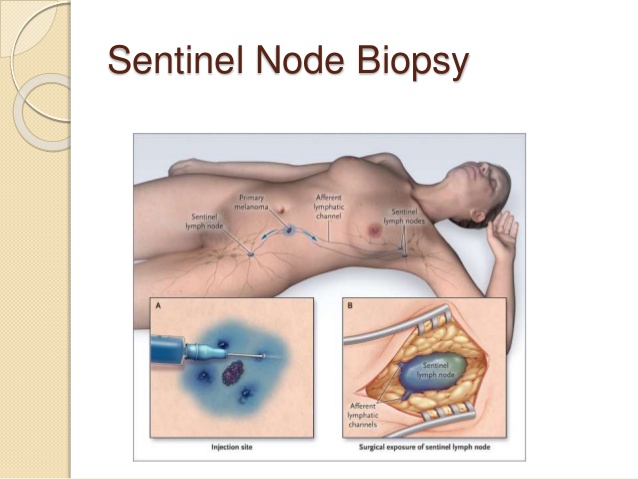
- Axillary sentinel node biopsy has been shown to be feasible for axillary staging:
- In patients with in-breast recurrence or ipsilateral breast second primary tumors
- Limited prior axillary sampling (less than 9 nodes) has been shown to have greater success in localization
- Preoperative lymphoscintigraphy:
- Should be considered given the possibility of aberrant lymphatic drainage due to alterations secondary to prior surgery and radiation
- References
- Tokmak H, Kaban K, Muslumanoglu M, Demirel M, Aktan S. Management of sentinel node re-mapping in patients who have second or recurrent breast cancer and had previous axillary procedures. World J Surg Oncol. 2014;12:205.
- Kothari MS, Rusby JE, Agusti AA, MacNeill FA. Sentinel lymph node biopsy after previous axillary surgery: a review. Eur J Surg Oncol. 2012;38(1):8-15.
Adenoid Cystic Carcinoma of the Breast
- Adenoid cystic carcinoma of the breast:
- Is a very rare subtype of breast cancer
- It is usually triple negative
- It is much less likely to have nodal involvement and is more common in postmenopausal women:
- With a mean age of 66
- Distant metastases are rare:
- However, the lung is the most common site
- It has a better prognosis than infiltrating ductal triple negative breast cancer:
- With a 5-year overall survival rate of 88%.3
- References
- Treitl D, Radkani P, Rizer M, El Hussein S, Paramo JC, Mesko TW. Adenoid cystic carcinoma of the breast, 20 years of experience in a single center with review of literature. Breast Cancer. 2018;25(1)28-33.
- Welsh JL, Keeney MG, Hoskin TL, et al. Is axillary surgery beneficial for patients with adenoid cystic carcinoma of the breast? J Surg Oncol. 2017;116(6):690-695.
- Kulkarni N, Pezzi CM, Greif JM, et al. Rare breast cancer: 933 adenoid cystic carcinomas from the National Cancer Data Base. Ann Surg Oncol. 2013;20(7):2236-2241

Prohylactic Mastectomy / Risk Reducing Mastectomy
- In the last 10 years there has been a significant focus on the role of contralateral prophylactic mastectomy and the risk of contralateral breast cancer
- Single-institution studies and Surveillance, Epidemiology, and End Results program (SEER) data:
- Have found contralateral prophylactic mastectomy rates to be as high as 25%:
- Which continue to increase
- Further, this trend seems to be limited to the United States
- Which continue to increase
- Have found contralateral prophylactic mastectomy rates to be as high as 25%:
- Nichols et al:
- Reviewed rates of contralateral breast cancer between 1976 and 2006 using the SEER database
- Overall, they found the rate of contralateral breast cancer to be declining:
- Approximately 3% per year since 1985
- From 1990 forward, they found this benefit to be restricted to those presenting with an ER+ breast cancer:
- With annual incidence rates of contralateral breast cancer of 0.25% to 0.37%:
- When the index cancer was diagnosed after age 30 years
- With annual incidence rates of contralateral breast cancer of 0.25% to 0.37%:
- The rates of contralateral breast cancer were higher in patients with ER– negative breast cancers:
- But still remained reasonably low with annual incidence rates of contralateral breast cancer of 0.45% to 0.65% when the index cancer was diagnosed after age 40 years
- The use of adjuvant endocrine therapy:
- Has contributed to this decline as it reduces the risk of contralateral breast cancer by approximately 50%
- Contralateral prophylactic mastectomy:
- Is attributed with approximately a 90% to 94% overall reduction in the risk of contralateral breast cancer:
- Not 100%
- Is attributed with approximately a 90% to 94% overall reduction in the risk of contralateral breast cancer:
- Contralateral prophylactic mastectomy:
- Does not improve overall survival:
- Recent modeling suggests the added absolute benefit of contralateral prophylactic mastectomy to overall survival:
- Is less than 1.45%
- Recent modeling suggests the added absolute benefit of contralateral prophylactic mastectomy to overall survival:
- Does not improve overall survival:
- The American Society of Breast Surgeons published a consensus statement with indications and suggestions for patient management and decision making with regard to contralateral prophylactic mastectomy:
- Discouraging the procedure for women with unilateral breast cancer at average risk for contralateral cancer
- References
- Nichols HB, Berrington de Gonzalez A, Lacey JV, Rosenberg PS, Anderson WF. Declining incidence of contralateral breast cancer in the United States from 1975 to 2006. J Clin Oncol. 2011;29(12):1564-1569.
- Early Breast Cancer Trialists’ Collaborative Group, Davies C, Godwin J, et al. Relevance of breast cancer hormone receptors and other factors to the efficacy of adjuvant tamoxifen: patient-level meta-analysis of randomised trials. Lancet. 2011;378(9793):771-784.
- King TA, Sakr R, Patil S, et al. Clinical management factors contribute to the decision for contralateral prophylactic mastectomy. J Clin Oncol. 2011;29(16):2158-2164.
- Metcalfe K, Lynch HT, Ghadirian P, et al. Contralateral breast cancer in BRCA1 and BRCA2 mutation carriers. J Clin Oncol. 2004;22(12):2328-2335.
- Portschy PR, Kuntz KM, Tuttle TM. Survival outcomes after contralateral prophylactic mastectomy: a decision analysis. J Natl Cancer Inst. 2014;106(8).
- Boughey JC, Attai DJ, Chen SL, et. al.. Contralateral prophylactic mastectomy consensus statement from the American Society of Breast Surgeons: additional considerations and a framework for shared decision making. Ann Surg Oncol. 2016 Oct;23(10):3106-3111.

Contralateral Mastectomy (CM) Rates in the USA.
- In the United States (US), CM rates have been increasing for more than two decades:
- One study using the Surveillance, Epidemiology, and End Results (SEER) database:
- Showed that the rates of CM in patients with unilateral breast cancer (UBC) undergoing mastectomy increased:
- From 4.2% in 1998 to 11.0% in 2003
- Showed that the rates of CM in patients with unilateral breast cancer (UBC) undergoing mastectomy increased:
- A similar study using the National Cancer Database (NCDB):
- Showed that the CM rate increased from 0.4% in 1998 to 4.7% in 2007
- Since then, several other studies have demonstrated a continuation of this trend in the US:
- Reporting CM rates as high as 30% to 50% in certain patient populations
- One study using the Surveillance, Epidemiology, and End Results (SEER) database:
- This trend of increasing CM rates has also been seen in patients with ductal carcinoma in situ
- Factors associated with undergoing CM are:
- Caucasian race
- Private insurance
- Higher socioeconomic status
- High volume centers
- Younger age
- Use of breast MRI
- Genetic testing
- Reconstructive surgery
- Surgeons have also been shown to influence the likelihood of CM:
- For example, if a surgeon recommends against CM:
- The likelihood of undergoing CM decreases:
- In a survey study of patients who underwent definitive surgery for breast cancer:
- Those whose surgeons recommended against CM had a CM rate of 6.1%:
- Whereas those who received no recommendation had a CM rate of 57.5
- Those whose surgeons recommended against CM had a CM rate of 6.1%:
- In a survey study of patients who underwent definitive surgery for breast cancer:
- The likelihood of undergoing CM decreases:
- For example, if a surgeon recommends against CM:
- Shared decision making has been shown to reduce decision-related conflict and regret

Screening for Breast Cancer
- The average lifetime risk of breast cancer for women in the United States:
- Is 12.9%
- Age is one of the most important risk factors:
- The median age of diagnosis is 63 years:
- With over 50% of breast cancer diagnoses occurring:
- Between the ages of 55 to 74 years
- With over 50% of breast cancer diagnoses occurring:
- Breast cancer diagnosis drops from 26.5% to 13.7% for women ages 75 years or older and to 5.2% for women aged 84 years or older
- The median age of diagnosis is 63 years:
- Mammogram:
- Remains the cornerstone for screening
- There is little guidance for continued screening recommendations for women aged 75 years or older:
- In 2009, the U.S. Preventive Services Task Force:
- Made official recommendations that women have biennial screening mammography:
- From aged 50 to 74 years
- For women aged 40 to 49 years:
- Screening should be done based on individual assessment and discussion with her health care providers
- The task force concluded that the data to evaluate the benefit and harms for mammography for women over age 75 years was insufficient to recommend continued screening
- Made official recommendations that women have biennial screening mammography:
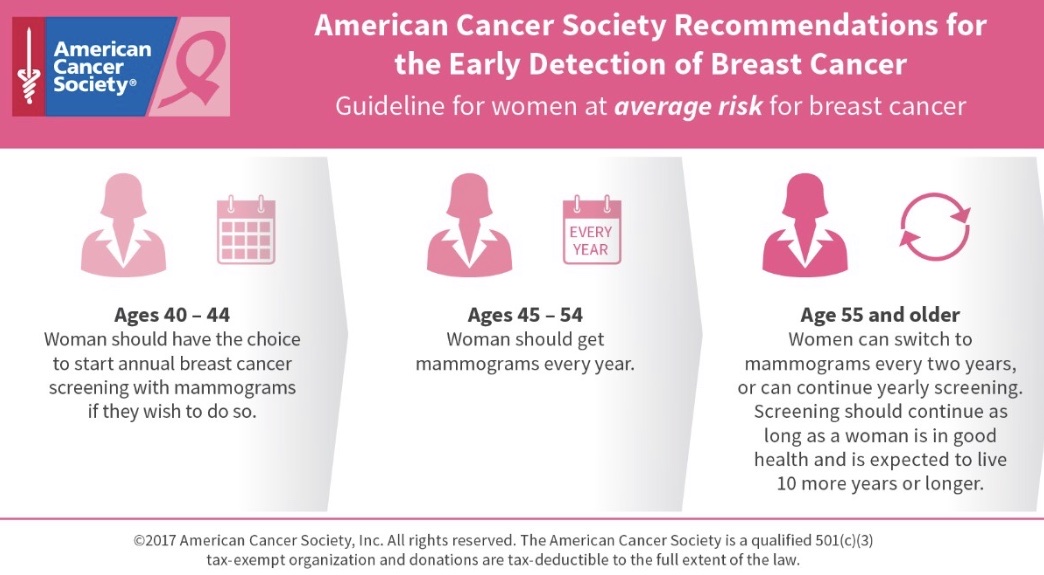
- The American Cancer Society and the American Society of Breast Surgeons:
- Recommend continued screening:
- As long as a woman’s life expectancy is at least 10 years:
- There has been demonstrated survival benefit in this population without significant comorbidities as well as lower rates of false-positive biopsies
- As long as a woman’s life expectancy is at least 10 years:
- Recommend continued screening:
- In 2009, the U.S. Preventive Services Task Force:
- The Affordable Care Act includes coverage of screening mammography regardless of life expectancy
- The recommendation to stop screening mammograms based on advanced age or competing comorbidities is difficult for both patients and providers to approach and discuss
- Some patients think that stopping screening is a form of age discrimination and providers find it difficult to discuss or determine life expectancy
- Age is an unreliable indicator of mortality:
- The Lee Index was initially validated as a tool to estimate 4-year mortality
- This was recently re-evaluated and validated for 10-year mortality
- The index can be accessed through the ePrognosis website:
- Patients with a high 10-year mortality risk are more likely to be harmed by preventive interventions with “long lagtimes-to-benefits” such as screening mammograms
- The diagnosis of occult malignancy in elderly patients:
- Has the risk of causing harm related to diagnostic procedures, surgical procedures, and medical or radiation therapies
- It is estimated that approximately 30% of breast cancers are overdiagnosed cancers and almost one third of the women will experience a harm related to this overdiagnosis
- For older women with a life expectancy of greater than 5 to 10 years:
- It is unknown whether screening mammography actually decreases the risk of dying of breast cancer
- For elderly women with new symptomatic breast findings:
- Diagnostic imaging will guide diagnosis and treatment
- Mammography is more sensitive and specific for women over 80 years of age (sensitivity = 86% vs. 73% in 50-year-old; specificity = 94% vs. 92% in 50-year-old)
- Ultrasound is also a reliable imaging test and biopsy can be safely done with relative patient comfort for histologic and biologic/prognostic panel testing
- This information will then allow for an informed shared decision-making discussion with the patient and her provider
- References
- Cancer Stat Facts: Female Breast Cancer. National Cancer Institute. Surveillance, Epidemiology, and End Results Program. Accessed March 3, 2023. https://seer.cancer.gov/statfacts/html/breast.html
- Nelson HD, Fu R, Cantor A, Pappas M, Daeges M, Humphrey L. Effectiveness of breast cancer screening: systematic review and meta-analysis to update the 2009 U.S. Preventive Services Task Force Recommendation. Ann Intern Med. 2016;164(4):244-255. doi.org/10.7326/M15-096
- The American Society of Breast Surgeons Official Statements. Accessed March 3, 2023. https://www.breastsurgeons.org/resources/statements
- Cruz M, Covinsky K, Widera EW, Stijacic-Cenzer I, Lee SJ. Accurately predicting 10-year mortality for older Americans: an extension of the Lee Index. JAMA. 2013;309(9):874-876. doi.org/10.1001/jama.2013.1184
- ePrognosis—Lee Index. University of California San Francisco. Accessed March 3, 2023. https://eprognosis.ucsf.edu/lee.php
- Walter LC, Schonberg MA. Screening mammography in older women: a review. JAMA. 2014;311(13):1336-1347. doi.org/10.1001/jama.2014.2834

Axillary Lymphadenopathy
- Isolated axillary adenopathy:
- Is usually benign and resolves spontaneously
- Persistent adenopathy of a malignant nature:
- Is most commonly due to:
- Lymphoma in men
- In women:
- Breast cancer predominates:
- Followed by lymphoma and melanoma
- Breast cancer predominates:
- Is most commonly due to:
- Even so, the incidence of occult primary breast cancer with axillary metastases:
- Comprises only 0.3 to 0.8% of all newly diagnosed breast carcinomas:
- It is classified by the American Joint Commission on Cancer as:
- CT0, cN1, cM0, stage 2A
- It is classified by the American Joint Commission on Cancer as:
- Comprises only 0.3 to 0.8% of all newly diagnosed breast carcinomas:
- When evaluating a woman with malignant adenopathy, the differential diagnosis must also include:
- Lung
- Ovary
- Thyroid
- Gastrointestinal tract
- Liver
- Pancreas
- Kidney
- Initial workup after a complete history and physical examination (including skin survey) should include:
- A bilateral mammogram and an ultrasound:
- If the mammogram and ultrasound are negative, a breast MRI is appropriate, followed by chest x-ray and CT scans if the MRI is unrevealing
- A bilateral mammogram and an ultrasound:
- References
- Rueth NM, Black DM, Limmer AR, et al. Breast conservation in the setting of contemporary multimodality treatment provides excellent outcomes for patients with occult primary breast cancer. Ann Surg Oncol. 2015;22(1):90-95.
- NCCN Guideline with NCCN Evidence Blocks™ – Breast Cancer Version 3.2019. National Comprehensive Cancer Network website. https://www.nccn.org/professionals/physician_gls/recently_updated.aspx. Accessed September 21, 2019