Blog

Regionally Recurrent Breast Cancer – Management

  • Isolated recurrent axillary disease:
    • Is an uncommon presentation of recurrence:
      • The incidence remains rare at 1% to 2%
  • It is important to stage patients with locoregional recurrences:
    • As approximately one-third:
      • Will present with synchronous distant metastasis
  • If the staging workup is negative:
    • A complete axillary dissection should be performed if possible
    • If surgical resection is not possible:
      • Systemic therapy should be offered:
        • To potentially allow surgical resection
    • Radiation should be performed if feasible for recurrences as well:
      • Depending on the prior extent of radiation delivered
  • In addition, complete breast imaging:
    • Should be performed to ensure there is no in-breast recurrence as well
  • The use of systemic therapy should be offered after a multidisciplinary discussion taking into account tumor phenotype and prior therapies already received by the patient
  • Wapnir et al:
    • Demonstrated in the CALOR trial that in ER negative (ER-) isolated recurrences:
      • Systemic chemotherapy improved disease-free survival:
        • However, in ER+ recurrences:
          • Endocrine therapy should be the preferred therapy
  • References:
    • Giuliano AE, Ballman K, McCall L, et al. Locoregional recurrence after sentinel lymph node dissection with or without axillary dissection in patients with sentinel lymph node metastases: long-term follow-up from the American College of Surgeons Oncology Group (Alliance) ACOSOG Z0011 randomized trial. Ann Surg. 2016;264:(3):413-420.
    • Neuman HB, Schumacher JR, Francescatti AB, et al. Risk of synchronous distant recurrence at time of locoregional recurrence in patients with stage II and III breast cancer (AFT-01). J Clin Oncol. 2018;36(10):975-980.
      3. National Comprehensive Cancer Network (NCCN) Breast CancerOnline: https://www.nccn.org/professionals/physician_gls/recently_updated.aspx. Accessed September 15, 2020
    • Wapnir IR, Price KN, Anderson SJ, et al. Efficacy of chemotherapy for ER-negative and ER-positive isolated locoregional recurrence of breast cancer. Final analysis of the CALOR Trial. N Engl J Med. 2018;36(11):1073-1079.

Management of Pathogenic CHEK2 Variants

  • Management of pathogenic CHEK2 variants:
    • Should take into account the specific variant identified
  • Most of the risk data is based on frameshift variants:
    • Such as 1100delC:
      • With an estimated absolute lifetime breast cancer risk of 20% to 40%
  • The risks associated with other types of CHEK2 variants are not as well defined:
    • However, breast cancer risks associated with the specific missense variant Ile157Thr have been studied in more depth
  • Data from multiple studies, such as a large case-control study including 10,860 breast cancer patients from The CHEK2 Breast Cancer Case-Control Consortium:
    • Found a significantly increased risk of breast cancer with the 1100delC variant (OR 2.34; 95% CI 1.72-3.20; p=0.0000001)
  • Another similar study including 44,777 breast cancer patients:
    • Also demonstrated a significantly increased risk for breast cancer with the 1100delC variant (OR 2.26; 95% CI 1.90-2.69; p=2.3×10⁻²⁰)
  • Unlike the 1100delC variant:
    • The Ile157Thr variant has been associated with a more modest elevation in risk for breast cancer
    • A meta-analysis of case-control studies, including 26,336 cases and 44,219 controls, demonstrated an association of the Ile157Thr variant with breast cancer (OR=1.58; 95% CI 1.42-1.75; p<0.000001)
  • Current National Comprehensive Cancer Network guidelines regarding frameshift CHEK2 variants:
    • Recommend beginning annual mammograms at 40 years old
    • Considering breast MRI starting at 30 to 35 years old
    • Evidence is inadequate to recommend risk reducing mastectomy (RRM)
    • On the other hand, supplementary breast cancer risk management for patients with the missense variant Ile157Thr is not suggested:
      • However, management should still be personalized based on family history, for instance:
        • Beginning breast imaging 5 to 10 years earlier than the youngest family member diagnosed with breast cancer
  • References:

Subacute Thyroiditis

  • Subacute thyroiditis (like painless sporadic thyroiditis and postpartum thyroiditis):
    • Is a spontaneous remitting inflammatory disorder of the thyroid:
    • That may last for weeks to months (has a more sudden onset)
  • This disorder has a number of eponyms, including:
    • De Quervain’s thyroiditis
    • Giant cell thyroiditis
    • Pseudo-granulomatous thyroiditis
    • Subacute painful thyroiditis
    • Subacute granulomatous thyroiditis
    • Acute simple thyroiditis
    • Noninfectious thyroiditis
    • Acute diffuse thyroiditis
    • Migratory “creeping” thyroiditis
    • Pseudotuberculous thyroiditis
    • Viral thyroiditis
  • The first description of subacute thyroiditis was in:
    • 1895 by Mygind:
      • Who reported 18 cases of “thyroiditis akuta simplex
  • The pathology of subacute thyroiditis was first described:
    • In 1904 by Fritz De Quervain:
      • Whose name is associated with the disorder:
        • He showed giant cells and granulomatous type changes in the thyroids of affected patients
  • Subacute thyroiditis:
    • Is the most common cause of:
      • The painful thyroid:
        • May account for up to 5% of clinical thyroid abnormalities
  • As with other thyroid disorders:
    • Women are more frequently affected than men:
      • 5 to 1 (Hashimoto’s Thyroiditis is 8 to 9 / 1)
  • The peak incidence is in the:
    • Fourth and fifth decades of life (20 to 60 years of age):
      • This disorder is rarely observed in children and the elderly
  • Although the term subacute thyroiditis connotes a temporal quality that could apply to any thyroidal inflammatory process of intermediate duration and severity:
    • It is actually referring specifically to the granulomatous appearance of the thyroid found on pathologic exam
  • Pathogenesis:
    • Infectious Association:
      • Although there is no clear evidence for a specific etiology:
        • Indirect evidence suggests that subacute thyroiditis:
          • May be caused by a viral infection of the thyroid
      • The condition is often preceded by a:
        • Prodromal phase of:
          • Myalgia General
          • Malaise
          • Low-grade fevers
          • Fatigue
          • Frequently by an upper respiratory tract infection
  • It has been reported most frequently in:
    • The temperate zone:
      • Only rarely from other parts of the world
  • It has been found to occur seasonally:
    • The highest incidence is in the summer months:
      • July through September:
        • Which coincide with the peak of enterovirus:
          • Echovirus infection
          • Coxsackie virus A and B infection
  • The incidence rate has been shown to vary directly with:
    • Viral epidemics:
      • Specifically mumps:
        • The incidence of subacute thyroiditis has been found to be higher during these viral epidemics
      • Interestingly:
        • Antibodies to the mumps virus have even been detected in individuals with subacute thyroiditis who do not have clinical evidence of mumps
      • Subacute thyroiditis has also been associated with:
        • Measles
        • Influenza
        • The common cold
        • Adenovirus
        • Infectious mononucleosis
        • Coxsackie virus
        • Myocarditis
        • Cat scratch fever
        • St. Louis encephalitis
        • Hepatitis A
        • The parvovirus B19 infection
      • Antibodies to Coxsackie virus, adenovirus, influenza, and mumps have been detected in the:
        • Convalescent phase of this disease
      • Coxsackie virus is most commonly:
        • Associated with subacute thyroiditis
      • Coxsackie virus antibody titers:
        • Have been shown to directly follow the course of the thyroid disease
    • Certain non-viral infections, including:
      • Q fever and malaria:
        • Have been associated with a clinical syndrome similar to subacute thyroiditis
      • A case of subacute thyroiditis occurring simultaneously with:
        • Giant cell arteritis has been reported
      • Another case of subacute thyroiditis developed during:
        • Alfa-interferon treatment for hepatitis C
  • Autoimmune Association:
    • Unlike painless or postpartum thyroiditis:
      • There is no clear association between subacute thyroiditis and autoimmune thyroid disease:
        • Serum thyroid peroxidase and thyroglobulin antibodies levels:
          • Are usually normal
        • When decreased the levels of thyroid peroxidase and thyroglobulin antibodies:
          • Correlated with the phase of transient hypothyroidism
        • Antibodies to an un-purified thyroid preparation can be detected:
          • For up to 4 years after a bout of subacute thyroiditis
        • Antibodies to the thyrotropin (TSH) receptor:
          • Have been rarely detected during the course of subacute thyroiditis
        • In most studies:
          • There was no correlation between the presence of thyrotropin receptor binding inhibitory immunoglobulin (TBII) or of thyrotropin receptor stimulating immunoglobulin and the thyrotoxic phase of the thyroiditis
        • On the other hand, there has been some correlation between thyroid-blocking antibodies and the development of hypothyroidism
        • It is thought that the appearance of the TSH-receptor antibodies results from an immune response:
          • That occurs after there is damage to the thyrocytes, specifically membrane desquamation
  • Following recovery from the inflammatory process of subacute thyroiditis:
    • All immunologic phenomena disappear:
      • The transitory immunologic markers that are observed during the course of subacute thyroiditis:
        • Appear to occur in response to the release of antigenic material from the thyroid
  • Genetic Association:
    • There is an apparent genetic predisposition for subacute thyroiditis:
      • With HLA-Bw 35 reported in all ethnic groups:
      • The relative risk of HLA-Bw 35 in subacute thyroiditis:
        • Is high:
          • Ranging from 8 to 56
    • Additional evidence for genetic susceptibility is the:
      • Simultaneous development of subacute thyroiditis in identical twins heterozygous for the HLA-Bw 35 haplotypes
      • A weak association of subacute thyroiditis with:
        • HLA-DRw8 has been reported in Japanese patients

          #Arrangoiz #CancerSurgeon #ThyroidSurgeon #ParathyroidSurgeon #HeadandNeckSurgeon #ThyroidExpert #SurgicalOncologist #EndocrineSurgery #MountSinaiMedicalCenter #Miami #ThyroidNodule #deQuervain’sthyroiditis #Subacutethyroiditis

NSABP B-18 and NSABP B-27 Trial

  • The NSABP B-18 trial:
    • Evaluated whether four cycles of doxorubicin and cyclophosphamide (AC) given preoperatively improved DFS and OS when compared with the same regimen given postoperatively
    • Results showed:
      • No statistically significant differences in DFS or OS between the two groups
      • Secondary aims included the evaluation of preoperative chemotherapy in down staging the primary breast tumor and involved axillary lymph nodes:
        • With preoperative chemotherapy, 13% of patients achieved pCR
      • Patients who received preoperative chemotherapy were:
        • More likely to receive breast-conserving surgery (67% vs. 60%, P=0.002) than patients receiving postoperative chemotherapy
  • The NSABP B-27 trial:
    • Evaluated the addition of docetaxel (T) either preoperatively or postoperatively to preoperative AC chemotherapy
    • These results showed that the addition of T:
      • Did not significantly impact DFS or OS, but when given preoperatively:
        • Significantly increased the number of patients who achieved a pathologic complete response (pCR):
          • 26% v 13%, p<0.0001
      • In both studies, patients who achieved a pCR had significantly improved DFS and OS compared to those who did not (P=0.0001)
  • References
    • Fisher B, Brown A, Mamounas E, Wieand S, Robidoux A, Margolese RG, et al. Effect of preoperative chemotherapy on local-regional disease in women with operable breast cancer: findings from National Surgical Adjuvant Breast and Bowel Project B-18. J Clin Oncol. 1997;15(7):2483- 2493.
    • Wolmark N, Wang J, Mamounas E, Bryant J, Fisher B. Preoperative chemotherapy in patients with operable breast cancer: nine-year results from National Surgical Adjuvant Breast and Bowel Project B-18. J Natl Cancer Inst Monogr. 2001(30):96-102.
    • Bear HD, Anderson S, Smith RE, Geyer CE, Mamounas EP, Fisher B, et al. Sequential preoperative or postoperative docetaxel added to preoperative doxorubicin plus cyclophosphamide for operable breast cancer: National Surgical Adjuvant Breast and Bowel Project Protocol B-27. J Clin Oncol. 2006;24(13):2019-2027.
    • Rastogi P, Anderson SJ, Bear HD, Geyer CE, Kahlenberg MS, Robidoux A, et al. Preoperative chemotherapy: updates of National Surgical Adjuvant Breast and Bowel Project Protocols B-18 and B-27 J Clin Oncol. 2008;26(5):778-785.

#Arrangoiz #BreastSurgeon #BreastCancer #SurgicalOncology #NSABPB18 #NSABPB27 #Miami #Mexico

Early Breast Cancer Trialists’ Collaborative Group 

  • The Early Breast Cancer Trialists’ Collaborative Group (EBCTCG) meta-analysis:
    • Found that for patients undergoing breast-conserving surgery for node-negative breast cancer:
      • Radiation reduced the risk of any recurrence:
        • 16% vs. 31%
      • Radiation reduced breast cancer mortality:
        • 17% vs. 21%
  • The EBCTCG:
    • Also found that for patients undergoing mastectomy with 1 to 3 nodes positive:
      • Radiotherapy was associated with:
        • A reduction in local-regional recurrence (LRR):
          • 4% vs. 20%
        • A reduction in breast cancer mortality:
          • 42% vs. 50%
    • Many practitioners interpreted these findings to mean that all postmastectomy patients with 1 to 3 positive nodes should have postmastectomy radiation therapy (PMRT):
      • However, the patients enrolled in those trials were enrolled between 1964 and 1986, and many of them did not receive systemic therapy
    • A retrospective study of patients with 1 to 3 positive nodes compared the risk of LRR between the two different eras, before and after the routine use of sentinel node biopsy, taxane therapy, and aromatase inhibitors:
      • Use of PMRT reduced the 15-year rate of LRR in the first era:
        • From 14.5% to 6.1%
      • PMRT did not appear to benefit patients treated in the second era:
        • With 5-year LRR rates of 2.8% without PMRT, and 4.2% with PMRT
    • In view of the fact that PMRT significantly increased overall mortality in node-negative patients in the EBCTCG:
      • 47.6% vs, 41.6%; rate ratio 1.23:
        • Caution should be taken in extrapolating the results to all patients with 1 to 3 positive nodes in the modern era
  • The consensus statement regarding the role of PMRT in women with 1 to 3 positive lymph nodes:
    • ASCO / ASRTO / SSO unanimously agreed that PMRT in this subset of patients reduces local-regional failure, any recurrence, and breast cancer mortality:
      • In patients with T1 to T2 breast cancer with 1 to 3 positive lymph nodes in the setting of multidisciplinary care
      • In some subsets of patients, the risk of local-regional failure may be so low that the absolute benefit of PMRT is outweighed by its toxicities, even if axillary lymph node dissection is omitted in the setting of a positive lymph node
  • When given, PMRT should include the internal mammary, supraclavicular, and apical axillary nodes and the chest wall or reconstructed breast
  • All patients with a positive axillary node after receipt of neoadjuvant chemotherapy:
    • Should receive PMRT
  • Following mastectomy, patients with DCIS generally do not require radiotherapy:
    • Childs et al. showed infrequent chest wall recurrences:
      • Crude rates of chest wall recurrence was 1.4% for all patients, even though 15% had positive margins, and 16% had close margins (less than 2 mm) in the analysis
        • Crude rate of chest wall recurrence for patients with positive margins and close margins was 4.8% and 4.3%, respectively
  • In the setting of breast-conserving surgery, observation after lumpectomy for DCIS may be appropriate in select settings:
    • There is a higher risk of ipsilateral breast event without breast RT:
      • As RT decreases the recurrence by roughly 50%
    • RTOG 9804:
      • Is a prospective randomized trial consisting of women with mammographically detected “good risk” DCIS with low- or intermediate-grade DCIS, less than 2.5 cm with margins greater than 3mm
      • They were randomized to RT versus observation after surgery
      • With median followup at 7 years:
        • The local failure rate was 1% in the RT arm versus 7% in the observation arm suggesting a subset of patients with a small volume of DCIS could be observed given the low failure rates
  • Currently, three prospective randomized clinical trials in the US and UK are evaluating the safety of omitting radiation in highly selected DCIS patients
  • References
    • Early Breast Cancer Trialists’ Collaborative Group, McGale P, Taylor C, Correa C. Effect of radiotherapy after mastectomy on 10-year recurrence and 20-year breast cancer mortality: meta-analysis of individual patient data for 8135 women in 22 randomised trials. Lancet. 2014;383(9935):2127-2135.
    • McBride A, Allen P, Woodward W, et al. Locoregional recurrence risk for patients with T1,2 breast cancer with 1-3 positive lymph nodes treated with mastectomy and systemic treatment. Int J Radiat Oncol Biol Phys. 2014;89(2):392-398.
    • Recht A, Comen EA, Fine RE, et al. Postmastectomy radiotherapy: an American Society of Clinical Oncology, American Society for Radiation Oncology, and Society of Surgical Oncology focused guideline update. Ann Surg Oncol. 2017; 24(1):38-51.
    • Childs SK, Chen YH, Duggan MM, et al. Impact of margin status on local recurrence after mastectomy for ductal carcinoma in situ. Int J Radiat Oncol Biol Phys.2013;85(4):948-952.
    • McCormick B, Winter K, Hudis C, et al. RTOG 9804: a prospective randomized trial for good-risk ductal carcinoma in situ comparing radiotherapy with observation. J Clin Oncol. 2015;33(7):709-715.

Algorithm for the Evaluation of Hypothyroidism.

b031d54367974925a6bef6849faba444

Rodrigo Arrangoiz MS, MD, FACS a head and neck surgeon / endocrine surgeon / surgical oncologist and is a member of Mount Siani Medical Center in Miami Beach, Florida :

  • He is an expert in the management thyroid disease and thyroid cancer

Training:

• General surgery:

• Michigan State University:

• 2004 al 2010

• Surgical Oncology / Head and Neck Surgery / Endocrine Surgery:

• Fox Chase Cancer Center (Filadelfia):

• 2010 al 2012

• Masters in Science (Clinical research for health professionals):

• Drexel University (Filadelfia):

• 2010 al 2012

• Surgical Oncology / Head and Neck Surgery / Endocrine Surgery:

• IFHNOS / Memorial Sloan Kettering Cancer Center:

• 2014 al 2016

#Arrangoiz #CancerSurgeon #ThyroidSurgeon #ParathyroidSurgeon #HeadandNeckSurgeon #ThyroidExpert #SurgicalOncologist #EndocrineSurgery #MountSinaiMedicalCenter #Miami #ThyroidNodule #ToxicNodularGoiter #TNG #MultinodularGoiter #Hypothyroidism #Goiter

Etiology of Hypothyroidism

images

  • Excluding thyroidectomy and radioactive iodine (131I) ablation:

    • The most common causes of hypothyroidism in the adult are:

      • Hashimoto’s thyroiditis (Chronic Lymphocytic Thyroiditis)

      • The hypothyroid phase of subacute thyroiditis

    • Because the long-term treatment is very different:

      • The clinicians must distinguish between these conditions.

Do-You-Have-Hypothyroidism-Hashimotos-or-Both

  • The common causes of low circulating thyroid hormone levels are:

    • Primary hypothyroidism  (thyroid failure with elevated TSH):Hashimoto’s thyroiditis (chronic lymphocytic thyroiditis)
      • Hypothyroid phase of painful subacute thyroiditis:Pseudo-granulomatous–De Quervain’s thyroiditis
      • Hypothyroid phase of painless lymphocytic thyroiditis
      • Hypothyroid phase of postpartum thyroiditis
      • Radioactive iodine ablation
      • Thyroidectomy
      • Head and neck radiation
      • Drugs:Lithium
        • Amiodarone
        • Interleukin
        • Interferon
        • Propylthiouracil / methimazole
        • Iodine excess in patients with thyroiditis
      • Iodine deficiency (uncommon in the United States)
      • Biosynthetic defects (rare and presents in childhood)
      • Congenital hypothyroidism (rare and presents in childhood)
    • Secondary (hypothyroidism with low or inappropriately normal TSH):Pituitary dysfunction:Pituitary damage from tumor, surgery, and / or radiation
    • Tertiary:Hypothalamic damage from:Tumor and / or radiation

The causes of thyroid hypothyroidism. Infographics. Vector illustration on isolated background.Management

Euthyroid patients with positive thyroid antibody titers can typically be

monitored without the institution of thyroid hormone replacement

therapy.26 However, there are some data that pregnant patients with

positive thyroid antibody titers may have improved pregnancy out-

comes and reduced complications with the institution of LT4 replace-

ment therapy. In non-pregnant patients with hypothyroidism, there are

standard recommendations for treatment and monitoring.27 This usu-

ally consist of LT4 therapy and TSH and FT4 monitoring every 6 weeks

with adjustments in LT4 dosing until the TSH is within the goal range

(typically 1 to 3 uIU/mL) although a higher target range is considered

acceptable in the elder

symptoms-of-hypothryroidism

#HeadandNeckSurgeon #ThyroidExpert #SurgicalOncologist #EndocrineSurgery #MountSinaiMedicalCenter #Miami #ThyroidNodule #ToxicNodularGoiter #TNG #MultinodularGoiter #Hypothyroidism #Thyroiditis #Goiter

Lymph Node Metastasis in Papillary Thyroid Carcinoma (PTC)

  • Lymph node involvement in PTC:
    • The incidence of nodal metastases in adults depends upon the extent of surgery:
      • Among patients who undergo a modified radical neck dissection:
        • Up to 80% have lymph node metastases:
          • Half of which are microscopic
      • Among patients with papillary micro-carcinomas who have prophylactic central node dissection:
        • Microscopic metastases have been reported in 37% to 64%
    • At diagnosis, clinically detectable regional lymph node metastases:
      • Are more common in children (approximately 50%) than adults (30% to 40%)
  • Invasion of either the thyroid capsule or a lymph node capsule into surrounding soft tissue:
    • Has been reported in 5% to 35% of surgical specimens
  • Vascular invasion is seen in only:
    • Approximately 5% to 10%
  • Distant metastases:
    • From 2% to 10% of patients have metastases beyond the neck at the time of diagnosis:
      • Among such patients:
        • Two-thirds have pulmonary
        • One-fourth have skeletal metastases
        • Rarer sites of metastasis are:
          • The brain, kidneys, liver, and adrenals
  • Growth pattern:
    • The growth pattern and biologic behavior of papillary thyroid cancers are variable:
      • At one end of the spectrum is the common:
        • Micro-carcinoma (formerly called occult papillary thyroid cancer):
          • Defined as a tumor equal or less than 1 cm in diameter
          • These micro-carcinomas are found in 15% to 30% of thyroid glands at autopsy
          • This high frequency, coupled with the rarity of clinically detected papillary cancer:
            • Suggests that the presence of a single focus of micro-carcinoma in a thyroidectomy specimen is likely to be an incidental finding of no clinical importance
      • At the other end of the spectrum is a large, locally invasive cancer with distant metastases noted at the time of diagnosis:
        • These tumors are also far more likely than micro-carcinoma to metastasize through intra-thyroidal lymphatic channels and form multifocal tumors or involve regional lymph nodes
  • References:
    • The prognostic significance of nodal metastases from papillary thyroid carcinoma can be stratified based on the size and number of metastatic lymph nodes, as well as the presence of extranodal extension. AU Randolph GW, Duh QY, Heller KS, Livolsi VA, Mandel SJ, Steward DL, Tufano RP, Tuttle For The American Thyroid Association Surgical Affairs Committee’s Taskforce On Thyroid Cancer Nodal Surgery RM SO Thyroid. 2012;22(11):1144

Management of Hashimoto’s Thyroiditis (HT)

  • Management of euthyroid patients with positive thyroid antibody titers:
    • Can typically be monitored without the institution of thyroid hormone replacement therapy:
      • However, there are some data that pregnant patients with positive thyroid antibody titers may have improved pregnancy outcomes and reduced complications with the institution of LT4 replacement therapy
  • In non-pregnant patients with hypothyroidism:
    • There are standard recommendations for treatment and monitoring:
      • This usually consist of LT4 therapy and TSH and FT4 monitoring every 6 weeks with adjustments in LT4 dosing until the TSH is within the goal range (typically 1 to 3 uIU/mL) although a higher target range is considered
        acceptable in the elderly patients

Ultrasound Evaluation of Breast Nodules

  • Stavros has proposed the following BIRADS categories for breast ultrasound (see Table)
Proposed BIRADS categories for breast ultrasound.
  • The American College of Radiology classification:
    • Subdivides category 4 into:
      • BIRADS 4a:
        • Which has a 2% to 10 % risk of malignancy
      • BIRADS 4b:
        • Which has a 10% to 50 % risk of malignancy
      • BIRADS 4c:
        • Which has a 50% to 95% risk malignancy
    • BIRADS 5:
      • Has 95% or greater chance of malignancy
  • In evaluating a solid sonographic nodule:
    • One should first look for any of the 10 signs of malignancy, and if even 1 of them is present:
      • The lesion cannot be considered BIRADS 3
    • The signs of malignancy are:
      • Shadowing
      • Hypoechoic echotexture
      • Spiculation
      • Angular margins
      • Thick echogenic halo
      • Microlobulation
      • Taller than wide
      • Duct extension
      • Branching pattern
      • Calcifications
  • Note that Stavros compares the echogenicity of lesions to that of breast fat, not breast parenchyma:
    • Therefore, a lesion with hypoechoic echotexture would be very hypoechoic if breast parenchyma is used as the reference
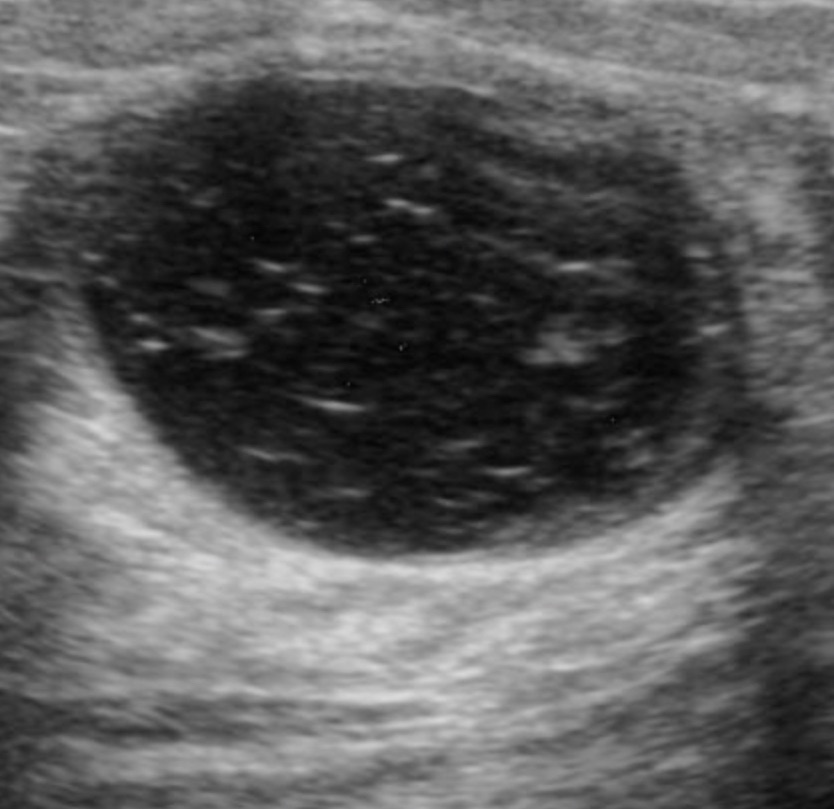
  • The hypoechoic lesion in the image does not have smooth margins but appears microlobulated
  • Regardless of whether the classification of Stavros or the American College of Radiology is used:
    • The risk of the lesion in this patient is not low enough to be considered BIRADS 3 nor high enough risk to warrant BIRADS 5:
      • Thus, it falls somewhere in the BIRADS 4 range:
        • Biopsy is required
  • References:
    • D’Orsi CJ, Sickles EA, Mendelson EB, Morris EA. ACR BI-RADS® Atlas, Breast Imaging Reporting and Data System. 5th ed. Reston, VA: American College of Radiology; 2013
    • Jales RM, Sarian LO, Torresan R, Marussi EF, Alvares BR, Derchain S. Simple rules for ultrasonographic subcategorization of BI-RADS®-US 4 breast masses. Eur J Radiol. 2013;82(8):1231-1235.
    • Stavros AT. Breast Ultrasound. Philadelphia, PA: Lippincott Williams & Wilkins; 2004.
#Arrangoiz #Breast Surgeon #CancerSurgeon #SurgicalOncologist #MountSinaiMedicalCenter #MSMC #Miami Mexico