Blog

Breast Cancer Recurrence after Mastectomy

  • The main goal of routine post-treatment follow-up is:
    • The early detection of local-regional recurrence
  • For patients with locally recurrent breast cancer, that appears to be confined to the soft tissue of the chest wall, and no evidence of metastatic disease:
    • When possible, surgical resection of the tumor is the initial treatment of choice for most patients
  • Following surgery:
    • The addition of radiation therapy appears to further decrease the risk of a subsequent local recurrence
  • The addition of adjuvant systemic therapy:
    • Should be considered for patients who suffer local recurrence with more than minimal tumor burden
  • References:
    • Aebi S, Wapnir I. Management of locoregional recurrences. In: Winchester D J, Winchester D P, Hudis C A, and Norton L eds. Breast Cancer 2nd ed. Hamilton, Canada: B C Deker, Inc; 2006:511-523.
    • Buchanan C L, Dorn P L, Fey J, et al. Locoregional recurrence after mastectomy: incidence and outcomes. J Am Coll of Surg. 2006;203:469-474.
    • Dahlstrøm K K, Andersson A P, Andersen M, Krag C. Wide local excision of recurrent breast cancer in the thoracic wall. Cancer. 1993;72:774-777.
    • National Comprehensive Cancer Network. NCCN Clinical Practice Guidelines in Oncology. Breast Cancer. Available at http://www.nccn.org.

Immune Checkpoint Blockade in Cutaneous Melanoma

  • Ipilimumab:
    • Is a humanized monoclonal antibody that blocks CTLA-4:
      • A key regulatory molecule of the immune system
    • The use of immune checkpoint blockade via monoclonal antibodies targeting anti-CTLA4 (ipilimumab; Yervoy):
      • Has been established as an effective treatment for stage IV disease since 2011
      • Although approved in the metastatic setting for some time:
        • The use of checkpoint blockade in the adjuvant setting has been more recently approved in stage III melanoma:
          • Based on a number of randomized phase III trials
        • The randomized phase III clinical trial EORTC 18071 compared high-dose ipilimumab (10 mg/kg) to placebo, administered every 3 weeks for four doses, then every 3 months for 3 years unless toxicity or relapse prevented its continuation:
          • It demonstrated both a decreased rate of recurrence and improved OS for patients in the ipilimumab arm, leading to the approval of adjuvant ipilimumab
          • Despite the survival benefits noted in this adjuvant setting, opponents of this approach remark on the toxicity and paradoxical increased dosing seen in the adjuvant setting compared to metastatic disease (the latter of which employs a dose of 3 mg/kg every 3 weeks × four doses)
          • The toxicity from ipilimumab in EORTC 18071 was significant: adverse events of any grade were noted in 98.7% of patients treated with ipilimumab, including 54.1% with grade 3 or 4 toxicity
          • The median number of ipilimumab doses was four
          • Furthermore, there were five treatment-related deaths in patients treated with ipilimumab (three due to colitis, one to myocarditis, and one to multiorgan failure associated with Guillain–Barré syndrome)
          • While treatment-related deaths may be encountered in any clinical trial, such events in the adjuvant setting raise caution; some argue whether the toxicity is worth the potential survival benefit
          • This is relevant since there is a fraction of patients who will never recur and therefore have no potential to benefit from any adjuvant therapy
        • Of course, the challenge is that it is currently not possible to know that information at the level of an individual patient:
          • Therefore, the ability to prospectively identify higher- and lower-risk patients with biomarkers remains an area of intense clinical interest, as is interest on additional targets and combination therapies
  • Following the success and approval of CTLA-4 inhibition:
    • The study of programmed cell death protein-1 (PD-1) axis:
      • Which functions in the periphery to modulate T-cell responses, has produced success in a number of clinical trials
  • PD-1 interacts with two ligands:
    • PD-L1 and PD-L2:
      • To dampen T-cell responses:
        • Physiologically functioning to limit autoimmunity
    • The inhibitory effect of PD-1 is accomplished through a dual mechanism of:
      • Promoting apoptosis in cytotoxic T-cells (programmed cell death, as the name implies) while simultaneously reducing apoptosis in regulatory T cells
    • PD-1 protein is upregulated on activated T cells:
      • Blockade of this molecule upregulates the cellular immune system’s antitumor activity
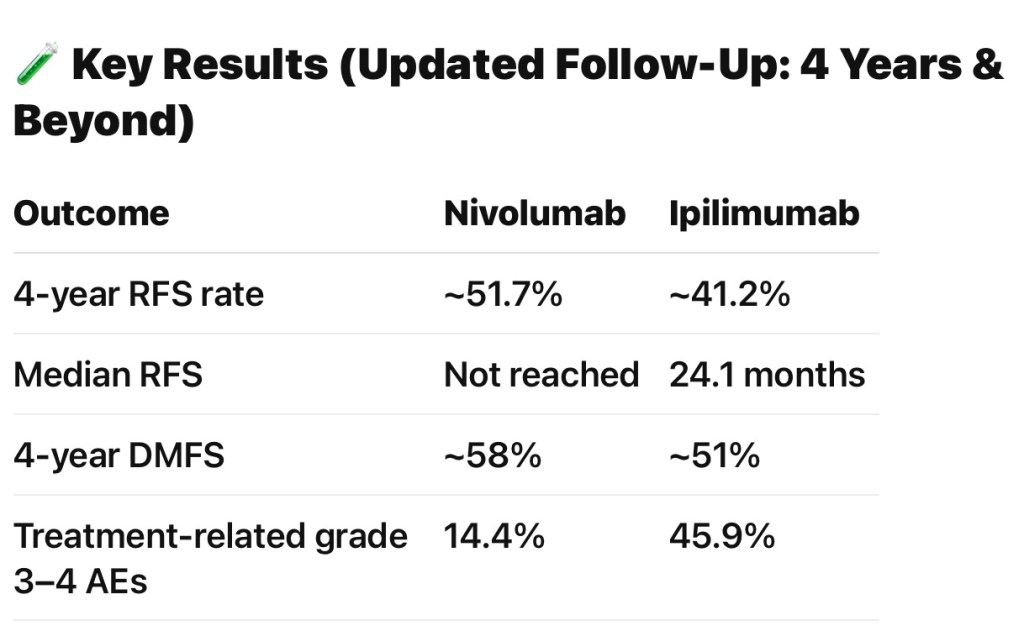
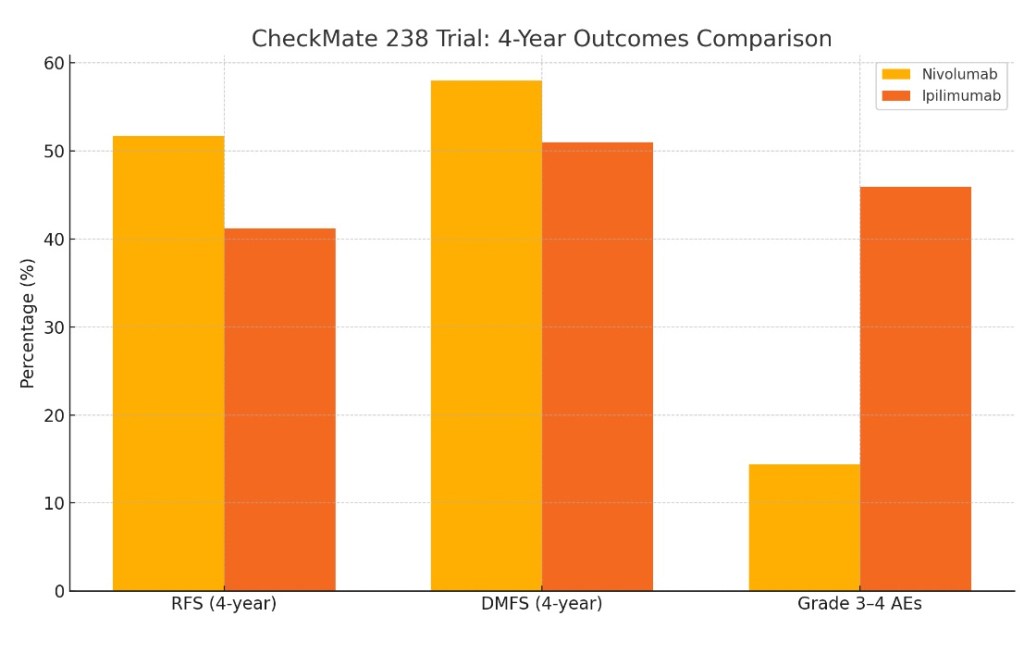
    • In a randomized, double-blind, phase III clinical trial (CheckMate 238) for patients with resected advanced melanoma, over 900 patients who underwent complete resection of stage IIIB, IIIC, or IV melanoma received either nivolumab (3 mg/kg every 2 weeks) or ipilimumab (10 mg/kg every 3 weeks × 4 doses and then every 12 weeks):
      • Toxicity (grade 3 or 4 adverse events) was reported in 14.4% of the patients in the nivolumab group versus 45.9% of patients in the ipilimumab group; moreover, two deaths (0.4%) were reported and noted to be related to toxic effects in the ipilimumab group
      • Weber et al. concluded that nivolumab resulted in:
        • Significantly longer RFS and a lower rate of grade 3 or 4 adverse events than adjuvant therapy with ipilimumab
      • Based upon the results of CheckMate 238:
        • Nivolumab was approved for adjuvant use by the FDA in 2017
    • Another anti–PD-1 drug, pembrolizumab, was compared to placebo in the randomized, controlled, double-blind phase III EORTC 1325-MG/KEYNOTE-054 trial:
      • AJCC 7th edition stage IIIA (if stage IIIA, SLN deposit had to be >1 mm metastasis), IIIB, and IIIC completely resected patients were included:
        • RFS was 59.8% in the 514 patients receiving pembrolizumab versus 41.1% in the 505 patients on placebo after 42 months of follow-up (HR 0.59; 95% CI, 0.49 to 0.70) in the updated trial results published in 2021
        • Pembrolizumab was approved by the FDA for adjuvant use in stage III disease in 2019 after the initial trial results were released
    • Building on the success of pembrolizumab in the stage III adjuvant setting, the phase III randomized clinical trial KEYNOTE-716 trial studied adjuvant pembrolizumab versus placebo in resected stage IIB or IIC melanoma patients, all of whom had a negative SLN biopsy:
      • At the second interim analysis with a median follow-up of 18 months:
        • This study demonstrated a significant reduction in relapse-free survival and distant metastasis among patients receiving pembrolizumab in an overall cohort of 1,182 patients
      • These findings led to the recently expanded indication for the use of pembrolizumab in the stage IIB and IIC setting
  • As the indications continue to expand for the use of checkpoint blockade, their utilization in the metastatic, adjuvant, and neoadjuvant setting must be considered in view of their side effect profile:
    • Adverse events become increasingly important to the surgical oncologist as immunotherapy is increasingly utilized in the adjuvant and neoadjuvant settings
  • Multidisciplinary care is ultimately crucial to these decisions in weighing the risks of a particular side effect profile, its potential downstream effects, and the potential benefit of these therapies

Breast Cancer Recurrences: Management

  • In general, local chest wall or nodal recurrences should be excised if feasible, and then possibly treated with systemic therapy
  • The role of chemotherapy following complete excision of isolated locoregional recurrence:
    • Was examined in the CALOR trial with the final analyses of this trial:
      • Demonstrating a 10-year disease-free survival benefit:
        • For patients with the addition of chemotherapy in ER negative recurrences:
          • But no statistically significant benefit for ER positive recurrences
  • Re-irradiation with or without hyperthermia has also been examined:
    • Vernon et al. included multiple prospective randomized trials comparing radiation alone (RT) versus hyperthermia (HT):
      • The local complete response was:
        • 59% in the combined group and 41% in the RT alone group
    • A large meta-analysis by Datta et al. combined 34 studies (8 two-arm, and 26 single-arm):
      • The complete response (CR) rate reported for the combined RT + HT for the two-arm studies was 60% vs. 38% for RT alone
  • Concurrent chemotherapy with radiation therapy has also been evaluated, in particular with chemosensitizers such as capecitabine:
    • Zagar et al. report that a combination of mild hyperthermia with a thermally sensitive doxorubicin containing liposome was safe when treating for patients with chest wall recurrences of breast cancer
  • References
    • Wapnir IL, Price KN, Anderson SJ, et al. Efficacy of chemotherapy for ER-negative and ER-positive isolated locoregional recurrence of breast cancer: final analysis of the CALOR Trial. J Clin Oncol. 2018;36:1073-9.
    • Vernon CC, Hand JW, Field SB, et al. Radiotherapy with or without hyperthermia in the treatment of superficial localized breast cancer: results from five randomized controlled trials. International Collaborative Hyperthermia Group. Int J Radiat Oncol Biol Phys. 1996;35(4):731-744.
    • Datta NR, Puric E, Klingbiel D, Gomez S, Bodis S. Hyperthermia and radiation therapy in locoregional recurrent breast cancers: a systematic review and meta-analysis. Int J Radiat Oncol Biol Phys. 2016;94(5):1073-1087.
    • Zagar TM, Higgins KA, Miles EF, et al. Durable palliation of breast cancer chest wall recurrence with radiation therapy, hyperthermia, and chemotherapy. Radiother Oncol. 2010;97(3):535-540.
    • Zagar TM, Oleson JR, Vujaskovic Z, et al. Hyperthermia combined with radiation therapy for superficial breast cancer and chest wall recurrence: a review of the randomised data. Int J Hyperthermia. 2010; 26(7): 612-617.
    • Zagar TM, Vujaskovic Z, Formenti S, et al. Two phase I dose-escalation/pharmacokinetics studies of low temperature liposomal doxorubicin (LTLD) and mild local hyperthermia in heavily pretreated patients with local regionally recurrent breast cancer. Int J Hyperthermia. 2014 Aug; 30(5): 285-294.

Thyroid Function Testing in Hypothyroidism

  • The initial test recommended in the evaluation of hypothyroidism is:
    • A serum TSH concentration if the patient has any of the signs or symptoms of a hypothyroid syndrome or any of the risk factors shown in table
  • The measurement of a TSH:
    • Is a very sensitive and specific method to diagnose hypothyroidism
    • It is almost always elevated in primary hypothyroidism:
      • The TSH rise occurs before the decreases of serum T4 and / or T3 levels
    • However, measurement of TSH is not a good initial test for secondary hypothyroidism:
      • Thus should not be used to assess the thyroid status of a patient with known or suspected hypothalamic or pituitary disease, or in severe nonthyroidal illness
    • Serum TSH is also difficult to use when thyroid hormone levels are in flux
    • If thyroid hormone replacement is not initiated after thyroidectomy:
      • TSH rises to > 30 mIU/L within 22 days in 95% of individuals
  • An algorithm for the evaluation of hypothyroidism in an individual with signs and / or symptoms suggestive of the disease is presented in Figure
  • If the serum TSH is within the normal range:
    • The patient is biochemically euthyroid and no further evaluation is necessary
  • If the TSH is > 10 mIU/L:
    • Thyroid hormone replacement should be initiated:
      • An exception is during recovery from an acute illness or in subacute thyroiditis:
        • When the TSH may be transiently elevated before its normalization
  • If the TSH is elevated above the reference range but still < 10 mIU/L:
    • It is recommended that the TSH with an estimate of free T4 and a serum TPO Ab level:
      • Be repeated in 1 month
    • If the TSH is elevated on repeat assessment and the free T4 (or FT4I) is decreased:
      • It is recommended to start thyroid hormone replacement therapy for the treatment of overt hypothyroidism
  • Measurement of total or free T3 levels is not indicated in the evaluation of hypothyroidism:
    • Because T3 levels are maintained within the reference range:
      • In mild to moderate hypothyroidism:
        • Due to increased conversion of T4 to T3:
          • Via the increased activity of 5′deiodinase
  • Subclinical Hypothyroidism:
    • Subclinical hypothyroidism is defined as:
      • An elevated serum TSH concentration with a normal measure of free T4 (either as FT4 or FT4I)
    • Of the U.S. population over age 80 years:
      • Approximately 15% have a serum TSH level > 4.5 mIU/L:
        • Particularly among those with serum thyroid antibody positivity
    • The optimal management of subclinical hypothyroidism has been a matter of controversy:
      • Because the TSH will normalize in approximately one-third of adults over a 3- to 4-year period:
        • It is important to identify those who will have persistent disease and / or those who may benefit from thyroid hormone replacement
    • Some small, well-controlled studies:
      • Have suggested a benefit toward improved well-being and a reduction in cholesterol levels:
        • In subclinically hypothyroid individuals treated with thyroid hormone
      • The benefit of reducing cardiovascular risk is primarily seen in middle-aged patients:
        • With less improvement among older patients
    • In general, the decision to treat patients with subclinical hypothyroidism:
      • Depends on the presence of signs or symptoms of hypothyroidism, or the increased risk of progression to overt hypothyroidism:
        • As indicated by a positive risk factor, such as:
          • Sonographic evidence of thyroiditis
          • Elevated serum antithyroid antibody titers
          • The presence of other high-risk conditions such as:
            • Cardiovascular disease
            • Pregnancy
            • Infertility
    • If the individual is asymptomatic:
      • The most conservative approach is to follow the patient clinically and repeat the TSH in 6 to 12 months or earlier as directed by signs or symptoms (Figure)
      • It would also be reasonable to obtain additional data to determine the risk of progression to overt hypothyroidism, including:
        • Inquiring about a family history of autoimmune thyroid disease
        • Performing a thyroid ultrasound to assess for thyroiditis
        • Obtaining a serum TPO Ab titer
      • In one study, women with mild subclinical hypothyroidism and serum thyroid autoimmunity followed for 4 years:
        • Had a 5% per year risk of developing biochemical hypothyroidism
  • Serum Thyroid Antibodies in Hypothyroidism:
    • Measurement of serum antithyroid antibodies in the differential diagnosis of primary hypothyroidism:
      • Should be interpreted in the context of the clinical findings
    • TPO Ab or TgAb is positive:
      • In most patients with autoimmune thyroiditis (Hashimoto’s thyroiditis)
        • It is not required but confirms the diagnosis:
          • Those with high titers are likely to progress more rapidly to overt hypothyroidism
    • Elevated serum TPO Ab and TgAb:
      • Can be detected after the release of thyroid antigens:
        • In patients with silent subacute thyroiditis:
          • Such as postpartum thyroiditis
  • Thyroid Imaging in Hypothyroidism:
    • Thyroid ultrasound in Hashimoto’s demonstrates:
      • A characteristic irregular texture and is often associated with diffuse enlargement
    • Blood flow, as assessed by Doppler:
      • Is reduced in subacute thyroiditis:
        • But it is difficult to distinguish reduced flow from normal
    • Radionuclide imaging of the thyroid:
      • Is almost never helpful for the diagnosis of hypothyroidism
    • Thus thyroid ultrasound and / or radionuclide imaging:
      • Should be performed only to evaluate suspicious structural abnormalities:
        • Such as a palpable thyroid nodule in the hypothyroid patient
    • Although controversial, there is an epidemiologic association of:
      • Concurrently elevated serum TSH concentrations in thyroiditis with an increased risk of thyroid malignancy
    • It has been suggested that clinicians use sonography to evaluate patients with thyroiditis, Hashimoto’s thyroiditis, and Graves’ disease:
      • To detect thyroid nodules:
        • Which would then require biopsy based on ultrasound features
  • Treatment of Hypothyroidism:
    • Hypothyroidism is treated with thyroid hormone replacement:
      • Usually in the form of oral T4 (levothyroxine)
    • In individuals with little or no endogenous thyroid hormone production:
      • The usual requirement is 1.6 mcg/kg/day
    • Because 80% of circulating T3 is derived from T4:
      • T4 monotherapy is adequate in most patients for thyroid hormone replacement
    • Some patients, however, have persistent symptoms of hypothyroidism while on biochemically adequate levothyroxine replacement and prefer the use of T4 / T3 combined products:
      • Such as desiccated thyroid
    • The American Thyroid Association guidelines;
      • State that there is a lack of high-quality controlled long-term outcome data:
        • To routinely support the use of desiccated thyroid extract, combination synthetic T4 / T3, or T3 monotherapy:
          • Over levothyroxine therapy
  • In patients with primary hypothyroidism:
    • Levothyroxine dose adjustments should be done based on a serum TSH measured 4 to 6 weeks after initiating the medication:
      • Due to the long half-life of levothyroxine, which is 7 to 10 days
    • The goal of treatment is a serum TSH level around the middle of the normal range:
      • For otherwise healthy individuals with primary hypothyroidism
    • And to suppressed TSH or a TSH level at the low end of the normal range is targeted for most patients with differentiated thyroid cancer

Chest Wall Recurrence after Mastectomy – Calor Trial

  • Patients with chest wall recurrence:
    • Are at high risk for:
      • Concurrent systemic recurrences:
        • Therefore, obtaining systemic staging and receptor information on the recurrence should be the first consideration
  • Often, there may be extensive local regional involvement in several areas along the chest wall and in the nodal regions
  • According to National Comprehensive Cancer Network guidelines:
    • Systemic staging generally consists of either a PET/CT scan or a CT of the chest, abdomen, and pelvis, as well as a bone scan
  • Surgical excision with negative margins:
    • Followed by comprehensive chest wall and nodal radiotherapy may be indicated in the absence of widespread systemic disease
  • These patients should be managed by a multidisciplinary team, including:
    • The surgical oncologist, medical oncologists, radiologists, pathologists, and potentially a plastic surgeon
  • Patients may or may not benefit from chemotherapy:
    • In the CALOR trial:
      • Chemotherapy was found to benefit patients with resected ER negative isolated locoregional recurrence:
        • But not ER positive isolated local regional recurrence
  • References

Evaluation of Hypothyroidism

  • Signs and Symptoms of Hypothyroidism:
    • Commons signs and symptoms of hypothyroidism are mostly nonspecific, and some patients may not display any signs or symptoms
    • Symptoms may be insidious, and in the elderly and middle-aged women:
      • Nonspecific complaints may be interpreted as signs of normal aging or depression
    • Symptoms of hypothyroidism depend on the degree and duration of the disease:
      • But most frequently include:
        • Weight gain
        • Fatigue
        • Constipation
        • Menstrual irregularities / infertility
    • General signs and symptoms of hypothyroidism:
      • Weight gain
      • Fatigue
      • Cold Intolerance
      • Hyponatremia
      • Hypothermia
      • Increased body mass index
    • Skin:
      • Dry and coarse skin
      • Dry and coarse hair
      • Pretibial myxedema (non pitting edema)
      • Hair loss
    • Head and Neck:
      • Hoarse voice
      • Enlarged tongue
      • Periorbital edema
      • Goiter
    • Gastrointestinal:
      • Constipation
      • Reduced esophageal motility
      • Nonalcoholic fatty liver
    • Musculoskeletal:
      • Myalgia
      • Muscle cramps
      • Muscle weakness
      • Carpel tunnel syndrome
      • Elevation of serum creatine phosphokinase
      • Hoffman’s syndrome:
        • Rare form of hypothyroid myopathy:
          • Characterized by pseudohypertrophy (increased muscle mass) and proximal muscle weakness:
            • Particularly in the legs
    • Nervous system:
      • Depression
      • Impaired concentration
      • Memory loss
      • Changes in vision, hearing, and taste
      • Dementia
      • Impaired congitive function
      • Neurophathy
      • Cochlear dysfunction
      • Decreased gustartory and olfactory sensitivity
      • Delayed relaxation of tendon reflexes
    • Cardiovascular:
      • Fatigue on exertion
      • Shortness of breath
      • Bradycardia
      • Diastolic hypertension
      • Dyslipidemia
      • Electrocardiogram changes
      • Hyperlipidemia
      • Pericardial effusion
      • Congestive heart failure
    • Reproductive:
      • Irregular menstrual periods
      • Amenorrhea
      • Galactorrhea:
        • If accompiend by elevated prolactin levels
      • Infertility
      • Miscarriage
    • Hematological:
      • Bleeding
      • Fatigue
      • Mild anemia
      • Acquired von Willebrand disease
      • Decreased protein C and S
      • Increased red blood cell distribution width
      • Increased mean platelet volume
  • Etiologies of Hypothyroidism:
    • The most common etiologies of decreased serum thyroid hormone concentrations are those associated with primary hypothyroidism:
      • Which is defined as underproduction of thyroid hormone at the thyroid gland
    • Excluding postsurgical and postablative hypothyroidism:
      • The most common cause of adult hypothyroidism worldwide is:
        • Hashimoto’s thyroiditis
    • Causes of hypothyroidism associated with secondary and tertiary disease:
      • When hypothyroidism arises from pituitary and hypothalamic insults, respectively:
        • Are much less common
  • It is important that hypothyroidism arising from Hashimoto’s thyroiditis:
    • Be distinguished from transient forms of hypothyroidism:
      • Such as excess iodine exposure
      • The hypothyroid phase of subacute thyroiditis
    • Hypothyroidism arising from Hashimoto’s thyroiditis:
      • Is an indication for lifelong thyroid hormone replacement:
        • The transient forms of hypothyroidism may not necessarily require this
  • The most common forms of subacute thyroiditis are:
    • Postpartum thyroiditis
    • Painful subacute thyroiditis
    • Painless subacute or silent thyroiditis
  • All forms of subacute thyroiditis:
    • Are characterized by the triphasic pattern of transient thyrotoxicosis (i.e., 1 to 3 months):
      • Followed by transient hypothyroidism (i.e., lasting up to 6 months):
        • With the eventual return to the euthyroid state:
          • Although not all patients will experience all phases
    • Postpartum thyroiditis:
      • Occurs in the few months after a:
        • Miscarriage, therapeutic abortion, or delivery
    • Subacute painful thyroiditis:
      • Is associated with:
        • An enlarged and tender thyroid gland
        • Variably presents with flulike symptoms:
          • High fever, myalgia, and a high serum erythrocyte sedimentation rate (ESR)
    • Painless or silent lymphocytic subacute thyroiditis:
      • Is associated with an enlarged thyroid gland
    • All three types of subacute thyroiditis:
      • Can be diagnosed by a:
        • Very low radioactive iodine uptake
    • In most cases, the hypothyroid phase of subacute thyroiditis does not require treatment with thyroid hormone replacement:
      • Unless the patient is symptomatic or the hypothyroidism is biochemically severe
  • The long-awaited B51 has been published. A study that opens door, but doesn’t close them all. Should we irradiate nodal areas in cN1 patients who achieve ypN0 after NAC?
  • Evidence might be solid to omit RNI in HER2+ patients with good response. This group appears to be the most promising.
  • The triple-negative cohort shows a puzzling signal: higher risk with irradiation. Statistical noise? Selection bias? Serendipity?
  • In pure luminal cases—5% in practice but only 20% in the trial there’s a trend toward benefit with RNI.
  • Limited follow-up, low representation, and no data on grade or LVI make it hard to change practice based on this evidence.
  • Also, I wonder if this was actually two studies in one:
    • In mastectomy, it’s all or nothing—irradiate everything or nothing at all.
    • In breast-conserving surgery, it’s about adding or omitting RNI from standard treatment.
  • B51 is a step toward personalized treatment but not the final word.
  • Sometimes, less is not less—but more.
  • Yet omission must always be thoughtful.

Morbidity of Lymph Node Surgery in Melanoma

  • Complications associated with sentinel lymph node biopsy (SLNB) for melanoma:
    • Were evaluated in 2,120 patients in an analysis of data from the Sunbelt Melanoma Trial:
      • Overall, 96 (4.6%) of the patients developed major or minor complications associated with SLNB:
        • Whereas 103 (23.3%) of 444 patients experienced complications associated with SLNB plus completion lymph node dissection
      • The authors concluded that:
        • SLNB alone is associated with significantly less morbidity compared to SLNB plus completion lymph node dissection
    • Similar to the Sunbelt Melanoma Trial, in MSLT-1:
      • SLNB did not significantly add to the morbidity of melanoma surgery when compared to wide excision of the primary melanoma alone
  • Formal lymphadenectomy is associated with higher complication rates than SLNB, and includes:
    • Seroma
    • Wound infection
    • Cellulitis
    • Lymphedema
    • Skin flap problems:
      • That may on occasion require surgical revision
  • Complication rates are higher in the:
    • Inguinal region than in the axilla or neck:
      • Cormier et al. prospectively followed 53 patients at MD Anderson who underwent inguinal lymphadenectomy for melanoma:
        • Using liberal objective criteria, investigators found the:
          • Acute wound complication rate to be 77.4% with a wound infection rate of 54.7% and a wound dehiscence rate of 52.8%
        • In multivariate analysis, only body mass index was found to be associated with an increase in complications
    • The infection rate reported after lymphadenectomy in MSLT-1 was 12%:
      • They noted that lymphedema rates varied significantly depending on the lymph nodes basins that were dissected:
        • 9.0% for axillary lymphadenectomy vs. 26.6% for inguinal lymphadenectomy)
  • Lymphedema is among the most serious long-term complications of formal lymphadenectomy:
    • Inguinal lymphadenectomy associated lymphedema:
      • Was not altered significantly by the addition of a deep groin dissection
    • In addition, the number of lymph nodes removed:
      • Did not appear to alter the lymphedema rate significantly
  • In the study by Cormier et al:
    • The lymphedema rate at 3 months was 85% using qualitative measures and 45% by quantitative measures for patients who underwent inguinal lymphadenectomy
  • Lower extremity edema after groin dissection:
    • Can be decreased by preventive measures, including:
      • Perioperative antibiotics
      • Elastic stockings
      • Leg elevation exercises
      • On occasion, diuretics
    • Even with preventive measures, patients should be counseled that lymphedema can still develop
  • Nonetheless, prophylactic measures are important:
    • Because reversing the progression of lymphedema is difficult
  • The complication rate for axillary lymph node dissections is lower than that for inguinal dissection:
    • The most frequent complication is wound seroma:
      • Varying from 3% to 23%
    • Other common complications include:
      • Cellulitis and lymphedema (approximately 10%)

UPDATE from the American Association of Clinical Endocrinology 2025 Annual Meeting

  • Radiofrequency Ablation will be a viable treatment for Papillary Thyroid Carcinoma
    For low-risk patients with papillary thyroid carcinoma interested in something other than surgery or surveillance, radiofrequency ablation may be an option.
  • At the AACE Annual Scientific and Clinical Conference the experience of the Thyroid Institute of Southern California in Newport Beach was presented.
  • A single-arm study of 24 patients with papillary thyroid carcinoma who underwent one session of radiofrequency ablation.
  • All 24 patients declined surgery and refused the Watch & Wait approach to treating microcarcinomas and did not have a tumor more than 2 cm in its greatest dimension lymph node metastasis or an aggressive subtype of tumor.
  • Papillary thyroid carcinoma is one of the most common thyroid cancers.
  • Traditional management has been surgery or active surveillance.
  • Minimally invasive therapy such as radiofrequency ablation can be an emerging therapy for our patients.
  • The objective of the study was to evaluate radiofrequency ablation and compare it to active surveillance.
  • Eleven patients had a T1a tumor (< 1 cm) 12 had a T1b tumor (1 cm to < 2 cm) and one had a T2 tumor (2 cm to < 4 cm), and four patients had a BRAF mutation.
  • At 12 months tumor size was reduced by more than 80% in those with T1a tumors (86%) and those with T1b tumors (82.5%).
  • Percent volume reduction at 12 months was slightly greater in patients with a BRAF mutation.
  • Maybe it’s operator-dependent they may use more aggressive radiofrequency in those regions.
  • The percent volume reduction at 12 months was 64.2% in patients with T1a tumors and 78% in patients with T1b tumors.
  • Among those with T1a tumors those with a BRAF mutation had an 86.3% reduction and those without one had a 72.31% reduction.
  • These results are quite pleasing for first-year data. By contrast in a 2020 study of 50 patients who were under active surveillance 30 of them eventually had surgery.
  • Radiofrequency is a very viable option for low-risk papillary thyroid carcinomas in those who decline surgery or surveillance with very precise selection of your patient.
  • Despite the significant tumor reduction has been seen here over 12 months the physicians are going to look at the 2, 3 and 4-year data because this looks very promising.
  • Careful screening of these patients will be very important.
  • This is a very good alternative to active surveillance because of significant patient anxiety.
  • Further studies are necessary & needed.

  • Nikravan SP. Radiofrequency ablation of T1a and T1b papillary thyroid carcinoma: A North American outpatient endocrinologist experience. Presented at AACE Annual Scientific and Clinical Conference; May 2025; Orlando.

Neck Dissection for Cutaneous Melanoma

  • Lymph node metastases from melanomas in the head and neck were previously believed to follow a predictable pattern:
    • However, it is established that lymphatic drainage from melanomas of the head and neck can be multidirectional and unpredictable
  • SLNB may be misdirected in as many as 59% of patients:
    • If the operation is based on classic anatomical studies without preoperative lymphoscintigraphy:
      • These findings strongly support the use of lymphoscintigraphy in patients with melanomas in the head and neck
  • My approach for patients with melanoma in the head and neck region and clinically involved nodes is:
    • Wide excision of the primary lesion with either modified radical neck dissection or selective neck dissection
  • Melanomas arising on the scalp or face anterior to the pinna of the ear and superior to the commissure of the lip:
    • Can metastasize to intraparotid lymph nodes because these nodes are contiguous with the cervical nodes:
      • When intraparotid nodes are clinically involved, it is advisable to combine neck dissection with parotid lymph node dissection