Vertical Partial Laryngectomy

  • A vertical partial laryngectomy is indicated for primary tumors of the vocal cords:
    • That extend to involve the:
      • Supraglottic larynx
      • The anterior commissure
      • Or that have significant subglottic extension
      • Patients with reduced mobility of the involved vocal cord
      • Those who have failed to respond to previous radiation therapy for a locally advanced lesion that still remains confined to one side of the larynx
      • Select patients with fixed vocal cord lesions
  • Criteria for the selection of a lesion suitable for a vertical partial laryngectomy:
    • Lesion of mobile vocal cord extending to anterior commissure
    • Lesion of mobile vocal cord involving vocal process and antero-superior portion of arytenoid
    • Subglottic extension should not be more than 5 mm
    • Select patients with fixed vocal cord lesion not extending across the midline
    • A unilateral transglottic lesion not violating the above criteria
    • True vocal cord / anterior commissure lesion not involving more than anterior third of opposite cord

#Arrangoiz #CancerSurgeon #HeadandNeckSurgeon #HeadandNeckCancer #ThyroidSurgeon #Doctor #SurgicalOncologist #Surgeon #Miami #Mexico #LaryngealCancer #MountSiniaMedicalCenter #MSMC

Radiation Techniques with Evidence-Based Guidelines to Support there use with Breast-Conserving Surgery?

  • Standard fractionation whole-breast irradiation (WBI):
    • Represents a standard radiation technique used following breast-conserving surgery and is part of current evidence-based guidelines
  • Hypofractionated WBI:
    • Has been found to be equivalent to standard fractionation WBI in several randomized trials
    • Updated American Society for Radiation Oncology (ASTRO) guidelines:
      • Recommend its use at any age without any restrictions on prior chemotherapy
      • Any stage can be treated as long as the regional lymph nodes do not require an addition field
      • The dose homogeneity goal is to minimize the breast receiving greater than 105% of the prescription dose
  • Accelerated partial breast irradiation (APBI):
    • Has been found to have comparable rates of local recurrence and toxicity compared with standard / hypofractionated WBI in multiple randomized trials:
      • With current evidence-based guidelines available from ASTRO and the American Brachytherapy Society for off-protocol use
  • Intraoperative radiation therapy (IORT):
    • Has been found to have higher rates of local recurrence in the TARGIT and ELIOT trials compared with standard fractionation WBI, and is not included in commonly utilized evidence-based guidelines at this time
  • References
    • Fisher B, Anderson S, Bryant J, et al. Twenty-year followup of a randomized trial comparing total mastectomy, lumpectomy, and lumpectomy plus irradiation for the treatment of invasive breast cancer. N Engl J Med 2002;347(16):1233-1241.
    • Smith BD, Bellon JR, Blitzblau R, et al. Radiation therapy for the whole breast: Executive summary of an American Society for Radiation Oncology (ASTRO) evidence-based guideline. Pract Radiat Oncol. 2018;8(3):145-152
    • Correa C, Harris EE, Leonardi MC, et al. Accelerated partial breast irradiation: executive summary for the update of an ASTRO evidence-based consensus statement. Pract Radiat Oncol. 2017;7(2):73-79.
    • Shah C, Vicini F, Shaitelman SF, et al. The American Brachytherapy Society consensus statement for accelerated partial-breast irradiation. Brachytherapy.2018;17(1):154-170.
    • Vaidya JS, Wenz F, Bulsara M, et al. Risk-adapted targeted intraoperative radiotherapy versus whole-breast radiotherapy for breast cancer: 5-year results for local control and overall survival from the TARGIT-A randomised trial. Lancet 2014(9917);383:603-613.
    • Veronesi U, Orecchia R, Maisonneuve P, et al. Intraoperative radiotherapy versus external radiotherapy for early breast cancer (ELIOT): a randomised controlled equivalence trial. Lancet Oncol. 2013;14(13):1269-1277.

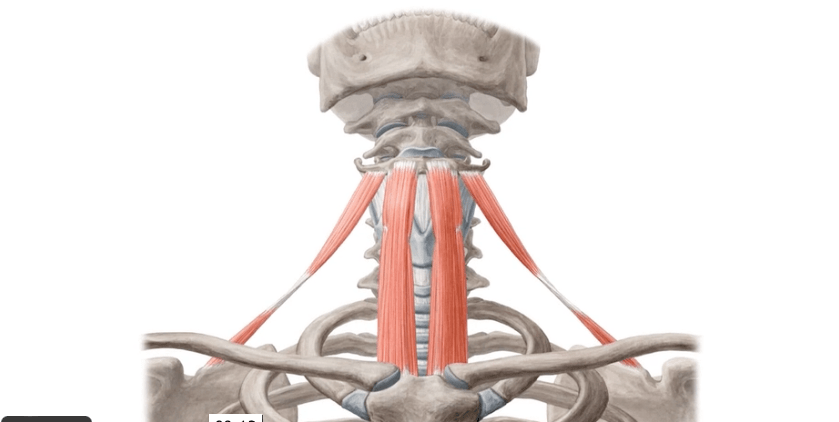
Muscles of the Larynx

  • There are many muscles that either make up a certain part of the laryngeal structure inside the neck, or that sit adjacent to it and aid in its function:
    • These muscles produce the movements of the larynx and its cartilages:
      • Thus enabling the proper air conduction, speech, movements of the epiglottis and airways protection
  • The muscles of the larynx are divided into two groups:
    • Extrinsic muscles:
      • Which produce the movements of the hyoid bone
      • The extrinsic muscles of the larynx are those that are somehow attached to the hyoid bone:
        • Be it via origin or insertion and thus move the thyroid cartilage
      • These are the:
        • Infrahyoid:
          • The infrahyoid muscles are part of and attach to the lower larynx as well as the inferior aspect of the hyoid bone
          • This muscle group includes the:
            • Sternohyoid
            • Omohyoid
            • Sternothyroid
            • Thyrohyoid
          • These muscles work to lower the larynx and the hyoid bone
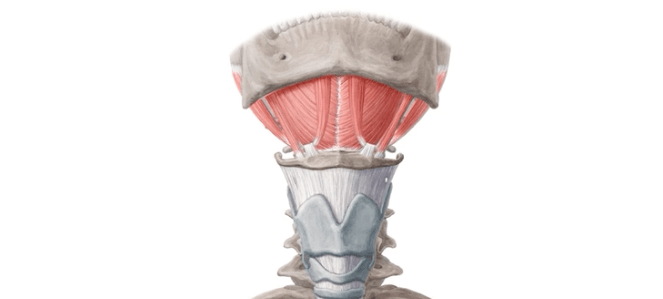
        • Suprahyoid muscles:
          • Are attached to the superior aspect of the hyoid bone
          • Function to fixate the hyoid bone as well as elevate it along with the larynx
          • These muscles include:
            • Stylohyoid
            • Digastric
            • Mylohyoid
            • Geniohyoid
          • The stylopharyngeus muscle is not attached directly to the hyoid bone:
            • However it acts indirectly to elevate both the hyoid bone and the larynx
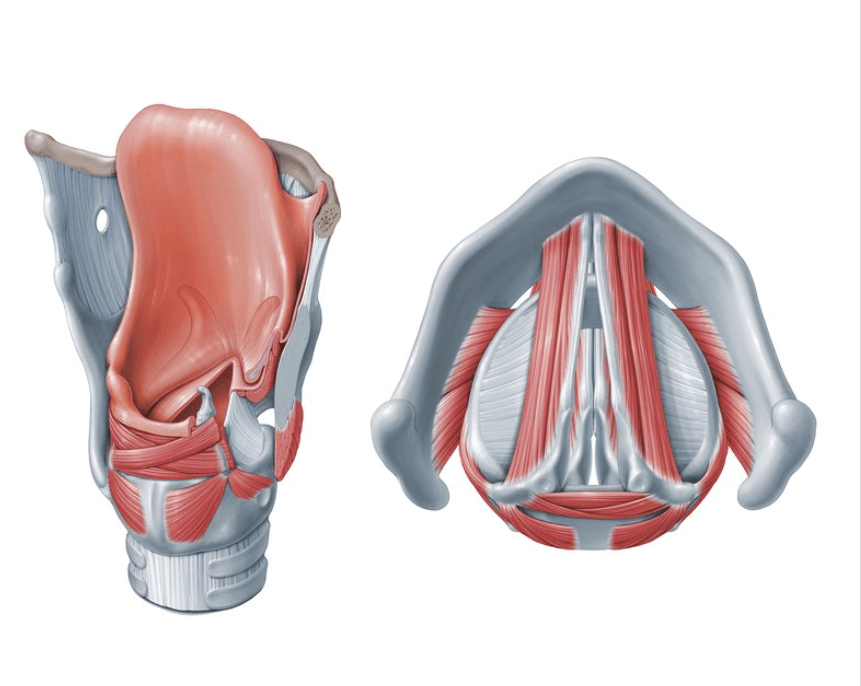
    • Intrinsic muscles:
      • Which move the vocal cords in order to produce speech sounds
      • They are functionally divided into:
        • Adductors:
          • Lateral cricoarytenoid:
            • Ailing from the arch of the cricoid cartilage, this muscle distally attaches itself to the muscular process of the arytenoid cartilage
            • It acts as an adductor of the vocal folds
          • Transverse arytenoid
        • Abductors:
          • Posterior cricoarytenoid:
            • The proximal attachment of this muscle is on the posterior surface of the lamina of the cricoid cartilage and its corresponding insertion point is on the muscular process of the arytenoid cartilage
            • The recurrent laryngeal nerve innervates this muscle:
              • As it does all the other intrinsic muscles of the larynx:
                • With the exception of the cricothyroid muscle
            • Its function is to abduct the vocal folds
        • Sphincters:
          • Transverse arytenoid:
            • The arytenoid cartilage acts as a point of origin for both the transverse and oblique arytenoid muscles:
              • Which run between the two arytenoid cartilages, as they distally attach to the opposing arytenoid cartilage
            • Due to their points of attachment, they are able to close the intercartilaginous portion of the rima glottidis
          • Oblique arytenoid
          • Aryepiglottic
        • Muscles that tense the vocal cords:
          • Cricothyroid:
            • This muscle originates on the anterolateral part of cricoid cartilage and inserts into the inferior border of the thyroid cartilage and its inferior horn
            • It is innervated by the external branch of the superior laryngeal nerve
            • Irrigation is by the superior and inferior thyroid arteries:
              • As are all the intrinsic laryngeal muscles
            • Upon contraction:
              • It lengthens and tenses the vocal ligaments
        • Muscles that relax the vocal cords:
          • Thyroarytenoid:
            • The thyroarytenoid muscle originates from the angle of thyroid cartilage and adjacent cricothyroid ligament
            • It inserts into the anterolateral surface of arytenoid cartilage:
              • Just as the posterior and lateral cricoarytenoid muscles do
            • As for function, the muscle shortens and relaxes the vocal cords
          • Vocalis:
            • The proximal attachment of the vocalis muscle is upon the vocal process of the arytenoid cartilage
            • It inserts distally upon the vocal ligament and acts by tensing the anterior vocal ligament and relaxing the posterior vocal ligament
The infrahyoid muscles are a group of four muscles under the hyoid bone attaching to the sternum, larynx and scapula.
The suprahyoid muscles are four muscles located between the mandible to the hyoid bone.
Together with adjacent tissue they form the floor of the mouth.


The intrinsic muscles of the larynx alter both the length and the tension placed upon the vocal cords as well as the rima glottidis.
#Arrangoiz #CancerSurgeon #HeadandNeckSurgeon #SurgicalOncologist #Surgeon #Doctor #MD #MSCM #MountSinaiMedicalCenter #ThyroidSurgeon #EndocrineSurgery #ParathyroidSurgeon #Miami #Mexico #LaryngealCancer

American Society for Radiation Oncology Accelerated Partial Breast Irradiation Guidelines

  • Current ASTRO APBI guidelines:
    • Suitable:
      • Any patient greater than 50 years with:
        • T1 (margins at least 2 mm) or
        • Tis:
          • If screen-detected
          • Less than 2.5cm
          • Low-intermediate grade
          • Margins greater than 3 mm
  • Cautionary:
    • 40 to 49 years old or
    • 50 years old:
      • With at least one pathological higher risk factor
  • Unsuitable:
    • Less than 40 years old
    • Positive margins
    • Tumor greater than 3 cm
    • N+
  • Reference:
    • Correa C, Harris EE, Leonardi MC, et al. Accelerated partial breast irradiation: executive summary for the update of an ASTRO evidence-based consensus statement. Pract Radiat Oncol. 2017;7(2):73-79.

Nonsurgical Functional Organ Preservation versus Surgery in Laryngeal Squamous Cell Carcinoma

  • The feasibility of nonsurgical functional organ preservation using induction chemotherapy prior to definitive RT was established by the Department of Veterans Affairs (VA) Laryngeal Cancer Study Group larynx trial:
    • Similar results were seen in a European Cooperative Group trial (EORTC 24891) of patients with cancers of the hypopharynx mostly (piriform sinus and some with hypopharyngeal aspect of the aryepiglottic fold)
  • In the VA trial:
    • 332 patients with stage III or IV laryngeal cancer were randomly assigned to three cycles of induction chemotherapy with cisplatin plus fluorouracil:
      • Followed by definitive RT or primary surgery (typically total laryngectomy), followed by postoperative RT:
        • Patients without at least a partial response and those with any evidence of disease progression during or after induction chemotherapy:
          • Were treated with surgery and postoperative RT
    • At a median follow-up of 33 months:
      • The two-year survival rate was equal in both treatment groups:
        • 68%
      • The larynx was successfully preserved in:
        • 64% of patients treated with induction chemotherapy
  • A subsequent publication reported that the three-year survival rates were:
    • 53% for chemotherapy plus RT
    • 56% for surgery plus RT
  • In the European trial:
    • 194 patients with stage II through IV squamous cell carcinoma of the pyriform sinus or aryepiglottic fold were randomly assigned to receive induction chemotherapy with cisplatin plus fluorouracil, followed by definitive RT or surgery (total laryngectomy with partial pharyngectomy), followed by postoperative RT:
      • Patients who failed to achieve a complete response to induction chemotherapy underwent salvage surgery and postoperative RT
    • At a median follow-up of 10.5 years:
      • There were no significant differences in survival or patterns-of-failure outcomes
      • The 10-year progression-free survival probabilities for the chemotherapy plus definitive RT and for the surgery arms were:
        • 11% and 9%, respectively
      • Overall survival probabilities at 10 years were:
        • 13% and 14%, respectively
      • The 5- and 10-year probabilities of being alive with a functional larynx were 21.9% and 8.7%, respectively, on the larynx preservation arm:
        • However, for those patients alive at 5 and 10 years, 59.5% (22/37) and 62.5% (5/8) maintained a normal larynx, respectively
  • Following the demonstration of benefit with induction chemotherapy followed by RT:
    • Various subsequent trials evaluated the concurrent administration of chemotherapy with RT (concurrent chemoradiation), induction chemotherapy, and induction chemotherapy followed by concurrent chemoradiation (sequential chemoradiation)
#Arrangoiz #CancerSurgeon #HeadandNeckSurgeon #SurgicalOncologist #Surgeon #Doctor #MD #MSCM #MountSinaiMedicalCenter #ThyroidSurgeon #EndocrineSurgery #ParathyroidSurgeon #Miami #Mexico #LarynxCancer

Laryngeal Cancer Generalities

  • The larynx plays a central role in coordinating the functions of the upper aerodigestive tract, including respiration, speech, and swallowing
  • The larynx is the second most common site for squamous cell carcinoma in the head and neck, which is causally related to tobacco and alcohol exposure.
  • The larynx is divided into:
    • Supraglottic, glottic, and subglottic regions:
      • These anatomic divisions are based on embryologic development and have important clinical implications
  • Lymphatic drainage of the supraglottic larynx:
    • Is very rich compared with the scanty lymphatic network in the submucosal plane of the true vocal cords
    • The patterns of regional spread of laryngeal cancer therefore depend on the site of origin and the local extent of the primary tumor
  • Each of the three regions of the larynx is divided into various sites.
    • The sites in the supraglottic region are:
      • The laryngeal surface of the epiglottis, the aryepiglottic folds, the arytenoids, the ventricular bands or false vocal cords, and the ventricles, which are potential spaces between the false and true vocal cords
    • In the glottic larynx:
      • The right and left vocal cords and anterior commissure represent the three designated sites
    • The subglottic region:
      • Is generally considered as one site and is divided into its right and left lateral walls
  • Squamous cell carcinomas:
    • Constitute more than 95% of primary malignant tumors of the larynx
  • The remaining tumors are those arising from the minor salivary glands, neuroepithelial tumors, soft tissue tumors, and, rarely, the cartilaginous laryngeal framework
  • In 2018, the American Cancer Society estimated that approximately 13,150 new cases of cancer of the larynx would be diagnosed in the United States, which represents 0.8% of all new cancers
  • Death rate estimates vary, depending on the site and stage of the primary tumor:
    • Overall, 3,710 cause-specific deaths for cancer of the larynx were estimated for 2018 in the United States
  • Worldwide, the incidence of laryngeal cancer varies in different countries:
    • Southern Europe has by far the highest incidence of laryngeal cancer in men in the world:
      • The geographic variation in the incidence rates and anatomic site distribution may be a reflection of lifestyle and habits of the patient population in different parts of the world, as well as other environmental factors
The anatomic limits of the larynx. Upper arrow, Tip of epiglottis. Lower arrow, Lower border of cricoid cartilage.
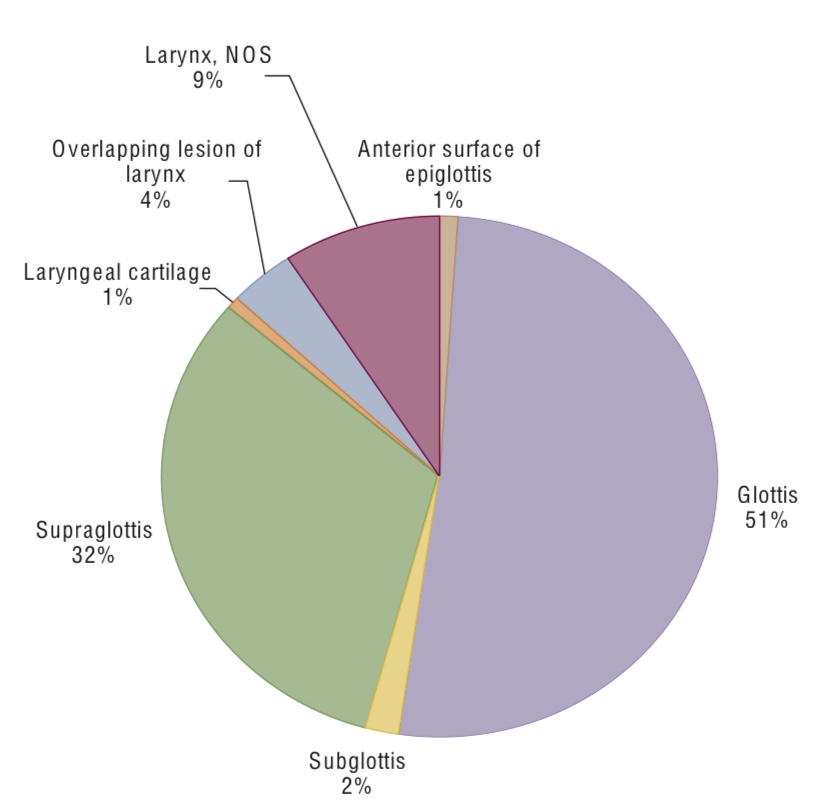
  • The glottic region is by far the most common site for primary malignant tumors in the larynx
#Arrangoiz #CancerSurgeon #HeadandNeckSurgeon #SurgicalOncologist #Surgeon #Doctor #MD #MSCM #MountSinaiMedicalCenter #ThyroidSurgeon #EndocrineSurgery #ParathyroidSurgeon

Laryngeal Carcinoma

  • The larynx is divided into three regions:
    • Supraglottis
    • Glottis
    • Subglottis
  • The distribution of cancers is as follows:
    • 30% to 35% in the supraglottic region
    • 60% to 65% in the glottic region
    • 5% in the subglottic region
  • The incidence and pattern of metastatic spread to regional nodes vary with the primary region:
    • The lymphatic drainage of the glottis is:
      • Sparse and early-stage primaries rarely spread to regional nodes
    • Because hoarseness is an early symptom:
      • Most glottic cancers are early stage at diagnosis
    • Thus, glottic cancer has an excellent cure rate of 80% to 90%
    • Nodal involvement adversely affects survival rates and is rare in T1 to T2 disease
  • More than 50% of patients with supraglottic primaries:
    • Present with spread to regional nodes because of an abundant lymphatic network that crosses the midline:
      • Bilateral cervical metastases are not uncommon with early-stage supraglottic primaries:
        • Thus, supraglottic cancer is often locally advanced at diagnosis
#Arrangoiz #CancerSurgeon #HeadandNeckSurgeon #SurgicalOncologist #Surgeon #Doctor #MD #MSCM #MountSinaiMedicalCenter #ThyroidSurgeon #EndocrineSurgery #ParathyroidSurgeon

Cardiac Sparing Breast Radiation Techniques

  • Multiple techniques have been used to aid in cardiac sparing, including:
    • Assisted breathing control
    • Accelerated partial breast irradiation
    • Intensity-modulated radiation therapy
    • Prone positioning
  • A study from Mulliez et al:
    • Found that prone technique in conjunction with respiratory gating:
      • Was associated with a reduction in mean heart dose, as well as dose to the left anterior descending coronary artery
  • At this time, there are limited data regarding long-term cardiac outcomes (e.g., myocardial infarctions) with any cardiac-sparing technique:
    • Due to the length of follow-up required
  • Outcomes with prone breast irradiation have demonstrated:
    • Low rates of local recurrence
    • Excellent cosmetic outcomes
    • No suggestion of higher rates of skin toxicity
    • Lower doses to the lungs and heart
    • No suggestion of higher rates of pneumonitis
  • References
    • Mulliez T, Speleers B, Mahjoubi K, et al. Prone left-sided whole-breast irradiation: significant heart dose reduction using end-inspiratory versus end-expiratory gating. Cancer Radiother. 2014;18(7):672-677.
    • Mulliez T, Veldeman L, Speleers B, et al. Heart dose reduction by prone deep inspiration breath hold in left-sided breast irradiation. Radiother Oncol.2015;114(1):79-84.
    • Osa EO, DeWyngaert K, Roses D, et al. Prone breast intensity modulated radiation therapy: 5-year results. Int J Radiat Oncol Biol Phys. 2014;89(4):899-906.
    • Shah C, Badiyan S, Berry S, et al. Cardiac dose sparing and avoidance techniques in breast cancer radiotherapy. Radiother Oncol. 2014;112(1):9-16.
    • Taylor, CW, Wang Z, Macaulay E, et al. Exposure of the heart in breast cancer radiation therapy: a systematic review of heart doses published during 2003 to 2013. Int J Radiat Oncol Biol Phys. 2015; 93(4):845-853.

Lore’s Triangle

  • This triangle described by Lore et al., is also for identification of recurrent laryngeal nerve:
    • Medial border of the triangle is formed by:
      • The trachea / esophagus
    • The lateral border by:
      • The carotid artery
    • Superior border by:
      • The surface of inferior pole of thyroid
#Arrangoiz #CancerSurgeon #HeadandNeckSurgeon #SurgicalOncologist #Surgeon #Doctor #MD #MSCM #MountSinaiMedicalCenter #ThyroidSurgeon #EndocrineSurgery #ParathyroidSurgeon

Complications Following Breast Reconstruction

  • Performing an immediate breast reconstruction with a tissue expander or breast implant:
    • Carries a higher complication rate than a mastectomy alone
  • Surgical complications and delayed wound healing:
    • May lead to a delay in adjuvant radiation therapy
  • Obesity with a BMI >30:
    • Increases complication rates leading to adjuvant radiation therapy delays
  • Age over 50 has also been implicated to increase post-operative complications which may be related to other pre-existing comorbidities that occur with advancing age
  • References
    • Teotia SS, Venutolo C, Haddock NT. Outcomes in patients receiving neoadjuvant chemotherapy undergoing immediate breast reconstruction: effect of timing, postoperative complications, and delay to radiation therapy. Plast Reconstr Surg. 2019;144(5):732e-742e.
    • Paprottka FJ, Schlett CL, Luketina R, Paprottka K, Klimas D, Radtke C, et al. Risk factors for complications after skin-sparing and nipple-sparing mastectomy. Breast Care (Basel). 2019;14(5):289-296.