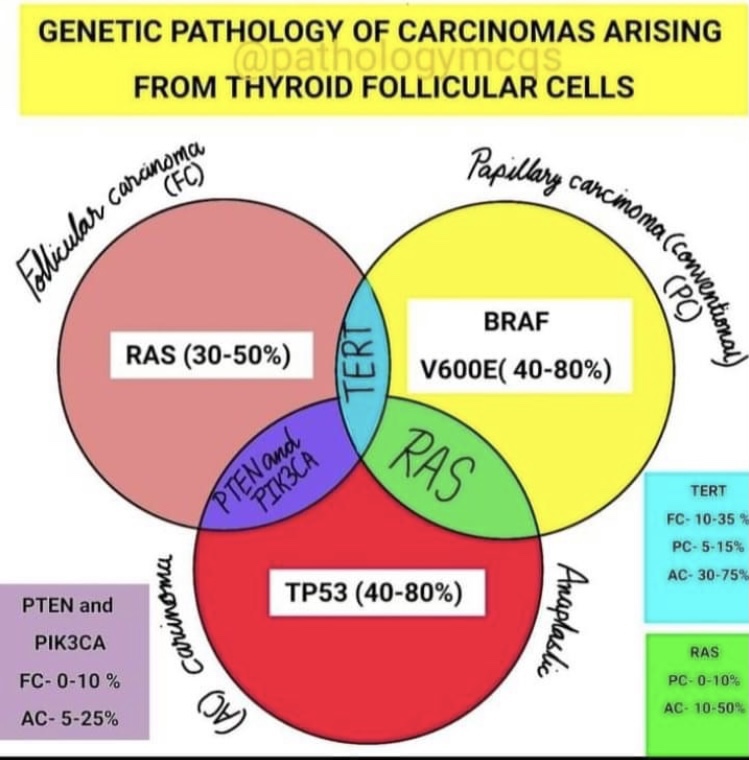
THYROSEQ Test Description

👉Rodrigo Arrangoiz MS, MD, FACS is the first thyroid surgeon in Mexico to utilize this test in the management of a thyroid nodule.

👉He is now a member of Center for Advanced Surgical Oncology in Miami

👉ThyroSeq Genomic Classifier (GC) is a test for the pre-operative assessment of thyroid nodules with indeterminate cytology:

👉Which offers accurate assessment of cancer probability in a given nodule and additionally provides information on cancer prognostication, helping to select the most optimal patient management.

👉ThyroSeq incorporates all major scientific advances in thyroid cancer genetics and has more than 10-years’ experience serving physicians and their patients with thyroid nodules and cancer.

👉The first version of ThyroSeq was launched for clinical use at the University of Pittsburgh Medical Center as a seven-gene panel (ThyroSeq v0) in April of 2007.

👉Until recently, the test was offered as ThyroSeq v2. Today, ThyroSeq v3 is available for clinical use.

👉ThyroSeq v3 is also based on next-generation sequencing of DNA and RNA. However, it is expanded to analyze 112 genes, providing information on greater than 12,000 mutation hotspots and greater than 150 gene fusion types (Nikiforova MN et al. 2018).

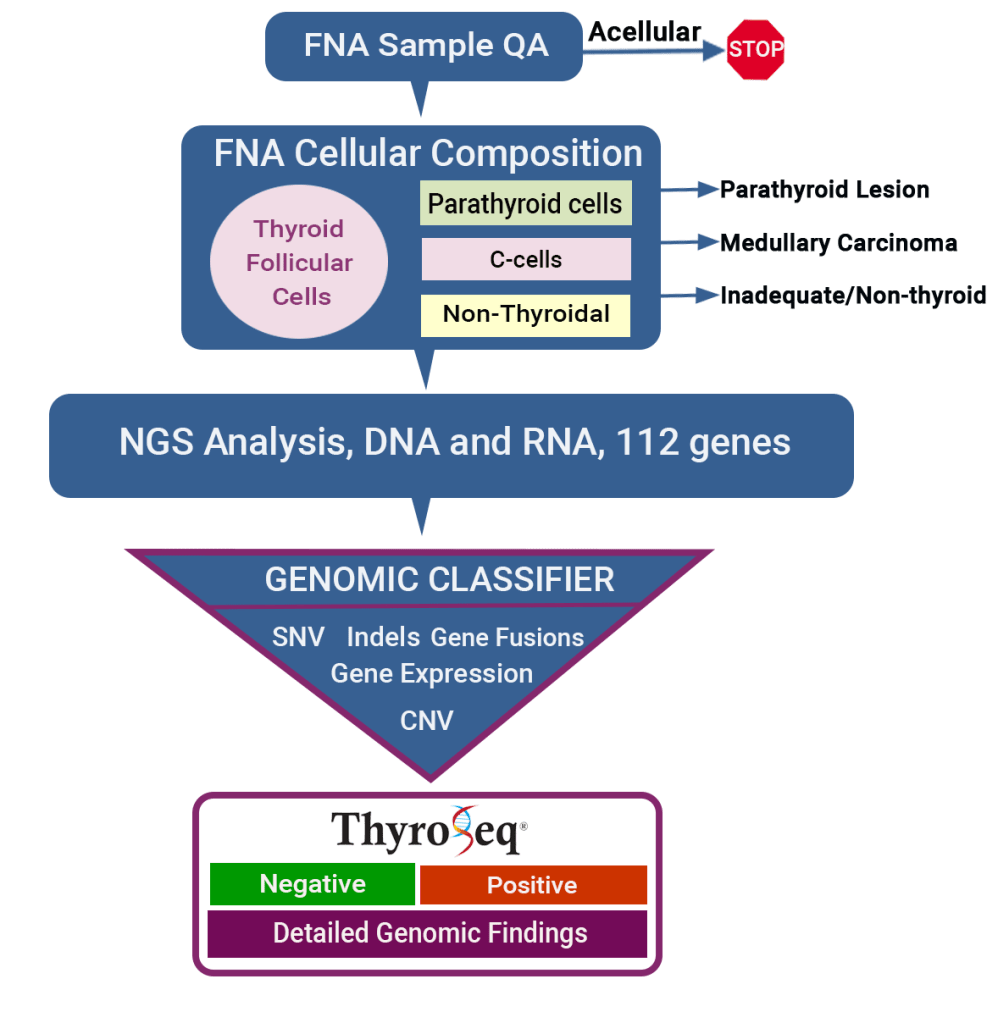
👉The test detects four classes of genetic alterations: (i) mutations (SNVs, indels); (ii) gene fusions; (iii) gene expression alterations; and (iv) copy number variations (CNVs).

👉The test utilizes a proprietary Genomic Classifier (GC) based on the algorithmic analysis of all detected genetic alterations to report the test result as Positive or Negative.

👉ThyroSeq test consists of several steps:

  • It starts with the assessment of the FNA sample cellularity:
    • This is a quality assurance (QA) step that determines if the provided sample has sufficient number of cells to proceed with the analysis.
    • If the number of cells is below the required limit, the test is cancelled and no charges are posted.
  • Next, cellular composition of the sample is evaluated:
    • This step assures that the provided sample has an adequate proportion of thyroid follicular cells.
    • It also allows accurate detection of c-cells (MTC), parathyroid cells, and other non-thyroidal cells.
  • Then, the generated next generation sequencing data on 112 genes are processed using an in-house bioinformatic pipeline that applies a complex algorithm to estimate cancer probability in the tested nodule:
  • Next, the test results and findings are reviewed by a board-certified pathologist who verifies all findings and releases the test report.
  • ThyroSeq test report is provided in a user-friendly format that states the probability of cancer in the patient’s nodule, suggests potential patient management, and also lists specific genomic alterations that are relevant to the individual patient.
    • You can expect results within 2 weeks from the time your specimen is received.
#Arrangoiz #ThyroidSurgeon #ThyroidExpert #ThyroidCancer #HeandandNeckSurgeon #CancerSurgeon #ThyroidNodules #Thyroseq

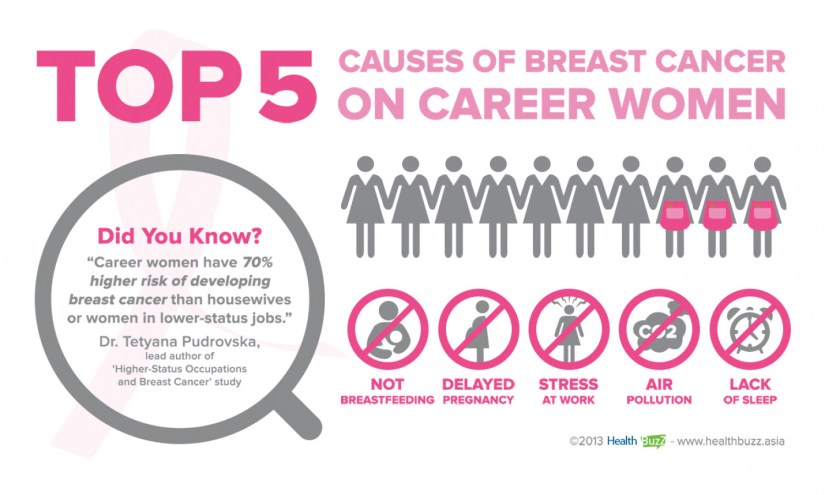
The Clinical Response to Neoadjuvant Endocrine Therapy Correlates with the Duration of Treatment

  • In the preoperative setting, chemotherapy is typically recommended to:
    • Improve breast cancer operability or downstage the axilla among medically fit patients:
      • However, neoadjuvant endocrine therapy (NET) is a good option for:
        • Post-menopausal women with ER+ breast cancers:
          • When aiming for improved candidacy for breast conservation or
          • In patients in whom chemotherapy will not be safely tolerated
  • Studies evaluating NET have demonstrated:
    • Similar rates of clinical and radiographic response and breast conservation therapy (BCT) to those reported from studies using neoadjuvant chemotherapy
  • When neoadjuvant chemotherapy (four cycles of doxorubicin and paclitaxel) was compared directly to NET (12 weeks of aromatase inhibitors; exemestane or anastrozole):
    • NET was associated with:
      • Comparable clinical response
      • Higher rates of breast conservation:
        • 33% vs. 24%
      • No difference in local recurrence at approximately three years
  • Meta-analysis and clinical trial data support use of aromatase inhibitors (letrozole or anastrozole) over tamoxifen:
    • Higher clinical and radiographic response rates:
      • 55% vs. 36%
    • Improved rates of BCT:
      • 45% versus 35%
  • The ACOSOG Z10316 trial:
    • Demonstrated comparable effectiveness of exemestane, letrozole and anastrozole for 16 to 18 weeks before surgery
  • NET requires a longer duration of treatment than preoperative chemotherapy and depends on the patient’s individual eligibility for breast conservation
  • NET is typically recommended for:
    • Three to six months prior to surgery:
      • However, extended treatment for up to 12 months has been safe and is associated with a greater response to treatment
  • Although tumor progression is rare on NET:
    • Continued surveillance is important for women with an intact primary breast tumor taking endocrine therapy, and cancer growth would be an indication for surgery
  • The majority of clinical trials for NET have focused on postmenopausal women:
    • In that younger patients often have:
      • Higher-risk tumor biology and are likely candidates for chemotherapy:
        • Thus, data on the use of NET in premenopausal patients are limited to phase II trials and include ovarian suppression plus aromatase-inhibitors (i.e., exemestane + goserelin)
  • References
    • Semiglazov VF, Semiglazov VV, Dashyan GA, Ziltsova EK, Ivanov VG, Bozhok AA, et al. Phase 2 randomized trial of primary endocrine therapy versus chemotherapy in postmenopausal patients with estrogen receptor-positive breast cancer. Cancer. 2007;110(2):244-254.
    • Ellis MJ, Ma C. Letrozole in the neoadjuvant setting: the P024 trial. Breast Cancer Res Treat. 2007;105(suppl 1):133-143.
    • Eiermann W, Paepke S, Appfelstaedt J, Llombart-Cussac A, Eremin J, Vinholes J, et al. Preoperative treatment of postmenopausal breast cancer patients with letrozole: a randomized double-blind multicenter trial. Ann Oncol. 2001;12(11):1527-1532.
    • Smith IE, Dowsett M, Ebbs SR, Dixon JM, Skene A, Blohmer JU, et al. Neoadjuvant treatment of postmenopausal breast cancer with anastrozole, tamoxifen, or both in combination: The Immediate Preoperative Anastrozole, Tamoxifen, or Combined with Tamoxifen (IMPACT) multicenter double-blind randomized trial. J Clin Oncol. 2005;23(22):5108-5116.
    • Cataliotti L, Buzdar AU, Noguchi S, Bines J, Takatsuka Y, Petrakova K, et al. Comparison of Anastrozole versus tamoxifen as preoperative therapy in postmenopausal women with hormone receptor-positive breast cancer: the pre-operative “arimidex” compared to tamoxifen (PROACT) trial. Cancer. 2006;106(10):2095-2103.
    • Ellis MJ, Suman VJ, Hoog J, Lin L, Snider J, Prat A, et al. Randomized phase II neoadjuvant comparison between letrozole, anastrozole, and exemestane for postmenopausal women with estrogen receptor-rich stage 2 to 3 breast cancer: clinical and biomarker outcomes and predictive value of the baseline PAM5-based intrinsic subtype—ACOSOG Z1031. J Clin Oncol. 2011;29(17):2342-2349.

#Arrangoiz #BreastSurgeon #CancerSurgeon #SurgicalOncologist #BreastCancer #CASO #CenterforAdvancedSurgicalOncology

Controversies, consensus, and collaboration in the use of radioactive iodine therapy in thyroid cancer

👉Clinical Thyroidology Jan 2021

👉The management of thyroid cancer has undergone a lot of changes over the last 10+ years. The 2015 American Thyroid Association (ATA) management guidelines for thyroid nodules and thyroid cancer recommend a patientcentered approach to evaluating the risk of thyroid cancer recurrence and overall prognosis for each individual patient. This has led to a decrease in total thyroidectomies (removal of the entire thyroid) and an increase in the removal only of the lobe containing the cancer (lobectomy), keeping the other lobe intact. Partially due to this change in surgical approach, there has been a marked decrease in the use of radioactive iodine therapy after surgery for thyroid cancer.
There has been discussion in the greater nuclear medicine community regarding some of these recommendations and two prominent nuclear medicine organizations, the European Association of Nuclear Medicine (EANM) and the Society of Nuclear Medicine and Molecular Imaging (SNMMI), declined to endorse the guidelines.
In order to promote better understanding of differences in perspective and to reach a more collaborative and consistent, evidence-based set of recommendations, or at least of guiding principles, representatives from the ATA and the European Thyroid Association (ETA) met with representatives from the EANM and the SNMMI to draft a consensus paper. This paper aims to support cooperation among medical societies, to define the goals radioactive iodine therapy, to acknowledge that the published literature is lacking with regard to the best dose of radioactive iodine therapy to use and to better improve the definition of thyroid cancer that is no longer responding to radioactive iodine therapy.

CONCLUSION:

1) The best thyroid cancer management requires cooperation between endocrinologists, surgeons and nuclear medicine physicians.
2) The goal of radioactive iodine therapy should be specifically defined as (a) destroying remaining normal thyroid tissue, (b) treatment of suspected microscopic cancer remaining after surgery or (c) treatment of known visible cancer.
3) Proper patient selection for radioactive iodine therapy requires assessment of postoperative cancer status and not simply preoperative staging.
4) Evaluation of postoperative cancer status should be standardized in terms of blood tests and imaging tests.
5) Proper patient selection for radioactive iodine therapy also requires evaluation of multiple factors, including patient preference, potential side effects, and availability and quality of medical resources.
6) The best administered radioactive iodine therapy cannot be determined from the available literature, favoring more individualized dosing decisions.
7) Identification of cancers that are unlikely to respond to radioactive iodine therapy should not to exclude them from consideration of radioactive iodine therapy.
8)Criteria used to identify cancers that are unlikely to respond to radioactive iodine therapy will continue to evolve, especially with progress in evidence-based studies and better imaging.
9) Prospective studies are needed to address knowledge and evidence gaps with regard to radioactive iodine therapy.

#Arrangoiz #ThyroidSurgeon #CancerSurgeon #HeadandNeckSurgeon #ThyroidExpert #CASO #CenterforAdvancedSurgicakOncology

Neoadjuvant Chemotherapy (NAC)

Neoadjuvant Chemotherapy (NAC)

  • Neoadjuvant chemotherapy (NAC):
    • Refers to the delivery of systemic treatment prior to surgery
  • Preoperative chemotherapy was initially utilized in women with locally advanced or inflammatory breast cancers:
    • To improve operability
  • Among women with early-stage breast cancers:
    • The NSABP B-18 and B-27 randomized clinical trials:
      • Demonstrated no difference in:
        • Disease-specific or overall survival:
          • Between those who received neoadjuvant versus adjuvant chemotherapy
      • Neoadjuvant chemotherapy:
        • Improved rates of breast conservation:
          • 68% versus 60%
  • More recent observational data have demonstrated:
    • No increased risk in surgical complications among women who underwent neoadjuvant chemotherapy
  • NAC has more recently been used to:
    • Downstage the axilla in patients with biopsy-proven lymph node involvement with hopes to avoid completion lymphadenectomy and decrease the risk of lymphedema
  • Additionally, NAC has been used in women with operable breast cancers:
    • To theoretically treat micro-metastatic disease prior to local therapy and to allow assessment of the in vivo tumor response to certain chemotherapy regimens
  • Notably, results from the Early Breast Cancer Trialists’ Collaborative Group (EBCTCG) meta-analysis included:
    • Patient-level data from 4,756 women enrolled in clinical trials 1983 to 2002:
      • Results demonstrated a higher risk of in-breast recurrence after neoadjuvant chemotherapy:
        • At 15 years, women treated with NAC had a 21% risk of local recurrence (vs. 16% in the surgery-first patients):
          • This was attributed to a higher rate of breast conservation, but with no difference in distant recurrence or breast cancer-specific overall survival
  • Among women with operable breast cancers at the time of diagnosis:
    • Neoadjuvant chemotherapy (NAC) is increasingly used to gain information about the tumor’s response to treatment:
      • With pathologic response rates correlating with long-term prognosis
  • ·         The most accepted definition of pathologic complete response (pCR):
  • Although this definition varies:
    • Residual in situ disease does not affect the risk of distant recurrence
  • Response to preoperative treatment differs by tumor biology:
    • With hormone-receptor positive breast cancer patients:
      • Having the lowest overall pCR rate
  • For some women with residual disease, including those with HER2-positive and triple-negative breast cancers:
    • This allows for use of additional adjuvant therapy that improves cancer outcomes including:
      • Receipt of TDM-1 (trastuzumab emtansine, KATHERINE Trial)
      • Xeloda (CREATE-X Trial), or
      • Eligibility for ongoing clinical trials
  • Notably, recent changes to the American Joint Committee on Cancer Staging System includes:
    • Pathologic stage after neoadjuvant chemotherapy as part of the updated system:
      • When pCR is achieved in both the breast and axillary nodes:
        • Survival is driven by response to chemotherapy compared to initial presenting stage
  • ·         Choosing a NAC regimen depends on tumor biology:
  • Chemotherapy should be combined with HER2-targeted therapies:
    • i.e., Taxane + carboplatin + trastuzumab, pertuzumab (TCHP)
    • HER2-negative patients:
      • Anthracycline-based drugs including:
        • Doxorubicin and cyclophosphamide followed by a taxane
    • Higher risk HER2-negative breast cancers (node-positive hormone-receptor positive patients and triple-negative patients) typically receive:
      • Anthracycline and taxane-based regimens with or without carboplatin
    • Notably, results from the CALGB 406034 trial:
      • Suggested that for triple-negative breast cancer:
        • The addition of carboplatin to NAC resulted in a 14% increase in eligibility for breast conservation
  • References
    • Fisher B, Bryant J, Wolmark N, Mamounas E, Brown A, Fisher ER, et al. Effect of preoperative chemotherapy on the outcome of women with operable breast cancer. J Clin Oncol. 1998;16(8): 2672-2685.
    • Boughey J, Peintinger F, Meric-Bernstam F, Perry AC, Hunt KK, Babiera GV, et al. Impact of preoperative versus postoperative chemotherapy on the extent and number of surgical procedures in patients treated in randomized clinical trials for breast cancer. Ann Surg. 2006;244(3):464-470.
    • Early Breast Cancer Trialists’ Collaborative Group (EBCTCG). Long-term outcomes for neoadjuvant versus adjuvant chemotherapy in early breast cancer: meta-analysis of individual patient data from ten randomized trials. Lancet Oncol. 2018;19(1):27-39.
    • Fayanju OM, et al. The Clinical Significance of Breast-only and Node-only Pathologic Complete Response After Neoadjuvant Chemotherapy. Annals of Surgery. 2018; 268(4): 591-601.
    • von Minckwitz, G et al. Trastuzumab Emtansine for Residual Invasive HER2-Positive Breast Cancer. NEJM. 2018; 380(7): 617-628.
    • Masuda N, et al. Adjuvant Capecitabine for Breast Cancer After Preoperative Chemotherapy. NEJM. 2017; 376:2147-59.
    • Golshan M, et al. Impact of neoadjuvant chemotherapy in stage II-III triple negative breast cancer on eligibility for breast-conserving surgery and breast conservation rates: surgical results from CALGB 40603 (Alliance). Annals of Surgery. 2015; Sep; 262(3):434-9.

#Arrangoiz #BreastSurgeon #CancerSurgeon #SurgicalOncologist #CenterforAdvancedSurgicalOncology #CASO #BreastCancer #NeoadjuvantChemotherapy

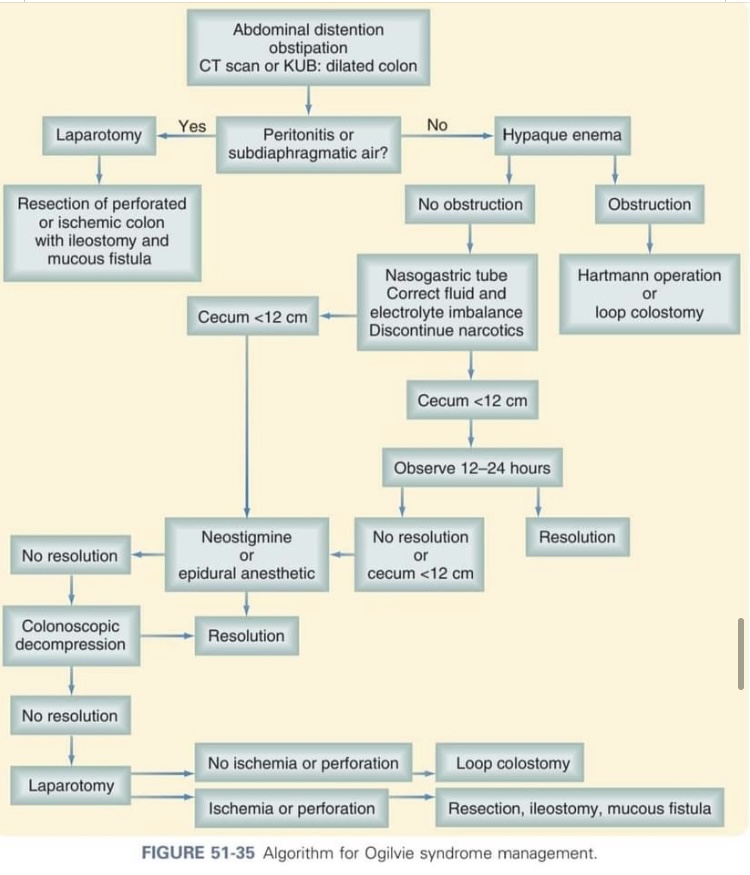
Algorithm for Ogilvie Syndrome Management.

👉Ogilvie’s syndrome presents as acute large bowel obstruction.

👉Abdominal radiographs show evidence of colonic obstruction, with marked caecal distension being a common feature. Indeed, caecal perforation is a well recognised complication

👉Ref; Sabiston text book of surgery, 21 ed.

#Arrangoiz #Surgeon #CancerSurgeon #SurgicalOncologist #Teacher #CASO #CenterforAdvancedSurgicalOncology

RAI thyroid bed uptake after total thyroidectomy: A novel SPECT‐CT anatomic classification system

Laryngoscope April 2015

👉https://onlinelibrary.wiley.com/doi/10.1002/lary.25295

Recent, more selective use of radioactive iodine (RAI) has led to reevaluation of the clinical importance of achieving complete total thyroidectomy with minimal residual normal thyroid tissue. We utilize the improved localization by post‐RAI remnant ablation, single photon emission computerized tomography‐computed tomography (SPECT‐CT) to define specific anatomic sites of residual RAI‐uptake foci after total thyroidectomy for differentiated thyroid cancer (DTC) and to provide a novel classification system relating uptake to thyroid anatomy and preservation of adjacent neural structures.

Radioactive iodine‐uptake foci in thyroid bed were localized by SPECT/CT imaging at the time of RAI remnant ablation in 141 DTC patients undergoing total thyroidectomy.

Results
Minimal residual RAI uptake (median 0.32% at 24 hours) in the thyroid bed was detected by diagnostic planar whole body scans in 93% and by posttherapy SPECT/CT imaging in 99% of subjects. Discrete RAI uptake foci were identified on the SPECT/CT imaging at Berry’s ligament (87%), at superior thyroid poles (79%), in paratracheal‐lobar regions (67%), in isthmus‐region (54%), and in pyramidal lobe (46%). Despite the residual foci, the nonstimulated thyroglobulin (Tg) prior to remnant ablation (with a median thyroid‐stimulating hormone of 0.36 m IU/L) was < 0.6 ng/mL in 53% and < 1 ng/mL in 73% of cases.

Conclusion

After extracapsular total thyroidectomy, highly sensitive detection tools identify microscopic residual RAI avid foci in thyroid bed in the majority of patients. These foci can be classified as 1) neural‐related and 2) capsule‐related. These common residual foci have no relationship to postoperative Tg, suggesting that attempts at radical removal of thyroid tissue in these locations may not be warranted.

#Arrangoiz #ThyroidSurgeon #ThyroidExpert #HeadandNeckSurgeon #CASO #CenterforAdvancedSurgicakOncology

National Cancer Survivors Day

👉On National Cancer Survivors Day we celebrate survivors —their inspirational stories and hopeful messages.

#Arrangoiz #ThyroidSurgeon #ThyroidExpert #HeadandNeckSurgeon #ThyroidCancer #CancerSurgeon #Miami #CASO #CenterforAdvancedSurgicalOncology

Neoadjuvant Chemotherapy (NAC)

  • Neoadjuvant chemotherapy (NAC):
    • Refers to the delivery of systemic treatment prior to surgery
  • Preoperative chemotherapy was initially utilized in women with locally advanced or inflammatory cancers:
    • To improve operability
  • Among women with early-stage breast cancers:
    • The NSABP B-18 and B-27 randomized clinical trials:
      • Demonstrated no difference in:
        • Disease-specific or overall survival between those who received neoadjuvant versus adjuvant chemotherapy
      • Neoadjuvant chemotherapy:
        • Improved rates of breast conservation:
          • 68% versus 60%
  • More recent observational data have demonstrated:
    • No increased risk in surgical complications among women who underwent neoadjuvant chemotherapy
  • NAC has more recently been used to:
    • Downstage the axilla in patients with biopsy-proven lymph node involvement with hopes to avoid completion lymphadenectomy and decrease the risk of lymphedema
  • Additionally, NAC has been used in women with operable breast cancers:
    • To theoretically treat micro-metastatic disease prior to local therapy and to allow assessment of the in vivo tumor response to certain chemotherapy regimens
  • Notably, results from the Early Breast Cancer Trialists’ Collaborative Group (EBCTCG) meta-analysis included:
    • Patient-level data from 4,756 women enrolled in clinical trials 1983 to 2002:
      • Results demonstrated a higher risk of in-breast recurrence after neoadjuvant chemotherapy:
        • At 15 years, women treated with NAC had a 21% risk of local recurrence (vs. 16% in the surgery-first patients):
          • This was attributed to a higher rate of breast conservation, but with no difference in distant recurrence or breast cancer-specific overall survival
  • References
    • Fisher B, Bryant J, Wolmark N, Mamounas E, Brown A, Fisher ER, et al. Effect of preoperative chemotherapy on the outcome of women with operable breast cancer. J Clin Oncol. 1998;16(8): 2672-2685.
    • Boughey J, Peintinger F, Meric-Bernstam F, Perry AC, Hunt KK, Babiera GV, et al. Impact of preoperative versus postoperative chemotherapy on the extent and number of surgical procedures in patients treated in randomized clinical trials for breast cancer. Ann Surg. 2006;244(3):464-470.
    • Early Breast Cancer Trialists’ Collaborative Group (EBCTCG). Long-term outcomes for neoadjuvant versus adjuvant chemotherapy in early breast cancer: meta-analysis of individual patient data from ten randomized trials. Lancet Oncol. 2018;19(1):27-39.

#Arrangoiz #BreastSurgeon #CancerSurgeon #BreastCancer #Chemotherapy #CASO #CenterforAdvancedSurgicalOncology #SurgicalOncologist

Inflammatory Breast Cancer IBC Generalities

  • Inflammatory breast cancer (IBC):
    • Is a clinical diagnosis characterized by:
      • The rapid progression of an enlarged breast with skin changes including redness, edema, and peau d’orange
    • Skin punch biopsy will demonstrate:
      • Lymphovascular tumor emboli:
        • In approximately 75% of cases:
          • But the absence should not rule out a diagnosis
    • Staging scans, including a CT chest / abdomen/ pelvis, PET scan, and / or bone scan:
      • Should be completed prior to initiating treatment
    • Inflammatory breast cancer is a clinical stage T4d:
      • And the most fatal form of breast cancer:
        • Accounting for 7% of all breast cancer deaths:
          • Real-world observational data have demonstrated that inflammatory breast cancer has significantly worse survival compared to other non-metastatic locally advanced and metastatic non-inflammatory breast cancers
        • Despite this, 5-year survival of IBC patients has increased from:
          • 40% to 50% in the 1990’s to almost 70% in 2008
    • Recent national and international guidelines for IBC recommend:
      • Full staging (PET / CT preferred over CT chest / abdomen / pelvis + bone scan) and bilateral breast and axillary nodal imaging, followed by neoadjuvant systemic therapy, modified radical mastectomy (including level I and II lymph node dissection), and radiation
      • Adjuvant targeted therapy and hormonal therapy should be considered in appropriate cases
      • Notably, lumpectomy is contraindicated
      • Breast reconstruction should be delayed
      • Multi-modal therapy for IBC has resulted in the best overall survival rates
    • For HER2-negative breast cancers:
      • Preoperative chemotherapy regimens should include:
        • Sequential doxorubicin and cyclophosphamide followed by a taxane:
          • To achieve the highest pathologic complete response rate
    • For HER2-positive breast cancers:
      • Chemotherapy should be used with dual anti-HER2-directed therapy with pertuzumab and trastuzumab:
        • To achieve the best pathologic complete response rate
  • References
    • National Comprehensive Cancer Network. NCCN Clinical Practice Guidelines in Oncology. Breast Cancer. Available with login at: https://subscriptions.nccn.org.
    • Fouad TM, Barrera AMG, Reuben JM, Lucci A, Woodward WA, Stauder MC, et al. Inflammatory breast cancer: a proposed conceptual shift in the UICC-AJCC TNM staging system. Lancet Oncol. 2017;18(4):e228-e232.
    • Ueno NT, Espinosa Fernandez JR, Cristofanilli M, Overmoyer B, Rea D, Berdichevski F, et al. International consensus on the clinical management of inflammatory breast cancer from the Morgan Welch Inflammatory Breast Cancer Research Program 10th Anniversary Conference. J Cancer. 2018;9(8):1437-1447.
    • Rueth NM, Lin HY, Bedrosian I, Shaitelman SF, Ueno NT, Shen Y, et al. Underuse of trimodality treatment affects survival for patients with inflammatory breast cancer: an analysis of treatment and survival trends from the National Cancer Database. J Clin Oncol. 2014;32(19):2018-2024.

#Arrangioz #BreastSurgeon #CancerSurgeon #SurgicalOncologist #BreastCancer #InflammatoryBreastCancer #CASO #CenterforAdvancedSurgicalOncology