
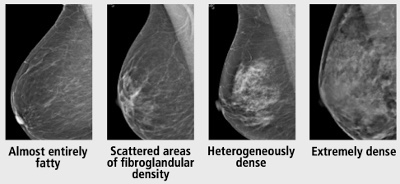
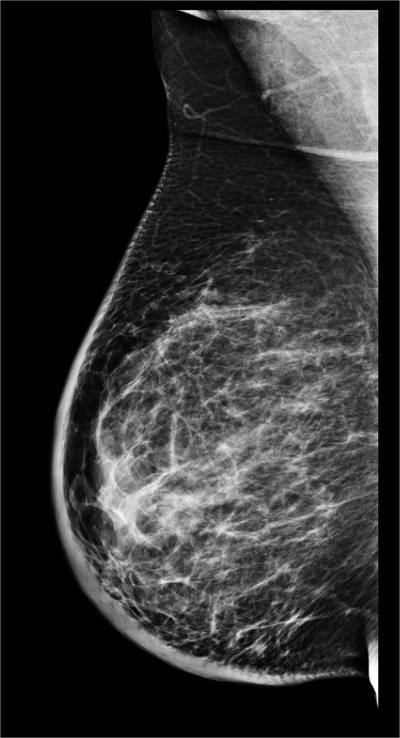
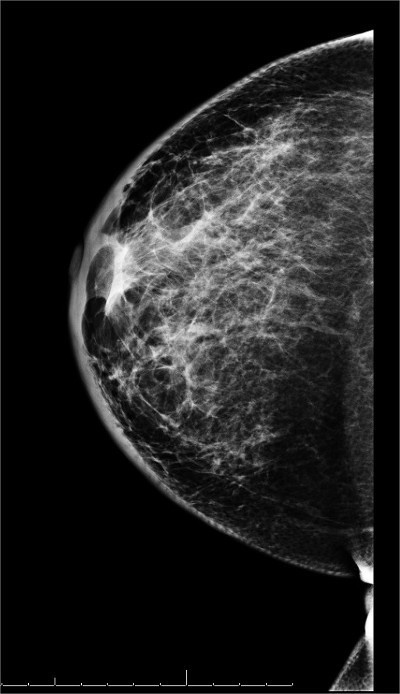
👉Debate on adjunct screening in women with dense breasts has resulted from legislation mandating that women be informed if their mammograms show dense breast tissue, including informing them that other screening modalities are available.
👉In addition to MRI and molecular imaging, both tomosynthesis and breast ultrasound are additional techniques for enhanced screening in patients with dense breasts.
👉Multiple studies have now shown significant benefits from the addition of tomosynthesis to conventional digital mammography alone in screening programs.
👉Ciatto et al. found an increase in detection rate of invasive breast cancer from 5.3/1000 to 8.1/1000, while also decreasing the recall rate by 17%.
👉Skaane et al. found a 40% increase in the detection of invasive cancers with a 15% reduction in false negatives.
👉Rose et al. and Haas et al. showed statistically significant relative reductions in recall rates of 37% and 30%, respectively.
👉A recent retrospective review of 454,850 examinations in 13 screening centers in the United States demonstrated a 41% increase in invasive cancer detection, a 15% reduction in call backs, and a 49% increase in the positive predictive value for recall.
👉Implementation of tomosynthesis did not lead to a significant reduction in biopsy rates as compared to digital mammography screening.
👉As yet, there are no data that show a reduction in mortality with enhanced screening in dense breasts.
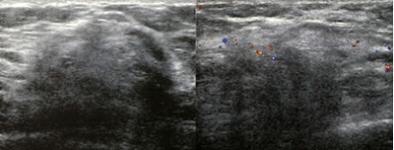
👉A prospective multicenter study compared tomosynthesis with bilateral physician hand-held ultrasound screening in 3231 asymptomatic patients with mammography-negative dense breasts.
– In all, 24 additional cancers were detected, 23 of which were invasive.
– Tomosynthesis detected 13 cancers, and ultrasound detected 23.
– These data suggest that even though tomosysthesis significantly increases the number of cancers found in dense breasts, in the hands of a skilled breast radiologist, ultrasound may be even better.
👉REFERENCES
- Ciatto S, Houssami N, Bernardi D, et al. Integration of 3D digital mammography with tomosynthesis for population breast-cancer screening (STORM): a prospective comparison study. Lancet Oncol. 2013;14:583-589.
- Friedewald SM, Rafferty EA, Rose SL, et al. Breast cancer screening using tomosynthesis in combination with digital mammography. JAMA. 2014;311:2499-2507.
- Haas BM, Kalra V, Geisel J, Raghu M, Durand M, Philpotts LE. Comparison of tomosynthesis plus digital mammography and digital mammography alone for breast cancer screening. Radiology. 2013;269:694-700.
- Rose SL, Tidwell AL, Bujnoch LJ, Kushwaha AC, Nordmann AS, Sexton R Jr. Implementation of breast tomosynthesis in a routine screening practice: an observational study. AJR Am J Roentgenol. 2013;200:1401-1408.
- Skaane P, Bandos AI, Gullien R, et al. Comparison of digital mammography alone and digital mammography plus tomosynthesis in a population-based screening program. Radiology. 2013;267:47-56.
- Tagliafico AS, Calabrese M, Mariscotti G, et al. Adjunct screening with tomosynthesis or ultrasound in women with mammography-negative dense breasts: interim report of a prospective comparative trial. J Clin Oncol. 2016 Mar 9. pii: JCO634147. [Epub ahead of print]
#Arrangoiz
#BreastSurgeon
#CancerSurgeon


