
👉Magnetic resonance imaging is more sensitive than mammography in detecting breast cancers, especially in dense breasts, although it suffers from low specificity.
👉This results in additional biopsies of lesions seen on MRI that were not visualized by mammogram or ultrasound.
👉In one study of patients who underwent preoperative MRI, 12% of the subjects required additional biopsies, and 25% of these were malignant (the vastm majorty were benign lesions).
👉The prospective Comparative Effectiveness of MRI in Breast Cancer (COMICE) trial randomized 1623 women with breast cancer who were considered appropriate breast conservation candidates to either undergo preoperative MRI or to proceed to surgery with no further imaging.
👉The study showed that patients were more likely to undergo mastectomy as the first operation if they had a preoperative MRI (7%) versus those who did not (1%).
👉Re-excision rates following partial mastectomy were the same in the two groups (10% vs 11%).
👉These results have been replicated by the MR mammography of nonpalpable breast tumours (MONET) trial as well as several retrospective reviews.
👉Some single-institution trials have shown that MRI can identify contralateral cancers in patients with breast cancer.
👉However, many of these contralateral lesions are ductal carcinoma in situ or small, low-grade neoplasms.
👉The fact that the rate of contralateral cancers discovered by MRI is higher than the rate of development of a second contralateral cancer leads to the question of whether these cancers are clinically relevant or whether systemic chemotherapy and endocrine therapy given for the primary tumor may treat this occult neoplasm.
👉There are mixed data as to whether MRI decreases the rate of contralateral breast cancer after patients are treated for their primary cancer.
👉To date, no studies have shown that MRI improves survival.
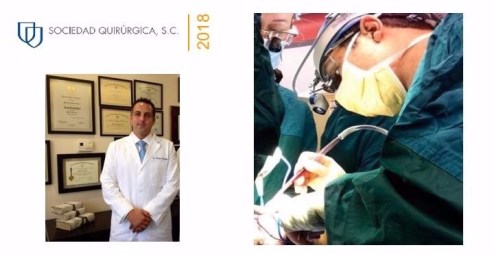
👉Rodrigo Arrangoiz MS, MD, FACS cirujano oncology y miembro de Sociedad Quirúrgica S.C en el America British Cowdray Medical Center en la ciudad de Mexico:
-
Es experto en el manejo del cáncer de mama.
Training:
• General surgery:
• Michigan State University:
• 2004 al 2010

• Surgical Oncology / Head and Neck Surgery / Endocrine Surgery:
• Fox Chase Cancer Center (Filadelfia):
• 2010 al 2012

• Masters in Science (Clinical research for health professionals):
• Drexel University (Filadelfia):
• 2010 al 2012

• Surgical Oncology / Head and Neck Surgery / Endocrine Surgery:
• IFHNOS / Memorial Sloan Kettering Cancer Center:
• 2014 al 2016


 Rodrigo Arrangoiz MS, MD, FACS, FSSO