
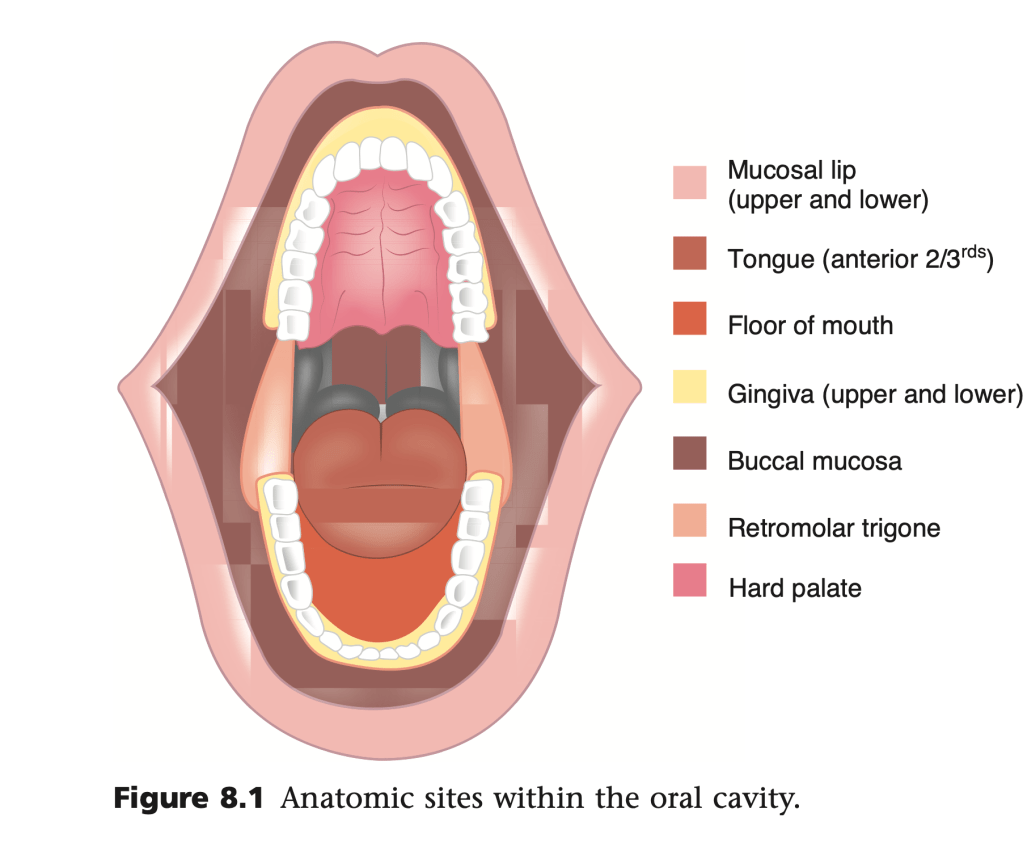
- The oral cavity represents the entrance to the upper aerodigestive tract:
- Which begins at the lips and ends at the anterior surface of the faucial arch
- It is lined by squamous epithelium:
- With interspersed minor salivary glands
- The oral cavity also contains the:
- Dentoalveolar structures with the upper and lower dentition
- The oral cavity is continuously exposed to inhaled and ingested carcinogens:
- Thus it is the most common site for the origin of malignant epithelial neoplasms in the head and neck region
- Known carcinogens for oral cavity carcinoma include:
- Those present in tobacco, alcohol, and betel nuts
- The association of human papilloma virus with oral cancer:
- Is not as well established as in oropharyngeal cancers
- Primary tumors of the oral cavity may arise from:
- The surface epithelium
- Minor salivary glands
- Submucosal soft tissues
- Lesions of dentoalveolar origin:
- Represent a unique group of neoplasms and cysts
- More than 90% of malignant tumors in the oral cavity are:
- Squamous cell carcinomas:
- The remainder are minor salivary gland carcinomas and other rare tumors
- Squamous cell carcinomas:
- Most patients with cancer in the oral cavity are men:
- Although the incidence of tongue cancer in women in the United States has progressively increased over the past several decades

 Rodrigo Arrangoiz MS, MD, FACS, FSSO