Blog

Hypofractionation Radiation Therapy

  • Hypofractionation:
    • Larger fraction size (600 to 800 cGy) compared with conventional fractionation (180 to 200 cGy)
    • Fractions delivered several days apart
    • Lower total dosage (2100 to 3200 cGy) than
      conventional fractionation (7000 cGy)
    • Shortened overall treatment duration
      compared with conventional fractionation
  • Hypofractionation:
    • Is the administration of high-dose-per-fraction (HDPF) radiation:
      • In which only one or two fractions are given per week
    • This technique has evolved for the treatment of malignant melanoma:
      • Which generally is perceived as being radioresistant
  • Conventional fractions of 200 cGy delivered 5 days a week:
    • Allow normal tissues and tumor cells to recover during the intervals between fractions
  • Experimental in vitro data have shown that malignant melanoma cells are better at repairing radiation-induced sublethal damage compared with other cells:
    • This finding may explain the long-standing notion that melanoma is intrinsically “radioresistant”
  • HDPF regimens:
    • Deliver higher doses of radiation per fraction (600 cGy twice a week or 800 cGy once weekly):
      • With the aim of overcoming the reparative capacity of the tumor cells by increasing the damage per fraction
  • In retrospective analyses, response rates have been shown to correlate with dose per fraction but not with the total dose delivered:
    • However, a prospective randomized trial (RTOG 83–05) found no therapeutic advantage in a comparison of HDPF (800 cGy once a week up to a total dose of 3200 cGy) and conventional fractionation (250 cGy daily, 5 days a week, for a total of 5000 cGy):
      • Although no therapeutic advantage was seen, the shorter delivery time of HDPF radiation allows earlier initiation of systemic therapies if applicable
  • Moderately hypofractionated radiation (225 cGy per fraction):
    • Has demonstrated superior results for early-stage larynx cancers treated with radiotherapy alone:
      • This is currently considered the standard of care in this setting
  • Additionally, a regimen commonly referred to as quad shot:
    • Which was originally developed for advanced pelvic tumors:
      • Is sometimes applied for palliation of tumors in the head and neck
    • This involves cycles of a 1480 cGy course of radiotherapy delivered in four fractions over the course of 2 days:
      • Which can be repeated multiple times over a period of weeks or months depending on the treatment response
      • Aside from the demonstrated efficacy of this regimen, it also allows significant advantages in terms of patient convenience in the palliative setting

Breast Cancer-Related Lymphedema (BCRL):

  • Breast cancer-related lymphedema (BCRL):
    • Has been a significant concern for breast cancer patients undergoing axillary surgery
  • The development of BCRL is associated with:
    • Significantly lower physical and psychosocial well-being and increased health care utilization
  • The risk of BCRL:
    • Is a function of the extent of axillary intervention:
      • Ranging from about 12% following a sentinel node biopsy to about 30% after an axillary lymph node dissection (ALND)
  • The highest risk of BCRL (51%) has been reported in patients with inflammatory breast cancer:
    • Who receive trimodality therapy (neoadjuvant taxane-containing chemotherapy, modified radical mastectomy, and adjuvant radiation):
      • Therefore, adjuvant radiotherapy is associated with an increased risk of BCRL
  • The value of routine screening for BCRL in patients at risk is controversial
  • There is growing evidence that subclinical lymphedema:
    • Defined as relative volume change of the affected arm of 5% to 10% compared to the baseline measurement:
      • Is strongly associated with the development of more symptomatic BCRL:
        • Which correlates with a relative volume change of greater than 10%
  • Consequently, identifying patients with subclinical lymphedema is a potential opportunity for early intervention and long-term improvement in quality of life
  • Furlan et al prospectively evaluated 85 breast cancer patients (n=40 had an ALND and n=45 had a sentinel node biopsy) by obtaining serial circumferential arm measurements preoperatively, then 1 month, 3, 6, 12, and 24 months after surgery:
    • Study results showed that the earliest signs of subclinical lymphedema were detected no sooner than the 6-month assessment, and those with subclinical lymphedema were promptly referred for decongestive therapy
  • An international randomized trial comparing bioimpedance spectroscopy (BIS) and tape measurement to detect subclinical lymphedema:
    • Showed that BIS had a higher sensitivity and was associated with an earlier referral for decongestive therapy
    • In the same study, earlier administration of decongestive therapy was associated with a lower risk of progression to symptomatic BCRL
    • The practical aspects of implementing BCRL screening with BIS versus tape measurements and other techniques warrant further study
  • References
    • Coriddi M, Kim LN, Haglich K, et al. The impact of lymphedema on patient-reported outcomes after breast reconstruction: a preliminary propensity score-matched analysis. Ann Surg Oncol. 2023;30(5):3061-3071. doi: 10.1245/s10434-022-12994-z
    • Cheville A, Lee M, Moynihan T, et al. The impact of arm lymphedema on healthcare utilization during long-term breast cancer survivorship: a population-based cohort study. J Cancer Surviv. 2020;14(3):347-355. doi: 10.1007/s11764-019-00851-0
    • Bucci LK, Brunelle CL, Bernstein MC, et al. Subclinical lymphedema after treatment for breast cancer: risk of progression and considerations for early intervention. Ann Surg Oncol. 2021;28(13):8624-8633. doi: 10.1245/s10434-021-10173-0
    • Farley CR, Irwin S, Adesoye T, et al. Lymphedema in inflammatory breast cancer patients following trimodal treatment. Ann Surg Oncol. 2022;29(10):6370-6378. doi: 10.1245/s10434-022-12142-7
    • Furlan C, Matheus CN, Jales RM, Derchain SFM, Bennini JR Jr, Sarian LO. Longitudinal, long-term comparison of single-versus multipoint upper limb circumference periodical measurements as a tool to predict persistent lymphedema in women treated surgically for breast cancer: an optimized strategy to early diagnose lymphedema and avoid permanent sequelae in breast cancer survivors. Ann Surg Oncol. 2021;28(13):8665-8676. doi: 10.1245/s10434-021-10290-w
    • Ridner SH, Dietrich MS, Boyages J, et al. A comparison of bioimpedance spectroscopy or tape measure triggered compression intervention in chronic breast cancer lymphedema prevention. Lymphat Res Biol. 2022;20(6):618-628. doi: 10.1089/lrb.2021.0084

Radiation Therapy in Head and Neck Cancer

  • A randomized study by the radiation therapy oncology group (RTOG) 90–03:
    • Evaluated the use of low-LET radiation alone
      with four fractionation schemes for the treatment of squamous cell carcinoma of the head and neck
    • Patients included in this trial underwent radiation therapy as a single modality, without the use of chemotherapy
    • The sites included the oral cavity, oropharynx, hypopharynx, and supraglottic larynx
    • The stages were limited to III and IV (with no distant metastases):
      • However, the base of the tongue and the hypopharynx subsites included stage II patients as well
    • The four arms were as follows:
      • Conventional fractionation:
        • The conventional fractionation schedule that entails use of 180 to 200 cGy per fraction
        • One fraction per day, 5 days per week for 6 to 7 weeks for a total dosage of 6500 to 7000 cGy has evolved empirically over many years
      • Hyperfractionation:
        • Hyperfractionation is preferred for slowly proliferating tumors
        • Hyperfractionation improves the therapeutic ratio primarily through:
          • Redistribution of tumor cells into more radiosensitive phases as a result of multiple fractions
          • Differential sparing of late-responding normal tissues because of a decrease in the size of the dose per fraction
        • Hyperfractionation:
          • Smaller fraction size (115 to 120 cGy) compared with conventional fractionation (180 to 200 cGy)
          • BID to TID fractionation
          • Larger total dosage (7440 to 8460 cGy) than conventional fractionation (7000 cGy)
          • Similar overall treatment duration as
            conventional fractionation
      • Accelerated fractionation with split:
        • Accelerated fractionation is the strategy of choice for rapidly proliferative tumors
        • Accelerated fractionation is based on the concept that the shortened overall treatment time would reduce the opportunity for accelerated repopulation effectively
        • Accelerated fractionation:
          • Similar fraction size as conventional fractionation (180 to 200 cGy)
          • BID to TID fractionation
          • Similar total dosage as conventional
            fractionation
          • Shortened overall treatment
            duration compared with conventional fractionation
      • Accelerated fractionation with a concomitant boost
  • The RTOG 90-03:
    • Had a significantly improved 2-year locoregional control and disease-free survival rate with:
      • Accelerated fractionation with a concomitant boost compared with conventional fractionation and accelerated fractionation with a split
    • Patients treated with hyperfractionation also had a trend toward improved results:
      • However, a phase III Groupe Oncologie Radiotherapie Tete et Cou cooperative trial did not show a benefit when altered fractionation was combined with chemotherapy
      • In fact, patients treated with accelerated fractionation with concurrent chemotherapy experienced more toxicities than did patients treated with conventional fractionation with concurrent chemotherapy
  • The RTOG 99-14 trial:
    • Asked the same question about whether chemotherapy given concurrently with concomitant boost radiation can further improve on locoregional control
    • Because of the encouraging preliminary results, RTOG 01-29 was conducted to answer the question of whether altered fractionation should be used in the setting of chemotherapy
    • The results of this two-arm prospective randomized trial of more than 700 patients was was reported:
      • Showing that when chemotherapy is given concurrently with radiation:
        • There is no added benefit of using altered fractionation compared with standard once-daily radiation
      • Furthermore, the long-term grade 3 to 4 late toxic effects of chemotherapy from RTOG 99-14 with concomitant boost radiation was extremely high at 42%
      • Gastrostomy tube dependence rates anytime during follow-up, at 1 year, and at 2 years were 83%, 41%, and 17%, respectively
      • However, it should be mentioned that these patients were treated with older, conventional nonconformal radiation techniques, such as Cobalt 60
      • Since the introduction of IMRT, which allows for significant reduction in radiation dose to normal tissues, treatment-associated toxicities have improved
  • Three randomized studies comparing conventional radiation technique versus IMRT for head and neck cancer:
    • Have indeed shown that there are lower late complications with IMRT
    • Furthermore, there is no evidence that IMRT causes compromise in locoregional control

Axillary Web Syndrome

  • Axillary web syndrome:
    • Appears to be a common complication following axillary surgery
    • It consists of the appearance of a visible web of axillary skin overlying palpable cords of tissue:
      • That are made taut and painful by shoulder abduction
    • These cords can result in painful abduction of the shoulder and reduced range of motion
    • It typically results from axillary lymphadenectomies for treatment of breast cancer or melanoma
    • In general, axillary web syndrome is poorly defined and misunderstood:
      • In a large systematic review:
        • The incidence ranged from 0.6% to 85.4%
      • Extent of surgery (number of nodes removed), low body mass index, and age have been reported as possible risk factors for development of this syndrome
      • Although smoking, receipt of neoadjuvant chemotherapy, and radiation may play a role in its development:
        • These factors have not been described in the literature
      • In the majority of cases:
        • Axillary web syndrome:
          • Appears to develop within 2 to 8 weeks of axillary surgery
      • Although patients generally do well with resolution of their symptoms:
        • Current evidence for the treatment of axillary web syndrome is insufficient to provide clear guidance for clinical practice
      • Suggested interventions have included:
        • Early education
        • Physiotherapy
        • Thermal therapy
        • Medications
        • Surgery
  • References:
  • Koehler LA, Haddad TC, Hunter DW, Tuttle TM. Axillary web syndrome following breast cancer surgery: symptoms, complications and management strategies. Breast Cancer. 2018;11:13-19.
  • Yeung WM, McPhail SM, Kuys SS. A systematic review of axillary web syndrome (AWS). J Cancer Surviv. 2015;9(4):576-598

Inflammatory Breast Cancer (IBC)

  • Inflammatory breast cancer (IBC ):
    • Is a clinical diagnosis characterized by:
      • The rapid progression of an enlarged breast with skin changes including:
        • Redness, edema, and peau d’orange
    • Skin punch biopsy:
      • Will demonstrate lymphovascular tumor emboli:
        • In approximately 75% of cases:
          • But the absence should not rule out a diagnosis
    • Staging scans, including a CT chest / abdomen / pelvis, PET scan, and / or bone scan:
      • Should be completed prior to initiating treatment
  • Inflammatory breast cancer:
    • Is a clinical stage T4d
    • It is the most fatal form of breast cancer:
      • Accounting for 7% of all breast cancer deaths:
        • Real-world observational data have demonstrated that inflammatory breast cancer has significantly worse survival compared to other non-metastatic locally advanced and metastatic non-inflammatory breast cancers
      • Despite this, 5-year survival of IBC patients has increased from:
        • 40% to 50% in the 1990’s to almost 70% in 2008
  • Recent national and international guidelines for IBC:
    • Recommend full staging:
      • PET / CT preferred over CT chest / abdomen / pelvis + bone scan and bilateral breast and axillary nodal imaging
    • Followed by neoadjuvant systemic therapy, modified radical mastectomy (including level I and II lymph node dissection), and radiation
    • Adjuvant targeted therapy and hormonal therapy should be considered in appropriate cases
    • Notably, lumpectomy is contraindicated, and breast reconstruction should be delayed
    • Multi-modal therapy for IBC has resulted in the best overall survival rates
  • For HER2-negative breast cancers:
    • Preoperative chemotherapy regimens should include sequential doxorubicin and cyclophosphamide followed by a taxane:
      • To achieve the highest pathologic complete response rate
  • For HER2-positive breast cancers:
    • Chemotherapy should be used with dual anti-HER2-directed therapy with pertuzumab and trastuzumab to achieve the best pathologic complete response rate
  • References
    • National Comprehensive Cancer Network. NCCN Clinical Practice Guidelines in Oncology. Breast Cancer. Available with login at: https://subscriptions.nccn.org.
    • Fouad TM, Barrera AMG, Reuben JM, Lucci A, Woodward WA, Stauder MC, et al. Inflammatory breast cancer: a proposed conceptual shift in the UICC-AJCC TNM staging system. Lancet Oncol. 2017;18(4):e228-e232.
    • Ueno NT, Espinosa Fernandez JR, Cristofanilli M, Overmoyer B, Rea D, Berdichevski F, et al. International consensus on the clinical management of inflammatory breast cancer from the Morgan Welch Inflammatory Breast Cancer Research Program 10th Anniversary Conference. J Cancer. 2018;9(8):1437-1447.
    • Rueth NM, Lin HY, Bedrosian I, Shaitelman SF, Ueno NT, Shen Y, et al. Underuse of trimodality treatment affects survival for patients with inflammatory breast cancer: an analysis of treatment and survival trends from the National Cancer Database. J Clin Oncol. 2014;32(19):2018-2024.

Pregnancy-Associated Breast Cancer

  • Pregnancy-associated breast cancer:
    • Is fortunately a rare entity:
      • In which breast cancer is diagnosed during the pregnancy or the first year after delivery
  • The surgical care of these patients is the same as non-pregnant patients:
    • Sentinel node biopsy:
      • Can safely be performed during pregnancy:
        • Therefore, axillary dissection is not warranted
      • However, only radioactive dye should be used
    • Patients can safely undergo breast-conserving surgery:
      • With radiation occurring after delivery
  • Anthracycline-based chemotherapy:
    • Is safe during the 2nd and 3rd trimester:
      • A study by Litton, et al:
        • Showed children exposed to chemotherapy in utero had normal development and the rate of congenital abnormalities were similar to national averages
  • Biologic and hormonal therapies:
    • Are contraindicated during pregnancy
  • While termination is not mandatory to allow treatment of the malignancy:
    • Close monitoring by an obstetrician experienced in high-risk pregnancies:
      • Is recommended to monitor the fetus and to determine the best time to complete chemotherapy to ensure that the patient does not deliver during a nadir, thus minimizing risk at the time of delivery
  • References:
    • Guidroz JA, Scott‐Conner CE, Weigel RJ. Management of pregnant women with breast cancer. J Surg Oncol. 2011;103(4):337-340.
    • Shah NM, Scott DM, Kandagatla P, et al. Young women with breast cancer: fertility preservation options and management of pregnancy-associated breast cancer. Ann Surg Oncol. 2019;26(5):1214-1224.
    • Murthy RK, Theriault RL, Barnett CM, et al. Outcomes of children exposed in utero to chemotherapy for breast cancer. Breast Cancer Res. 2014;16(6):500.
    • Shachar SS, Gallagher K, McGuire K, et al. multidisciplinary management of breast cancer during pregnancy. Oncologist. 2017;22(3):324–334. Erratum in: Oncologist. 2018;23(6):746.

Epidemiology of Thyroid Cancer

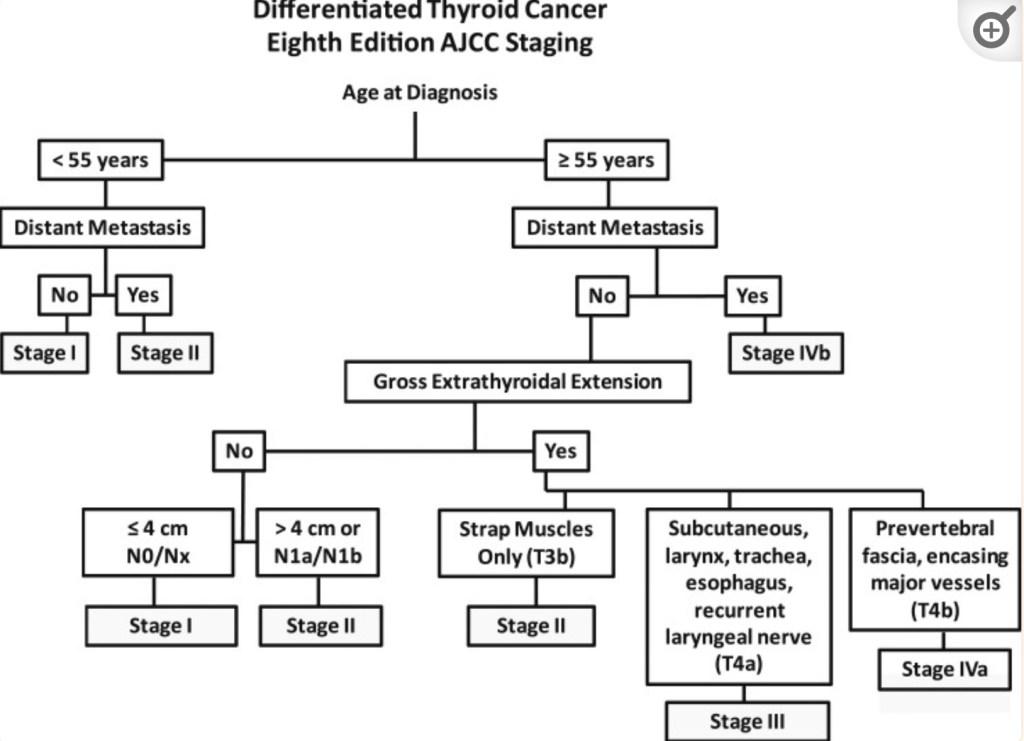
  • The incidence of thyroid cancer in the United States has tripled over the past three decades:
    • The majority of which is due to small papillary thyroid carcinomas:
      • This trend has also been noted in many other coun- tries across Europe, Asia, Oceania, and South America
  • The incidence is rising in both genders and across all age groups, including children and adolescents
  • Fortunately, in the United States, the incidence rates may be stabilizing, though it remains to be seen if the plateau will persist
  • Although the incidence of thyroid cancer has risen in recent times, PTC remains a relatively rare tumor:
    • Representing only 3.1% of all new cancer cases
    • It is estimated that 44, 020 new cases (2.2% of all the cancer cases) will be diagnosed in 2024, and 2,170 (0.4% of cancer deaths) deaths were attributed to thyroid cancer during this period
    • In spite of the recent upward trend in thyroid cancer incidence, mortality rates remain stable:
      • Suggesting a significant proportion of new cases represent overdiagnosis
      • Indeed, there is a large reservoir of undiagnosed disease:
        • With thyroid cancer identified in up to 36% of cases of autopsy studies:
          • A prevalence that is more than 1000-fold higher than the rates of disease that are clinically diagnosed in the general population
  • Further support of the role of increased diagnostic scrutiny in the uptrend is revealed by the numbers of small cancers detected:
    • 87% of newly diagnosed cancers are 2 cm or smaller
    • 49% are < 1 cm:
      • However, it should be noted that several studies have determined that thyroid cancers of all sizes are on the rise suggesting that overdiagnosis is not solely to blame for increased incidence

Should a Sentinel Lymph Node Biopsy be Performed During a Prophylactic Mastectomy?

👉 The rationale for performing sentinel lymph node biopsy (SLNB) is to have nodal staging in the event invasive carcinoma is identified pathologically in the breast that was removed prophylactically

👉 Multiple studies have reported that the chance of finding invasive disease in the surgical specimen with prophylactic mastectomy is less than 3%

👉 In a large series from the MD Anderson Cancer Center that included 436 prophylactic mastectomies, cancer was identified in 22 (5%) cases

👉 Of these, the majority of patients (14) had ductal carcinoma in situ

👉 Only eight patients (1.8%) had invasive cancer, with a mean tumor size of 5 mm

👉 The study included 23 patients with BRCA mutations, and no invasive cancers were identified in these cases

👉 Significantly increased risk of invasive cancer in the prophylactic mastectomy was seen in postmenopausal patients (3.7%; p=0.007), patients age greater than 60 years (7.5%; p=0.008), and patients with invasive lobular carcinoma (9.7%; p0.0002) or lobular carcinoma in situ (7.7%; p=0.008).

👉 A decision-analytic model was created by the same group to compare the risk / benefit ratio of routine SLNB for all prophylactic mastectomies compared to omitting SLNB and performing ALND only when invasive cancer is found in the breast

👉 The pertinent literature was reviewed to determine the chance of finding invasive cancer in a prophylactic mastectomy specimen and to estimate the chance of complications (lymphedema, paresthesias, decreased range of shoulder motion) with SNLB and ALND

👉 At a rate of finding invasive cancer of 1.9%, 73 SLNBs were required to avoid 1 ALND

👉 After reviewing the literature, the complication rate was estimated at 7% for SLNBs and 31% for ALND

👉 In one model scenario, the probability of complications per breast cancer detected was 9-fold greater with the SLNBs strategy than with the directed ALND strategy

👉 This model supported the decision to forego SLNB in most patients undergoing prophylactic mastectomy, given the large number of procedures required to benefit one patient

👉Rodrigo Arrangoiz MS, MD, FACS, FSSO cirujano oncólogo y cirujano de mamá  en Mount Sinai Medical Center en Miami:

  • Es experto en el manejo del cáncer de mama


👉Es miembro de la American Society of Breast Surgeons:

Training:

• General surgery:

• Michigan State University:

• 2004 al 2010

• Surgical Oncology / Head and Neck Surgery / Endocrine Surgery:

• Fox Chase Cancer Center (Filadelfia):

• 2010 al 2012

• Masters in Science (Clinical research for health professionals):

• Drexel University (Filadelfia):

• 2010 al 2012

• Surgical Oncology / Head and Neck Surgery / Endocrine Surgery:

• IFHNOS / Memorial Sloan Kettering Cancer Center:

• 2014 al 2016


#Arrangoiz

#Surgeon

#Cirujano

#SurgicalOncologist

#CirujanoOncologo

#BreastSurgeon

#CirujanodeMama

#CancerSurgeon

#CirujanodeCancer

Omitting Axillary Staging In Women Older Than 70 Years of Age with Early Stage ER+ Breast Cancer

  • The standard of care with respect to surgical management of early stage breast cancer with a clinically negative axilla:
    • Is to undergo axillary staging with sentinel lymph node mapping and biopsy (SLNM / SLNB)
  • In patients who are clinically node negative undergoing lumpectomy with SLNB:
    • A completion axillary lymph node dissection (ALND) is not required if one or two lymph nodes are positive:
      • These patients should go on to receive adjuvant therapy
    • Omission of ALND:
      • Does not lead to a difference in 10-year locoregional recurrence or overall survival
  • There is, however, a role for omission of axillary staging in elderly women:
    • Who are clinically node negative with ER+ tumors:
      • Particularly if co-morbidities are present
  • The Cancer and Leukemia Group B (CALBG) 9343 study:
    • Evaluated women ≥ 70 years of age who underwent lumpectomy for clinical T1, N0, ER+ breast cancer +/- adjuvant radiation (RT):
      • With tamoxifen (Tam) recommended for all patients
    • Of the 636 participants:
      • 404 (64%) did not undergo any initial axillary surgery
      • At 12-year follow-up:
        • There were no axillary recurrences among women who underwent initial axillary dissection
        • Among those who did not undergo axillary dissection:
          • There were no axillary recurrences in the Tam + RT group
          • Six of 200 in the Tam only group (3%) had axillary recurrences
  • The International Breast Cancer Study Group Trial 10-93:
    • Evaluated 473 patients with early stage breast cancer who were clinically node negative
    • Patients had a mean age of 74
    • The majority of patients were ER+
    • Patients were randomized to breast surgery +/- axillary dissection followed by endocrine therapy
    • Overall, 2% of patients had an axillary recurrence:
      • 1% of those with axillary surgery vs. 3% in patients without axillary surgery:
        • With no difference in disease-free and overall survival
  • Results from these and other studies recently led the Society of Surgical Oncology to release the Choosing WiselyÒ guidelines:
    • Recommending against routine use of SLNB in clinically node-negative women ≥70 years of age with hormone positive cancer
    • Hormonal therapy:
      • Is typically recommended for patients with hormone receptor positive disease
    • Omission of SLNB in clinically node-negative women ≥70 years of age treated with hormonal therapy:
      • Does not result in a significantly increased rate of locoregional recurrence and does not impact breast cancer mortality:
        • Thus, although axillary staging with SLNB continues to be the standard of care, omission of axillary staging can be considered in some patients ≥70 years of age with early stage, clinically node-negative, hormone receptor positive breast cancer
  • References:
    • Giuliano AE, Ballman K, McCall L, et al. Locoregional recurrence after sentinel lymph node dissection with or without axillary dissection in patients with sentinel lymph node metastases: long-term follow-up from the American College of Surgeons Oncology Group (Alliance) ACOSOG Z0011 randomized trial. Ann Surg. 2016;264(3):413-420.
    • Giuliano AE, Ballman KV, McCall L, et al. Effect of axillary dissection vs no axillary dissection on 10-year overall survival among women with invasive breast cancer and sentinel node metastasis: the ACOSOG Z0011 (Alliance) Randomized Clinical Trial. JAMA. 2017;318(10):918-926.
    • Hughes KS, Schnaper LA, Bellon JR, et al. Lumpectomy plus tamoxifen with or without irradiation in women age 70 years or older with early breast cancer: long-term follow-up of CALGB 9343. J Clin Oncol. 2013;31(19):2382-2387.
    • International Breast Cancer Study Group: Randomized trial comparing axillary clearance versus no axillary clearance in older patients with breast cancer: first results of International Breast Cancer Study Group Trial 10-93. J Clin Oncol.2006;24(3):337-344.
    • Society of Surgical Oncology. Five things physicians and patients should question. Choosing Wisely website. Released July 12, 2016; updated June 20, 2019. http://www.choosingwisely.org/societies/society-of-surgical-oncology. Accessed August 25, 2019.

Choosing Wisely Guidelines and Supporting Studies for Omitting Sentinel Lymph Node Mapping and Sentinel Lymph Node Biopsy in Breast Cancer Patients Over 70 Years of Age

  • Improvements in adjuvant therapy for breast cancer:
    • Have allowed surgeons to perform less aggressive surgical procedures safely
  • Axillary staging in women with hormone-positive (HR+) breast cancer (BC) and clinically negative lymph nodes has evolved from upfront axillary lymph node dissection (ALND) to sentinel lymph node mapping an biopsy (SLNM / SLNB):
    • Landmark trial NSABP-32:
      • Demonstrated no difference in survival or locoregional control in patients who received ALND compared to SLNB:
        • Thereby propelling SLNM / SLNB as the gold standard for axillary evaluation in patients with negative clinical axillae
  • Although more slowly adopted, de-escalating axillary surgery by omitting SLMN / SLNB:
    • Has been shown to be safe in selected patient populations such as:
      • Older women with early-stage HR+ tumors
  • In Western countries:
    • Nearly a third of breast cancers (BCs) occur in patients over 65:
      • With the greatest incidence in women aged 75 to 79
  • Given the central role of surgery:
    • The question arises as to whether the surgical evaluation of the axilla is necessary for older patients with early BC and clinically negative axillary nodes
  • The American Board of Internal Medicine Foundation:
    • Launched a national initiative called Choosing Wisely to prompt provider discussion about the appropriate use of tests, treatments, and procedures based on evidence-driven medicine
    • In conjunction with the Society of Surgical Oncology in 2016:
      • Recommendations were released:
        • The first recommendation stated “Don’t routinely use sentinel node biopsy in clinically node-negative women ≥70 years of age with early-stage hormone receptor-positive, HER2 negative invasive breast cancer”:
        • This recommendation was based on several prospective trials highlighting that SLNB had no impact on locoregional recurrence or breast-cancer-specific mortality (BCSS)
  • One such trial was conducted by Martelli et al evaluating the long-term safety of no axillary surgery for patients > 70 years old with operable BC and negative clinical axillae who received adjuvant endocrine therapy:
    • This study found that axillary surgery did not increase overall survival (OS) or BCSS over 5 years
    • The cumulative 15-year incidence of axillary disease:
      • Remained low at 5.8% and 3.7% for T1 patients who received ALND compared to those who did not
    • Martelli et al concluded there was:
      • No benefit to axillary surgery for older patients with node-negative early BC who received BCS with adjuvant endocrine therapy
  • Similarly, Chung et al evaluated the safety of SLNB omission in women >70 years old with T1 to T2 tumors:
    • The 5-year OS was 70%:
      • Whereas BCSS was 96%:
        • Ischemic heart disease was the most common cause of death
    • The authors also found that adjuvant therapy was less likely to be offered regardless of nodal status, indicating that nodal status did not influence care:
      • As patients were more likely to die from causes other than BC
  • The IBCSG 10-93 trial:
    • Assessed whether omitting axillary surgery in older people would improve quality of life (QOL) with equivalent disease-free survival (DFS) and OS:
      • A total of 473 women received primary breast surgery with adjuvant tamoxifen and were randomly assigned to receive or omit axillary staging
      • Adverse QOL effects from axillary surgery were evident early in the postoperative period but dissipated 6 to 12 months after surgery
      • At the 6-year follow-up:
        • There was no difference in DFS or OS
      • The investigators concluded that the omission of axillary surgery corresponded with improved early QOL without differences in DFS or OS
  • CALGB 9343:
    • Which addressed the need for adjuvant radiation after a lumpectomy in early-stage HR+ BC in older people, included a small subset of patients who received no axillary surgery or radiation:
      • In this patient cohort, only 3% developed ipsilateral axillary recurrence compared to no recurrences in patients who received radiation without axillary staging
      • Due to low axillary recurrence among those who had omitted nodal surgery and radiotherapy:
        • Authors surmised SLNB might be safely omitted in this population
  • Application of Choosing Wisely in clinical practice:
    • After releasing the Choosing Wisely recommendation, Welsh et al sought to develop a risk stratification model to facilitate guideline adoption for patients at low risk for nodal positivity
    • Using the National Cancer Database data from 2010 to 2013, a total of 71,834 patients met the criteria for SLNB omission
    • The pathologic nodal positivity rate for patients with axillary staging was 15.3%
    • Welsh et al classified low-risk patients as those with:
      • Grade 1 less than 2 cm tumors or grade 2 less than 1 cm tumors:
        • Translating to a nodal positivity rate of 7.8% compared to 22.3% among patients who did not meet low-risk criteria
      • The authors concluded that SLNB might be safely omitted in older patients with:
        • Grade 1 cT1mi to T1c HR+ tumors
        • Grade 2 cT1mi to T1b HR+ tumors
Algorithm for omission of sentinel lymph node biopsy in older people. HR+, hormone receptor positive; SLN, sentinel lymph node; y.o., years old.
  • Moorman explored the utility of a nomogram to aid decision-making for SLNB omission:
    • Presenting a model with an excellent predictive value that can select one-third of patients in whom SLNB is deemed unnecessary because of a less than 5% chance of nodal involvement
  • Similar nomograms have been adopted by MSKCC and the Mayo Clinic to predict the likelihood of nodal positivity
  • Additionally, the ongoing prospective Sentinel Node Vs Observation After Axillary Ultra-souND trial:
    • Examines the safety of SNLB omission in patients of any age with T1 tumors and clinically, radiographically negative axillae without prior systemic treatment:
      • This trial will clarify the safety of SNLB omission in patients with small tumors while examining the effects on adjuvant treatment and quality of life
  • Adherence to Choosing Wisely
    • Several investigators have demonstrated the slow implementation of Choosing Wisely campaign in clinical practice
    • For example, Wang et al examined 4 low-value BC operations identified through the Choosing Wisely campaign before and after evidence demonstrated that each procedure was unnecessary:
      • The retrospective cohort study using the National Cancer Database registry, which included 1,500 facilities across the United States, examined a total of 920,256 women with a median age of 63 years diagnosed with BC between 2004 and 2016 and identified 4 low-value BC operation cohorts: ALND, lumpectomy margin reoperation, contralateral prophylactic mastectomy, and SLNB
      • Although ALND and margin re-excision surgeries decreased during the study period, rates of contralateral prophylactic mastectomy and SLNB in older women increased
      • Academic research programs and high-volume facilities demonstrated the greatest reduction in use, indicating that facility-level characteristics were associated with the use of low-value BC operations
    • This was further corroborated by Armani et al, whose survey showed that although academic centers were more likely to practice according to national guidelines, adherence overall was low
    • Tonneson et al identified a group of women at low risk of nodal positivity where SLNB may be omitted (grade 1, cT1mi-T1c, or grade 2, cT1mi-T1b) and evaluated the impact of SLNB omission by performing a retrospective chart review of women aged ≥70 years with HR+ node-negative BC at the Mayo Clinic between 2010 and 2020 and compared SLNB use before (2010–2016) and after (2017–2020) the Choosing Wisely guideline release according to clinical risk and the association with adjuvant therapy:
      • This group found that the SLNB surgery rate significantly decreased from 90.6% (2010–2016) to 62.8% in 2020 (P < .001) and that this was driven by BCS with SLNB rates of 88.2% (2010–2016) and 46.7% in 2020
  • In conclusion, the safety and efficacy of the omission of SLNB with ER+ BC in older people continues to be studied:
    • Choosing Wisely states that routine SLNB should not be performed in this population, acknowledging that a subset of patients is low risk and may be spared the morbidity of axillary staging
  • Ongoing research continues to identify these low-risk populations while improving adherence to Choosing Wisely guidelines to prevent overtreatment in the rest of this cohort