Blog

Sentinel Lymph Node Biopsy in Thin Melanoma

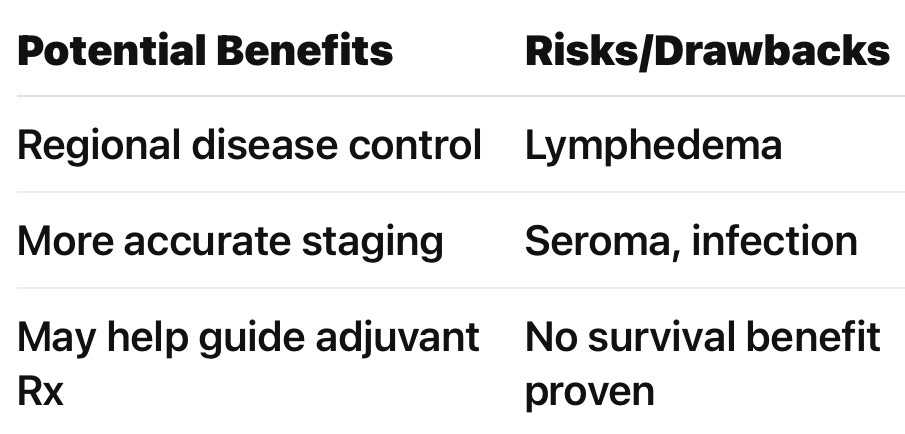
  • The American Joint Committee on Cancer (AJCC) staging system (8th Edition) for thin melanomas (less than or equal to 1 mm):
    • Includes both tumor thickness and ulceration as distinguishing features of a stage 1a and stage 1b melanoma
  • The American Society of Clinical Oncology (ASCO) and the Society for Surgical Oncology (SSO) jointly developed evidence-based recommendations for the use of SLN biopsy for patients with melanoma:
    • The guidelines note that SLN biopsy is recommended for:
      • All patients with intermediate-thickness melanomas (between 1 and 4 mm):
        • Studies have shown that SLN biopsy is useful for identifying nodal metastases in these patients:
          • Who account for about one-third of all melanoma cases
        • SLN biopsy detects cancer in the sentinel nodes in about:
          • 18% to 26% of patients
      • The majority of melanomas are thin (1 mm thick) and usually can be cured simply by wide local excision of the primary tumor:
        • The incidence of tumor-positive SLN biopsy among patients with thin melanomas is approximately 5%
        • Although SLN biopsy is not necessary in most cases:
          • The guideline recommendations note that it should be discussed and considered for selected patients with:
            • Thin melanomas (0.8mm to 1mm)
            • Those with melanomas < 0.8mm and possess high-risk factors:
              • Such as:
                • Ulceration
                • A mitotic rate of 1/ mm2
  • Wong et al:
    • Evaluated the results of SLN biopsy in 223 patients with thin melanomas and found nodal metastasis to be uncommon among patients with:
      • Melanomas less than 0.75 mm thick
      • Less than Clark level IV
  • References:
    • Wong SL, Faries MB, Kennedy EB, et al. Sentinel lymph node biopsy and Management of Regional Lymph Nodes in Melanoma: American Society of Clinical Oncology and Society of Surgical Oncology Clinical Practice Guideline Update. J Clin Oncol. 2018;36:399-413.
    • Wong SL, Brady MS, Busam KJ, Coit DG. Results of sentinel lymph node biopsy in patients with thin melanoma. Ann Surg Oncol.;2006;13:302-309.

Breast Cancer Radiation: Tumor Boast

  • A tumor bed boost has consistently been shown to reduce rates of local recurrence in patients undergoing breast-conserving surgery:
    • However, limited data have been available for patients with ductal carcinoma in situ (DCIS)
  • Moran et al. retrospectively evaluated 4,131 patients with DCIS:
    • Finding that the addition of a tumor bed boost:
      • Reduced ipsilateral breast tumor recurrences, with the benefit being:
        • 0.8% at 5 years
        • 1.6% at 10 years
        • 3.6% at 15 years
  • The American Society for Radiation Oncology (ASTRO) has published guidelines on the use of a tumor bed boost following whole-breast irradiation:
    • It is important to note that the range of boost doses depend on surgical margins following lumpectomy
  • References
    • Bartelink H, Maingon P, Poortmans PM, et al. Whole-breast irradiation with or without a boost for patients treated with breast-conserving surgery for early breast cancer: 20-year follow-up of a randomised phase 3 trial. Lancet Oncol. 2015;16(1):47-56.
    • Romestaing P, Lehingue Y, Carrie C, et al. Role of a 10-Gy boost in the conservative treatment of early breast cancer: results of a randomized clinical trial in Lyon, France. J Clin Oncol. 1997;15(3):963-968.
    • Moran MS, Zhao Y, Ma S, et al. Association of radiotherapy boost for ductal carcinoma in situ with local control after whole-breast radiotherapy. JAMA Oncol.2017;3(8):1060-1068.
    • Smith BD, Bellon JR, Blitzblau R, et al. Radiation therapy for the whole breast: Executive summary of an American Society for Radiation Oncology (ASTRO) evidence-based guideline. Pract Radiat Oncol. 2018;8(3):145-152.
    • Morrow M, Van Zee KJ, Solin LJ, et al. Society of Surgical Oncology-American Society for Radiation Oncology-American Society of Clinical Oncology consensus guideline on margins for breast-conserving surgery with whole breast irradiation in ductal carcinoma in situ. Pract Radiat Oncol. 2016;6(5):287-295.

Pathology in Cutaneous Melanoma

  • An experienced dermatopathologist is an important member of the multidisciplinary melanoma team:
    • That contributes to the accurate diagnosis and staging of patients with melanoma
  • It is my practice to have outside biopsies reviewed by our pathology staff upon referral to confirm diagnosis
  • Although the pathologic analysis primarily consists of microscopic examination of hematoxylin- and eosin-stained tumor:
    • Several melanocytic cell markers may also be useful to confirm the diagnosis
    • Two antibodies that have been widely used in immunohistochemical evaluations are:
      • S-100 and HMB-45:
        • S-100 is expressed not only by more than 90% of melanomas:
          • But also by several other tumors and some normal tissues, including dendritic cells
        • In contrast, the monoclonal antibody HMB-45:
          • Is relatively specific (yet not as sensitive) for proliferative melanocytic cells and melanoma
          • It is therefore often used as a confirmatory stain when the diagnosis of melanoma is being considered
      • Anti–MART-1 staining has also been shown to be very useful in the diagnosis of melanoma:
        • Antityrosinase and Sox10 may also be used
      • The major histomorphologic components that should be included in a primary melanoma pathology report include:
        • Breslow thickness
        • Ulceration status
        • Peripheral and deep margin status
        • Mitotic rate:
          • Using the dermal hot spot approach with units of mitoses per mm2
        • Other features that are often also recorded include:
          • Presence of microsatellites
          • Histologic subtype
          • Lymphovascular invasion
          • Tumor-infiltrating lymphocytes (TIL)
          • Regression
          • Neurotropism
          • Growth phase
          • The absence of epidermal component:
            • As the latter may represent an uncommon dermal primary or a metastatic deposit
  • The major histomorphologic types of melanoma:
    • Superficial spreading melanomas:
      • Constitute the majority of melanomas:
        • Approximately 70% of melanomas
      • Generally arise in a pre-existing nevus
  • Nodular melanomas:
    • Are the second most common type:
      • 15% to 30% of melanoma
    • Nodular melanomas progress to invasiveness more quickly than other types:
      • However, when depth of the melanoma is controlled for:
        • Nodular melanomas are generally associated with the same prognosis as other lesions:
          • Although at least one recent study suggests that a thin (T1) nodular melanoma may be associated with worse prognosis than T1 superficial spreading-type melanoma
  • Lentigo maligna melanomas:
    • Constitute a small percentage of melanomas:
      • 4% to 10%
    • These lesions occur in sun-exposed areas
    • Lentigo maligna melanomas are classically located on:
      • The faces of older white women
    • In general, lentigo maligna melanomas are:
      • Large (> 3 cm at diagnosis)
      • Flat lesions
      • Are uncommon in individuals younger than 50 years
    • Given their often-ill-defined appearance:
      • Margin control can sometimes be challenging at the time of wide excision
  • Acral lentiginous melanomas:
    • Occur on the palms (palmar), soles (plantar), or beneath the nail beds (subungual):
      • Although not all palmar, plantar, and subungual melanomas:
        • Are acral lentiginous melanomas
    • These melanomas account for only 2% to 8% of melanomas in white patients:
      • But for a substantially higher proportion of melanomas (35% to 60%) in darker-skinned patients
    • They are often large:
      • With an average diameter of approximately 3 cm
    • Their clinical extent at the primary site may be difficult to define, and scouting biopsies are sometimes employed to facilitate clinical assessment of the extent of disease
  • Amelanotic melanomas:
    • Are relatively uncommon melanomas that occur without pigmentation changes
    • They are often more difficult to diagnose because of their lack of pigmentation
    • Factors such as:
      • Change in size
      • Asymmetry
      • Irregular borders may suggest malignancy and prompt a biopsy, but delays in diagnosis may sometimes be observed
  • While melanoma has been traditionally described using these categories:
    • Prognosis is more dependent upon staging than by these histomorphologic types
#Arrangoiz #CancerSurgeon #HeadandNeckSurgeon #SurgicalOncologist #Melanoma #SkinCancer #MSMC #MountSinaiMedicalCenter

Boost Radiation Therapy after Breast Conserving Surgery

Boost radiation therapy is an additional dose of radiation delivered to the tumor bed after whole-breast irradiation (WBI) in patients who undergo breast-conserving surgery (BCS). The goal is to reduce local recurrence rates. The decision to give a boost is typically based on patient-specific risk factors.

Indications for Boost Radiation after BCS

1. Age < 50 years (especially < 40 years)

Data: The EORTC 22881–10882 trial (Bartelink et al., 2001; 2007 update) Population: 5,318 women with stage I/II breast cancer who received BCS + WBI (50 Gy) ± boost (16 Gy). Results: 10-year local recurrence (LR): Without boost: 10.2% With boost: 6.2% (Absolute reduction: 4%, p < 0.0001) Age stratification: < 40 years: LR reduced from 24% to 14% with boost (10% absolute benefit) 41–50 years: LR reduced from 11.7% to 6.4% (5.3% absolute benefit) 50 years: Less pronounced benefit

2. Positive or Close Surgical Margins

Rationale: Tumor cells may remain near the excision cavity, increasing recurrence risk. Guideline Support: NCCN recommends a boost for positive margins (even if re-excised) or if final margins are close, particularly in young patients.

3. High-Grade Tumors (Grade 3)

Data: High-grade tumors are more biologically aggressive and associated with higher LR rates. Boost helps reduce recurrence in these patients, especially when combined with other risk factors (young age, close margins).

4. Lymphovascular Invasion (LVI)

LVI is a marker for higher local and regional recurrence risk. While not an absolute indication, it adds weight to the decision in a patient with other risk factors.

5. Extensive Intraductal Component (EIC)

Especially in younger patients, an EIC increases the risk of residual disease and LR.

6. Triple-negative or HER2-positive subtypes (in younger patients)

While molecular subtype alone isn’t a formal indication for boost, aggressive biology may influence the decision when combined with other features (e.g., young age, LVI, close margins).

Guidelines

ASTRO 2016: Endorses boost in patients <50 years or with high-risk features. NCCN 2024: Recommends consideration of boost based on age, margin status, histology, grade, and LVI.

Clinical Takeaway

Boost radiation significantly reduces local recurrence in high-risk patients following breast-conserving surgery. The greatest benefit is seen in younger women and those with adverse pathological features.

Let me know if you’d like a one-slide summary for a presentation.

Diagnosis of Melanoma

  • The choice of biopsy technique:
    • Varies according to the anatomical site as well as the size and shape of the lesion
  • Particular attention should be placed on the impact of the biopsy:
    • On definitive surgical treatment
  • Either an excisional biopsy or an incisional biopsy using a scalpel or punch is acceptable
  • Punch biopsies can be performed for most lesions:
    • They should generally be performed at the most raised or darkest area of the lesion to sample the most aggressive area of the potential melanoma
  • Full-thickness biopsy into the subcutaneous tissue:
    • Should be performed to ensure accurate staging of the lesion
  • An excisional biopsy allows the pathologist to accurately determine the thickness of the lesion, since the entire lesion is available for evaluation:
    • Excisional biopsies should be performed when the lesion is too large for a punch:
      • But still can be removed without excessive surgical intervention
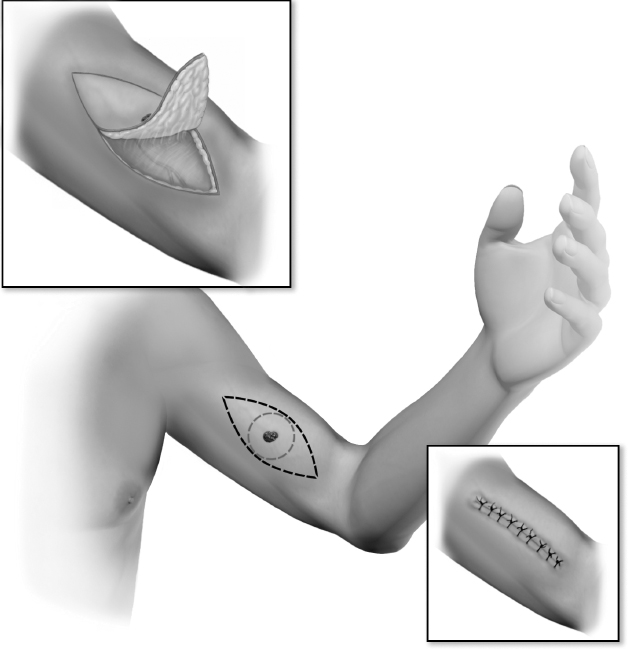
    • For excisional biopsies, a narrow margin of normal-appearing skin (1 to 2 mm) is generally taken with the specimen:
      • An elliptical incision is often used to facilitate closure
      • The biopsy incision should be oriented to facilitate later wide excision (e.g., axially on extremities) and minimize the need for a skin graft to provide wound closure at the time of wide excision
  • Shave biopsy:
    • Is generally discouraged if a diagnosis of melanoma is being considered since incomplete assessment of tumor thickness may result if the deep margin is not cleared
    • If a shave biopsy is performed, a deep shave /saucerization is preferable to obtain full-thickness biopsy of the suspect lesion
  • In general, I submit all pigmented lesions for permanent section examination and perform definitive surgery later
  • I generally prefer image-guided fine-needle aspiration or core biopsy as an initial diagnostic maneuver to document nodal or other melanoma metastases, but not to diagnose primary melanomas

Diagnosis of Cutaneous Melanoma

  • The choice of biopsy technique:
    • Varies according to the anatomical site as well as the size and shape of the lesion
  • Particular attention should be placed on the impact of the biopsy on definitive surgical treatment
  • Either an excisional biopsy or an incisional biopsy using a scalpel or punch is acceptable
  • Entire removal of the lesion is generally preferred to allow for accurate pathologic evaluation
  • Punch biopsies:
    • Can be performed for most lesions:
      • Generally, they can be performed when lesions are located on areas where maximum preservation of surrounding skin is important, or can be completely excised with a punch
    • Punch biopsies:
      • Should be performed at the most raised or darkest area of the lesion to sample the most aggressive area of the potential melanoma
  • Full-thickness biopsy:
    • Into the subcutaneous tissue should be performed to ensure accurate staging of the lesion
  • An excisional biopsy:
    • Allows the pathologist to accurately determine the thickness of the lesion, since the entire lesion is available for evaluation
  • Excisional biopsies:
    • Should be performed when the lesion is too large for a punch but still can be removed without excessive surgical intervention
  • For excisional biopsies:
    • A narrow margin of normal-appearing skin (1 to 3 mm) is taken with the specimen
  • An elliptical incision:
    • Is often used to facilitate closure
  • The biopsy incision should be oriented to facilitate later wide excision (e.g., axially on extremities) and minimize the need for a skin graft to provide wound closure at the time of wide excision
  • Shave biopsy:
    • Is generally discouraged if a diagnosis of melanoma is being considered since incomplete assessment of tumor thickness may result if the deep margin is not cleared
    • If a shave biopsy is performed:
      • A deep shave is preferable
  • In general, I submit all pigmented lesions for permanent section examination and perform definitive surgery at a later time
  • I generally prefer image-guided fine-needle aspiration biopsy as an initial diagnostic maneuver to document nodal or other melanoma metastases:
    • But not to diagnose primary melanomas
Excisional Biospy
Punch Biopsy

#Arrangoiz #CancerSurgeon #Teacher #HeadandNeckSurgeon #SurgicalOncologist #SkinCaner #Melanoma #PunchBiospy #MSMC #Mount SinaiMedicalCenter

Clinical Presentation of Cutaneous Melanoma

  • Clinical features of melanoma often include:
    • Variegated color
    • Irregular raised surface
    • Irregular perimeter
  • A biopsy should be performed on a:
    • Pigmented lesion that changes in size, configuration, or color
  • The so-called ABCDEs are a mnemonic device to help clinicians and laypersons remember potential early signs of melanoma:
    • A denotes lesion asymmetry
    • B border / surface irregularity
    • C color variegation
    • D diameter greater than 6 mm
    • E a lesion that is elevating, evolving, or enlarging
  • When a patient presents with a lesion suggestive of melanoma, in addition to biopsy:
    • A thorough physical examination must be performed:
      • With particular emphasis on the skin (including the scalp, interdigit webspace, and intertriginous areas), nodal basins, and subcutaneous tissues
  • Clinical Features:
    • Appearance:
      • Melanomas typically present as pigmented lesions, often with irregular borders and color variations
      • They can be black, brown, tan, or even red, white, or blue
      • Amelanotic melanomas:
        • Which lack pigment, can appear pink or flesh-colored, making them more challenging to diagnose
    • ABCDE Criteria:
      • The American Cancer Society recommends using the ABCDE criteria for early detection:
        • Asymmetry:
          • One half of the mole does not match the other
        • Border:
          • Edges are irregular, ragged, notched, or blurred
        • Color:
          • Color is not uniform and may include shades of brown, black, pink, red, white, or blue
        • Diameter:
          • The spot is larger than 6 mm across (about the size of a pencil eraser), although melanomas can be smaller
        • Evolving:
          • The mole is changing in size, shape, or color
  • References:

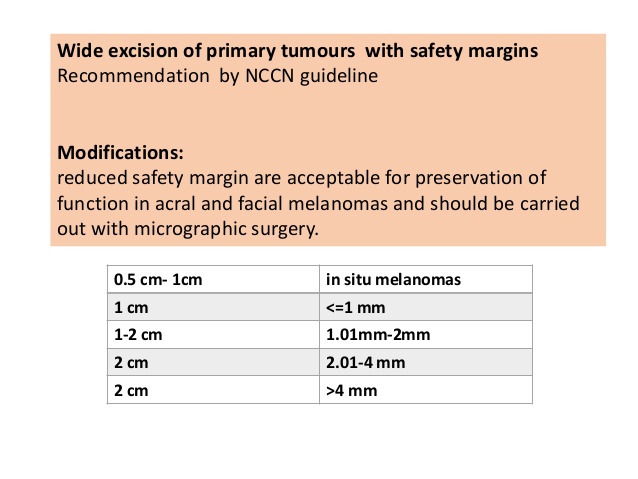
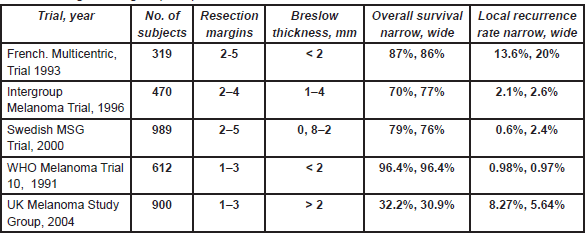
Surgical Margins in Cutaneous Melanoma: Summary of the Six Major Randomized Trials

  • WHO Melanoma Trial No. 10 (1988):
    • Citation:
      • WHO Melanoma Programme. Lancet. 1988
    • Population:
      • 612 patients with melanomas ≤ 2 mm
    • Arms:
      • 1 cm vs 3 cm surgical excision margins
    • Results:
      • No significant difference in:
        • Local recurrence (LR):
          • ~ 2.3% (1 cm) vs ~2.2 % (3 cm)
        • Overall survival (OS):
          • Similar in both groups
        • Complication rates:
          • Similar
    • Conclusion:
      • 1 cm margins are safe and adequate for melanomas ≤ 1 mm in thickness
      • Wider excisions did not improve outcomes
  • Swedish Melanoma Study Group Trial (1996):
    • Citation:
      • Ringborg U, et al. Cancer. 1996.
    • Population:
      • 989 patients with melanomas 0.8 to 2.0 mm
        • Arms:
      • 2 cm vs 5 cm margins
      • Results:
        • No significant difference in:
          • LR:
            • 3.8% (2 cm) vs 3.6% (5 cm)
          • OS:
            • 65% (2 cm) vs 68% (5 cm) at 10 years
        • Higher rates of skin grafting and wound complications in the 5 cm group
      • Conclusion:
        • 2 cm margins are sufficient
        • 5 cm excision is excessive, with no survival benefit but increased morbidity
  • UK Melanoma Study Group Trial (2004):
    • Citation:
      • Thomas JM, et al. Lancet. 2004.
    • Population:
      • 900 patients with melanomas > 2 mm
    • Arms:
      • 1 cm vs 3 cm margins
    • Results:
      • Local recurrence:
        • 4.6% (1 cm) vs 1.2% (3 cm), p < 0.01
      • 5-year melanoma-specific survival:
        • 65% (1 cm) vs 69% (3 cm), not statistically significant
      • More wound closure problems and skin grafts in the 3 cm group
    • Conclusion:
      • 1 cm margins are inadequate for thick melanomas (> 2 mm)
      • 3 cm margins reduce local recurrence, but without a survival benefit
  • French Cooperative Group Trial (2002, updated 2007):
    • Citation:
      • Veronesi U, et al. NEJM. 2002; Gallardo A, et al. J Clin Oncol. 2007.
    • Population:
      • 742 patients with melanomas > 2 mm
    • Arms:
      • 2 cm vs 5 cm margins
    • Results:
      • LR:
        • 3.7% (2 cm) vs 3.3% (5 cm)
      • Melanoma-specific survival at 10 years:
        • 67% (2 cm) vs 65% (5 cm)
      • Skin grafting more frequent in the 5 cm group
    • Conclusion:
      • 2 cm margins are equivalent to 5 cm margins for thick melanomas
      • 5 cm offers no additional benefit but increases morbidity
  • Intergroup Melanoma Surgical Trial (US, 2001):
    • Citation:
      • Balch CM, et al. Ann Surg Oncol. 2001
    • Population:
      • 740 patients with melanomas 1 to 4 mm thick
      • Arms:
        • 2 cm vs 4 cm margins
      • Results:
        • LR:
          • 1.3% (2 cm) vs 0.9% (4 cm), not significant
        • DFS and OS:
          • No significant difference
        • More skin grafting and delayed healing in the 4 cm group
    • Conclusion:
      • 2 cm margins are sufficient for melanomas 1 to 4 mm in thickness
      • 4 cm margins do not improve outcomes and increase surgical morbidity
  • MelMarT Pilot Trial (2016; Full Results Pending)
    • Citation:
      • Haydu L, et al. Ann Surg. 2016
    • Population:
      • 400 patients with melanomas > 1 mm (pilot phase)
      • Arms:
        • 1 cm vs 2 cm margins
      • Results (pilot):
        • LR, DFS, OS not significantly different (short follow-up)
      • Fewer complications in the 1 cm group
    • Conclusion (preliminary):
      • The 1 cm margin may be sufficient for select patients with intermediate-thickness melanomas
      • Full results from the larger trial (~2,000 patients) are pending and may influence future guidelines

Melanoma Margins Trial II (MelMarT-II)

  • The Melanoma Margins Trial II (MelMarT-II):
    • Is a pivotal phase III, multicenter, randomized controlled trial:
      • Designed to evaluate the safety and efficacy of narrower surgical margins:
        • For primary cutaneous melanomas that are stage T2b or higher
    • This trial specifically compares 1-cm margins with the standard 2-cm margins:
      • To determine if the narrower margin can provide equivalent outcomes in terms of local control and survival
    • The trial includes patients with primary melanomas thicker than 2 mm (T2b or higher):
      • It aims to assess whether a 1-cm margin can achieve similar rates of local recurrence, disease-free survival, and overall survival compared to the traditional 2-cm margin
    • The rationale for this study:
      • Is based on the hypothesis that narrower margins may reduce surgical morbidity and improve cosmetic outcomes without compromising oncologic safety
  • The MelMarT-II trial:
    • Is significant because it addresses the ongoing debate about the optimal surgical margin for thicker melanomas
  • Previous studies have established that a 2-cm margin is safe for melanomas thicker than 2 mm:
    • But the potential benefits of a 1-cm margin in terms of reduced morbidity and improved quality of life warrant further investigation
  • References:

Morphogenetic Correlates and Mutations in Melanoma

  • In addition to the classical descriptions of melanomas:
    • The ability to perform molecular profiling on tumors has added to our understanding of this complex and often heterogeneous disease
  • Although currently not generally reported as part of the primary staging of melanoma:
    • Genetic profiling has been widely employed in advanced disease:
      • With advances in technology, mutational analysis is routinely performed from formalin-fixed paraffin-embedded archival tissue
    • This has led to new insights into the pathogenesis of this disease as well as actionable treatment strategies against specific molecular aberrations:
      • Especially in the setting of unresectable and advanced disease
    • Recent studies demonstrate that most melanomas have one or more mutations in essential kinase signaling pathways
  • Important in melanoma is the:
    • RAS-RAF-MEK-ERK kinase-signaling pathway
  • Studies have consistently found that 40% to 50% of cutaneous melanomas (particularly superficial spreading melanoma):
    • Harbor mutations in a particular member of the RAF family known as BRAF
      • Although multiple BRAF mutations have been identified:
        • Approximately 90% consist of a point mutation at V600E:
          • That leads to an approximately 400-fold increase in the activity of the BRAF protein
      • Interestingly, 70% to 80% of benign nevi also harbor BRAF mutations:
        • Suggesting that genetic alterations alone cannot fully explain the aggressive biology of melanoma
    • In the same kinase pathway, approximately 15% to 26% of melanomas:
      • Are found to have an activating NRAS mutation
    • A comprehensive molecular analysis of cutaneous melanoma by The Cancer Genome Atlas (TCGA) melanoma project has provided new insights into the roles and frequency of mutated cancer genes and other genomic signatures
    • These findings helped to establish that cutaneous melanoma can be grouped into one of four subtypes:
      • BRAF mutant (most common)
      • RAS mutant
      • NF1 mutant
      • Triple-WT (wild type)
    • Interestingly, BRAF and NRAS mutations:
      • Are rarely identified simultaneously in the same melanoma tumor
  • The phosphatase and tensin homolog (PTEN) protein is widely expressed throughout the human body:
    • PTEN acts as a phosphatase to dephosphorylate phosphatidylinositol (3,4,5)-trisphosphate
    • The PI3 kinase-AKT pathway:
      • Is the most common kinase pathway mutated in cancer
    • PTEN inhibits the activation of AKT:
      • Therefore, loss of PTEN results:
        • In the constitutive activation of the AKT pathway
    • Often, PTEN loss is found concurrently with NRAS mutations
    • Mutations in AKT have also been identified in melanoma
  • While MAP kinase signaling pathway mutations:
    • Have been commonly found in cutaneous melanomas:
      • Arising in sun-exposed areas:
        • They are infrequent in mucosal and acral lentiginous melanomas
  • A missense mutation in the c-KIT gene:
    • Has been found in more than 20% of mucosal melanomas and more than 10% of acral lentiginous melanomas

#Arrangoiz #CancerSurgeon #HeadandNeckSurgeon #SurgicalOncology #Melanoma #SkinCancer #MSMC #MountSinaiMedicalCenter