
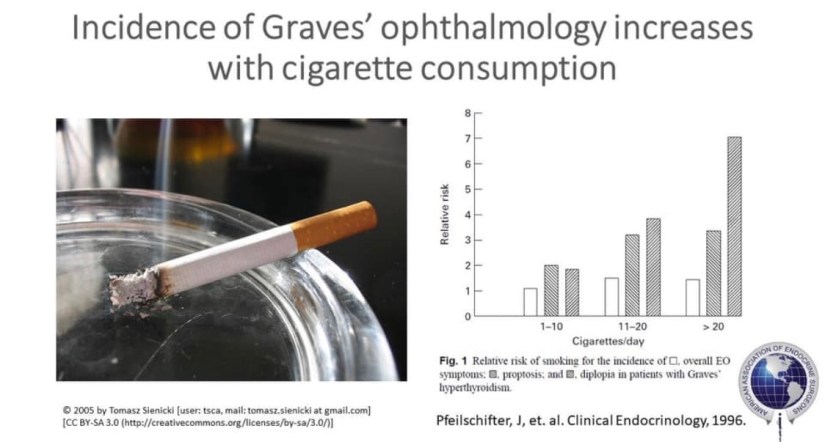
👉Another reason to quit smoking. Cigarette smoking increases the incidence of Graves’ eye disease in a dose-dependent manner.
#Arrangoiz
#ThyroidExpert
#ThyroidSurgeon
#Treacher
👉Another reason to quit smoking. Cigarette smoking increases the incidence of Graves’ eye disease in a dose-dependent manner.
#Arrangoiz
#ThyroidExpert
#ThyroidSurgeon
#Treacher
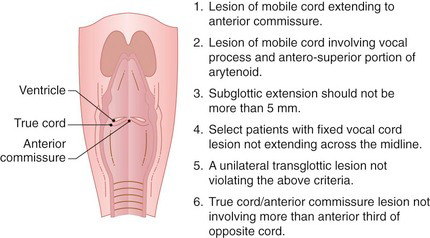



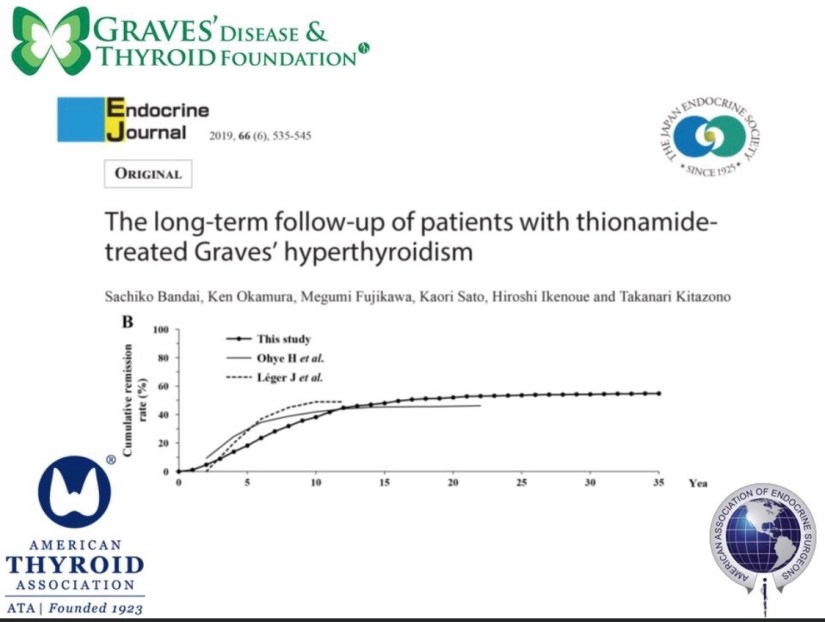
👉Remissions in Graves’ disease patients continue to be achieved after many years (>5–10) of continuous antithyroid drug therapy (ATD). Thus, long-term ATD may be viable option for patients who wish to avoid permanent hypothyroidism or potential complications of ablative therapy.
#Arrangoiz
#ThyroidExpert
#ThyroidSurgeon
#Teacher
#GravesDisease


https://m.youtube.com/watch?v=AgvQmtz1gnA&time_continue=127
 • Cirugia oncológica / tumores de cabeza y cuello / cirugia endocrina:
 • Maestria en ciencias (Clinical research for healthprofessionals):
 • Cirugia de tumores de cabeza y cuello / cirugiaendocrina
http://www.sociedadquirurgica.com
http://www.hiperparatiroidismo.info
#Arrangoiz
#CirugiadeTumoresdeCabezayCuello
#CirugiaEndocrina
#CirugiaOncologica
#HeadandNeckSurgery
#EndocrineSurgery
#SurgicalOncology
#Hyperparathyroidism
#Hiperparatiroidismo
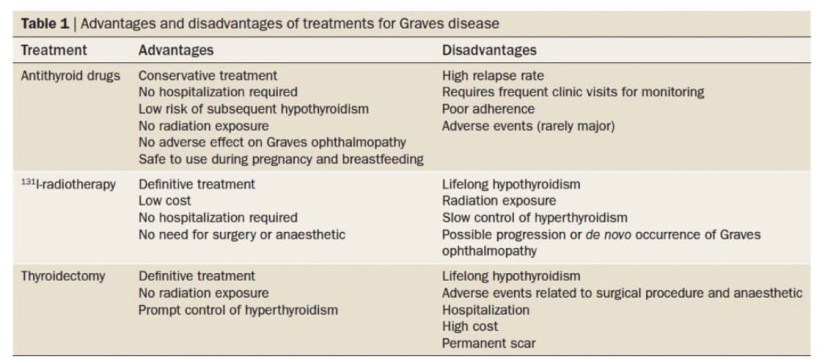 Personalize the treatment for your Graves’ disease patients

#Arrangoiz
#ThyoidSurgeon
#ThyroidExpert
#Teacher
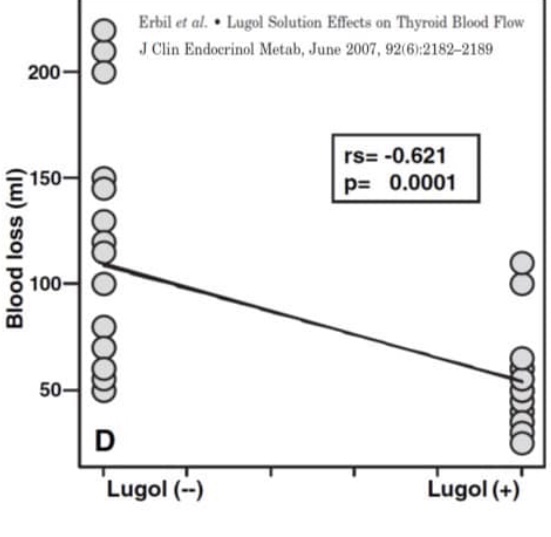
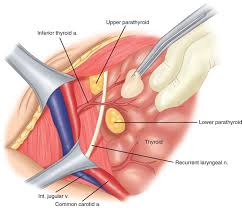
👉Preoperative potassium iodine (e.g., Lugol’s) treatment prior to thyroidectomy for Graves’ disease decreases thyroid vascularity and intraop blood loss which may allow better visualization and preservation of the surrounding nerves, vasculature, and parathyroid glands.
#Arrangoiz
#Teacher
#Surgeon
#Thyroid
#ThyroidSurgeon
#ThyroidExpert
#HeadandNexkSurgeon
#GravesDisease
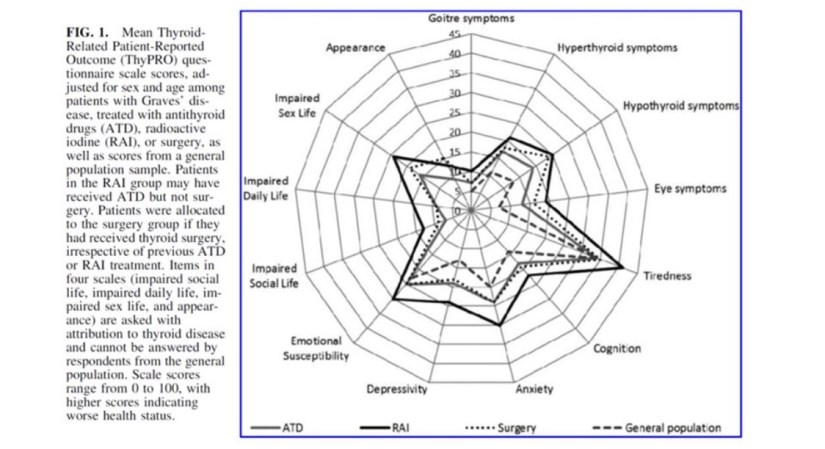
A recent study of 1186 Swedish patients with Graves’ disease found that quality of life was worse at 6-10 years after radioactive iodine therapy when compared with treatment via antithyroid drugs or surgery. (Torring, O, et al Thyroid 2019)
#Arrangoiz
#ThyroidSurgeon
#ThyroidExpert
#HeadandNeckSurgeon
👉A 10-year follow-up study of patients with breast cancer who had been treated with accelerated partial-breast irradiation (APBI) after surgery showed that their rates of disease recurrence were similar to those of patients who had received whole-breast irradiation (WBI), according to data presented by Meattini et al at the 2019 San Antonio Breast Cancer Symposium (Abstract GS4-06).
👉The study results suggest that the less invasive partial-breast procedure may be an acceptable choice for patients with early breast cancer.
👉Many patients diagnosed with early breast cancer undergo lumpectomy followed by a course of radiation.
👉Postoperative radiation still represents a mainstay of adjuvant treatment for breast cancer, able to significantly reduce the local relapse occurrence rate, explained the study’s lead author, Icro Meattini, MD, of the University of Florence, in a statement.
👉In recent years, researchers have sought to determine whether APBI might be as effective as WBI in preventing recurrence.
Study Methods
👉Dr. Meattini’s study examined 10-year follow-up data for women enrolled in the APBI IMRT trial, a randomized phase III trial.
👉The 5-year follow-up from the trial showed no significant difference in tumor recurrence or survival rates.
👉The APBI IMRT trial enrolled 520 women over age 40 who had either stage I or II breast cancer.
👉Between 2005 and 2013, the patients were randomly assigned 1:1 to receive either APBI or WBI.
👉The patients in the APBI arm received a total of 30 Gy of radiation to the tumor bed in five daily fractions, whereas those in the WBI arm received a total of 50 Gy in 25 daily fractions to the whole breast, plus a boost of 10 Gy to the tumor bed in five daily fractions.
👉Both treatment arms were comparable in terms of age, tumor size, tumor type, and adjuvant endocrine treatment, and both achieved a median 10-year follow-up.
👉The majority of the patients had hormone receptor–positive, HER2-negative breast cancer, and most were over age 50.
10-Year Follow-up
👉The study showed that after 10 years, 3.3% of patients in the APBI group had experienced a recurrence of breast cancer compared to 2.6% in the group that received WBI.
👉These results were comparable to the 5-year results, in which the group that received APBI had a 2.4% recurrence rate, and the group that received WBI had a 1.2% recurrence rate.
👉Neither difference was statistically significant.
👉Overall survival at the 10-year mark was also very similar between the two groups: 92.7% for the women who had received APBI and 93.3% for the women who received WBI.
👉Breast cancer–specific survival was 97.6% for those who received APBI and 97.5% for those who received WBI.
👉The distant metastasis-free survival rate was 96.9% both for the women who received APBI and for those who received WBI.
👉These results reinforce the initial promising results from the previous study,” said Dr. Meattini.
👉APBI can produce excellent disease control.
👉The study’s chief limitation is its relatively small size.
👉In well-selected cases, there is no difference in patients’ outcomes whether they are treated with APBI or WBI.
👉A once-daily regimen of external APBI might also produce an improved quality of life with less toxicity, and can potentially reduce the overall treatment time.
👉Dr. Meattini added that APBI may also be less likely to cause cosmetic changes and is less expensive to administer than WBI.
👉Partial-breast irradiation is one of the primary examples of effective deescalation of treatment in breast oncology.
👉For many patients, partial-breast irradiation may be an optimal choice that is cost-effective, safe, and efficacious.

 Rodrigo Arrangoiz MS, MD, FACS cirujano oncology y cirujano de mamá de Sociedad Quirúrgica S.C en el America British Cowdray Medical Center en la ciudad de Mexico:
Es miembro de la American Society of Breast Surgeons:





👉The histological structure of the vocal fold can be separated into five or six tissues, depending on the source:
– Which can then be grouped into three sections as the: the cover, the transition, and the body.
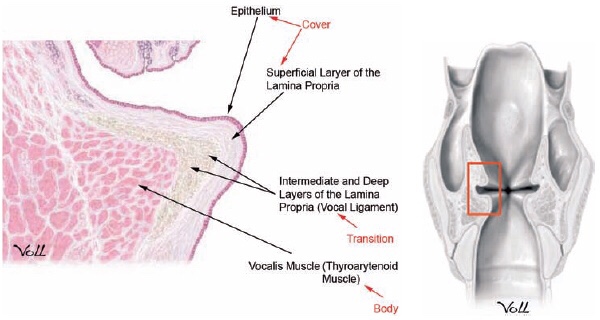
👉The cover is composed of the epithelium (mucosa), basal lamina (or basement membrane zone), and the superficial layer of the lamina propria.
👉The transition is composed of the intermediate and deep layers of the lamina propria.
👉The body is composed of the thyroarytenoid muscle.
– This layered structure of tissues is very important for vibration of the true vocal folds.
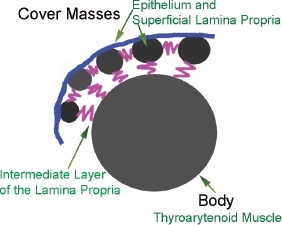
👉The free edge of the vibratory portion of the vocal fold, the anterior glottis, is covered with stratified squamous epithelium.
– This epithelium is five to twenty-five cells thick with the most superficial layer consisting of one to three cells that are lost to abrasion of the vocal folds during the closed phase of vibration.
👉The posterior glottis is covered with pseudostratified ciliated epithelium.
– On the surfaces of the epithelial cells are microridges and microvilli.
– Lubrication of the vocal folds through adequate hydration is essential for normal phonation to avoid excessive abrasion, and the microridges and microvilli help to spread and retain a mucous coat on the epithelium.
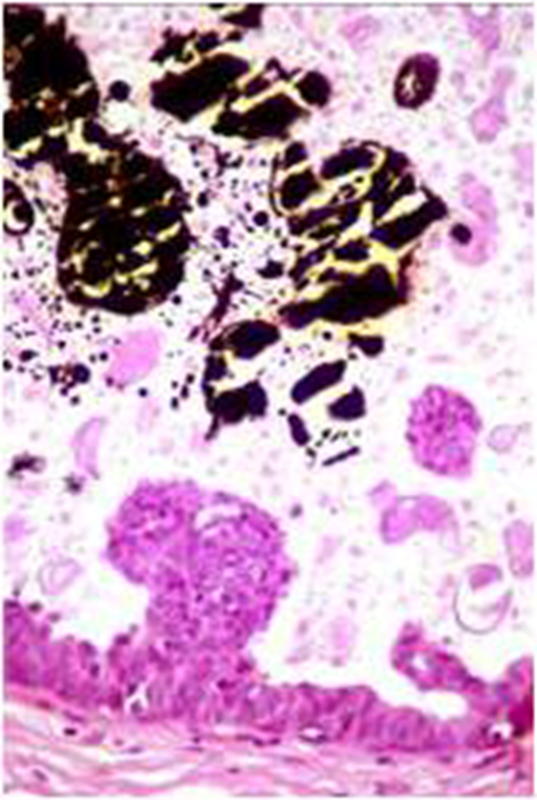
👉Ductal calcifications have a wide variety of presentations depending upon the underlying process that created them.
👉When coarse rod-like ductal calcifications are diffuse, bilateral, and not confined to a single lobe, they can be confidently assumed to result from plasma cell mastitis, and they do not require further evaluation or biopsy.
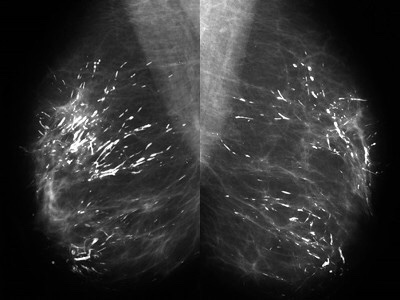
👉The process is called secretory disease because there is a stagnant, viscous fluid that eventually petrifies and results in the smooth contoured calcifications.
👉Some of them are branching and look like malignant casting type calcifications, but the key distinguishing feature is the diffuse, multilobe, bilateral nature of the process.
👉Calcifications become much more worrisome when they are confined to a single lobe.
👉The most frequent malignant, ductal “casting type” calcifications are fragmented, linear, and branching, and they are the most reliable mammographic sign of malignancy.
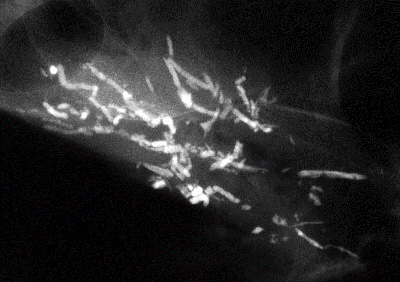
👉The presence of fragmented and/or dotted casting type calcifications on the mammogram restricted to one lobe is a pathognomonic sign of a diffuse, grade 3 breast cancer subtype that originates in the major ducts and usually has a solid or micropapillary pattern.
👉Traditionally, this subtype has been called “comedo carcinoma.”
👉The cancer cells either produce a viscous, proteinaceous fluid which gradually concentrates and eventually calcifies, or they undergo necrosis (apoptosis) followed by calcification.
👉In both instances the intraluminal pressure increases, distending the ducts considerably.
👉Dotted casting type calcifications have been referred to as “snake skin-like calcifications” and they accumulate in the fluid produced by either micropapillary or solid cancer cell growth patterns.
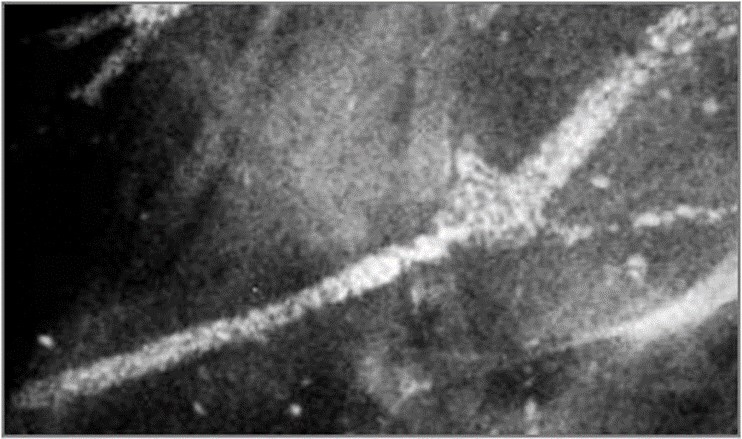
👉The tips of the micropapillary growths may become detached and eventually calcify, contributing to the intraluminal calcifications.
 Rodrigo Arrangoiz MS, MD, FACS cirujano oncology y cirujano de mamá de Sociedad Quirúrgica S.C en el America British Cowdray Medical Center en la ciudad de Mexico:
Es miembro de la American Society of Breast Surgeons:

