Blog

Surgical Management of Invasive Differentiated Thyroid Cancer: An Evidence-Based Review

  • Paper:
    • “Surgical Management of Invasive Differentiated Thyroid Cancer: An Evidence-Based Review”:
      • Published in: Thyroid, 2016; Vol 26(9): 1156–1166
        [DOI: 10.1089/thy.2015.0567]
  • Objective:
    • To provide an evidence-based review on the frequency, clinical implications, and management strategies of invasive differentiated thyroid cancer (DTC) involving adjacent structures of the neck.
  • Key Findings:
    • Frequency of Invasion (based on pooled data and institutional experience):
      • Recurrent Laryngeal Nerve (RLN): ~ 47% of locally advanced cases
      • Strap Muscles: ~ 40%
      • Trachea: ~ 21%
      • Esophagus: ~ 12%
      • Larynx: ~ 3%
      • Carotid Artery: ~ 2%
    • RLN and strap muscle invasion were:
      • The most common sites of local extension.
    • Surgical Management Recommendations:
      • Recurrent Laryngeal Nerve (RLN):
        • If functional and partially encased:
          • Consider nerve preservation via shaving
        • If non-functional or fully invaded:
          • Resection is advised with or without reinnervation techniques
        • Postoperative vocal cord assessment is mandatory
        • American Head and Neck Society (AHNS) Consensus Statement:
          • Statement 2-A:
            • RLN encased, ipsilateral vocal cord (VC) paresis / paralysis:
              • Resection is indicated (consensus)
          • Statement 2-B:
            • RLN encased, ipsilateral bilateral normal VC function:
              • Tumor may be shaved off to spare the RLN, as long as all gross disease is removed (consensus)
          • Statement 2-C:
            • RLN encased, contralateral VC paretic / paralyzed:
              • Tumor may be shaved off so that the RLN is spared (consensus)
          • Reference:
            • Shindo ML et al. Management of invasive well-differentiated thyroid cancer: An American Head and Neck Society Consensus Statement: AHNS Consensus Statement. Head Neck 2014 36: 1379-1390.
        • If the nerve is sacrified RLN reconstruction is advisable or thyroplasty or cord injection.
  • Surgical Management Recommendations:
    • Trachea:
      • Shaving of superficial invasion is acceptable
      • Full-thickness invasion may require window or segmental resection (e.g., tracheal reconstruction):
        • Multi-disciplinary planning often needed
      • Main methods of management:
        • Shave:
          • Used when tumor invades perichondrium or cartilage only:
            • Tangential excision with minimal invasion leaving mucosa intact
          • Preserves tracheal framework
          • Disadvantages:
            • Confirming negative margins intraoperatively
            • Lack of continuous plane underneath the external perichondrium
            • Tumor spread into the tracheal lumen via lymphatics that communicate in the intercartilaginous space
          • Local control:
            • Around 95% if tumor does not penetrate beyond the perichondrium
          • Window Resection:
            • Limited by the length and circumference of the trachea to mantain stability:
              • Need to resect < 1/3 of the circumference
              • Partial resection of < 3 rings
            • Often for McCaffrey Stage II to III
            • Primary closure rarely possible
            • Needs to be reconstructed with muscle flap or patch graft
          • Sleeve / Segmental Resection:
            • En bloc removal of ≥ 2 tracheal rings:
              • Up to 5 cm to 6 cm or 5 to 7 rings
            • End-to-end primary anastomosis under neck flexion
            • May include cricotracheal or laryngotracheal resection if involvement is proximal
            • Technical Considerations:
              • Maximum safe length for tension-free anastomosis: ~4.5 to 6 cm (5 to 7 rings)
              • Requires preoperative anesthesia planning for airway control
              • Neck flexion with chin-to-chest sutures post-op
              • Close monitoring for anastomotic dehiscence, tracheomalacia, or RLN injury
            • Outcomes:
              • 5-year disease-specific survival:
                • ~ 60% to 75% after R0 sleeve resection
              • Morbidity:
                • Risk of vocal cord paralysisanastomotic leak, or stenosis
              • Local control better with segmental vs shave resection in deeply invasive tumors
          • Cricotracheal Resection
    • Esophagus:
      • Esophageal invasion occurs in approximately 5% to 15% of patients with locally advanced differentiated thyroid cancer (DTC) or poorly differentiated thyroid cancer:
        • Particularly with posterior capsular extension from the thyroid gland:
          • It is most often associated with invasion of the cervical esophagus and less frequently with thoracic extension
      • Assessment and Staging:
        • Preoperative Workup:
          • CT scan with contrast:
            • Assess loss of fat plane and wall thickening
          • Endoscopic ultrasound (EUS) or esophagoscopy:
            • Assess mucosal involvement
          • Barium swallow:
            • Functional and structural assessment
          • Flexible laryngoscopy:
            • Assess vocal cord function
        • McCaffrey Staging System (modified for posterior invasion):
          • Stage I to II:
            • Abutment or superficial muscular invasion
          • Stage III:
            • Transmural involvement with mucosal breach
          • Stage IV:
            • Extensive circumferential or thoracic invasion
      • Surgical Management:
        • Shave Excision:
          • For superficial invasion of muscularis layer only:
            • Avoids full-thickness resection
          • Low morbidity, but risk of residual disease if not adequately evaluated
        • Partial Thickness Resection:
          • Involves resection of outer muscular layer with cautery or cold dissection
          • Often with sternohyoid or SCM flap reinforcement
        • Full-Thickness Resection (Segmental Esophagectomy):
          • Reserved for mucosal or transmural involvement
          • Requires primary closure or flap reconstruction:
            • For example radial forearm, pectoralis major, or free jejunal flap
          • May require temporary nasogastric / PEG feeding or tracheostomy
        • Cervical Esophagectomy with Reconstruction:
          • Rare; indicated in extensive disease
          • High morbidity, reserved for selected cases with curative intent
      • Postoperative Considerations:
        • Leak test (methylene blue or contrast swallow) on POD 5 to 7 if full-thickness resection
        • Monitor for:
          • Dysphagia
          • Fistula
          • Stricture formation
          • Consider gastrostomy or jejunostomy in high-risk cases
      • Adjuvant Therapy:
        • Radioactive Iodine (RAI):
          • If iodine-avid disease and residual / recurrent disease
        • External Beam Radiation (EBRT)::
          • Gross residual disease
          • Positive margins
          • Non-RAI-avid disease
      • Prognosis:
        • Complete resection (R0) improves local control and survival
        • Positive margins or incomplete resection associated with:
          • Higher recurrence rates
          • Lower disease-specific survival
        • Five-year survival can still exceed 60% to 70% with aggressive, multidisciplinary management
    • Key References:
      • McCaffrey TV. Surgical management of invasion into the aerodigestive tract by well-differentiated thyroid carcinoma. Arch Otolaryngol Head Neck Surg. 1999;125(4):401–405.
      • Shaha AR. Airway and esophageal involvement in thyroid cancer. World J Surg. 2007;31(5):904–911.
      • Nixon IJ et al. Locally advanced thyroid cancer: Surgical management. Thyroid. 2016;26(9):1156–1166.
      • Gaissert HA et al. Surgical treatment of invasive thyroid cancer. Ann Thorac Surg. 2007;83(6):1950–1955.
      • Haugen BR et al. ATA Guidelines. Thyroid. 2016;26(1):1–133.
      • Kim JW et al. Optimal surgical approach to locally invasive DTC. J Surg Oncol. 2017;116(2):229–234.
      • McCaffrey TV. Surgical management of laryngotracheal invasion by well-differentiated thyroid cancer. Arch Otolaryngol Head Neck Surg. 1999;125(4):401–405.
      • Gaissert HA et al. Segmental tracheal resection for invasive thyroid carcinoma. Ann Thorac Surg. 2007;83(6):1950–1955.
      • Kim JW et al. Optimal surgical extent for locally invasive thyroid cancer. J Surg Oncol. 2017;116(2):229–234.
      • Shaha AR. Airway management in thyroid cancer. World J Surg. 2007;31(5): 903–908.
  • Strap Muscles:
    • Often resected without morbidity
      • Invasion here does not necessarily confer worse prognosis
    • The strap muscles (sternohyoid, sternothyroid, omohyoid, thyrohyoid):
      • Lie anterior and lateral to the thyroid gland and are often the first structures invaded in locally advanced disease
    • Seen in up to 40% to 50% of cases with extrathyroidal extension (ETE):
      • Classified by AJCC 8th edition as:
        • Minimal ETE:
          • Invasion into perithyroidal soft tissue:
            • Not included in T staging
        • Gross ETE to strap muscles
          • T3b disease
      • According to Nixon IJ et al., strap muscle is the most frequently invaded adjacent structure in locally advanced DTC
    • Diagnosis:
      • Clinical and Imaging Features:
        • May present as firm fixation of the gland to strap muscles
        • On ultrasound CT:
          • Loss of fat plane
          • Muscle effacement
        • Intraoperative findings often determine true invasion
    • Surgical Management:
      • Recommended Approach:
        • En bloc resection of involved strap muscles with the thyroid gland
        • Usually limited to sternohyoid and sternothyroid
        • No need for reconstruction unless deep muscle loss impairs swallowing or airway support
      • Not Recommended:
        • Piecemeal shaving or curettage:
          • May lead to positive margins
        • Avoid unnecessarily wide resections if invasion is not gross
      • Pathologic confirmation of muscle invasion is essential for staging (T3b)
    • Oncologic Impact:
      • Survival & Recurrence:
        • Strap muscle invasion alone does not significantly affect disease-specific survival
        • Prognosis more dependent on:
          • Nodal status
          • Margin status
          • Multifocality or vascular invasion
      • Kim et al., J Surg Oncol 2017 – strap muscle invasion was not an independent predictor of recurrence or mortality
    • Adjuvant Therapy:
      • RAI therapy based on full risk stratification (not just muscle invasion)
      • No EBRT indicated for strap-only invasion with negative margins
      • ATA 2015 Guidelines:
        • Strap invasion alone may not upstage to high-risk unless other features are present
  • Larynx and Carotid Artery:
    • Invasion is rare but serious
    • Laryngectomy or carotid resection is only considered in select patients with curative intent
    • Prognosis and Outcomes:
      • Gross extrathyroidal extension (T4 disease) is associated with worse disease-specific survival
      • However, microscopic invasion alone does not significantly impact survival
      • Complete surgical resection remains the most important prognostic factor
    • Conclusions:
      • Adjacent structure invasion is relatively common in advanced DTC, especially involving the RLN and strap muscles
      • Tailored surgical approaches balancing oncologic control and functional preservation are critical
      • Multidisciplinary care and evidence-guided surgical decision-making optimize outcomes.
McCaffrey Classification
Window Resection of the Trachea
Sleeve / Segemental Resection
We use #3-0 Vicryl to bring the segments together. We perform this in conjunction with thoracic surgery.
Cricotracheal Resection
Temporoparietal free flap (TPFF) with buccal mucosa inner graft with thryoid cartilage as a construct.
Esphageal Invasion
  • Conclusion:
    • Surgery is the KEY component for survival in patients with poorly differentiated / invasive thyroid cancer
    • Not common:
      • Consider centers of excellence / high volume

Hypercalcemia and Hyperparathyroidism

  • Differential Diagnosis of Hypercalcemia:
    • Primary hyperparathyroidism:
      • Solitary adenoma:
        • 85% to 90% of the cases
      • Multigland hyperplasia:
        • 3% of the cases
      • Doble adenoma:
        • 6% to 9% of the cases
      • Triple adenoma:
        • 0.3% of the cases
    • Secondary hyperparathyroidism
    • Tertiary hyperparathyroidism
    • Familial hypocalciuric hypercalcemia
    • Medications:
      • Lithium
      • Hydrochlorothiazide
    • Malignancy:
      • Parathyroid carcinoma
      • Multiple myeloma
      • Tumors producing PTH-related peptide:
        • Ovarian cancer
        • Lung cancer
      • Acute or chronic leukemia
    • Sarcoidosis
    • Thyrotoxicosis
    • Paget disease
    • Increased intake:
      • Milk-alkali syndrome
      • Vitamin A toxicity
      • Vitamin D toxicity
  • Primary hyperparathyroidism (PHPT):
    • Is caused by an inappropriate, autonomous  secretion of parathyroid hormone (PTH) by the parathyroid gland (s), which leads to an elevated serum calcium concentration or wide variations of the serum calcium concentration.
    • Single gland disease:
      • Caused by a single, enlarged, overactive gland, is found in 85% to 90% of cases.
    • Multiple gland disease occurs in 10% to 15% of the cases:
      • Multiple gland disease may consist of:
        • Double adenomas (6% to 9% of the cases)
        • Four-gland hyperplasia (3% of the cases)
        • Three enlarged and one normal appearing gland (0.3% of the cases).
          • Because asymmetric hyperplasia is common, it is difficult to distinguish between multiple adenomas and hyperplasia and the term multiple gland disease is preferred.
    • PHPT in the United States usually presents quite early, often when hypercalcemia is noted during routine laboratory testing.
    • Signs may include:
      • Nephrolithiasis, decreased bone density, and fragility fractures, and subjective symptoms may include fatigue, cognitive changes, depression, constipation and other gastrointestinal complaints, musculoskeletal pain, nocturia, and rarely pruritus:
        • Many patients may appear asymptomatic:
          • A detailed history often uncovers symptoms:
            • 95% of the cases have symptoms when appropriate history is taken. 
              • The recently revised guidelines for asymptomatic PHPT include a more extensive evaluation of the skeletal and renal systems.
    • A family history of endocrine disorders should be investigated:
      • As hyperparathyroidism alone can be familial or can present as a component of multiple endocrine neoplasia (MEN) types 1 and 2A.

Slide1Slide118839633_298526490594970_1808619548355549612_o18813493_298526493928303_9123677475566775310_nSlide2Slide1

CGSO_16038_fig1CGSO_16038_fig2

Rodrigo Arrangoiz MS, MD, FACS cirujano de tumores de cabeza y cuello / cirugia endocrina miembro del equipo de Mount Sinai Medical Center experto en el manejo del hiperparatiroidismo primario.

Entrenamiento:

  • Cirugia general y gastrointestinal:

• Michigan State University:

• 2004 al 2010image-48

• Cirugia oncológica / tumores de cabeza y cuello / cirugia endocrina:

• Fox Chase Cancer Center (Filadelfia):

• 2010 al 2012

image-39

• Maestria en ciencias (Clinical research for healthprofessionals):

• Drexel University (Filadelfia):

• 2010 al 2012image-50

• Cirugia de tumores de cabeza y cuello / cirugiaendocrina

• IFHNOS / Memorial Sloan Kettering Cancer Center:

• 2014 al 2016

image-51

#Arrangoiz

#CirugiadeTumoresdeCabezayCuello

#CirugiaEndocrina

#CirugiaOncologica

#HeadandNeckSurgery

#EndocrineSurgery

#SurgicalOncology

#Hiperparatiroidismo

#Hyperparathyroidsim

#MountSInaiMedicalCenter

#MSMC

#Mexico #Miami

Primary Hyperparathyroidism

  • Incidence:
    • The incidence of PHPT has remained relatively stable in the last couple of decades
    • PHPT is more common in women than in men:
      • Two to three times higher in incidence rate in women
    • PHPT is more common in the elderly population:
      • The incidence increases with age
      • The incidence starts to increase at age 50:
        • 1 in 500 postmenopausal women will have PHPT
        • 1 in 1000 men over 50 will have PHPT
    • Incidence rates in the USA:
      • 60 cases per 100, 000 women
      • 20 cases per 100,000 men
  • Prevalence
    • In the USA:
      • 1% of the postmenopausal female population will have PHPT
    • International prevalence rates:
      • 3% of the postmenopausal female population will have PHPT
    • The prevalence PHPT has risen in the last couple of decades:
      • From 1995 and 2010 it has tripled:
        • Women:
          • 76 to 233 cases per 100,000 women
        • Men:
          • 30 to 85 cases per 100,000 men
    • Gender:
      • African Americans have the highest prevalence of PHPT:
        • Followed by caucasians followed by Asians
      • Hispanics have a lower prevalence rate
    • Reason for the higher prevalence compared to incidence in PHPT:
      • Is that only 20% to 25% of patients with PHPT in the USA will end up having surgery
      • Only 50% of patients in the USA with nephrolithiasis and PHPT have surgery
      • Only 20% of patients with osteoporosis and PHPT in the USA go onto have surgery
      • The probability of having surgery decreases with age:
        • The older one gets the less likely they will be offered an intervention
  • Genetics of PHPT:
    • Six primary conditions associated with an inherited predisposition for the development of PHPT:
      • MEN Type 1:
        • Incidence:
    • The incidence of PHPT has remained relatively stable in the last couple of decades
    • PHPT is more common in women than in men:
      • Two to three times higher in incidence rate in women
    • PHPT is more common in the elderly population:
      • The incidence increases with age
      • The incidence starts to increase at age 50:
        • 1 in 500 postmenopausal women will have PHPT
        • 1 in 1000 men over 50 will have PHPT
    • Incidence rates in the USA:
      • 60 cases per 100, 000 women
      • 20 cases per 100,000 men
  • Prevalence
    • In the USA:
      • 1% of the postmenopausal female population will have PHPT
    • International prevalence rates:
      • 3% of the postmenopausal female population will have PHPT
    • The prevalence PHPT has risen in the last couple of decades:
      • From 1995 and 2010 it has tripled:
        • Women:
          • 76 to 233 cases per 100,000 women
        • Men:
          • 30 to 85 cases per 100,000 men
    • Gender:
      • African Americans have the highest prevalence of PHPT:
        • Followed by caucasians followed by Asians
      • Hispanics have a lower prevalence rate
    • Reason for the higher prevalence compared to incidence in PHPT:
      • Is that only 20% to 25% of patients with PHPT in the USA will end up having surgery
      • Only 50% of patients in the USA with nephrolithiasis and PHPT have surgery
      • Only 20% of patients with osteoporosis and PHPT in the USA go onto have surgery
      • The probability of having surgery decreases with age:
        • The older one gets the less likely they will be offered an intervention
  • Genetics of PHPT:
    • Only 5% to 10% of patients with PHPT will with have an underlying genetic predisposition
    • Six primary conditions associated with an inherited predisposition for the development of PHPT:
      • MEN Type 1:
        • Pituitary Tumors
        • PHPT:
          • Has almost 100% penetrance
          • It is the first endocrine disease to manifest
          • It manifests at a young age
        • Pancreatic neuroendocrine tumors:
          • Duodenal and gastronomes
        • Foregut carcinoid tumors:
          • Lung
          • Thymus
        • Adrenal adenomas
      • MEN Type 2A:
        • Medullary thyroid carcinoma:
          • 100% penetrance
          • First endocrinopathy to manifest
        • Pheochromocytoma
        • PHPT:
          • Only 20% to 30% develop PHPT
          • Will depend on the RET mutation (codon)
          • They develop mild hypercalcemia
          • More common to see multi gland disease but you can also get one gland disease
          • Age of onset is younger:
            • Two decades earlier than sporadic PTHP
      • MEN Type IV:
        • Phenotypically similar to MEN type 1
        • Mutation CDKNIB gene
      • Hyperparathyroidism jaw tumor syndrome (rare):
        • Ossifying fibromas
        • Mixture of renal tumors, uterine fibroids
      • Familial hypocalciuric hypercalcemia (FHH – predisposes to hypercalcemia):
        • FHH is mainly classified into three different types depending on the genetic cause
        • FHH type 1:
          • Is the most common type of FHH and is caused by changes (also known as pathogenic variants or mutations) in the CASR gene
          • The protein made from the CaSR gene:
            • The calcium-sensing receptor (CaSR protein), monitors and regulates the level of calcium in the blood
        • FHH type 2:
          • Is caused by changes in the GNA11 gene
        • FHH type 3:
          • Is caused by changes in the AP2S1 gene
        • All three types of FHH are inherited in:
          • An autosomal dominant manner
        • In rare cases, FHH may be caused when a person’s immune system mistakenly makes antibodies that attack the CaSR protein:
          • The autoimmune form of FHH is not known to be caused by changes in a specific gene
        • Diagnosis of FHH:
          • Is suspected by high levels of calcium in the blood:
            • Especially when there are no other symptoms present
          • Further blood and urine tests may be used to rule out other possible causes
          • Genetic testing can confirm the diagnosis of FHH, except in rare autoimmune cases
        • Treatment:
          • Is typically considered unnecessary because most people with FHH do not have symptoms
          • If pancreatitis occurs, removal of the parathyroid gland may be recommended
      • Isolated familial PHPT
  • Management of inherited PHPT:
    • In many cases PHPT is the first manifestation of a hereditary syndromic disease:
      • Goal of surgery is to normalize PTH and provide best chances for long term disease free outcome
    • Pitfalls in imaging in patients with MEN type 1:
      • Present with parathyroid gland asymmetry:
        • Most of this cases are secondary to hyperplasia not adenoma
    • The gold standard for the management of MEN type 1 is:
      • Bilateral neck exploration with a subtotal parathyroidectomy or total parathyoidectomy with autotransplantation (to the sternocleidomastoid muscle of the neck or the brachioradialis muscle of the forearm):
        • Biochemical cure are very similar between both approaches
        • With autotransplantation there is a 3% to 10% risk that the autotransplanted gland does not take leading to hypoparathyroidism:
          • For this reason cryopreservation might be a good option (they can be kept in this state for up to 2 years)
      • Remember that 3% to 5% of the cases of MEN type 1 might have super numerary glands:
        • This glands might hide in the thymus / thryothymic ligament or other ectopic locations
    • Intraoperative PTH measuring:
      • Allows us to decide how much of a gland remnant can be left behind to achieve longterm cure:
        • Achieving a intact PTH less that 40 pg/dl supports a longer long term free of recurrence
      • If the intraoperative PTH is very low it can helps us decide to autotransplant a gland to decrease that incidence of postoperative permanent hypoparathyroidism
    • Management of MEN type IIa:
      • All of this patients will have manifested with medullary thyroid cancer (MTC) or will be diagnosed with MTC and PHPT at the same time
      • The operative report of the thyroid cancer case is required along with the pathology report:
        • Talking with the surgeon that performed the thyroidectomy will be beneficial
      • At least two localizing studies that are concordant
      • Use cryopreservation in re due cases:
        • Because we might not have the information of how many glands were removed or injured during the thyroid surgery
      • Autotransplantation might be a good option when managing PHPT because MTC commonly recurs in the neck
      • If operating for the MTC and PHPT at the same time:
        • The surgery for PHPT remove the abnormal gland check intraoperative PTH (make sure it is normal) and leave the rest of the normal glands in situ
      • If subtotal thyroidectomy is performed:
        • Leave a portion of a gland that is about the same size as a normal gland
        • Make sure it is well vascularized
        • If possible leave an inferior gland:
          • They are easier to localize than a superior gland in re due cases
          • Prevents deep dissection close to the RLN in re due cases

#Arrangoiz #ParathyroidSurgeon #ParathyroidExpert #Hyperparathyroidism #HereditaryHyperparathyroidism #HeadandNeckSurgeon #CancerSurgeon #SurgicalOncologist #PHPT #MENSyndromes #Miami #Mexico #MountSinaiMedicalCenter #MSMC

Normocalcemic Primary Hyperparathyroidism: Further Characterization of a New Clinical Phenotype

Abstract

Context: Patients with elevated parathyroid hormone (PTH) and consistently normal serum calcium levels, in whom secondary causes of hyperparathyroidism have been excluded, may represent the earliest presentation of primary hyperparathyroidism (PHPT).

Objective: The objective of the study was to characterize patients with normocalcemic PHPT referred to a bone disease unit.

Design: This was a longitudinal cohort study.

Setting: Ambulatory patients were referred to the metabolic bone disease unit.

Patients: The study population included 37 patients [aged 58 yr, range 32–78; 95% female; serum calcium, 9.4 ± 0.1 (SEM) mg/dl (2.3 ± 0.02 mmol/liter), reference range, 8.5–10.4 (2.1–2.6 mmol/liter); PTH, 93 ± 5 pg/ml].

Interventions: Interventions included yearly (median 3 yr; range 1–8 yr) physical examination, biochemical indices, and bone mineral density (BMD).

Main Outcome Measures: We measured the development of features of PHPT.

Results: Evaluation for classical features of PHPT revealed a history of kidney stones in five (14%), fragility fractures in four (11%), and osteoporosis in 57% [spine (34%), hip (38%), and/or distal one third radius (28%)]. BMD did not show preferential bone loss at the distal one third radius (T scores: spine, −2.00 ± 0.25; hip, −1.84 ± 0.18; one third radius, −1.74 ± 0.22). Further signs of PHPT developed in 40% (seven hypercalcemia; one kidney stone; one fracture; two marked hypercalciuria; six had >10% BMD loss at one or more site(s) including four patients developing World Health Organization criteria for osteoporosis). Seven patients (three hypercalcemic, four persistently normocalcemic) underwent successful parathyroidectomy.

Conclusions: Patients seen in a referral center with normocalcemic hyperparathyroidism have more substantial skeletal involvement than is typical in PHPT and develop more features and complications over time. These patients may represent the earliest form of symptomatic, rather than asymptomatic, PHPT.

Lowe, Hyesoo et al. “Normocalcemic primary hyperparathyroidism: further characterization of a new clinical phenotype.” The Journal of clinical endocrinology and metabolism 92 8 (2007): 3001-5 .

#Arrangoiz #ParathyroidSurgeon #ParathyroidExpert #Hyperparathyroidism #PrimaryHyperparathyroidism #CancerSurgeon #EndocrineSurgery #Teacher #Surgeon #HeadandNeckSurgeon #SurgicalOncologist #ParathyroidAdenoma #Hypercalcemia #ElevatedCalciumLevels #Miami #MountSinaiMedicalCenter #MSMC #Mexico #Hialeah

Total Thyroidectomy vs Thyroid Lobectomy in Differentiated Thryoid Cancer (DTC)

  • Overview:
    • The evolution from routinely performing total thyroidectomy (TT) to more selective use of thyroid lobectomy (TL) in DTC:
      • Reflects growing evidence that low- and select intermediate-risk patients can achieve equivalent oncologic outcomes with less morbidity
  • Key Historical and Modern Data:
    • Historical Basis for Total Thyroidectomy:
      • Mazzaferri & Young (1981, Am J Med):
        • Retrospective analysis:
          • Patients who underwent TT had better recurrence-free survival and lower disease-specific mortality
        • Study limitations:
          • Included many patients with advanced disease and used pre-ATA classification systems
        • Reference:
          • Mazzaferri EL, Young RL. Am J Med. 1981;70(3):511–518.
      • Shift Toward Risk-Adapted, Less Extensive Surgery:
        • Bilimoria et al. (2007, Ann Surg) – NCDB Study:
          • 52,000 PTC patients:
            • TT associated with better survival in tumors > 1 cm
          • Limitations:
            • Retrospective, confounded by extent of disease
          • Reference:
            • Bilimoria KY, et al. Ann Surg. 2007;246(3):471–479
        • Adam et al. (2014, J Clin Oncol) – NCDB Analysis:
          • 61,775 patients with 1 to 4 cm tumors:
            • No overall survival benefit for TT over TL
          • Supported shift toward more conservative surgery in low-risk DTC
          • Reference:
            • Adam MA, et al. J Clin Oncol. 2014;32(23):2000–2005.
        • Nixon et al. (2012, Ann Surg) – MSKCC Experience:
          • 889 patients with PTC < 4 cm, no extrathyroidal extension or lymph node metastasis:
            • No difference in recurrence or survival between TL and TT
          • Reference:
            • Nixon IJ, et al. Ann Surg. 2012;256(3):518–520
        • Prospective Trials and Systematic Reviews:
          • Japanese Prospective Data – Sugitani et al:
            • Prospective follow-up of TL in low-risk PTC (≤ 4 cm):
              • Low recurrence and excellent survival
            • Reference:
              • Sugitani I, et al. World J Surg. 2010;34(6):1215–1221.
          • Jeon et al. (2017, J Clin Endocrinol Metab):
            • Matched cohort study, 3,444 patients with 1 to 2 cm tumors:
              • No difference in recurrence-free survival or disease-specific survival
            • Reference:
              • Jeon MJ, et al. J Clin Endocrinol Metab. 2017;102(6):1965–1972
          • Sanabria et al. (2020, Cochrane Review):
            • Meta-analysis:
              • No survival benefit of TT over TL in tumors ≤ 4 cm without ETE or lymph node metastasis
              • Higher complication rates with TT
            • Reference:
              • Sanabria A, et al. Cochrane Database Syst Rev. 2020;12:CD012703
        • Complication Rates:
          • TT carries a higher risk of permanent hypoparathyroidism and recurrent laryngeal nerve injury:
            • 30% to 40% transient and 1% to 3% permanent hypoparathyroidism
            • Higher reoperation risk for contralateral disease post-TL, but lower surgical morbidity initially
        • ATA 2015 Guidelines (Current as of 2025):
          • Recommendations:
            • Tumors < 1 cm (T1a): 
              • Active surveillance or TL
            • Tumors 1cm to 4 cm (T1b to T2):
              • No aggressive features (ETE, nodal metastases, poor histology, vascular invasion): 
                • TL is sufficient
            • If aggressive features present or bilateral disease suspected: 
              • TT recommended.
            • > 4 cm tumors, bilateral disease, gross ETE, clinical N1, distant mets:
              • TT preferred
            • Reference:
              • Haugen BR, et al. Thyroid. 2016;26(1):1–133
  • Emerging Data / Future Directions:
    • Upcoming 2025 ATA Guidelines may further support TL in more intermediate-risk patients, especially with molecular profiling and personalized risk stratification
    • Role of genomics and molecular markers (e.g., BRAF, TERT, RAS) in guiding extent of surgery is under investigation
  • Conclusions:
    • Thyroid lobectomy is oncologically safe in selected patients with low-risk DTC (unifocal, ≤ 4 cm, cN0, no ETE or aggressive histology)
    • Total thyroidectomy remains necessary for high-risk features, RAI candidates, or bilateral disease
    • The trend is toward individualized, risk-adapted surgical strategies balancing recurrence risk with surgical morbidity
  • References:
    • Mazzaferri EL, Young RL. Am J Med. 1981;70(3):511–518.
    • Bilimoria KY, et al. Ann Surg. 2007;246(3):471–479.
    • Adam MA, et al. J Clin Oncol. 2014;32(23):2000–2005.
    • Nixon IJ, et al. Ann Surg. 2012;256(3):518–520.
    • Sugitani I, et al. World J Surg. 2010;34(6):1215–1221.
    • Jeon MJ, et al. J Clin Endocrinol Metab. 2017;102(6):1965–1972.
    • Sanabria A, et al. Cochrane Database Syst Rev. 2020;12:CD012703.
    • Haugen BR, et al. Thyroid. 2016;26(1):1–133.

Selpercatinib (Retevmo) in Thyroid Cancer

  • Selpercatinib (Retevmo):
    • Is a highly selective RET kinase inhibitor:
      • Designed to block aberrant RET signaling in cancers with RET mutations or fusions
  • It’s FDA-approved for:
    • Adult and pediatric patients (≥ 2 years):
      • With advanced / metastatic RET fusion–positive thyroid cancer that is radioactive iodine (RAI)-refractory and requires systemic therapy
    • Also approved for RET-mutant medullary thyroid cancer and RET fusion–positive non–small cell lung cancer
    • Clinical Evidence:
      • LIBRETTO‑001 Trial (RET Fusion –Positive Thyroid Cancer Cohorts):
        • Participants:
          • 65 adult patients with RET fusion + DTC, including both RAI – refractory and treatment – naïve individuals
        • Efficacy:
          • Previously treated cohort (n=41): ORR 85% (95% CI: 71–94%), median duration of response (DOR) 26.7 months
          • Treatment-naïve cohort (n=24): ORR 96%, median DOR not yet reached (≥ 42.8 months)
        • Progression-free survival for RET fusion – positive thyroid cancers:
          • Estimated around 22 months, consistent with real-world data
  • Safety Profile:
    • Common side effects include:
      • Hypertension
      • Dry mouth
      • Diarrhea
      • Fatigue
      • Edema
      • Rash
      • Laboratory abnormalities like elevated ALT / AST 
    • Most AEs were grade 1 to 2, with manageable toxicity:
      • Low discontinuation rates (~ 2%)
  • Emerging Roles:
    • Neoadjuvant Use and Radioactive Iodine Re-sensitization:
      • Active clinical trials (e.g., NCT04759911, NCT06458036) are evaluating selpercatinib as neoadjuvant therapy prior to surgery or RAI in RET fusion–positive DTC, with the goal to shrink tumors and enhance iodine uptake
  • Clinical Implications:
    • First-line option for advanced / metastatic RET fusion + DTC, especially when RAI has failed or is inapplicable
    • Offers exceptional response rates and durable remissions
    • Potential for earlier use, including neoadjuvant settings or combination with RAI, pending trial results
    • Recommended tumor genomic profiling for all advanced thyroid cancers to identify RET alterations and enable targeted therapy
  • Future Outlook:
    • Neoadjuvant and combinatorial strategies may broaden selpercatinib’s role in DTC
    • Ongoing trials will clarify its utility in enhancing RAI responsiveness and enabling less extensive surgery

Secondary Hyperparathyroidism

  • Hyperparathyroidism is an inevitable feature of end-stage renal disease (ESRD):
    • It is a result of decreased renal tubular excretion of phosphate and defective 1-α hydroxylase enzyme:
      • Which cause impaired renal activation of 25-hydroxycholecalciferal to 1,25 dihydroxycholecalciferol
        • These causes hyperphosphatemia and hypovitaminosis D:
          • Which result in prolonged hypocalcemia:
            • That lead to hyperplasia of the chief cells of the parathyroid glands:
              • And eventually increased secretion of parathyroid hormone (PTH)
  • When the condition is chronic and prolonged:
    • The pathologic changes may become irreversible:
      • With skeletal resistance to PTH
      • Autonomous function of the hyperplastic glands:
        • Even with correction of the underlying cause and withdrawal of calcium and calcitriol therapy
  • Parathyroidectomy:
    • Is usually warranted in severe refractor renal hyperparathyroidism:
      • After failure of pharmacologic treatment with calcitriol, a vitamin D analog, or cinacalcet
    • The procedure is also considered when the medical therapy to reduce the level of intact PTH (iPTH):
      • Results in unacceptable elevation of the serum calcium and / or phosphorus:
        • With the potential for precipitation and increased cardiovascular mortality:
          • When the calcium-phosphate product exceeds 55 mg2/dl2) or when the adverse effects of the pharmacotherapy are not tolerated by the patient

#Arrangoiz #ParathyroidSurgeon #ParathyroidExpert #Hyperparathyroidism #Surgeon #HeadandNeckSurgeon #Teacher #MSMC #MountSinaiMedicalCenter #Miami #Mexico #EndocrineSurgery

WHO Classification of Thyroid Neoplasms 5th Edition (2022)

  • Key Structural Changes:
    • Tumors are now classified by cell of origin and malignant potential:
      • Benign
      • Low-risk
      • Malignant
    • Greater emphasis on:
      • Molecular alterations, histologic grading, and tumor behavior
    • Terminology changes:
      • “Variants” are now “subtypes”
      • “Hürthle cell” is replaced by “oncocytic
  • Classification Framework:
    • Tumors are grouped by:
      • Cell lineage
      • Pathologic behavior
      • Molecular profile
    • They have four hierarchical ranks:
      • Category → family → type → subtype 
  • Follicular cell–derived neoplasms are stratified into:
    • Benign tumors
    • Low‑risk neoplasms
    • Malignant neoplasms 
    • Other categories include:
      • C‑cell (medullary) tumors
      • Mixed tumors
      • Salivary gland–type carcinomas
      • Thymic tumors
      • Embryonal lesions
      • Tumors of uncertain histogenesis
  • Classification by Cell of Origin:
    • Follicular Cell-Derived Tumors:
      • Benign:
        • Follicular adenoma
        • Oncocytic adenoma:
          • Formerly “Hürthle cell adenoma
        • Papillary architecture adenoma
        • Follicular nodular disease:
          • New term replacing multinodular goiter
    • Low-Risk Neoplasms:
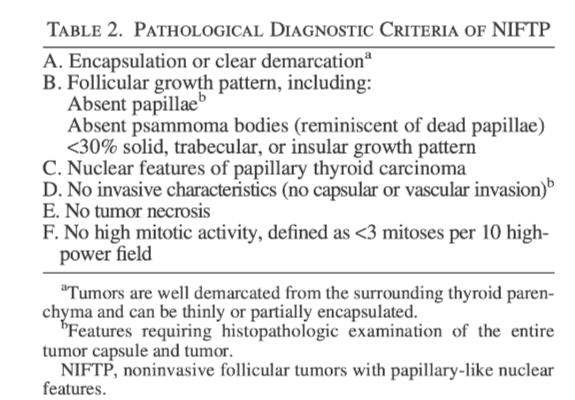
      • NIFTP:
        • Noninvasive Follicular Thyroid Neoplasm with Papillary-like Nuclear Features
      • Tumor of uncertain malignant potential
      • Hyalinizing trabecular tumor
    • Malignant:
      • Papillary thyroid carcinoma (PTC) – with subtypes:
        • Classical
        • Tall cell
        • Columnar cell
        • Solid
        • Diffuse sclerosing
        • Hobnail
      • Follicular thyroid carcinoma (FTC):
        • Minimally invasive
        • Widely invasive
      • Oncocytic carcinoma
      • Poorly differentiated thyroid carcinoma (PDTC)
      • Differentiated high-grade thyroid carcinoma (new)
      • Anaplastic thyroid carcinoma (ATC)
    • C Cell-Derived Tumors:
      • Medullary thyroid carcinoma (MTC):
        • New grading system based on mitotic count, necrosis, and Ki-67 index
      • Calcitonin-secreting hyperplasia (C-cell hyperplasia)
    • Mixed Tumors:
      • Mixed medullary and follicular carcinoma
    • Tumors of Uncertain Histogenesis:
      • Cribriform-morular thyroid carcinoma:
        • Formerly a subtype of PTC
    • Thyroblastoma (new entity)
    • Salivary Gland-Type Tumors of the Thyroid:
      • Mucoepidermoid carcinoma
      • Secretory carcinoma
    • Thymic-Origin Tumors:
      • SETTLE:
        • Spindle epithelial tumor with thymus-like differentiation
      • CASTLE:
        • Carcinoma showing thymus-like differentiation
  • Differentiated High-Grade Thyroid Carcinoma (DHGTC):
    • New category for tumors with high mitotic rate or necrosis:
      • But that retain differentiation (e.g., follicular or papillary histology)
  • NIFTP is formally recognized as a low-risk neoplasm, not carcinoma
  • References:

Primary Hyperparathyroidism

  • Primary hyperparathyroidism (PHPT):
    • Is caused by an increased secretion of parathyroid hormone (PTH) by the parathyroid gland(s):
      • Which leads to an elevated serum calcium level
  • The overproduction of parathyroid hormone (PTH):
    • Termed hyperparathyroidism (HPT), can be categorized as:
      • Primary
      • Secondary
      • Tertiary
  • Primary hyperparathyroidism (PHPT);
    • Arises from an unregulated overproduction of PTH from an abnormal parathyroid gland
  • Increased PTH levels may also occur as a compensatory response to hypocalcemic states resulting from:
    • Chronic renal failure or gastrointestinal (GI) malabsorption of calcium:
      • This secondary HPT can be reversed by the correction of the underlying problem:
        • For example kidney transplantation for chronic renal failure
  • However, chronically stimulated parathyroid glands:
    • May occasionally become autonomous:
      • Resulting in the persistence or recurrence of the hypercalcemia after successful renal transplantation:
        • Resulting in tertiary HPT
  • PHPT is defined as:
    • Hypercalcemia or widely fluctuating levels of serum calcium resulting from:
      • The inappropriate or autogenous secretion of PTH:
        • By one or more parathyroid glands:
          • In the absence of a known or recognized stimulus
  • The most common cause of hypercalcemia in the outpatient setting is:
    • Primary hyperparathyroidism (PHPT):
      • With approximately 100,000 new cases per year reported in the United States
  • Since the advent of routine laboratory testing:
    • The prevalence of the disease has increased from:
      • 0.1% to 0.4%:
        • One to seven cases per 1000 adults
  • In a study by Yeh et al:
    • The incidence of PHPT fluctuated between:
      • 36.3 and 120.2 cases per 100,000 women-years
      • 13.4 and 35.6 in 100,000 men-years
  • PHPT may present at any age:
    • With the vast majority of cases occurring in patients older than 45 years of age
    • The mean age at diagnosis has remained between:
      • 52 and 56 years
  • Women have consistently made up the preponderance of cases:
    • With a female-to-male ratio of:
      • 3:1 to 4:1
    • Based on a population based study from Rochester Minnesota:
      • The higher incidence of this could be secondary (hypothetically) to:
        • Estrogen deficiency after menopause:
          • That reveals underlying HPT
  • The precise origin of PHPT is unknown:
    • Although exposure to low-dose therapeutic ionizing radiation and familial predisposition account for some cases:
      • Irradiation for acne could have accounted for a 2 to 3-fold increase in the incidence of this disease at some point in time, and a 4-fold increase was noted in survivors of the atomic bomb
    • Schneider et al., in their study of 2555 patients followed for 50 years, even low doses of radiation exposure during the teenage years:
      • Was associated with a slight risk of developing PHPT
      • In this study a dose response was documented in people receiving external-beam radiotherapy for benign diseases before their 16th birthday
      • The latency period for the development of PHPT after radiation exposure:
        • Is longer than that for the development of thyroid tumors, with most cases occurring 30 to 40 years after exposure
    • Patients who have been radiated have similar clinical manifestations and serum calcium levels when compared to patients without a history of radiation exposure:
      • However, the former tend to have higher PTH levels and a higher incidence of concomitant thyroid neoplasms
  • Certain medications have been implicated in the development of hypercalcemia:
    • Lithium therapy has been known to:
      • Shift the set point for PTH secretion in parathyroid cells:
        • Thereby resulting in elevated PTH levels and mild hypercalcemia
    • Lithium stimulates the growth of abnormal parathyroid glands in vitro and also in susceptible patients in vivo
    • Unusual metabolic features associated with lithium use include:
      • Low urinary calcium excretion
      • Normal cyclic AMP excretion
      • Lack of calcic nephrolithiasis
    • The mechanism probably results from:
      • Lithium linking with the calcium sensing receptor on the parathyroid glands resulting in PTH secretion
  • Elevated serum calcium levels have been associated with thiazide diuretic:
    • The overall annual age- and sex-adjusted (to 2000 U.S. whites) incidence was:
      • 7.7 (95% CI, 5.9 to 9.5) per 100,000 individuals
    • The average 24-hour plasma calcium concentrations are increased with thiazide diuretic use:
      • But the mean 24-hour PTH levels remain unchanged in subjects with normal baseline PTH levels and no evidence of hypercalciuria
    • Thiazides diuretics have several metabolic effects that may contribute to increased calcium levels:
      • A decrease in urine calcium excretion is the most likely cause:
        • But in some cases diuretic use has been associates with a metabolic alkalosis:
          • That could also increase the total serum calcium levels through a pH-dependent increase in protein-bound calcium
      • Although plasma 1,25 (OH) vitamin D levels are unchanged:
        • Increased intestinal calcium absorption in response to thiazide diurectic use:
          • Has been noted and could also contribute to an increase in serum calcium
      • One last possible explanation for the elevated serum calcium levels associated with thiazide diuretic use is:
        • Hemoconcentration associated with dieresis
  • Numerous genetic abnormalities have been identified in the development of PHPT, including:
    • Anomalies in tumor suppressor genes and proto-oncogenes
    • Specific DNA mutations in a parathyroid cell:
      • May confer a proliferative advantage over normal neighboring cells:
        • Thus allowing for clonal growth:
          • Large populations of these altered cells containing the same mutation within hyper functioning parathyroid tissue:
            • Suggest that such glands are a result of clonal expansion
    • The majority of PHPT cases are:
      • Sporadic
    • Nonetheless, PHPT also occurs within the spectrum of a number of inherited disorders such as:
      • Multiple endocrine neoplasia syndromes (MEN):
        • MEN type 1 (Wermer Syndrome)
        • MEN type 2A (Sipple Syndrome)
      • Isolated familial HPT
      • Familial HPT with jaw-tumor syndrome
    • All of these are inherited in an:
      • Autosomal dominant fashion
  • The earliest and most common presentation of MEN type 1 (Wermer Syndrome):
    • Is PHPT:
      • Develops in approximately 80% to 100% of patients by age 40 years
    • These patients also are predisposed to the development of:
      • Pancreatic neuroendocrine tumors
      • Pituitary adenomas
      • Less frequently:
        • Skin angiomas
        • Lipomas
        • Adrenocortical tumors
        • Neuroendocrine tumors of the:
          • Thymus
          • Bronchus
          • Stomach
      • MEN type 1 has been shown to result from:
        • A germline mutation in a tumor suppressor gene:
          • Called MEN1 gene:
            • Located on chromosome 11q12-13 that encodes Menin:
              • A protein that is postulated to interact with the transcription factors JunD and nuclear factor-κB in the nucleus, in addition to replication protein A and other proteins
      • Pre-symptomatic screening for mutation carriers for MEN type 1:
        • Is difficult because generally MEN1 mutations result in a nonfunctional protein and are scattered throughout the translated nine exons of the gene
      • MEN1 mutations also have been found in kindred’s initially suspected to represent isolated familial HPT
      • Screening for mutation carriers for MEN type 1 has a very high detection rate greater than 94%, and is used in Sweden for patients with:
        • PHPT with a first-degree relative with a major endocrine tumor, age of onset is less than 30 years and / or if multiple pancreatic tumors / parathyroid hyperplasia is detected
  • Approximately 20% of patients with MEN type 2A (Sipple Syndrome):
    • Develop PHPT:
      • Which is usually less severe
    • MEN type 2A is caused by:
      • A germline mutation of the RET proto-oncogene:
        • Located on chromosome 10
    • Genotype and phenotype correlations have been noted in this syndrome:
      • In that individuals with mutations at codon 634:
        • Are more likely to develop PHPT
  • Patients with the familial HPT with jaw-tumor syndrome:
    • Have an increased predisposition to:
      • Parathyroid carcinoma
    • This syndrome maps to a tumor suppressor locus HRPT2 (parafibromin):
      • On chromosome 1
  • Sporadic parathyroid adenomas and some hyperplastic parathyroid glands:
    • Have loss of heterozygosity (LOH) at 11q13:
      • The site of the MEN1 gene in approximately 25% to 40% of the cases
  • Over expression of PRAD1:
    • Which encodes cyclin D1:
      • A cell cycle control protein:
        • Is found approximately 18% of parathyroid adenomas
    • This was proven to result from a rearrangement on chromosome 11:
      • That places the PRAD1 gene:
        • Under the control of the PTH promoter
  • Other chromosomal regions deleted in parathyroid adenomas and possibly reflecting loss of tumor suppressor genes include:
    • 1p
    • 6q
    • 15q
  • Amplified regions suggesting oncogenes have been identified at:
    • 16p
    • 19p
  • RET mutations:
    • Are unusual in sporadic parathyroid tumors
  • Sporadic parathyroid cancers are characterized by:
    • Uniform loss of the tumor suppressor gene RB:
      • Which is involved in cell cycle regulation
    • 60% have HRPT2 (CDC73) mutations located in chromosome 1:
      • Encodes the protein Parafibromin
    • These alterations are rare in benign parathyroid tumors;
      • May have implications for diagnosis
    • The p53 tumor suppressor gene:
      • Is also inactivated in a subset (30%) of parathyroid carcinomas
  • Single gland adenoma:
    • Is the most common cause (75% to 90%) of PHPT
  • Lower pole adenomas (in relation to the thyroid):
    • Are more common than are upper pole adenomas
  • Sizes range from 1 cm to 3 cm:
    • The normal parathyroid gland measures approximately 6 mm X 4 mm X 2 mm
  • The weight of parathyroid adenomas vary between:
    • 553.7 mg +/- 520.5 mg (range, 66-2536):
      • The normal weight of a parathyroid gland is:
        • Approximately 40 mg to 50 mg
  • Ectopic glands can be present:
    • 4% to 16% of cases
  • PHPT is caused by multiple adenomas or hyperplasia in:
    • 15% to 25% of the cases
  • Parathyroid carcinoma as the cause of PHPT:
    • Is extremely rare in most parts of the world (~1%)
  • Multi-gland adenoma arises in a significant number of patients:
    • Double adenomas are seen in approximately:
      • 2% to 12% of the cases
    • Triple adenomas:
      • In less than 1% the cases
    • Four adenomas or parathyroid gland hyperplasia:
      • In less than 3% to 15% of the cases
  • Most parathyroid adenomas:
    • Consist of parathyroid chief cells
    • They are usually encapsulated
    • In 50% of the cases they are surrounded by normal parathyroid tissue
    • Some adenomas, nevertheless, are composed of oxyphil cells:
      • These adenomas are usually larger than chief cell adenomas
  • Parathyroid adenomas are sometimes located within the thymus:
    • They express a parathyroid-specific gene:
      • GCMB
    • Contrasting with the normal thymus:
      • Which does not neither express PTH nor GCMB
  • In a study by Ruda et al:
    • 225 patients with PHPT:
      • Parathyroid hyperplasia accounted for approximately 6% of cases
  • In parathyroid hyperplasia all four glands are enlarged:
    • With the lower glands typically being larger than the upper time
    • The glands are usually composed of:
      • Chief cells
    • Clear cell hyperplasia is very rare and is the only one in which the upper parathyroid glands are larger than the lower ones

#Arrangoiz #ParathyroidSurgeon #ParathyroidExpert #Hyperparathyroidism #PrimaryHyperparathyroidism #CancerSurgeon #EndocrineSurgery #Teacher #Surgeon #HeadandNeckSurgeon #SurgicalOncologist #ParathyroidAdenoma #Hypercalcemia #ElevatedCalciumLevels #Miami #MountSinaiMedicalCenter #MSMC #Mexico #Hialeah

Axillary Pathologic Complete Response (PCR) in ER+ / HER 2- Breast Cancer

  • Axillary pCR in ER⁺ / HER2⁻ Breast Cancer after neoadjuvant chemotherapy (NACT):
    • Neoadjuvant chemotherapy is commonly used to downstage axillary disease in node-positive breast cancer:
      • However, ER – positive, HER2 – negative tumors:
        • Especially luminal A subtype:
          • Are less responsive to chemotherapy compared to triple-negative or HER2-positive tumors
Axillary Response to Neoadjuvant Chemotherapy
  • Interpretation and Considerations:
    • Luminal A tumors (low Ki-67):
      • Typically show < 10% pCR
    • Luminal B tumors (higher proliferative index):
      • Achieve up to 20% to 25% axillary pCR
    • Hormone receptor positivity:
      • Correlates inversely with chemotherapy response
    • Axillary response:
      • May exceed breast pCR in some ER+ / HER2− patients:
        • Isolated nodal clearance
    • Ki-67 and genomic assays (e.g., Oncotype DX, MammaPrint):
      • May predict likelihood of response
  • Clinical Implications:
    • Lower pCR in ER+ / HER2-:
      • Supports careful use of NACT primarily for:
        • Tumor downsizing in borderline resectable disease
        • Downstaging axilla to avoid ALND:
          • If cN1 → ypN0
        • Surgical planning should consider likelihood of residual disease:
          • Particularly in low-proliferative tumors
    • Role for post-NACT axillary imaging and sentinel lymph node biopsy remains critical in this group
  • Key References: