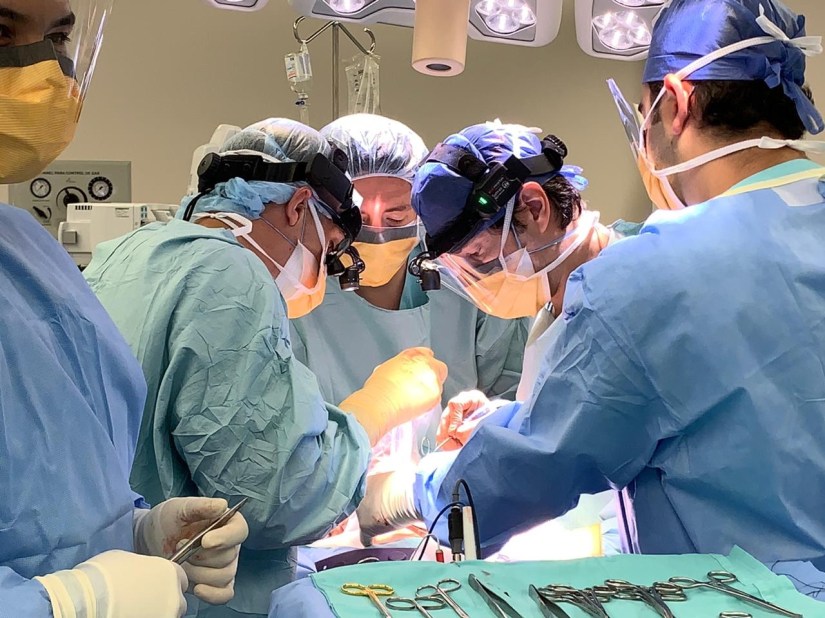
Mastectomy vs Breast Conservation Therapy

  • NSABP B-04:
    • A Protocol for the Evaluation of Radical Mastectomy and Total Mastectomy With and Without Radiation in the Primary Treatment of Cancer of the Female Breast
    • Enrolled 1,079 patients with clinically node-negative disease:
      • Randomized them to radical mastectomy (RM), total mastectomy (TM) plus local-regional axillary irradiation, or TM alone
    • An additional 586 patients with clinically node-positive disease:
      • Were randomized to RM or TM plus radiation
    • An important point of this trial is that none of these patients received systemic therapy
    • After 25 years of follow-up:
      • The study showed no significant difference in long-term outcome between:
        • Clinically node-negative patients who received RM and those who received TM with or without radiation, or between clinically node-positive patients who received RM vs.TM with nodal irradiation
      • When comparing the hazard ratio for death within the two arms:
        • The results show no survival advantage from RM
    • In patients with clinically node-negative disease:
      • Pathologic examination of the mastectomy specimen in patients treated with radical mastectomy revealed that 40% of the patients had pathologically positive nodes:
        • However, only 19% of patients treated with TM alone and no axillary surgery had an axillary recurrence:
          • Suggesting that not all occult axillary disease will progress into clinically meaningful disease, even in the absence of systemic therapy
  • NSABP B-06:
    • Phase III Total Mastectomy / Axillary Dissection vs Segmental Mastectomy / Axillary Dissection with or without Radiotherapy for Potentially Curable Breast Carcinoma
    • Compared lumpectomy and axillary node dissection with or without breast irradiation with modified radical mastectomy (MRM):
      • In patients with tumors 4 cm or less in greatest diameter
    • The results of this trial demonstrating equivalent survival between the two surgical options:
      • Establish BCS as a viable surgical option for most patients with invasive breast cancer
  • The Milan I trial:
    • Compared 701 patients with invasive breast cancer up to 2 cm in size without clinically positive axillary lymph nodes:
      • Randomized them into those who received radical mastectomy and those who received quadrantectomy plus axillary dissection and radiotherapy
    • A recent analysis of the trial showed no differences in OS between the two study groups
  • The NSABP B-17:
    • Phase III Randomized Study of Postoperative Radiotherapy Following Segmental Mastectomy and Axillary Dissection in Patients with Noninvasive Intraductal Adenocarcinoma of the Breast:
      • Compared lumpectomy alone to lumpectomy plus breast irradiation in 818 patients with localized ductal carcinoma in situ
    • This trial concluded that radiotherapy did not improve OS but that it did significantly decrease the rate of invasive or in situ in breast tumor recurrence in the ipsilateral breast
  • The EORTC Trial 10801:
    • Was a randomized multicenter trial that compared breast-conserving therapy with MRM for patients with invasive breast cancer less than 5 cm in diameter
    • At 10 years, there was no difference between the two groups in OS or in distant metastasis-free rates
    • Locoregional recurrence at 10 years was:
      • 12% for the mastectomy group and 20% for the breast-conserving therapy group

References

1. Fisher B, Montague E, Redmond C, Barton B, Borland D, Fisher ER, et al. Comparison of radical mastectomy with alternative treatments for primary breast cancer: a first report of results from a prospective randomized clinical trial. Cancer. 1977;39(6 Suppl):2827-2839.

2. Fisher B, Anderson S, Bryant J, Margolese RG, Deutsch M, Fisher ER, et al. Twenty-year follow-up of a randomized trial comparing total mastectomy, lumpectomy, and lumpectomy plus irradiation for the treatment of invasive breast cancer. N Engl J Med. 2002;347(16):1233-1241.

3. Mamounas EP, Wickerham DL, Fisher B, Geyer CE, Julian TB, Wolmark N. The NSABP experience. In: Kuerer HM, ed. Kuerer’s Breast Surgical Oncology. New York, NY: McGraw-Hill Companies; 2010:475-508.

4. Veronesi U, Cascinelli N, Mariani L, Greco M, Saccozzi R, Luini A, et al. Twenty-year follow-up of a randomized study comparing breast-conserving surgery with radical mastectomy for early breast cancer. N Engl J Med. 2002;347(16):1227-1232.

5. Fisher B, Dignam J, Wolmark N, Mamounas E, Costantino J, Poller W, et al. Lumpectomy and radiation therapy for the treatment of intraductal breast cancer: findings from National Surgical Adjuvant Breast and Bowel Project B-17. J Clin Oncol. 1998;16(2):441-452.

6. Curran D, van Dongen JP, Aaronson NK, Kiebert G, Fentiman IS, Mignolet F, et al. Quality of life of early-stage breast cancer patients treated with radical mastectomy or breast-conserving procedures: results of EORTC Trial 10801. The European Organization for Research and Treatment of Cancer (EORTC), Breast Cancer Co-operative Group (BCCG). Eur J Cancer. 1998;34(3):307-314.

Sentinel Lymph Node Biopsy Compared to Axillary Dissection

  • Data from the ACOSOG Z0011 trial:
    • Suggest completion axillary dissection can be avoided:
      • In patients with cT1 / cT2 cN0 breast cancer with sentinel lymph node (SLN) metastasis:
        • Provided that systemic therapy and whole-breast irradiation (WBI):
          • Are incorporated into the treatment strategy for early-stage breast cancer:
            • Following breast-conserving surgery (BCS)
  • This trial enrolled:
    • Clinically node-negative patients (cN0)
    • Tumors less than 5 cm in size (cT1 to cT2)
    • With 1 to 2 positive SLNs:
      • By hematoxylin and eosin staining:
        • Who were treated with BCS and planned WBI
  • Patients were randomized to:
    • SLN biopsy alone vs. axillary lymph node dissection (ALND)
  • The 10-year:
    • Overall survival was similar in the SLNB only group compared to the ALND group:
      • 86.3% vs. 83.6%, p = 0.72
    • Disease-free survival was similar in the SLNB only group compared to the ALND group:
      • 80.2% and 78.2%
    • In patients treated with ALND:
      • 27% had additional non-SLN disease found at the time of ALND:
        • Suggesting that patients treated with SLNB alone:
          • Would have a similar disease burden
        • Yet, nodal recurrence rates were similar between the SLNB and ALND groups at 10 years:
          • 1.5% vs. 0.5%, p = 0.13:
            • Suggesting that systemic therapy and radiation therapy:
              • Provide adequate local control in patients with limited disease burden in the axilla
  • The AMAROS trial:
    • Is a phase III non-inferiority study:
      • Comparing ALND with axillary radiation therapy in patients with clinical cT1 to cT2 cN0 breast cancer with a positive sentinel node
    • The trial showed low 5-year rates of regional recurrence in the ALND and axillary radiation therapy groups:
      • 0.43% vs 1.19%, respectively:
        • But the risk of patient perceived (subjective) or measured (objective) lymphedema:
          • Was twice as high in the ALND arm compared to the radiation arm:
            • Subjective:
              • 23% vs. 11% after 5 years of follow-up
            • Objective:
              • 13% vs. 5% after 5 years of follow-up
  • The ACOSOG Z0010 trial:
    • Evaluates the incidence and impact of SLN and bone marrow micrometastases on patients with early-stage breast cancer treated with BCS and radiation:
      • It demonstrated that identification of occult disease in the SNs with immunohistochemistry was not associated with survival

References

1. Giuliano AE, McCall L, Beitsch P, Whitworth PW, Blumencranz P, Leitch AM, et al. Locoregional recurrence after sentinel lymph node dissection with or without axillary dissection in patients with sentinel lymph node metastases: the American College of Surgeons Oncology Group Z0011 Randomized Trial. Ann Surg. 2010;252(3):426-432.

2. Veronesi U, Cascinelli N, Mariani L, Greco M, Saccozzi R, Luini A, et al. Twenty-year follow-up of a randomized study comparing breast-conserving surgery with radical mastectomy for early breast cancer. N Engl J Med. 2002;347(16):1227-1232.

3. Rutgers EJ, Donker M, Straver ME. Radiotherapy or surgery of the axilla after a positive sentinel node in breast cancer patients: final analysis of the EORTC AMAROS trial (10981/22023). J Clin Oncol. 2013;31 (suppl; abstr LBA1001). Available at: http://meetinglibrary.asco.org/content/109779-132. Accessed November 7, 2013.

4. Straver ME, Meijnen P, van Tienhoven G, et al. Sentinel node identification rate and nodal involvement in the EORTC 10981-22023 AMAROS trial. Ann Surg Oncol. 2010;17:1854-1861.

5. Hunt KK, Ballman KV, McCall LM, et al. Factors associated with local-regional recurrence after a negative sentinel node dissection: results of the ACOSOG Z0010 trial. Ann Surg. 2012;256:428-436.

NSABP B-06, Phase III Total Mastectomy /Axillary Dissection vs. Segmental Mastectomy / Axillary Dissection with or without Radiotherapy

  • NSABP B-06, Phase III Total Mastectomy / Axillary Dissection vs. Segmental Mastectomy / Axillary Dissection with or without Radiotherapy for Potentially Curable Breast Carcinoma:

    • Compared total mastectomy with lumpectomy alone and lumpectomy with irradiation:in patients with tumors four cm or less in greatest diameter
    • All patients had an axillary lymph node dissection (ALND)
  • This trial, along with five other randomized prospective trials, was instrumental in:
    • Establishing lumpectomy plus radiation therapy as the preferred treatment for women with early stage, operable breast cancer, as compared to mastectomy
  • After 20 years of follow-up:
    • There were no observed differences in overall survival, or distant disease-free survival:

      • Between the total mastectomy group and the lumpectomy groups, with or without radiation
      • The hazard ratio (HR) for death with lumpectomy alone was 1.05 (95% confidence interval [CI] 0.90–1.23; P=0.51)
      • The HR for death with lumpectomy plus radiation was 0.97 (95% CI, 0.83–1.14; P=0.74):
        • Which were comparable to total mastectomy
  • NSABP B-04:
    • Enrolled clinically node-negative patients and randomized them to:
      • RM, TM plus radiation, or TM alone
  • NSABP B-17:
    • Compared lumpectomy alone to lumpectomy plus breast radiation in patients with localized ductal carcinoma in situ (DCIS)
  • NSABP B-32:
    • Assigned clinically node-negative patients to either sentinel lymph node (SLN) resection plus ALND (group 1) or to SLN resection alone with ALND only if the SLNs were positive (group 2)
  • NSABP protocol B-43:
    • Aims to evaluate the effect of trastuzumab on local recurrence in patients with HER2-positive DCIS treated with lumpectomy and whole-breast irradiation
  • References

    • Fisher B, Anderson S, Bryant J, Margolese RG, Deutsch M, Fisher ER, et al. Twenty-year follow-up of a randomized trial comparing total mastectomy, lumpectomy, and lumpectomy plus irradiation for the treatment of invasive breast cancer. N Engl J Med. 2002;347(16):1233-1241.
    • Fisher B, Montague E, Redmond C, Barton B, Borland D, Fisher ER, et al. Comparison of radical mastectomy with alternative treatments for primary breast cancer: a first report of results from a prospective randomized clinical trial. Cancer. 1977;39(6 Suppl):2827-2839.
    • Mamounas EP, Wickerham DL, Fisher B, Geyer CE, Julian TB, Wolmark N. The NSABP experience. In: Kuerer HM, ed. Kuerer’s Breast Surgical Oncology. New York, NY: McGraw-Hill Companies; 2010:475-508.
    • Fisher B, Dignam J, Wolmark N, Mamounas E, Constantino J, Poller W, et al. Lumpectomy and radiation therapy for the treatment of intraductal breast cancer: findings from National Surgical Adjuvant Breast and Bowel Project B-17. J Clin Oncol. 1998;16(2):441-452.
    • Krag DN, Anderson SJ, Julian TB, Brown AM, Harlow SP, Constantino JP, et al. Sentinel-lymph-node resection compared with conventional axillary-lymph-node dissection in clinically node-negative patients with breast cancer: overall survival findings from the NSABP B-32 Randomized Phase 3 Trial. Lancet Oncol. 2010;11(10):927-933.

Adjuvant Radiation Therapy in Ductal Carcinoma In Situ Treated with Breast Conservation Therapy

  • The National Surgical Adjuvant Breast and Bowel Project (NSABP) B-17 phase III randomized clinical trial and three other prospective randomized clinical trials and their follow-up studies:
    • Have demonstrated and continue to show the benefit of radiation therapy (RT) following breast-conserving surgery for patients with DCIS:
      • With a significant 50% reduction in IBTR
  • In a report by Wapnir et al. on long-term outcomes of the NSABP B-17 and B-24 trials:
    • Patients who only received lumpectomy:
      • Had a local recurrence rate of 19.4% compared with 8.9% in the lumpectomy plus RT group at 15 years of follow-up:
        • Demonstrating a 52% reduction in the risk of IBTR
  • Similarly, European Organisation for Research and Treatment of Cancer (EORTC) 10853:
    • Showed a risk reduction of 48% with the addition of radiotherapy to locally excised DCIS
  • The Radiation Therapy Oncology Group (RTOG) 9804 trial:
  • Evaluated the impact of RT after breast-conserving therapy (BCT) in patients with mammographically detected low-risk DCIS:
    • As defined by size less than 2.5 cm, unicentricity, low- and intermediate-grade, and margins > 3 mm
  • The primary endpoint of ipsilateral local failure was:
    • 0.9% in the RT arm versus 6.7% in the observation arm
  • The E5194 trial:
    • Included a similar patient population of 665 patients placed into two cohorts:
      • Low- and intermediate-grade DCIS with a tumor size less than 2.5 cm or
      • High-grade DCIS with a tumor size < 1 cm
    • All patients were treated with BCT yielding > 3 mm margins without RT with a median follow-up of 12.3 years
    • These results demonstrated tumor size and cohort to be significant predictors of developing an ipsilateral breast event:
      • 14.4% for the low-risk cohort versus 24.6% for the high-risk cohort
      • This risk continued to increase without plateau through the follow-up period:
        • Necessitating further follow-up to determine long-term outcomes
  • Differences in the IBTR rates between these studies may be due to the effect of tamoxifen use:
    • Which was not controlled in either trial and which is known to reduce the risk of IBTR in combination with RT after BCT as shown by the NSABP B-24 trial
  • Together, the results of both RTOG 9804 and E5194 support the individualized treatment of DCIS:
    • Based on identification of patients at low risk for IBTR determined by pathologic and clinical features that may omit RT
  • A 12-year follow-up study of RTOG 9804:
    • Demonstrated that the 12-year cumulative incidence of local recurrence (LR) was:
      • 2.8% with RT and 11.4% with observation alone:
        • The 12-year cumulative incidence of invasive LR was:
      • 1.5% with RT and 5.8% with observation alone
  • References
  • Wapnir IL, Dignam JJ, Fisher B, Mamounas EP, Anderson SJ, Julian TB, et al. Long-term outcomes of invasive ipsilateral breast tumor recurrences after lumpectomy in NSABP B-17 and B-24 randomized clinical trials for DCIS. J Natl Cancer Inst. 2011;103(6):478-488.
  • EORTC Breast Cancer Cooperative Group; and EORTC Radiotherapy Group; Bijker N, Meijnen P, Peterse JL, et al. Breast-conserving treatment with or without radiotherapy in ductal carcinoma-in-situ: ten-year results of European Organisation for Research and Treatment of Cancer randomized phase III trial 10853—a study by the EORTC Breast Cancer Cooperative Group and EORTC Radiotherapy Group. J Clin Oncol. 2006;24(21):3381-3387.
  • McCormick B, Winter K, Hudis C, Kuerer HM, Rakovitch E, Smith BL, et al. RTOG 9804: a prospective randomized trial for good-risk ductal carcinoma in situ comparing radiotherapy with observation. J Clin Oncol. 2015;33(7):709-715.
  • Solin LJ, Gray R, Hughes L, Wood WC, Lowen MA, Badve SS, et al. Surgical excision without radiation for ductal carcinoma in situ of the breast: 12-year results from the ECOG-ACRIN E5194 Study. J Clin Oncol. 2015;33(33):3938-3944.
  • McCormick B. Randomized trial evaluating radiation following surgical excision for “good risk” DCIS: 12-year report from NRG/RTOG 9804. Int J Radiat Oncol Biol Phys.2018;102(5):1603.

Truncal Melanoma

  • Truncal melanomas:
    • Have a higher rate of mapping on lymphoscintigraphy:
      • To multiple lymph node basins
  • McHugh et al. (2006):
    • Found 23% of patients with primary truncal melanomas:
      • To have multiple lymphatic basin drainage
  • Other series have described a rate of multiple lymphatic basin drainage for truncal melanomas:
    • Between 29% to 46%
  • The standard of care and rationale for preoperative lymphoscintigraphy:
    • It assists with identifying patients with multiple lymphatic basins:
      • When identified, a sentinel node biopsy should be performed in each basin
  • References:
    • Jacobs IA, Chang CK, Salti GI. Significance of dual-basin drainage in patients with truncal melanoma undergoing sentinel lymph node biopsy. J Am Acad Dermatol. 2003;49:615-619.
    • Porter GA, Ross MI, Berman RS, Lee JE, Mansfield PF, Gershenwald JE. Significance of multiple nodal basin drainage in truncal melanoma patients undergoing sentinel lymph node biopsy. Ann Surg Oncol. 2000;7:256-261.
    • McHugh JB, Su L, Griffith KA, et al. Significance of multiple lymphatic basin drainage in truncal melanoma patients undergoing sentinel lymph node biopsy. Ann Surg Oncol. 2006;13:1216-1223.

MINDACT Trial

  • The MINDACT:
    • Is a randomized, controlled, prospective, phase III, clinical trial:
      • Evaluating the use of a 70-gene signature test (MammaPrint):
        • To aid in directing chemotherapy treatment of women with early-stage breast cancer
      • The goal of this study was:
        • To reduce the overtreatment of early-stage breast cancer
        • To determine if genomic risk (as defined by the 70-gene signature test) can be utilized to predict recurrence and possibly avoid chemotherapy in patients with a low genomic risk
  • Patients were designated as high or low risk for recurrence based on two categories:
    • Clinical / pathologic high-risk features:
      • Positive lymph nodes
      • High-grade tumors
      • T2 tumors
      • Premenopausal diagnosis
    • Genomic risk:
      • As defined by the 70-gene signature test
  • Women who were low risk in both categories:
    • Were not given chemotherapy
  • Women who were high risk in both categories:
    • Were given chemotherapy in addition to endocrine therapy
  • The patients who were deemed discordant between the two categories:
    • Were randomized to use either:
      • Clinical / pathologic or genomic risk to determine chemotherapy recommendations
    • Patients who had a low genomic risk had a 94.7% 5-year distant-metastasis-free survival without chemotherapy:
      • Even in the presence of high-risk clinical / pathologic factors
    • The authors concluded that:
      • Selected patients with low genomic risk may be spared chemotherapy
      • However, in an accompanying editorial:
        • Critics of this trial have noted the survival advantage of 1.5% for high-risk patients who received chemotherapy, and that the study was underpowered to accurately analyze differences between these groups
        • They noted that small differences in survival may be more significant to certain patients:
          • Thus, the decision to forgo standard treatment based on genomic assays is a very personalized decision
  • Similar results were reported with the 21-gene recurrence score assay (e.g., Oncotype DX):
    • With regard to benefit of adjuvant chemotherapy based on genomic risk stratification:
      • For women with estrogen receptor-positive, lymph node-negative breast cancer:
        • Patients with a high recurrence score via the 21-gene recurrence score assay had a significant benefit from chemotherapy with a decrease in 10-year distant recurrence rates, while patients with a low score showed minimal benefit
  • While they differ in the individual genes used to determine their output score:
    • Both of these genomic assays support the concept of directing adjuvant therapy for breast cancer:
      • Based on the biology and genetics of the tumor itself rather than only the clinical and / or pathologic factors

References

1. Cardoso F, van’t Veer LJ, Bogaerts J, Slaets L, Viale G, Delaloge S, et al; MINDACT Investigators. 70-gene signature as an aid to treatment decisions in early-stage breast cancer. N Engl J Med. 2016;375(8):717-729.

2. Hudis CA, Dickler M. Increasing precision in adjuvant therapy for breast cancer. N Engl J Med. 2016;375(8):790-791.

3. Paik S, Tang G, Shak S, Kim C, Baker J, Kim W, et al. Gene expression and benefit of chemotherapy in women with node-negative, estrogen receptor-positive breast cancer. J Clin Oncol. 2006;24(23):3726-3734.

Ipsilateral Breast Cancer Recurrence Based on the NSABP B17 and B24

  • Patients enrolled in the NSABP B-17 trial:
    • Were randomly assigned to receive partial mastectomy only or partial mastectomy followed by lattice radiotherapy (LRT; a novel technique of delivering heterogeneous doses of radiation to voluminous tumors not amenable to surgery):
      • For the treatment of localized DCIS
    • The trial showed:
      • A clear benefit for the addition of radiation
  • Patients enrolled in the NSABP B-24 trial:
    • Were randomly assigned to receive LRT or LRT plus tamoxifen (LRTT)
    • At 15-year follow-up, the risk of death in these trials was low:
      • Ranging from 2.3% for patients who had LRTT to 4.7% for patients who had LRT
  • Ipsilateral breast tumor recurrence was:
    • 35% (19.6% invasive, 15.4% DCIS) in the lumpectomy only arm of B-17 and 19.8% (10.7% invasive, 9.0% DCIS) in the LRT arm
    • In B-24 IBRT was 16.6% (9.0 invasive, 7.6% DCIS) in the LRT arm and 13.2% (6.6% invasive, 6.7% DCIS) in the LRTT arm
  • The risk of contralateral new primary ranged from:
    • 4.9% (3.3% invasive, 1.6% DCIS) in the LRTT arm of B-24 to 9.3% (5.6% invasive, 3.7% DCIS) in the LRT arm of B-17

References

1. Wapnir IL, Dignam JJ, Fisher B, Mamounas EP, Anderson SJ, Julian TB, et al. Long-term outcomes of invasive ipsilateral breast tumor recurrences after lumpectomy in NSABP B-17 and B-24 randomized clinical trials for DCIS. J Natl Cancer Inst. 2011;103(6):478-488.

Subungual Melanoma

  • There is frequently a delay in diagnosis with subungual melanomas:
    • Due to the difficulty in performing an adequate biopsy and the pigmentation being masked by the nail
  • Biopsies:
    • Are usually not definitive for Breslow thickness:
      • Frequently these melanomas are thicker and more aggressive than initial appreciated
  • The standard of care is:
    • Distal amputation with SLNM and SLN biopsy:
      • Nguyen et al:
        • Reviewed a single-institution series of 124 cases of subungual melanomas:
          • In this series, mean thickness was 3.1 mm and the level of resection / amputation was not associated with survival outcomes
      • Cohen et al:
        • Reported that 5 (17%) of 30 patients who underwent SLN biopsy had nodal metastasis
      • Median thickness was 2.1 mm, with the most common site being the toe
    • In the Australian series, 79% were Clark level IV or V with a median thickness of 3.2 mm:
      • 24% of patients who underwent SLN biopsy had positive lymph nodes.
  • References:
    • Cohen T, Busam KJ, Patel A, Brady MS. Subungual melanoma: management considerations. Am J Surg. 2008;195:244-248.
    • Heaton KM, el-Naggar A, Ensign LG, Ross MI, Balch CM. Surgical management and prognostic factors in patients with subungual melanoma. Ann Surg. 1994;219:197-204.
    • Nguyen JT, Bakri K, Nguyen EC, Johnson CH, Moran SL. Surgical management of subungual melanoma: mayo clinic experience of 124 cases. Ann Plast Surg. 2013;71:346-354.

Acral Melanoma

  • Acral melanomas present particular challenges in management, including:
    • The location, which makes reconstruction more difficult:
      • Lesions on non-weight bearing areas of the sole, such as the arch:
        • May be reconstructed with skin grafts with good functional results:
          • However, this option is less acceptable for lesions on the ball of the foot or the heel:
            • In those areas coverage with thicker tissue, for example an acral skin flap from the arch, is preferable
          • If skin graft must be used, it should be full thickness
  • SLN biopsy is an effective staging tool for melanoma, including thick lesions:
    • Several retrospective studies and the first Multicenter Selective Lymphadenectomy Trial (MSLT-I):
      • Have confirmed the prognostic significance of nodal metastases, even in high-risk lesions:
        • However, SLN biopsy was not found to confer a melanoma-specific survival advantage in the MSLT-I trial:
          • Any potential survival advantage of early nodal treatment:
            • Appears to be limited to lesions thinner than 3.5 mm
  • Neoadjuvant treatment of resectable melanoma:
    • Is not a standard approach at this time for any resectable melanoma, primary or metastatic:
      • However, some investigation and clinical use of a neoadjuvant approach in BRAF-mutated melanomas with borderline resectable metastases has been suggested
      • A mutation in c-kit may be present in some acral melanomas:
        • But preoperative systemic therapy targeted to that mutation (e.g., imatinib) is not recommended
  • References:
    • Balch C, Soong S, Ross MI, et al. Long-term results of a multi-institutional randomized trial comparing prognostic factors and surgical results for intermediate thickness melanomas (1.0-4.0 mm). Ann Surg Oncol. 2000;7:87-97.
    • Bello DM, Ariyan CE, Carvajal RD. Melanoma mutagenesis and aberrant cell signaling. Cancer Control. 2013;20:261-281.
    • Gershenwald JE, Mansfield PF, Lee JE, Ross MI. Role for lymphatic mapping and sentinel lymph node biopsy in patients with thick (or = 4 mm) primary melanoma. Ann Surg Oncol. 2000;7:160-165.
    • Gillgren P, Drzewiecki KT, Niin M, et al. 2-cm versus 4-cm surgical excision margins for primary cutaneous melanoma thicker than 2 mm: A randomised, multicentre trial. Lancet. 2011;378:1635-1642.
    • Morton DL, Thompson JF, Cochran AJ, et al. Final trial report of sentinel-node biopsy versus nodal observation in melanoma. N Engl J Med. 2014;370:599-609.
    • Nahabedian M, Wagner JD. Complex closures of melanoma excisions. In: Balch CM, Houghton AN, Sober AJ, Soong S-J, eds. Cutaneous Melanoma. 4th ed. Saint Louis, MO: Quality Medical Publishing; 2003:231-256.
    • Thomas JM, Netwon-Bishop J, A Hern R, et al. Excision margins in high-risk malignant melanoma. N Engl J Med. 2004;350:757-766.

Metastatic HER2 Positive Breast Cancer

  • The brain is frequently reported as:
    • The first site of relapse:
      • In women with HER2-positive breast cancer treated with trastuzumab
  • It is known that up to 50% of patients with HER2-positive metastatic breast cancer:
    • Will develop brain metastasis
  • Any patient who has a persistent, worsening headache in the setting of prior HER2-positive breast cancer:
    • An MRI brain is warranted

References

1. Pestalozzi BC, Zahrieh D, Price KN, et al. Identifying breast cancer patients at risk for Central Nervous System metastases in trials of the International Breast Cancer Study Group (IBCSG). Annals of oncology : official journal of the European Society for Medical Oncology. 2006;17(6):935-944.

2. Pestalozzi BC, Holmes E, de Azambuja E, Metzger-Filho O, Hogge L, Scullion M, et al. CNS relapses in patients with HER2-positive early breast cancer who have and have not received adjuvant trastuzumab: a retrospective substudy of the HERA trial (BIG 1-01). Lancet Oncol. 2013;14(3):244-248.