What are the current indications for total parotidectomy?

  • Intraparotid lymph node metastases from an extraparotid tumor, usually skin neoplasms (e.g., basal cell carcinoma, melanoma, squamous cell carcinoma, Merkel cell carcinoma, etc.)
    • Regardless of the lobe in which the metastasis is found, but strictly necessary in those located in the deep lobe
  • Intraparotid lymph node metastasis from a primary tumor of the parotid gland:
    • Regardless of the lobe in which the metastasis is identified, but strictly necessary in those located in the deep lobe
  • Primary parotid gland tumor with metastasis to regional cervical nodes [N+]
  • High-grade malignant primary tumor of the parotid gland with known high risk of regional lymph node metastasis
  • Malignant primary tumor of the deep lobe of the parotid gland
  • Benign primary tumor of the superficial lobe with extension to the deep lobe:
    • The latter scenario is usually managed, in most cases, by superficial parotidectomy associated with a partial excision of the deep lobe
  • Benign primary tumor of the deep lobe requiring a superficial parotidectomy “of necessity” for excision (in other words, those in which it is not possible to perform a deep parotidectomy while preserving the superficial lobe)
  • Malignant primary tumor of the parotid gland with invasion of surrounding soft tissues
  • Primary tumor of the parotid gland with a high rate of multifocality (to ensure complete removal, e.g., oncocytomas).
  • Bibliography:
  1. Olsen KD, Moore EJ. (2014) Deep lobe parotidectomy: clinical rationale in the management of primary and metastatic cancer. Eur Arch Otorhinolaryngol. 271(5):1181-5.
  2. Olsen KD, Quer M, de Bree R, Vander Poorten V, Rinaldo A, Ferlito A. (2017) Deep lobe parotidectomy-why, when, and how? Eur Arch Otorhinolaryngol. 274(12):4073-4078.
  3. Thom JJ, Moore EJ, Price DL, Kasperbauer JL, Starkman SJ, Olsen KD. (2014) The Role of Total Parotidectomy for Metastatic Cutaneous Squamous Cell Carcinoma and Malignant Melanoma. JAMA Otolaryngol Head Neck Surg. 140(6):548-54.

Wharton Duct Ligation During Level 1B Dissection

  • Ligation of Whartons duct in the mylohyoid-hyoglossal hiatus during submaxillectomy requires prior exposure of the lingual and hypoglossal nerves
  • Landmarks:
    • 1. Submandibular canal
    • 2. Hypoglossal nerve
    • 3. Lingual nerve
    • 4. Eardrum cord
    • 5. Mylohyoid nerve
    • 6. Submental artery
    • 7. Frog veins (“of the hypoglossus”)
    • 8. Hyoglossal muscle (floor of the submandibular triangle)
    • 9. Anterior belly of the digastric muscle
    • 10. Facial artery
    • 11. Facial vein
    • 12. Posterior belly of the digastric muscle
    • 13. Projection of Jaffe’s mandibular marginal nerve
    • 14. Hayes-Martin manoeuvre
    • 15. Platysma muscle
    • 16. Sector of the venous vascular lamina over the hyoglossal muscle

Omitting Surgery May Be Safe in Early Breast Cancer (BC) After Neoadjuvant Pathologic Complete Response (pCR)

  • A small trial headed by MD Anderson Cancer Center, Houston, has helped to further identify women who can safely skip surgery after neoadjuvant therapy for early breast cancer.
  • Among 50 women in the study with cT1, cT2, cN0, cN1, M0 triple negative or HER2-positive disease:
    • 31 (62%) had a complete pathologic response (pCR) to neoadjuvant therapy on image-guided vacuum-assisted core biopsy (VACB)
  • They went onto whole breast radiation with a boost, but given their response to neoadjuvant treatment and the accuracy of VACB, the women did not have surgery
  • So far, it seems to have been the right call:
    • At 3 years, there’s been no tumor recurrences and disease-free and overall survival are both 100%
  • Eliminating breast surgery in highly-selected patients with image-guided VACB-determined pCR following” neoadjuvant systemic therapy has “very promising 3-year results:
    • This was presented by Henry M. Kuerer, MD, PhD, a breast cancer surgeon at MD Anderson, who presented the findings at the European Society for Medical Oncology (ESMO) 2023 annual meeting.
  • The study speaks to a trend in breast cancer toward deescalation of treatment:
    • Particularly surgery:
      • To save women from the side effects of treatments they don’t need
  • With the success of modern systemic therapy, it’s only natural that we think this way:
    • This study is really important:
      • It’s addressing a very important question whether we can omit surgery in certain groups of patients:
        • We do want to deescalate surgery, and the study results are “very good:
        • However, larger trials with longer follow-up are needed to draw any firm conclusions.

Study details

  • Women in the trial were a median of 60.4 years old
  • 58% had HER2-positive and the rest triple-negative unicentric breast cancer
  • Mean baseline tumor size was 2.8 cm
  • Just 12% of the participants had lymph node involvement
  • Neoadjuvant systemic therapy was clinician’s choice
  • Breast lesions had to shrink to less than 2 cm on imaging after systemic therapy to be eligible for the study
  • A minimum of 12 cores had to be obtained on VACB
  • The 38% of women in the study with residual disease after systemic treatment went on to surgery
  • Two patients were circulating tumor cell (CTC)-positive at baseline, two were positive at 6 months, and one at 12 months
  • No patients had CTCs detected at more than one timepoint
  • The work was funded by the National Cancer Institute
#Arrangoiz #BreastSurgeon #CancerSurgeon #SurgicalOncologist #Surgeon #Doctor #MountSianiMedicalCenter #MSMC #Miami #Mexico

What proportion of patients with inherited variants in high-risk cancer genes had changes to medical management based on their genetic test results?

Samadder NJ, et al. JAMA Oncol. 2021;7(2):230‑237. doi:10.1001/jamaoncol.2020.6252

More than 1 in 4 patients with inherited variants in high‑risk cancer genes had changes to medical management based on their test results, including chemotherapy and surgical decisions.6

If a patient has cancer, a positive result6‑8:

  • May open the door for more personalized care options that can be tailored for your particular cancer
  • May provide access to clinical trials
  • May help to estimate risk for developing another cancer, which may impact care or screening recommendations for patients both now and in the future

What proportion of people with cancer have a heritable genetic risk factor?

Samadder NJ, et al. JAMA Oncol. 2021;7(2):230‑237. doi:10.1001/jamaoncol.2020.6252

One in 8 people with cancer have a gene variant that increases cancer risk and can be passed down through their family.

While many genetic changes called “gene variants’’ are good for your health, or simply make you unique, others can increase the risk of developing different types of cancers, including colon, breast, stomach, uterine, skin, prostate, ovarian, and pancreatic cancers. Like other genetic information, variants that increase the risk for cancer can be passed down from a family member. This can lead to hereditary cancer.

Dermopathy of Graves Disease

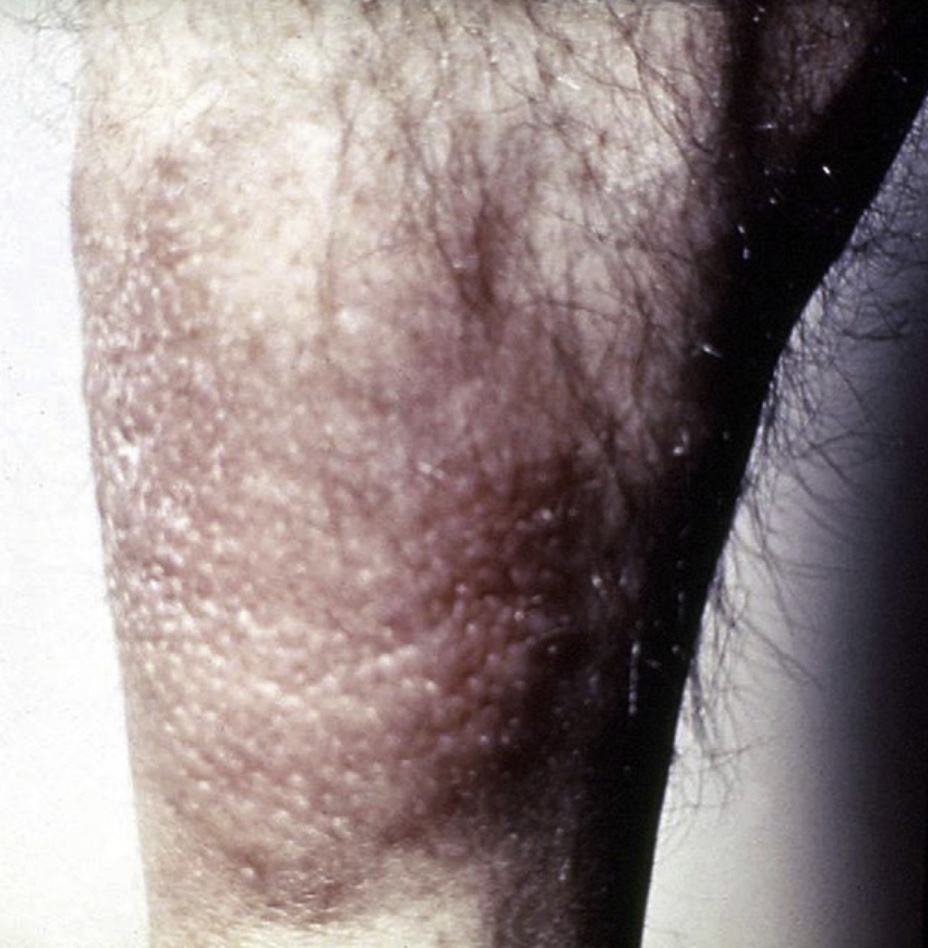
  • Pretibial myxedema occurs in 0.5% to 4.3% of patients with Graves’ disease:
    • It is an infiltrative dermopathy:
      • Most often involving the skin of the legs
    • It is manifested by painful, pruritic, raised plaque-like vio- laceous and hyperpigmented lesions:
      • That have the texture of an orange peel
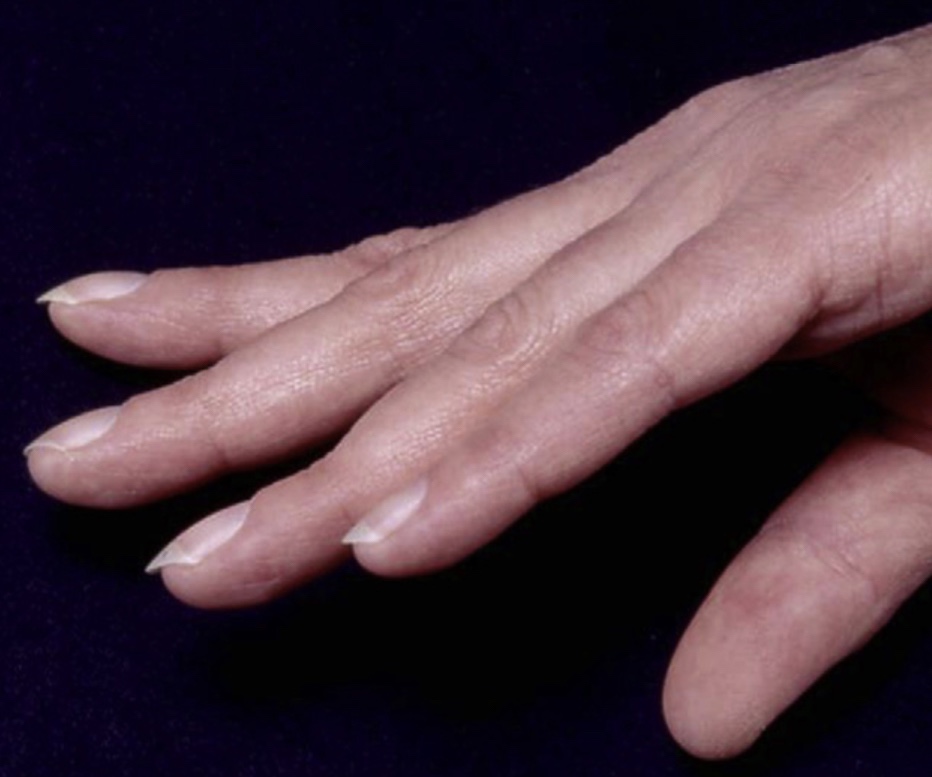
  • Acropachy occurs in less than 1% of patients with Graves’ disease:
    • It is manifested by clubbing and periosteal new bone formation of the metacarpal bones and the phalanges
Pre Tibial Myxedema
Clubbing of fingers as the most common form of thyroid acropachy.

#Arrangoiz #ThyroidSurgeon #CancerSurgeon #HeadandNeckSurgeon #SurgicalOncologist #Hyperthyroidism #EndocrineSurgery #MountSinaiMedicalCenter #MSMC #Miami #Mexico #Florida #Doctor #Surgeon #Thyroid #ThyroidDisease

Graves Ophthalmopathy

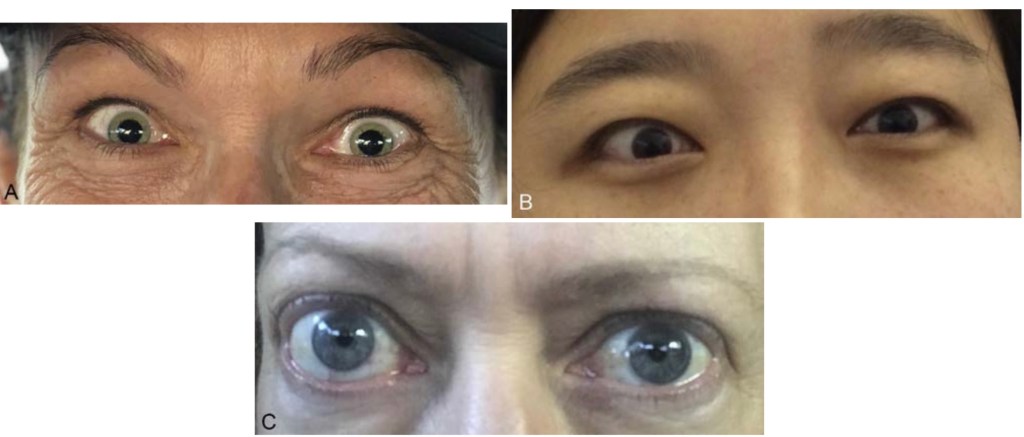
Clinically relevant ophthalmopathy occurs in 20% to 30% of patients with Graves’ disease and is vision-threatening in 3% to 5%.

#Arrangoiz #ThyroidSurgeon #CancerSurgeon #HeadandNeckSurgeon #SurgicalOncologist #Hyperthyroidism #EndocrineSurgery #MountSinaiMedicalCenter #MSMC #Miami #Mexico #Florida #Doctor #Surgeon #Thyroid #ThyroidDisease

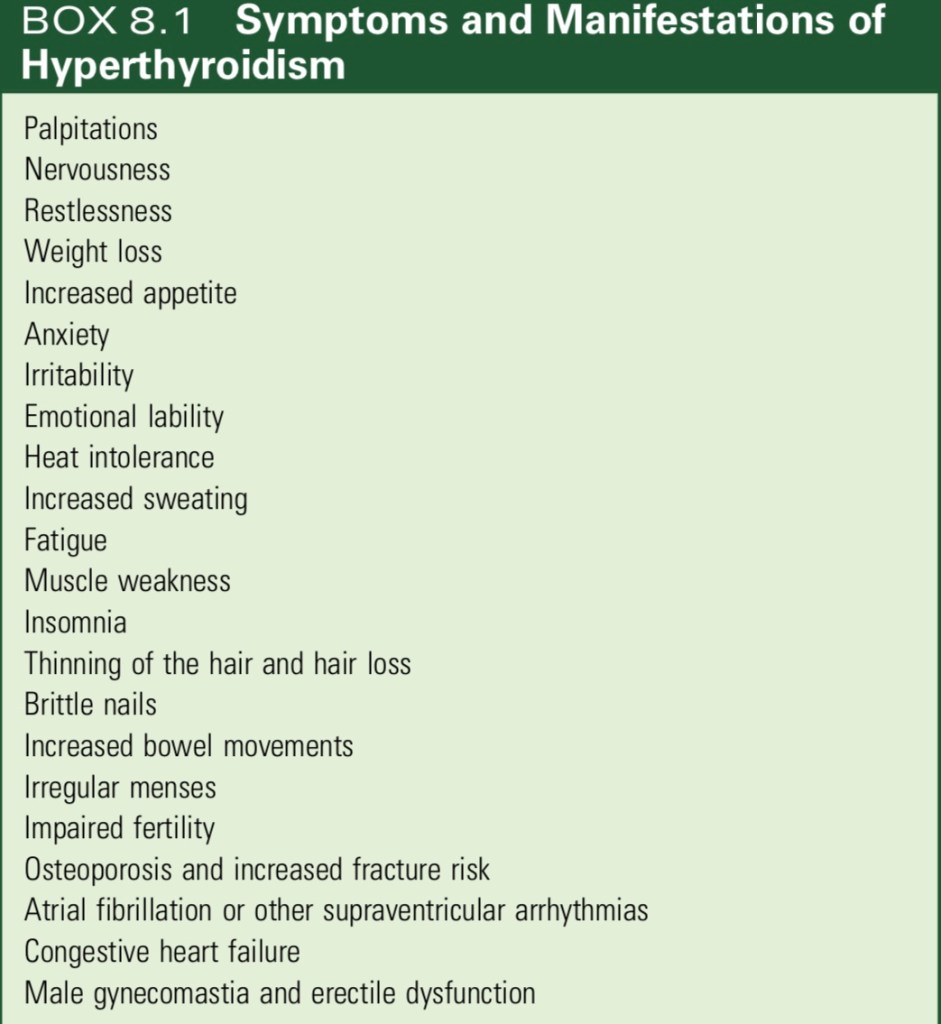
Signs of Hyperthyroidism

#Arrangoiz #ThyroidSurgeon #CancerSurgeon #HeadandNeckSurgeon #SurgicalOncologist #Hyperthyroidism #EndocrineSurgery #MountSinaiMedicalCenter #MSMC #Miami #Mexico #Florida #Doctor #Surgeon #Thyroid #ThyroidDisease

Symptomatic and Signs of Hyperthyroidism

#Arrangoiz #ThyroidSurgeon #CancerSurgeon #HeadandNeckSurgeon #SurgicalOncologist #Hyperthyroidism #EndocrineSurgery #MountSinaiMedicalCenter #MSMC #Miami #Mexico #Florida #Doctor #Surgeon #Thyroid #ThyroidDisease

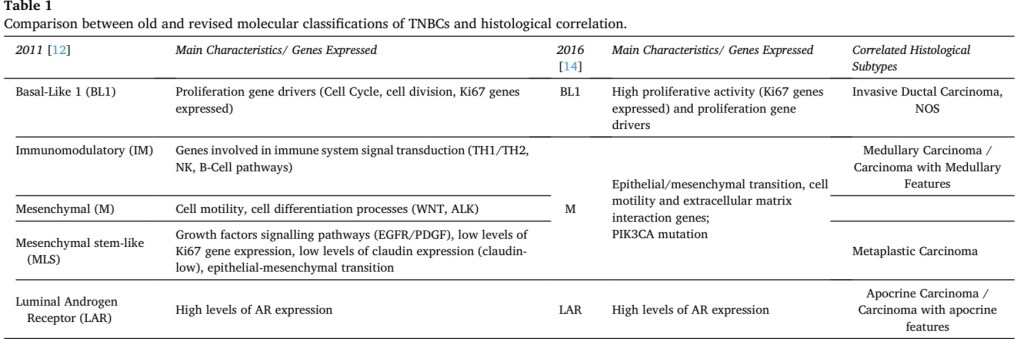
Original Molecular Classification of Triple Negative Breast Cancer (TNBC)

  • Following the description of the main intrinsic breast cancer molecular subtypes based on gene expression analysis:
    • Lehmann et al. demonstrated the complex and heterogeneous nature of TNBCs, and that their definition simply based on interpretation of histopathological features might be of limited efficacy in understanding prognostic behaviour and therapeutic implications
  • They described six subtypes of TNBC based on gene expression analysis of 21 breast cancer data sets:
    • Basal-like type 1 (BL1):
      • Characterized by high proliferative activity demonstrated by elevated Ki67 mRNA expression
    • Basal-like type2 (BL2):
      • Showing basal-myoepithelial phenotype
    • Immunomodulatory (IM) subtype:
      • That includes gene ontologies related to immune cell processes involved in immune signal transduction (such as TH1/TH2, NK and B-cell receptor pathways), in absence of significant correlation with stromal inflammatory cell infiltrate
    • Mesenchymal (M) subtype:
      • That displays genetic patterns responsible for cell motility and cell differentiation processes (i.e. Wnt pathway, ALK pathway)
    • Mesenchymal stem-like (MLS) subtype:
      • Shows genetic profiles associated with growth factors signalling pathways (i.e. EGFR, PDGF) and, particularly, low rates of proliferation genes and low expression of claudins’ family proteins (lately described as claudin-low cancer subtype)
    • LAR subtypes (luminal androgen receptor subtype):
      • Express high levels of androgen receptor hormones (AR) and correlates also with tumors showing apocrine differentiation on histologic examination