My name is Rodrigo Arrangoiz I am a breast surgeon/ thyroid surgeon / parathyroid surgeon / head and neck surgeon / surgical oncologist that works at Center for Advanced Surgical Oncology in Miami, Florida.
I was trained as a surgeon at Michigan State University from (2005 to 2010) where I was a chief resident in 2010. My surgical oncology and head and neck training was performed at the Fox Chase Cancer Center in Philadelphia from 2010 to 2012. At the same time I underwent a masters in science (Clinical research for health professionals) at the University of Drexel. Through the International Federation of Head and Neck Societies / Memorial Sloan Kettering Cancer Center I performed a two year head and neck surgery and oncology / endocrine fellowship that ended in 2016.
Mi nombre es Rodrigo Arrangoiz, soy cirujano oncólogo / cirujano de tumores de cabeza y cuello / cirujano endocrino que trabaja Center for Advanced Surgical Oncology en Miami, Florida.
Fui entrenado como cirujano en Michigan State University (2005 a 2010 ) donde fui jefe de residentes en 2010. Mi formación en oncología quirúrgica y e n tumores de cabeza y cuello se realizó en el Fox Chase Cancer Center en Filadelfia de 2010 a 2012. Al mismo tiempo, me sometí a una maestría en ciencias (investigación clínica para profesionales de la salud) en la Universidad de Drexel. A través de la Federación Internacional de Sociedades de Cabeza y Cuello / Memorial Sloan Kettering Cancer Center realicé una sub especialidad en cirugía de cabeza y cuello / cirugia endocrina de dos años que terminó en 2016.
The renal manifestations implicated with PHPT are:
Decreased glomerular filtration rate:
Up to 20% of patients with asymptomatic PHPT:
Have an estimated glomerular filtration rate (eGFR):
Below 60 mL/min/1.73 m2
The development of kidney insufficiency in PHPT is related to:
The degree and duration of hypercalcemia:
Mild hypercalcemia is rarely associated with kidney insufficiency
In randomized trials of two to three years duration, there is little evidence that kidney function deteriorates in patients with mild chronic hypercalcemia due to PHPT
Hypercalciuria:
Hypercalciuria is a contributing factor for stone formation in PHPT
Although PTH directly stimulates the distal tubular reabsorption of calcium:
This effect is overshadowed by the increase in filtered calcium due to hypercalcemia:
Leading to increased urinary calcium excretion in 35% to 40% of patients with PHPT
Nephrolithiasis
Nephrocalcinosis
Impaired urinary concentrating ability sometimes leading to polyuria, polydipsia, nocturia
Reduced fractional phosphate reabsorption leading to hypophosphatemia
Increased urinary exertion of magnesium
Nephrolithiasis:
Is the universally accepted:
Classical kidney manifestation of PHPT
It was previously reported in approximately 40% to 80% of patients with PHPT:
But now occur only in about 20% to 25% (5% to 55% in some series) of the cases:
This wide range likely reflects differences in the methods used for kidney imaging, as well as heterogeneity in PHPT severity
Conversely, approximately 5% of patients with nephrolithiasis have hyperparathyroidism
Among normocalcemic patients with nephrolithiasis:
PHPT should be suspected if the serum calcium concentration is in the high-normal range:
Because the hypercalcemia of PHPT may be intermittent and detected only by multiple measurements
In one series of 48 patients with nephrolithiasis and PHPT:
30 patients (63%) had serum calcium concentrations between 10.2 and 11 mg/dL
The pathophysiology is thought to be related to the filtered load of calcium in the glomerulus:
That increases proportionately with the degree of hypercalcemia
Most renal stones in patients with PHPT are composed of:
Calcium oxalate although slightly alkaline urine may favor the precipitation of calcium phosphate stones
Contributing factors for calcium oxalate stone formation in PHPT include:
Hypercalciuria
Hyperoxaluria
Hypocitraturia
Hypomagnesuria
Dietary risk factors such as a low calcium intake, high oxalate intake, high animal protein intake, high sodium intake, low fluid intake
A high serum calcitriol concentration – The high serum calcitriol concentration, caused by PTH stimulation of renal hydroxylation of 25-hydroxyvitamin D (25[OH]D), may contribute to both hypercalciuria and stone formation. Genetic factors such as polymorphisms in calcium-sensing receptor (CaSR) gene have also been described
Stone formers are more likely to be hypercalciuric:
But less than one-third of the hypercalciuric patients with PHPT actually develop renal stones
Hypercalciuria is not a predictor of nephrolithiasis in patients with PHPT and is no longer considered as an indication for surgery:
At the present time, it is almost impossible to securely foresee which patients with PHPT will develop nephrolithiasis bases on biochemical analysis of urine
Nephrocalcinosis:
Which refers to renal parenchymal calcification:
Is found in less than five percent of patients and is more likely to lead to renal dysfunction
Subclinical nephrocalcinosis and nephrolithiasis:
Are more common in patients with than without hyperparathyroidism
In a retrospective review of 271 renal ultrasounds from patients with surgically proven, asymptomatic PHPT:
The prevalence of kidney stones on ultrasound performed within six months prior to surgery was significantly higher than in age-matched subjects who had renal ultrasounds for other reasons (7% versus 1.6%)
In a cross-sectional analyses of asymptomatic patients with PHPT:
Occult urolithiasis or kidney calcifications (nephrolithiasis and / or nephrocalcinosis) were identified in approximately 20% of patients
Hypertension:
The incidence of hypertension is variable:
Anywhere between 30% to 50% of patients with PHPT
Hypertension appears to be more common in:
Older patients and correlates with the magnitude of renal dysfunction
In contrast to other symptoms:
Is least likely to improve after parathyroidectomy
Another plausible explanation of the origin of hypertension in patients with PHPT:
Is the synthesis of parathyroid hypertensive factor that triggers an increase in blood pressure
The elevated levels of PTH is also linked with the disruption in the renin-angiotensin- aldosterone system
👉Higher rates of hypertension, arrhythmias, left ventricular hypertrophy/dysfunction, and coronary artery disease have been observed in patients with Primary hyperparathyroidism.
👉There is also an increased all-cause and cardiovascular mortality when compared to the general population.
👉Currently, the impact of parathyroidectomy on cardiovascular events and mortality is not well-defined, but some research has suggested a benefit may exist.
👉The Appropriate Diagnosis of Primary Hyperparathyroidism
Is the most abundant cation in human beings and has several crucial functions
Approximetely 900 mg
Extracellular calcium levels:
Are 10,000-fold higher than intracellular levels:
Both are tightly controlled
Extracellular calcium:
Is important for excitation-contraction coupling in muscle tissues, synaptic transmission in the nervous system, coagulation cascade , and secretion of other hormones
Intracellular calcium:
Is an important second messengerregulating cell division, motility, membrane trafficking, and secretion
Calcium:
Is absorbed from the small intestine:
In its inorganic form
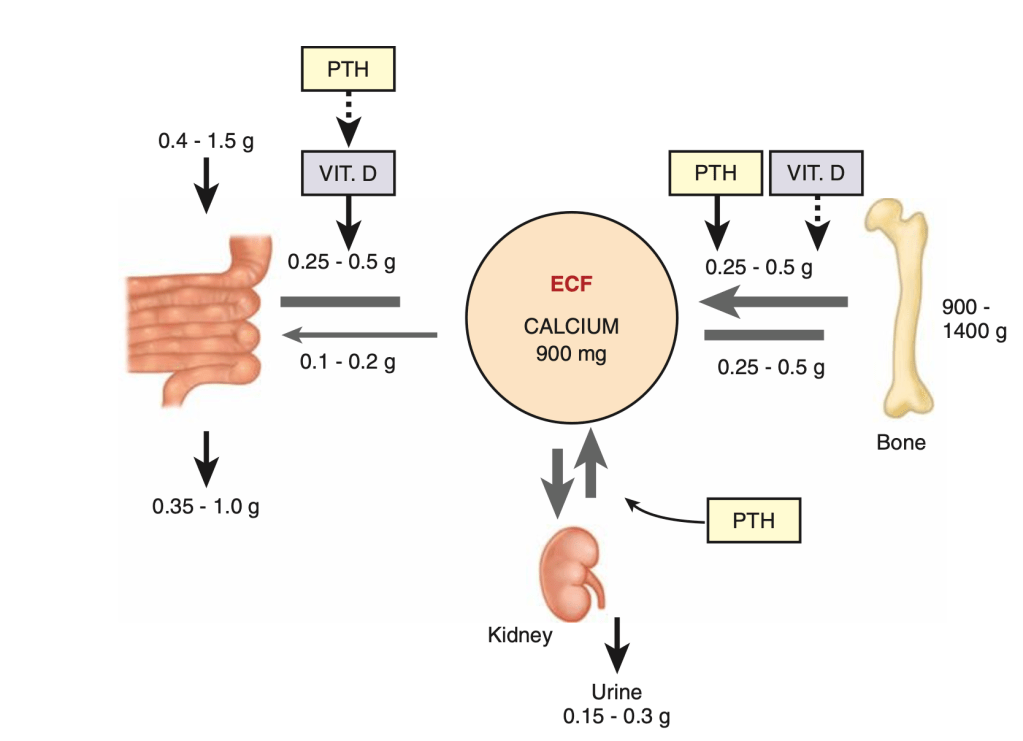
Calcium fluxes in the steady state are depicted in Figure
Calcium balance and fluxes in a normal human. Solid arrows depict a direct effect, whereas dashed arrows depict an indirect effect. The thickness of the arrows is representative of the magnitude of the flux. ECF = extracellular fluid; PTH = parathyroid hormone; VIT. = vitamin.
Extracellular calcium (900 mg):
Accounts for only 1% of the body’s calcium stores:
The majority of which is sequestered in the skeletal system
Approximately 50% of the serum calcium is in the ionized form:
Which is the active component
The remainder is bound to albumin (40%) and organic anions such as phosphate and citrate (10%)
The total serum calcium levels range from:
8.5 to 10.5 mg/dL (2.1 to 2.6 mmol/L)
Ionized calcium levels range from:
4.4 to 5.2 mg/dL (1.1 to 1.3 mmol/L)
Both concentrations are tightly regulated
The total serum calcium level:
Must always be considered in its relationship to plasma protein levels:
Especially serum albumin:
For each gram per deciliter of alteration of serum albumin above or below 4.0 mg/dL:
There is a 0.8 mg/dL increase or decrease in protein-bound calcium and, thus, in total serum calcium levels
Total and, particularly, ionized calcium levels:
Are influenced by various hormone systems
Parathyroid Hormone
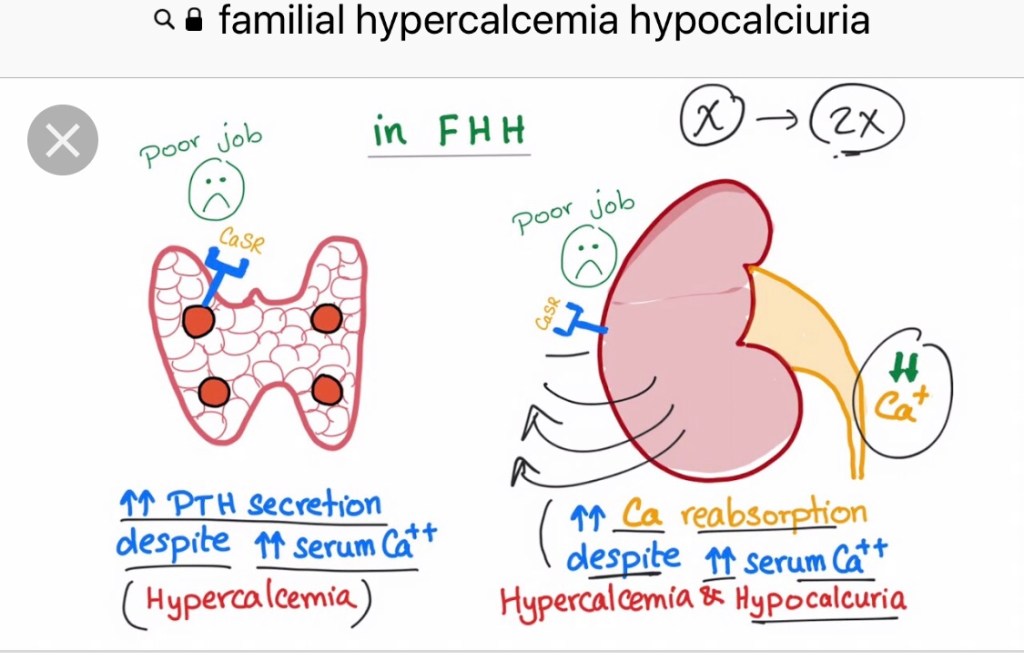
The parathyroid cells rely on a G-protein–coupled membrane receptor:
Designated the calcium-sensing receptor (CASR):
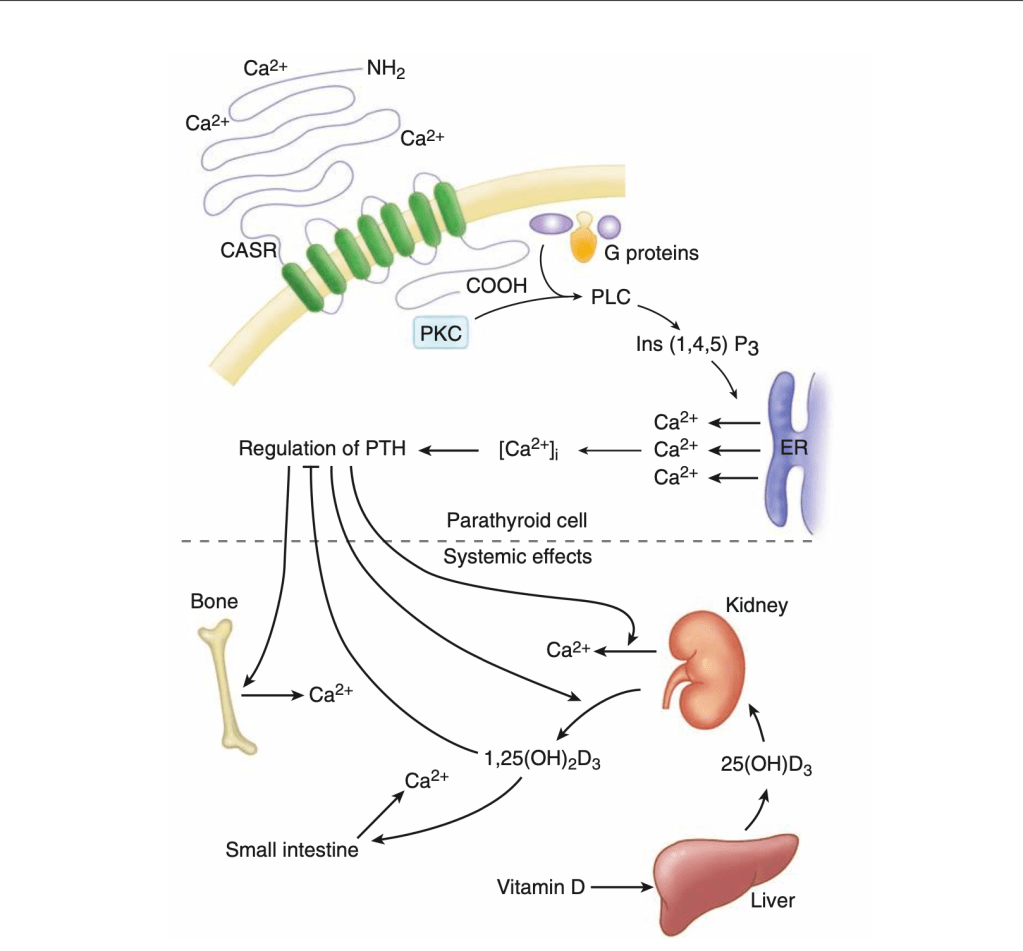
To regulate PTH secretion By sensing extracellular calcium levels (Figure)
Regulation of calcium homeostasis. The calcium-sensing receptor (CASR) is expressed on the surface of the parathyroid cell and senses fluctuations in the concentration of extracellular calcium. Activation of the receptor is thought to increase intracellular cal- cium levels, which, in turn, inhibit parathyroid hormone (PTH) secretion via posttranslational mechanisms. Increased PTH secretion leads to an increase in serum calcium levels by increasing bone resorption and enhancing renal calcium reabsorption. PTH also stimulates renal 1-α-hydroxylase activity, leading to an increase in 1,25-dihydroxy vitamin D, which also exerts a negative feedback on PTH secretion. PKC = protein kinase C; PLC = phospholipase C.
PTH secretion:
Also is stimulated by:
Low levels of 1,25-dihydroxy vitamin D
Catecholamines
Hypomagnesemia
The PTH gene is located on chromosome 11
PTH:
Is synthesized in the parathyroid gland as a precursor hormone preproPTH:
Which is cleaved first to pro-PTH and then to the final 84-amino-acid PTH
Secreted PTH:
Has a half-life of 2 to 4 minutes
In the liver:
PTH is metabolized into the active N-terminal component and the relatively inactive C-terminal fraction:
The C-terminal component is excreted by the kidneys and accumulates in chronic renal failure
PTH functions to regulate calcium levels:
Via its actions on three target organs:
The bone, kidney, and gut
PTH:
Increases the resorption of bone:
By stimulating osteoclasts and promotes the release of calcium and phosphate into the circulation
At the kidney, calcium is primarily absorbed in concert with sodium in the proximal convoluted tubule:
But fine adjustments occur more distally:
PTH acts to limit calcium excretion at the distal convoluted tubule:
Via an active transport mechanism
PTH also inhibits phosphate reabsorption (at the proximal convoluted tubule) and bicarbonate reabsorption
It also inhibits the Na+ / H+ antiporter:
Which results in a mild metabolic acidosis in hyperparathyroid states
PTH and hypophosphatemia:
Also enhance 1-hydroxylation of 25-hydroxyvitamin D:
Which is responsible for its indirect effect of increasing intestinal calcium absorption
Calcitonin:
Calcitonin is produced by thyroid C cells (parafollicular cells)
Functions as an antihypercalcemic hormone:
By inhibiting osteoclast-mediated bone resorption
Calcitonin production is stimulated b:
Calcium and pentagastrin and also by catecholamines, cholecystokinin, and glucagon
When administered intravenously to experimental animals, it produces hypocalcemia
At the kidney, calcitonin increases phosphate excretion by inhibiting its reabsorption
Calcitonin plays a minimal, if any, role in the regulation of calcium levels in humans:
However, it is very useful as a marker of MTC and in treating acute hypercalcemic crisis
Vitamin D
Vitamin D refers to vitamin D2 and vitamin D3:
Both of which are produced by photolysis of naturally occurring sterol precursors
Vitamin D2 is available commercially in pharmaeutical preparations
Vitamin D3 is the most important physiologic compound:
It is produced from 7-dehydrocholesterol:
Which is found in the skin
Vitamin D is metabolized in the liver to its primary circulating form:
25-hydroxyvitamin D
Further hydroxylation in the kidney results in:
1,25-dihydroxy vitamin D:
Which is the most metabolically active form of vitamin D
Vitamin D stimulates the absorption of calcium and phosphate from the gut and the resorption of calcium from the bone
Common labs ordered in the workup of patients with primary hyperparathyroidism include:
A serum calcium (+/- ionized calcium)
Albumin (for correction of total serum calcium level)
Intact PTH
Phosphate
Creatinine
25-hydroxy vitamin D
24-hour urine calcium and creatinine.
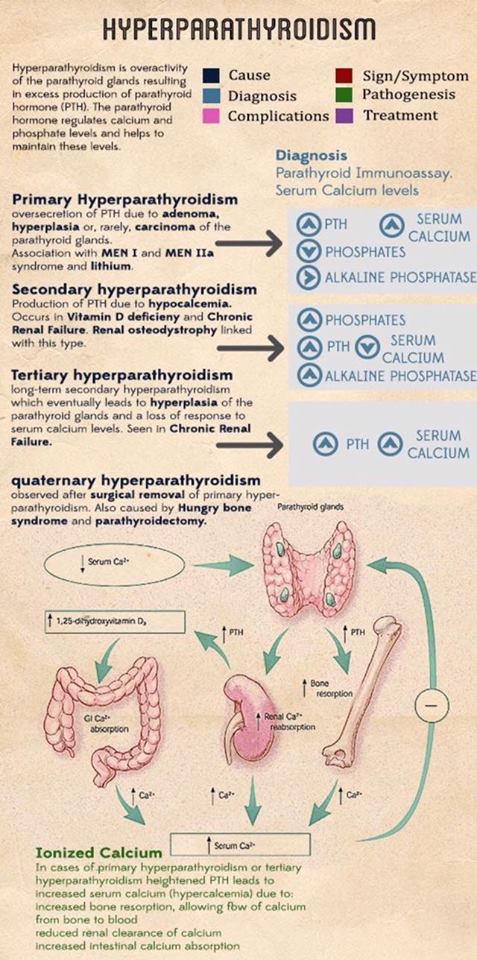
Hypercalcemia (elevated serum total calcium levels) with with an elevated intact PTH with normal kidney function and without hypocalciuria:
Indicates primary hyperparathyroidism (PHPT)
However, some patients with this disease will have:
Hypercalcemia with an “inappropriately normal” PTH:
This can be a common cause of delayed diagnosis
Dr. Rodrigo Arrangoiz is a board-certified surgical oncologist who subspecializes in breast cancer and head and neck cancer. Dr. Arrangoiz earned his medical degree at the Anahuac University Medical School in Mexico City, Mexico and graduated Suma Cum Laude. He completed his internship and residency in general surgery at Michigan State University, where he was named chief resident during his fifth year of residency. Dr. Arrangoiz also completed a complex surgical oncology, head and neck fellowship at the Fox Chase Cancer Center in Philadelphia and at the same time he undertook a master’s in science (Clinical Research for Health Care Professionals) at Drexel University in Philadelphia. Dr. Arrangoiz also participated in a two-year global online fellowship in head and neck surgery and oncology through the International Federation of Head and Neck Societies / Memorial Sloan Kettering Cancer Center.
Dr. Arrangoiz has participated in multiple courses and academic congresses as a lecturer and guest professor and has also participated in several publications on topics related to his specialty that include oral cavity cancer, hyperparathyroidism, thyroid cancer, breast cancer, endocrine tumors, squamous cell carcinoma of the head and neck, and more. He is board certified by the American Board of Surgery, the Mexican Board of General Surgery and the Mexican Board of Oncology.
He is a member of various medical associations such as the American College of Surgeons, American Thyroid Association, American Head and Neck Society, American Medical Association, American Society of Clinical Oncology, Association of Academic Surgeons, Society of Surgical Oncology, The Society of Surgery of the Alimentary Tract, Society of American Gastrointestinal Endoscopic Surgeons, and the American Society of Breast Surgeons, among others.
Specialty:
Head and Neck Surgery Thyroid and Parathyroid Surgery Breast Surgery Complex Surgical Oncology
Areas of Clinical Interest:
Malignant thyroid disease (papillary, follicular, medullary, anaplastic thyroid cancer, thyroid lymphoma, and metastatic disease to the thyroid gland) benign thyroid diseases (goiter, multinodular goiter, substernal goiter, hyperthyroidism), hyperparathyroidism / hypercalcemia, benign and malignant breast diseases, head and neck surgery and head and neck cancer.
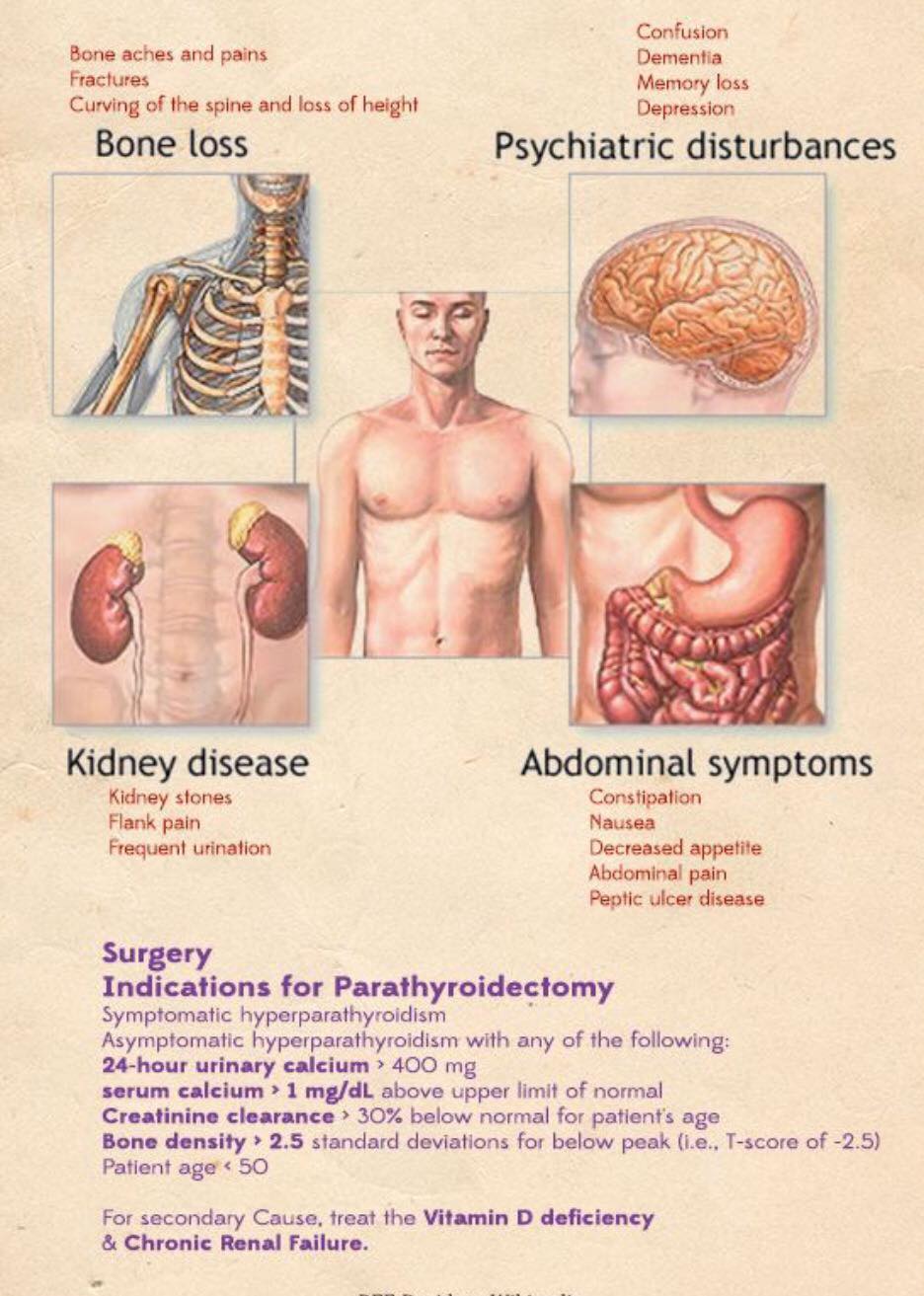
All symptomatic patients and most asymptomatic patients should be considered for parathyroidectomy:
Patients with nephrolithiasis (kidney stones), fragility fractures, osteoporosis, or evidence of spinal compression fractures are considered symptomatic.
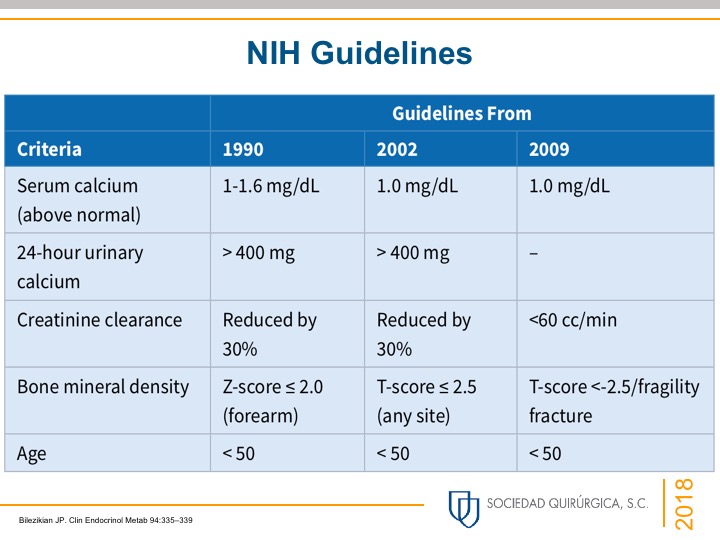
In asymptomatic patients (usually less than 5% of the cases when an appropriate history is taken), indications for parathyroidectomy include:
Patient age younger than 50 years
Serum calcium level > 1 mg/dL above the upper limit of normal range,
Evidence of renal involvement:
Silent nephrolithiasis on imaging
Nephrocalcinosis
Hypercalciuria defined as a 24-hour urine calcium > 400 mg/dL
Impaired renal function defined as glomerular filtration rate < 60 mL/min).
Other findings that should prompt consideration for parathyroidectomy in asymptomatic patients include:
Neurocognitive dysfunction:
Manifesting as anxiety, depression, memory loss, and insomnia, which are multifactorial in cause but might be exacerbated by hypercalcemia
Frailty or diminished functional capacity
Gastroesophageal reflux
Fibromyalgia
Cardiovascular disease.
It is important to note that asymptomatic patients are often not truly asymptomatic, with insidious symptoms often attributed to other causes when they are related to or exacerbated by the underlying imbalance in calcium homeostasis; thus parathyroidectomy may be indicated even for asymptomatic patients.
Rodrigo Arrangoiz MS, MD, FACS
He is first author on some publications on hyperparathyroidism:
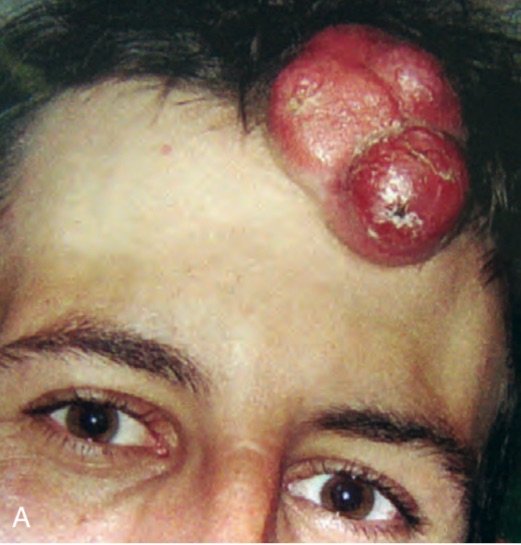
That presents as a unifocal or multifocal nodular lesion
It is a rare, slow-growing, locally aggressive cutaneous sarcoma:
With a high rate of local recurrence and low metastatic potential
Dermatofibrosarcoma protuberans:
Involves the head and neck region in 10% to 20% of cases:
With the scalp and supraclavicular fossae the most common sites for involvement (Figure)
These slow-growing, locally aggressive tumors have tentacle-like extensions well beyond the visible lesion:
Thus the true extent of the disease is often underestimated:
Leading to local recurrence in more than 50% of patients
Histologically a storiform or fascicular proliferation of spindle cells extends from the dermis into the subcutis:
With immunohistochemistry showing:
CD34 positive staining in most cases
Presence of fibrosarcomatous changes and high mitotic rate:
May portend a more aggressive course
This tumor frequently has a translocation of a fusion protein involving:
COL1A1 and PDGFB that functions like PDGFB
Wide excision with margins of ≥ 2 cm is generally advocated, with adjuvant radiation reserved for larger or recurrent tumors when resection is not feasible
Histological subtypes include:
Classic DFSP
Fibrosarcomatous transformation:
Conferring a higher risk of recurrence and metastasis
Surgical management is the mainstay of treatment:
The National Comprehensive Cancer Network (NCCN), National Cancer Institute, and American Cancer Society recommend:
Mohs micrographic surgery (MMS) as the preferred approach due to its ability to achieve complete margin control and minimize tissue loss, especially in anatomically sensitive areas
If MMS is unavailable, wide local excision (WLE) with 2 to 4 cm margins down to the investing fascia is acceptable:
Achieving negative surgical margins is the most critical factor for reducing recurrence risk; margin width is important, but negative margins are paramount
Recent evidence suggests that margins greater than 2 cm to 2.5 cm are associated with significantly lower recurrence rates:
But recurrence is rare when negative margins are achieved, regardless of width
Routine lymph node dissection is not indicated for DFSP, as the risk of nodal metastasis is extremely low
Lymph node dissection should be considered only in cases with clinical or radiologic suspicion of nodal involvement or in tumors with fibrosarcomatous transformation, which carries a higher metastatic risk
Sentinel lymph node biopsy is not standard but may be considered in select high-risk cases, such as those with fibrosarcomatous change or lymphovascular invasion, though its utility remains under investigation
Adjuvant radiotherapy:
Is considered in cases of positive or close margins when further re-excision is not feasible, or for unresectable or recurrent disease
The role of adjuvant radiotherapy is supported by its ability to reduce local recurrence in these settings
Imatinib, a tyrosine kinase inhibitor:
Is indicated for unresectable, recurrent, or metastatic DFSP harboring the t(17;22) translocation (COL1A1-PDGFB fusion)
Cytotoxic chemotherapy:
Has a limited role and is generally reserved for metastatic disease not amenable to targeted therapy, with inferior outcomes compared to imatinib
Surveillance recommendations include:
Regular follow-up for early detection of local recurrence:
Particularly within the first three years post-resection:
As most recurrences occur during this period
For patients with negative-margin, non-fibrosarcomatous DFSP:
Less intensive follow-up may be appropriate, and some data suggest that ongoing surveillance may not be necessary after negative-margin resection
In contrast, patients with fibrosarcomatous transformation should be followed according to soft tissue sarcoma protocols due to higher risk of recurrence and metastasis
Areas of ongoing debate include the optimal surgical margin width and the role of sentinel lymph node biopsy, particularly in high-risk subtypes:
The consensus remains that complete surgical excision with negative margins is the cornerstone of management, with adjuvant therapies reserved for select cases
References:
Dermatofibrosarcoma Protuberans: Update on the Diagnosis and Treatment. Hao X, Billings SD, Wu F, et al. Journal of Clinical Medicine. 2020;9(6):E1752. doi:10.3390/jcm9061752.
Review of Dermatofibrosarcoma Protuberans. Lim SX, Ramaiya A, Levell NJ, Venables ZC. Clinical and Experimental Dermatology. 2023;48(4):297-302. doi:10.1093/ced/llac111. Dermatofibrosarcoma Protuberans: What Is This?. Vitiello GA, Lee AY, Berman RS. The Surgical Clinics of North America. 2022;102(4):657-665. doi:10.1016/j.suc.2022.05.004.
Dermatofibrosarcoma Protuberans: An Updated Review of the Literature. Jozwik M, Bednarczuk K, Osierda Z. Cancers. 2024;16(18):3124. doi:10.3390/cancers16183124.
Current Patterns of Care and Outcomes for Dermatofibrosarcoma Protuberans: An International Multi-Institutional Collaborative. Winer LK, Akumuo R, Fredette JD, et al. Cancer. 2025;131(1):e35468. doi:10.1002/cncr.35468.
Surgical Management of Dermatofibrosarcoma Protuberans. Rust DJ, Kwinta BD, Geskin LJ, et al. Journal of Surgical Oncology. 2023;128(1):87-96. doi:10.1002/jso.27258.
Dermatofibrosarcoma Protuberans. Miller SJ, Alam M, Andersen JS, et al. Journal of the National Comprehensive Cancer Network : JNCCN. 2012;10(3):312-8. doi:10.6004/jnccn.2012.0032.
Oncological Efficiency of Wide Local Excision in Dermatofibrosarcoma Protuberans. Güç ZG, Güç H, Bütün O, Alacacıoğlu A, Demirdöver C. Journal of Plastic, Reconstructive & Aesthetic Surgery : JPRAS. 2023;77:244-252. doi:10.1016/j.bjps.2022.11.002.
Outcome After Surgical Treatment of Dermatofibrosarcoma Protuberans (DFSP): Does It Require Extensive Follow-Up and What Is an Adequate Resection Margin?. Alshaygy I, Mattei JC, Basile G, et al. Annals of Surgical Oncology. 2023;30(5):3106-3113. doi:10.1245/s10434-022-12953-8.
Management of Dermatofibrosarcoma Protuberans. Badhey AK, Tikhtman R, Tang AL. Current Opinion in Otolaryngology & Head and Neck Surgery. 2021;29(4):278-282. doi:10.1097/MOO.0000000000000721.
Dermatofibrosarcoma Protuberans. Allen A, Ahn C, Sangüeza OP. Dermatologic Clinics. 2019;37(4):483-488. doi:10.1016/j.det.2019.05.006.
Dermatofibrosarcoma Protuberans – It typically presents as a firm, slow-growing plaque or nodule, most commonly on the trunk, followed by the extremities and head and neck.
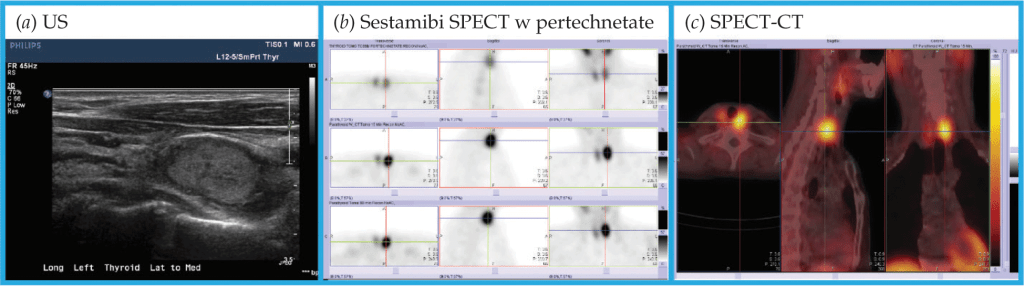
Localization studies for Primary Hyperparathyroidism (PHPT):
Are used for surgical planning
Nuclear medicine parathyroid scan (Sestamibi scan):
Is the most commonly employed test
There are a number of variations to how this is performed in different centers (e.g., subtraction scans with a second isotope or combined with SPECT [single photon emission CT])
Meta-analyses suggest that the sensitivity of this test:
Is around 80%
However, the range of sensitivities reported in the literature illustrate that the accuracy of this test may be influenced by patients and disease factors, as well as the experience of the practice.
It is a rare, aggressive neuroendocrine skin cancer:
With a high risk of local recurrence, nodal involvement, and distant metastasis
The incidence is rising:
Particularly among elderly and immunosuppressed patients, and prognosis remains poor, especially in those with advanced disease or immunosuppression
A multidisciplinary approach:
Is essential for initial workup and staging
Histopathologic confirmation and microstaging of the primary lesion are required
For patients with clinically node-negative disease:
Sentinel lymph node biopsy (SLNB) is recommended to assess occult nodal involvement:
As up to 40% of these patients may harbor microscopic nodal metastases
Imaging (e.g., PET/CT):
Is indicated for patients with clinically apparent nodal or distant disease
The majority of these tumors in North America (80%) are:
Caused by infections with Merkel cell polyomavirus (MCV):
A double-stranded DNA virus
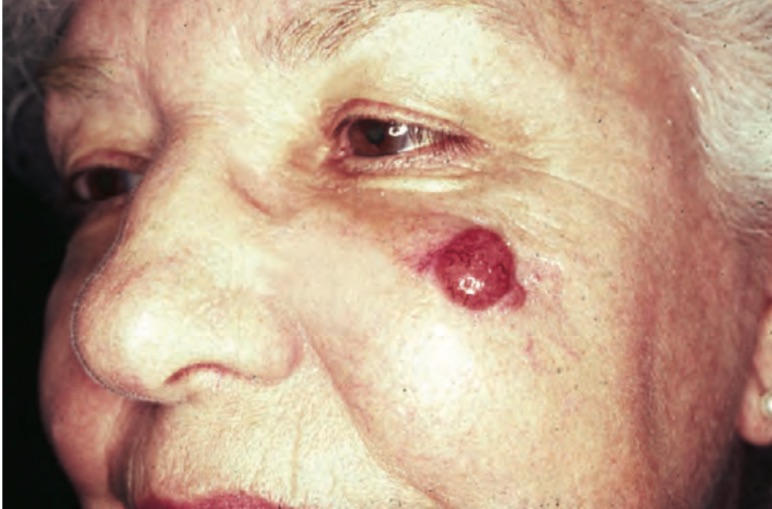
Nearly half of all Merkel cell car- cinoma lesions:
Occur in the head and neck region:
The cheek is the most common site:
Followed by the upper neck and nose
These lesions typically occur in elderly white persons:
They appear as a red to violaceous, smooth, dome-shaped lesion with telangiectasias (Figure)
These tumors have a high propensity for metastatic spread:
To regional lymph nodes as well as distant sites
Histologically they are composed of:
Basophilic cells with scant cytoplasm and dark powdery chromatin:
They may be morphologically similar to other neuroendocrine carcinomas:
Hence metastatic small cell carcinoma, malignant melanoma, or primary neuroendocrine (or “small cell”) carcinoma of the parotid gland may be considerations in the differential diagnosis
Immunohistochemical stains:
For synaptophysin, chromogranin, and cytokeratin 20 (CK20) (demonstrating a characteristic “dotlike” pattern) or the Merkel cell polyoma virus large T antigen (recognized by the antibody CM2B4) are positive:
Whereas thyroid transcription factor-1 (TTF-1) is negative
Surgical management:
Is the primary treatment for localized MCC
The National Comprehensive Cancer Network (NCCN) recommends:
Wide local excision (WLE) or Mohs micrographic surgery (MMS) with 1 to 2 cm surgical margins to the investing fascia of muscle when anatomically feasible
In anatomically challenging sites (e.g., head and neck):
Narrower margins may be acceptable, particularly if adjuvant radiotherapy is planned:
Studies indicate that local control is excellent with adjuvant radiotherapy, even when margins are ≤ 1 cm
The American Cancer Society aligns with these recommendations, emphasizing the importance of complete excision and individualized margin selection based on tumor location and patient factors
Elective neck dissection:
Is not routinely recommended for clinically node-negative patients:
Instead, SLNB is the preferred method for nodal staging:
If SLNB is positive, completion lymph node dissection or nodal radiotherapy may be considered
For clinically node-positive disease:
Fine needle aspiration or core biopsy is used for confirmation, and management includes lymph node dissection and / or nodal radiotherapy
Radiation therapy:
Plays a central role in MCC management
Adjuvant radiotherapy is generally recommended for most patients:
Especially those with high-risk features such as:
Lymphovascular invasion
Immunosuppression
Positive or close margins
Large tumor size
The recommended dose is 50 to 66 Gy:
Tailored to the extent of residual disease and margin status
Radiotherapy alone is a definitive option for patients who are not surgical candidates
Clinical appearance of Merkel cell carcinoma
National Comprehensive Cancer Network guidelines for HNMCC recommend treatment for localized tumors to include:
Surgical excision followed by adjuvant radiotherapy or observation, favoring the use of radiotherapy for patients with HNMCC for its potentially limited ability to achieve 1- to 2-cm margins and the risk of false-negative sentinel lymph node biopsy results
Furthermore, MCC is a radiosensitive malignant neoplasm, and postoperative radiotherapy has shown improved outcomes, including increased OS and disease-free survival, compared with surgery alone
Chemotherapy is not recommended as adjuvant therapy for localized MCC:
As it has not demonstrated a survival benefit and is associated with significant toxicity
Its use is generally reserved for select patients with advanced or metastatic disease:
Often in the palliative setting
Immunotherapy has become the standard of care for advanced or metastatic MCC:
Immune checkpoint inhibitors such as avelumab and pembrolizumab are first-line agents:
Offering durable responses and improved outcomes compared to traditional chemotheraphy
There remain areas of ongoing controversy and research, including the optimal surgical margin size, the precise indications for adjuvant radiotherapy, and the management of high-risk or immunosuppressed patients:
The rarity of MCC and lack of prospective randomized trials contribute to variability in practice patterns
References:
Association Between Surgical Margins Larger Than 1 cm and Overall Survival in Patients With Merkel Cell Carcinoma. Andruska N, Fischer-Valuck BW, Mahapatra L, et al. JAMA Dermatology. 2021;157(5):540-548. doi:10.1001/jamadermatol.2021.0247.
Merkel Cell Carcinoma. Lewis DJ, Sobanko JF, Etzkorn JR, et al. Dermatologic Clinics. 2023;41(1):101-115. doi:10.1016/j.det.2022.07.015.
Survival of Patients With Head and Neck Merkel Cell Cancer: Findings From the Pan-Canadian Merkel Cell Cancer Collaborative. Nayak AL, Pickett AT, Delisle M, et al. JAMA Network Open. 2023;6(11):e2344127. doi:10.1001/jamanetworkopen.2023.44127.
Merkel Cell Carcinoma, Version 1.2018, NCCN Clinical Practice Guidelines in Oncology. Bichakjian CK, Olencki T, Aasi SZ, et al. Journal of the National Comprehensive Cancer Network : JNCCN. 2018;16(6):742-774. doi:10.6004/jnccn.2018.0055.
Best Practices in Surgical and Nonsurgical Management of Head and Neck Merkel Cell Carcinoma: An Update. Duarte-Bateman D, Shen A, Bullock T, et al. Molecular Carcinogenesis. 2023;62(1):101-112. doi:10.1002/mc.23483.
Overall Survival After Mohs Surgery for Early-Stage Merkel Cell Carcinoma. Cheraghlou S, Doudican NA, Criscito MC, Stevenson ML, Carucci JA. JAMA Dermatology. 2023;159(10):1068-1075. doi:10.1001/jamadermatol.2023.2822.
Merkel Cell Carcinoma of the Head and Neck: Epidemiology, Pathogenesis, Current State of Treatment and Future Directions. Yusuf MB, McKenzie G, Rattani A, et al. Cancers. 2021;13(14):3506. doi:10.3390/cancers13143506.
Narrow Excision Margins Are Appropriate for Merkel Cell Carcinoma When Combined With Adjuvant Radiation: Analysis of 188 Cases of Localized Disease and Proposed Management Algorithm. Tarabadkar ES, Fu T, Lachance K, et al. Journal of the American Academy of Dermatology. 2021;84(2):340-347. doi:10.1016/j.jaad.2020.07.079.
Identifying an Optimal Adjuvant Radiotherapy Dose for Extremity and Trunk Merkel Cell Carcinoma Following Resection: An Analysis of the National Cancer Database. Patel SA, Qureshi MM, Sahni D, Truong MT. JAMA Dermatology. 2017;153(10):1007-1014. doi:10.1001/jamadermatol.2017.2176.
Merkel Cell Carcinoma – Current Controversies and Future Directions. Steven N, Lawton P, Poulsen M. Clinical Oncology (Royal College of Radiologists (Great Britain)). 2019;31(11):789-796. doi:10.1016/j.clon.2019.08.012.