Management of Distant Metastatic Disease in Cutaneous Melanoma

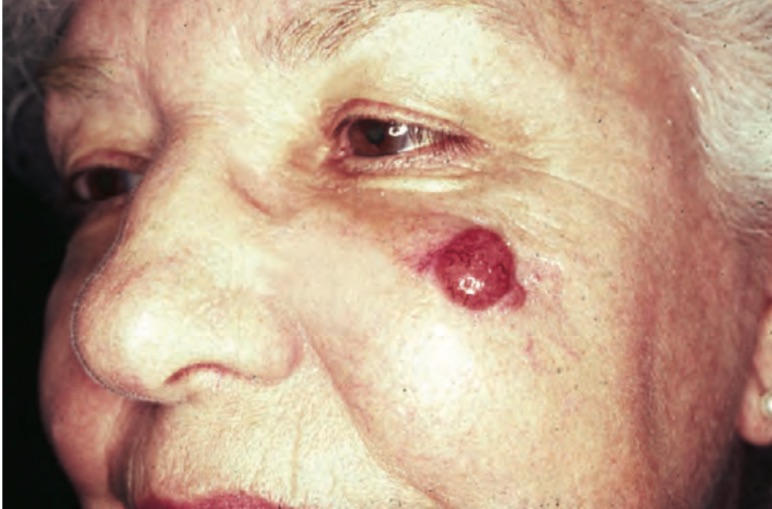
  • Common sites of distant metastasis in melanoma patients are, in order of decreasing frequency:
    • Skin and subcutaneous tissues (40%)
    • Lungs (12% to 36%)
    • Liver (15% to 20%)
    • Brain (12% to 20%)
    • Other sites include the:
      • Gastrointestinal tract
      • Bone
      • Adrenal gland
      • Distant skin
      • Soft tissue, and / or lymph nodes
      • Less commonly:
        • The spleen or pancreas
  • Historically, patients with systemic metastases have had a poor prognosis:
    • With a median survival ranging from 6 to 12 months
  • Fortunately, a wave of effective systemic therapies have ushered in a new era of treatment options for patients with unresectable or distant metastatic disease
  • Indeed, the approach to treatment for such patients is now associated with improved and sometimes durable long-term survival and continues to evolve
  • Contemporary systemic therapy represents the mainstay of treatment for most patients with distant metastatic disease:
    • Although surgery (curative or palliative) and other modalities (e.g., intralesional therapy):
      • Continue to play an evolving role in carefully selected patients as part of a multidisciplinary approach to the care of such patients
  • In view of continued advances in the clinical arena and the common need to often consider second- or subsequent line treatments, clinical trials represent an important and attractive option for many patients
  • Surgery:
    • The decision to perform surgery in patients with distant melanoma metastasis:
      • Should be considered as part of a multidisciplinary approach to care
    • Overall, given the advances in systemic therapy, surgery as a sole component of the care of these patients is relatively uncommon
    • The role of metastasectomy in this setting:
      • Whether curative or palliative in intent:
        • Continues to evolve
    • Indeed, most previous trials and retrospective series that have evaluated the role of surgery for patients with distant melanoma metastasis have mostly been conducted prior to this era of more effective systemic therapy:
      • As such, if surgery is considered, the rationale, extent, timing, and decision to proceed should involve a multidisciplinary approach and thoughtful consideration of existing systemic treatment options
      • Common indications include:
        • Palliation of symptoms (e.g., gastrointestinal obstruction or hemorrhage, difficulty in managing cutaneous metastases, intractable pain)
        • Isolated metastases not responding to otherwise successful systemic therapy
        • Isolated stable oligometastatic disease
    • Complete metastasectomy may be considered in patients as part of a multidisciplinary approach to distant metastasis:
      • In at least one legacy study, such as the Canvaxin phase III trial, patients underwent complete metastasectomy for stage IV melanoma as part of an adjuvant stage IV clinical trial:
        • Despite the overall negative trial results related to the Canvaxin vaccine:
          • Patients had a 40% 5-year survival, even though this trial was conducted prior to the era of contemporary systemic therapy
      • Other nonrandomized trials of highly selected patients demonstrated similar results after complete resection of distant metastases
  • Patient selection is critical for the strategy of complete surgical metastasectomy, whether for curative or palliative intent
  • To aid in patient selection, a thorough imaging evaluation is indicated, including:
    • MRI of the brain and CT or PET/CT of the chest, abdomen, and pelvis to fully assess disease burden and the potential to offer either a complete or palliative resection
  • Patient factors also play a role in patient selection:
    • Patients should not have comorbidities that would preclude a possible full recovery from surgery within 4 to 8 weeks:
      • To allow for the initiation of adjuvant or systemic therapies
    • Moreover, the biology of the melanoma itself should be considered:
      • Patients whose distant metastasis developed following a longer disease-free interval or who present with isolated or oligometastatic disease:
        • In general, more likely to be considered for surgical resection
    • Lastly, the systemic options available and their demonstrated efficacy should be considered:
      • This includes, but is not limited to, responsiveness and ability to tolerate immune checkpoint blockade, mutational status, and progression on other lines of therapy:
      • Ultimately, these decisions should be made in collaboration with a multidisciplinary team
    • Surgery may also offer effective palliation for isolated or oligometastatic accessible distant metastases
    • Examples of accessible lesions include isolated visceral metastases, isolated brain metastases, and occasionally isolated lung metastases
    • Palliative strategies may improve functional status and render patients more likely to tolerate systemic treatments
    • Importantly, surgery may also be considered to support consolidation of a mixed response to systemic therapy
    • Overall, the role of surgery in the context of the multidisciplinary management of the patient with distant metastases continues to evolve

Neoadjuvant Therapy in Cutaneous Melanoma

  • Given the high risk of recurrence for patients with clinical regional lymphadenopathy or resectable distant metastasis and the effectiveness of systemic therapies:
    • Neoadjuvant therapy is being actively pursued in several clinical trials and is increasingly employed in the clinical setting for patients who present with clinical regional lymphadenopathy
  • Neoadjuvant therapy:
    • Provides the opportunity to examine disease biology in response to therapy, reduce the morbidity of surgical resection, and potentially tailor the need for and approach to adjuvant therapy based on extent of response
  • For BRAF V600 mutant patients:
    • A single-center (MD Anderson), open-label phase II randomized neoadjuvant therapy trial with neoadjuvant BRAF / MEK combination inhibitor therapy dabrafenib + trametinib for 8 weeks followed by surgery versus surgery with adjuvant dabrafenib + trametinib (for patients in both study arms) in patients with resectable clinical stage IIIB / C or stage IV oligometastatic disease
    • The trial enrolled 14 patients to the neoadjuvant arm and 7 patients to the adjuvant arm
    • It was stopped early at a prespecified interim safety analysis after noting significantly longer event-free survival in the neoadjuvant arm:
      • 71% [10 of 14 patients] vs. 0% [0 of 7 patients]
    • Median event-free survival:
      • 19.7 vs. 2.9 months; HR 0.016; 95% CI, 0.00012 to 0.14; P < .0001
    • There were no grade 4 adverse events in the neoadjuvant group, and importantly, they observed a pathologic complete response (pCR) in 58% of patients treated on the neoadjuvant arm
    • The trial was continued as a single-arm neoadjuvant study
  • The results were replicated in the phase II, single-arm NeoCombi study conducted in Australia:
    • Which found a 49% pCR in the cohort of 35 patients receiving neoadjuvant dabrafenib + trametinib
  • Leveraging advances in the immunotherapy arena:
    • Several trials (OpACIN, OpACIN-Neo, Amaria et al., 2018) have investigated various regimens of nivolumab with or without ipilimumab, and one trial from the University of Pennsylvania investigated neoadjuvant single-dose pembrolizumab (Huang et al.):
      • A recent meta-analysis of these four studies by Menzies et al. found that 38% (n = 51) of patients had a pCR:
        • Which correlated with improved RFS (100% vs. 72%, P < .001):
          • No patients with a pCR had thus far died
      • In addition, in patients with pCR, near pCR, or partial pathologic response following neoadjuvant immunotherapy:
        • The 2-year RFS was 96%, with very few relapses observed
      • Of note, the optimal dose from OpACIN-Neo appeared to be ipilimumab 1 mg/kg and nivolumab 3 mg/kg, which was also better tolerated than the ipilimumab 3 mg/kg and nivolumab 1 mg/kg employed in the metastatic setting
  • The ongoing PRADO trial (NCT02977052), based on an expansion cohort from OpACIN-Neo, is investigating whether CLND can be safely omitted in patients with a major pathologic response in the excised index lymph node after two cycles of neoadjuvant ipilimumab + nivolumab
  • The role of neoadjuvant therapy in patients with melanoma continues to rapidly evolve
  • When considered, this approach should be discussed in the context of a multidisciplinary care team, preferably in the context of a clinical trial

Management of Local Recurrence in Cutaneous Melanoma

  • True local recurrence:
    • Is defined as recurrence at the site of the primary tumor, within or continuous with the scar:
      • It is most likely the result of incomplete excision of the primary tumor
      • It represents a relatively rare pattern of recurrence
  • In many cases, such “local recurrences”:
    • May more appropriately be considered persistence of the primary tumor
  • A local recurrence consisting of a single lesion in a patient whose primary melanoma had favorable prognostic features:
    • May be appropriately treated with wide excision similar to a primary melanoma lesion
  • Patients with local recurrences consisting of multiple, small, and superficial lesions may be treated in a fashion similar to that used to treat patients with in-transit disease
  • Definition of Local Recurrence:
    • Local recurrence in cutaneous melanoma refers to the reappearance of melanoma at or near the site of the original primary tumor:
      • Typically within 2 cm of the initial surgical scar, in the absence of regional or distant metastasis
  • Evaluation and Staging:
    • Before initiating treatment:
      • Clinical examination:
        • Thorough skin and lymph node examination
      • Imaging:
        • PET-CT or CT/MRI to rule out regional or distant metastases
      • Biopsy:
        • Confirm recurrence histologically
      • Restaging:
        • Based on AJCC 8th Edition Melanoma Staging System
  • Surgical Management:
    • Surgery remains the cornerstone of treatment:
      • Wide Local Excision (WLE):
        • Excision with clear margins:
          • Typically 1 to 2 cm based on Breslow depth
        • May include re-excision if margins were inadequate in prior surgery
    • Reconstruction:
      • May be required depending on the anatomical location and size of excision
    • Sentinel Lymph Node Biopsy (SLNB):
      • Consider SLNB in recurrent lesions if not performed previously:
        • Particularly in patients with intermediate or thick lesions:
          • Offers prognostic information and can alter staging
  • Adjuvant Therapy:
    • Based on risk of recurrence, pathological findings, and prior treatments:
      • Immunotherapy:
        • Anti-PD-1 agents like nivolumab or pembrolizumab
      • Targeted therapy:
        • For BRAF V600-mutant melanoma:
          • Dabrafenib + trametinib
      • Radiotherapy:
        • May be used postoperatively for high-risk features:
          • Positive margins, perineural invasion, multiple recurrences
      • Regional and Systemic Therapy for Unresectable Recurrence
      • If the recurrence is not surgically resectable or has multiple in-transit metastases:
        • Intralesional therapy:
          • T-VEC – talimogene laherparepvec
        • Systemic immunotherapy or targeted therapy:
          • Clinical trials may offer novel therapies
  • Surveillance:
    • Regular follow-up is essential due to the risk of further recurrences or metastasis
    • Typical schedule:
      • Every 3 to 6 months for the first 2 to 3 years
      • Annually thereafter
      • Includes skin checks, lymph node exams, and imaging when indicated
  • Prognostic Factors:
    • Breslow thickness of recurrence
    • Ulceration
    • Time to recurrence
    • Prior sentinel node involvement
    • Genetic mutations (BRAF, NRAS)
  • Multidisciplinary Management:
    • Patients with recurrent melanoma should ideally be managed in a melanoma or skin cancer multidisciplinary team (MDT) setting involving:
      • Dermatology
      • Surgical oncology
      • Medical oncology
      • Radiation oncology
      • Pathology and radiology

Radiation Therapy in Cutaneous Melanoma

  • The role of radiation therapy in melanoma care continues to evolve:
    • Particularly in this emerging era of more effective systemic therapy
  • Overall, it is not as commonly utilized in contemporary practice:
    • Compared to the era preceding the implementation of checkpoint blockade and targeted therapy
  • Radiation therapy is sometimes deployed:
    • In effort to enhance outcomes for melanoma patients
  • While local control is routinely achieved by primary tumor wide excision:
    • Adjuvant radiation therapy is sometimes used in the uncommon presentation of:
      • The potentially locally aggressive desmoplastic neurotropic melanoma subtype:
        • The use of radiation in this setting is supported by various retrospective studies and the current national consensus guidelines
    • Radiation therapy is also sometimes used when surgery is not possible or feasible
  • Although adjuvant radiation therapy has historically been offered:
    • To patients with multiple involved or matted regional nodes or with extracapsular extension of regional lymphatic metastases:
      • Its role in this context continues to rapidly evolve, and if considered, treatment plans should be developed in the context of the multidisciplinary care of the patient
    • Indeed, adjuvant radiation in the prevention of nodal relapse in high-risk populations was recently studied in the ANZMTG trial:
      • That randomized 250 patients with palpable regional nodal disease and high risk of nodal recurrence after lymphadenectomy to either adjuvant radiation therapy or observation:
        • Although radiation therapy decreased nodal recurrence in the radiation arm:
          • 21% vs. 36%, P = .02
        • The additional therapy did not result in a significant difference in either overall or relapse-free survival
    • The role of radiation therapy in the setting of progressively improving systemic treatment options remains an area of active clinical investigation
    • At MD Anderson, radiation therapy is sometimes used in the adjuvant setting:
      • To reduce in-basin failure in high-risk patients following lymphadenectomy
    • It is also used for the palliation of local symptoms and to reduce risk of local recurrence after failure of first-line therapy
    • More recently, radiation therapy has also been deployed in a clinical trial of nodal radiation therapy after SLN biopsy:
      • For patients with high-risk SLN-positive melanoma who are scheduled to have immunotherapy without completion lymph node dissection (i.e., undergoing nodal observation with active surveillance) (NCT04594187)
  • Future research goals include clinical trials to further define the role of adjuvant radiation therapy alone or in combination with systemic therapies
  • Patients with multiple involved or matted regional nodes or with extracapsular extension of regional lymphatic metastases may be considered for adjuvant radiation therapy in the context of the multidisciplinary care of the patient with metastatic melanoma
  • Summary:
  • Radiation therapy (RT) is not a first-line treatment for primary cutaneous melanoma:
    • Which is optimally managed with surgical excision
  • However, RT has a defined role in select clinical scenarios:
    • Adjuvant RT is most clearly indicated for desmoplastic melanoma with high-risk features, such as:
      • Breslow thickness > 4 mm
      • Clark level V
      • Extensive neurotropism / perineural invasion
      • Head and neck location
      • Narrow deep margin resection
  • The American Academy of Dermatology recommends considering adjuvant RT in these cases to improve local control:
    • Though it does not impact distant metastasis or overall survival
  • Multidisciplinary consultation:
    • Including a radiation oncologist, is advised to weigh risks and benefits
  • Primary RT may be considered for:
    • Melanoma in situ
    • Llentigo maligna type (MIS, LM):
      • When complete surgical excision is not feasible:
        • This is more common outside the United States, and recurrence rates in retrospective series range from 0% to 17%:
          • The depth of penetration with superficial RT is a concern, and its use is uncommon in the US
  • Palliative RT:
    • Is used for symptomatic control of unresectable locoregional or metastatic disease, including cutaneous, subcutaneous, or brain metastases:
      • To reduce morbidity and improve quality of life
  • The role of RT in the adjuvant setting for high-risk, resected melanoma is less well defined in the era of effective systemic therapies:
    • Ongoing studies are evaluating its utility in combination with immunotherapy
  • References:
    • Guidelines of Care for the Management of Primary Cutaneous Melanoma. Swetter SM, Tsao H, Bichakjian CK, et al. Journal of the American Academy of Dermatology. 2019;80(1):208-250. doi:10.1016/j.jaad.2018.08.055.
    • Radiation and Melanoma: Where Are We Now?. Bliley R, Avant A, Medina TM, Lanning RM. Current Oncology Reports. 2024;26(8):904-914. doi:10.1007/s11912-024-01557-y.
    • Radiotherapy in the Treatment of Subcutaneous Melanoma. Borzillo V, Muto P. Cancers. 2021;13(22):5859. doi:10.3390/cancers13225859.
    • The Evolving Role of Radiation Therapy in the Management of Malignant Melanoma. Khan N, Khan MK, Almasan A, Singh AD, Macklis R. International Journal of Radiation Oncology, Biology, Physics. 2011;80(3):645-54. doi:10.1016/j.ijrobp.2010.12.071.
    • Radiation Therapy in the Management of Malignant Melanoma. Mahadevan A, Patel VL, Dagoglu N. Oncology (Williston Park, N.Y.). 2015;29(10):743-51.

Intralesional Therapy in Cutaneous Melanoma

  • The concept of intralesional therapy:
    • For locoregional in-transit disease (or more broadly speaking for other accessible metastases) in melanoma is not new
  • A potential advantage of such a strategy:
    • Is that a direct targeted approach may be associated with limited systemic toxicity:
      • While at the same time promoting a favorable local immune response and potentially direct cytotoxic activity
  • Historically, this approach has been considered for patients with:
    • Unresectable, multiple, or locally advanced locoregional disease:
      • As well as patients with accessible M1a disease
  • T-VEC (talimogene laherparepvec):
    • Is the only currently FDA-approved intralesional agent
    • It leverages the role of:
      • Granulocyte macrophage colony stimulating (GM-CSF) injection and its theoretical contribution to antitumor immunity
    • The agent is an attenuated oncolytic herpes simplex virus:
      • That has been modified to express the GM-CSF gene and is also capable of selective replication in tumor cells
    • The antitumor effect is thought to be due to a combination of:
      • A direct oncolysis from the viral infection and lytic replication
      • As well as the induction of a systemic immune response
    • In a phase III trial reported by Andtbacka et al:
      • 436 patients were enrolled and randomized to T-VEC or GM-CSF (control)
      • All patients had unresectable, injectable stage III or IV melanoma with a limited visceral disease burden
      • T-VEC was administered by intralesional injections once every 2 weeks, while in the other arm GM-CSF was administered subcutaneously daily for 14 days in each 28-day cycle
      • The durable (defined as ≥ 6 months) response rate, the primary objective of the trial:
        • Was significantly increased in patients receiving T-VEC (16.3% vs. 2.1%), as was the overall response rate (26.4% vs. 5.7%)
      • Some antitumor effects were observed in approximately one-third of uninjected lesions and in slightly more than 10% of visceral sites
      • OS was not significantly different among the arms of the trial:
        • However, in subset analysis there appeared to be a survival advantage in patients with stage III or IV (M1a) disease:
          • 4-year OS 32% vs. 21%, HR 0.57, 95% CI 0.40 to 0.80
      • Treatment with T-VEC was well tolerated:
        • Commonly reported adverse events included fatigue, chills, pyrexia, and other systemic flu-like symptoms
      • Based on these positive clinical results, in 2015, T-VEC became the first intralesional therapy approved by the FDA for the local treatment of unresectable cutaneous, subcutaneous, and nodal lesions in patients with melanoma recurrent after initial surgery
      • Efforts have been made to build upon the success of ILI and intralesional therapy (T-VEC in particular)
      • Ariyan et al. examined the safety and efficacy of combining ipilimumab with ILI in patients with in-transit disease:
        • After administering combination therapy to 26 patients, they observed response rates of 85% at 3 months (62% CR) and progression-free survival (PFS) at 1 year of 57%
      • A recent positive phase II trial comparing T-VEC followed by surgery versus surgery alone in stage IIIB to IV(M1a) melanoma:
        • Demonstrated an improvement in 2-year recurrence-free survival from 16.5% among 74 patients in the surgery alone arm to 29.5% in the 76 patients included in the T-VEC followed by surgery arm

Management of Locoregional Non-Nodal Disease in Melanoma

  • The presence of clinically or microscopically detectable locoregional non-nodal disease can be broadly categorized into three groups:
    • Satellites
    • In-transit metastasis
    • Microsatellite disease
  • Satellite / in-transit patterns of recurrence:
    • Are relatively unique to melanoma:
      • They can occur in 3% to 10% of melanoma cases
    • Although the molecular determinants and pathophysiology of in-transit disease are not fully understood:
      • They are likely an intralymphatic manifestation of melanoma metastases
    • Independent predictors of in-transit recurrence among patients who underwent sentinel node biopsy include:
      • Age older than 50 years
      • Lower-extremity primary tumor
      • Increasing tumor thickness
      • Ulceration
      • Nodal involvement
  • Regional nodal metastases:
    • Can occur in about two-thirds of patients with in-transit disease:
      • If present, are associated with lower survival rates
  • Reported predictors of distant metastasis among patients with in-transit recurrence include:
    • Positive SLN status
    • In-transit tumor size of at least 2 cm
    • Disease-free interval before in-transit recurrence of less than 12 months
  • Approach to Treatment:
    • The treatment landscape for patients with locoregional non-nodal disease continues to evolve:
      • It warrants a multidisciplinary team approach
    • Treatment options include:
      • Surgery:
        • Particularly for patients with limited, resectable disease
        • If surgery is performed:
          • It is recommended that clear histologic margins be obtained as there is no clinical trial-informed data to support wider excision margins
          • Regional approaches
          • Intralesional therapy
          • Systemic therapy
  • Systemic treatment approaches:
    • Have mostly supplanted regional-directed therapy for multifocal and / or unresectable disease
  • Patients with in-transit metastases confined to a limb:
    • That are not amenable to standard surgical measures (e.g., patients with recurrent and / or multiple in-transit metastases and patients with large-burden in-transit disease) and have failed or are not candidates for systemic therapy:
      • Pose a unique treatment challenge
      • Importantly, amputation is rarely indicated
  • Hyperthermic Isolated Limb Perfusion (HILP) and Isolated Limb Infusion (ILI):
    • Although infrequently employed as a component of the current melanoma treatment landscape:
      • Regional chemotherapy techniques such as isolated limb infusion (ILI) or hyperthermic isolated limb perfusion (HILP) have been employed to treat in-transit metastases
  • Hyperthermic isolated limb perfusion (HILP) with melphalan:
    • Was initially used to treat in-transit metastases of the extremities in the mid-1950s
    • With this procedure, a formal lymph node dissection is performed:
      • That provides exposure to the critical vessels of interest
      • Subsequently, cannulae are inserted and the extremity is placed on an extracorporeal (oxygenated) bypass circuit after a tourniquet is applied:
        • Effectively isolating the limb from systemic circulation
    • Melphalan has been the most employed agent for use in HILP:
      • Overall response rates of 64% to 100%
      • Median complete response rates of 58% have been achieved
      • The median response duration in patients with a complete response:
        • Generally ranges from 9 to 19 months
    • Although HILP was a rational treatment option for patents with in-transit metastases:
      • The technique was also complex and invasive:
        • To address these challenges, the technique of minimally invasive ILI was developed
    • ILI is essentially a low-flow minimally invasive isolated limb perfusion performed via percutaneously inserted catheters, and without oxygenation of the circuit (Figure):
      • Using standard radiologic techniques, catheters are inserted percutaneously into the main artery and vein of the unaffected limb (or placed in the main artery and vein in the affected limb, i.e., brachial or popliteal artery and vein)
    • Under general anesthesia, after a pneumatic tourniquet is inflated proximally, cytotoxic agents (generally melphalan and actinomycin-D):
      • Are infused through the arterial catheter and “hand-circulated” with a syringe technique for 20 to 30 minutes:
        • Progressive hypoxia occurs because, in contrast to isolated limb perfusion, no oxygenator is used
        • The hypoxia and acidosis associated with ILI are therapeutically attractive because numerous cytotoxic agents, including melphalan, appear to damage tumor cells more effectively under hypoxic conditions:
          • Hypoxia and acidosis have been reported to increase the cytotoxic effects of melphalan in experimental models
    • Although the limb tissues are exposed to the cytotoxic agent for only a short period (up to 30 minutes), the procedure has been shown to yield response rates roughly like those observed after conventional HILP:
      • Overall response rates of 85%
      • Complete response rate of 41%
      • Partial response rate of 44%
    • A multi-institutional study by Beasley et al:
      • Revealed a 31% complete response rate and a 33% partial response rate
    • Because of the relative simplicity of the isolated infusion technique, it became a more attractive option for patients with prohibitive comorbidities or the elderly, and in general became more widely used than HILP
Schematic drawing depicting an isolated limb infusion. The catheters are typically placed percutaneously by an interventional radiologist via the contralateral extremity, with the catheter tips positioned in the tumor-bearing extremity just below the inguinal ligament in the superficial femoral artery and vein. After inflation of the tourniquet, chemotherapy is manually infused for 20 to 30 minutes, after which the limb is washed out with normal saline. (Lindner P, Doubrovsky A, Kam PC, et al. Prognostic factors after isolated limb infusion with cytotoxic agents for melanoma. Ann Surg Oncol. 2002;9:127–136.)
  • Toxicity and Morbidity of HILP and ILI:
    • HILP and ILI can be associated with potentially significant regional adverse effects, including:
      • Myonecrosis
      • Nerve injury
      • Compartment syndrome
      • Arterial thrombosis:
        • Sometimes necessitating fasciotomy or rarely amputation
      • Systemic leak of melphalan can result in additional toxicities
    • Following ILI, regional adverse events appear to be similar to those reported after conventional HILP:
      • With 41% of patients experiencing grade II toxic effects and 53% experiencing grade III toxic effects
    • Both procedures require a high degree of technical expertise:
      • If considered in the context of a multidisciplinary team-based approach, the procedure (almost exclusively ILI, as HILP is mostly of historical significance) should be performed only in centers that have experience with the technique
    • Moreover, in the era of modern targeted and immunotherapies, these techniques are rarely employed

Supplemental Screening of Women with Dense Breasts, Indications?

  • Approximately 28 million women ages 40 to 76 in the United States have dense breasts:
    • This represents approximately 40% of all women
  • Breast density:
    • Refers to the relative quantities of fat (radiolucent) versus epithelium and stroma (radiodense) in breast tissue
  • Higher breast density:
    • Is associated with decreased mammographic sensitivity and increased breast cancer risk
  • While there are no clinical guidelines for women with dense breasts:
    • The data support a discussion of this risk and consideration of additional screening
  • Supplemental screening can be considered in this population:
    • Although there is no consensus on the optimal additional screening modality used for women with dense breast tissue:
      • Often ultrasound or contrast-enhanced mammography (or tomosynthesis if not part of patient’s standard screening regimen) are selected
  • The American College of Radiology Imaging Network (ACRIN) 6666 trial:
    • Investigated screening breast ultrasound in women with dense breast tissue and at least one additional breast cancer risk factor:
      • Incremental detection rate:
        • Was four cancers per 1000 patients when screening ultrasound was added to mammography
  • MRI has the highest incremental cancer detection rate:
    • Reported in the high-risk population to be 4 to 14 per 1000 women following a negative mammogram
    • The majority of MRI detected cancers:
      • 67% to 80% are invasive
    • This benefit, though, needs to be balanced with the false positive rates:
      • Which range from 14% to 38% at time of baseline MRI and 8% to 18% for subsequent MRI screening
    • Additionally, breast MRI requires intravenous gadolinium contrast and is an expensive test
    • The American Cancer Society reports there is insufficient evidence:
      • To recommend for or against MRI in women with heterogeneously or extremely dense breasts on mammography as their only risk factor
    • The Dutch DENSE trial:
      • Is currently investigating the value of MRI screening in this population, but these data are not yet available
  • Optimal screening regimens for women with dense breasts require a thorough discussion with the patient regarding the risks and benefits of supplemental screening, including:
    • The potential for false positives, additional biopsies and increased cost
  • Risk models will often help guide individual screening recommendations but even in the absence of family history, breast density may justify supplemental screening:
    • Insurance reimbursement is variable
  • References:
    • Throckmorton AD, Rhodes DJ, Hughes KS, Degnim AC, Dickson-Witmer D. Dense breasts: what do our patients need to be told and why? Ann Surg Oncol. 2016;23(10):3119-3127.
    • Melnikow J, Fenton JJ, Whitlock EP, Miglioretti DL, Weyrich MS, Thompson JH, et al. Supplemental screening for breast cancer in women with dense breasts: a systematic review for the U.S. Preventive Services Task Force. Ann Intern Med. 2016;164(4):268-278.
    • Berg WA, Zhang Z, Lehrer D, Jong RA, Pisano ED, Barr RG, et al. Detection of breast cancer with addition of annual screening ultrasound or a single screening MRI to mammography in women with elevated breast cancer risk. JAMA. 2012;307(13):1394-1404.
    • Mann RM, Kuhl CK, Moy L. Contrast-enhanced MRI for breast cancer screening. J Magn Reson Imaging. 2019;50(2):377-390.
    • Breast Cancer Screening With MRI in Women Aged 50-75 Years With Extremely Dense Breast Tissue: the DENSE Trial. ClinicalTrials.gov Identifier: NCT01315015. https://clinicaltrials.gov/ct2/show/NCT01315015 Accessed November 8, 2019.
#Arrangoiz #Doctor #Surgeon #CancerSurgeon #SurgicalOncologist #BreastSurgeon #MountSinaiMedicalCenter #MSMC #Miami #Mexico #BreastCancer #HormoneReplacementSurgery

Breast Cancer Chest Wall Recurrence Management

  • Patients with chest wall recurrence:
    • Are at high risk for concurrent systemic recurrences:
      • Therefore, obtaining systemic staging and receptor information on the recurrence should be the first consideration
    • Often, there may be extensive local regional involvement in several areas along the chest wall and in the nodal regions
  • According to National Comprehensive Cancer Network guidelines:
    • Systemic staging generally consists of either a:
      • PET/ CT scan or a CT of the chest, abdomen, and pelvis, as well as a bone scan
  • Surgical excision with negative margins followed by comprehensive chest wall and nodal radiotherapy:
    • May be indicated in the absence of widespread systemic disease
  • This patient should be managed by a multidisciplinary team:
    • Including the surgeon, medical oncologists, radiologists, pathologists, and potentially a plastic surgeon
  • Patients may or may not benefit from chemotherapy:
    • In the CALOR trial:
      • Chemotherapy was found to benefit patients with resected ER negative isolated locoregional recurrence:
        • But not ER positive isolated local regional recurrence
  • References

Breast Cancer Recurrence after Mastectomy

  • The main goal of routine post-treatment follow-up is:
    • The early detection of local-regional recurrence
  • For patients with locally recurrent breast cancer, that appears to be confined to the soft tissue of the chest wall, and no evidence of metastatic disease:
    • When possible, surgical resection of the tumor is the initial treatment of choice for most patients
  • Following surgery:
    • The addition of radiation therapy appears to further decrease the risk of a subsequent local recurrence
  • The addition of adjuvant systemic therapy:
    • Should be considered for patients who suffer local recurrence with more than minimal tumor burden
  • References:
    • Aebi S, Wapnir I. Management of locoregional recurrences. In: Winchester D J, Winchester D P, Hudis C A, and Norton L eds. Breast Cancer 2nd ed. Hamilton, Canada: B C Deker, Inc; 2006:511-523.
    • Buchanan C L, Dorn P L, Fey J, et al. Locoregional recurrence after mastectomy: incidence and outcomes. J Am Coll of Surg. 2006;203:469-474.
    • Dahlstrøm K K, Andersson A P, Andersen M, Krag C. Wide local excision of recurrent breast cancer in the thoracic wall. Cancer. 1993;72:774-777.
    • National Comprehensive Cancer Network. NCCN Clinical Practice Guidelines in Oncology. Breast Cancer. Available at http://www.nccn.org.

Immune Checkpoint Blockade in Cutaneous Melanoma

  • Ipilimumab:
    • Is a humanized monoclonal antibody that blocks CTLA-4:
      • A key regulatory molecule of the immune system
    • The use of immune checkpoint blockade via monoclonal antibodies targeting anti-CTLA4 (ipilimumab; Yervoy):
      • Has been established as an effective treatment for stage IV disease since 2011
      • Although approved in the metastatic setting for some time:
        • The use of checkpoint blockade in the adjuvant setting has been more recently approved in stage III melanoma:
          • Based on a number of randomized phase III trials
        • The randomized phase III clinical trial EORTC 18071 compared high-dose ipilimumab (10 mg/kg) to placebo, administered every 3 weeks for four doses, then every 3 months for 3 years unless toxicity or relapse prevented its continuation:
          • It demonstrated both a decreased rate of recurrence and improved OS for patients in the ipilimumab arm, leading to the approval of adjuvant ipilimumab
          • Despite the survival benefits noted in this adjuvant setting, opponents of this approach remark on the toxicity and paradoxical increased dosing seen in the adjuvant setting compared to metastatic disease (the latter of which employs a dose of 3 mg/kg every 3 weeks × four doses)
          • The toxicity from ipilimumab in EORTC 18071 was significant: adverse events of any grade were noted in 98.7% of patients treated with ipilimumab, including 54.1% with grade 3 or 4 toxicity
          • The median number of ipilimumab doses was four
          • Furthermore, there were five treatment-related deaths in patients treated with ipilimumab (three due to colitis, one to myocarditis, and one to multiorgan failure associated with Guillain–Barré syndrome)
          • While treatment-related deaths may be encountered in any clinical trial, such events in the adjuvant setting raise caution; some argue whether the toxicity is worth the potential survival benefit
          • This is relevant since there is a fraction of patients who will never recur and therefore have no potential to benefit from any adjuvant therapy
        • Of course, the challenge is that it is currently not possible to know that information at the level of an individual patient:
          • Therefore, the ability to prospectively identify higher- and lower-risk patients with biomarkers remains an area of intense clinical interest, as is interest on additional targets and combination therapies
  • Following the success and approval of CTLA-4 inhibition:
    • The study of programmed cell death protein-1 (PD-1) axis:
      • Which functions in the periphery to modulate T-cell responses, has produced success in a number of clinical trials
  • PD-1 interacts with two ligands:
    • PD-L1 and PD-L2:
      • To dampen T-cell responses:
        • Physiologically functioning to limit autoimmunity
    • The inhibitory effect of PD-1 is accomplished through a dual mechanism of:
      • Promoting apoptosis in cytotoxic T-cells (programmed cell death, as the name implies) while simultaneously reducing apoptosis in regulatory T cells
    • PD-1 protein is upregulated on activated T cells:
      • Blockade of this molecule upregulates the cellular immune system’s antitumor activity
    • In a randomized, double-blind, phase III clinical trial (CheckMate 238) for patients with resected advanced melanoma, over 900 patients who underwent complete resection of stage IIIB, IIIC, or IV melanoma received either nivolumab (3 mg/kg every 2 weeks) or ipilimumab (10 mg/kg every 3 weeks × 4 doses and then every 12 weeks):
      • Toxicity (grade 3 or 4 adverse events) was reported in 14.4% of the patients in the nivolumab group versus 45.9% of patients in the ipilimumab group; moreover, two deaths (0.4%) were reported and noted to be related to toxic effects in the ipilimumab group
      • Weber et al. concluded that nivolumab resulted in:
        • Significantly longer RFS and a lower rate of grade 3 or 4 adverse events than adjuvant therapy with ipilimumab
      • Based upon the results of CheckMate 238:
        • Nivolumab was approved for adjuvant use by the FDA in 2017
    • Another anti–PD-1 drug, pembrolizumab, was compared to placebo in the randomized, controlled, double-blind phase III EORTC 1325-MG/KEYNOTE-054 trial:
      • AJCC 7th edition stage IIIA (if stage IIIA, SLN deposit had to be >1 mm metastasis), IIIB, and IIIC completely resected patients were included:
        • RFS was 59.8% in the 514 patients receiving pembrolizumab versus 41.1% in the 505 patients on placebo after 42 months of follow-up (HR 0.59; 95% CI, 0.49 to 0.70) in the updated trial results published in 2021
        • Pembrolizumab was approved by the FDA for adjuvant use in stage III disease in 2019 after the initial trial results were released
    • Building on the success of pembrolizumab in the stage III adjuvant setting, the phase III randomized clinical trial KEYNOTE-716 trial studied adjuvant pembrolizumab versus placebo in resected stage IIB or IIC melanoma patients, all of whom had a negative SLN biopsy:
      • At the second interim analysis with a median follow-up of 18 months:
        • This study demonstrated a significant reduction in relapse-free survival and distant metastasis among patients receiving pembrolizumab in an overall cohort of 1,182 patients
      • These findings led to the recently expanded indication for the use of pembrolizumab in the stage IIB and IIC setting
  • As the indications continue to expand for the use of checkpoint blockade, their utilization in the metastatic, adjuvant, and neoadjuvant setting must be considered in view of their side effect profile:
    • Adverse events become increasingly important to the surgical oncologist as immunotherapy is increasingly utilized in the adjuvant and neoadjuvant settings
  • Multidisciplinary care is ultimately crucial to these decisions in weighing the risks of a particular side effect profile, its potential downstream effects, and the potential benefit of these therapies