Postoperative Radioactive Iodine (RAI) use in ATA Intermediate-Risk Differentiated Thyroid Cancer (DTC)

  • Postoperative radioactive iodine (RAI) use in ATA intermediate-risk differentiated thyroid cancer (DTC):
    • With stratification into low‑intermediate and high‑intermediate subsets
  • Evidence Base Overview:
    • No randomized trials specifically focus on RAI impact in ATA intermediate-risk patients
    • Evidence is primarily retrospective:
      • Using multivariate, propensity-adjusted analyses, registry data (SEER), cohort series, and a few prospective studies
  • ATA Intermediate‑Risk Definition:
    • The 2015 ATA guidelines (1) classified patients as intermediate-risk if they exhibit:
      • Microscopic extrathyroidal extension (ETE)
      • Vascular invasion
      • Clinical N1 or > 5 pathologic N1 with nodes < 3 cm
      • Aggressive histotypes (e.g., Hobnail, tall cell, insular)
      • RAI-avid foci outside thyroid bed
      • Multifocal microcarcinoma with ETE and BRAF mutation 
  • Within this, it’s helpful to subdivide into (most likely will appear in the new 2025 ATA guidelines):
    • Low-intermediate:
      • A single low-volume risk feature:
        • Microscopic ETE
        • Small-volume N1a
    • High-intermediate:
      • Multiple or higher-risk features, such as:
        • ≥ 5 nodes
        • Vascular invasion
  • Observational and Registry Data:
    • SEER Registry Studies (2,3):
      • Showed improved overall survival following RAI in:
        • N1 disease
        • pT3 (or > 4 cm)
        • Aggressive histology 
      • However:
        • Absolute benefit is small in patients < 45 years (~ 1%) vs larger in older patients (~ 4%) (3)
    • Single‑Center Cohorts:
      • Mayo Clinic (4) (20‑year follow-up):
        • Found no impact on outcomes for node-positive with MACIS < 6 
      • One Hong Kong study (5):
        • Showed better lymph node recurrence-free survival post-RAI in:
          • N1b or nodes > 1 cm
  • Retrospective Low–Intermediate Series (6) (Italy, 2024):
    • RAI reduced recurrence by 42%:
      • 9.6% vs 15.9% using inverse‑probability regression in patients with ≥ 2 intermediate risk factors 
  • Polish Prospective RAI Dose Trial (Arch Med Sci, 2022): (7)
    • Intermediate-risk group receiving 60 vs 100 mCi:
      • Had similar excellent response (~ 85%), low structural recurrence (~ 6.5%), and excellent long-term outcomes 
  • Prospective / Clinical Trials:
    • No RCTs isolating intermediate-risk exist:
      • However, the rhTSH + RAI Prep trial included many intermediate-risk patients (n ≈ 307) and found non-inferiority of rhTSH vs withdrawal for RAI effectiveness (8)
  • Guideline Position Statements:
    • The 2015 ATA guidelines recommend selective use of RAI in intermediate-risk DTC based on individual risk features, with a weak recommendation and low-quality evidence (1)
    • The 2022 European Thyroid Association / EANM consensus also supports personalized RAI use in this group, prioritizing shared decision-making and individual risk-benefit assessment (9)
  • Clinical Take‑Home Points:
    • Selective RAI yields a survival / recurrence benefit:
      • Strongest in older patients or those with > 1 intermediate risk feature
    • Low-intermediate risk (e.g., single small node, microscopic ETE):
      • RAI benefit is less definitive:
        • Consider active surveillance vs low-dose RAI
      • High‑intermediate risk (multi-node, vascular invasion, aggressive histology):
        • More likely to benefit:
          • RAI recommended:
        • Dose considerations:
          • 60 mCi sufficient for intermediate risk (Polish RCT)
        • rhTSH prep is validated
        • Shared decision-making essential, given evidence limitations and QoL trade-offs
  • Recommendation Framework:
    • Low‑intermediate (one minor feature, younger age):
      • Discuss omission vs low-dose RAI (e.g., 60 mCi + rhTSH) with surveillance plan
    • High‑intermediate (multi-factor, older age):
      • Offer RAI routinely; evidence supports 60 to 100 mCi
    • Shared consent vital, addressing patient goals, comorbidities, and center’s surveillance capabilities
  • References:
    • 1. Haugen BR, et al. 2015 ATA Management Guidelines for Adult Patients with Thyroid Nodules and Differentiated Thyroid Cancer. Thyroid. 2016;26(1):1–133.
    • 2. Nixon IJ, et al. The impact of RAI on survival in intermediate-risk patients: SEER analysis. Ann Surg Oncol. 2012;19(6):2025–33.
    • 3, Haymart MR, et al. Radioactive iodine in thyroid cancer: SEER-based outcomes. JAMA. 2011;306(7):721–8.
    • 4. Mazzaferri EL, et al. Management of differentiated thyroid cancer: Mayo Clinic experience. J Clin Endocrinol Metab. 2001;86(4):1447–63.
    • 5. Lam AK, et al. RAI impact on lymph node recurrence: Hong Kong cohort study. Cancer. 2005;103(5):920–9.
    • 6. Prete A, et al. Benefit of RAI in intermediate-risk DTC patients with multiple features. Endocrine. 2024;84(1):123–131.
    • 7. Piciu D, et al. Prospective evaluation of 60 vs 100 mCi in intermediate-risk thyroid cancer. Arch Med Sci. 2022;18(4):1002–1012.
    • 8. Mallick U, et al. Preparation for RAI: rhTSH vs withdrawal in low- and intermediate-risk patients. Lancet. 2012;379(9825):823–830.
    • 9. Luster M, et al. EANM/ETA consensus on RAI therapy in thyroid cancer. Eur J Nucl Med Mol Imaging. 2022;49(1):13–25.

IoN Trial – Is Ablative Radioiodine Necessary?

  • Name: IoN – Is Ablative Radioiodine Necessary?
  • Type:
    • Multicenter, open-label, non-inferiority RCT across 33 UK cancer centers 
  • Enrollment Period:
    • June 2012 to March 2020
  • Participants:
    • 504 patients post–total thyroidectomy:
      • R0 resection
  • Pathology Stage:
    • pT1 to pT3 (TNM 7 edition):
      • Including pT3a (TNM 8 edition)
    • Nodes:
      • N0, Nx, or N1a
    • Exclusions:
      • pT1a unifocal
      • pN1b
      • M1
      • Aggressive variants 
  • Intervention and Follow-Up:
    • Randomization (1:1):
      • RAI Arm:
        • 1.1 GBq (30 mCi) RAI post-surgery
      • No RAI Arm:
        • Surveillance only
    • Preparation:
      • rhTSH used where standard:
        • All received TSH suppression
    • Monitoring:
      • Neck US annually
      • Thyroglobulin (Tg) every 6 months
    • Primary Endpoint:
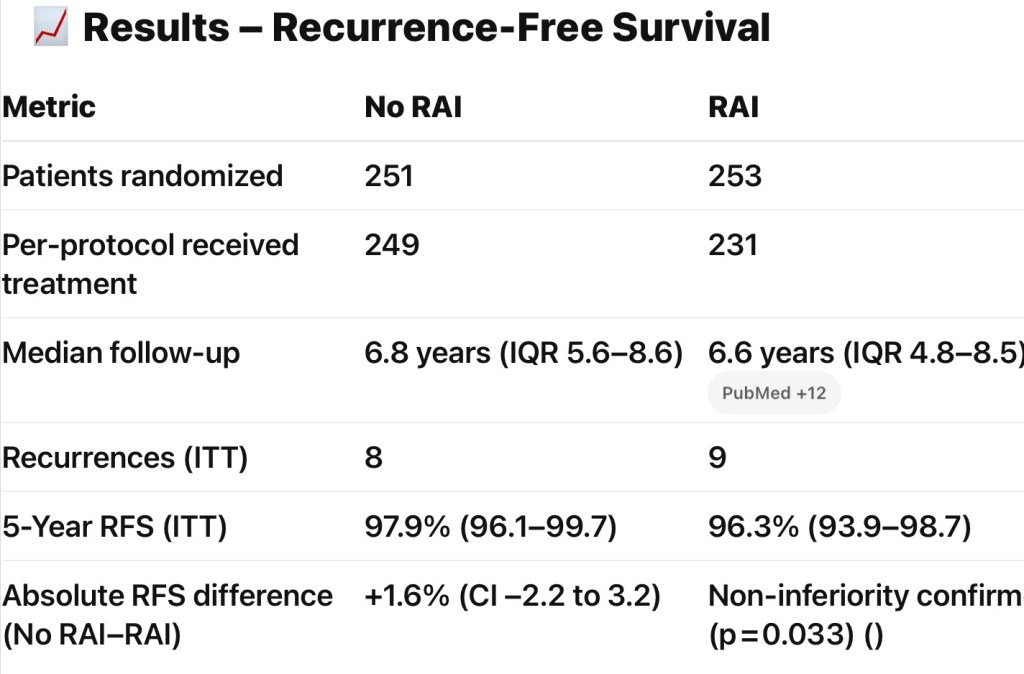
      • 5-year recurrence-free survival (RFS):
        • Absence of locoregional or distant structural disease or thyroid cancer related death 
    • Statistical Non-Inferiority Margin:
      • 5% absolute difference 
  • Stratified Outcomes and Safety:
    • Subgroup analysis:
      • Recurrence was slightly higher for:
        • pT3 / pT3a tumors (9%) vs pT1 to pT2 (3%)
        • N1a nodes had 13% recurrence versus 2% in N0 / Nx 
      • Adverse events:
        • Similar between arms
        • Most common were:
          • Fatigue (~ 25%),
          • Lethargy (~ 14%)
          • Dry mouth (~ 10%)
          • No treatment-related deaths 
  • Clinical Implications for Head and Neck Surgeons:
    • RAI omission is safe in patients meeting strict criteria (pT1 to pT2, N0 / Nx, complete thyroidectomy):
      • With no compromise in 5-year RFS
    • Non-inferiority achieved:
      • Difference lies well within prespecified 5% margin
    • Patient-centered benefits:
      • Avoids radiation isolation
      • Reduces side effects
      • Enhances QoL:
        • Especially important for younger patients
    • RAI may still be considered for pT3 / pT3a or N1a cases:
      • Due to higher recurrence observed:
        • Individual multidisciplinary tumor board (MDT) discussion is warranted
    • Supports 2025 Lancet recommendations:
      • Omission of adjuvant RAI is reasonable in selected low-risk DTC patients 
  • Final Take-Home Points:
    • IoN validates RAI omission in strictly defined low-risk DTC post-total thyroidectomy:
      • 98% RFS at 5 years without RAI
    • Reinforces a move toward risk-adapted, de-escalated care in line with ATA risk guidelines and emerging global consensus
    • Tailor decision-making in MDT:
      • Offer RAI to > T2 or with nodal involvement:
        • Otherwise, provide informed reassurance and structured surveillance

Parathyroid Awareness Month

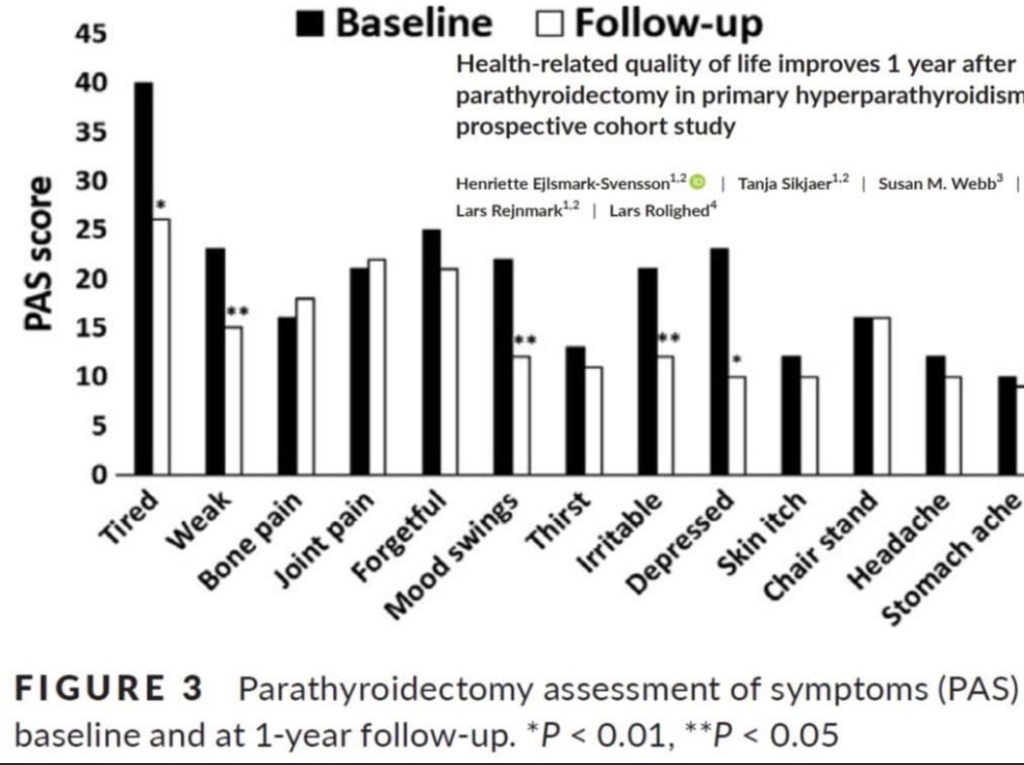
Health‐related quality of life commonly improves following parathyroidectomy for primary hyperparathyroidism.

https://www.ncbi.nlm.nih.gov/pubmed/30267589

#CheckYourCalcium #JAM2020 American #Arrangoiz #ParathyroidSurgeon #EndocrineSurgery #ParathyroidExpert #HeadandNeckSurgeon #MountSinaiMedicalCenter MSMC #Miami #Mexico

LIBRETTO-531 Trial in Thyroid Cancer

  • LIBRETTO‑531:
    • Design & Patient Population:
      • Phase III, global, multicenter, open-label, randomized (2:1) trial (NCT04211337):
        • Comparing selpercatinib (160 mg BID) to physician’s choice of cabozantinib or vandetanib:
          • In MKI-naïve, progressive advanced /metastatic RET-mutant MTC patients 
        • Stratified by RET M918T mutation status and intended control arm MKI
        • Crossover permitted from MKI arm to selpercatinib upon progression
    • Efficacy Results (Interim, ~ 12-months follow-up):
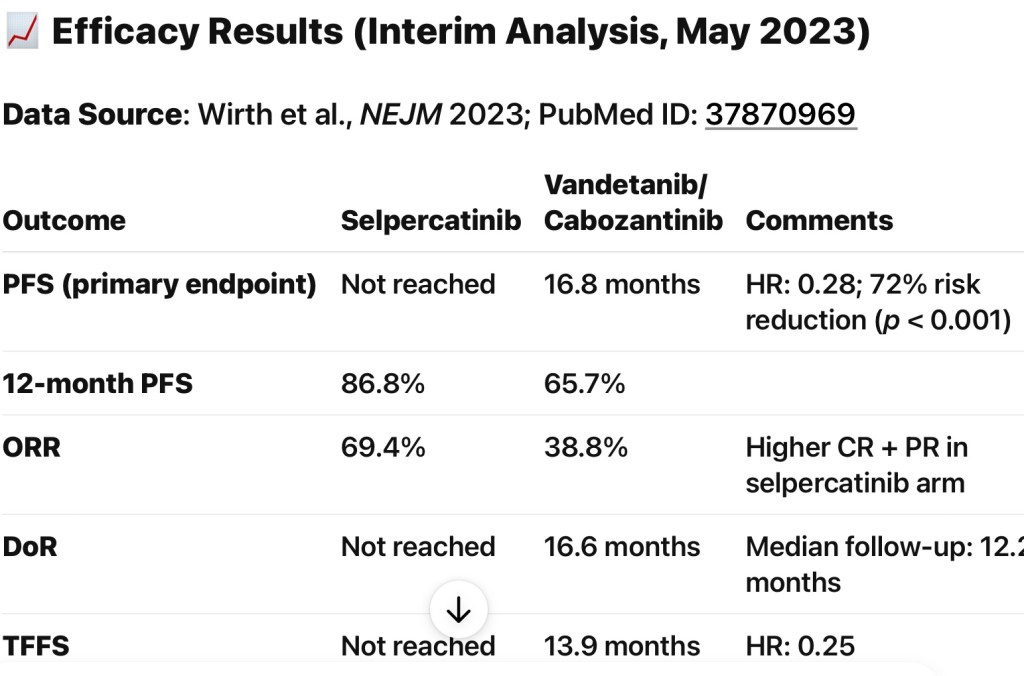
      • Primary endpoint (PFS, RECIST v1.1):
        • Selpercatinib:
          • Median not reached
        • MKI arm:
          • 16.8 months (95% CI, 12.2–25.1); HR 0.28; P<0.001 
        • 12‑month PFS:
          • 86.8% vs 65.7%
      • Secondary endpoint (Treatment Failure-Free Survival – TFFS):
        • Not reached vs 13.9 months in MKI arm; HR 0.25
      • Overall Response Rate (ORR):
        • 69.4% in selpercatinib group vs 38.8% in MKI group 
      • Safety-driven dose modifications:
        • 38.9% with selpercatinib vs 77.3% with MKIs
      • Discontinuations 4.7% vs 26.8% 
  • Safety & Patient-Reported Outcomes:
  • Common ≥ 25% AEs:
    • Hypertension, edema, dry mouth, fatigue, diarrhea
  • Grade 3/4 laboratory abnormalities:
    • Lymphopenia, elevated ALT / AST, electrolyte disturbances
  • Patient-reported tolerability (FACT-GP5):
    • Demonstrated robust reliability (ICC 0.80–0.85); high side-effect burden correlated with decreased functioning
  • Mechanism of Action:
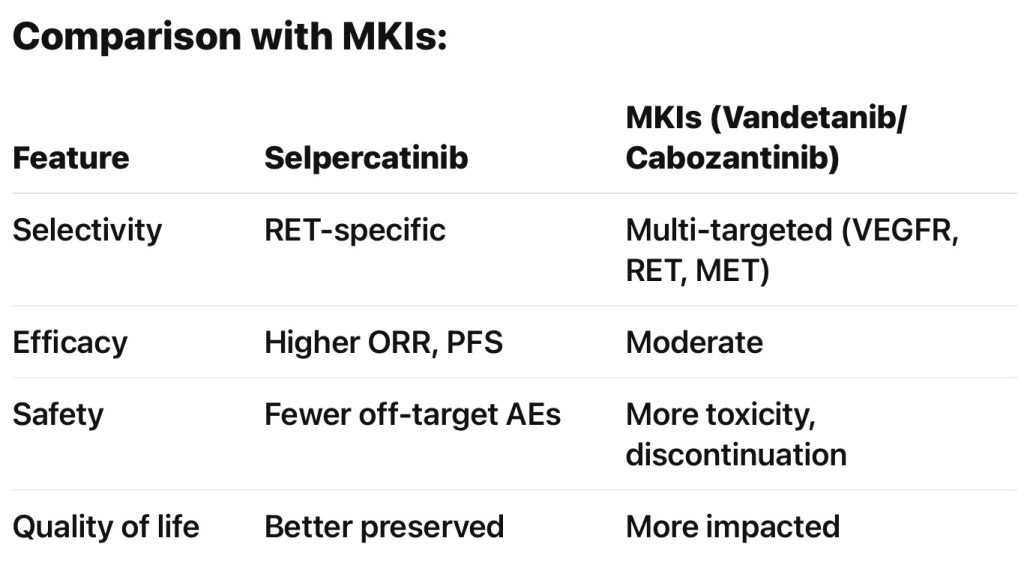
    • Selpercatinib is a highly selective RET inhibitor, effective against both:
      • RET point mutations (e.g., M918T in MTC)
      • RET fusions (common in papillary thyroid carcinoma and NSCLC)
    • High selectivity translates to less off-target toxicity compared to multikinase inhibitors (vandetanib/cabozantinib), which inhibit VEGFR, MET, etc.
  • Guideline Endorsements:
    • NCCN (2024) now includes selpercatinib as a Category 1 first-line option:
      • For RET-mutant, progressive/unresectable MTC, alongside cabozantinib and vandetanib
    • ATA Guidelines:
      • Similarly endorse selective RET inhibitors as preferred agents for RET-driven MTC
    • ESMO / European Consensus:
      • Align with use in RET-mutant MTC post-MKI therapy
  • Regulatory Perspective:
    • FDA granted traditional approval on September 27, 2024 for adults and pediatrics ≥ 2 years with advanced / metastatic RET-mutant MTC requirement systemic therapy
    • Earlier accelerated approval received in 2020 for patients ≥ 12 years; expanded to ≥ 2 years with pediatric dosing in May 2024
  • Clinical Implications for Head and Neck Oncology Teams:
    • First-line therapy improvement:
      • LIBRETTO‑531 is the first randomized trial demonstrating selpercatinib superiority over MKIs in efficacy and tolerability
      • Reduced surgical urgency:
        • Durable responses may defer or potentially downstage extra-thyroidal or metastatic disease, assisting in surgical planning
      • Multidisciplinary coordination:
        • Shared decision-making essential for selecting candidates, managing MTC lesion status, and monitoring biochemical markers (calcitonin, CEA)
      • Monitoring & sequencing:
        • Be vigilant for long-term tolerability needs, dose adjustments, and resistance (e.g., RET solvent-front mutations); TKIs sequencing should involve endocrine-oncology collaboration
  • Recommended References for Further Reading:
    • Primary LIBRETTO‑531 publication: NEJM (PubMed PMID: 37870969) 
    • Preceding phase I/II evidence: Wirth et al., N Engl J Med 2020 (LIBRETTO‑001)
    • NCCN Thyroid Carcinoma Guidelines, v2.2024  .
      FDA approval details for selpercatinib
    • Patient-reported outcomes analysis: Regnault et al., J Patient Rep Outcomes 2024
  • Summary for Surgical Experts:
    • Selpercatinib sets a new standard first-line systemic therapy in RET-mutant MTC, delivering superior tumor and nodal responses while maintaining patient quality-of-life
    • Surgeons should integrate molecular profiling early, allowing neoadjuvant-like benefit of targeted therapy before considering resection or resection of metastatic deposits
    • Long-term surgical planning may be increasingly influenced by TKI response and durability
  • Clinical Implications for Surgeons and Oncologists:
    • Preoperative:
      • Patients with borderline resectable MTC may benefit from downstaging with selpercatinib
      • Early molecular testing for RET mutations is essential
    • Postoperative:
      • Patients with biochemical persistence (calcitonin / CEA) or structural recurrence can receive selpercatinib earlier
      • More favorable AE profile allows longer-term outpatient management
  • References:
    • Wirth LJ, et al. Selpercatinib vs Standard Therapy in RET-Mutant MTC. N Engl J Med. 2023;389(15):1344-1356. PMID: 37870969
      NCCN Guidelines: Thyroid Carcinoma v2.2024. https://www.nccn.org
    • ATA Guidelines Update (Thyroid, 2022): Use of targeted therapy in RET-mutant disease
      FDA Approval Summary: https://www.fda.gov/drugs
    • Drilon A, et al. Targeting RET-driven cancers with selpercatinib. Cancer Discov. 2020. PMID: 3221355

The Delphi Criteria for Advanced Disease in Thyroid Cancer

  • The Delphi criteria for advanced disease in thyroid cancer:
    • Refer to a consensus-based set of clinical, pathological, and radiological features:
      • Developed by expert panels (often using the Delphi method):
        • To define what constitutes advanced thyroid cancer
    • These criteria help guide decision-making:
      • In terms of treatment strategies, referral to tertiary centers, and inclusion in clinical trials
  • While there is no universal single set of “Delphi criteria” adopted globally for thyroid cancer:
    • Multiple Delphi panels have been convened in recent years to create consensus on what features define advanced or aggressive disease
  • Below is a synthesis of key features commonly included in such panels and used in high-level consensus guidelines:
    • ATA, NCCN, and expert Delphi studies
  • Delphi-Based Criteria for Advanced Thyroid Cancer:
    • Clinical Features:
      • Age > 55 years:
        • For differentiated thyroid cancer (DTC)
      • Rapid tumor growth
      • Hoarseness or vocal cord paralysis
      • Dysphagia or airway compression
      • Distant metastases:
        • Lung, bone, brain
      • Recurrent or persistent disease after initial therapy
    • Pathological Features:
      • High-risk histologies:
        • Poorly differentiated thyroid carcinoma
        • Anaplastic thyroid carcinoma
        • Hürthle cell carcinoma with widely invasive features
        • Tall cell, hobnail, or columnar variants of PTC
        • Extensive vascular invasion
        • Extrathyroidal extension:
          • Especially gross
        • Incomplete resection margins:
          • R2 or R1
    • Radiological Features:
      • Evidence of invasion into adjacent structures::
        • Trachea, esophagus, larynx, recurrent laryngeal nerve, carotid artery
      • Radiographic evidence of unresectability
      • Distant metastases confirmed via CT, MRI, or PET / CT
    • Molecular/Functional Criteria:
      • RAI-refractory disease:
        • Based on functional imaging and response
      • Presence of high-risk mutations:
        • TERT promoter
        • TP53
        • BRAF + TERT
      • High FDG-avidity on PET scan:
        • Often correlates with aggressiveness
    • Biochemical Markers:
      • Rapidly rising thyroglobulin levels post-thyroidectomy and RAI
      • Elevated Tg levels with negative RAI uptake:
        • Suggesting RAI-refractory disease
  • Notable Delphi Studies / Consensus Papers:
    • Tuttle RM et al., Memorial Sloan Kettering Cancer Center: Clinical criteria for RAI-refractory DTC
    • American Thyroid Association (ATA) 2015 Guidelines: Use a similar risk stratification model that incorporates many of these features
    • NCCN Guidelines (latest version): Lists features of unresectable, progressive, or symptomatic disease requiring systemic therapy
    • Molecular Oncology Tumor Boards have also developed decision-making algorithms based on Delphi consensus

Hunry Bone Syndrome Post-Parathyroidectomy

  • After initial parathyroidectomy, reported rates of moderate postoperative hypocalcemia range from 5% to 47%:
    • However, permanent hypoparathyroidism and severe hypocalcemia due to hungry bone syndrome are rare

#Arrangoiz #ParathyroidSurgeon #ParathyroidExpert #Hyperparathyroidism #PrimaryHyperparathyroidism #CancerSurgeon #EndocrineSurgery #Teacher #Surgeon #HeadandNeckSurgeon #SurgicalOncologist #ParathyroidAdenoma #Hypercalcemia #ElevatedCalciumLevels #Miami #MountSinaiMedicalCenter #MSMC #Mexico #Hialeah

ESTIMABL 2 Trial in Thyroid Cancer (NCT01837745)

  • Trial Overview – ESTIMABL2 (NCT01837745):
    • Is a French, multicenter, phase III randomized trial investigating the necessity of post-thyroidectomy radioactive iodine (RAI) in patients with low-risk DTC:
      • Defined as intrathyroidal papillary carcinomas ≤ 1 cm (pT1a-m) or 1 to 2 cm (pT1b), with no suspicious lymph nodes on preoperative neck ultrasound (N0 / Nx)
    • All underwent total thyroidectomy (with or without prophylactic central neck dissection) and were randomized at 2 to 5 months post-op to:
      • RAI group:
        • 1.1 GBq (30 mCi) after rhTSH preparation
      • No‑RAI group:
        • Surveillance only 
    • Follow-up Protocol:
      • 3-year endpoint:
        • Thyroglobulin (Tg) and anti-Tg antibodies annually, neck ultrasound in alternating years
    • Event definition:
      • Need for further radioactive iodine or surgery:
        • Due to abnormal uptake, ultrasound changes, Tg rise, or antibody surge
      • Non-inferiority margin:
        • 5% difference in event-free survival 
    • Primary (3-Year) Results:
      • Evaluable patients:
        • 729 (FU: 367; RAI: 362)
        • Events:
          • 18 (4.9%) in surveillance vs 15 (4.1%) in RAI
        • Event-free survival:
          • 95.1% (no RAI) vs 95.9% (RAI)
          • Difference 0.8% (95% CI –3.3% to 1.8%) → non-inferiority confirmed 
    • Secondary interventions (surgery / RAI):
      • 6 (1.6%) vs 9 (2.5%)
  • 5-Year Long-Term Outcomes:
    • Evaluable at 5 years:
      • 698 patients
    • Event-free survival:
      • No RAI: 93.2%
      • RAI: 94.8%
        • Difference: 1.6% (90% CI –4.5 to 1.4%)
          • Remains within non-inferiority bounds 
  • Quality of response:
    • Surveillance group had higher rates of “excellent response” (83.3% vs 75.6%) and fewer indeterminate results 
  • Clinical Implications for Surgeons:
    • Omission of adjuvant RAI in strictly defined ATA low-risk patients (pT1, cN0, complete surgery, normal Tg and US) is safe and effective, even at 5 years
    • Non-inferiority margin of 5% comfortably met at both 3 and 5 years, a robust outcome
    • Superior biochemical and imaging outcomes in the surveillance arm suggest less overdiagnosis and overtreatment
    • Reduces patient burden:
      • Avoids radiation, isolation, and enhances convenience
    • Supports tailored management:
      • RAI can be reserved for cases with unfavorable histology, remnant tissue on US, or rising Tg / antibodies
  • Recommendations for Practice:
    • Strict selection is essential:
      • Only patients with pT1 N0 / Nx, complete surgery, and negative post-op US are eligible for RAI omission
    • Omit RAI in these low-risk patients, with follow-up consisting of Tg, TgAb, and periodic neck ultrasound
    • Reserve RAI for patients with adverse features:
      • Aggressive histology
      • Tg rise
      • Suspicious imaging
    • Discuss care pathway in MDT rounds, highlighting QoL gains and similar oncologic outcomes
    • Educate patients:
      • Provide clear rationale and plan for surveillance to avoid anxiety over omitted therapy
  • Final Takeaways:
    • The ESTIMABL2 trial delivers strong evidence that surveillance alone post-thyroidectomy is a safe, effective, and patient-centric strategy in carefully selected ATA low-risk DTC patient:
      • Offering similar long-term outcomes to standard RAI treatment, with additional QoL and diagnostic benefits

Hypercalcemia and Thiazide Diuretic Use

👉Elevated serum calcium levels have been associated with thiazide diuretic use and need to be differentiated from primary hyperparthyroidism – Dr. Rodrigo Arrangoiz

👉The overall annual age- and sex-adjusted (to 2000 U.S. whites) incidence of hypercalcemia due to thiazide diuretic use was 7.7 (95% CI, 5.9 to 9.5) per 100,000 individuals.

👉The average 24-hour plasma calcium concentrations are increased with thiazide diuretic use, but the mean 24-hour PTH levels remain unchanged in subjects with normal baseline PTH levels and no evidence of hypercalciuria.

👉Thiazides diuretics have several metabolic effects that may contribute to increased calcium levels:

  • A decrease in urine calcium excretion is the most likely cause.
  • In some cases of diuretic use metabolic alkalosis can occur that could cause an increase in total serum calcium levels through a pH-dependent increase in protein-bound calcium.
  • Although plasma 1,25 (OH) vitamin D levels are unchanged, increased intestinal calcium absorption in response to thiazide diurectic use has been noted and could also contribute to an increase in serum calcium.
  • One last possible explanation for the elevated serum calcium levels associated with thiazide diuretic use is hemoconcentration associated with diuresis.

👉CheckYourCalcium (realízate un calcio total en sangre).

#CheckYourCalcium #Arrangoiz #ParathyroidExpert #ParathyroidSurgeon #Hiperparatiroidism #Hipercalcemia #CheckYourCalcium #HeadandNeckSurgeon #MountSinaiMedicalCenter #MSMC #Miami #Mexico #Hyperparathyroidism

👉 Para obtener más información sobre el hiperparatiroidismo:

https://s3.amazonaws.com/academia.edu.documents/48239291/Current_Thinking_in_Hyperparathyroidism.pdf?response-content-disposition=attachment%3B%20filename%3DCurrent_Thinking_in_Hyperparathyroidism.pdf&X-Amz-Algorithm=AWS4-HMAC-SHA256&X-Amz-Credential=AKIAIWOWYYGZ2Y53UL3A%2F20190724%2Fus-east-1%2Fs3%2Faws4_request&X-Amz-Date=20190724T015127Z&X-Amz-Expires=3600&X-Amz-SignedHeaders=host&X-Amz-Signature=9633131723dc3e5fa1671838123524ae980c0bfb31e4a92be406b43a103bc355

ESTIMABL1 Trial Overview

  • Title:
    • Outcome after ablation in patients with low‑risk thyroid cancer (ESTIMABL1)
  • Design:
    • A multicenter, randomized, open-label, phase III equivalence trial:
      • Across 24 centers in France (2007 to 2010)
  • Population:
    • 752 adults with low-risk papillary or follicular differentiated thyroid cancer (DTC) post-total thyroidectomy
  • Randomization (1:1:1:1) into four groups:
    • RAI dose:
      • Low (1.1 GBq / ~30 mCi) vs High (3.7 GBq / ~100 mCi)
    • TSH stimulation:
      • rhTSH injections vs thyroid hormone withdrawal
  • Primary Endpoint:
    • Successful remnant ablation at 6 to 10 months:
      • Defined as stimulated thyroglobulin ≤ 1 ng/mL and no residual tissue on ultrasound
  • Initial and Long-Term Efficacy:
    • 6 to 10 Month Ablation Success:
      • ~ 92% across all groups:
        • With equivalence between:
          • Low and high dose
          • rhTSH vs withdrawal
    • 5.4-Year Median Follow-Up (n = 726):
      • 98% had no evidence of disease (715 / 726)
      • 11 patients had evidence of persistent or recurrent disease (structural or biochemical)
        • Recurrence was evenly distributed across RAI dose and stimulation method:
          • Indicating no impact of strategy on long-term outcomes
  • Prognostic Predictors:
    • Stimulated thyroglobulin at ablation:
      • Was predictive of eventual disease status and ablation success:
        • Patients with higher thyroglobulin were more likely to have persistent disease regardless of group
    • No lymph node stratification influence or stimulation method effect was observed
  • Clinical Implications:
    • Low-dose RAI (1.1 GBq) with rhTSH is validated as standard of care:
      • Equivalent efficacy with better patient experience
    • ATA 2015 guidelines endorse this strategy for low-risk DTC:
      • Simplified staging and reduced toxicity
    • No impact on long-term disease-free survival:
      • Supports tailored management based on disease biology rather than RAI intensity
  • Evidence Synthesis:
    • Meta-analysis of RCTs (> 1,500 patients, 4 to 10 years follow-up):
      • Confirms no difference in long-term recurrence between 1.1 GBq and 3.7 GBq (OR 0.93, 95% CI 0.53–1.63)
    • Similar equivalence was seen between rhTSH vs hormone withdrawal and across centers (France & UK)
    • HiLo trial results align, confirming comparable recurrence rates with low-dose RAI and rhTSH
  • Surgical Take-Home Points:
    • Remnant ablation using low-dose RAI + rhTSH is effective and minimizes side effects compared to high-dose or withdrawal strategies
    • Stimulated thyroglobulin at post-op ablation is a stronger predictor of recurrence than RAI dose or preparation method
    • No difference in long-term disease-free survival across dose or stimulation arms supports risk-adapted RAI use
    • Multidisciplinary protocols should adopt low-dose rhTSH-based ablation for ATA low-risk patients, reserving higher dose only for select cases (e.g., unresected tissue, aggressive pathology)
    • Surveillance strategies:
      • Regular ultrasound + Tg on levothyroxine; use stimulated Tg selectively for indeterminate findings

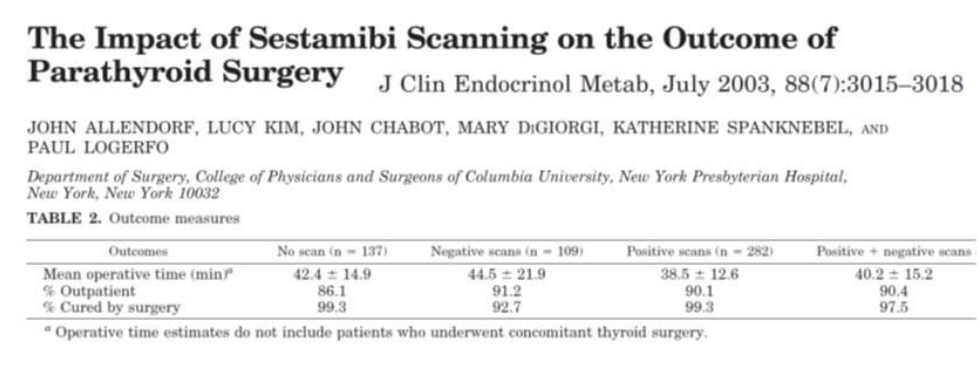
Parathyroid Awareness Month

👉Negative preoperative imaging does not exclude patients from surgery for hyperparathyroidism.

👉Experienced parathyroid surgeons have high cure rate (95%) with or without preoperative localization.

👉https://doi.org/10.1210/jc.2002-021095

#CheckYourCalcium #Arrangoiz #ParathyroidSurgeon #PararhyroidExpert MountSinaiMedicalCenter #MSMC #Miami #Mexico #HeadandNeckSurgeon #Hyperparathyroidism