My name is Rodrigo Arrangoiz I am a breast surgeon/ thyroid surgeon / parathyroid surgeon / head and neck surgeon / surgical oncologist that works at Center for Advanced Surgical Oncology in Miami, Florida.
I was trained as a surgeon at Michigan State University from (2005 to 2010) where I was a chief resident in 2010. My surgical oncology and head and neck training was performed at the Fox Chase Cancer Center in Philadelphia from 2010 to 2012. At the same time I underwent a masters in science (Clinical research for health professionals) at the University of Drexel. Through the International Federation of Head and Neck Societies / Memorial Sloan Kettering Cancer Center I performed a two year head and neck surgery and oncology / endocrine fellowship that ended in 2016.
Mi nombre es Rodrigo Arrangoiz, soy cirujano oncólogo / cirujano de tumores de cabeza y cuello / cirujano endocrino que trabaja Center for Advanced Surgical Oncology en Miami, Florida.
Fui entrenado como cirujano en Michigan State University (2005 a 2010 ) donde fui jefe de residentes en 2010. Mi formación en oncología quirúrgica y e n tumores de cabeza y cuello se realizó en el Fox Chase Cancer Center en Filadelfia de 2010 a 2012. Al mismo tiempo, me sometí a una maestría en ciencias (investigación clínica para profesionales de la salud) en la Universidad de Drexel. A través de la Federación Internacional de Sociedades de Cabeza y Cuello / Memorial Sloan Kettering Cancer Center realicé una sub especialidad en cirugía de cabeza y cuello / cirugia endocrina de dos años que terminó en 2016.
Byers RM, Weber RS, Andrews T, McGill D, Kare R, Wolf P. Frequency and therapeutic implications of “skip metastases” in the neck from squamous carcinoma of the oral tongue. Head Neck. 1997 Jan;19(1):14-9. doi: 10.1002/(sici)1097-0347(199701)19:1<14::aid-hed3>3.0.co;2-y. PMID: 9030939.
Background:
Supraomohyoid neck dissection (Levels I, II, III):
Is an adequate operation for the elective treatment of the neck for patients with oral cavity cancer
Squamous cell carcinoma of the oral tongue:
Metastasize to clinically negative nodes:
In 20% to 30% of patients:
These nodes usually are located in:
Levels I to III
Methods:
The medical records of 277 previously untreated patients with squamous cell carcinoma of the oral tongue were reviewed between the years 1970 and 1990
All patients had a glossectomy and neck dissection as part of their initial treatment
Patients were evaluated as to the findings in their neck
The following group of patients were included:
Patients who had level III nodes positive, without disease in levels I and II
Patients with disease in level IV
Patients with disease in level IIB or IIIB
Patients who were electively dissected and whose neck did not demonstrate any pathologically involved nodes:
But level IV was not included in the dissection and the patient subsequently developed pathologically positive nodes in level IV
Results:
Of all patients:
15.8% had either level IV metastasis as the only manifestation of disease in the neck or the level III node was the only node present without disease in level I to II
Conclusion:
The usual supraomohyoid neck dissection is inadequate for a complete pathologic evaluation of all the nodes at risk for patients with squamous carcinoma of the oral tongue
This may create a dilemma in determining whether postoperative radiotherapy is necessary
Consequently, all patients with squamous cell carcinoma of the oral tongue should have levels I to IV nodes (Extended Supraomohyoid Neck Dissection) removed:
If an elective neck dissection is part of their initial therapy
Here is an expanded summary of Baratz et al., “Neoadjuvant Immunotherapy and Chemoimmunotherapy Regimens in Head and Neck Cancer: A Systematic Review and Meta-Analysis,” published online in JAMA Otolaryngology–Head & Neck Surgery on March 12, 2026
Why this paper matters:
Neoadjuvant immunotherapy in resectable HNSCC:
Has been attractive because:
It may treat micrometastatic disease early
Exploit the intact tumor-immune microenvironment before surgery
It may potentially improve pathologic response without delaying definitive treatment
What has been unclear is whether immunotherapy alone or chemoimmunotherapy is more effective
This meta-analysis addresses that question by pooling the available prospective data in resectable, treatment-naive HNSCC
Objective:
The investigators aimed to:
Summarize the efficacy of neoadjuvant chemoimmunotherapy in HNSCC
Compare outcomes of chemoimmunotherapy vs immunotherapy alone:
Before definitive surgery in locoregionally advanced resectable HNSCC
Methods:
This was a librarian-led systematic review and meta-analysis performed according to PRISMA methodology
The authors searched MEDLINE, EMBASE, Cochrane Central, Cochrane Database of Systematic Reviews, and Scopus from database inception through October 2024
They included prospective interventional trials in resectable, treatment-naive HNSCC that had completed accrual and reported pathologic response and / or RECIST response data
Two investigators independently performed study screening and extraction
The main outcomes were:
Major pathologic response (MPR)
Complete pathologic response (CPR)
Complete radiographic response (CR):
By RECIST 1.1
Secondary outcomes included:
1-year overall survival
Toxicity
The pooled analysis used a binary random-effects model, with heterogeneity reported as I²
Study population:
The meta-analysis included 23 studies with a total of 751 patients. Of these:
357 patients (47%) received chemoimmunotherapy
102 patients (14%) received dual-agent immunotherapy
292 patients (39%) received single-agent immunotherapy
The pooled cohort was predominantly male (77%) with an age range of 27 to 87 years
Main findings:
Pathologic response:
Strongly favored chemoimmunotherapy
The most important finding was:
The marked gradient in pathologic response across regimens:
Pooled MPR + CPR rates were:
66% for chemoimmunotherapy 95% CI 58%-73%
18% for dual-agent immunotherapy 95% CI 6%–29%
6% for single-agent immunotherapy 95% CI 3%–9%
This is the key take-home point:
Adding chemotherapy to immunotherapy:
Was associated with substantially higher pathologic response rates than immunotherapy alone
Clinically, this matters because in head and neck cancer:
Pathologic response has increasingly been explored as an early signal of antitumor activity and a possible surrogate for longer-term benefit:
Although it is not yet a fully validated surrogate for survival in this setting
That distinction is important when interpreting these results
The paper shows better tumor kill in the surgical specimen:
But it does not yet prove that patients live longer because of the neoadjuvant regimen:
That is why the authors call for phase 3 trials
Short-term survival looked promising across groups, but differences were not definitive:
Across the included studies, 1-year overall survival ranged:
88% to 96% with single-agent immunotherapy
88% to 96% with dual-agent immunotherapy
88% to 100% with chemoimmunotherapy
These ranges suggest that all three strategies can be delivered with good short-term outcomes in selected patients:
However, because these were mainly early-phase, non-comparative studies with heterogeneous populations and follow-up:
The survival data should be viewed as hypothesis-generating, not practice-defining
Toxicity was higher than dual immunotherapy, but not prohibitive:
Among studies reporting adverse events, grade 3 to 5 adverse events occurred in:
29% of patients receiving single-agent immunotherapy
3% with dual-agent immunotherapy
17% with chemoimmunotherapy
These numbers need cautious interpretation because toxicity reporting was not uniform across studies, and the denominators were limited to reporting studies rather than all pooled patients:
Still, the overall message is that chemoimmunotherapy increased efficacy while maintaining an acceptable:
Though not trivial, toxicity burden in selected surgical candidates.
Authors’ conclusion:
The authors concluded that neoadjuvant chemoimmunotherapy:
Was associated with higher pathologic and radiographic response rates than immunotherapy alone in locoregionally advanced resectable HNSCC, and that these findings support the need for head-to-head phase 3 trials
How to interpret this as a head and neck oncologic surgeon:
Strengths:
This study has several strengths:
It focuses specifically on resectable, treatment-naive HNSCC:
Which is the clinically relevant population for neoadjuvant decision-making
It includes only prospective interventional studies
It separates single-agent, dual-agent, and chemoimmunotherapy approaches rather than lumping all neoadjuvant immunotherapy together
It uses outcomes surgeons and multidisciplinary teams care about:
Pathologic response, radiographic response, survival, and toxicity
Important limitations:
The paper is very useful, but it does not settle the question of standard of care
The biggest limitations are:
Most included studies were phase 1 / 2, small, and often single-arm
There was likely substantial clinical heterogeneity:
Primary site, stage, PD-L1 status, regimen, number of cycles, and adjuvant treatment strategies
The outcome driving the signal is primarily pathologic response:
Not mature event-free survival or overall survival
Cross-trial comparisons may exaggerate differences:
Because these were not randomized head-to-head comparisons
Toxicity and imaging response reporting were not fully standardized
So the paper supports promise:
Not final proof
Practical clinical implications:
For a practicing surgeon:
This meta-analysis suggests that chemoimmunotherapy is currently the most active neoadjuvant immune-based strategy in resectable HNSCC:
At least if the endpoint is pathologic response
If a center is considering neoadjuvant treatment within a trial or highly selected multidisciplinary framework:
The data support prioritizing chemoimmunotherapy over immunotherapy alone when the goal is maximizing preoperative tumor regression
At the same time, these data do not mean every resectable oral cavity, larynx, or oropharynx patient:
Should routinely receive neoadjuvant chemoimmunotherapy outside a protocol
The field is moving quickly, and the editorial accompanying this paper emphasizes that these results arrive in the context of KEYNOTE-689:
The first phase 3 randomized study to establish perioperative immunotherapy as a standard-of-care option in locally advanced resectable HNSCC:
While also warning that enthusiasm should be balanced with caution as these strategies enter broader practice
Bottom line:
This meta-analysis is one of the clearest pooled signals so far that in resectable locoregionally advanced HNSCC, neoadjuvant chemoimmunotherapy produces substantially higher pathologic response rates than immunotherapy alone
The benefit signal is strong for tumor response, short-term survival appears encouraging, and toxicity seems manageable in selected patients:
But the evidence base is still dominated by early-phase studies, so phase 3 randomized data remain essential before universal adoption
As published by the AJCC and UICC is widely accepted
In its most recent revision (eighth edition of the AJCC Staging Manual):
Depth of invasion (DOI):
Is added to the surface dimensions and local extent of the tumor:
As the required parameters for primary tumor staging in the oral cavity
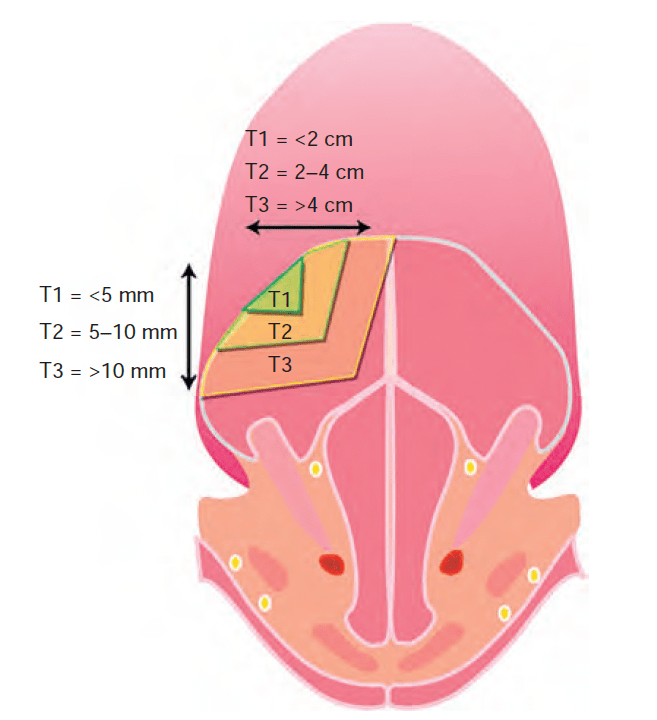
Depth of invasion and surface dimensions are the parameters required for T staging of oral cancer
Accurate assessment of DOI by clinical examination is not possible:
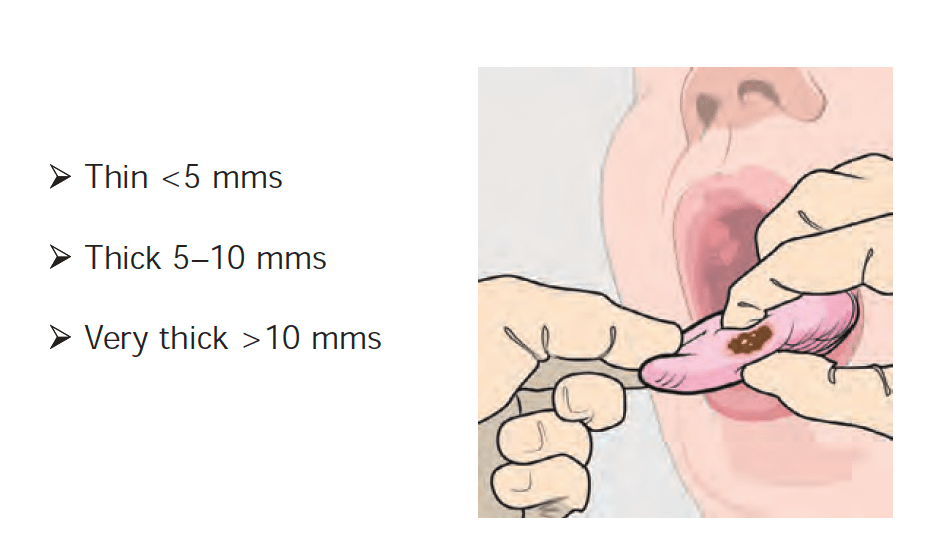
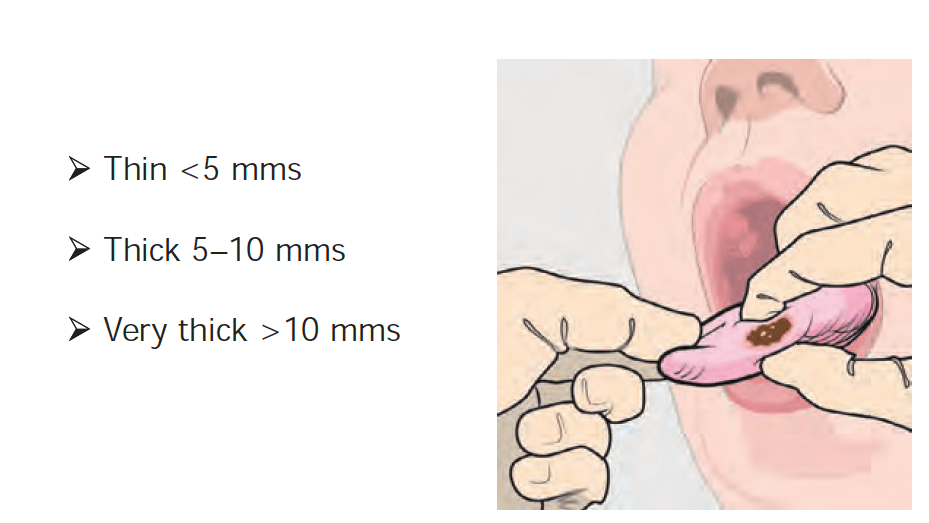
However, the staging system stratifies DOI by 5 mm increments, and thus clinical estimates of DOI can be categorized into:
Thin (less than 5 mm)
Thick (5 to 10 mm)
Very thick (greater than 10 mm)
By palpation to assign clinical T stage
Primary tumors of the oral cavity are categorized as thin, thick, and very thick by palpation
The stage distribution of patients with squamous cell carcinoma of the oral cavity at the Memorial Sloan Kettering Cancer Center in New York is shown in the graph:
Stage distribution for squamous cell carcinoma of the oralcavity (MSKCC data 1985 to 2015)
The most important histologic feature of the primary tumor:
That affects selection of treatment and eventual prognosis:
Is its depth of invasion (DOI)
Thin and superficially invasive lesions:
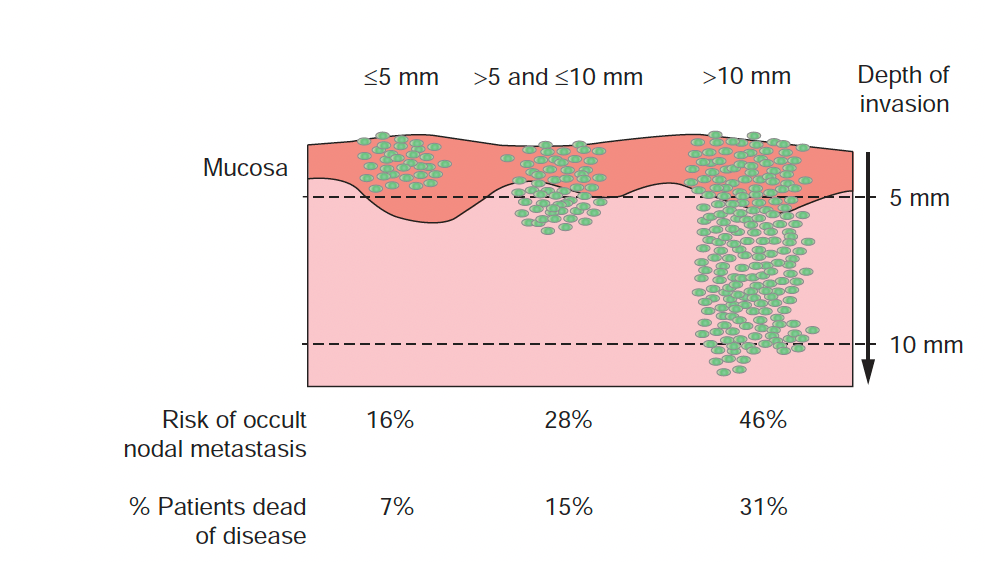
Have a lower risk of regional lymph node metastasis
Are highly curable
Offer an excellent prognosis
Thicker lesions that deeply infiltrate the underlying soft tissues:
Have a significantly increased incidence of regional lymph node metastasis and an adverse impact on prognosis
The risk of lymph node metastasis and survival rates in relation to the DOI of the primary lesion for T1 and T2 squamous carcinomas of the oral tongue and floor of mouth are shown in Figure:
Although it would be ideal to know the exact DOI of the lesion before surgical intervention, having that information before surgical excision and histopathologic examination of the primary tumor is not possible
In general, however, estimate of DOI by assessing thickness of the lesion as appreciated by palpation:
Is a reasonably good indicator of deeply invasive lesions versus superficial lesions:
To estimate the extent of soft tissue and / or bone resection for the primary lesion and to decide on the need for elective dissection of the regional lymph nodes at risk in a clinically negative neck
Primary tumors of the oral cavity are categorized as thin,thick, and very thick by palpation
Several retrospective studies have identified DOI of the primary tumor:
As an important determinant of prognosis:
Thus DOI is now included in T staging of primary tumors of the oral cavity
The incidence of occult nodal metastasis in the clinicallynegative neck for patients and disease-specific survival for patients withT1 and T2 oral carcinoma in relation to depth of invasion (DOI). (Memorial Sloan Kettering Cancer Center data, 1985 to 2015).
Depth of invasion (DOI) is the vertical depth of tumor invasion:
Measured from the basement membrane of the adjacent normal mucosa to the deepest point of invasion:
It is not the same as “tumor thickness”
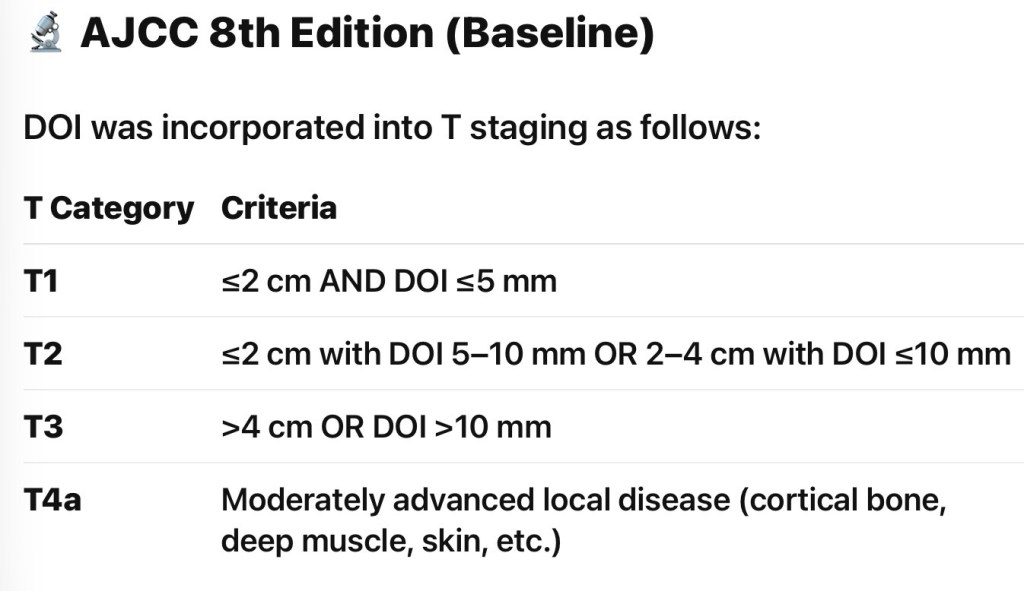
DOI is now a core determinant of T category in AJCC 8th and 9th oral cavity SCC:
AJCC 8 DOI cut points (oral cavity):
T1:
≤ 2 cm and DOI ≤ 5 mm
T2:
≤ 2 cm with DOI > 5 to 10 mm OR > 2 to 4 cm with DOI ≤ 10 mm
T3:
DOI >10 mm (or tumor > 4 cm)
Clinical implication:
A small “T1 by size” lesion can become T2 / T3 purely based on DOI:
Changing risk counseling and neck strategy
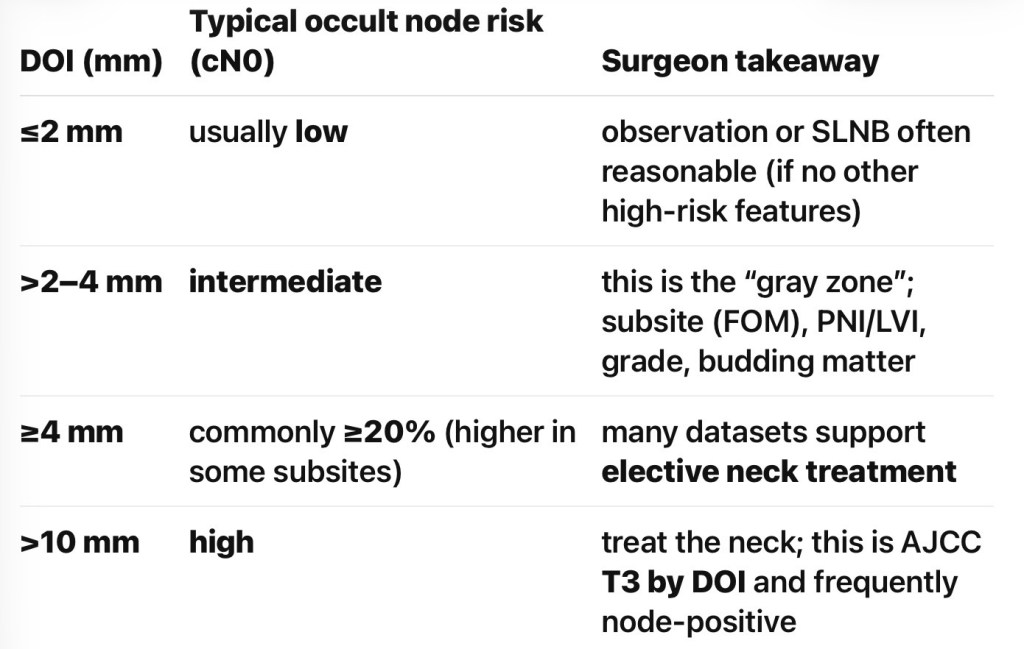
Risk of occult nodal metastasis vs DOI (tongue and floor of mouth):
Big picture (consistent across studies):
DOI is one of the strongest predictors of occult cervical lymph node metastasis (CLNM) in cN0 oral cavity SCC
A commonly used operative decision threshold is:
DOI ~ 3 to 4 mm:
But subsite matters, and FOM often carries higher nodal risk at the same DOI
Practical DOI “risk bands” used in tumor boards
Evidence supporting ≥ 4 mm as an elective neck dissection (END) trigger (early OCSCC):
Multiple analyses suggest DOI ≥ 4 mm is an effective cutoff where END improves regional control / survival compared with observation in early-stage OCSCC
Recent work continues to evaluate / validate a 4 mm threshold, acknowledging imperfect sensitivity / specificity
Meta-analytic evidence shows higher lymph node metastasis (LNM) risk when DOI > 4 mm (RR ~2.18 in one large study, alongside other adverse pathologic factors)
Floor of mouth nuance:
At the same DOI:
FOM cancers may metastasize more frequently than tongue cancers in some datasets:
Implying that a single universal DOI cutoff across all subsites can be overly simplistic
Prognosis vs DOI (local control, survival, and upstaging):
DOI correlates with:
Higher probability of nodal metastasis:
Including occult disease
Worse disease-specific outcomes:
It is sufficiently prognostic that it was incorporated into AJCC 8 edition T staging
DOI > 10 mm is particularly important because it upstages to pT3 (even if tumor is small in surface dimension):
Reflecting its association with advanced / aggressive behavior
Key point for counseling:
DOI is not just a “neck decision tool”:
It is a global biologic aggressiveness marker and a staging variable
Elective neck management in cN0 tongue / FOM SCC:
Guideline-consistent approach:
NCCN guidance (summarized in literature):
Consider elective neck dissection (END) in early oral cavity SCC when DOI exceeds ~3 mm (often framed as “consider END”)
Many institutions operationalize:
Tongue:
END commonly at ≥ 4 mm
FOM:
Lower threshold and / or stronger lean toward END due to higher nodal propensity in several series
END vs sentinel lymph node biopsy (SLNB) vs observation:
Elective Neck Dissection (END):
Typical for cN0 early tongue / FOM:
Selective neck dissection levels I to III ± IV based on institutional practice, DOI, and risk factors:
Benefit is maximizing regional control and avoiding “salvage neck failure” biology
Sentinel Lymph Node Biopsy (SLNB):
Valid alternative to END for T1 to T2 cN0 oral cavity SCC in experienced centers:
Especially when trying to reduce morbidity
Practical pearl:
SLNB is most attractive when DOI is low / intermediate and imaging is negative:
But your workflow must support reliable mapping / pathology
Observation:
Reasonable primarily for very thin lesions (e.g., ≤ 2 mm) without other high-risk features and with reliable follow-up
Remember:
DOI cutoffs have imperfect test characteristics:
A “thin” tumor can still metastasize
A pragmatic surgeon algorithm (tongue + floor of mouth, cN0):
Pre-op:
High-quality exam + imaging
Estimate DOI if possible:
US / MRI can help in some settings
If DOI likely > 10 mm (or bulky lesion):
Treat the neck (END)
If DOI 4 to 10 mm:
Strong default to END (levels I to III) or SLNB if program is robust
Atypia / dysplasia, to in situ carcinoma, to invasive cancer
Leukoplakia and erythroplakia:
Are terms given to clinically identifiable lesions:
That may harbor invasive cancer or undergo malignant transformation
Precursor lesions may present as:
Small patches or as a large verrucous plaques
The surface can be:
Brown to red (erythroplakia) or may have circumscribed whitish plaques (leukoplakia):
White spots may ulcerate
Leukoplakia:
Develops as a result of chronic irritation of the mucous membranes by carcinogens
This irritation stimulates proliferation of epithelial and connective tissue
Histopathologic examination reveals:
Underlying hyperkeratosis associated with epithelialhyperplasia
In the absence of underlying dysplasia:
Leukoplakia rarely (less than 5 %) is associated with progression to malignancy (Ridge, 2013; Massano et al., 2006; Thompson, 2003)
Erythroplakia:
Red spots, that are friable adjacent to normal mucosa:
Characterize erythroplakia
It is associated with underlying epithelial dysplasia and has a much greater potential for malignancy than leukoplakia:
Carcinoma is found in nearly 40 % of the cases of erythroplakia (Ridge, 2013)
The classification of the world health organization (WHO) of precursor lesions is as follows (Barnes, 2005):
Squamous cell hyperplasia:
Hyperplasia describes an increase in the number of cells:
This can be in the spinous layer (acanthosis), and / or in the layers of basal / parabasal cells (progenitor compartment) called basal cell hyperplasia
Dysplasia:
Is characterized by cellular atypia, loss of normal cellular maturation, and loss of epithelial stratification:
Mild dysplasia:
Squamous intraepithelial neoplasia 1
Moderate dysplasia:
Squamous intraepithelial neoplasia 2
Severe dysplasia or carcinoma in situ:
Squamous intraepithelial neoplasia 3
The probability of developing a carcinoma depends on the degree of dysplasia:
In the case of severe dysplasia:
Up to 24% of patients may have an occult invasive squamous cell cancer (Ridge, 2013)
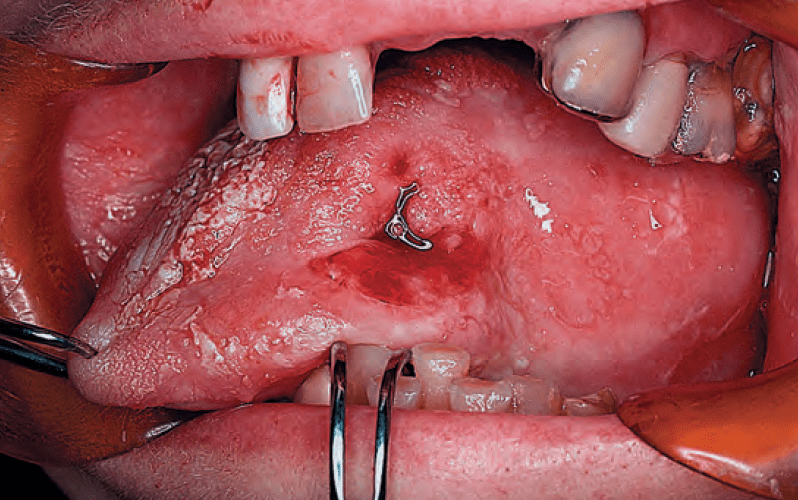
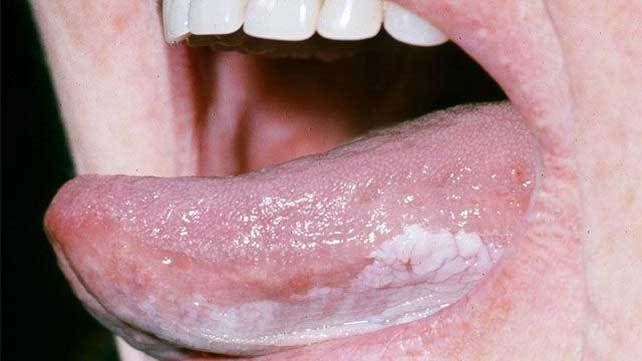
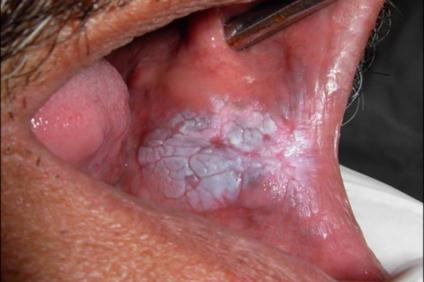
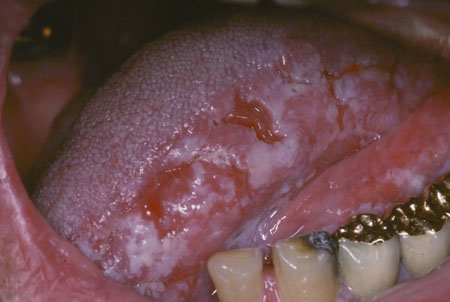
Leukoplakia on the Right and Erythroplakia #Arrangoiz #CancerSurgeon #HeadandNeckSurgeon #SurgicalOncologist #TongueCancer #SCC #Miami #Mexico #MountSinaiMedicalCenter #MSMC
A “white plaque of questionable risk having excluded other known diseases or disorders that carry no increased risk for cancer”
It is the most common oral potentially malignant disorder (OPMD) in North America and Europe:
With a prevalence ranging from 0.1% to 33%
Definition:
Oral leukoplakia (OL) is a predominantly white patch or plaque on the oral mucosa:
That cannot be characterized clinically or pathologically as any other disorder
It is a diagnosis of exclusion:
Conditions such as:
Frictional keratosis, lichen planus, candidiasis, and other identifiable white lesions must be ruled out before the term is applied
A final diagnosis of leukoplakia in cases with an identifiable causative factor (e.g., friction, tobacco):
Can only be made in retrospect after failure to resolve within 4 to 8 weeks of eliminating the suspected cause
Pathophysiology:
Leukoplakia represents a spectrum of epithelial alterations:
Driven by accumulating somatic – genomic alterations
The molecular progression model involves:
Sequential loss of heterozygosity (LOH) at specific chromosomal loci:
Early losses at 9p21 (p16 inactivation) and 3p21, followed by 17p13 (p53 mutation), 11q13 (cyclin D1 amplification), and later losses at 4q, 8p, 13q, and 14q
Tumor progression from OL:
OIs promoted by somatic genomic alterations, immune evasion, and abrogation of effective immune responses against cancer cells
Overexpression of p53 and deletions /mutations in KMT2C, p16INK4a, and p14ARF genes have been identified:
Particularly in proliferative verrucous leukoplakia (PVL)
Microbial dysbiosis:
May also contribute to a chronic inflammatory microenvironment favoring epithelial transformation
Etiology and Risk Factors:
Tobacco and alcohol consumption:
Are the most common risk factors
However, OL can also occur in non-smokers — notably:
Most patients with PVL have never smoked:
Yet PVL carries the highest malignant transformation rates (70% to 100%)
Additional risk factors include:
Betel quid / areca nut use
Immunosuppression:
HIV-positive patients with OL are more likely to develop oral cancer
Clinical Presentation:
OL typically presents as:
A white, adherent plaque that cannot be scraped off:
Lesions are largely asymptomatic
Two clinical subtypes are recognized:
Homogeneous leukoplakia:
Uniformly white, flat, thin plaques with a smooth or slightly wrinkled surface
These carry a lower risk of malignant transformation
Nonhomogeneous leukoplakia:
Mixed red-and-white lesions (erythroleukoplakia), nodular, verrucous, or speckled variants
These carry a significantly higher risk of malignant transformation
Common sites include:
The lateral / ventral tongue, floor of mouth, soft palate, buccal mucosa, and gingiva
Proliferative verrucous leukoplakia (PVL):
A distinct aggressive subtype, is characterized by multifocal keratotic plaques with progressive expansion, high recurrence, and strong malignant potential
Histology:
Histopathology of leukoplakia can reveal a range of findings:
Hyperkeratosis (orthokeratosis or parakeratosis) without dysplasia:
Carcinoma in situ or invasive squamous cell carcinoma:
May be found on biopsy of clinically apparent leukoplakia
Importantly, frank dysplasia is more frequently found in isolated (unifocal) leukoplakia than in PVL:
Yet PVL has a much higher malignant transformation rate (~ 50% vs. ~ 9.5%), underscoring that histologic grade alone does not fully predict risk
Management:
Management is guided by histopathologic findings and clinical risk factors:
All leukoplakias should be biopsied regardless of clinical impression:
As the decision to biopsy based on visual assessment alone has low sensitivity (59.6%) and low specificity (62.1%) for identifying cancer
Benign (no dysplasia):
Active surveillance with periodic clinical examination, or treatment with topical therapy
Risk factor modification (tobacco and alcohol cessation) is essential
Dysplastic lesions:
Surgical excision:
Scalpel or laser ablation – is the standard approach
CO₂ laser ablation and photodynamic therapy have also been used
Chemoprevention:
Vitamin A, retinoids, beta-carotene, and lycopene have shown some short-term efficacy in clinical resolution of lesions but no treatment has been proven to prevent long-term malignant transformation in RCTs
Relapses and adverse effects are common
Close follow-up is mandatory regardless of treatment, as recurrence rates are high (37.5% in one series) and malignant transformation can occur even after complete excision:
The American Dental Association (2026) recommends routine clinical oral examination for all adults, including systematic visual inspection and palpation to detect OPMDs early
Prognosis and Malignant Transformation:
The mean malignant transformation rate of OL is approximately:
3.5% (range 0.13% to 34%) across studies:
With an estimated annual rate of ~1.5% to 2% per year
A large population-based cohort study (n = 4,886) found a 5-year absolute risk of oral cancer of 3.3% overall, stratified by dysplasia grade:
No dysplasia: 2.2%
Mild dysplasia: 11.9%
Moderate dysplasia: 8.7%
Severe dysplasia: 32.2%
Critically, 39.6% of cancers arose from biopsied leukoplakias without dysplasia:
Highlighting that absence of dysplasia does not eliminate risk
Risk factors for malignant transformation include:
Female sex
Lesion area > 200 mm²
Epithelial dysplasia
Nonhomogeneous type
Tongue location
Immunosuppression
References:
Common Tongue Conditions in Primary Care. Straub L, Schettini P, Myrex P. American Family Physician. 2024;110(5):467-475.
Oncological Outcomes of Patients With Oral Potentially Malignant Disorders. Villa A, Lodolo M, Ha P. JAMA Otolaryngology– Head & Neck Surgery. 2025;151(1):65-71. doi:10.1001/jamaoto.2024.3719.
Oral Leukoplakia, the Ongoing Discussion on Definition and Terminology. van der Waal I. Medicina Oral, Patologia Oral Y Cirugia Bucal. 2015;20(6):e685-92. doi:10.4317/medoral.21007.
Molecular Markers of the Risk of Oral Cancer. Lippman SM, Hong WK. The New England Journal of Medicine. 2001;344(17):1323-6. doi:10.1056/NEJM200104263441710.
Head and Neck Cancer. Forastiere A, Koch W, Trotti A, Sidransky D. The New England Journal of Medicine. 2001;345(26):1890-900. doi:10.1056/NEJMra001375.
Microbial Dysbiosis and Host-Microbe Interactions in Proliferative Verrucous Leukoplakia: Insights Into Carcinogenic Potential. Špiljak B, Ozretić P, Brailo V, et al. Archives of Microbiology. 2025;208(1):65. doi:10.1007/s00203-025-04611-w. Head and Neck Cancer. Dunn LA, Ho AL, Pfister DG. JAMA. 2025;:2842834. doi:10.1001/jama.2025.21733.
Oral Leukoplakia and Oral Cavity Squamous Cell Carcinoma. Bewley AF, Farwell DG. Clinics in Dermatology. 2017 Sep – Oct;35(5):461-467. doi:10.1016/j.clindermatol.2017.06.008.
Oral Potentially Malignant Disorders. Wetzel SL, Wollenberg J. Dental Clinics of North America. 2020;64(1):25-37. doi:10.1016/j.cden.2019.08.004.
Proliferative Verrucous Leukoplakia: An Expert Consensus Guideline for Standardized Assessment and Reporting. Thompson LDR, Fitzpatrick SG, Müller S, et al. Head and Neck Pathology. 2021;15(2):572-587. doi:10.1007/s12105-020-01262-9.
Leukoplakia-a Diagnostic and Management Algorithm. Villa A, Woo SB. Journal of Oral and Maxillofacial Surgery : Official Journal of the American Association of Oral and Maxillofacial Surgeons. 2017;75(4):723-734. doi:10.1016/j.joms.2016.10.012.
Potentially Malignant Disorders of the Oral Cavity and Oral Dysplasia: A Systematic Review and Meta-Analysis of Malignant Transformation Rate by Subtype. Iocca O, Sollecito TP, Alawi F, et al. Head & Neck. 2020;42(3):539-555. doi:10.1002/hed.26006.
Clinical Management Update of Oral Leukoplakia: A Review From the American Head and Neck Society Cancer Prevention Service. Gates JC, Abouyared M, Shnayder Y, et al. Head & Neck. 2025;47(2):733-741. doi:10.1002/hed.28013.
Oral Leukoplakia and Risk of Progression to Oral Cancer: A Population-Based Cohort Study. Chaturvedi AK, Udaltsova N, Engels EA, et al. Journal of the National Cancer Institute. 2020;112(10):1047-1054. doi:10.1093/jnci/djz238.
Randomized Controlled Trials for Oral Leukoplakia. Lodolo M, Valor J, Villa A. Oral Diseases. 2025;. doi:10.1111/odi.15399.
Management of Oral Leukoplakia by Ablative Fractional Laser-Assisted Photodynamic Therapy: A 3-Year Retrospective Study of 48 Patients. Yao YL, Wang YF, Li CX, Wu L, Tang GY. Lasers in Surgery and Medicine. 2022;54(5):682-687. doi:10.1002/lsm.23534.
Interventions for Treating Oral Leukoplakia to Prevent Oral Cancer. Lodi G, Franchini R, Warnakulasuriya S, et al. The Cochrane Database of Systematic Reviews. 2016;7:CD001829. doi:10.1002/14651858.CD001829.pub4.
Living evidence-informed guideline on the early detection of oral squamous cell carcinoma and potentially malignant disorders. Olivia Urquhart. American Dental Association (2026).
Long-Term Outcome of Non-Surgical Treatment in Patients With Oral Leukoplakia. Kuribayashi Y, Tsushima F, Morita KI, et al. Oral Oncology. 2015;51(11):1020-1025. doi:10.1016/j.oraloncology.2015.09.004.













 Rodrigo Arrangoiz MS, MD, FACS, FSSO