Local Breast Cancer Recurrence

Local recurrence in the breast may be accompanied by distant recurrence. Therefore, all patients who are diagnosed with a local or regional recurrence should have staging scans to rule out distant disease. If these scans are negative, surgical intervention is recommended if the tumor is operable.

In patients who develop an ipsilateral breast recurrence or new primary tumor following prior history of breast conservation with whole breast radiation therapy, further radiation is generally contraindicated. Therefore, the standard surgical treatment of the breast is mastectomy. While there have been case reports of repeat lumpectomy followed by accelerated partial-breast radiation therapy, there are insufficient data to support the long-term safety of this approach. If the tumor is not operable by mastectomy at presentation, neoadjuvant therapy with chemotherapy or hormone therapy may be considered as an initial step.

The approach to the axillary lymph nodes has been an area of debate since the era of SLNB. Nodal staging provides valuable prognostic information, even in the case of a local recurrence. If a patient is clinically node-negative at the time she presents with a local recurrence in the breast, SLNB may be attempted. There is a small body of literature supporting the use of reoperative SLNB in clinically node-negative patients who have an ipsilateral recurrence or new primary following prior breast conservation with SLNB. These studies have found that successful lymphatic mapping is more likely to occur when fewer nodes were removed at the time of the treatment for the index cancer. While lymphoscintography is not strictly required, it may help to identify sites of extra-axillary drainage due to alternate drainage pathways. In patients who have had prior completion axillary lymph node dissection, reoperative SLNB is possible, but less likely to be associated with successful lymphatic mapping. In these cases, axillary exploration is less likely to yield any additional lymph nodes.

Cardosa F, Fallowfield L, Costa A, et al; and ESMO Guidelines Working Group. Locally recurrent or metastatic breast cancer: ESMO Clinical Practice Guidelines for diagnosis, treatment and follow-up. Ann Oncol. 2011;22(Suppl 6):vi25-vi30.

Cox CE, Furman BT, Kiluk JV, et al. Use of reoperative sentinel lymph node biopsy in breast cancer patients. J Am Coll Surg. 2008;207:57-61.

Karam A, Stempel M, Cody HS III, Port ER. Reoperative sentinel lymph node biopsy after previous mastectomy. J Am Coll Surg. 2008;207:543-548.

Kaur P, Kiluk JV, Meade T, et al. Sentinel lymph node biopsy in patients with previous ipsilateral complete axillary lymph node dissection. Ann Surg Oncol. 2011;18:727-732.

Port E, Garcia-Etienne C, Park J, Fey J, Borgen PI, Cody HS 3rd. Reoperative sentinel lymph node biopsy: a new frontier in the management of ipsilateral breast tumor recurrence. Ann Surg Oncol. 2007;14:2209-2214.

Breast Cancer in Pregnancy

Breast cancer associated with pregnancy occurs anywhere in the first postpartum year, during pregnancy, or anytime during lactation.

Management of pregnant women newly diagnosed with breast cancer can be complex and depends on the trimester of pregnancy and desires for breast conservation.

Most obstetricians will recommend to deliver the baby at the earliest at 34 weeks to avoid morbidity of prematurity and treatment for the breast cancer should not be delayed until delivery. Studies have shown worse survival in those patients who delayed treatment 3 to 6 months.

It is safe to administer chemotherapy during pregnancy, but the risk of congenital malformations in the first trimester can be as high as 20% so it is generally recommended to start chemotherapy in the second or third trimester. The only agents that are contraindicated are taxanes and trastuzumab.

A study published in 2006 did not show any significant short term complications for children that were exposed to fluorouracil, doxorubicin, cyclophosphamide (FAC) chemotherapy in utero. It is not safe however to administer radiation or hormone therapy during pregnancy because of risks to the fetus.

Surgery is safe in the second and third trimester and is generally avoided in the first trimester due to risk of spontaneous abortion.

Surgical options include mastectomy and breast conservation, if applicable. If a patient has lumpectomy, radiation therapy must wait until after delivery. Sentinel node biopsy has been shown to be safe during pregnancy followed by axillary node dissection if the sentinel node is tumor positive. It is generally felt that preoperative lymphoscintigraphy is safe during pregnancy, although only a few small studies have examined sentinel node biopsy in pregnant patients. Injection of blue dye to identify a sentinel node is not recommended because of the small risk of allergic reaction and uncertain affects on the fetus.

Therapeutic abortion is no longer necessary or recommended.

Barnes DM, Newman LA. Pregnancy-associated breast cancer: a literature review. Surg Clin North Am. 2007:87:417-430.

Berry DL, Theriault RL, Holmes FA, et al. Management of breast cancer during pregnancy using a standardized protocol. J Clin Oncol. 1999;17:855-861.

Hahn KME, Johnson PH, Gordon N, et al. Treatment of pregnant breast cancer patients and outcomes of children exposed to chemotherapy in utero. Cancer. 2006;107:1219-1226.

Khera SY, Kiluk JV, Hasson DM, et al. Pregnancy-associated breast cancer patients can safely undergo lymphatic mapping. Breast J. 2008;14:250-254.

Mondi MM, Cuenca RE, Ollila DW, Stewart JH 4th, Levine EA. Sentinel lymph node biopsy during pregnancy: initial clinical experience. Ann Surg Oncol. 2007;14:218-221.

The National Surgical Adjuvant Breast and Bowel Project (NSABP) B-18 trial compared the strategy of four cycles of chemotherapy followed by surgery (neoadjuvant) to the strategy of surgery followed by four cycles of the same chemotherapy (adjuvant).

While the former was associated with a higher rate of breast conservation, there was no difference in survival between the two arms.

Patients who achieve a pathologic complete response after neoadjuvant chemotherapy have an improved prognosis; therefore, many clinical trials use the neoadjuvant setting, where response to novel therapies can be monitored in vivo.

Untch M, Konecny GE, Paepke S, von Minckwitz G. Current and future role of neoadjuvant therapy for breast cancer. Breast. 2014; 23:526-537.

Wang-Lopez Q, Chalabi N, Abrial C, et al. Can pathologic complete response (pCR) be used as a surrogate marker of survival after neoadjuvant therapy for breast cancer? Crit Rev Oncol Hematol. 2015;95:88-105.

Wolmark N, Wang J, Mamounas E, Bryant J, Fisher B. Preoperative chemotherapy in patients with operable breast cancer: nine year results for National Breast and Bowel Project B-18. J Natl Cancer Inst Monogr. 2001;30:96-102

Who Should Get Metastatic Work-Up in Operable Breast Cancer Patients

Patients presenting with potentially operable breast cancer should be evaluated for occult metastatic disease if they have clinical stage III disease, per American Society of Clinical Oncology (ASCO) guidelines.

Patients with stage II disease have a low rate of finding distant metastases, and, therefore, such a work-up is not indicated.

While young age and triple-negative phenotype are poor prognostic factors, they do not influence whether patients should have a metastatic work-up independent of clinical stage.

Brennan ME, Houssami N. Evaluation of the evidence on staging imaging for detection of asymptomatic distant metastases in newly diagnosed breast cancer. Breast. 2012;21:112-123.

Kim H, Han W, Moon HG, et al. The value of preoperative staging chest computed tomography to detect asymptomatic lung and liver metastasis in patients with primary breast carcinoma. Breast Cancer Res Treat. 2011;126:637-641.

Myers RE, Johnston M, Pritchard K, et al. Baseline staging tests in primary breast cancer: A practice guideline. CMAJ. 2001;164:1439-1444.

Schnipper LE, Smith TJ, Raghavan D, et al. American Society of Clinical Oncology identifies five key opportunities to improve care and reduce costs: the top five list for oncology. J Clin Oncol. 2012;30:1715-1724.

Paget Disease of the Breast

Paget’s disease of the breast, which is completely unrelated to Paget’s disease of bone, accounts for 1% to 3% of all breast cancers. Paget’s disease may be either ductal carcinoma in situ (DCIS) or invasive breast cancer, although in situ lesions predominate.

Paget cells are large eosinophilic cells with pale cytoplasm and large atypical nuclei; these should be distinguished from Toker cells, which tend to be small bland cells that can be found in 10% of normal nipples.

Although most series have included small cohorts, mammographically occult underlying cancers have been found in 29% to 100% of cases of Paget’s disease. Preoperative imaging is critical, particularly if breast conservation is desired. If mammography is negative, breast MRI should be considered. However, if biopsy of the nipple demonstrates invasion and mastectomy is the chosen procedure, the findings on breast MRI would unlikely change management.

Breast conservation was previously thought to be contraindicated because of the need to remove the nipple-areolar complex. However, as with other breast cancers, lumpectomy (to include the nipple-areolar complex) is oncologically safe provided negative margins are obtained even if an underlying invasive cancer is present. The patient should be counseled, however, about the resulting cosmetic deformity. Radiotherapy alone is insufficient treatment and has not been evaluated for this disease.

Evaluation of the nodes with use of sentinel lymph node biopsy is indicated in standard fashion if invasive cancer is present, or if the patient opts for a mastectomy and has DCIS.

Bijker N, Rutgers EJ, Duchateau L, et al. Breast-conserving therapy for Paget disease of the nipple: a prospective European Organization for Research and Treatment of Cancer study of 61 patients. Cancer. 2001;91:472-477.

Dalberg K, Hellborg H, Warnberg F. Paget’s disease of the nipple in a population based cohort. Breast Cancer Res Treat. 2008;111:313-319.

Echevarria JJ, Lopez-Ruiz JA, Martin D, Imaz I, Martin M. Usefulness of MRI in detecting occult breast cancer associated with Paget’s disease of the nipple-areolar complex. Br J Radiol. 2004;77:1036-1039.

Ikeda DM, Helvie MA, Frank TS, Chapel KL, Andersson IT. Paget disease of the nipple: radiologic-pathologic correlation. Radiology. 1993;189:89-94.

HER2-Targeted Agents In Breast Cancer

HER2-targeted agents are highly effective in improving survival in HER2-positive patients.

Therefore, trastuzumab (+/- pertuzumab), both of which target HER2, are part of every regimen endorsed by NCCN for HER2-positive disease.

These are often combined with standard chemotherapy, composed of anthracyclines (such as doxorubicin) and/or taxanes (such as docetaxel and paclitaxel).

National Comprehensive Cancer Network. NCCN Clinical Practice Guidelines in Oncology. Breast Cancer. Available at http://www.nccn.org.

Slamon D, Eiermann W, Robert N, et al. Adjuvant trastuzumab in her2 positive breast cancer. N Engl J Med. 2011;365:1273-1283.

HR+, HER2+ Early-Stage Disease: Interpreting Results From ADAPT and NSABP B52

We have two trials out there looking at anti-HER2 therapy plus/minus endocrine therapy in the setting. One trial is the ADAPT Trial looking at hormone receptor-positive, HER2-positive disease at 12 weeks of T-DM1 (ado-trastuzumab) plus/minus endocrine therapy, where there was no difference in the pCR (pathologic complete response) rate but a substantial pCR of 41% with 12 weeks of TDM1 alone.

The second trial is the NSABP B-52 trial, a phase III trial that looked at TCHP (docetaxel, carboplatin, trastuzumab, and pertuzumab) plus/minus endocrine therapy.

Both trials involved pre- and postmenopausal patients. And again, the NSABP B-52 trial did not show an improvement of the pCR in hormone receptor-positive HER2-positive disease by adding endocrine therapy to anti-HER2 therapy.

What does that mean for clinical practice?

It means, first of all, the endocrine therapy did not negatively impact the pCR rate. So it’s safe to use endocrine therapy plus anti-HER2 therapy in the postoperative setting, but there is no need, so far, to combine it with the anti-HER2 therapy with a chemotherapy backbone in the neoadjuvant setting. We don’t know why that is; it may be that the times used in the studies were not long enough and endocrine therapy added to anti-HER2 therapy needs a longer time. But I think for the time being, we should not combine endocrine therapy plus chemotherapy and anti-HER2 therapy in the neoadjuvant setting.

Ki-67 Proliferation Index

What is the utility and prognostic value of Ki-67 as a biomarker to guide treatment decisions regarding adjuvant abemaciclib in combination with endocrine therapy for patients with hormone receptor (HR)-positive / HER2-negative early breast cancer?

The FDA approval of abemaciclib for patients with high-risk HR-positive / HER2-negative early breast cancer represents a significant advancement in the field, and it is notably the first regulatory approval in the adjuvant HR-positive/HER2-negative setting after more than 15 years. Based on the results of the phase III monarchE trial, the FDA approved the use of abemaciclib in combination with endocrine therapy (tamoxifen or an aromatase inhibitor) for the adjuvant treatment of adult patients with node-positive, HR-positive/HER2-negative early breast cancer and a high risk of recurrence based on clinicopathologic features (either ≄ 4 axillary lymph nodes or 1-3 positive axillary lymph nodes with tumor grade 3 and / or tumor size ≄ 50 mm) and a Ki-67 score ≄ 20%, as determined by an FDA-approved test. The details of the approval, specifically the inclusion of a Ki-67 score of ≄ 20% as a requirement, has created some controversy in the oncology community.

The monarchE trial results demonstrated that patients with the highest risk of recurrence—specifically those with both high-risk clinical features and a high Ki-67 score—derived the greatest absolute benefit in terms of invasive disease-free survival with the addition of abemaciclib to endocrine therapy. Not surprisingly, this subgroup was the basis for the FDA approval. However, the study also demonstrated that although a high Ki-67 score is prognostic for recurrence, it is not a predictive marker for benefit from abemaciclib, as patients with a low Ki-67 score also demonstrated improved invasive disease-free survival with the addition of abemaciclib to endocrine therapy. Some in the community feel that a longer follow-up period is needed for the population of patients with a low Ki-67 score to better understand the role of adjuvant abemaciclib in this patient group. Historical data suggest that this group of patients with a low Ki-67 score is more likely to experience later recurrence compared with the group of patients with a high Ki-67 score. In view of this, both the National Comprehensive Cancer Network and American Society of Clinical Oncology guidelines currently recommend the consideration of treatment with adjuvant abemaciclib in otherwise eligible patients regardless of the Ki-67 score. This underscores the notion that the most significant impact of novel agents such as CDK4/6 inhibitors is likely to be in the localized, curable breast cancer setting, where they could reduce the risk of progression to metastatic disease.

The use of the Ki-67 score in the monarchE trial is a natural choice given that it is a marker of cellular proliferation and therefore mechanistically linked to CDK4/6 inhibitors. Also, the nuclear staining of the Ki-67 protein as a prognostic biomarker for HR-positive/HER2-negative breast cancer is well established, widely used, and inexpensive. However, the scoring methodology for Ki-67 stains remains controversial. Data from the International Ki67 in Breast Cancer Working Group (IKWG) have shown dramatic heterogeneity in Ki-67 assessment across laboratories, and the IKWG has expressed serious concerns regarding its routine use. The IKWG has systematically analyzed the causes of Ki-67 variability across laboratories and developed guidelines for its assessment using immunohistochemistry (IHC). The IKWG is of the opinion that consistency in Ki-67 scoring is difficult to achieve in the 5% to 30% range. Of note, the FDA approval of a Ki-67 score using a ≄20% cutoff as a companion diagnostic has not been generally embraced in the breast oncology community.

Ki-67 is a pan-cell cycle marker that is expressed in all tissues, albeit at low levels. This has led to issues regarding antibody titration for IHC analysis. A consequence of this is that antibodies are used at different dilutions, with resultant differences in nuclear staining intensities. The FDA approval of the Ki-67 IHC MIB-1 assay now requires the use of a ready-to-use standard concentration of an antibody. Similarly, it provides standardized criteria and analytical methods for defining Ki-67 positivity. Regarding the monarchE trial and the FDA-approved criteria, a nucleus is considered positive for Ki-67 if: (1) the signal is unequivocally brown; (2) the staining corresponds to a nucleus; (3) the staining covers the whole chromatin distribution within the nucleus; and (4) the nuclear staining is observed in viable, nonapoptotic cells. This definition differs from the one proposed by the IKWG in that the IKWG defines a nucleus as positive if it is not blue; therefore, grey nuclei are considered positive. In addition, focal nuclear positivity is considered sufficient. Both the IKWG- and FDA-approved methods recommend the analysis of the entire slide, although the IKWG method is more involved in requiring counting of larger areas and a higher number of cells. Both methods exclude necrotic tumor areas, foci of carcinoma in situ, edge effects, and fixation- and processing-related artifacts.

Overall, CDK4/6 inhibitors have revolutionized the treatment for patients with HR-positive/HER2-negative advanced breast cancer, and the FDA approval of adjuvant abemaciclib plus endocrine therapy in the early breast cancer setting is a significant advancement in the field.

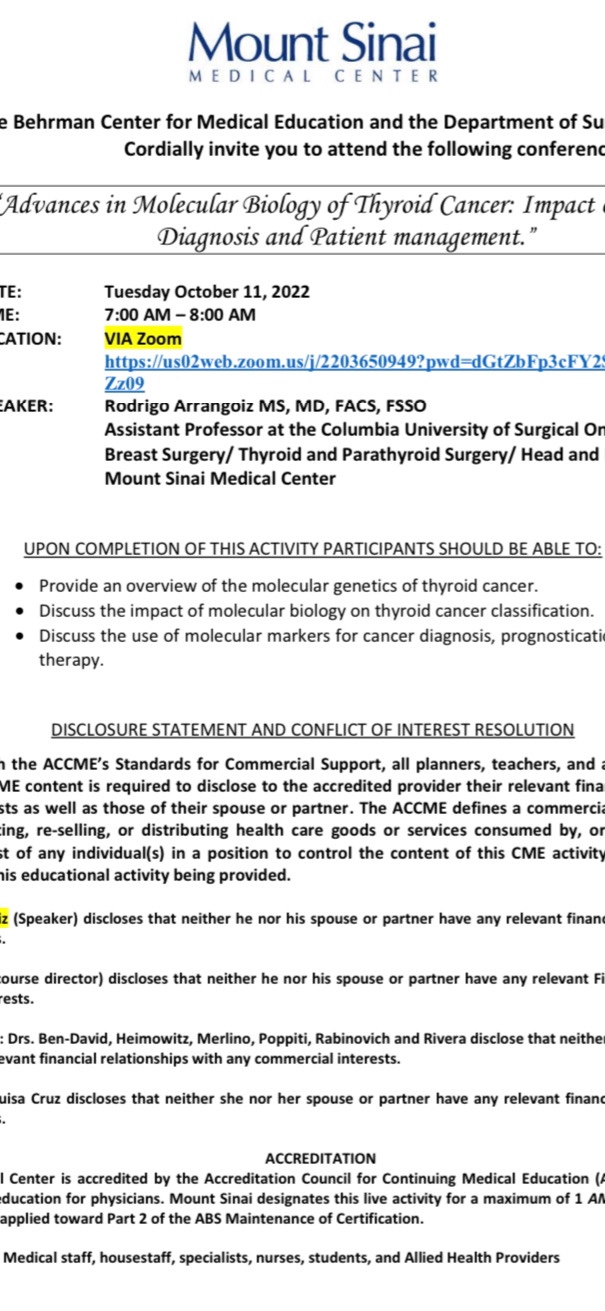
Poorly Differentiated and Anaplastic Thyroid Carcinomas

Poorly differentiated carcinoma is a rare thyroid tumor that arises from follicular cells and is characterized by a partial loss of thyroid differentiation and less favorable prognosis in comparison with well-differentiated papillary or follicular carcinomas.

Anaplastic (undifferentiated) carcinoma represents the most undifferentiated type of thyroid tumors. In thyroidectomy samples of poorly differentiated and anaplastic thyroid carcinomas, it is not infrequent to find areas of well-differentiated papillary, conventional follicular or oncocytic carcinoma. This suggests that these tumors may represent distinct steps in the step-wise progression: well-differentiated carcinoma derived from follicular cells → poorly differentiated carcinoma → anaplastic carcinoma.

In agreement with such a progression, some molecular alterations, considered to be early events in thyroid carcinogenesis (i.e., mutations of RAS and BRAF), are found in tumors with all levels of dedifferentiation, whereas other, late events (i.e., TP53 mutations) occur with increasing frequency in tumors that progressively loose thyroid differentiation.

Inactivating point mutations of the TP53 tumor suppressor gene are among the most common mutations found in human cancer.

In thyroid tumors, point mutations of TP53 are a late event, reported in 60% to 80% of anaplastic thyroid carcinomas and 15% to 30% of poorly differentiated carcinomas, but only in single cases of follicular and papillary carcinomas.

Most of them involve exons 5 to 8 of the gene and alter its DNA binding properties.

p53 inactivation in thyroid cells is not only responsible for accelerated tumor growth, but is also associated with the progressive loss of differentiated markers.

Indeed, the recovery of wild-type p53 expression in cultured thyroid anaplastic carcinoma cells leads to the reduction in proliferation rate, re-expression of thyroid-specific genes (e.g., TPO, PAX-8), and re-acquisition the ability to respond to thyroid-stimulating hormone stimulation. This suggests that the progressive loss of differentiation in poorly differentiated and anaplastic carcinomas is mediated, at least in part, by inactivation of the p53 gene.

It also points to the restoration of TP53 function as a possible therapeutic approach for these highly aggressive tumors. Indeed, viral TP53 gene therapy has been tested in preclinical and clinical trials for various cancer types, and is under evaluation for anaplastic thyroid carcinoma.

β-catenin is a cytoplasmic protein, which is encoded by the CTNNB1 gene and is an important intermediate in the wingless (Wnt) signaling pathway. In thyroid tumors, point mutations in exon 3 of CTNNB1 have been found in 25% of poorly differentiated carcinomas and 66% of anaplastic thyroid carcinomas, but not in well-differentiated carcinomas.

Most of the tumors carrying the mutation also demonstrated an aberrant nuclear expression of the protein determined by immunohistochemical analysis, although there was no full correlation between these findings.

Point mutations of the RAS genes have been reported in 18% to 27% of poorly differentiated carcinomas and in 50% to 60% of anaplastic thyroid carcinomas. It is likely that mutant RAS stimulates genomic instability in the affected cells and predisposes them to accumulation of additional genetic abnormalities, such as mutations of the TP53gene. This can be illustrated by a case report of an anaplastic carcinoma developed in a well-differentiated follicular carcinoma, where RAS mutation was found in both tumor components, whereas TP53 was only found in the anaplastic carcinoma.

BRAF mutations occur in approximately 15% of poorly differentiated carcinomas and approximately 20% of anaplastic carcinomas, typically in those tumors that also contain areas of well-differentiated papillary thyroid carcinoma. In these tumors, BRAF mutation is detectable in both well-differentiated and poorly differentiated or anaplastic tumor areas, providing evidence that it occurs early in tumorigenesis.